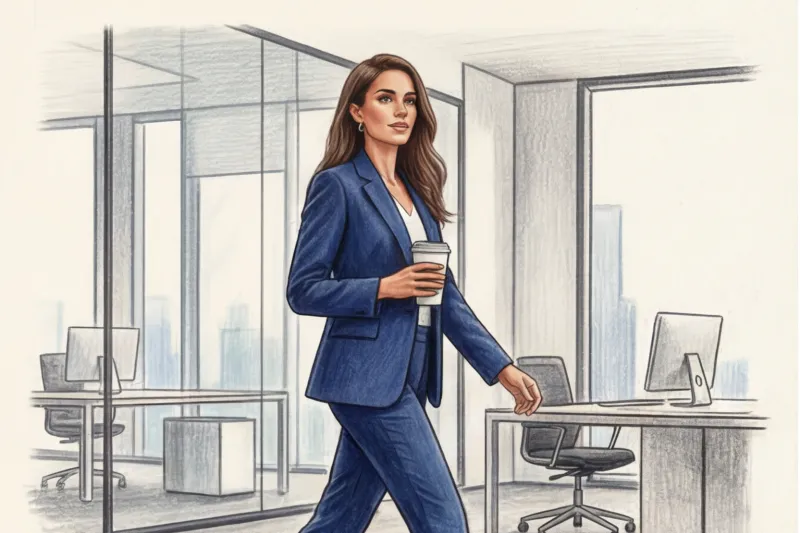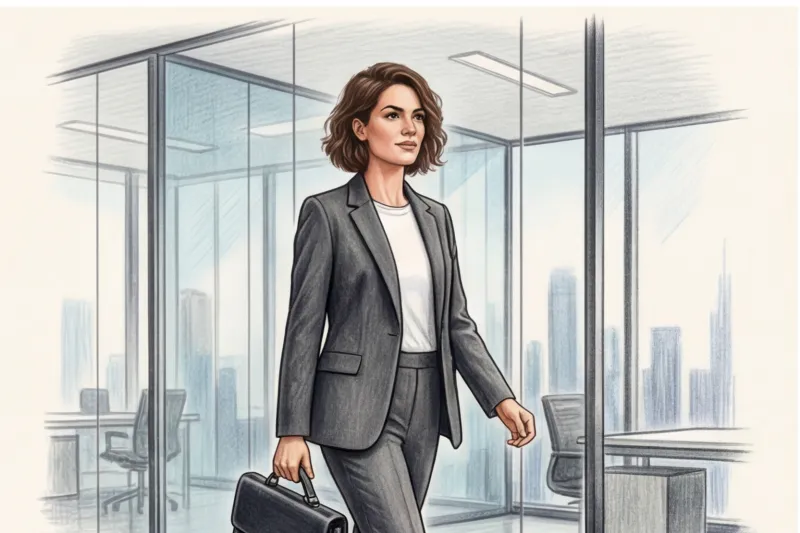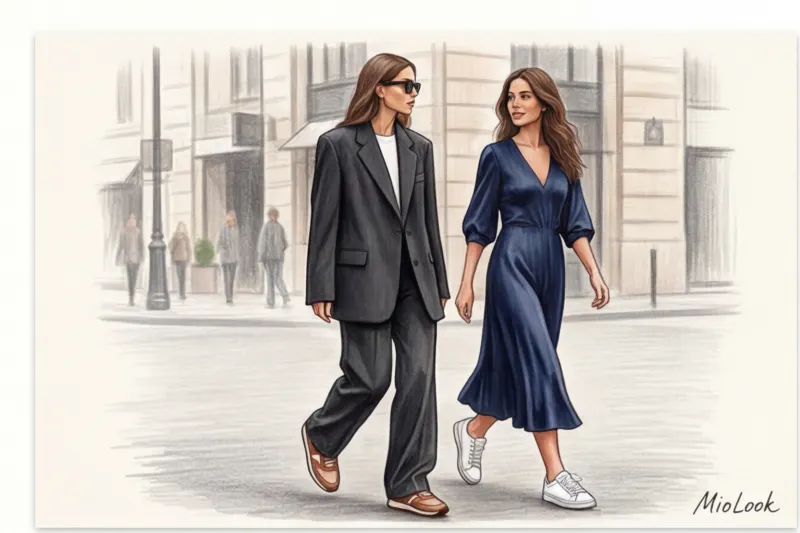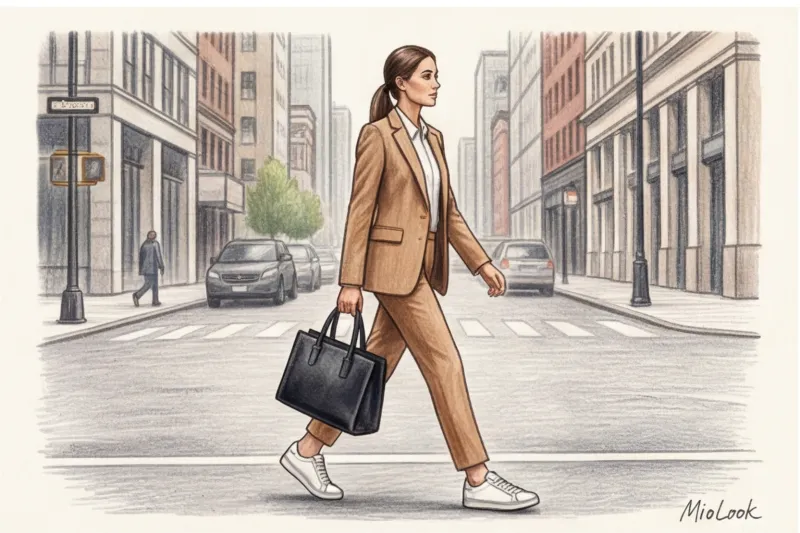
Three years ago, the CEO of a major fintech startup approached me with an unusual request. She spent 10 hours a day on her feet, shuttling between board meetings and informal pitches to investors. Her Jimmy Choo stilettos were causing her physical pain, but she refused to switch to "relaxed casual"—her status prevented it. The solution was a change of footwear. When we skillfully integrated premium leather sneakers into her formal wardrobe, she lost no ounce of authority but gained freedom of movement.
Today it is skillfully stylized women's pantsuit with sneakers The silhouette makes it dynamic, modern, and truly influential. It's no longer a street trend for college girls. It's an investment sartorial technique (from the English word "sartorial" - related to the art of tailoring), where the key role is played by the architecture of the cut and the premium quality of the materials. We discussed the global evolution of this combination in more detail in our The complete guide to what to wear with sneakers.
But why does this combination look like a Vogue cover on some women, while on others it looks like they forgot to change their shoes after a subway ride? Let's explore the anatomy of this complex yet brilliant stylistic technique.
Style Architecture: Why a Women's Pantsuit with Sneakers Often Looks Ridiculous
The biggest mistake I constantly see on the streets of Milan and Moscow is trying to salvage an ill-fitting, outdated suit with trendy sneakers. Remember: sneakers aren't magical. If the pants don't fit well, sneakers will only accentuate the sloppiness.
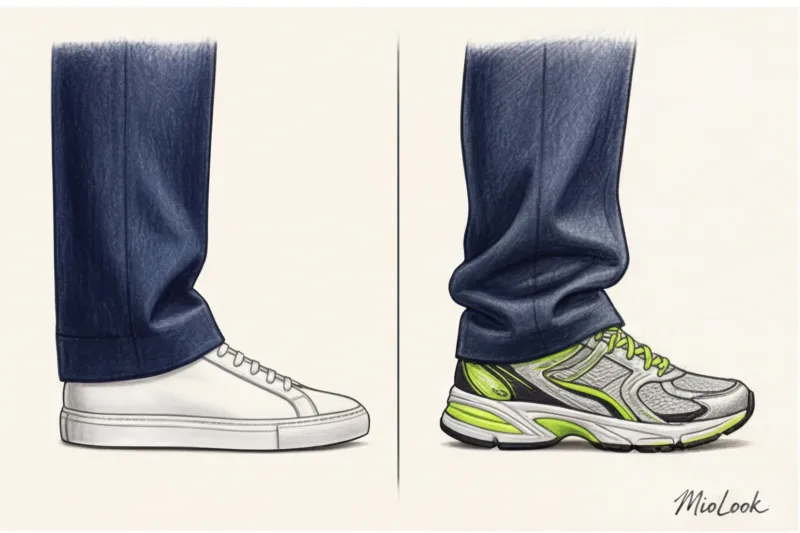
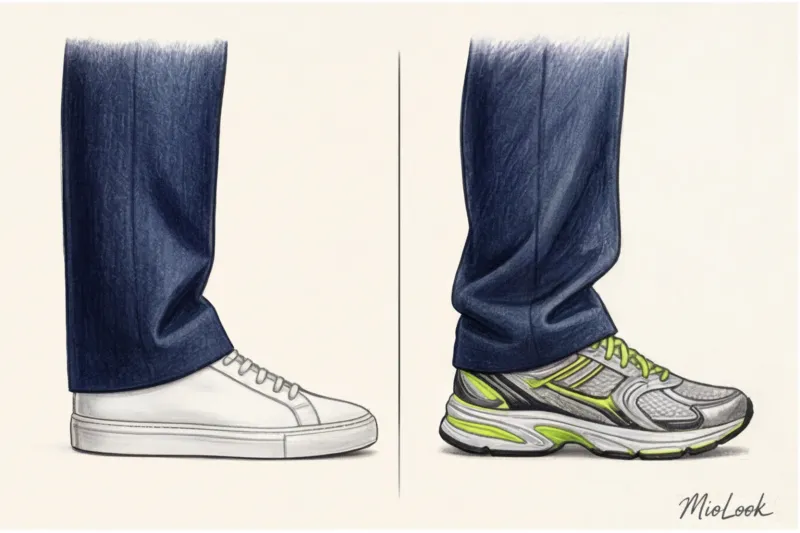
This is where the biggest misconception of recent years lies. Fashion magazines have long convinced us that chunky "ugly sneakers" (dad sneakers with exaggerated soles) make a formal suit ultra-fashionable due to the contrast. As a practitioner, I declare: this is a myth that mercilessly ruins your proportions.
Chunky running shoes with an abundance of detail (mesh, neon inserts, complex tread) have enormous visual weight. When paired with fine wool suit pants, the physics of the fabrics collide. The vertical, perfectly pressed crease line is broken by the sneaker's puffy tongue. The leg bunches up unattractively, visually shortening the legs and transforming an elegant look into a clownish silhouette.
For the suit we need not utilitarian sports shoes (leave Asics and Hoka for the gym), but so-called sartorial sneakers — luxury urban sneakers, created according to the principles of classic footwear.
Access to MioLook for €0.99 — one-time payment
A smart AI stylist will select the perfect look.
Get access — €0.99 onceThe Perfect Pair Formula: What to Invest in for a Status Look
If you want sneakers to look appropriate in an executive office, they must be crafted according to the rules of traditional shoemaking. The difference between mass-market and premium is colossal, and it's instantly noticeable.
Materials and Assembly: Expensive Shoe Markers
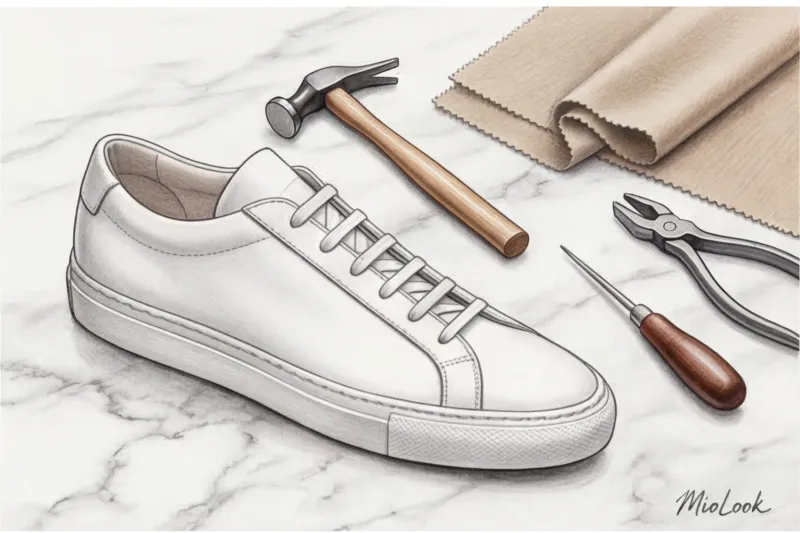
I always ask my clients to pay attention to the inside of their shoes. Cheap sneakers are lined with synthetic mesh, which makes your feet sweat and quickly loses shape. Investment-grade shoes always have a lining made of the finest calfskin.
The exterior should be smooth nappa leather or premium, dense suede. No visible glue at the sole joint—only stitching. Over 12 years of working with premium wardrobes, I've tested the wear resistance of dozens of brands. Smooth full-grain calfskin can withstand the friction of wool trousers for years, while cheap split leather wears out after a month of daily wear.
Silhouette and sole thickness
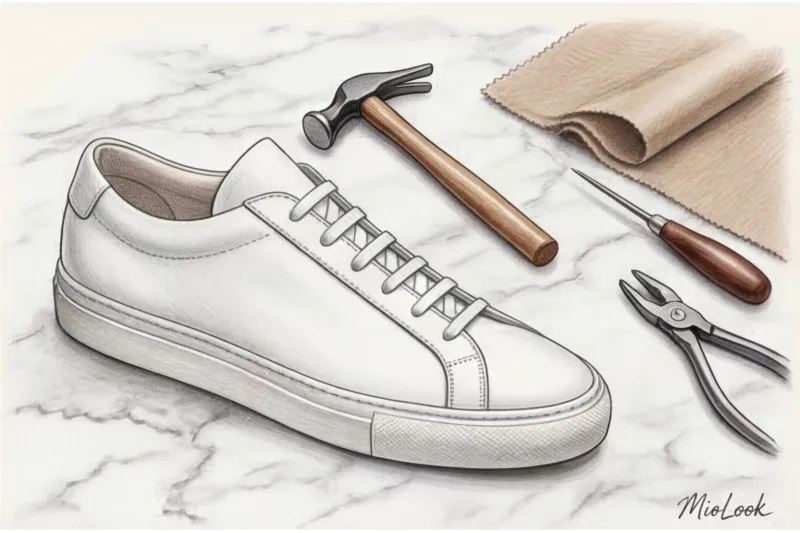
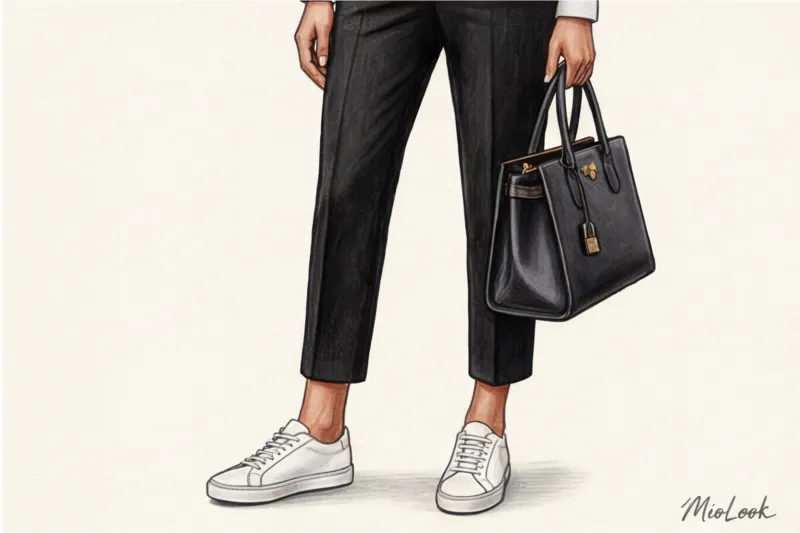
The ideal choice is a minimalist retro silhouette inspired by 70s tennis shoes. The optimal sole height is 2.5–3.5 cm. This is enough to isolate the foot from the pavement and slightly elongate the silhouette, without creating a "hoof" effect.
Note the Margom molded soles—the gold standard of Italian manufacturing. They won't yellow over time or wear out on the heel after a season of driving.
Cut is everything: which suit styles are created for sporty chic
Even the most expensive sneakers won't save your look if you wear them with skinny, mid-calf-length skinny pants and a fitted, cropped jacket. This silhouette is hopelessly outdated and instantly makes you look cheaper.
The secret lies in soft tailoring. A jacket should have a defined shoulder line but be loose enough in the body. We need air between the fabric and the body. If you're unsure whether your current suit meets this criterion, upload a photo of it to MioLook — the algorithm will help analyze the style's relevance and suggest the best styling options.
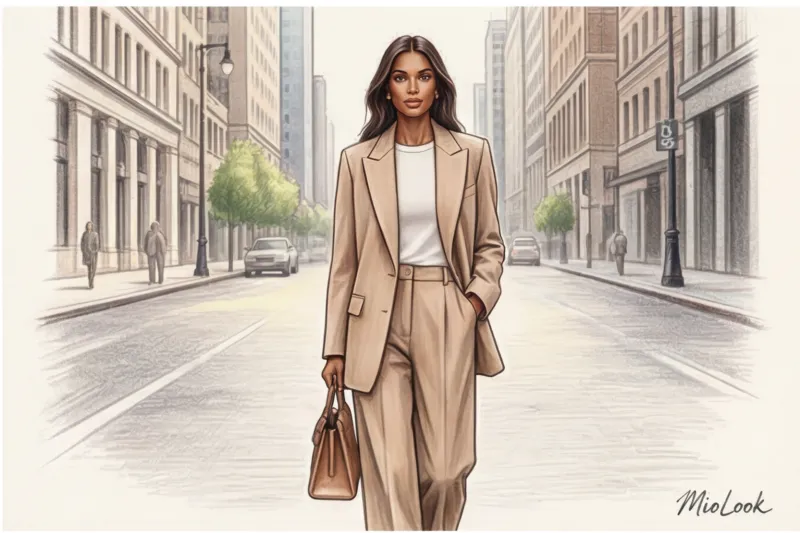
Trouser Length and Width: The Puddle Pants Rule and Cropped Styles
There are two win-win options for trouser lengths to pair with sneakers:
- Wide-leg trousers (Puddle pants): Palazzo pants should be long enough to form a soft fold at the front, resting on the toe of the sneaker, and almost touch the floor at the back. This creates an effect of relaxed, confident luxury. But let's be honest: this rule doesn't work at all during the autumn slush. It's completely unsuitable for rainy weather.
- Cropped straight trousers: They should be loose enough through the hips and end just above the ankle bone. If the pants end higher, they'll cut off your height. If they're lower but still tight, they'll bunch up.
Fabric texture: from wool crepe to flowing silk
The weight of the suit's fabric should match the material of the sneakers. Matte, luxurious fabrics (wool crepe, flannel, cashmere, heavy cotton from 180 g/m²) pair perfectly with smooth leather and suede.
But shiny fabrics (cheap satin, thin polyester) paired with athletic shoes create a dissonance. Gloss calls for elegance, while sneakers are always about grounding.
Your perfect look starts here
Join thousands of users who look flawless every day with MioLook.
Get access — €0.99 onceBusiness Casual: Integrating Sneakers into the Office Dress Code
According to a large-scale study by McKinsey and Business of Fashion (2024), more than 70% of international corporations have permanently abandoned strict footwear requirements for back-office employees. But freedom doesn't mean permissiveness.
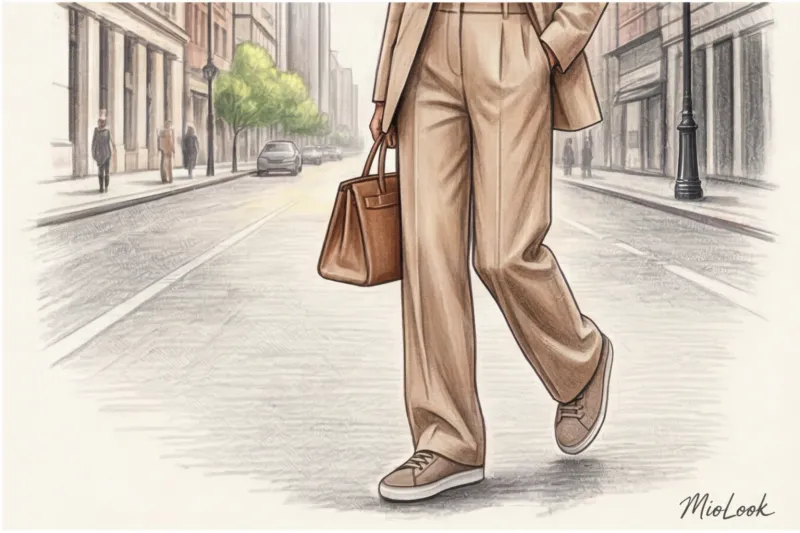
To maintain authority while switching from studs to flats, use one-relaxed-element rule If your shoes are athletic (even luxury sneakers), everything else about your look should be impeccably tailored. Your suit should fit like a glove, the fabric should be luxurious, and your hair should be perfectly styled.
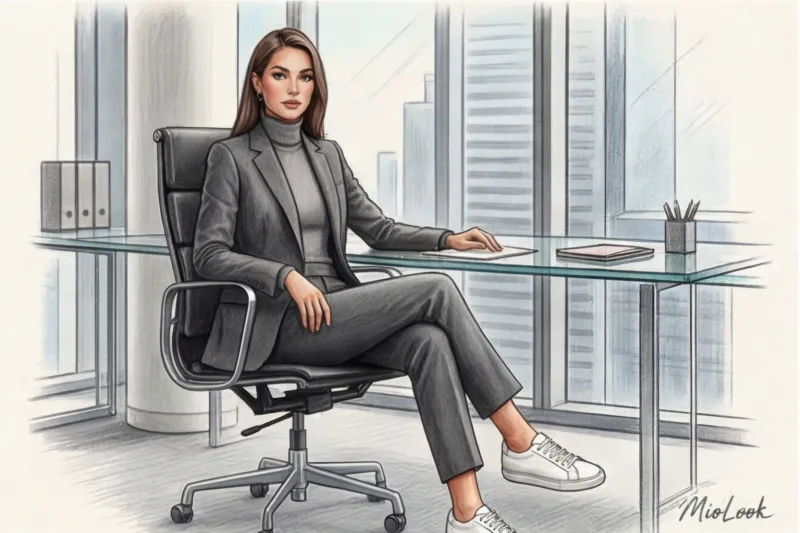
Of course, there are limitations. When signing a multi-million dollar contract with conservative partners or attending a court hearing, I still recommend my clients choose classic loafers or oxfords. Sneakers are a tool for everyday influence, not for formal events.
Color palette: from safe basics to monochrome luxury
White leather sneakers are a versatile canvas. They brighten up any outfit, even the most somber one. However, the ultimate stylistic achievement lies in tonal looks that embrace the aesthetic of "quiet luxury."
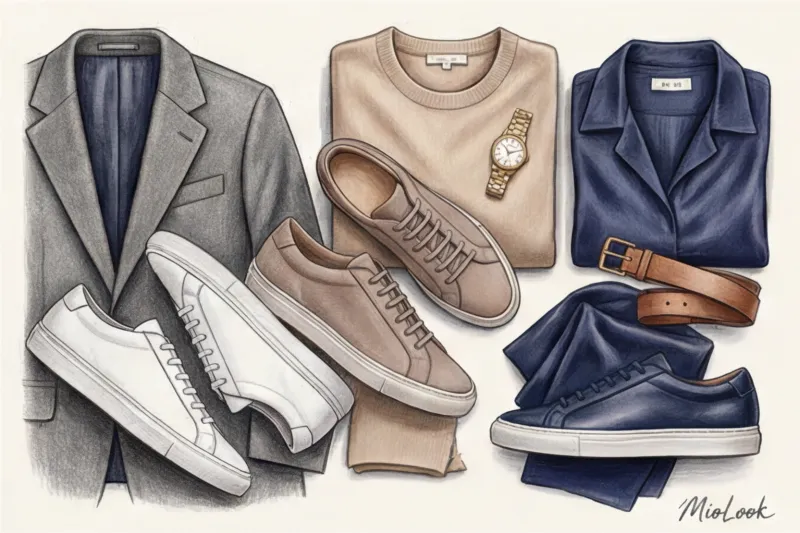
Try matching suede sneakers to your suit. A beige suit and camel sneakers. A navy suit with a sweater and navy leather sneakers with white soles. Monochrome elongates the silhouette vertically and always looks three times more expensive than it actually is.
Contrasting black sneakers with a light-colored suit are a huge risk. They visually "weight down" the foot and look like orthopedic shoes. If you want dark shoes, choose deep chocolate, burgundy, or even navy.
Stylist Checklist: 5 Rules for a Luxury Look with Sneakers
To ensure your look is admired and doesn't raise questions from HR, check yourself against this checklist. You can digitize your wardrobe in MioLook , to make up these combinations in advance and evaluate them before leaving home.
- Absolute purity. Scuff marks on athletic shoes are only acceptable at the skateboarding rink. In the city and at the office, white soles should be dazzlingly white. Keep special melamine sponges and foam for cleaning leather at home.
- Invisible socks. Peeking nylon (especially nude!) or thick sports socks with logos ruin the aesthetic of cropped trousers. Use high-quality socks with a silicone heel insert that are completely hidden inside the shoe.
- Status accessories. The relaxed feel of your shoes needs to be balanced. A structured leather bag with a rigid shape (no soft tote bags) and an expensive watch with a metal bracelet or leather strap will bring the look together.
- Mould holders. Treat leather sneakers like handmade shoes. Insert wooden (cedar) shoe trees into them immediately after taking them off. This will prevent creases at the toe and extend the life of the shoes for years to come.
- The right top. Swap out your classic stiff shirt for a quality basic t-shirt made of thick cotton, a thin merino wool turtleneck, or a silk top. A stiff shirt collar often clashes with the sporty nature of your shoes.
Let's do the math. A pair of premium leather sneakers for $400, with proper care, will last you at least three years. If you wear them 150 days a year, the cost-per-wear is less than a dollar. This is much more cost-effective than buying $80 canvas sneakers from a mass-market store and throwing them away every three months because they lose their shape.
Wearing a suit with sneakers isn't about laziness or sacrificing elegance. It's about a new form of control over your time, comfort, and style. Choose the right textures, pay attention to the architecture of the cut, and you'll see how the way you feel changes.