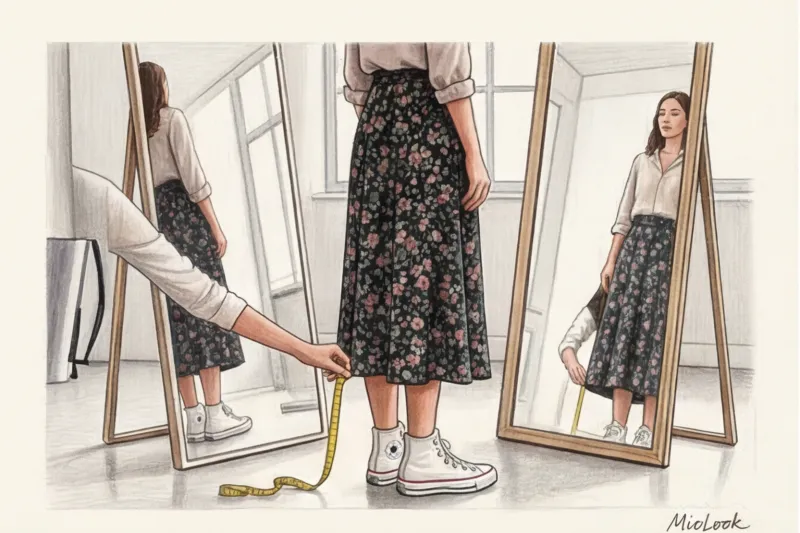
During a wardrobe review in Warsaw, my client Anna decisively tossed three pairs of nearly new Converse Chuck 70s into the "disposal" box. "They make me look like a gnome," she declared categorically. The problem wasn't the shoes, but the skinny jeans she carefully tucked in to "show off the sneakers." Once we swapped the jeans for wide, just-right-length palazzos, the "gnome" instantly transformed into a woman with endless legs.
If you too regularly search for an answer to the question, What to wear with women's high-top sneakers To avoid looking half a meter shorter, this article is for you. We've already discussed basic combinations of athletic shoes with classic ones in our The complete guide to styling sneakers with dresses and suits , but high-top models require a completely different, almost mathematical precision in proportions.
Over 12 years of working as a personal stylist, I've developed clear formulas for working with these types of shoes. Forget the clichéd advice from the glossy magazines of the 2000s—today we'll explore the mechanics of visual weight and the "micro-gap" rule.
Why high-top sneakers cut down on height: the anatomy of proportions
To understand how to "defuse" high-top shoes, you need to understand how our eyes perceive silhouettes. The standard shaft height for high-top sneakers, across most mass-market and premium brands, is between 11 and 14 centimeters. Ironically, this is precisely where the narrowest and most graceful part of a woman's foot—the ankle—is located.
When the edge of a contrasting sneaker cuts across this area, a hard horizontal line is created. According to research by the London College of Fashion (2023) on the visual perception of clothing, a contrasting horizontal line at the ankle visually "cuts off" 5 to 7 centimeters of height. The eye perceives the length of the leg not from the hip to the floor, but from the hip to the top of the shoe.
This is where the concept comes into play visual weight I personally tested them in front of a mirror: classic, thin Converse Chuck Taylors and chunky Nike Blazer Mid basketball shoes perform dramatically differently on the same figure. Thin sneakers hug the foot and have a low visual weight, while puffy sneakers weigh down the bottom, requiring a more voluminous upper for balance.
"In styling, we always rely on the golden ratio (the ratio of 1/3 to 2/3). If you wear high-top sneakers with breeches or a knee-length skirt, you're dividing your figure into a 1/1/1 ratio. This is guaranteed to break up any woman's silhouette, regardless of her actual height."
Access to MioLook for €0.99 — one-time payment
A smart AI stylist will select the perfect look based on your proportions.
Get access — €0.99 onceThe biggest style myth: why you shouldn't tuck jeans into sneakers
Perhaps the most harmful piece of advice still floating around online is the recommendation to tuck skinny jeans into high-top sneakers to "show off the shoes in all their glory." When I'm shopping with clients, I explicitly forbid this practice.
Why doesn't this work? It creates the "pencil-in-a-cup" effect. The wide, padded shaft of the sneaker creates a massive base from which the leg, clad in skinny denim, juts out. This stark contrast in volume paradoxically makes the hips appear wider and the legs shorter. You're voluntarily placing emphasis on the ankle, which weighs down the entire lower body.
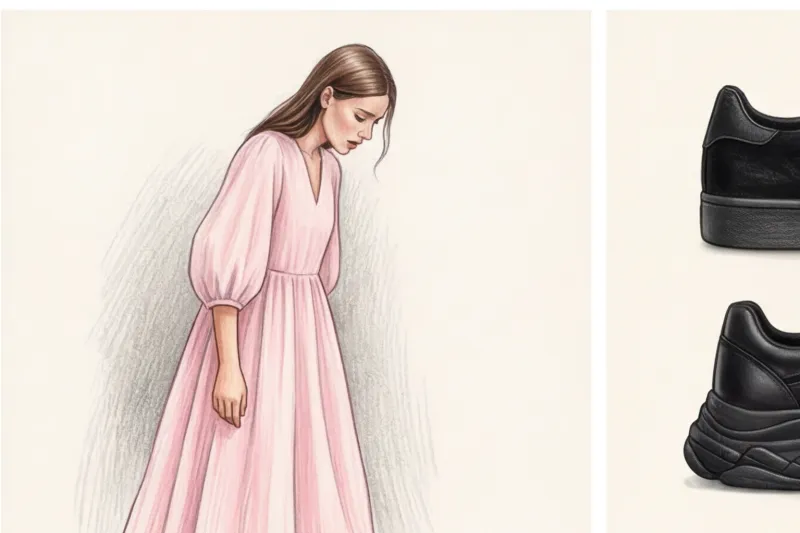
I must admit, this rule has its one exception This technique only works if you create a continuous monochrome vertical line: black matte leggings with black suede or leather high-top sneakers. In this case, the line is blurred, and the leg appears as a single line.
The "Micro-Gap" Rule: How to Wear High-Heeled Sneakers with Skirts and Dresses
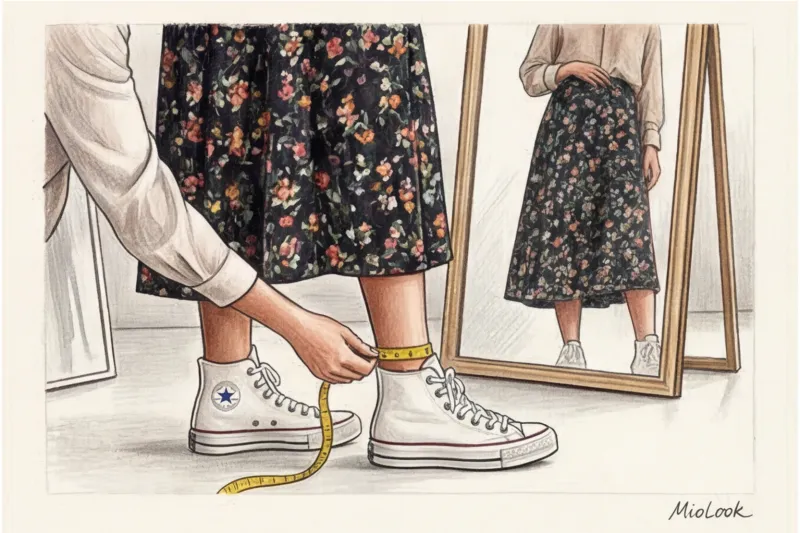
If you want to wear high-tops with skirts, you'll need to master the signature "micro-gap" rule. It's simple: to maintain height, the hem of your skirt should either overlap your shoes or leave exactly 2-4 centimeters of bare skin.
No 10-15 centimeters of exposed calf! If there's a wide strip of skin between the edge of the skirt and the top of the sneaker, the leg is visually chopped into three blocks: skirt, calf, and shoe. This instantly makes the figure appear squat.
Midi and maxi lengths: an elegant balance
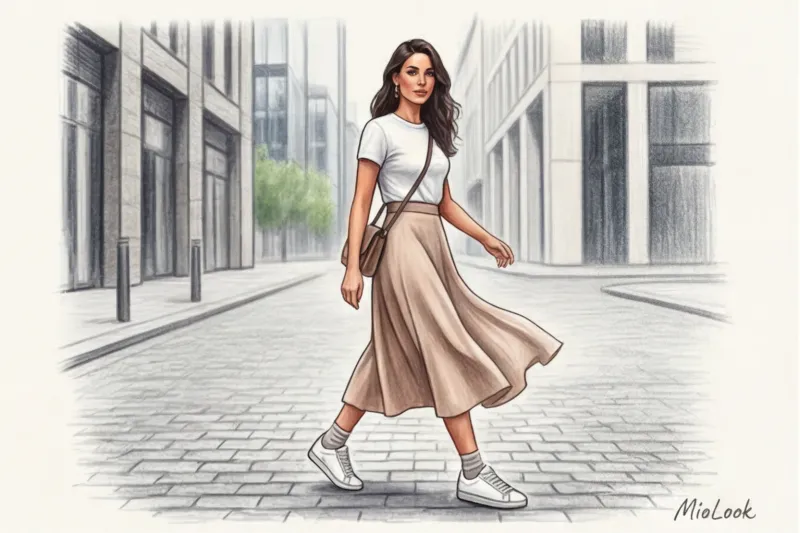
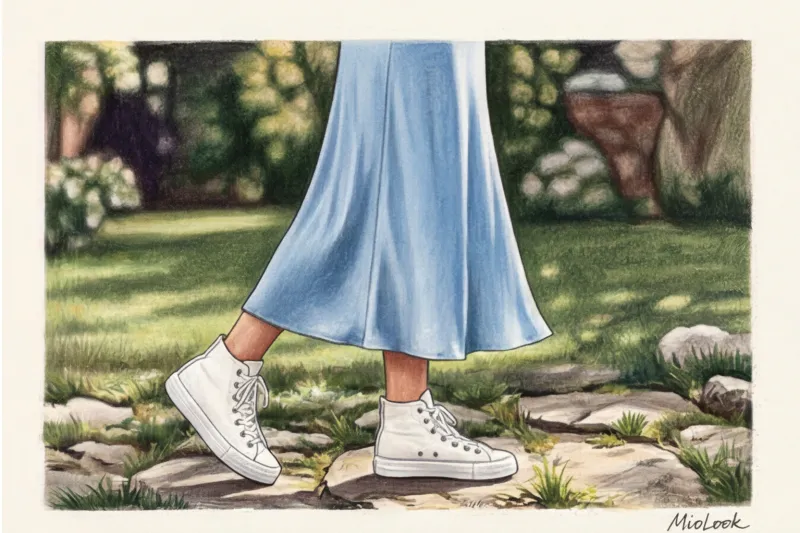
The roughness of athletic shoes is best offset by the texture of the fabric. Choose flowing materials: heavy silk, satin, or viscose with a density of at least 180 g/m². A slip skirt that ends exactly where your Converse begins is the perfect basic uniform.
A great life hack is skirts with a deep slit up the leg. The slit creates a dynamic vertical line when walking, which counteracts any heaviness in the ankle area.
Your perfect look starts here
Join thousands of users who look flawless every day with MioLook.
Get access — €0.99 onceMini: The Danger Zone and How to Tame It
The combination of a miniskirt and high-top sneakers often looks childish, reminiscent of the American cheerleader style. If you're over 25 and want to look classy, you need to tone down this combination.
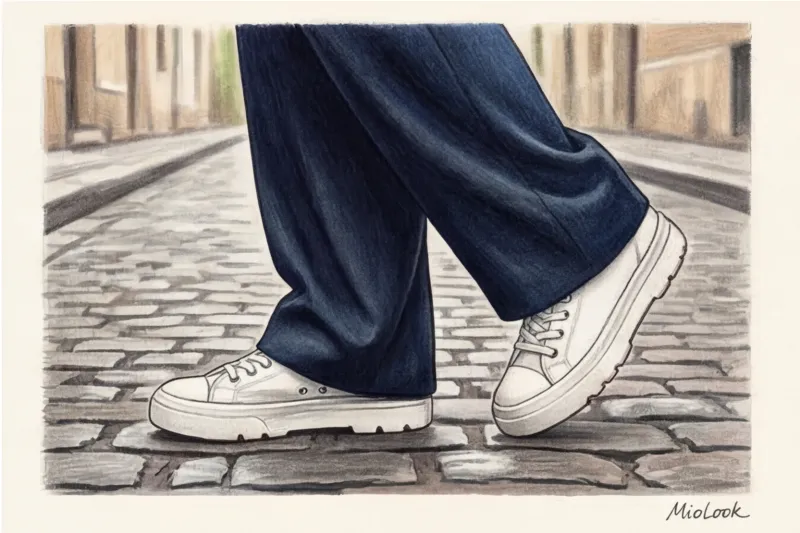
Wear thick tights that match your shoes. Another option for the warmer season is to wear high ribbed socks that extend 2-3 centimeters over the top of your sneaker, creating a smooth transition from your wide sneaker to your narrow foot.
Trousers and Jeans: 3 Win-Win Formulas for Long Legs
If you don't want to count inches of bare skin, switch to trousers. Here are three tried-and-true formulas I use when choosing a wardrobe for brands like COS, Massimo Dutti, and & Other Stories.
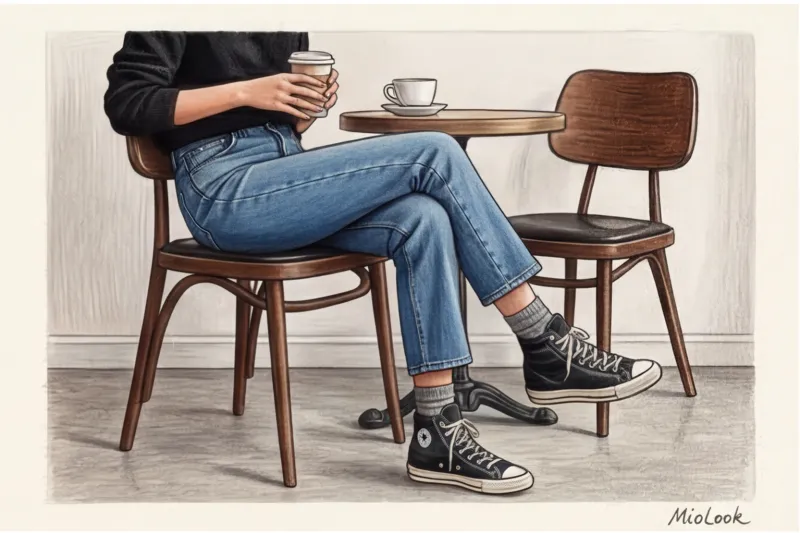
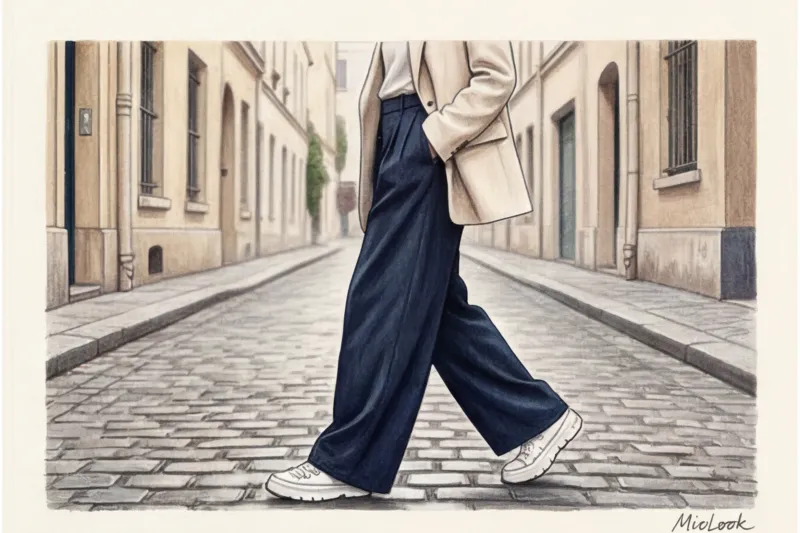
Formula 1: Palazzo to the floor.
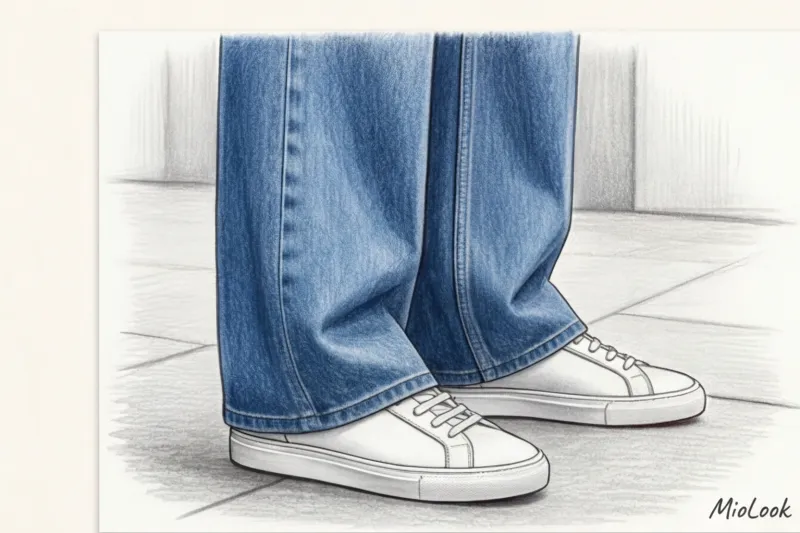
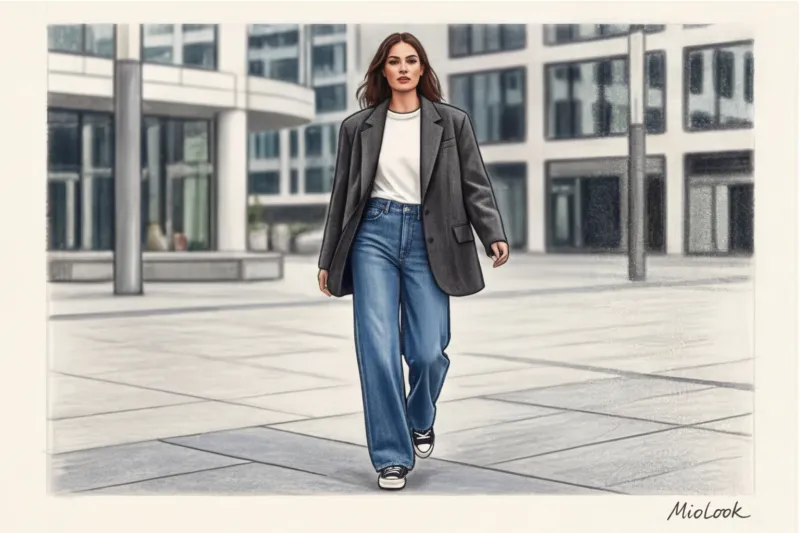
High-waisted, wide-leg pants should cover two-thirds of the sneaker, leaving only the toe and the bottom of the laces visible. This is the most powerful leg-lengthening tool. The fabric should be suiting and hold a crease well.
Formula 2: Straight cropped jeans.
Styles like Levi's Ribcage or Zara Marine Straight. The ideal length is when the hem is raw or hemmed. barely touches The top edge of the shoe, without creating an accordion. If your jeans are longer, feel free to cut them off with scissors; light fringe is trendy right now.
Formula 3: Trousers with slits.
Split-hem pants are a brilliant design invention. They allow you to show off beautiful shoes, but the front half of the leg rests on the toe of the sneaker, maintaining a continuous vertical line.
If you are unsure about the length and fit of trousers that will suit your body type, upload a photo of your items to the "smart wardrobe" feature in MioLook Artificial intelligence will analyze proportions and suggest ready-made combinations from what's already hanging in your closet.
High-top sneakers: what to wear with women's models in the cold season
In European (and especially northern) autumn and winter, high-top sneakers are a lifesaver—they're simply warmer. However, incorporating them into layered looks requires caution.
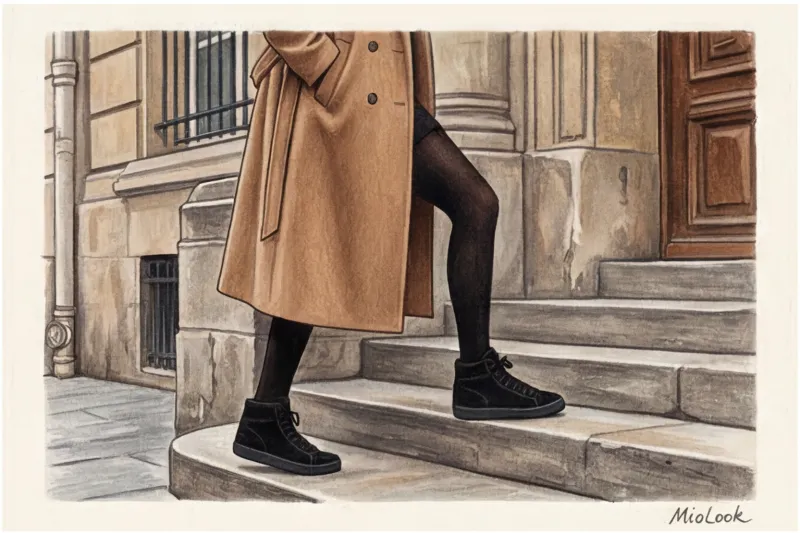
The biggest mistake of the cold season is the combination of bulky high-top sneakers, skinny jeans, and a short puffer jacket. This combination turns your figure into a "square on thin legs with weights underneath."
How to do it right:
- The One Color Rule: Opaque tights in 80-100 denier should be chosen to match the shoes exactly. Black sneakers and black tights create the illusion of endless legs.
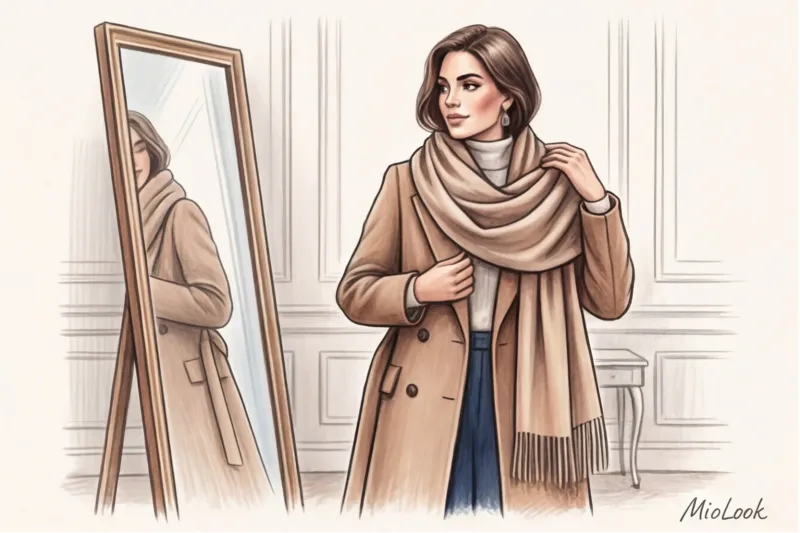
- Length of outerwear: A coat or trench coat should be below the knee (ideally midi-length). A long, open coat creates two strong vertical lines on the sides of the figure, which elongate the figure, even if you're wearing chunky shoes.
- Smart casual: For a more relaxed office dress code, pair minimalist leather high-tops with a loose-fitting three-piece wool suit.
Ready to get started?
Try the free plan—no strings attached, no hidden terms.
Get access — €0.99 onceA stylist's checklist: buying the right high-top sneakers
My approach to shopping is pragmatic: every item should be 100% worth its price. Before taking a pair to the checkout, check it against three criteria.
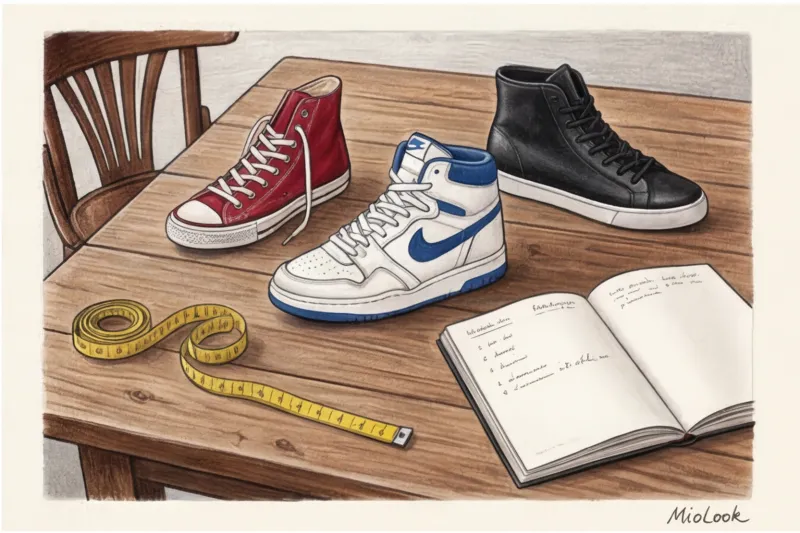
- Shaft width. It should fit snugly around the ankle (like a sock), not stick out like a flared sock. A wide shaft visually thickens the foot. If you can fit more than two toes between your foot and the top of the shoe, it's not the right fit.
- Thickness of the sole. High-heeled models can take away some height, so it's logical to compensate with a platform. A 3-4 cm sole (like the Converse Run Star Hike or Veja models) will give you back those lost inches.
- Shoe color. Pure white and charcoal black sneakers create maximum contrast with your skin. If you're petite, consider beige, light gray, or olive shades—they blend more smoothly with your skin tone and aren't as sharp.
Summary: Creating a harmonious look without losing height
Working with high-top sneakers is always a balancing act of volume and lines. You don't have to be a 6'1" model to wear these shoes stylishly. Just control the horizontal lines.
Before leaving the house, do a quick check-up in front of the mirror:
- Are your skinny trousers tucked into your shoes? (If so, loosen them immediately or replace them with wider ones.)
- If you are wearing a skirt, is the "micro-gap" of 2-4 cm observed?
- Is there a long vertical line in the look (an unbuttoned jacket, a long coat, creases in the trousers) to compensate for the massive bottom?
Don't be afraid to experiment. Take out those pieces you usually wear only with heels—silk skirts, tailored suit pants—and try them with high-top sneakers. You'll be surprised how fresh and modern your usual wardrobe can look with just the right lengths.