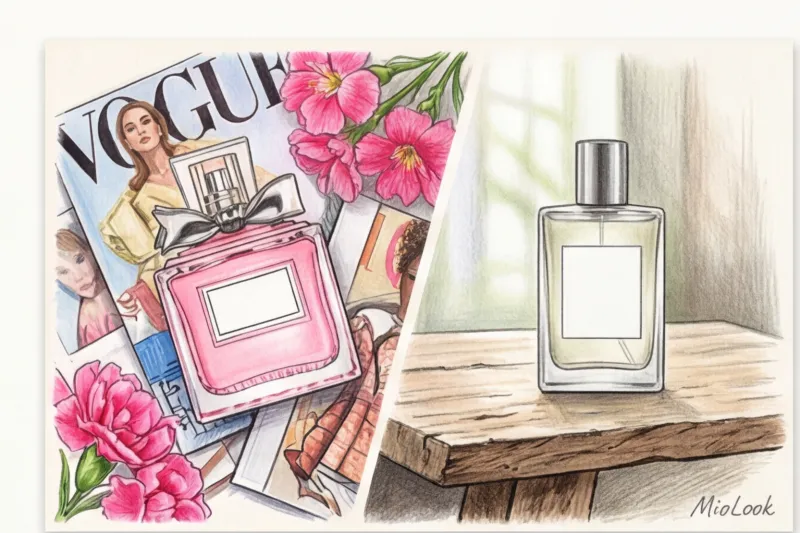
Last month, Anna, a top manager at an IT company, came to me for a wardrobe review. She'd blind-bought a bottle of a smash-hit perfume for 300 euros, swayed by the raves of influencers. In reality, the scent of heavy burnt caramel and medical bandages clashed completely with her soft, "Great Guy" archetype and cozy Loro Piana cashmere sweaters. It looked as incongruous as if she'd worn a massive diamond necklace with a fleece tracksuit. It was expensive, but in the context of her look, it was devastating.
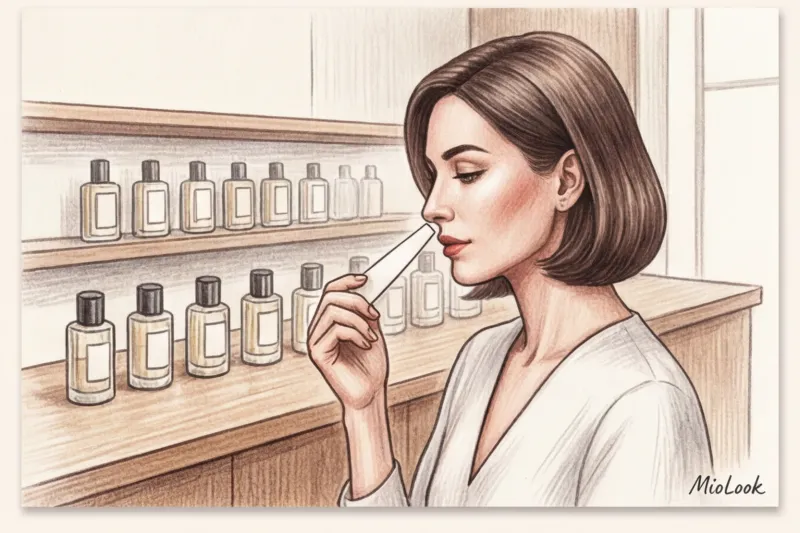
Often during consultations, clients ask me the same question: What is niche perfumery? — a genius marketing ploy to extract money or a genuine impression management tool? As a practicing stylist, I view fragrances not as "art for art's sake," but as an invisible yet powerful accessory to a smart wardrobe. We've covered the architecture of personal style in more detail in our the complete guide to finding your perfume "I".
Niche Perfumery: What It Is and Why Everyone's Talking About It
Let's get the wheat from the chaff right off the bat. The main difference between niche (or selective) fragrances and traditional luxury brands like Chanel or Dior lies in the very approach to creation. Luxury brands target a mass audience: before releasing a fragrance, they conduct dozens of focus groups to ensure the composition appeals to millions of women from Tokyo to New York. It's a commercial product.
A niche is created without regard for trends. The perfumer is given complete creative freedom and carte blanche to use rare ingredients. There's no goal here to "please everyone." On the contrary, a conceptual fragrance can be off-putting, intriguing, and evoke complex associations.
According to The Fragrance Foundation, niche segment sales are growing at double-digit rates for 2023. Why? We're simply tired of smelling like everyone else. In a business environment where dress codes are often standardized, signature scents have become a new, subtle indicator of status. You could be wearing a simple suit from Zara, but a hint of a rare, woody fragrance will instantly elevate your look to the premium category.
The Anatomy of Price: What Are We Paying for When We Buy a Niche?
I love numbers and always encourage my clients to shop pragmatically. Let's break down the cost of a typical perfume bottle. In the luxury segment, up to 80% of the price you see at the checkout goes toward marketing: fees for Bella Hadid or Johnny Depp, massive TV commercials, and the development of complex bottle designs. That leaves precious little for the juice itself.
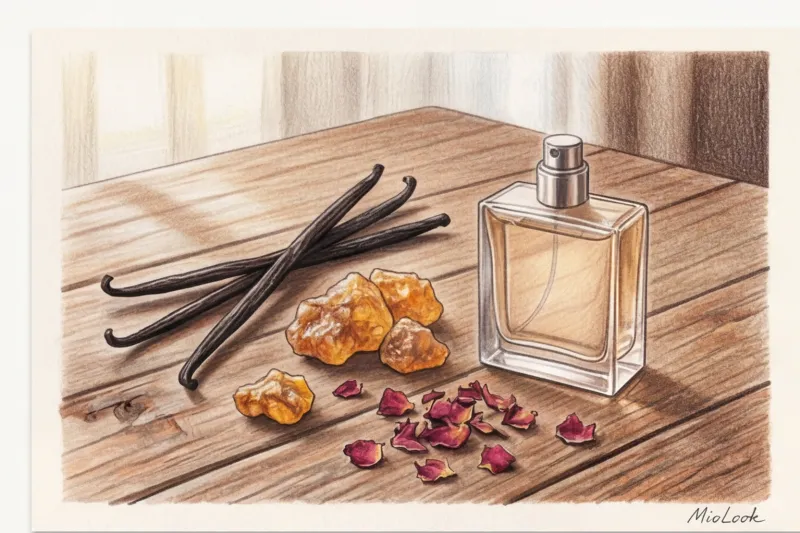
In a niche, the budget is distributed differently. The focus is on the raw materials and the perfumer's creative work. You pay for Grasse rose absolute, oakmoss extract, or innovative molecules, not for an actress's face on a billboard.
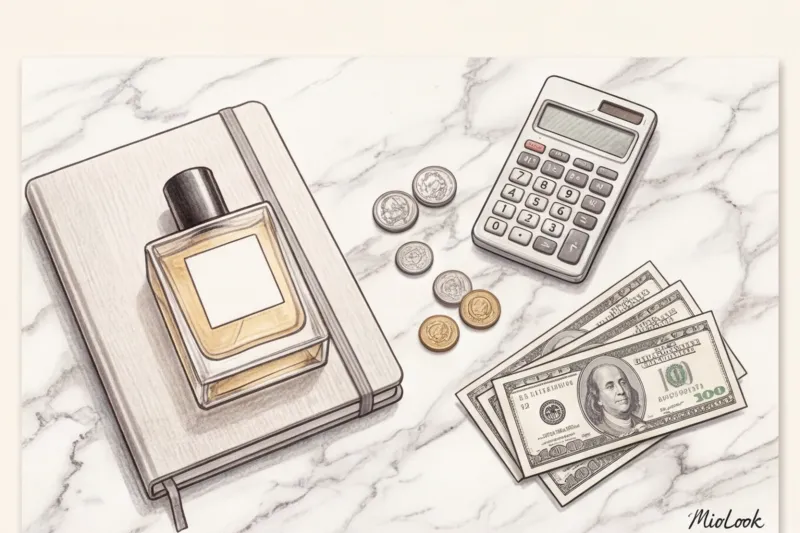
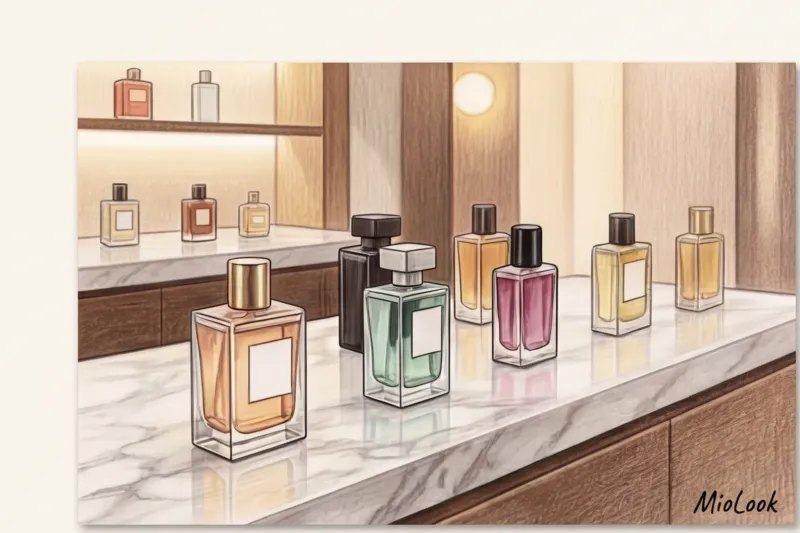
Have you noticed that niche giants like Byredo, Le Labo, or Jo Malone all have identical bottles? This isn't just a nod to minimalism. Unifying packaging allows brands to save millions on glass mold production and redirect those savings into the bottle itself. Furthermore, niche fragrances are released in limited quantities due to the specific vintage—like fine wine.
Access to MioLook for €0.99 — one-time payment
A smart AI stylist will select the perfect look based on your perfume wardrobe.
Get access — €0.99 once5 Major Niche Fragrance Myths You Should Stop Believing
Over 12 years of working with wardrobes, I've collected a whole collection of stereotypes that make women afraid to approach the selective shelves. Let's debunk them.
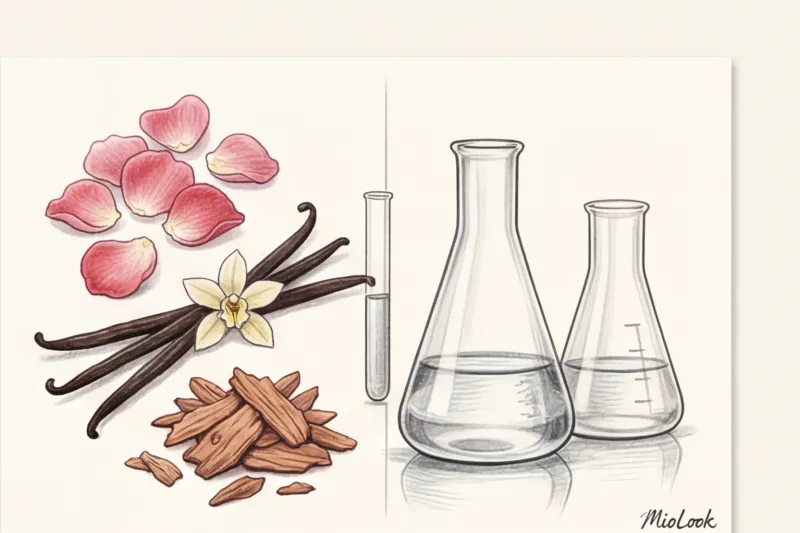
- Myth 1: “A niche is always 100% natural.” The biggest misconception. All-natural perfumes often smell like a dusty pharmacy and cause terrible allergies. The modern niche is a triumph of chemistry. Synthetic molecules (Iso E Super, ambroxan, aldehydes) make compositions long-lasting, voluminous, and safe. Geza Schoen, with his Escentric Molecules line, has built an empire on a single synthetic note.
- Myth 2: “It’s bound to be incredibly expensive.” If you're buying full-size 100 ml bottles blind, yes. But smart shopping dictates different rules: brands are releasing discovery sets (miniatures of 2-5 ml each). You buy a set for 30-40 euros and test the fragrances for weeks.
- Myth 3: “They smell strange – like asphalt, burnt rubber, or a basement.” Yes, outrageous brands like Etat Libre d'Orange can release a fragrance with the scent of blood and metal. But 90% of the niche is stunningly beautiful, straightforward compositions. Try the crystal-clear Blanche by Byredo, which smells like freshly washed cotton in the cold.
- Myth 4: “A niche always lasts for days.” Longevity depends not on price or brand status, but on the physics of the ingredients. Any citrus notes (bergamot, lemon) evaporate from the skin within 2-3 hours simply due to their light molecular weight. But resins, woods, and musk will linger for up to 12 hours.
Why the male/female divide no longer works
Niche perfumery doesn't have labels like "Pour Homme" or "Pour Femme." The concept of gender is blurred here, because a scent interacts not with your passport, but with your skin chemistry. On a hot man's skin, a rose might reveal itself as a brutal metallic scent, while on a cool woman's skin, it's a delicate powder.
I often use this technique with my executive clients: we pair a formal pantsuit with a scent featuring notes of tobacco, vetiver, or cedar. It works flawlessly: woody notes subconsciously convey authority, grounding, and confidence, eliminating any excess softness.
The Invisible Accessory: How to Incorporate a Niche into Your Look and Wardrobe
Clothes and perfume should work in synergy. Imagine: you're wearing an impeccably tailored, structured Saint Laurent jacket, a sturdy tote bag, and... the frivolous, cloyingly sweet scent of strawberry jam. Cognitive dissonance occurs. Those around you perceive a discrepancy.
"Fragrance is an invisible jacket. It assembles your image and begins to speak for you even before you open your mouth in a negotiation."
Here's my tried-and-true cheat sheet for integrating fragrances into capsule wardrobes:
- For strict negotiations (Business Formal): Choose dry woody notes, vetiver, iris, and black pepper. They create an invisible distance, conveying composure and focus. They pair perfectly with thick wool suits and starched shirts.
- For networking (Smart Casual): The goal here is to create a sense of belonging without violating personal boundaries. Molecular fragrances, notes of fig, suede, and green tea work well. They feel close to the skin, creating an aura of well-groomedness.
- For evening outings: Time for drama. Tuberose, incense, rich gourmand, patchouli. These notes call for velvet, silk, open shoulders, and subdued lighting.

By the way, when you plan your looks for the week MioLook app , make it a rule to include the intended scent in the outfit description. This disciplines you and helps you perceive the style holistically.
A Beginner's Guide: Which Brands to Get Started With
Don't dive straight into complex indie perfumes with notes of burning peat. Start with brands that serve as the perfect bridge between luxury and niche. Their compositions are unusual, but not shocking.
- Jo Malone: A British classic. Clear, transparent fragrances that can (and should) be mixed.
- Byredo: Swedish minimalism. Perfect for a basic wardrobe in the style of COS or Massimo Dutti.
- Diptyque: The intellectual French school. Subtle, natural, intelligent compositions.
- Juliette Has a Gun: Bold, modern, and largely molecular-based fragrances.
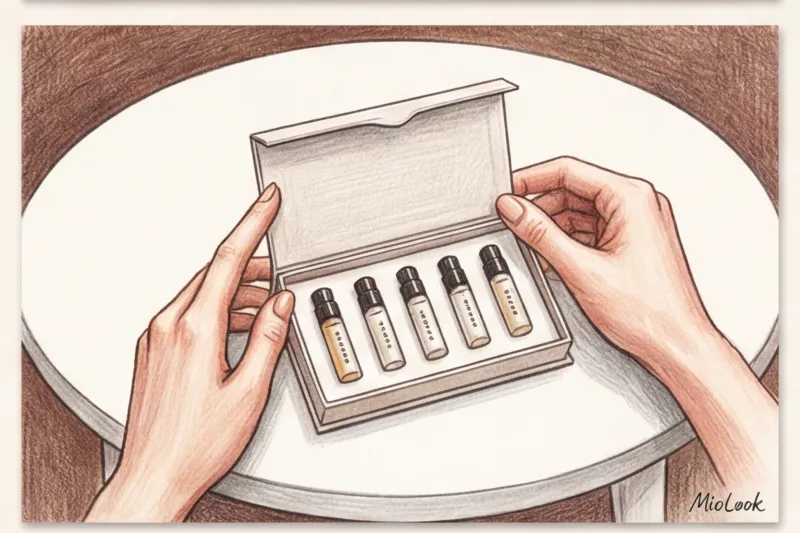
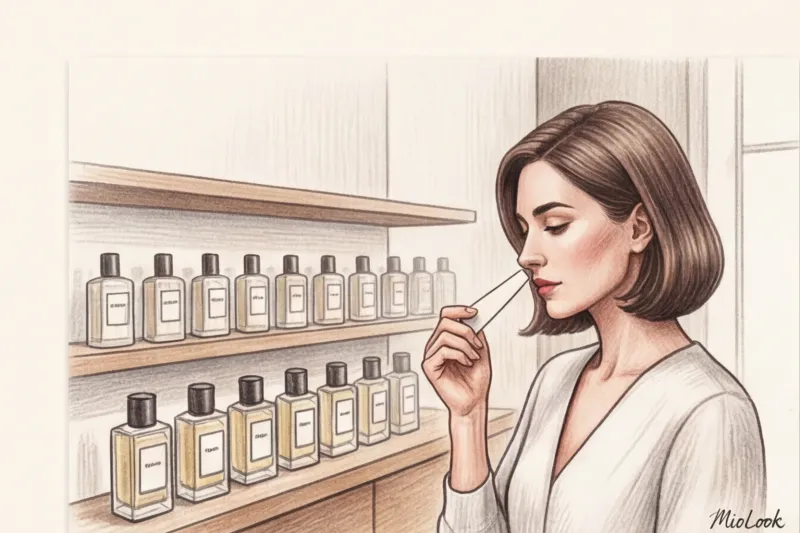
I always insist on the "3-Day Rule." Never buy a full-size bottle after the first test in the store. What captivated you in the first 15 minutes (the top notes) can turn into a suffocating base note within three hours. Order the Discovery Set, spray the fragrance in the morning, live with it throughout the day, and then shower. If you're already reaching for the sample on the third morning, it's your match.
Your perfect look starts here
Join thousands of users who look flawless every day with MioLook, combining clothes and fragrances.
Get access — €0.99 onceChecklist: 4 Fatal Mistakes When Testing Perfume
How often do I see the same scene in boutiques: a woman sprays perfume generously on one wrist and then begins vigorously rubbing it with her other wrist. This is the biggest pet peeve of all perfumers.
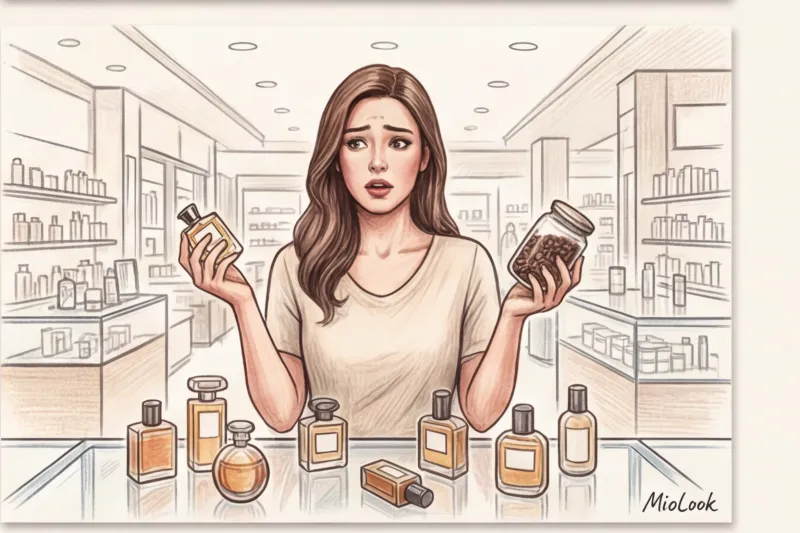
Save this checklist to avoid wasting money:
- Mistake 1: Rubbing on the skin. Friction heats the skin and literally "breaks" the fragile molecules of the top notes. The scent is distorted. The correct solution: apply and let dry naturally.
- Mistake 2: Testing marathon. Our brain can adequately analyze a maximum of 3-4 complex compositions at a time. After that, olfactory blindness sets in—everything blends into a single hum.
- Mistake 3: Smelling coffee beans. This is a myth from the 90s. Coffee is a powerful olfactory shock, which only further overloads the receptors. Want to "clear" your nose? Take a sip of clean water or breathe in some fresh air.
- Error 4: Rating only from the blotter. Paper is dead. It has no temperature, no sweat, no lipid layer. The scent on a blotter and on your neck are two different stories. Fair warning: this rule has one exception. Molecular perfumes (for example, Escentric 02) often smell completely scentless on paper; they vitally require body warmth to develop.
Summary: Building Your First Perfume Wardrobe
The idea of finding "one scent for life" is hopelessly outdated. We don't wear the same dress to the office, on a date, and to the country. Based on Michael Edwards' classification (creator of the famous Fragrance Wheel), I recommend my clients build a basic fragrance wardrobe using the "Three Pillars" formula.
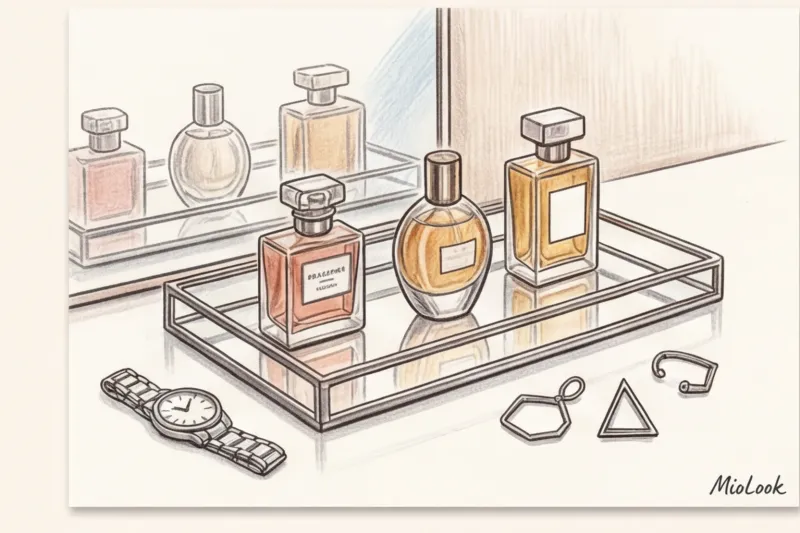
You will need: one cocoon scent for work (neutral, non-distracting, collected), one scent for the weekend (relaxing, brings joy to you personally) and one statement scent for evening outings (sillage, complimentary).
Your practical step for today: take stock of your perfume shelf. Remove any you haven't used in over a year. Then choose one of the guide brands and order a sample set. Treat your fragrance selection as thoughtfully as you would the perfect coat—and you'll see how it changes the way you feel.