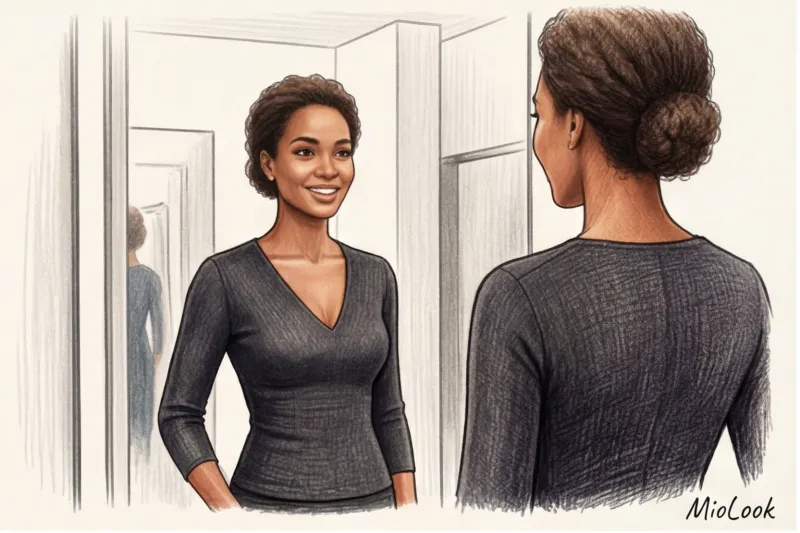
Three years ago, a client came to me—the CFO of a large IT company. She confessed that in her entire career, she had never worn a classic, formal shirt to work. The reason was painfully familiar to many women with a D+ cup: the buttons on her chest were treacherously separating. Buying a shirt a size larger didn't solve the problem—the shoulder seam was slipping down, making her look baggy. We found the solution not in the blouse department, but in the lingerie fitting room.
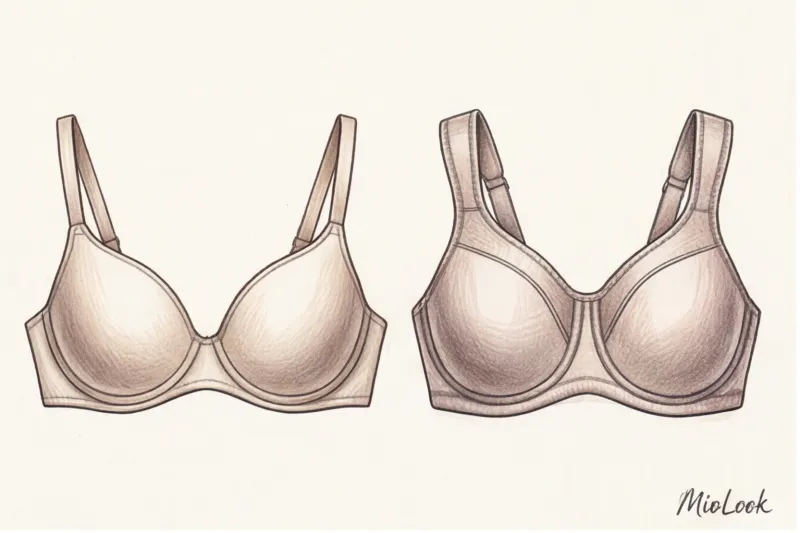
We just found the right sconce. Not a classic one, though, but a special one. If you've ever searched for information on What is a minimizer bra? , you've probably seen advertising promises like "it will reduce your bust by two sizes." As a stylist, I can tell you right away: this is marketing hyperbole. Lingerie can't dissolve volume into thin air. But it can intelligently redistribute it, creating a smooth foundation for your clothes. We discussed the architecture of a basic lingerie wardrobe in more detail in our The Complete Guide to Shapewear for Plus Size Women: Stylists' Advice.
Minimizer bra: what it is and how it actually works
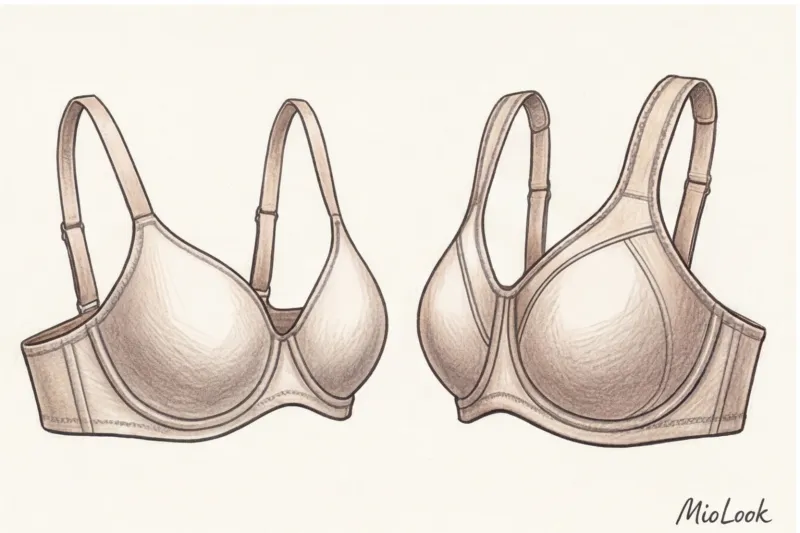
Let's break down the physics of the process. A minimizer isn't a compression sports bra that mercilessly flattens the bust, cutting off circulation. It's a complex engineering design with a special cut. The minimizer's main function is to remove volume from the front (the so-called "projection" of the bust) and gently shift it to the sides and upward.
This is achieved through the design of the cup. Standard balconette or plunge bras use U-shaped underwires that push the breasts forward and create cleavage. A minimizer bra uses a wide, open "C"-shaped underwire, enveloping a larger area of the chest. As a result, the profile projection of the bust is visually reduced by 2-3 centimeters—roughly one full cup size.
According to a 2023 study by British brand Marks & Spencer, more than 80% of women try to visually reduce their breasts in the most destructive way: by buying a classic bra one size smaller.
What happens when you go for a C cup instead of a D? The underwire digs into the soft tissue, causing your breasts to spill over the edge (the "quadruple breast" effect), and deep folds form in your back. A minimizer, on the other hand, maintains your actual cup size but distributes it over a larger area.
Your perfect look starts here
Join thousands of users who look flawless every day with MioLook. Digitize your wardrobe in minutes.
Get access — €0.99 onceWho really needs a minimizer, and who is contraindicated for it?
Now here's the hard truth that store consultants rarely tell you: minimizers aren't for everyone. Because they redistribute breast volume from the center to the underarms, your chest inevitably appears wider from the front.
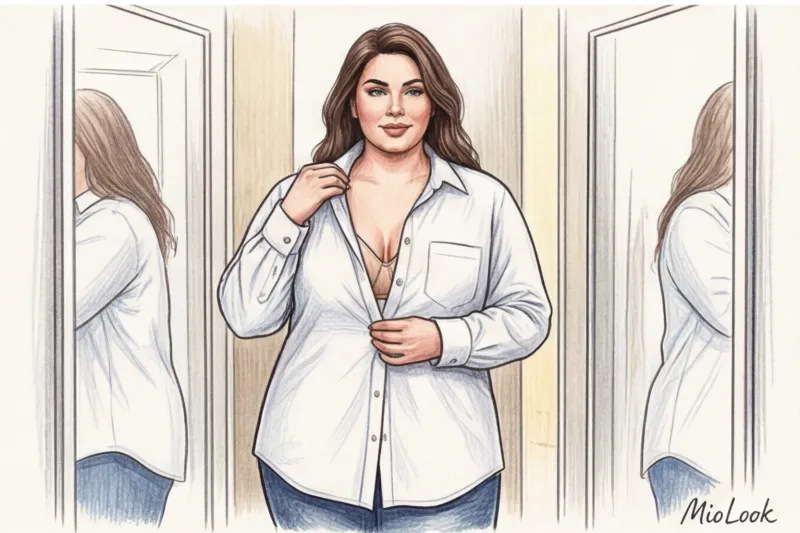
If you have an inverted triangle body shape (narrow hips, slender legs, but a full bust) or a pronounced hourglass shape with a narrow ribcage, a minimizer will work wonders. It will balance out your top half.
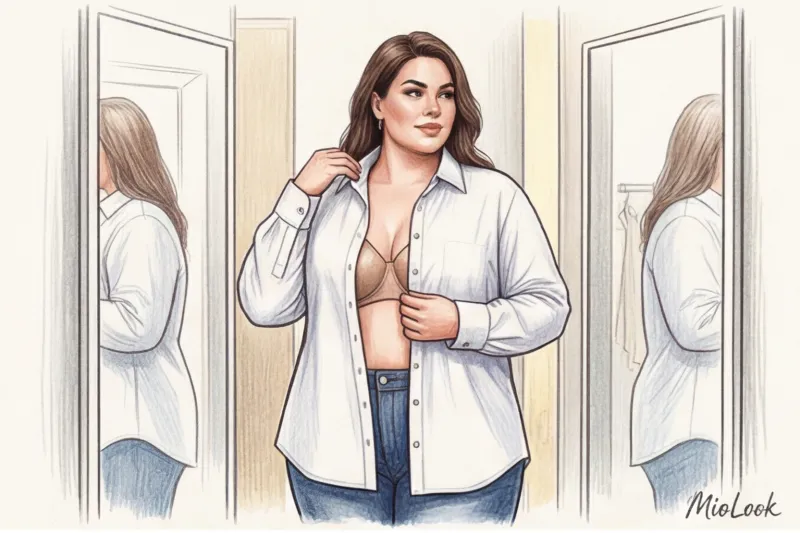
But if your figure is more apple-shaped, or you have a naturally broad back and broad shoulders, a minimizer will make your torso appear even more square. You'll appear slimmer in profile, but from the front, you'll look like a solid rectangle. In such cases, I always recommend that clients ditch minimizers in favor of side-support styles, which, conversely, gather the bust toward the center, visually narrowing the waist.
When a Minimizer Saves Your Look
- Classic shirts: By removing those same 2–3 cm of projection, the underwear allows the buttons on silk or cotton blouses to lie flat, without stretching the fabric.
- Double-breasted jackets: The abundance of fabric across the chest in a double-breasted design adds volume on its own. A smooth bra prevents the lapel from distorting.
- Fine knitwear: Smooth turtlenecks made of merino or cashmere often create an unflattering "shelf effect" if the bust is too prominent. A minimizer smooths out this difference.
Alternatives: When is it better to choose a classic full-cup?
A minimizer is a tool, not a uniform for every day. If you're wearing a wrap dress or a deep V-neck, the high center strap of a minimizer will be revealing. For such necklines, you'll need a deep plunge or a classic full-cup bra that creates a beautiful cleavage.
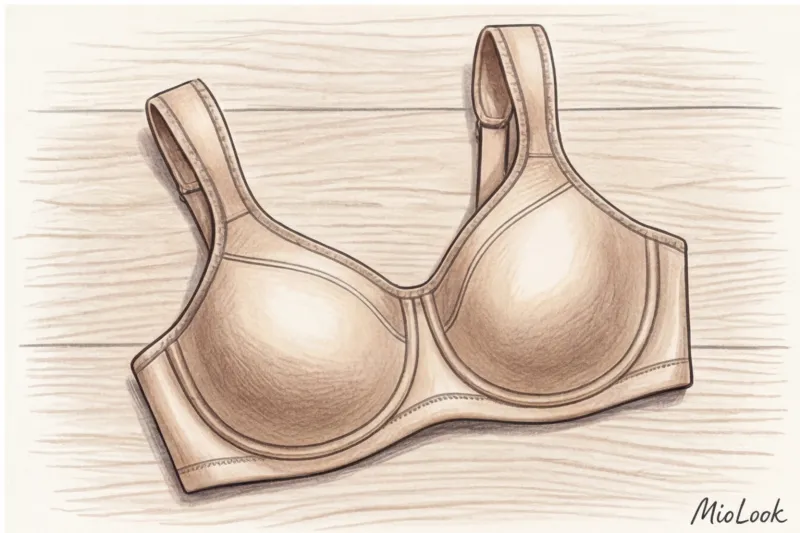
The Anatomy of a Proper Minimizer: A Pre-Purchase Checklist
High-quality shapewear for large breasts is always a matter of engineering. What do I encourage my clients to pay attention to in the fitting room?
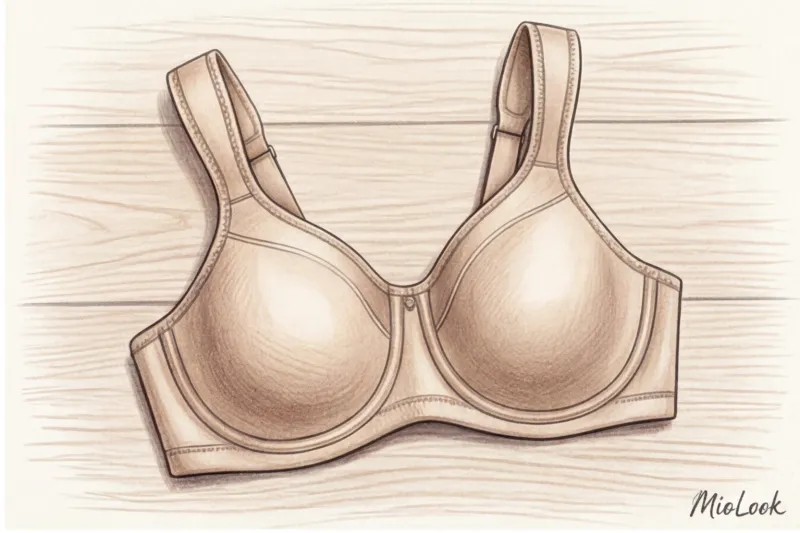
- Strap width: No thin "spaghetti straps." The straps should be at least 1.5–2 cm narrower. Ideally, they should have soft gel or foam padding on the shoulders to prevent them from digging into the skin under the weight of the breasts.
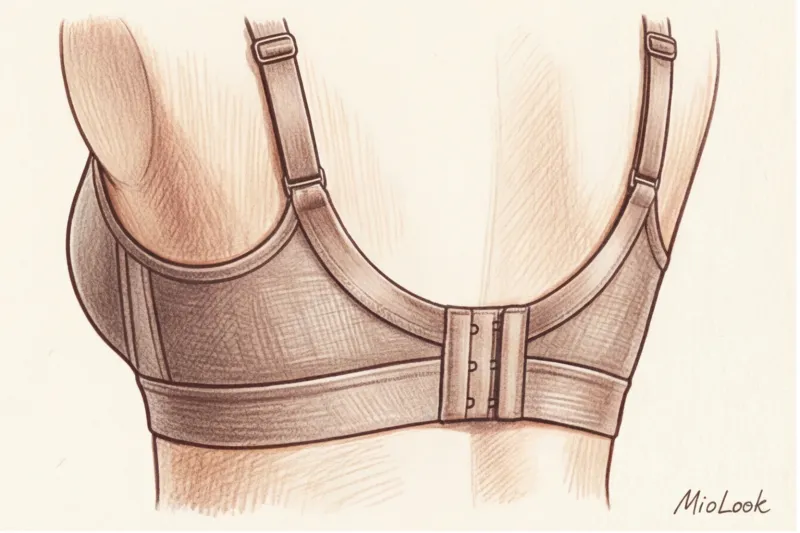
- Leotard back (U-shaped cutout at the back): The straps on the back should meet closer to the center, forming a U-shape. This prevents them from slipping off sloping shoulders.
- Powerful waist (belt): It's the band, not the straps, that supports 80% of the breast weight. A minimizer bra should have wide side panels with at least three (or better yet, four) hook-and-eye fastenings.
- Seams on cups: Here, you need to choose based on your size. Smooth, seamless (molded) minimizers made of dense microfiber are ideal for C and D cups—they're invisible under T-shirts. However, if you're a size E, F, or G, seamless fabric won't support the weight. Look for tailored cups with 3-4 seamed pieces—only tailored fabric will provide rock-solid support.
Access to MioLook for €0.99 — one-time payment
A smart AI stylist will select the perfect look based on your measurements and the items in your wardrobe.
Get access — €0.99 onceEuropean Brands: Where to Find the Best Models (Prices and Quality)
Over 12 years of experience, I've tried hundreds of styles. And I can confidently say: good lingerie doesn't necessarily have to cost as much as an airplane wing, but there are no miracles for 5 euros either. Here's my working classification.
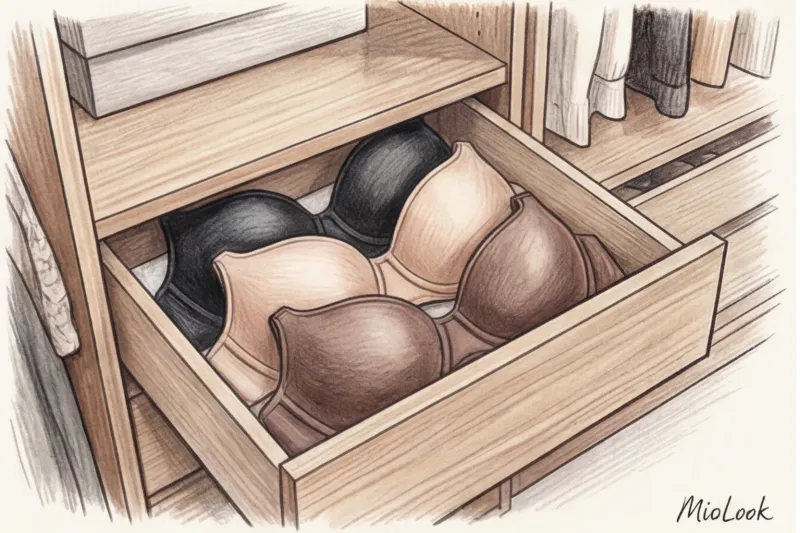
Premium and classic (50–80 €): The undisputed leader in this niche is the German brand Triumph, in particular their legendary model True Shape Sensation Their minimizers last for years, without stretching even after a dozen washes. French brands like Chantelle and Belgian Primadonna are more expensive (from €70 to €120), but their underwires are covered with a special soft layer that's completely undetectable on your ribs.
The golden mean (25–40 €): My personal style secret is the British Marks & Spencer. Their line Flexifit Technologically, it's almost as good as premium lingerie. M&S often uses the same factories as luxury brands to produce its underwear. For €30, you get perfect support, wide waistbands, and durable microfiber. This is the best value for money on the European market.
Mass market (up to €30): H&M has it in their line Premium Quality Decent basic minimizers made of dense mesh occasionally appear for €25–30. Intimissimi also offers basic smooth styles. But be careful: mass-market brands often skimp on the density of the elastane in the waistband. Such underwear can stretch out after just 3–4 months of active wear, losing its supportive properties.
How to Test Lingerie in the Fitting Room: The 5-Move Test
It's a huge mistake to just put on a bra, look in the mirror, and go to the checkout. We live in our clothes, not stand there like mannequins. I always make my clients do a rigorous crash test in the fitting room.
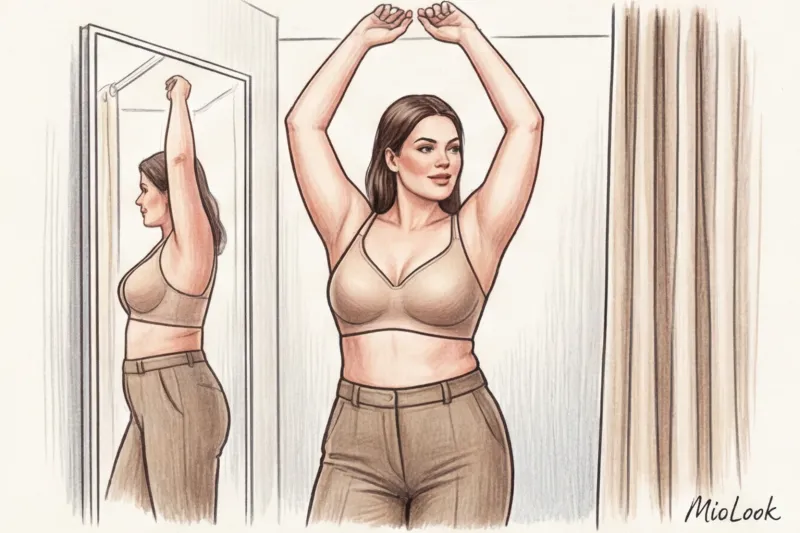
- Raise your arms up sharply. The band at the back should stay in place, strictly parallel to the floor. If it moves up toward the shoulder blades, the underbust measurement is too large. Choose a smaller band size but a larger cup size (the rule of interchangeable sizes).
- Bend forward 90 degrees. The breasts should not fall out in the center or gather in folds over the underwire.
- Bring your shoulders forward (as if you were hugging yourself). At this point, the underwires shouldn't dig into your armpits. If they do, they're too high for your height.
- Rotate your torso left and right. The breasts should remain stable inside the cups.
- Final test. Never buy underwear without wearing the most "fancy" item you plan to wear it with. Bring your thin turtleneck or that office shirt to the fitting room.
Conclusion: Is a minimizer worth investing in?
A minimizer isn't a tool for disguising your curves. It's a wardrobe essential. It's essential to ensure your jackets fit, your fine knits look expensive, and your confidence in the office without constantly fiddling with your chest buttons.
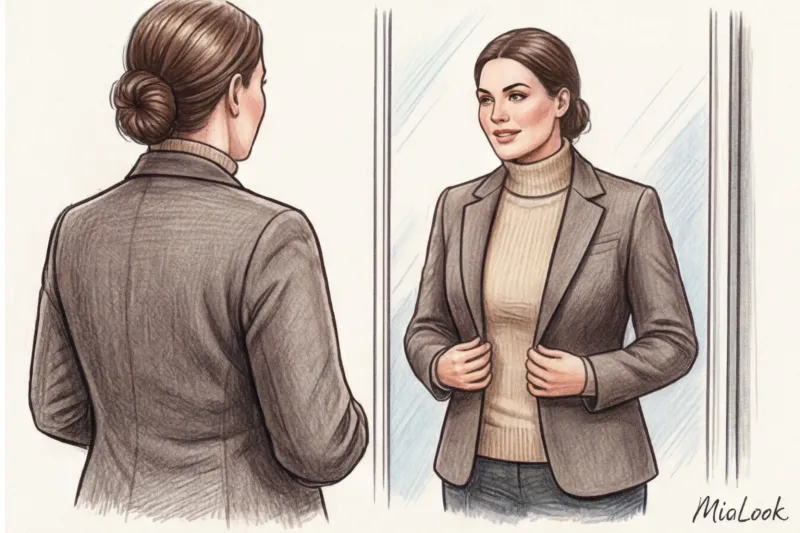
But remember: a woman's body changes under the influence of hormones, stress, weight changes, and exercise. Bra-fitting experts strongly recommend re-measuring your measurements every 6-12 months. Start your wardrobe overhaul not by buying another dress, but by cleaning out your underwear drawer. Your clothes are only as good as the fit of what's underneath.