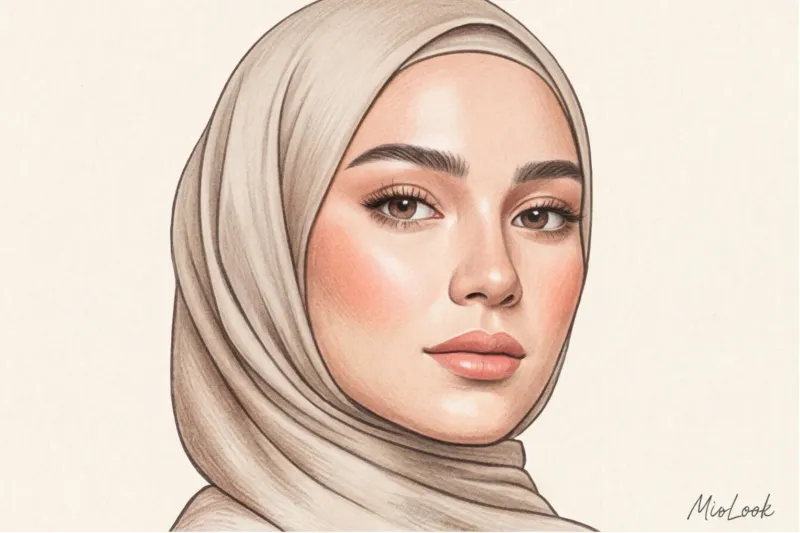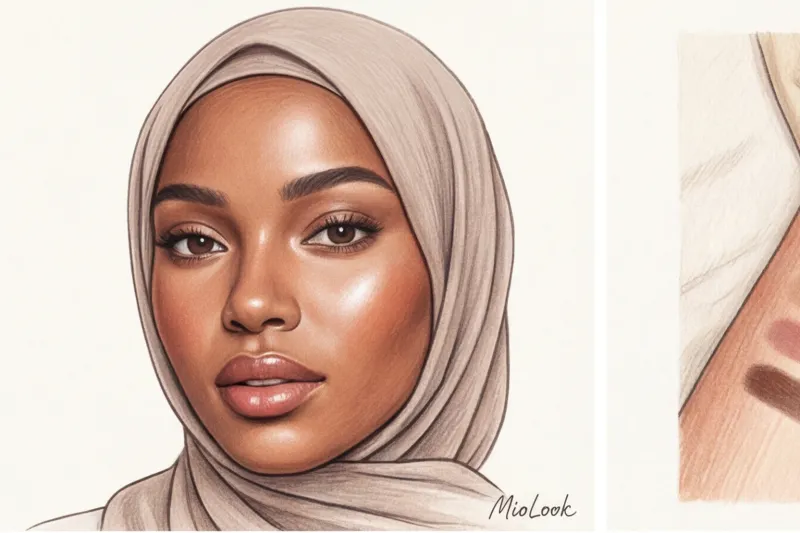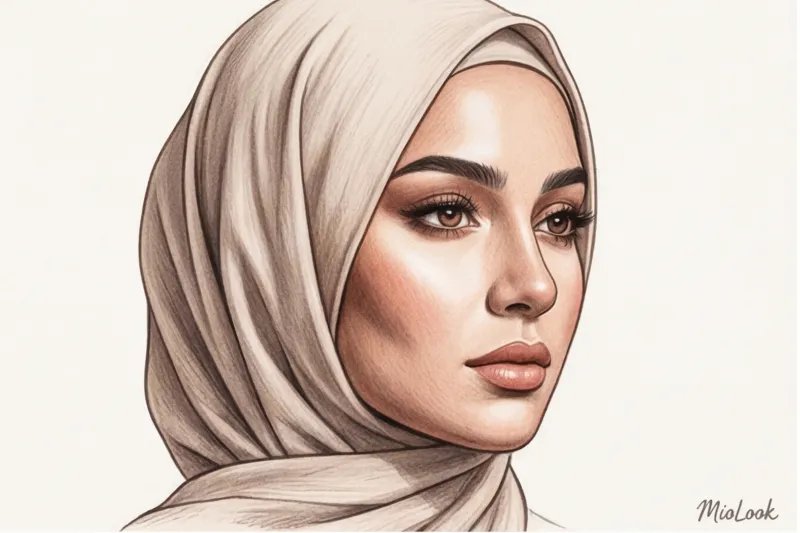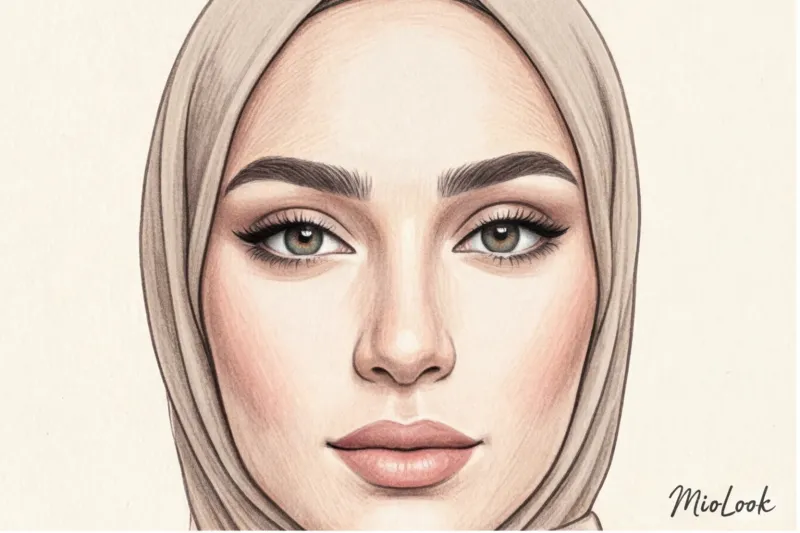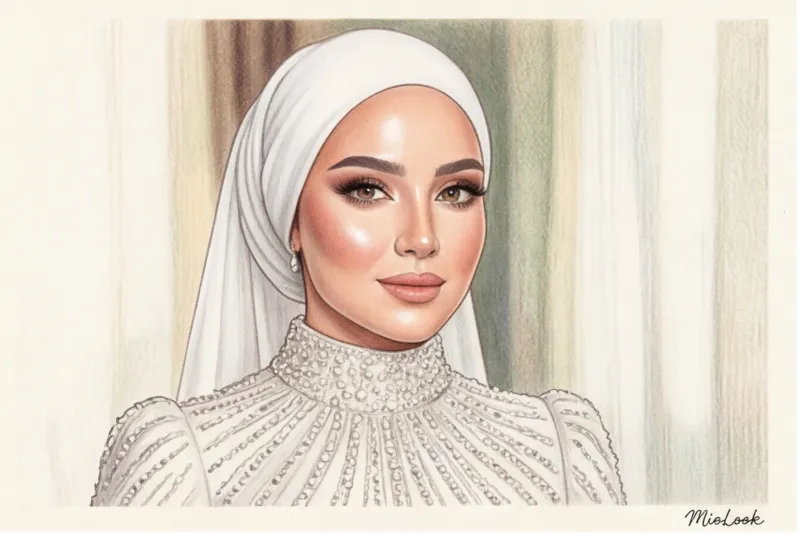
Have you ever wondered where people look when they see a bride in a completely covered gown? Over 12 years as a stylist, I've conducted hundreds of fittings and noticed one paradoxical thing. If a woman is wearing a revealing dress, the gaze glides along the neckline, collarbones, and complex hairstyle. But as soon as the neck, ears, and hair are covered, 100% of visual attention instantly focuses on the face. That's why wedding makeup for a hijab It's not just a matter of choosing long-lasting makeup. It's real architecture and working with visual physics. We covered this in more detail in our The complete makeup guide for closed-face looks , but today I want to explore the mechanics of balance: how to ensure that your face doesn't get lost in photographs against the backdrop of dozens of meters of luxurious fabric.
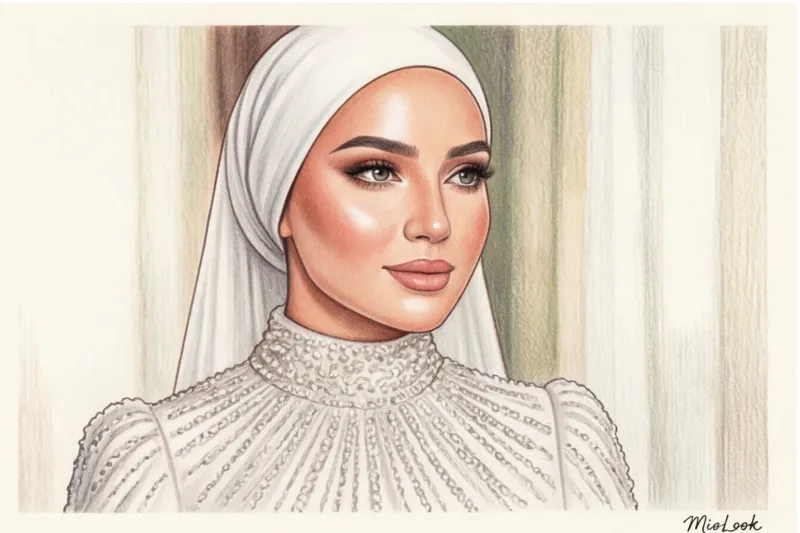
Why wedding makeup for a hijab obeys different laws of visual physics
Modest fashion radically changes the rules of perception. According to adapted data from Nielsen Norman Group eye-tracking research (2023, fashion industry analytics), when hair and neck are hidden, the observer's pupil does not "wander" as usual. It is firmly fixed in the so-called portrait triangle—from the eyebrows to the chin.
What does this mean in practice? Any flaking, uneven tone, or uneven contour will be ten times more noticeable. The absence of distractions like voluminous hair or exposed skin requires a phenomenal, almost glossy complexion.
In my practice, we use the concept of "makeup as an accessory." In European, revealing wedding looks, a €500 necklace or statement earrings might be the focal point. In modest fashion, these areas are covered with fabric. Therefore, makeup takes on the role of those accent pieces that are impossible to wear.
A long-sleeved wedding dress and a multi-layered hijab add an average of 2-3 kilograms of visual bulk to the figure. This mass of fabric must be balanced. If the dress is visually "heavy," the face cannot appear "light"—otherwise, it will simply disappear.
The main myth: "A modest dress requires discreet makeup."
This is the most dangerous misconception brides bring to me. The logic seems ironclad: a modest dress equals modest, natural-looking makeup. But in reality, the no-makeup makeup trend plays a nasty trick on a voluminous wedding gown.
One of my clients, Amina, chose a stunning dress costing around €3,500, featuring heavy hand embroidery and a thick satin hijab. During the dress rehearsal, she insisted on a subtle nude: translucent BB cream, a touch of blush, and lip gloss. When we took test shots with the flash, I showed her the results: in the photos, the gorgeous dress "carried" her, not the other way around. Her face looked sickly and tired, completely blended into the fabric.
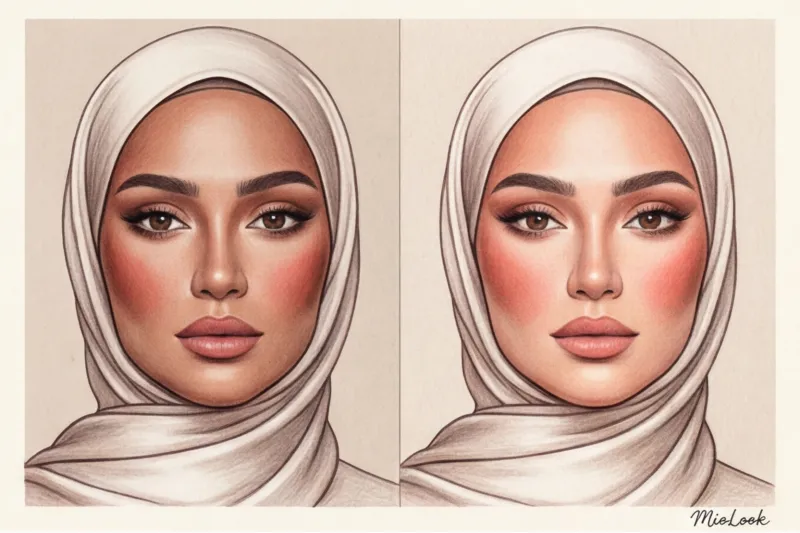
The fact is, the white color of a wedding hijab acts as a powerful photographic reflector. It mercilessly "eats" the natural shadows of the face, making it look flat. The fabric absorbs color—the face needs artificially created, enhanced structure.
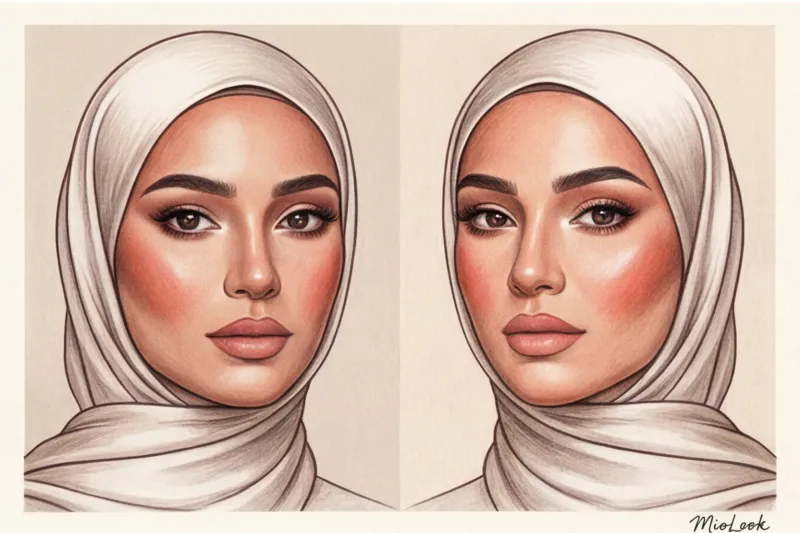
Balance formula: Tissue volume = Intensity of facial architecture
To avoid making mistakes, remember the simple rule of stylistic balance:
- Heavy textures (heavy satin, mikado, brocade, dense bead embroidery) require pronounced matte contouring and a dense, covering tone.
- Light textures (smooth chiffon, flowing silk without decoration, tulle) allow you to make your makeup more watercolor-like, using wet highlights and shimmering textures.
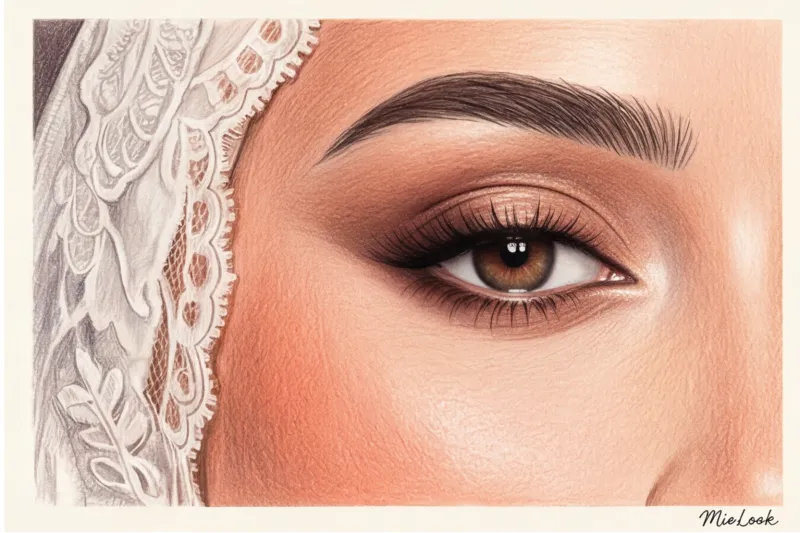
Facial architecture: how to highlight features when the neck and ears are covered
Creating wedding makeup for a hijab The makeup artist must take into account the new facial geometry created by the scarf's edge. This is where the main technical secret lies.
First, forget about actively darkening your lower jaw. In classic makeup, we often contour the chin and jawline to create a defined oval shape. But a hijab already physically cuts off these angles! If you add a dark contour highlighter, it will not only create a dirty stain effect but will also inevitably bleed onto the crisp white fabric (we'll talk more about this in the section on longevity).
Secondly, use blush as a substitute for décolletage. Covered looks lack the pink, fresh undertone that an exposed chest and neck typically provide. Apply blush higher than usual—right along the cheekbones, sweeping toward the temples. This creates a powerful lifting effect.
"A fair disclaimer: applying blush high on the cheekbones works amazingly for round and oval faces. But if you have a naturally long, rectangular face, this technique will visually make it appear even longer. In this case, sweep the blush slightly more horizontally, toward the apples of your cheeks."
As for the eyes, a soft, shading effect (soft-glam smoky eyes in bronze or coffee tones) works a thousand times better than harsh, graphic black eyeliner. Graphic eyeliner often looks too aggressive and outlandish against a modest, low-key outfit.
Access to MioLook for €0.99 — one-time payment
A smart AI stylist will analyze your appearance and select the perfect makeup palette to match your outfit.
Get access — €0.99 onceEvening Makeup: Transform Your Look Without Overloading
If you're not the bride but a guest at a reception, or simply attending a gala dinner in a one-piece dress, the rules change a little. This is where color comes into play.
Evening dress codes often feature dark, rich shades of dresses—emerald, deep blue, and burgundy. If you wear pale makeup with a deep, high-necked dress, you'll look like you've just recovered from an illness. Bright lipsticks are the savior. Wine, berry, and classic red shades (ranging from €25 for a quality mid-market to €50 for a luxury one) perfectly balance the heaviness of dark fabrics.
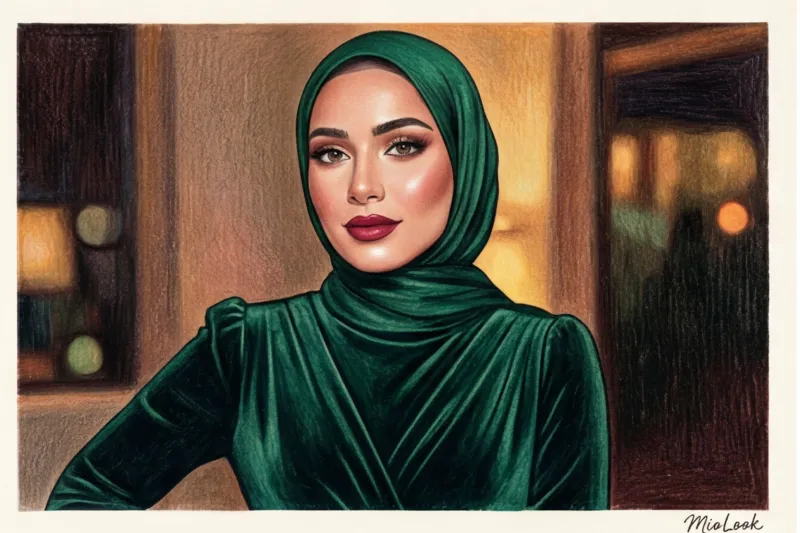
Remember my "one sparkling accent" rule depending on the fabric:
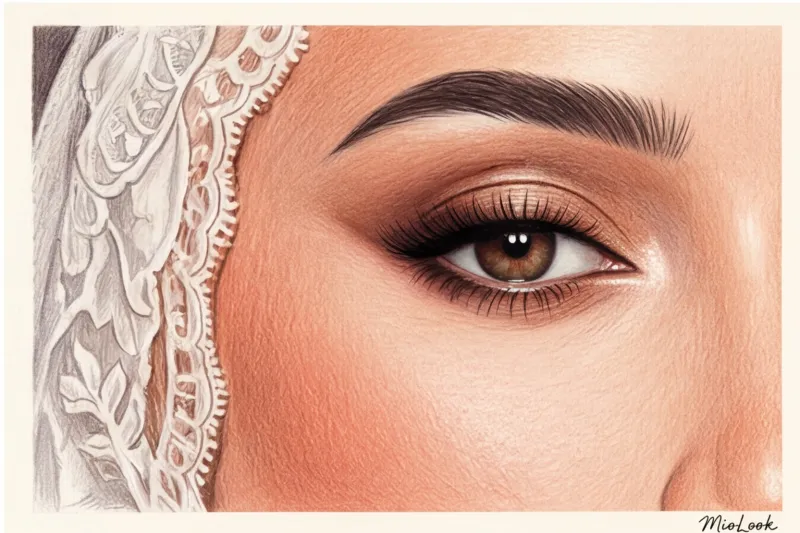
- If your high-neck dress is generously embroidered with sequins or lurex, your skin should be accentuated with a matte, velvety finish. Otherwise, you'll look like a disco ball.
- If your dress is made of smooth, matte crepe or flowing silk, feel free to add a polishing highlighter to the tops of your cheekbones, the bridge of your nose, and the inner corners of your eyes.
24/7 Durability: The Specifics of Fabric-Skin Friction
Now about the pain that glossy magazines somehow keep silent about. The main enemy of makeup under the hijab is friction. The cap (bonnie) worn under the headscarf mercilessly erases foundation from the forehead, and the edge of the hijab rubs against the jawline and cheeks.
A stylist's practical advice: to prevent foundation from turning red on white silk, you need to change the way you apply your foundation. Avoid creamy contouring products and bronzers on the edges of your face in favor of longer-lasting, dry textures. Creamy products remain mobile even under powder, and the fabric will definitely absorb them.
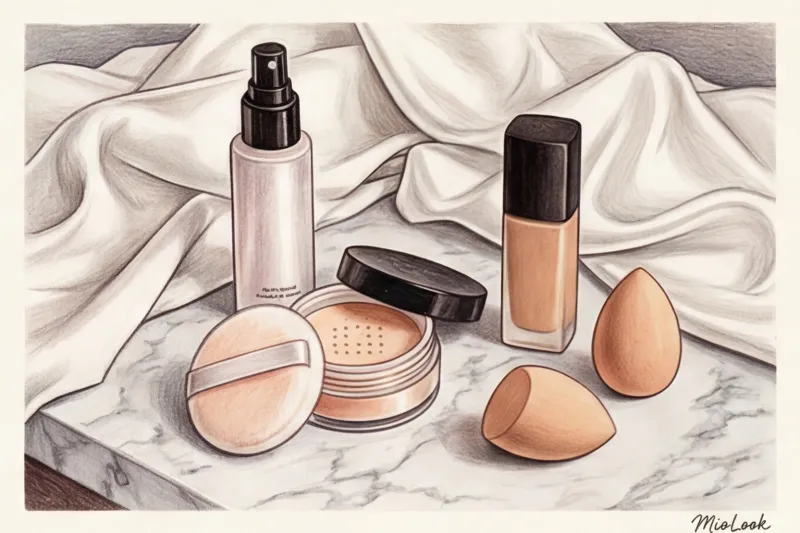
How we "cement" wedding makeup for a hijab:
- Mattifying primer (only for T-zone).
- A thin veil of long-lasting matte tone.
- Setting spray. Yes, yes, right on top of the wet tone.
- Dry correction (pigment).
- Loose transparent (colorless) powder, driven into areas of friction with the fabric with a powder puff.
- The final layer of fixative.
Your perfect look starts here
Join thousands of users who look flawless every day with MioLook technology.
Get access — €0.99 onceChecklist: Preparing and Creating Makeup for a High-Length Dress
Since the face takes 100% of the spotlight in a modest look, you can't afford textured imperfections. Foundation doesn't hide flaking; it accentuates it.
2 weeks before the event:
Begin an intensive moisturizing regimen. Avoid harsh scrubs and use gentle enzyme powders and lipid barrier-restoring creams. The base must be flawless.
On day X (sequence of collections):
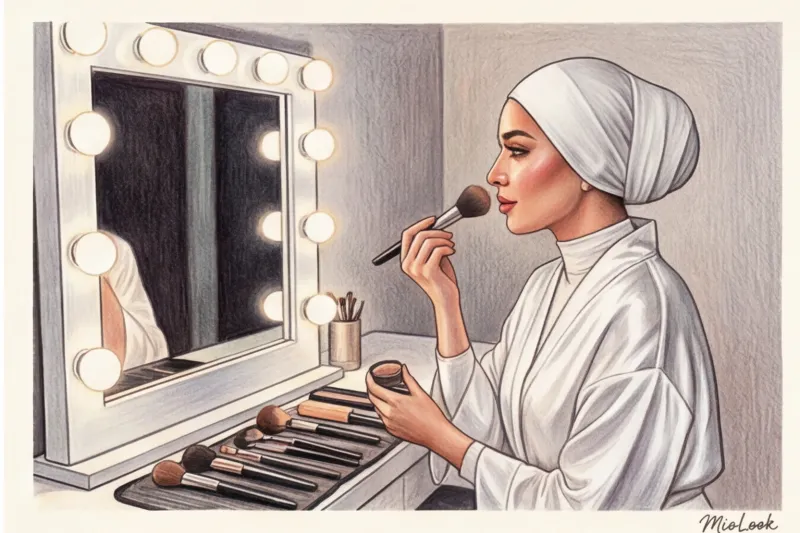
Never put on your hijab before finishing your face makeup! Here's the process: put on a bonnet (hat) → apply full eye and face makeup → apply fixative and powder around the edges → carefully drape the hijab → apply lipstick.
What to put in the bride's handbag (Touch-up kit):
- Mattifying wipes (do not apply powder on sebum, blot your face first).
- Compact transparent powder without pigment.
- Lipstick and lip liner (they get eaten first).
- Cotton swabs (to gently remove concealer from the inner corners of the eyes).
Results: Your Ideal Look
Makeup for a high-necked dress is your most important, most expressive accessory. It requires impeccable technique, the correct placement of visual weight, and expert use of long-lasting textures. The modesty of the dress is dictated not by a pale complexion, but rather by its sculpted precision and perfect grooming.
My main advice: be sure to do a makeup trial and show up for it wearing the hijab and (ideally) dress. You should see the look together, in daylight and on your smartphone camera. Only then will you be able to tell if the textured fabric has flattened your cheekbones and add the right color accents.