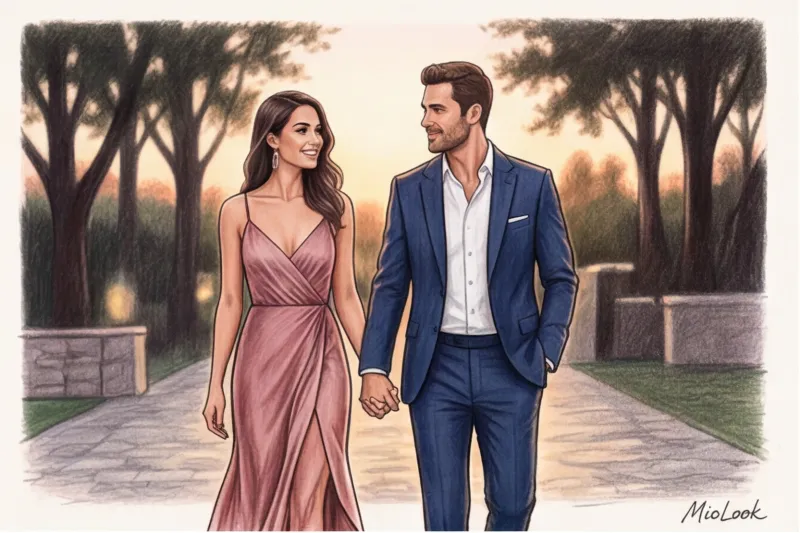
I still shudder when I hear the phrase during a consultation: “I bought a stunning emerald silk dress, now we need to find Oleg an identical tie.” As a stylist with 14 years of experience, I immediately understand: we are on the verge of a stylistic disaster. Putting together Paired looks for wedding guests , many, out of inertia, use the outdated “copy-paste” method, turning a grown, self-sufficient man into an accessory to his companion’s dress.
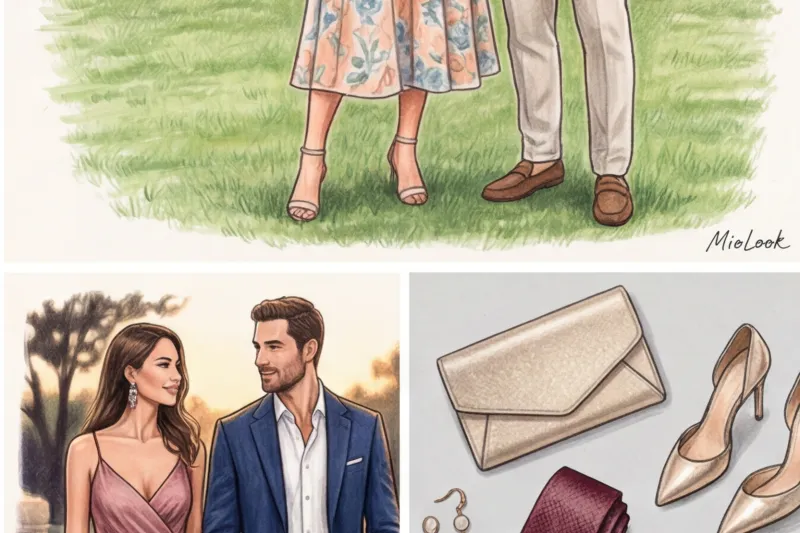
I have already talked in more detail about the fundamental psychology of couple look in our a complete guide to harmonious looks for couples But wedding dress codes are a separate domain with their own strict rules. Here, a couple always attracts twice as much attention as a single guest, meaning any style mistake is instantly multiplied by two.
Let's put aside identical colors and learn to create paired looks based on the principle of "quiet luxury"—by synchronizing textures, temperature tones, and levels of formality.
Why is it a stylistic faux pas to match a tie to a dress?
A man's perfectly chosen tie or pocket square, matching a woman's dress, is not an indicator of good taste. It's an ingrained stereotype from high school graduations in the 2000s, which mercilessly cheapens (creates that very cheap look) even the most expensive items.
Over the years of working with couples, I've noticed a clear pattern: men feel physically uncomfortable in loud, bright shirts or shiny ties imposed solely for the sake of "matching." In fashion psychology, there's a concept Enclothed Cognition (dressed cognition) – our clothing directly influences our emotions and behavior. By depriving your partner of style autonomy, you make them feel out of place throughout the entire celebration.
"A harmonious paired image is a dialogue between two self-sufficient individuals, and not an echo of one person reflected in the details of another."
Instead of searching for clone fabric, our goal is to demonstrate your unity in more subtle, aristocratic ways.
Stylist Secrets: How to Create Matching Wedding Guest Looks Without Direct Copying
My signature technique for working with couples is based on three pillars: formality, color temperature, and texture. If you sync at least two of these, your look will be flawless.
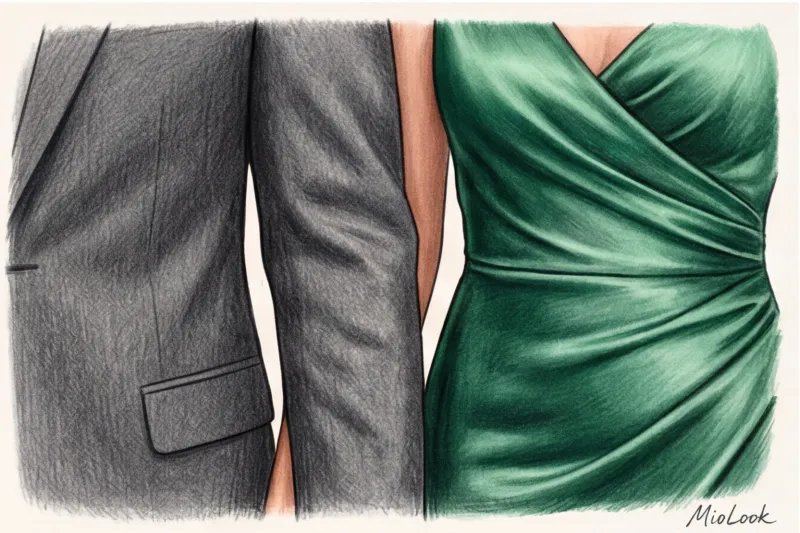
Rule #1: Synchronize the level of formality
The most common and most damaging mistake is misaligned dress codes. One of my clients almost canceled their joint appearance two hours before the ceremony. She chose a heavy, floor-length evening gown made of thick, premium satin, while her husband bought a relaxed linen suit of about 180 g/m² and wore it with loafers on his bare feet. Individually, both looks were stunning. Together, they looked like they were going to two completely different events: she to the red carpet, he to a beach party.
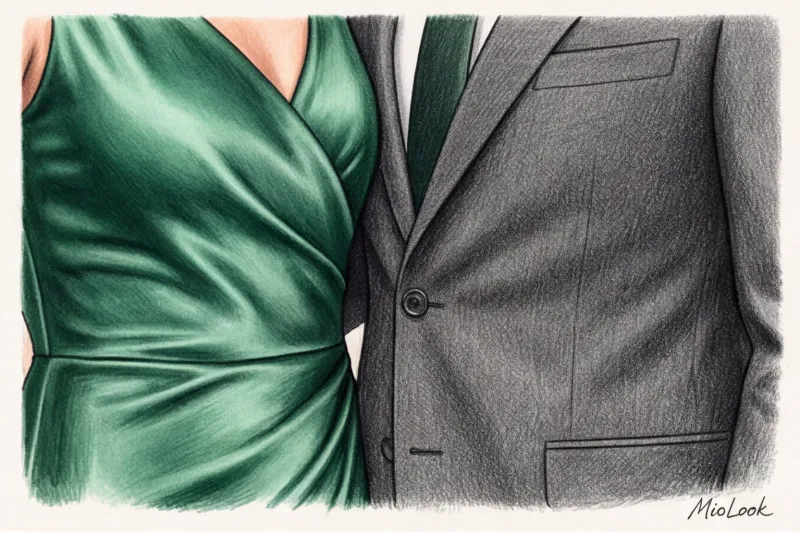
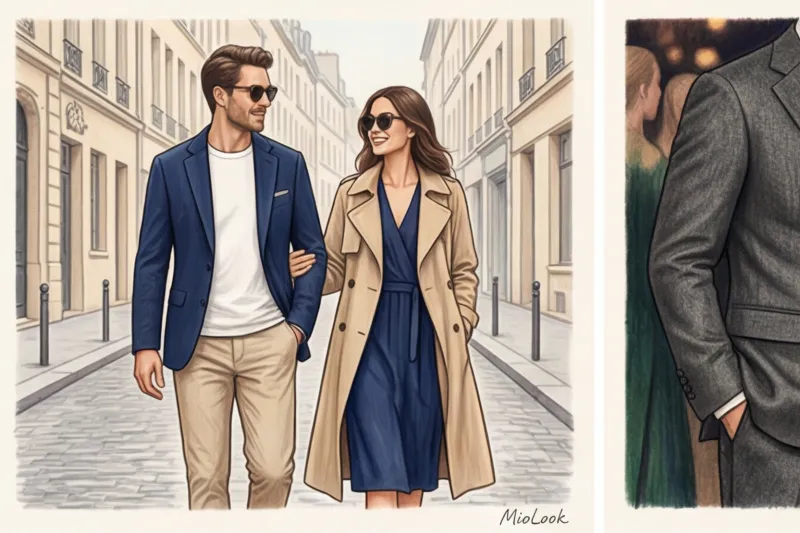
How do you balance this? If your man absolutely hates formal suits, but you want to look smart, look for a compromise. Opt for an elegant midi slip or a flowing pantsuit instead of a full-length evening gown. For him, instead of a formal tuxedo, we'd choose a high-quality wool-silk blend blazer (for €150-€250, you can find excellent options at Massimo Dutti or COS) paired with classic chinos. You'll both remain smart casual.
Rule #2: Temperature and complementary color harmony
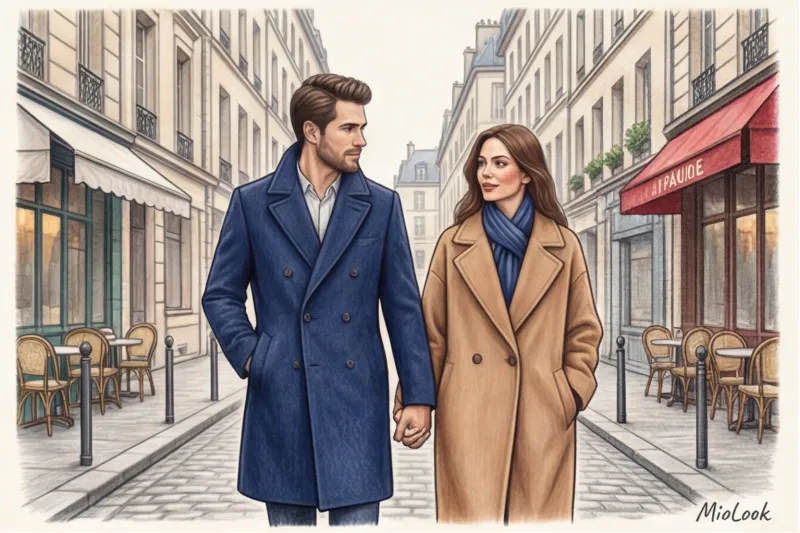
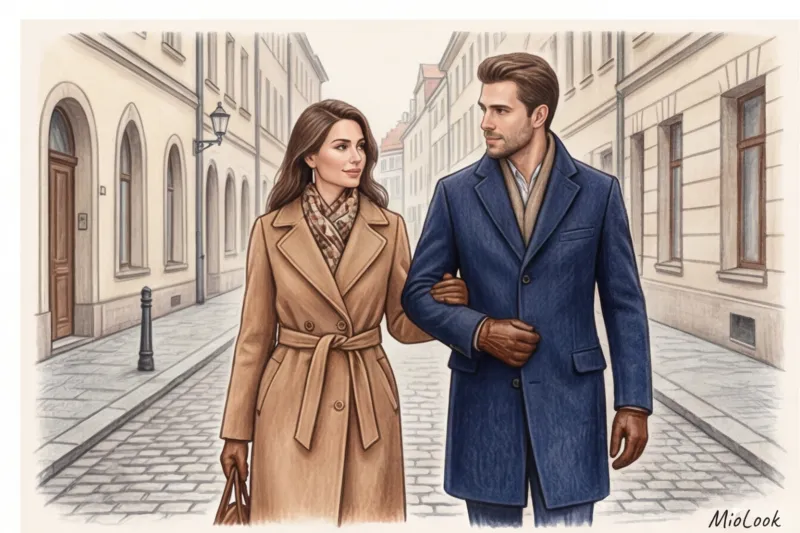
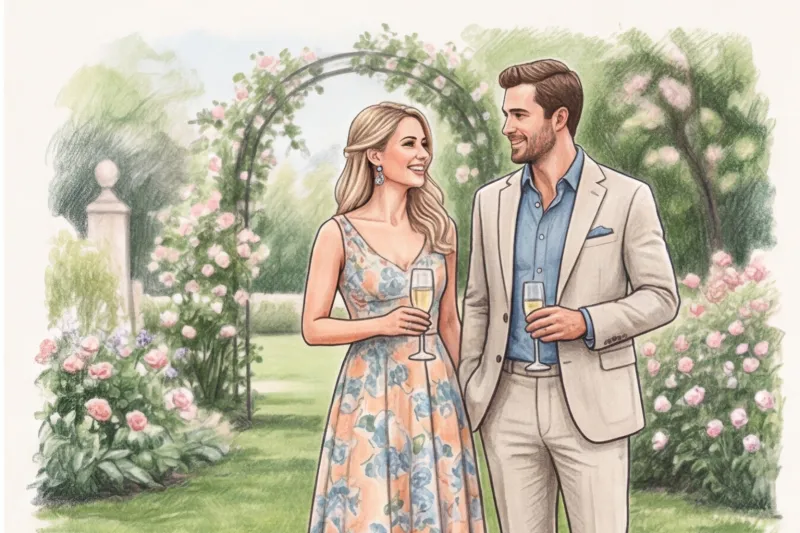
Instead of buying identical fabrics, I use Johannes Itten's color theory. We look for complementary combinations, not monochrome, while maintaining a consistent temperature. We mix warm shades with warm ones, and cool ones with cool ones.
According to statistics from Western wedding photographers in 2024, couples dressed in contrasting yet harmonious colors look 40% more impressive in group shots than couples in color-matched outfits. Cameras love depth and contrast.
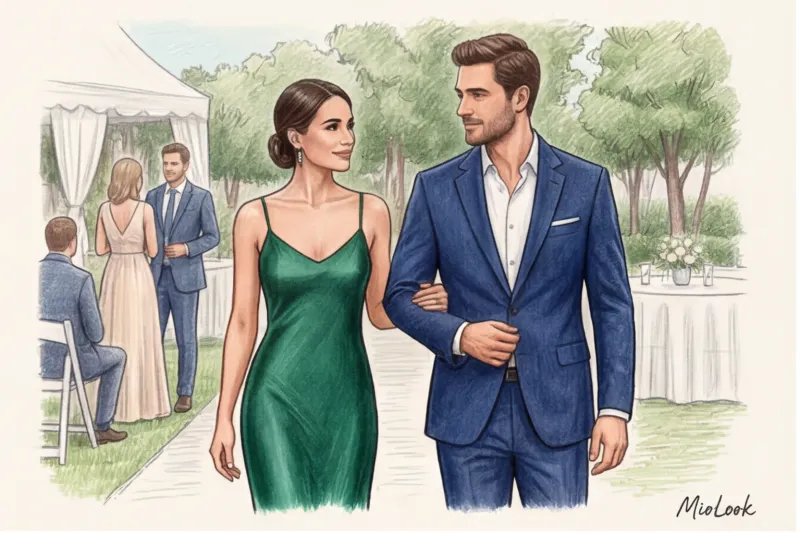
- Dear cold combinations: Deep emerald for her + sapphire blue for him. Plum + graphite gray.
- Luxurious warm combinations: Terracotta or wine for her + chocolate brown for him. Olive + warm beige.
If you want to learn more about which colors suit your appearance before buying an outfit, I recommend checking out the guide on 12 color types of appearance. And to avoid racking your brains over combinations in the store, upload photos of your items to MioLook — a smart AI stylist will tell you how your looks fall on the color wheel.
Rule #3: Dialogue of Textures
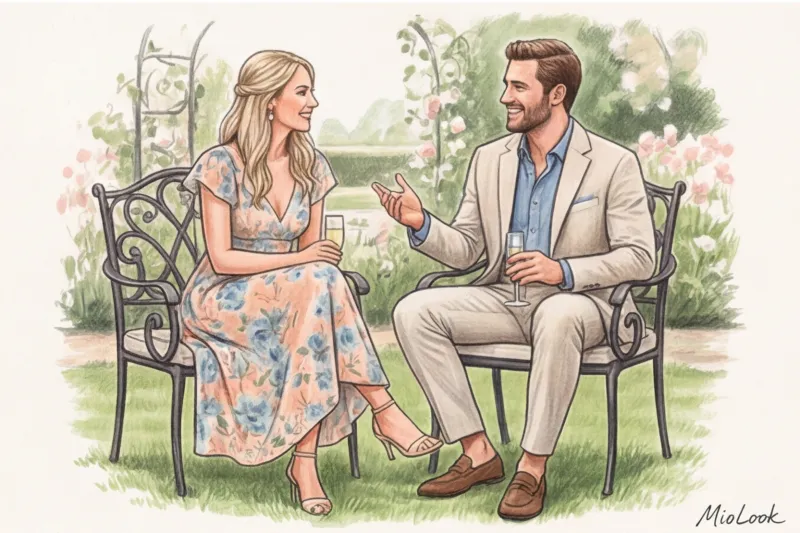
Fabrics have the ability to "talk" to each other. While colors can contrast, textures must complement each other.
Successful pairs:
- Smooth silk (dress) + fine matte worsted wool (suit). The sheen of one fabric accentuates the noble matte of the other.
- Heavy velvet + dense structured satin or taffeta.
Unsuccessful pairs:
- Rustic linen with a raw edge + evening sequins or rhinestones. It's a clash of aesthetics.
- Thin summer chiffon + heavy winter tweed.
Your perfect look starts here
Join thousands of users who look flawless every day. Upload items to your virtual wardrobe, and the neural network will create the perfect pairings for any occasion.
Get access — €0.99 onceA cheat sheet for two: adapting looks to the wedding dress code
The classic protocol of the British etiquette institute Debrett's strictly regulates pairing at formal events. Here's how we adapt these rules to modern realities when creating client looks for weddings in European chateaux or urban lofts.
Black Tie & Formal
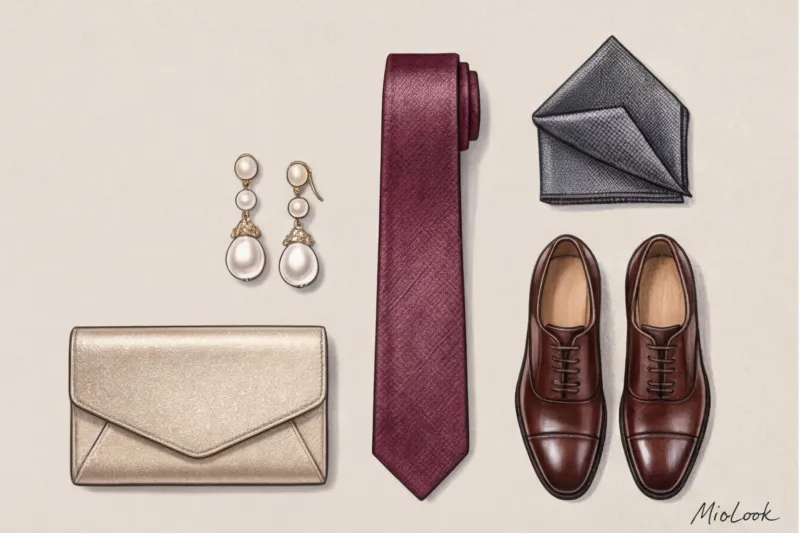
Here, the woman is the star, and the man is the luxurious, perfect frame for her look. For him, it's a sleek black tuxedo, a white shirt, and a black, self-tie bow tie (no ready-made bow ties with elastic, that would give away a €50 rental). For her, it's a complex, textured evening gown. The pairing here is achieved through the impeccable silhouette of both.
Cocktail
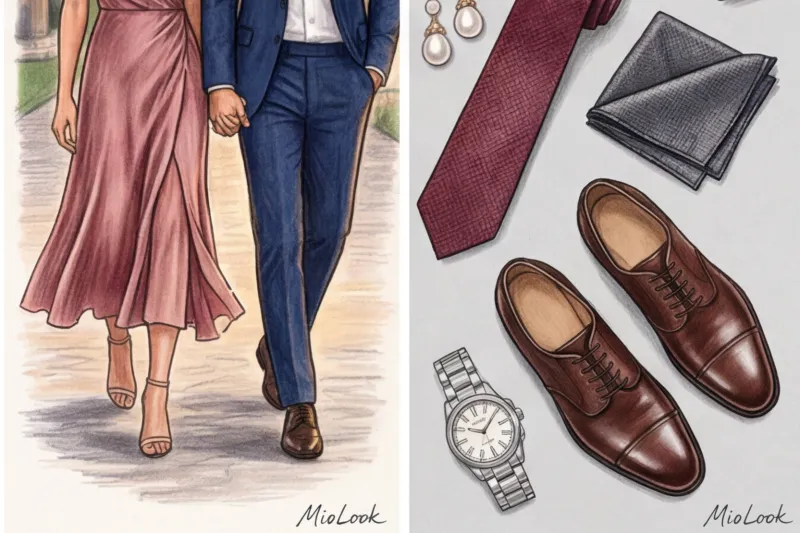
The most common wedding dress code, it allows for flexibility. Women can opt for a midi length, asymmetry, large floral prints, or deep colors. For men, this is a chance to ditch the boring office blue suit for a deep burgundy, pine green, or textured jacket with a subtle check pattern.
If you're looking for inspiration for a less formal yet elegant aesthetic (like a wedding dinner that turns into a party), check out our article on What to wear to the theater on a date — the principles of a smart, but not excessive, dress code are similar there.
Smart Casual and Outdoor Weddings (Rustic/Boho)
Last year, I was planning a wedding in Tuscany. It was 30°C (86°F) and surrounded by vineyards. We decided to forgo ties and classic stiletto heels. He wore a relaxed sage-colored linen-cotton suit, and she wore a flowing dusty rose dress with wedge espadrilles. A perfect natural palette, where nothing was too loud, yet everything blended seamlessly with the surroundings.
3 Fatal Mistakes That Ruin Stylish Couple Wedding Looks
Even if you've taken textures and temperatures into account, these three mistakes can ruin the overall impression:
- The same prints (even micro-patterns). If she's wearing a floral dress and he's wearing a matching handkerchief hanging out of his breast pocket, it looks childish. Leave the prints to someone else. If a woman has a bold pattern on her dress, a man should wear solid colors that highlight one of the base colors of her print.
- An attempt to outshine the bride and groom. A wedding isn't your big event. If a couple of guests show up in neon fuchsia and a blinding white suit, it's perceived as disrespectful to the newlyweds. Your elegance should be understated.
- Ignoring the wedding palette. Sometimes a couple dresses in the same color scheme, but the shades clash completely with the wedding's color scheme. If the invitation calls for a "dusty rose and gold" palette, avoid wearing an aggressive red and black combination, even if it suits you perfectly.
When do these rules NOT work? Every rule has an exception. If the invitation strictly states a dress code of "Total Black" or "White Party," you'll have to comply and wear a single color. But even in this case, we avoid the "twin" effect by playing on contrasting textures: matte crisscross versus glossy.
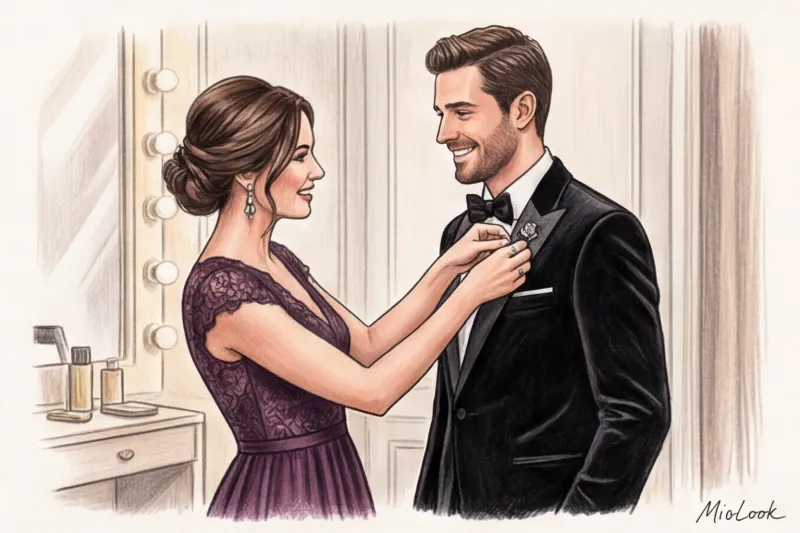
Pre-Go Checklist: Checking Your Couple Look
Before leaving the house, stand in front of a large mirror and ask yourself four self-checking questions. Screenshot this list:
- Do both looks match the location and time of day (a daytime ceremony doesn't tolerate tuxedos and velvet, while an evening ceremony doesn't tolerate linen and floral sundresses)?
- Is there any direct duplication of colors (tie-matching-dress)?
- Do your looks look self-sufficient and stylish if you move 10 meters away from each other? (No one should look "deprived" when alone.)
- Are both partners comfortable moving, sitting and dancing?
Remember: the best accessory for your gorgeous dress isn't a matching tie, but a confident, stylish, and relaxed man by your side. Dress so you're both comfortable being yourself, and your couple's outing is guaranteed to be the most talked-about event (in a good way!) after the newlyweds' outfits. And to simplify the getting ready process and avoid spending hours trying on dresses in front of the mirror, entrust the routine to an app. MioLook — your personal pocket stylist will assemble the perfect puzzle from your wardrobe in a couple of minutes.