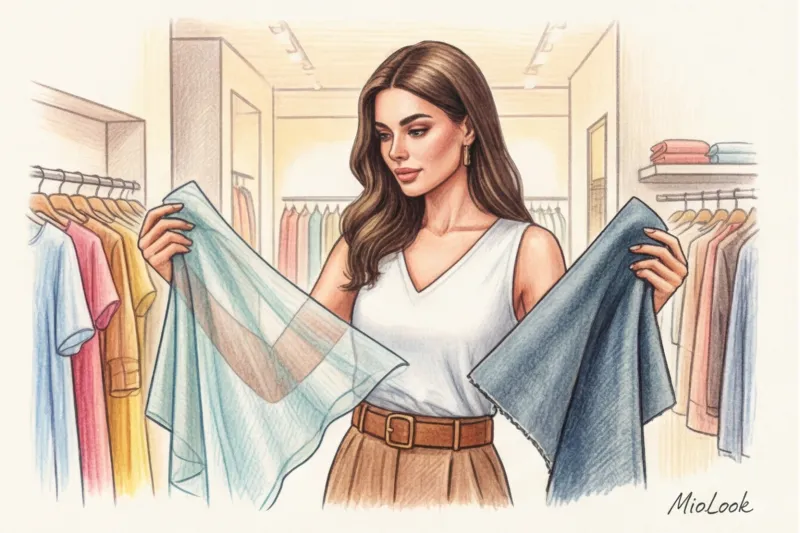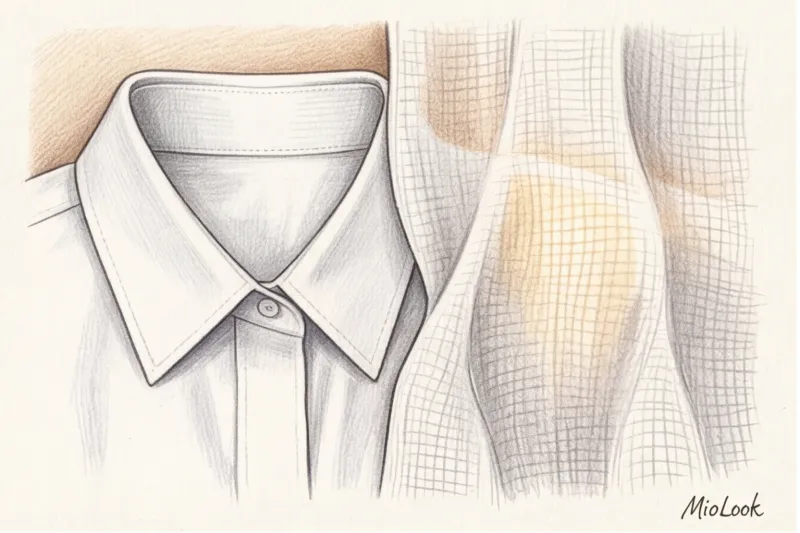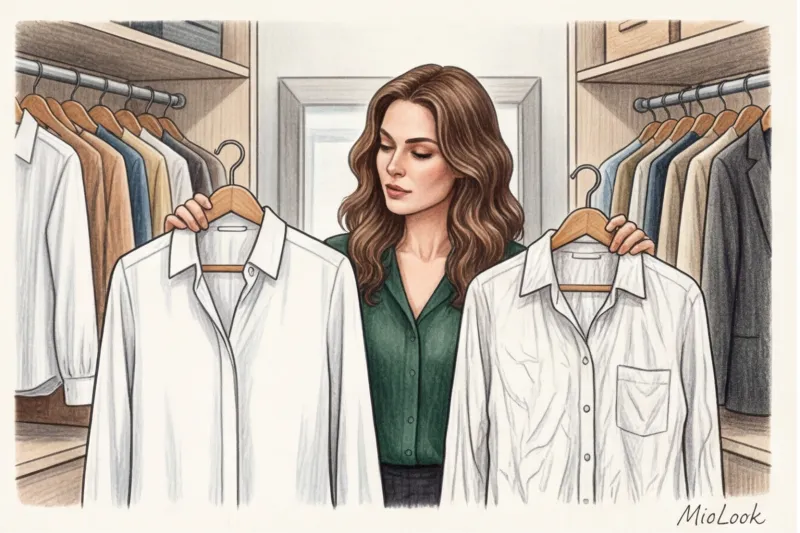
Last year, I audited over 50 of my clients' summer wardrobes. Do you know what 80% of the items they called "stuffy," "uncomfortable," and put on the back shelf until September had in common? They were visually striking dresses and blouses made of 100% cheap, mass-market polyester, bought on a whim for a pretty print. When it's 30°C outside, no floral pattern can compensate for the feeling of being wrapped in plastic wrap.

We have already discussed the basic materials in more detail in our A stylist's complete guide to the best fabrics for summer wear But today I want to explore perhaps the most controversial topic of the season. The main question I get asked every May: Can you wear polyester in the summer? , or should any synthetics be disposed of without looking?
Spoiler alert: you won't have to throw everything out. As a stylist who adores capsule designs and technology, I hate radical bans. Instead of simply saying "say no to plastic," let's figure out how to distinguish "greenhouse" fast-fashion polyester from high-tech blends that cool better than dense cotton.
Can You Wear Polyester in Summer? The Anatomy of the Greenhouse Effect
To understand why most synthetic dresses from Zara or H&M instantly make us sweat, just look at the physics of the fabric. Basic polyester is a hydrophobic fiber with zero hygroscopicity (the ability to absorb moisture).
Under normal conditions, our bodies cool down by evaporating sweat from the skin's surface. But cheap, smooth polyester acts like a plastic bag: it blocks air circulation, preventing moisture from evaporating, increasing the temperature under the garment, and causing the body to produce even more sweat. Hello, heatstroke.
I've seen some truly embarrassing fashion fails in my practice. One of my clients bought a stunning linen suit from a premium brand for €250. It had a perfect, architectural cut and a luxurious buttery shade—a benchmark. Summer business style clothing for women in the heat But at the very first meeting, at 28°C, she nearly fainted. The reason? The jacket was tightly lined with 100% cheap polyester. The linen on the outside honestly tried to "breathe," but the polyester barrier inside negated any comfort.
"Brands often skimp on hidden details. You can buy a dress made of the finest silk for €300, but if the manufacturer skimped €15 on the natural lining, it'll be impossible to wear in the summer."
Your perfect look starts here
Join thousands of users who look flawless every day with MioLook. Overhaul your summer wardrobe in just a few clicks.
Get access — €0.99 onceThe myth of bad synthetics: when polyester saves in the heat
And now for a counterintuitive fact that often causes shock in my style lectures: dense 100% cotton performs WORSE in humid heat than high-tech polyester.
Personal experiment: Last summer in Rome (75% humidity and 34°C), I decided to test two basic items. On the first day, I wore a classic oversized T-shirt made of thick cotton (200 g/m²). On the second day, I wore a minimalist top made of technical sports polyester (similar to Dry-FIT).
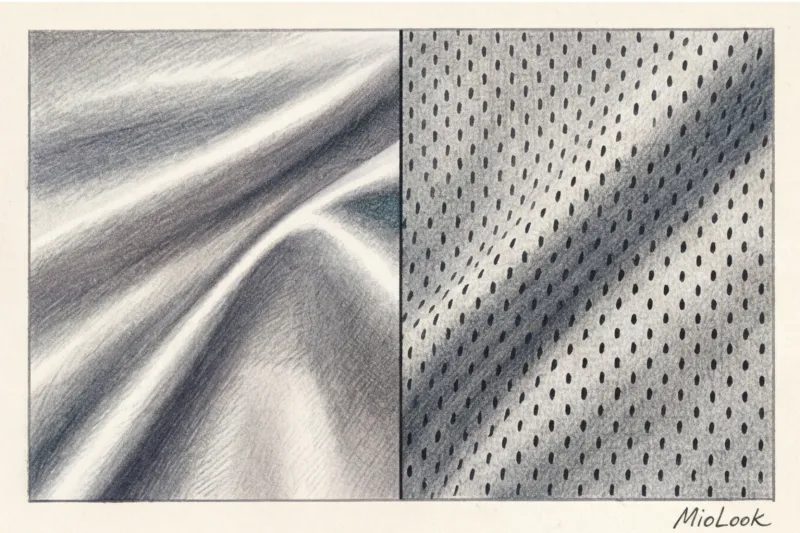
What happened to the cotton? It absorbed sweat (up to 27% of its weight in moisture), became heavy, stuck to my back, and refused to dry. What did polyester do? Thanks to the special capillary structure of its fibers, it instantly wicked moisture away from the skin to the outer surface of the fabric, where it evaporated immediately, creating a gentle cooling effect.
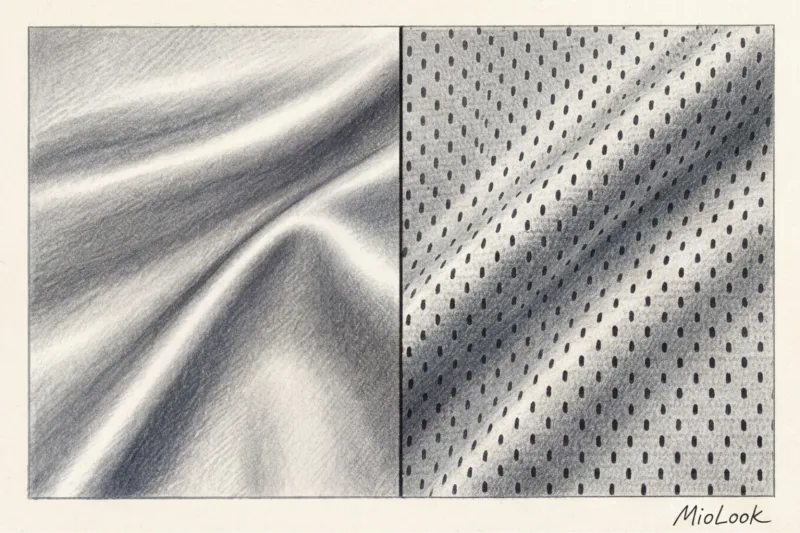
Not all polyester is created equal. According to the Sustainable Apparel Coalition's 2024 report, over 60% of clothing on store shelves today contains synthetic fibers. But the difference between a €15 chiffon blouse and a UNIQLO AIRism T-shirt is colossal.
- Smooth cheap polyester: The threads fit tightly together, there are no micropores. Air does not pass through.
- Technologically advanced synthetics (and recycled rPET): The threads have a complex cross-section (cross-shaped or multi-channel), which works like a micro-pump, pumping moisture away from the body.
- Blended fabrics (Blend): 20–30% polyester in linen or fine wool is an absolute blessing. The garment stops wrinkling hopelessly within five minutes of leaving the house, while maintaining all the breathable properties of its natural base.
Fair Limit: This trick with athletic synthetics won't work if you have a strict, conservative dress code (business formal). Technical fabrics always visually "give away" their athletic DNA a little, through texture or a slight matte sheen. For formal meetings, you'll have to look for other options.
Smart Alternatives: How to Find Breathable, Wrinkle-Resistant Fabrics
Let's be honest: why do we buy polyester-containing items in the first place? Convenience. We want to take a dress out of our suitcase on vacation and put it on right away, without spending 40 minutes battling with a steamer.
The good news is that the chemical industry has long since made strides. Today, you don't have to choose between "breathing" and "not ironing." Enter synthetic fibers—fabrics produced chemically, but made from natural raw materials (wood pulp), not from petroleum products.
Lyocell (Tencel): the champion of the summer wardrobe
If I had to choose just one fabric for my summer capsule, it would be lyocell (commercial name: Tencel). It's made from eucalyptus wood.
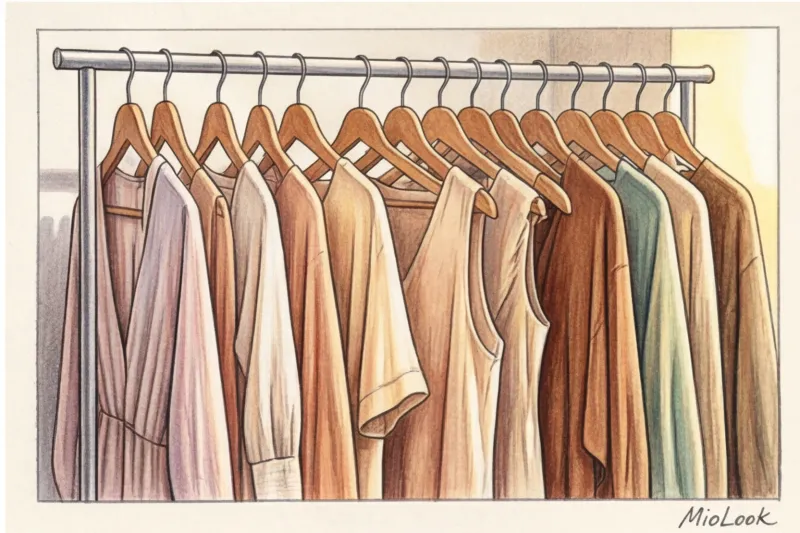
Lyocell has a unique cooling effect, superior even to linen. It's heavy, flows beautifully, creates soft folds, and is also hygroscopic. Lyocell palazzo pants (available in mass-market stores for €40–€80) are the perfect investment for a basic summer wardrobe. They are virtually wrinkle-free and feel like a firm, cool peach.
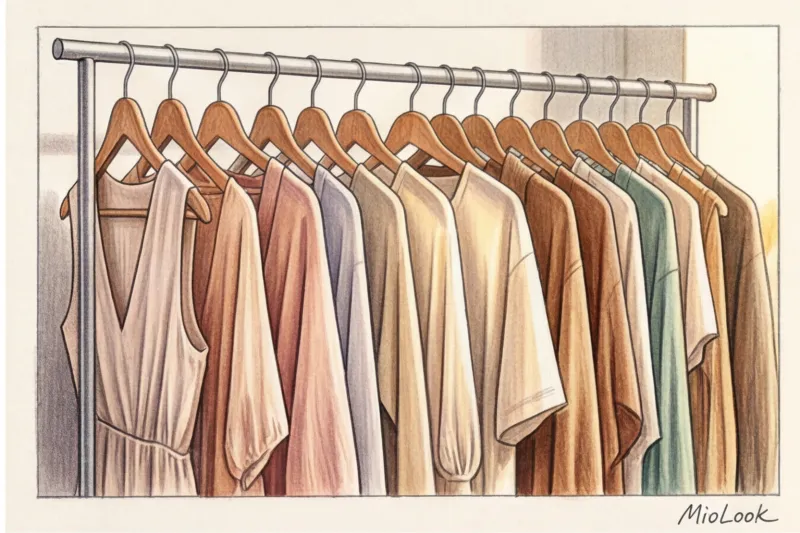
Cupra and Modal: A Status Replacement for Silk
Natural silk is beautiful, but difficult to care for and costs upwards of €150 for a basic top. Cheap polyester "silk" creaks unpleasantly in your hands and sparks from static electricity.
An ideal alternative is cupro. This fabric is made from cotton fluff. Visually, it's indistinguishable from washed matte silk, drapes gracefully, and is highly breathable.
Modal is another strong contender. Research by textile institutes shows that modal's moisture absorption is 1.5 times higher than that of regular cotton. This makes it an ideal choice for basic T-shirts and fitted dresses.
Access to MioLook for €0.99 — one-time payment
A smart AI stylist will select the perfect look for a hot day, taking into account the fabrics in your wardrobe.
Get access — €0.99 onceA stylist's checklist: how to read labels before buying a summer item
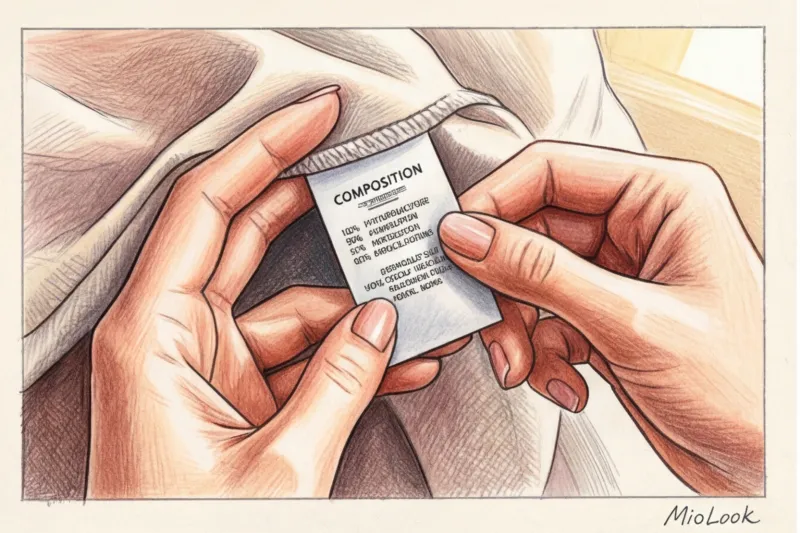
When I'm shopping with clients, I teach them one strict rule: never take an item into the fitting room without first examining the inside tag. To put together the perfect outfit capsule wardrobe For summer, use this algorithm:
- The 70/30 Rule: The perfect balance. If an item is made of 70% natural or synthetic fibers (cotton, linen, viscose, lyocell) and 30% polyester, go for it. The polyester acts as reinforcement, holding its shape.
- Look for red flags: 100% acrylic (the worst thing you can wear in the summer) and 100% smooth polyester in closed, tight-fitting Styles. A long-sleeved sheath dress made of 100% cheap synthetics is a guarantee of heatstroke.
- Lining test: As I mentioned above, always check the second layer of fabric. If the outer layer is silk or viscose and the lining is 100% polyester, the item is useless.
- Tactile and visual test: Remember that a loose weave is always better than a tight one. A thin, translucent, loose polyester (like in a loose peasant blouse) will be more breathable than a very dense, stiff 100% cotton.
If you've already purchased a polyester item: how to minimize discomfort
Let's say you already own a luxurious polyester maxi dress, or you're required to wear a corporate uniform made of blended fabrics containing more than 50% synthetics. How can you survive when the thermometer reads 28°C?
The secret lies in the distance between the body and the fabric. Tight polyester is absolutely contraindicated in summer. Oversized silhouettes, flowing silhouettes, deep necklines, and architectural cuts (such as A-line silhouettes or wide puff sleeves) create a "dome" effect. Every time you move, air will be trapped under the fabric, creating natural ventilation.

The second trick that often saves my clients with strict office dress codes is an invisible base layer. If you must wear a synthetic blouse, layer it under a very thin silk, cupra, or micromodal top (a tight one). This invisible layer will absorb moisture and act as a buffer, preventing the stiff polyester from sticking to the skin. Incidentally, we discussed this in detail in the article " Fabrics that don't show sweat stains: A guide for speakers ".
The Bottom Line: Digitalizing Summer Comfort and a Smart Approach
Don't be afraid of polyester if it's high-tech or added in the right proportions to maintain the garment's shape. The key to modern style is awareness and knowledge of your materials.
I highly recommend digitizing your clothing experience. After 6 months of using the app MioLook I've tagged all my summer items by their breathability. The app makes it easy to create tried-and-true capsules specifically for extreme heat. When the system tells you that you wore that particular viscose dress with 10% polyester 15 times this summer and felt great, while you only wore that 100% synthetic blouse once and cursed everything, you stop making shopping mistakes.

The main conclusion: summer comfort depends not on a label that says "100% natural," but on understanding how the threads are woven, how loose the fit is, and what purpose that particular item serves in your wardrobe.