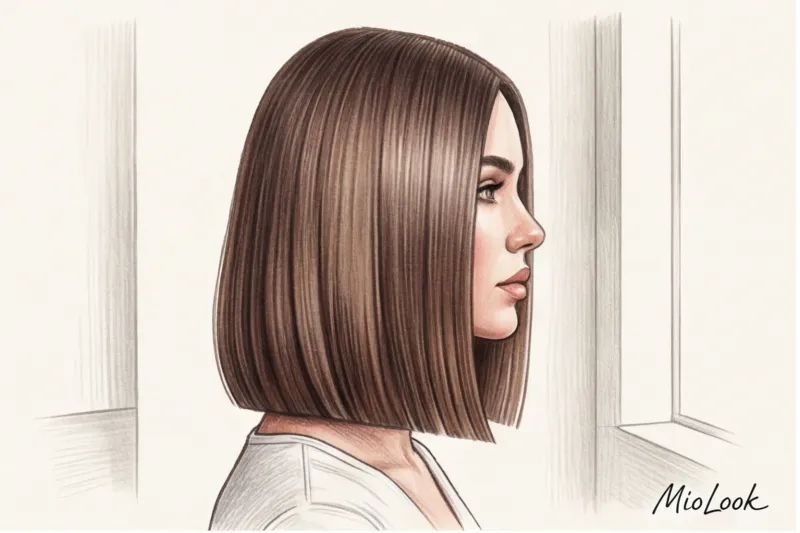
You spend 40 minutes in the morning brushing, pouring a generous amount of volumizing mousse onto your roots, setting it all with hairspray, stepping outside... and an hour later, your hair looks like a flat, lifeless curtain again. Sound familiar? Over 14 years as a stylist, I've heard this complaint from hundreds of women. We're used to thinking that volume is the result of grueling daily styling. But the secret lies elsewhere entirely.
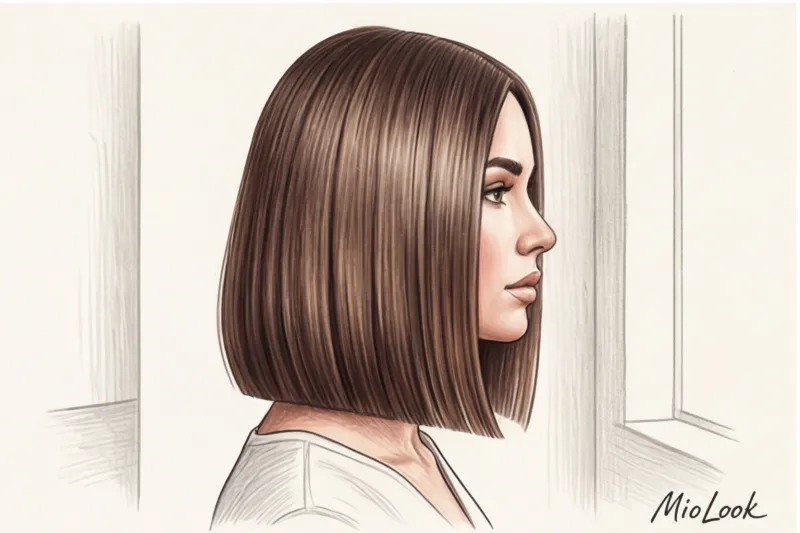
Correct haircuts that add volume to fine hair , are built not on styling, but on precise cut geometry. We recently discussed global trends in hair architecture in more detail in our a complete guide to fashionable women's haircuts , but today I want to address the issue of fine texture. Let's forget about the backcombing of the 2000s and talk about how to create the optical illusion of thickness with the right scissors and clever coloring.
The illusion of thickness: why haircuts that add volume to fine hair are based on geometry
The modern aesthetic of "quiet luxury" dictates its own rules: hair should look healthy, bouncy, and as if you didn't even try to style it. But fine hair, by its very nature, resists this. Why?
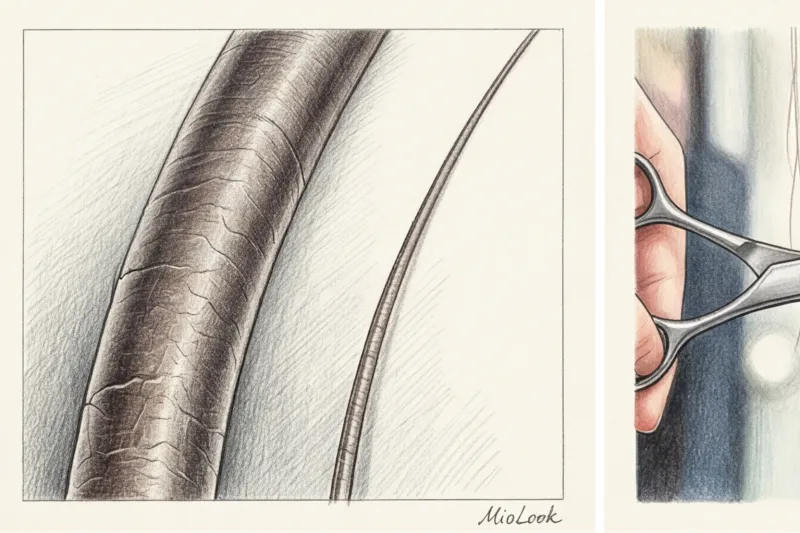
Let's look at the numbers: the thickness of fine hair is only 0.04–0.06 mm (for comparison, normal hair is about 0.08 mm). According to statistics from international trichology centers, approximately 30% of European women have this naturally fragile structure. Fine hair is physically unable to hold a heavy shape or aggressive styling.
A Dyson lab study published in 2023 demonstrated that daily exposure of fine hair to temperatures above 150°C leads to irreversible changes in its protein structure in just 4-6 months. The hair becomes even thinner and begins to break off.
That's why we must abandon harsh thermal styling and shift the responsibility to the haircut's architecture. The basic principle of the London Vidal Sassoon school is that volume is created by precisely angled strands during the cut. If the stylist sets the correct angle, the hair lifts naturally at the roots, relying on the underlying layers as a framework.
The Biggest Volume Myth: Why Layering and Thinning Are Killing Your Hair
The most harmful advice you can still hear in some salons is: "Do you have thin hair? Let's layer it or layer it to add volume!" In my experience, this is the most common reason for clients to cry.
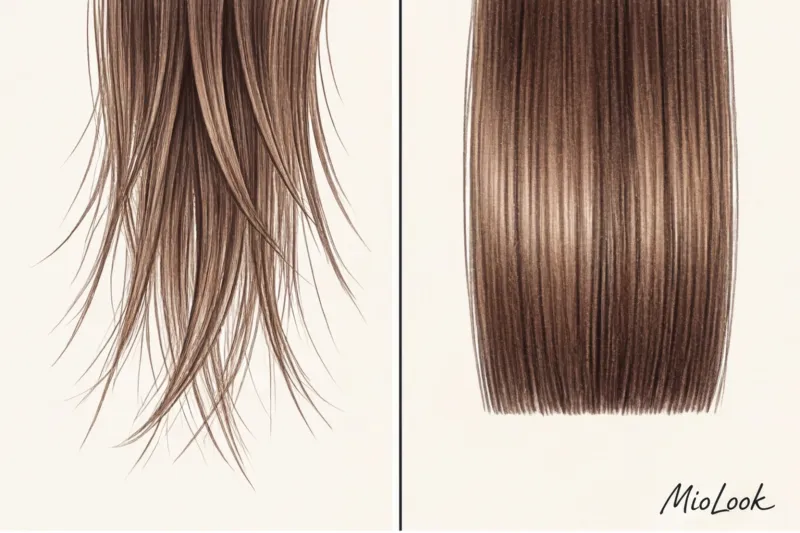
The multi-layering and strong graduation are designed to take away Remove excess volume and weight from very thick, heavy Asian or porous hair. When layering fine hair, you're literally cutting away what little volume you have. As a result, frizz forms on top, and the ends become a transparent "mousetail."
One of my clients, a top IT manager, had been trying to style her choppy cascade for five years. She'd bought expensive texturizing pastes, but her hair still looked untidy, which made her tailored cashmere jackets look considerably cheaper. We took a chance and trimmed off all the thinning ends, creating a perfectly even bob that reached her collarbones. The effect was stunning: her hair instantly doubled in size.
Top 5: The Best Haircuts for Adding Volume to Fine Hair (Without Styling)
If you want to wake up, brush your hair, and look great, you need a shape that holds itself. The key here is to maintain maximum thickness at the hairline. We discussed this principle in more detail in the article about Smart haircuts based on hair texture , but here are three of my absolute favorites.
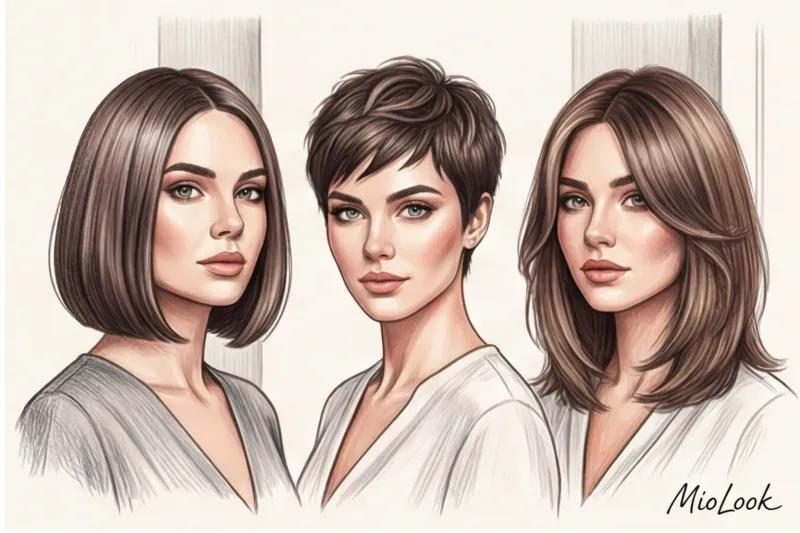
French and classic bob (straight cut)
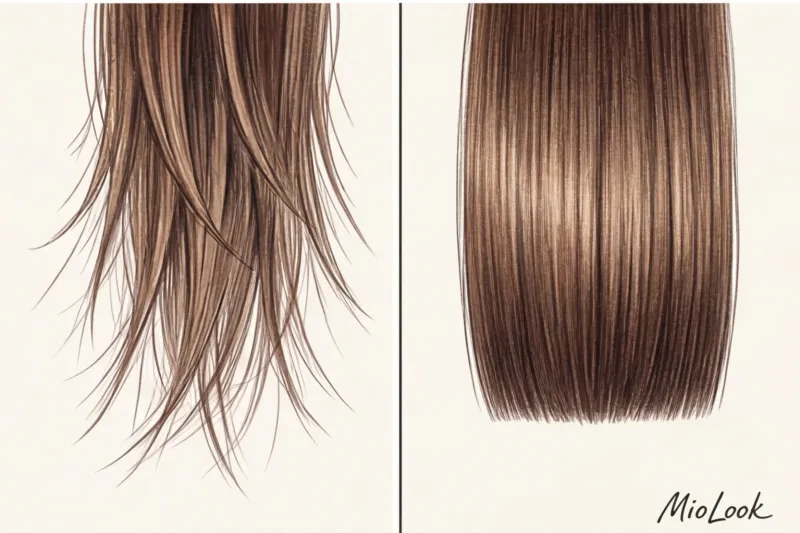
The magic of a blunt (even) cut lies in the visual thickening of the ends. When all the hair ends in one clear line, the eye perceives this as a sign of thickness and health. The ideal length for fine hair is from the earlobe to the middle of the neck. If you cut it below the collarbone, the ends will begin to thin again under their own weight.
Textured Pixie
The ultra-short length literally relieves the roots of weight, creating phenomenal natural root volume. The extended bangs also help contour the face and leave room for feminine styling.
But here I must make an honest disclaimer: The pixie cut isn't for everyone. If you don't have time to refresh your look every 3-4 weeks, or you prefer a more conservative look, elegant hairstyles , this haircut will become stress for you, not salvation.
Ghost Layers Haircuts
This is a secret technique used by modern stylists for those who don't want to part with their length but need volume. The inner layers of hair are cut slightly shorter than the top layers. The longer strands on top are placed on this shortened inner "framework" and lifted. On the outside, the cut appears to be one length, but underneath lies a bouncy texture.
Your perfect look starts here
Join thousands of users who look flawless every day. Artificial intelligence will help you choose a haircut to match your wardrobe.
Get access — €0.99 onceColor as a 3D tool: how coloring enhances the effect of a haircut
Even the most ingenious geometric shape can be lost if the hair color is "flat." Dull, monochromatic black or uniform platinum blonde are the worst enemies of fine hair, as they absorb light and highlight the lack of thickness.
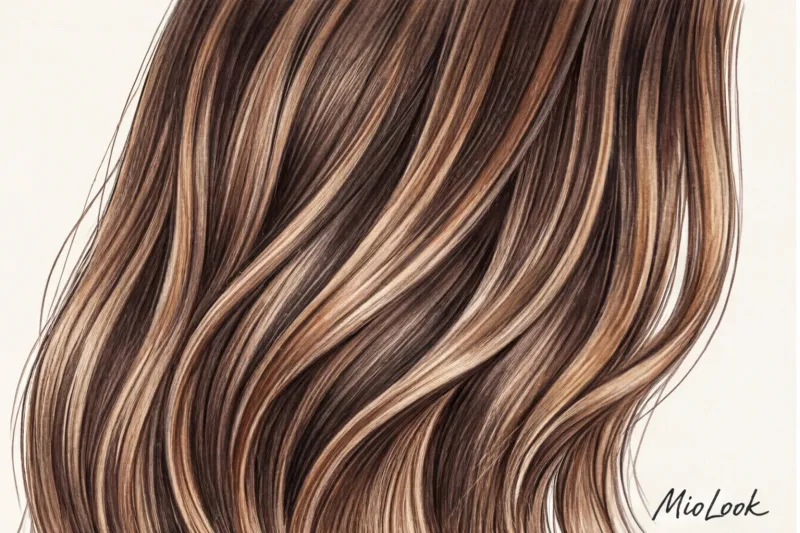
To enhance the effect of a voluminous haircut, we need 3D coloring:
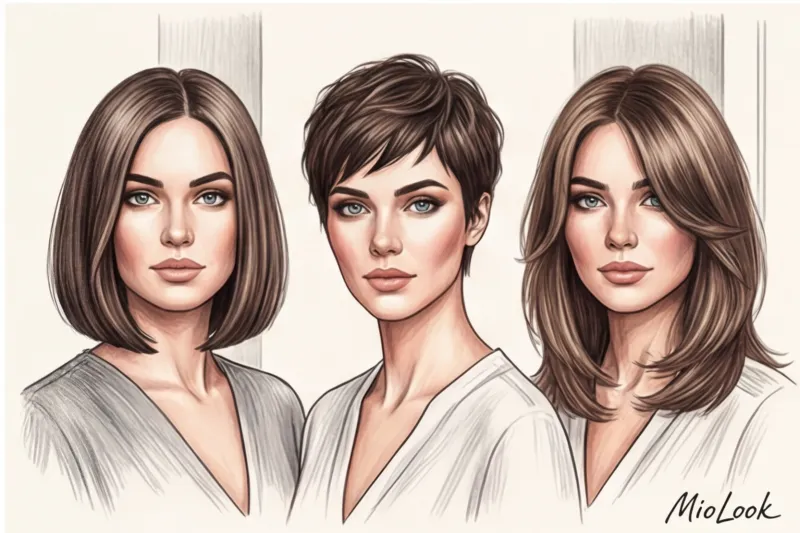
- Shadow Roots: If the roots are 1-2 tones darker than the length, it creates the illusion of natural shadow and visual thickness at the scalp.
- Highlights (Babylights, Balayage): Thin, barely-there highlights act as a highlighter, reflecting light and adding texture.
Sometimes it's hard to imagine how a new, complex shade will fit into your usual style. If you're unsure, I recommend taking photos of your favorite everyday outfits and uploading them to the app. MioLook A smart stylist can help you determine whether a new warm caramel balayage will clash with your cool-toned wardrobe.
Quiet Luxury Care: Styling That Doesn't Weight You Down
The biggest mistake my clients make is trying to apply too many thickening products to fine hair. Mousses, foams, and strong-hold hairsprays contain polymers that, after just a couple of hours, begin to attract dust and moisture from the air, pulling the hair down.
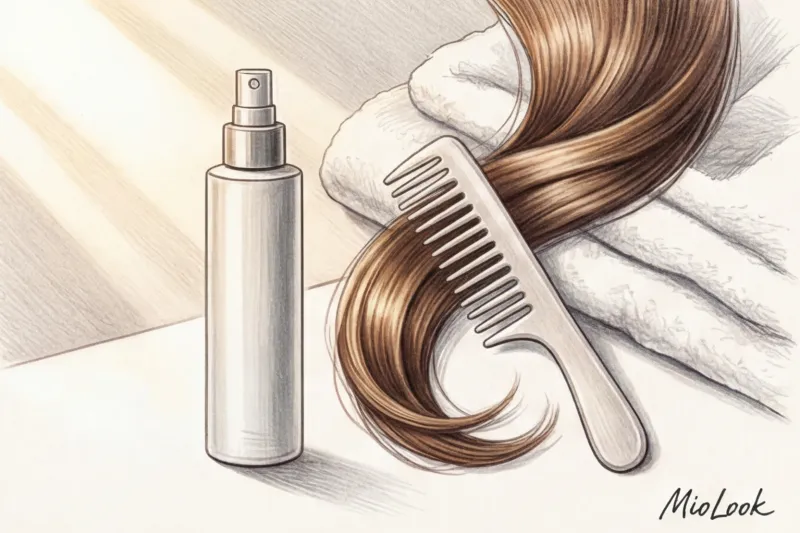
My rule: less is more. What really works:
- Salt and texturizing sprays. They create dry volume and a matte texture. A high-quality texturizer will cost around €25–€45, but it will replace three styling products.
- The 80/20 rule. Dry your hair upside down with warm (not hot!) air until it's 80% dry. Then, brush the remaining 20% of the moisture out using a hairbrush. This will preserve root volume.
- Be careful with "volumizing" shampoos. They often work by opening the hair cuticle, which can lead to dry and brittle ends in the long term. It's best to choose moisturizing products, but always apply conditioner 10 cm away from the roots.
Access to MioLook for €0.99 — one-time payment
A smart AI stylist will select the perfect look based on your appearance and wardrobe.
Get access — €0.99 onceChecklist: How to Explain to Your Hairdresser What Haircut You Want
Half the battle is effective communication in the salon chair. Forget abstract requests like "make my hair beautiful and voluminous." Use a professional dictionary to protect your hair from unsuccessful experiments.
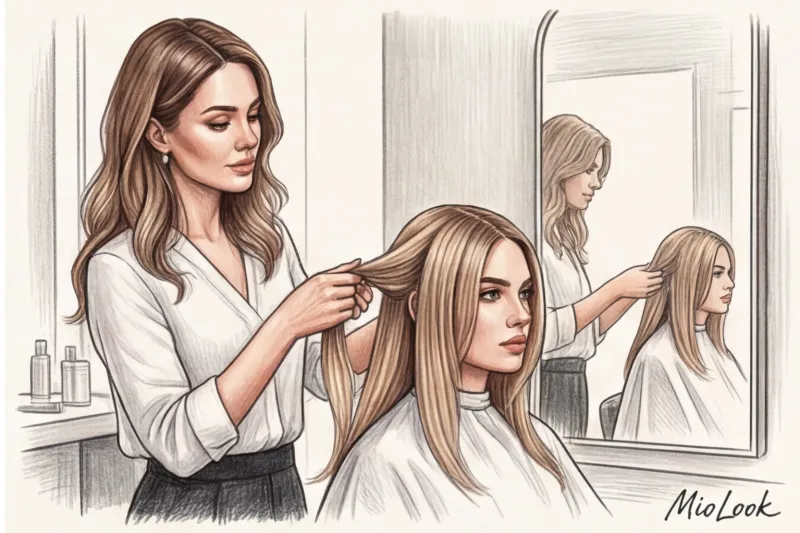
Here's your action plan before your next salon appointment:
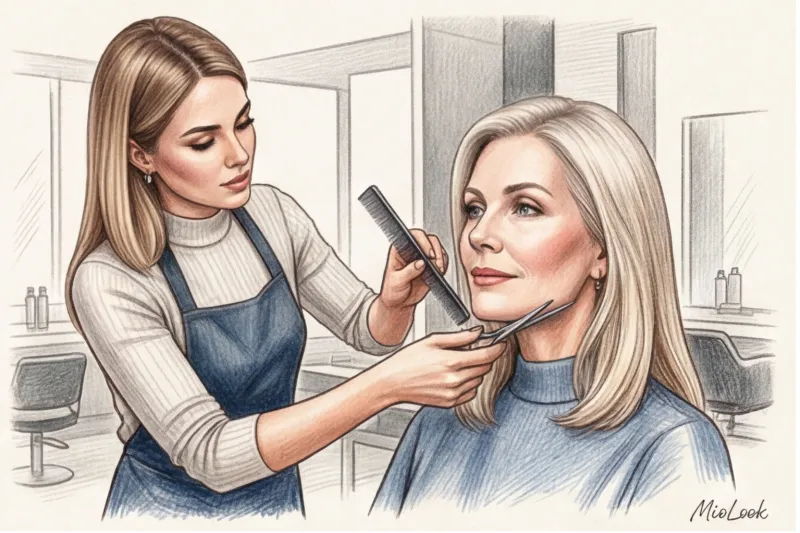
- Say NO to thinning. If the hairdresser pulls out special serrated scissors during a haircut, politely but firmly ask them to stop. Fine hair should only be cut with straight scissors.
- Ask for a "tight cut". Use this phrase to let your stylist know you want to keep the volume of your hair at the ends, not thin it out.
- Discuss the hidden layers. If a straight bob seems too strict for you everyday wardrobe , ask to add texture inside haircuts without touching the top length.
Remember, fine hair isn't a flaw, but simply a structure that requires a technically sound approach. Once you find a stylist who understands the geometry of a close-cut haircut, your morning routine will be reduced to 10 minutes, and your hair will become your most important, luxurious accessory.