Last week, I was sorting through a client's wardrobe and we stumbled upon a paradox. Her favorite 100% viscose H&M dress, bought five years ago for €40, looked almost new. But her basic "premium" modal T-shirt, bought just a month ago for €70, was already covered in telltale pilling on the sides. This incident perfectly illustrates the main question I get asked during consultations: modal or viscose—which is better?
The answer isn't as simple as the labels suggest. To understand the longevity of your wardrobe, I suggest looking a little deeper than marketing promises. We've covered the basic characteristics of cellulose fibers in more detail in our The complete guide to eco-friendly clothing fabrics: Tencel, modal, and lyocell Today I want to focus on how these two materials perform in real life after 20 or more washes.
Modal or viscose: which is better and what is the fundamental difference?
Both materials belong to the class of man-made cellulose fibers (MMCF). They share a common origin: the raw material is natural wood cellulose. The difference begins with the choice of wood. For classic viscose, pine, spruce, or bamboo are most often used, while modal is made exclusively from beech wood.
According to the report Textile Exchange Preferred Fiber and Materials Market Report (2023), the share of cellulose fibers in the fashion market is steadily growing as brands seek replacements for petrochemical synthetics. In this hierarchy, modal is often referred to as "second-generation viscose." It is not a fundamentally new material, but the result of a modernized chemical process in which the fiber is stretched in a special way to give it increased strength.
Chemistry in Simple Terms: Why It's Not Synthetic
Many people still confuse artificial and synthetic fabrics. Let's be clear. Synthetics (polyester, nylon, acrylic) are plastics derived from petroleum products. Artificial fabrics (viscose, modal, cupra) are created from natural raw materials, but using artificial means.
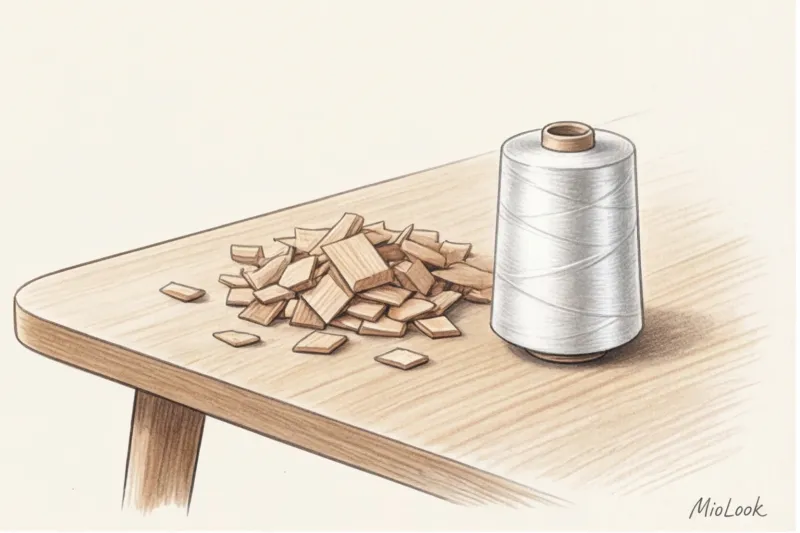
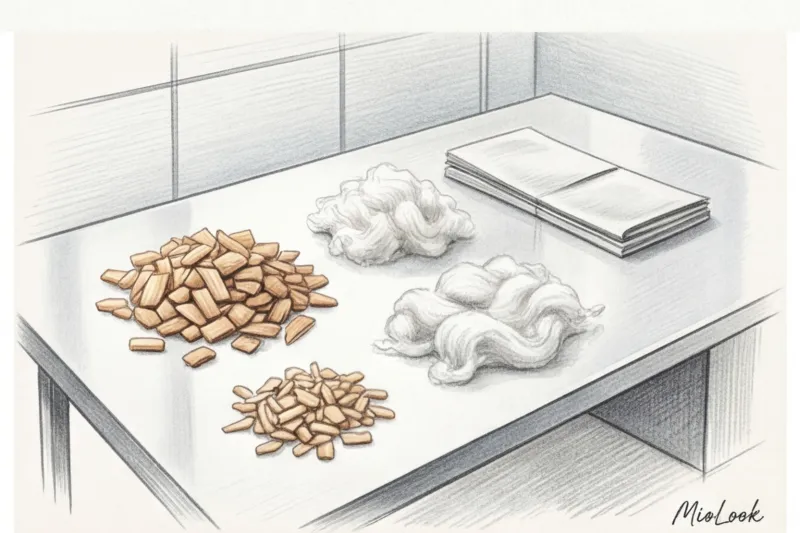
The extrusion process is captivating: hard wood chips are processed and dissolved into a thick, viscous syrup. This mass is then forced through dies (metal plates with microscopic holes) into a special solution. Thus, the dry wood is literally transformed into a soft, flowing thread.
Viscose: Unrivaled Drapery and Pitfalls
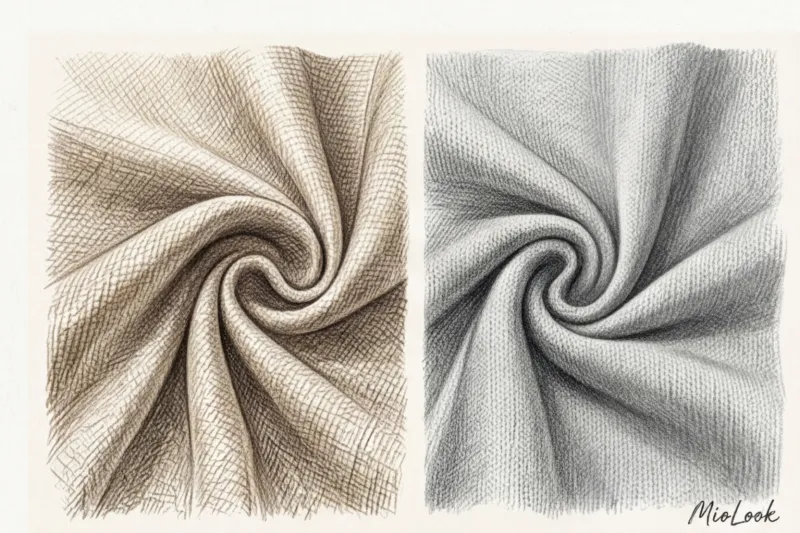
Viscose's main superpower is its fluidity. It drapes beautifully in heavy folds, has a refined silky sheen, and is incredibly breathable. This is why it has remained a favorite among designers for decades when creating flowing summer silhouettes.
But it has an Achilles' heel—a catastrophic loss of strength when wet. When viscose gets wet, its fibers lose up to 50% of their strength. They swell and become vulnerable to any mechanical stress.
One of my clients once decided to quickly freshen up a gorgeous slip dress from Zara by throwing it in the washing machine on a standard cycle with a spin speed of 1000 rpm. The result? The dress shrank exactly two sizes (the normal shrinkage rate for viscose when washed aggressively can reach 5-7%), and whitish creases appeared all over the fabric that were impossible to iron out. The fabric had literally torn at the micro level.

Modal: a technological breakthrough or just marketing?
Modal was developed in the 1950s specifically to address the brittleness of wet viscose. Its modified molecular structure allows it to remain stable in water. It does not deform when washed, and its shrinkage rate is a modest 1–2%.
It feels completely different to the touch. While viscose often has a smooth, slightly cool feel, modal is absolutely soft. According to research by the Austrian Lenzing Group (creators of the patented TENCEL™ Modal), this fiber can absorb 50% more moisture than cotton while remaining dry to the touch. Furthermore, modal is incredibly resistant to dye bleed: a black modal T-shirt will remain jet black even after thirty washes.
Your ideal image begins Here
Join thousands of users who look flawless every day with MioLook. Digitize your wardrobe in minutes.
Get access — €0.99 onceDebunking the myths: why cheap modal is inferior to high-quality viscose
Here's the interesting part. There's a persistent myth: "Modal is always more technologically advanced and durable than viscose." Forget it. In reality, premium viscose will last several times longer than cheap Chinese modal.
The secret to durability lies not in the name of the raw material, but in the quality of the yarn. Mass-market brands often cut corners by purchasing modal made from short staple fibers from unnamed mills. Short yarns quickly unravel from friction, and the garment (especially in the armpit area and where you carry your bag) becomes covered in pilling within a month.
At the same time, if you buy an item made from certified viscose (for example, Lenzing™ EcoVero™) with a high-twist viscose, it will survive hundreds of washings.
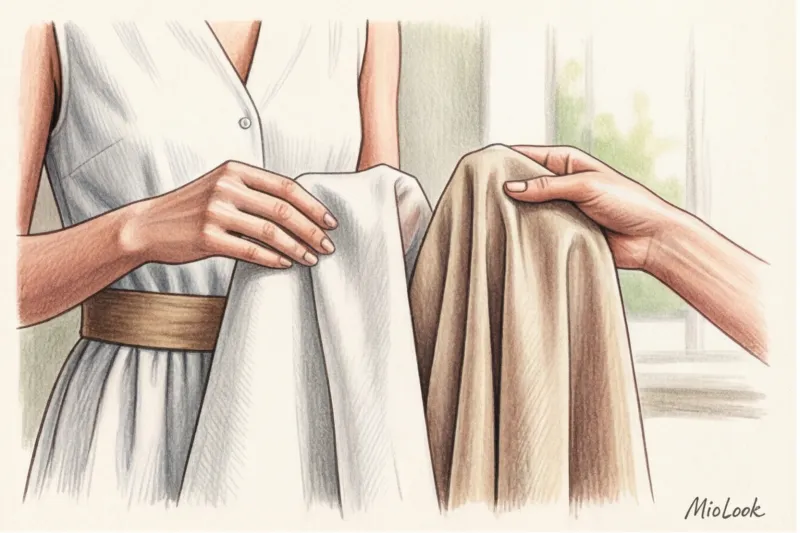
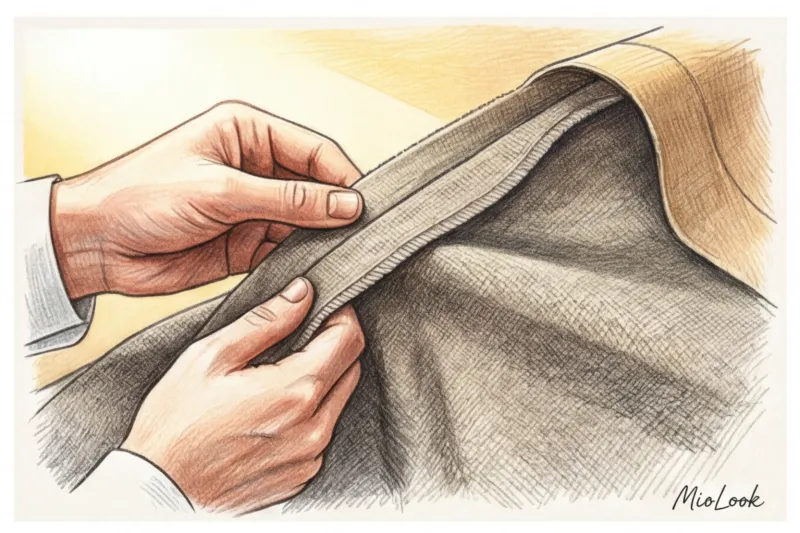
Insider from the stylist: How can you tactilely identify quality fabric in a fitting room? Hold the edge of the garment in your fist for 10 seconds and release. Cheap, loose fabric will remain wrinkled like newspaper. High-quality fiber with good twist will quickly straighten out, leaving only soft, smooth waves.
Battle of Textures: How Fabrics Behave in Real Life
In the summer heat, these fabrics reveal completely different personalities. Viscose acts as a personal air conditioner, quickly wicking away body heat and providing a subtle cooling effect. Modal, on the other hand, lacks this cooling property—it feels like a comfortable, cozy second skin. It's perfect for an air-conditioned office, but at 30°C, a thick modal long sleeve can feel stuffy.
There's another nuance that manufacturers rarely mention. Viscose is tough on sweat stains. If you perform on stage, give presentations, or are simply sensitive to heat, avoid solid, light-colored 100% viscose blouses—the moisture will immediately show up as dark circles. Modal, thanks to its microporous structure and matte finish, conceals these stains much better.

To avoid confusion about the seasonality of fabrics, I recommend my clients to use smart wardrobe feature in MioLook By adding items and specifying their composition, you can easily filter the database and receive recommendations for outfits specifically designed for hot days.
Stylist checklist: what to choose for specific wardrobe items
So what should you buy? Don't base your decision on the fabric, but rather on the item's function in your wardrobe.
- Dresses, palazzos, flowing blouses and summer suits: Viscose is the clear winner here. No modal will provide such luxurious movement. However, to prevent wide-leg trousers in the €80–€150 range from stretching out at the knees after your first squat, look for a blend: viscose plus 20–30% polyester for reinforcement.
- T-shirts, long sleeves, underwear and yoga clothes: Modal's territory. Its ability to gently hug the body's contours without compressing makes it ideal for base layer knits.
- Ideal blends: Pure cellulose is good, but blends work better. Adding 5% elastane to a viscose top ensures the collar doesn't stretch. And a modal-cotton blend (often 50/50) gives the fabric a supportive feel that pure modal lacks.
Ready to get started?
Try the MioLook free plan—no commitments required. A smart AI stylist will create the perfect look for you.
Get access — €0.99 onceCare instructions: how to avoid damaging cellulose fabrics
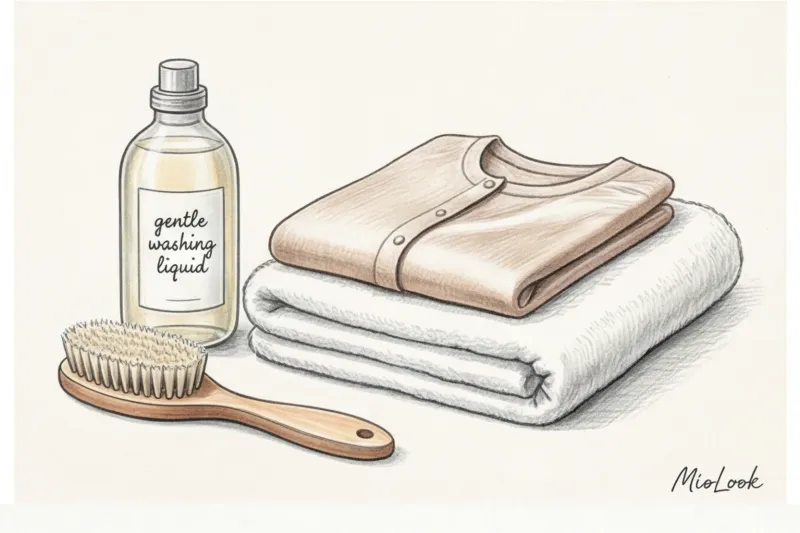
Premium fabric can be destroyed in a single wash. To ensure your items last for years, simply follow a few strict washing instructions:
- Temperature conditions: Strictly 30°C. No washing in hot water and absolutely no harsh tumble drying.
- Friction protection: Be sure to use laundry bags. Over 12 years of experience, I've learned that basic T-shirts washed in bags with liquid gel last 2-3 times longer than those washed in a drum with abrasive dry powder.
- No twisting: Remember how viscose loses its strength in water? Wringing a wet dress by hand physically tears the microfibers. Gently squeeze out the water through a terry towel.
- Careful ironing: Iron inside out only. Excessive steam on dark viscose leaves shiny, unsightly marks on the seams. Use a temperature suitable for silk.
- Proper storage: Don't hang modal knits on hangers. The weight of the fabric will stretch, causing the garment to lose its proportions. Fold knits on shelves.
Bottom Line: Informed Choices for Your Smart Wardrobe
As you can see, there's no clear winner in the "modal vs. viscose" debate. There are no bad fabrics—only improper use and manufacturers' desire to skimp on raw material quality.
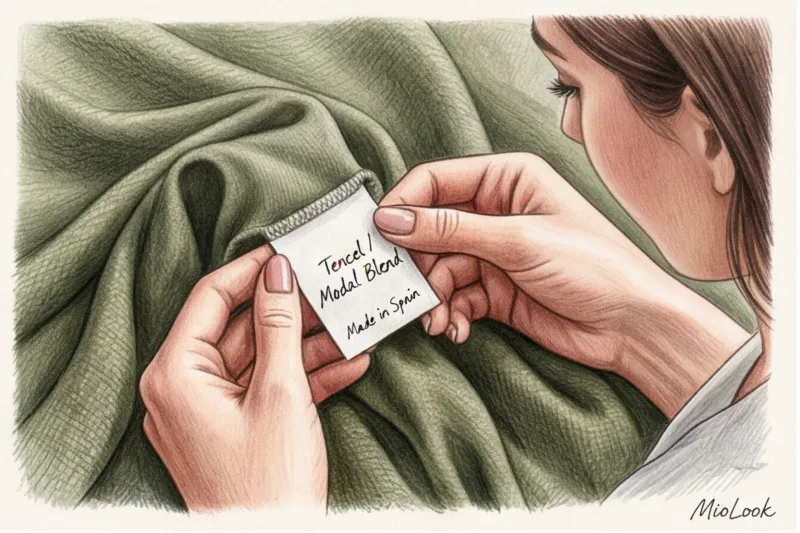
I urge you to read labels beyond the obvious ingredients. Look for patented names (Tencel, Ecovero), test the fabric for wrinkles right in the store, and always match the material's properties to the garment's intended use in your wardrobe.

A truly sustainable wardrobe isn't one with only green labels. It's one in which items serve you for years, maintaining their pristine appearance. Invest in quality yarn, care for your fabrics properly, and entrust the chore of creating new looks to MioLook artificial intelligence.