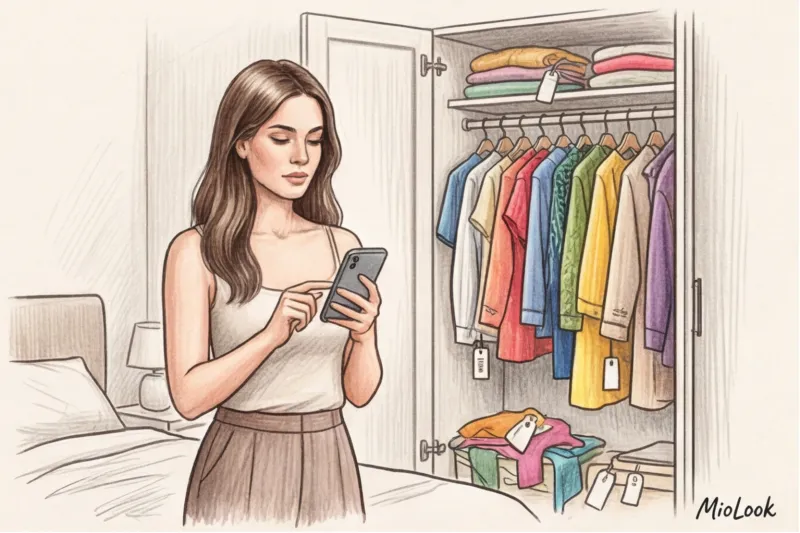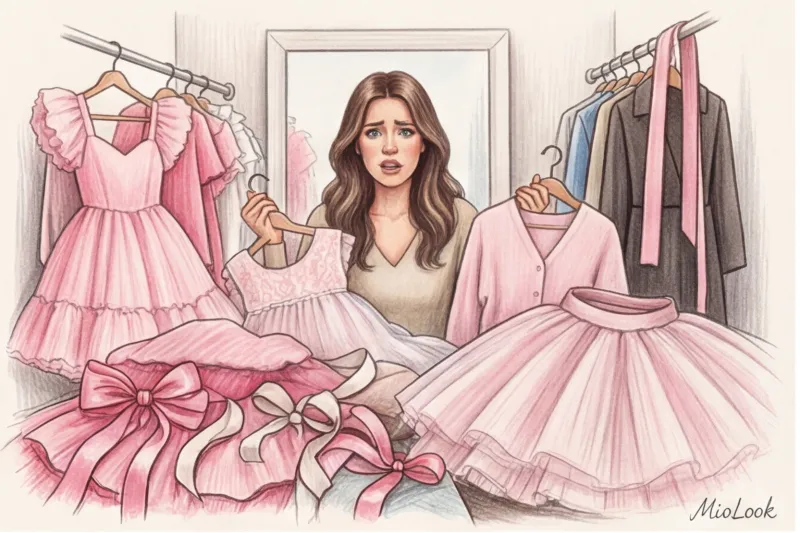
Over the past year, I've audited dozens of wardrobes and discovered a disturbing pattern: about 80% of spontaneously purchased corsets, tulle skirts, and silk ribbons were worn by my clients exactly once. We see hyper-feminine aesthetics on social media, succumb to impulse, buy into the fantasy, and then feel like theater extras on the subway. The problem isn't the microtrends themselves, but our approach to them. We treat radically new styles as ordinary purchases, when in fact, they're high-risk stylistic investments.
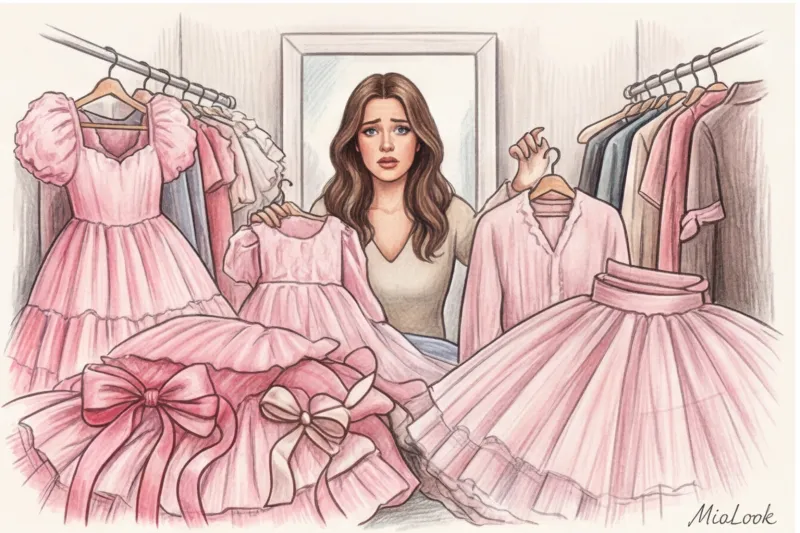
We discussed the psychological origins of this need for escapism and tenderness in more detail in our complete guide: Romantic Trends: How to Wear Coquette Style Every Day The point is, you don't have to buy out half the store to embrace the aesthetic. To avoid blowing your budget on flashy items, your first line of defense should be Virtual clothing try-ons using photos — a technology that works as financial and stylistic insurance.
Why the Coquette and Balletcore Aesthetic Is a Wardrobe (and Wallet) Risk
Let's be honest: after years of wearing tracksuits and oversized hoodies, we've all swung in the opposite direction. We crave bows, lace, pointe shoes, and maximum fragility. But herein lies the main pitfall, which I call the "carnival costume effect." Things that look amazing on Pinterest or in staged videos often look ridiculous and out of place in real life—in a regular office or at the supermarket checkout.
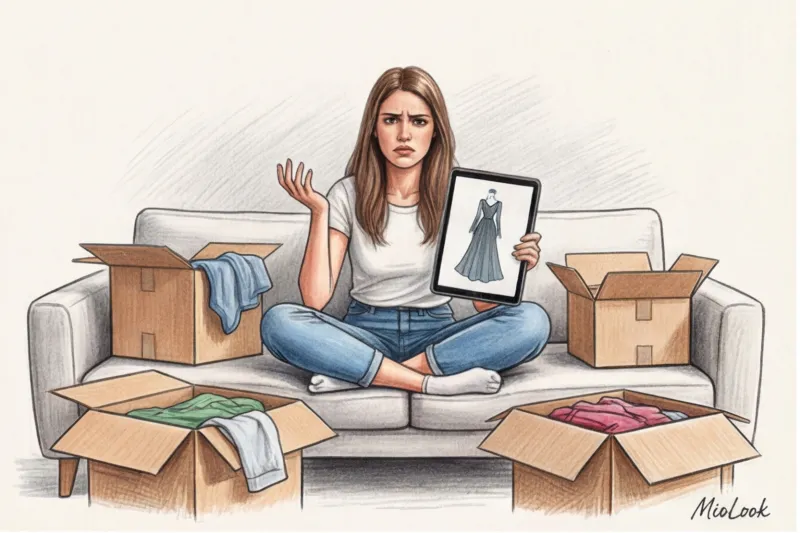
According to Lyst's 2024 data, the average lifespan of a TikTok microtrend is just 6-9 months. Around 60% of purchases driven by hyper-feminine trends ultimately end up as dead weight on shelves. Why? Because of the difficulty of styling.
"We don't just buy a thing; we buy the lifestyle it conveys. But if your real schedule consists of 10 hours at a laptop and driving, a corset with rigid boning will become an instrument of torture rather than a fashion statement."
One of my clients, let's call her Anna, spent about €350 on three full, tiered tulle skirts, succumbing to the magic of Balletcore. These skirts hung in her closet for eight months, still with their tags. When we started sorting through her wardrobe, Anna confessed, "I like this vibe on others, but on me, I feel like an overgrown child at a party." Had she digitally tested the silhouette before going to the checkout, this expense (and the guilt) could have been avoided.
Access to MioLook for €0.99 — one-time payment
A smart AI stylist will select the perfect look and protect you from impulse purchases.
Get access — €0.99 onceVirtual Photo Try-On: How Technology Saves You From Fashion Mistakes
The fashion industry is changing. According to the WGSN Consumer Tech Report (2024), the introduction of digital fitting rooms reduces e-commerce returns by a staggering 40%. This isn't just a fun AI-powered toy; it's a powerful analytics tool for your personal style. Virtual clothing try-ons using photos allows you to make a radical stylistic shift without spending a single euro of real investment.
Think back to classic shopping: you're swiping an armful of unfamiliar styles into the fitting room. The light in the stall shines from above, highlighting every shadow on your face, the salesperson behind the curtain asks, "How do you like them?", and you're frantically trying to button up a tight top. Making an informed decision in such circumstances is nearly impossible.
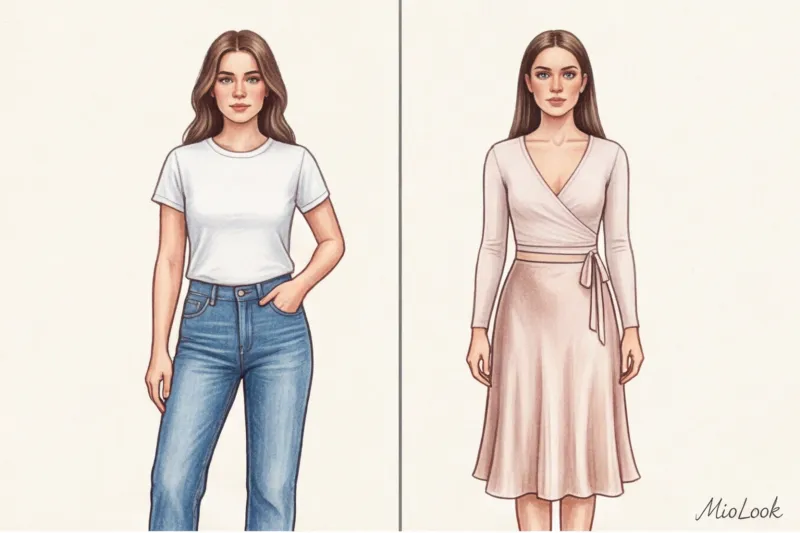
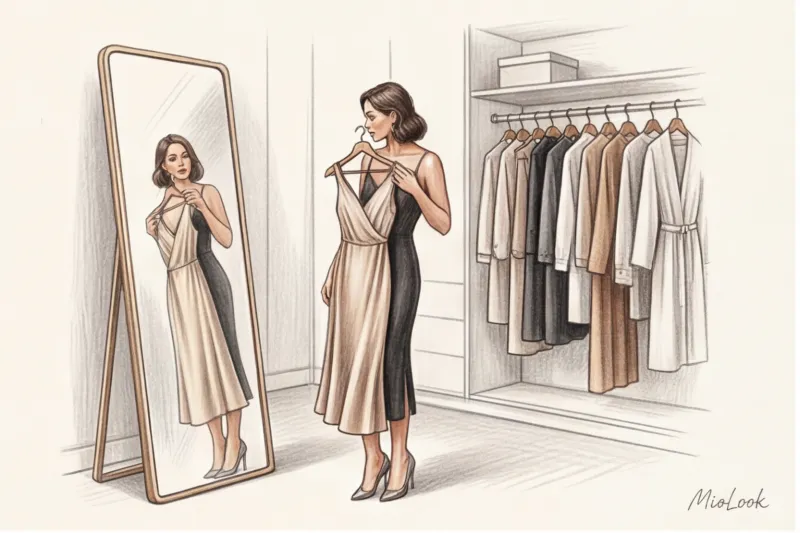
Digital fitting room in the app MioLook It gives you absolute psychological security. You can try on candy pink, even if you've been wearing nothing but black architectural minimalism for the last five years. You see an objective picture of how the new proportions interact with your figure, without the pressure of salespeople and the stress of changing clothes.
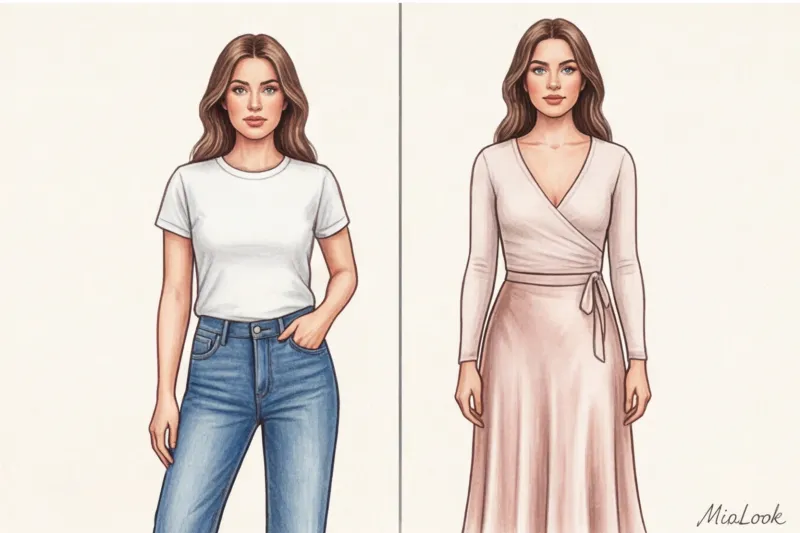
Balletcore or Coquette: Testing Both Aesthetics on Your Figure
While both microtrends exploit the theme of romance, they treat body geometry in fundamentally different ways. As a stylist, I always pay attention to the properties of fabrics. Virtual fittings perfectly highlight these nuances even before you touch the material.
If we look at the Kibbe body type system, the difference becomes clear. Women with pronounced geometric curves and wide shoulders (Natural body type) may feel physically uncomfortable in the stiff, stand-up lace of Coquette—it will look separate from the body. But the soft, draping knits of Balletcore, falling off the shoulders, will accentuate their statuesque figure.
Anatomy of Coquette: Bows, Lace, and Pearls
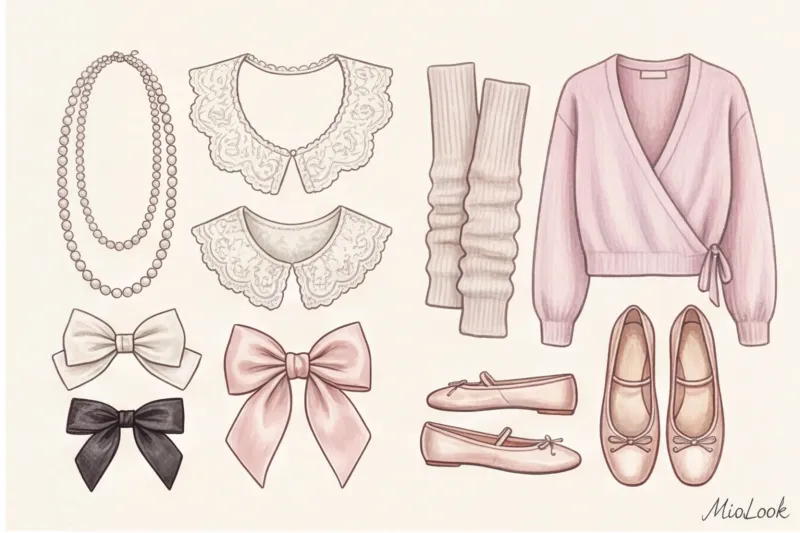
Coquette is a vintage, slightly theatrical romanticism. It's based on rigid forms: corsets, dense embroidery, an abundance of small embellishments, pearl strands, and, of course, childish bows.
- Best things to take on a virtual test: sweetheart neckline top, thick cardigan with pearl buttons, Peter Pan collar blouse.
- What to look for when generating: Does the abundance of small details clash with your facial features? If you have large, contrasting features, a small floral print can make up for it.
Balletcore code: pointe shoes, tulle and knitwear
Balletcore is a fusion of sport and softness. Soft, enveloping lines dominate: fine cotton knits, cashmere, translucent fabrics, leg warmers, and flats with pointed toes.
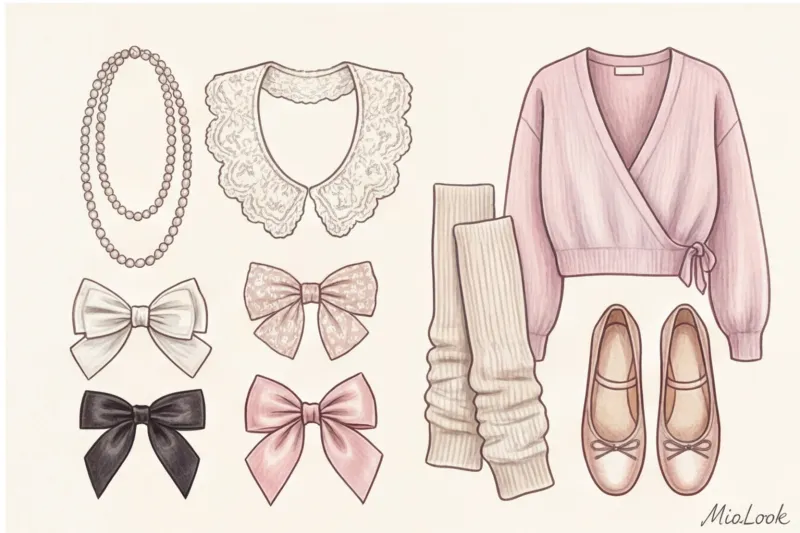
- Best things to take on a virtual test: wrap cardigan (wrap top), translucent matte tights, a full midi skirt paired with a tight bodysuit.
- What to look for when generating: How soft drapes change the silhouette of the shoulders and waist. Knitwear weighing less than 150 g/m² can be merciless to the slightest nuances of the figure.
Your ideal image begins Here
Join thousands of users who look flawless every day with MioLook.
Get access — €0.99 onceA stylist's secret: how to properly integrate microtrends into a basic wardrobe
Now, the main counterintuitive advice I give to all my clients: Never buy a complete look based on a microtrend aesthetic. Buying a "starter pack" (corset + ruffled skirt + ballet flats + bows) is a direct route to that very theatrical effect.
The secret to stylish women featured in street style chronicles lies in the 85/15 rule. Your look should be 85% clean, understated basics and only 15% trendy aesthetics. It's the contrasting textures that make an outfit modern, not saccharine.
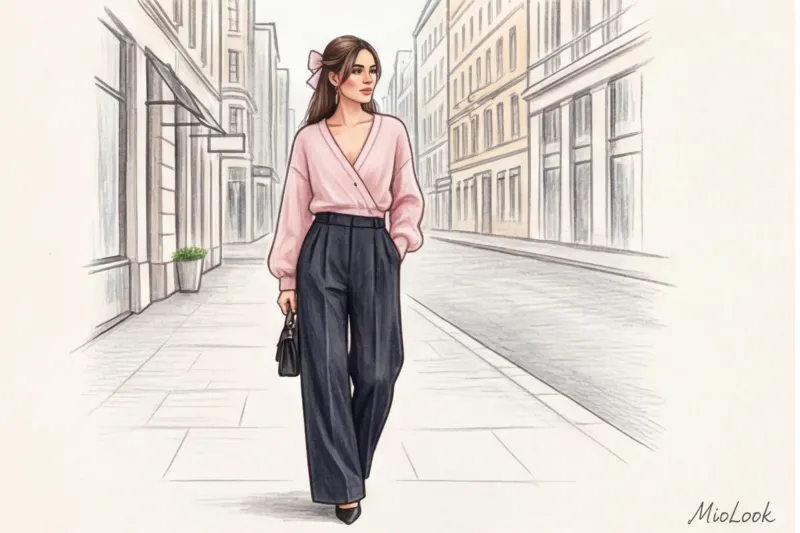
I conducted a personal experiment: I spent a week testing over 50 Balletcore looks in the app. Fluffy tulle dresses made me look like a 2000s graduate. But when I used AI to pair my usual men's wool pleated trousers (my go-to) with a soft pink ballet wrap cardigan (a trend), magic happened. The austerity of the heavy wool suit grounded the naivety of the pink knit. I bought this cardigan for €65, and it fits perfectly into my wardrobe.
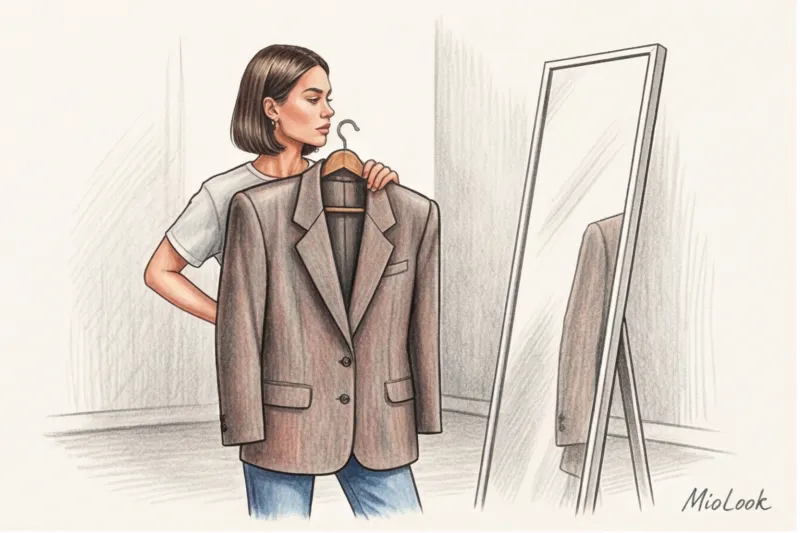
To tone down the drama, always mix and match: a lace Coquette top with distressed oversized denim; satin ballet flats with a leather biker jacket; a pearl choker with a simple white T-shirt of at least 180 g/m².
Step-by-step instructions: virtual try-on of clothes from photos for new looks
To Virtual clothing try-ons using photos To produce a realistic result, not a funny collage, the neural network needs the right input data. As an active user of AI tools, I developed the perfect algorithm.
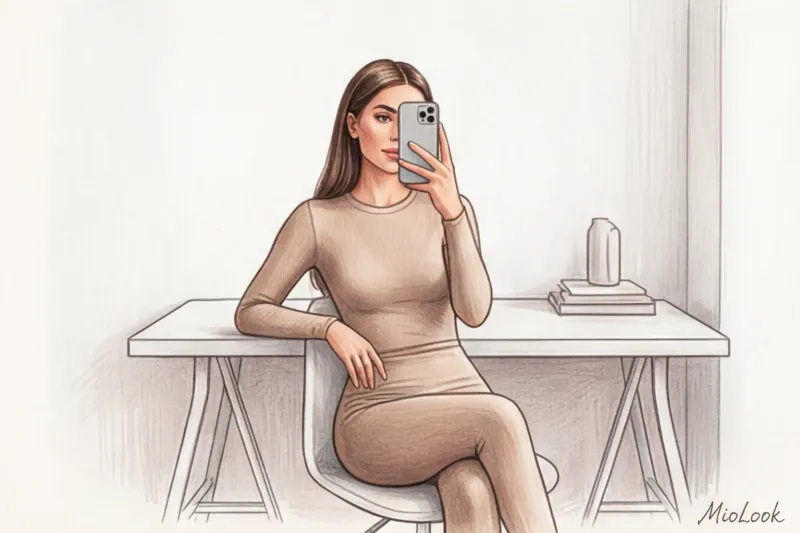
- Step 1: Correct source. This is critical. The AI must "read" your body geometry. Take photos in natural light from a window, standing up straight (avoid complex poses). Wear form-fitting basic clothing in a contrasting color to the background (for example, black leggings and a top against a white wall). What you shouldn't do: Photos in a down jacket, mirror selfies from the bottom up, or photos in thick hoodies will completely break the clothing overlay algorithm.
- Step 2: Upload and select category. Upload your photo to MioLook and move on to the romantic or trendy styles section. Start small—change just your top.
- Step 3: Iterative testing. Vary the colors. Try the same lace top in dusty rose, icy white, and deep wine. You'll be surprised how much color affects your aesthetic perception.
- Step 4: Forming a lookbook. Save your most successful (and most unsuccessful!) generations in a separate folder. Photos of failed generations are a great way to sober up at the checkout.
From a virtual image to a real purchase: a checklist
Let's say a neural network has generated a stunning look for you with a tulle skirt, and you're ready to open the Zara or H&M app to spend €80–€120. Stop. Before you hit "Add to Cart," run the item through a rigorous capsule wardrobe filter.
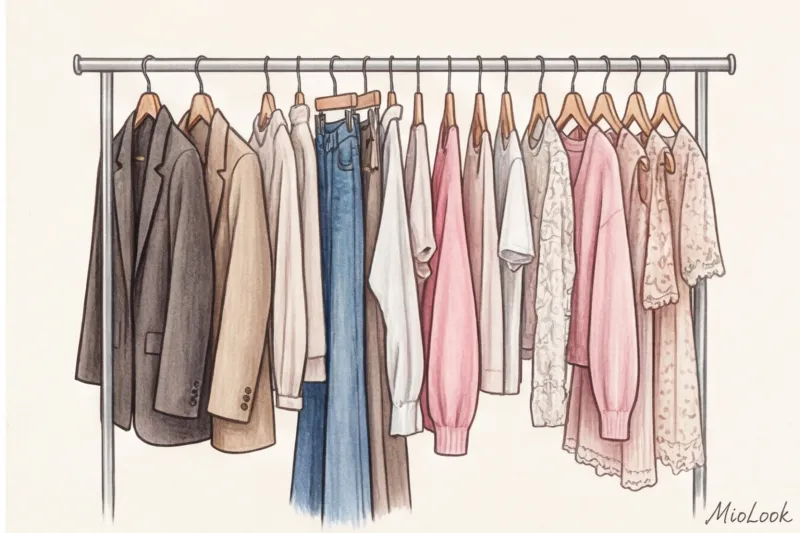
- Test 1: Rule of three combinations. Can you create three different outfits with this item right now, without buying anything new? If a ballet cardigan only goes with one specific skirt, it's a bad investment.
- Check 2: Color Temperature. When using the virtual shader, carefully examine your skin tone. Balletcore shades often have cool, icy undertones. If you have a warm, olive undertone, icy pink can make your complexion appear earthy. Look for warm, peachy alternatives.
- Test 3: Comfort in dynamics. The AI displays a static image. Ask yourself: will I be able to lift my arms in this tight corset? Will I have to adjust this top every five minutes?
Technology gives us the luxury of being frivolous in the virtual world, while remaining pragmatic in the real world. Try out the boldest bows and the fullest skirts digitally. Enjoy the aesthetics without breaking the bank. And only add those 15% of the trend that will give your usual basics a new look.