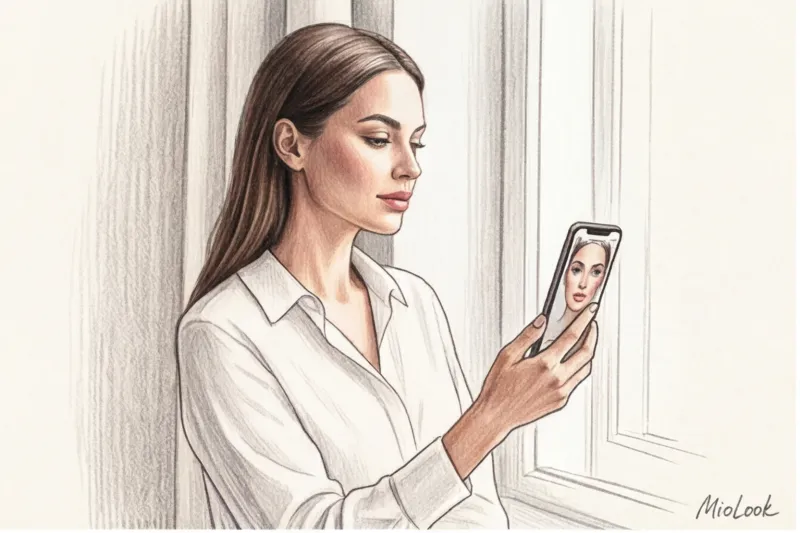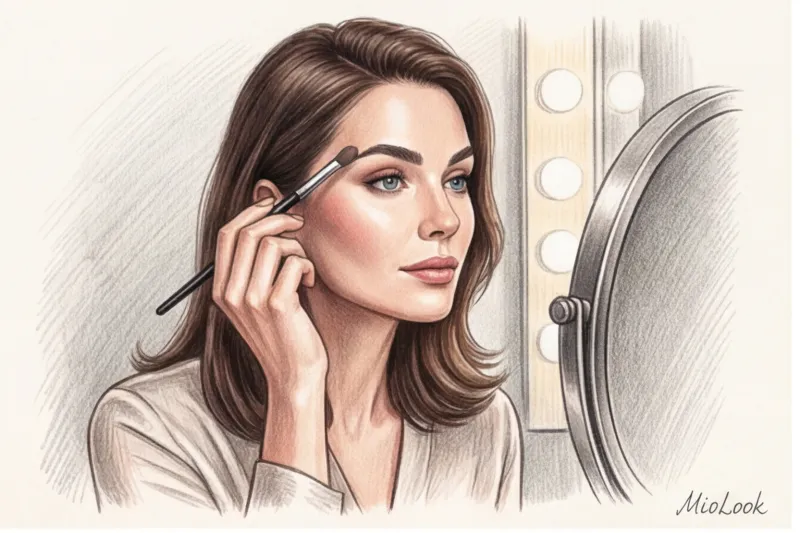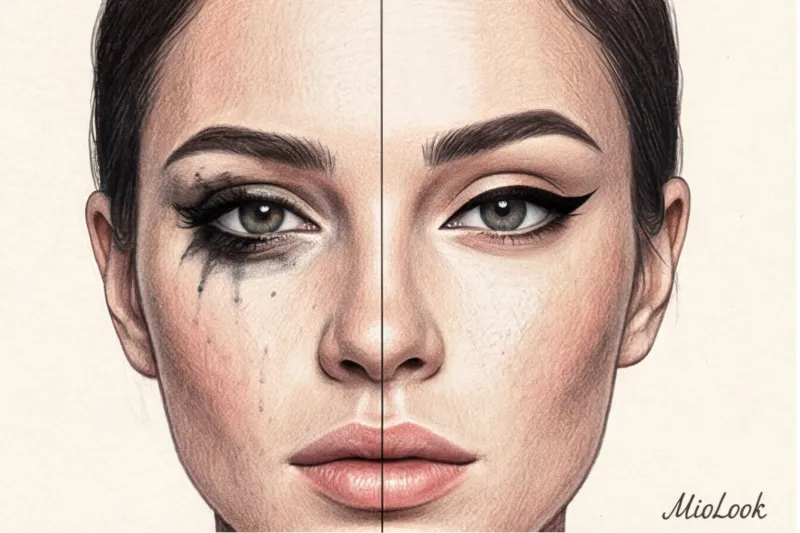
Last week, I was reviewing my client Anna's makeup bag. At the bottom lay five (!) different black eyeliners, ranging in price from €15 to €45. "They're all terrible: they smudge, they smear on the upper lid, and the tips break in half," she explained with exasperation. Spoiler alert: none of the eyeliners were faulty. The problem lay in the architecture of her hooded lid, which we stubbornly ignored, trying to replicate a popular online tutorial. When we opened the AR try-on app and programmatically moved the angle of the liner down just a few millimeters, the makeup instantly worked.
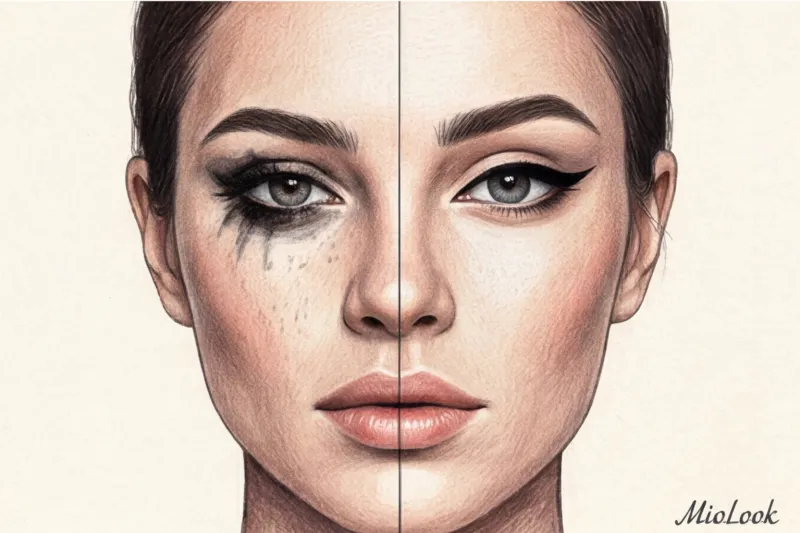
Today virtual eye makeup — it's no longer just a toy with fun masks that smooth out pores. It's a precise diagnostic tool for working with facial proportions. We've written more about how neural networks are forever changing our shopping algorithms in The complete guide to virtual makeup try-ons with AI In this article, we'll transform makeup try-ons from entertainment into a practical tool: I'll show you how to use AI as your personal makeup stencil before going to the cosmetics store.
Why YouTube Tutorials Don't Work, or How Virtual Eye Makeup Is a Game Changer
Let's be honest: classic video tutorials are 2D. The blogger demonstrates the technique on a perfectly open, often large, eyelid, completely disregarding your unique asymmetry, skin texture, and eye depth. Have you ever noticed how luxurious the blending looks on screen, only to turn into a heavy, dirty smudge the moment you repeat the same thing in front of your mirror?
Herein lies the biggest misconception in the beauty industry: the myth of the "universal wing." That classic upward "cat eye" taught in every makeup course is physically broken by the crease of the eyelid on almost 40% of real European-type women. If the crease intersects the outer corner of the eye, a straight line is impossible according to the laws of geometry.
Modern algorithms work fundamentally differently. When you use advanced virtual eye makeup, a neural network scans your face in 3D. It reads the dynamics of your folds when you blink, analyzes skin tension, and the volume of your orbital bone. You test 15 eyeliner variations in three minutes and immediately see which geometry elongates your eyes, while which makes them look heavy and tired. In real life, such experiments would take two hours, red eyes from rubbing, and half a bottle of micellar water.
Drooping Eyelids: How AI Helps Find the Right Angle for Eyeliner
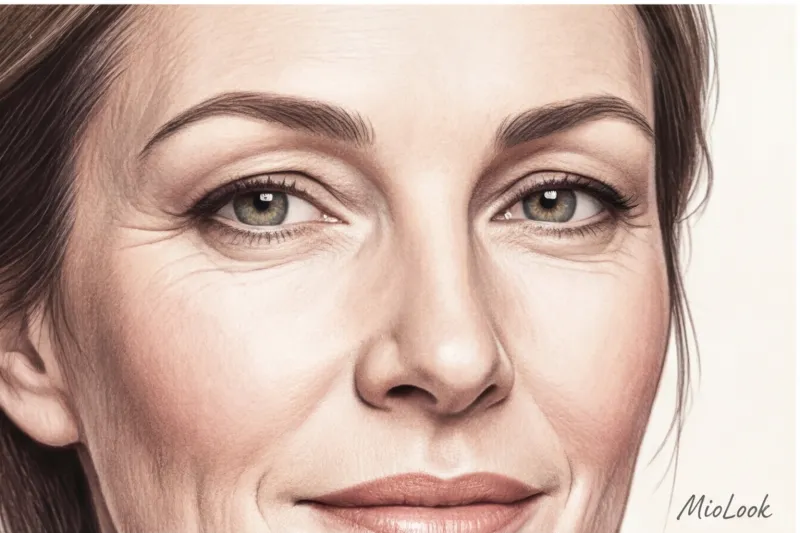
Hooded eyes aren't a flaw, but an anatomical feature in which the fixed eyelid partially or completely obscures the moving one. This is why standard eyeliner tends to be imprinted under the brow, and the tip of the wing forms a curved "comma" when the eye is open.
For these types of eyes, leading makeup artists use the "bat wing" technique. It involves drawing the liner with the crease in mind: when the eye is closed, it has a stepped curve, but when you open your eyes and look straight ahead, the curve disappears into the crease, creating a perfectly straight, sharp point.
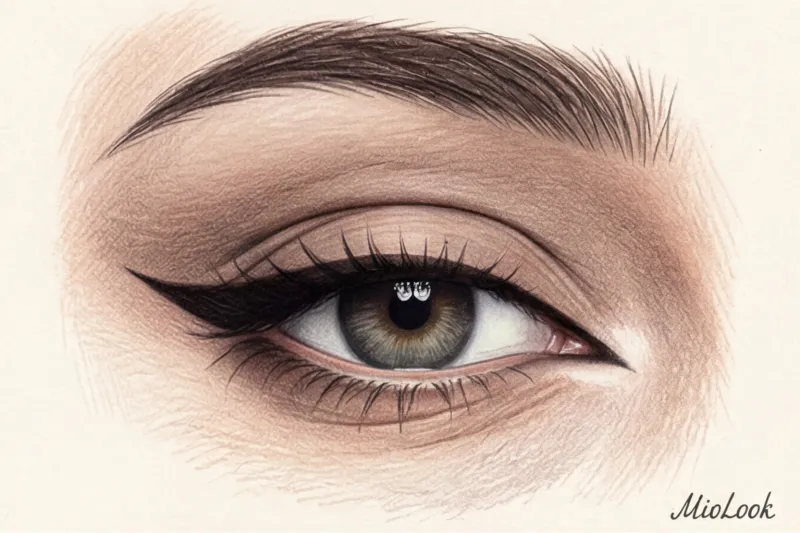
Finding the angle of this bend on your own is extremely difficult. This is where virtual fitting truly shines. You can turn on the camera, apply an AR filter with a graphic arrow, and simply turn your head, watching as the algorithm adjusts the line's geometry specifically for your overhang. You can take a screenshot and use it as a cheat sheet.
Testing matte and shimmery eyeshadow textures online
Another common mistake for drooping eyelids is choosing the wrong texture. Shimmery eyeshadows reflect light and visually enlarge objects. If you apply glitter directly to the drooping eyelid, the eye will appear puffy. Matte textures, on the other hand, absorb light and visually deepen the contours.
Modern AI tools perfectly simulate the physics of light reflection. When trying them on virtually, you'll clearly see the difference: how a dense matte taupe (a gray-brown shade) conceals a heavy lid, while a dewy finish only works in the inner corner of the eye or the very center of the moving lid, where the natural highlight falls.
Access to MioLook for €0.99 — one-time payment
A smart AI stylist will select the perfect makeup and look based on your individual proportions.
Get access — €0.99 onceDeep-set eyes: bringing the gaze to the foreground
With deep-set eyes, the brow bone juts out significantly, making the eyes appear sunken and casting a natural shadow on the lid. The worst thing you can do in this case is apply dark matte eyeshadow to the entire lid. This will create a black hole effect.
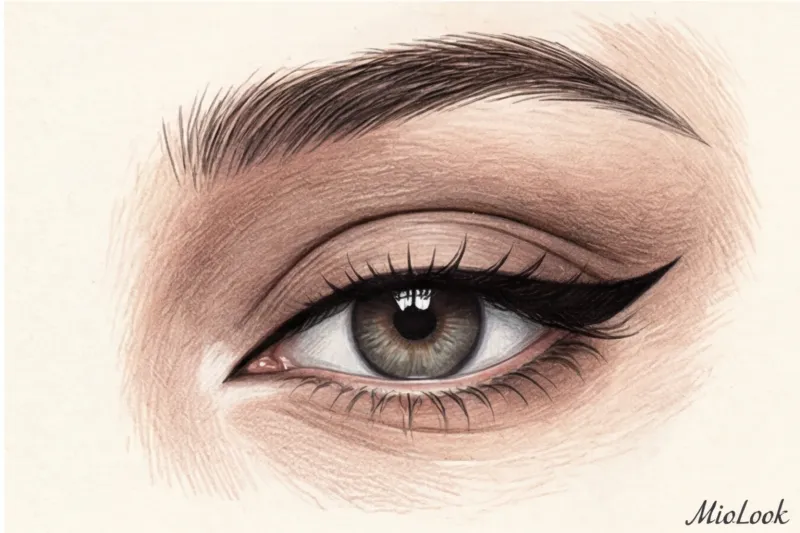
The main goal here is to highlight the eyes with light, satin textures. But how do you choose a light eyeshadow shade so it doesn't look like cheap chalk on your skin? Virtual eye makeup lets you try dozens of satin shades, from warm champagne to cool pearl, finding the one that complements your skin tone.
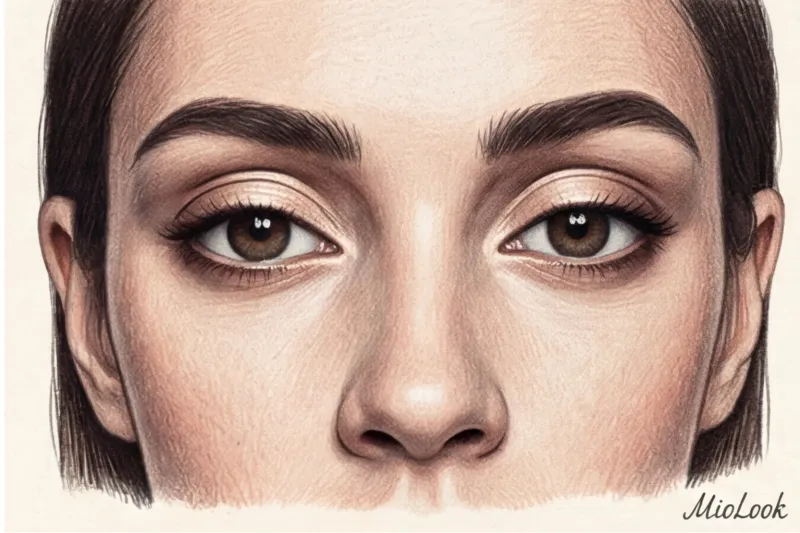
For such eyes, a wide, aggressive winged line is often contraindicated—it will simply "eat up" the visible portion of the eyelid. The alternative? Tightlining. In the app, you can select a fine-line liner tool and see how fine-tuning the lash line makes them appear three times thicker without weighing down the eyes. Incidentally, this technique is indispensable for the office. If you need to look fresh under harsh corporate lighting, I recommend checking out our article about business makeup , where the inter-eyelash arrow is the absolute base.
Almond and Round Eyes: How to Correct Proportions Without the "Panda Effect"
Round eyes are tall, and the white of the eye often shows through above or below the iris. The goal of makeup in this case is to visually elongate the shape toward the temples. A bold, sharp black wing can make the eye appear even rounder and doll-like. A soft, smudged brown wing, however, will elongate the shape subtly and delicately.
Those with almond-shaped eyes are lucky: almost any shape suits them. However, there's a pitfall: an overly busy lower lid, which visually narrows the eye and adds age. A virtual try-on quickly sobers you up: you apply intense black eyeliner to the lining of your lower lid in the app and immediately see how your eye appears half as small.
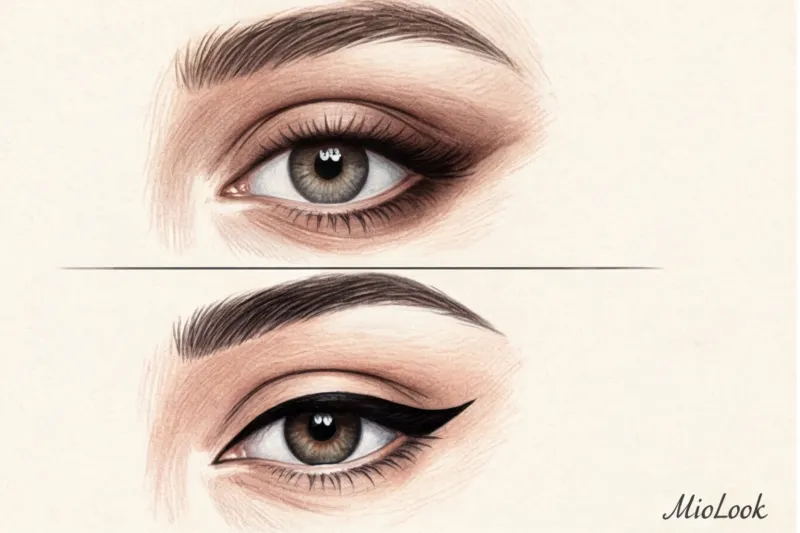
I recommend testing colored liners on almond-shaped and round eyes. We're usually afraid to buy emerald, burgundy, or dark blue eyeliner in the store—what if it doesn't work, and €25 goes in the trash. The AR app gives you the freedom to experiment. You might find that a rich eggplant color brings out the green in your eyes a hundred times better than your usual black. To avoid getting the color temperature wrong, check out our cheat sheet. 12 color types of appearance before testing shades online.
Asian Eyelid (Monolid): Makeup Architecture from a Clean Slate
The monolid (epicanthus) lid is distinguished by the absence of a pronounced crease on the upper eyelid. For a long time, the beauty industry was plagued by a harmful trend of artificially "drawing" a European crease on Asian eyelids using harsh contouring. Fortunately, we've moved away from this now. The monolid is the perfect, smooth canvas on which graphic makeup looks its most expressive.
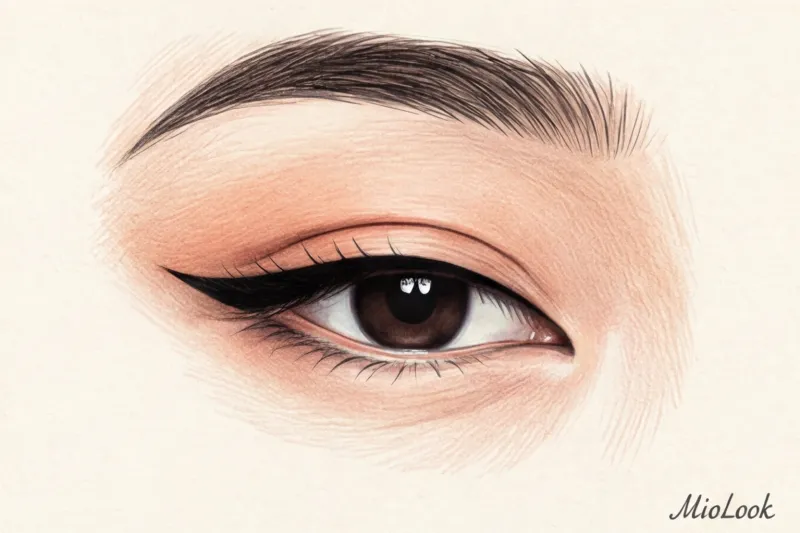
Classic European eyeliner designs don't work here at all. A thin line will simply disappear when the eye is open. AI algorithms, trained on global facial databases, automatically adapt makeup to the epicanthus fold. Using your smartphone screen, you can try out the boldest trends, such as floating eyeliner, which is drawn not along the lash line, but slightly higher, directly on the eyelid. The virtual format allows you to find the perfect line thickness in seconds: from delicate lash line to a grungy, sweeping smoky eye, which never looks tacky on a monoliner.
Your perfect look starts here
Join thousands of users who look flawless every day with MioLook. Smart wardrobe management and beauty try-ons in one place.
Get access — €0.99 onceA stylist's checklist: how to use AR eye try-ons correctly
As a practitioner, I must issue an important warning. No neural network will work correctly if you feed it poor input. To ensure your virtual eye makeup doesn't disappoint your expectations before purchasing cosmetics, follow these four strict rules:
- Daylight only: Never test shades in the bathroom under yellow lights. Artificial light distorts the color of the shadows. Sit facing the window—this is the only way the algorithm can accurately calculate your true skin tone.
- Absolutely clean face: Remove any remaining mascara and eyeliner. The neural network needs clean lashes and eyelid contours to properly apply the 3D mask. It's best to tie your hair back into a ponytail.
- Dynamic testing: Don't stand still in front of the camera. Slowly turn your head left and right, and raise and lower your chin. Make sure the bend in the virtual arrow doesn't break in 3D space.
- Creating references: Found the perfect shape? Take screenshots with your eye open and half-closed. This will be your personal stencil, which you'll use as a guide when drawing with a brush.
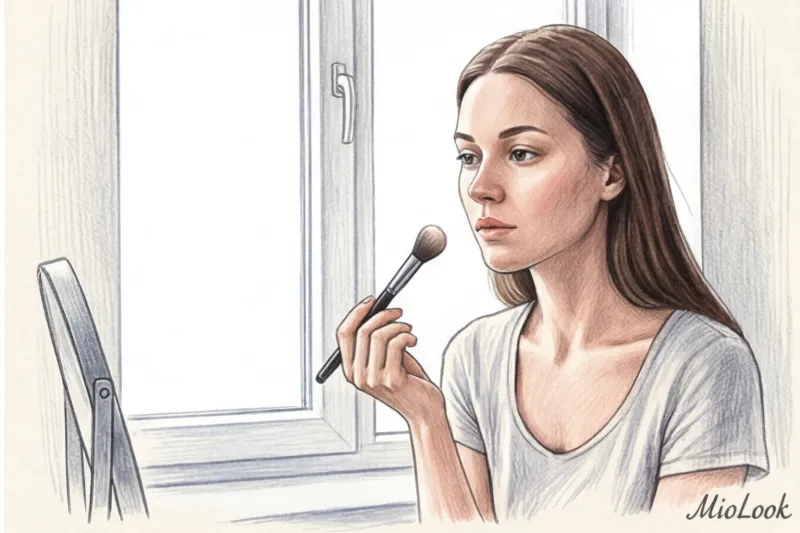
"Technology has a fair limitation: AI will show you flawless liner geometry, but it won't compensate for poor technique or cheap cosmetic ingredients. If you buy a dry pencil for €3 that scratches your skin and leaves bald spots, even the most precise virtual shape won't save the real thing." — Katarzyna Nowak, stylist.
Counting Money: Virtual Eye Makeup as a Savings Tool
Let's talk about budget. According to consumer behavior research, 80% of women have a sort of "palette graveyard" in their dresser drawer. My personal experience sorting through clients' makeup bags confirms this: usually, an expensive eyeshadow palette priced at €65–€120 (for example, from Charlotte Tilbury or Natasha Denona) has one or two base shades worn through. The rest are pristine because they clash with their skin tone or eye shape.
Impulsely buying cosmetics "because the blogger's stuff looks good" is a surefire way to waste money. Trying things on virtually protects your wallet. You come to the store with a clear list: I need a khaki gel kohl and matte eyeshadow with a taupe undertone because I I've already seen it , how amazing they work with my eye architecture.
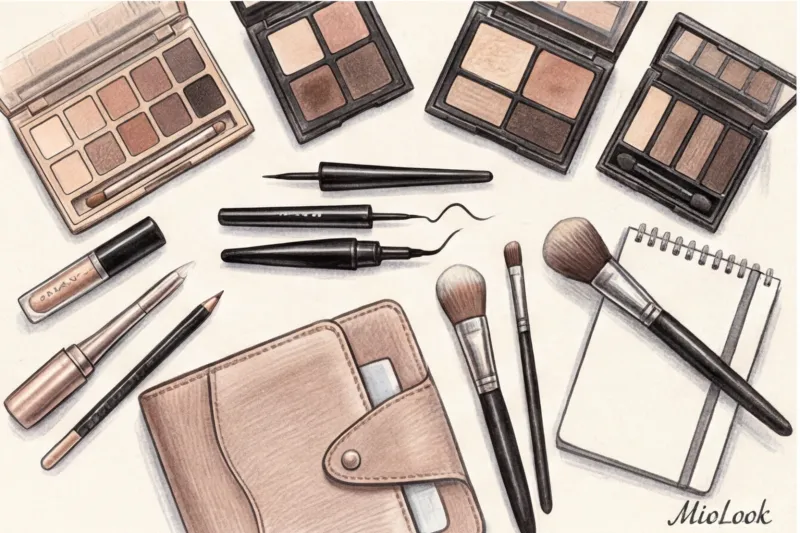
In the appendix MioLook The concept of a smart wardrobe seamlessly transitions into the concept of a smart cosmetics bag. You don't buy unnecessary items. You invest only in what truly pays for itself.
Stop blaming yourself for being "out of place" when your winged eyeliner fails again. There's a 99% chance you're simply using a template that clashes with your eyelid's anatomy. Turn neural networks into your personal diagnostician, find your unique geometry, and your morning makeup routine will transform from a daily stress into a clear, predictable system.