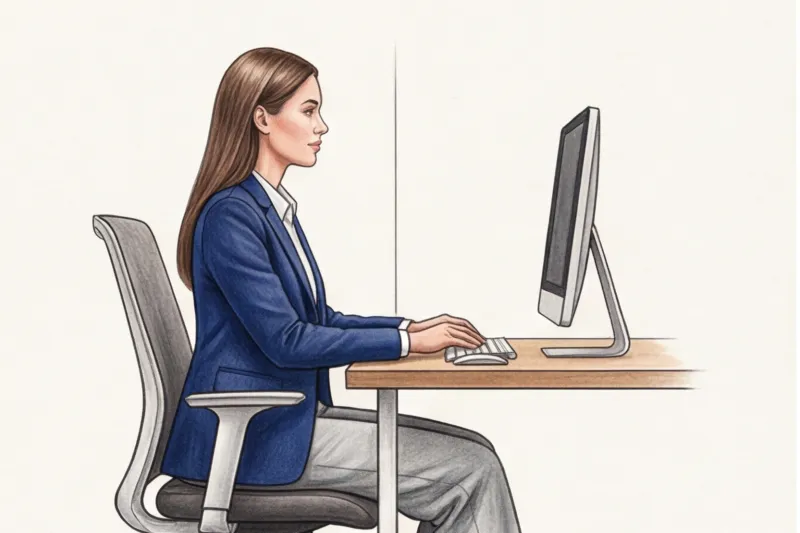
Have you noticed how your voice changes when you quote your services while sitting in front of a computer screen in your sweatpants? You can endlessly rehearse a confident speech, but your body betrays you by slouching, and your voice sounds quieter. The right clothes for Zoom — it's no longer about "looking decent" for your interlocutor. It's a strict tool for managing your own state and how the optical distortions of a webcam convey your professionalism.
We talked in more detail about organizing remote work and the basis for it in our The complete guide to the perfect freelance wardrobe But today I want to take a closer look at video calls: from the psychology to the technical features of your camera's CMOS sensors.
The Zoom-Mullet Illusion: Why Business on Top and Pajamas on the Bottom No Longer Work
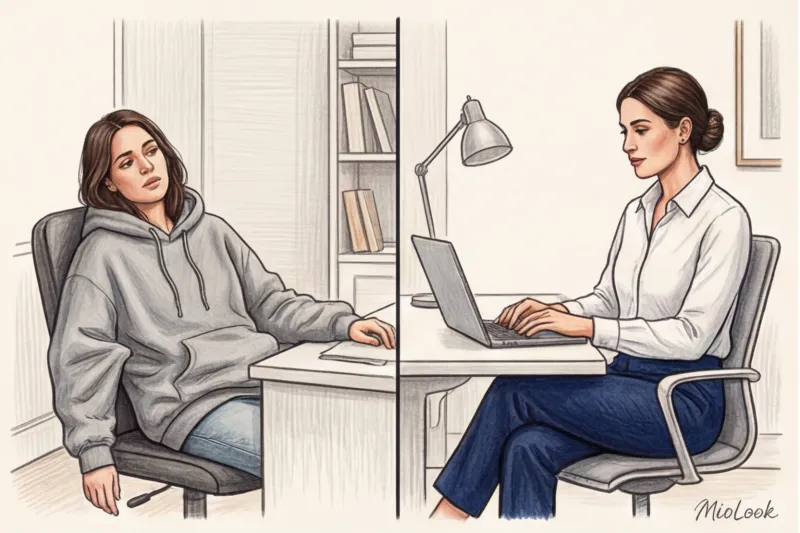
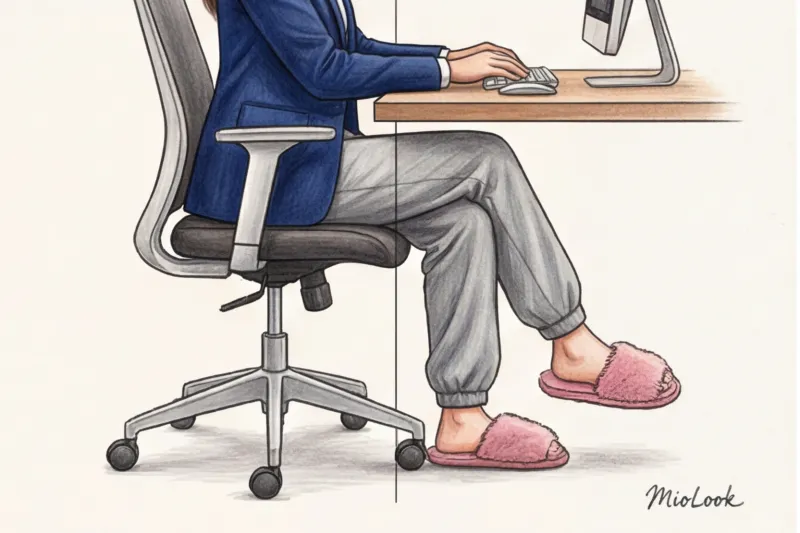
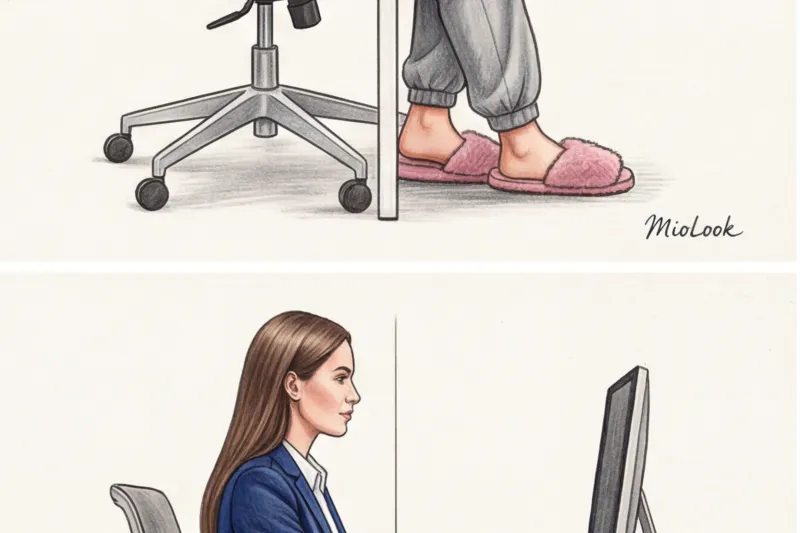
The "Zoom-mullet" approach popular during the pandemic (wearing a formal shirt and Mickey Mouse pajama joggers underneath) is the worst thing you can do for your remote work career.
I had a client, a senior UX designer, who had been struggling to break the financial ceiling and close a €4,000 contract for months. She felt insecure during briefings and often backed down in negotiations. When we analyzed her work routine, it turned out she spent every call wearing a luxurious silk blouse and... old fleece leggings.
It's all about a phenomenon called Enclothed Cognition (embodied cognition). In 2012, Northwestern University researchers Hajo Adam and Adam Galinsky demonstrated that clothing physically alters our neural connections. Your brain "knows" you're wearing pajamas. It detects the relaxed state of your lower body and physiologically reduces your willingness to engage in tough negotiations and assert personal boundaries.
"As soon as my client swapped her fleece leggings for wide-leg palazzo pants and started wearing loafers (yes, right at home), her sales conversion rate increased by 30%. Her posture changed, and with it, the tone of her voice."
The clothes you wear on video calls are your mental armor, not camouflage.
Your perfect look starts here
Join thousands of users who look flawless every day with MioLook. Manage your wardrobe right on your phone.
Get access — €0.99 onceZoom clothing and webcam rules: what you absolutely shouldn't wear
As a stylist, I constantly test items not only in the mirror but also in front of the camera. What looks expensive in person can turn into cheap visual noise on screen.
It's important to understand the physics of the process: video compression algorithms in Zoom and Google Meet "eat up" 30 to 40% of frame detail. Furthermore, the CMOS sensors in most built-in webcams have poor autoexposure.
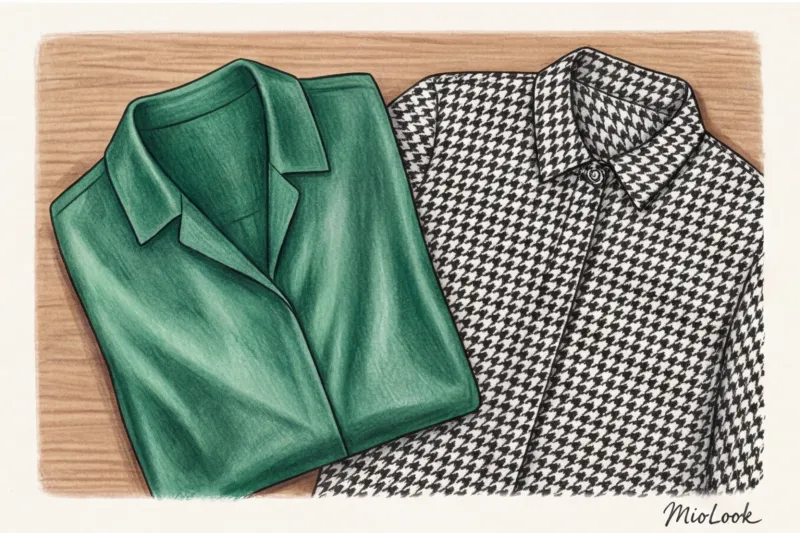
- Snow white color (Pure White): If you wear a crisp white shirt, the camera will try to balance out that bright spot and darken everything else. As a result, your face will appear gray or be pushed into deep shadow.
- Pitch Black: It works the other way around. The camera will try to "pull out" the black hole in your chest, mercilessly overexposing your face. You'll look like a pale, floating blob.
- Cheap shine and loose knitting: Polyester satin glistens on camera like you're covered in oil, while fluffy angora sweaters look like a sloppy, blurry cloud due to the loss of video quality.
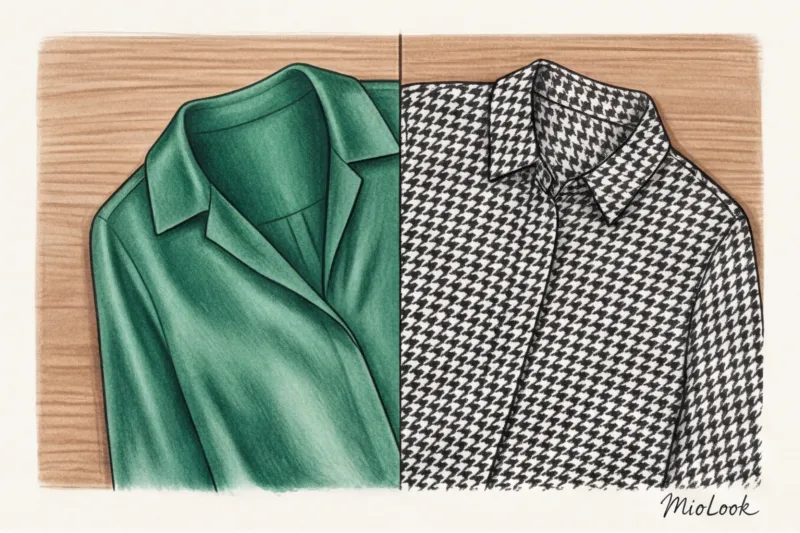
The Moiré Effect and Why Cameras Hate Small Prints
Never wear fine stripes, houndstooth, or dense polka dots on video calls. When the pixels of your camera's sensor don't match the frequency of the fine pattern on the fabric, it causes moiré effect — that same annoying strobe light that runs across your shirt with the slightest movement.
It's not just unsightly. It creates a huge cognitive load for the person you're speaking to. Their subconscious gets distracted by the ripples, and they stop listening to the essence of your words. The alternative? Solid colors or large, geometric color blocking.
Portrait Zone Architecture: Composing the Frame
On Zoom, there's a strict 30% rule: the other person only sees the top third of your body. All the style and status implications fall on your shoulders, neck, and décolleté.
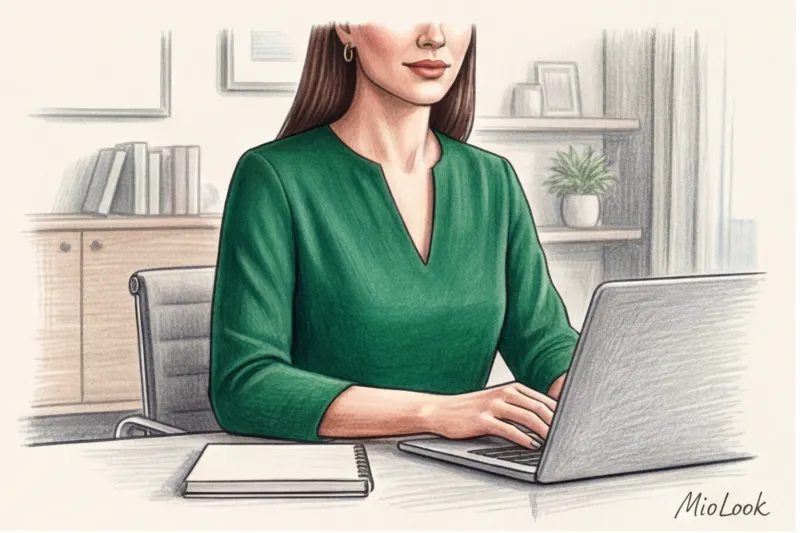
Here's the main mistake: a crew neck visually cuts off your neck. The camera always makes you look a little fatter and flatter, so a crew neck sweater can make your face look puffy. Opt for a V-neck or a shirt unbuttoned two buttons—this will create a vertical line and help visually lengthen the neck.
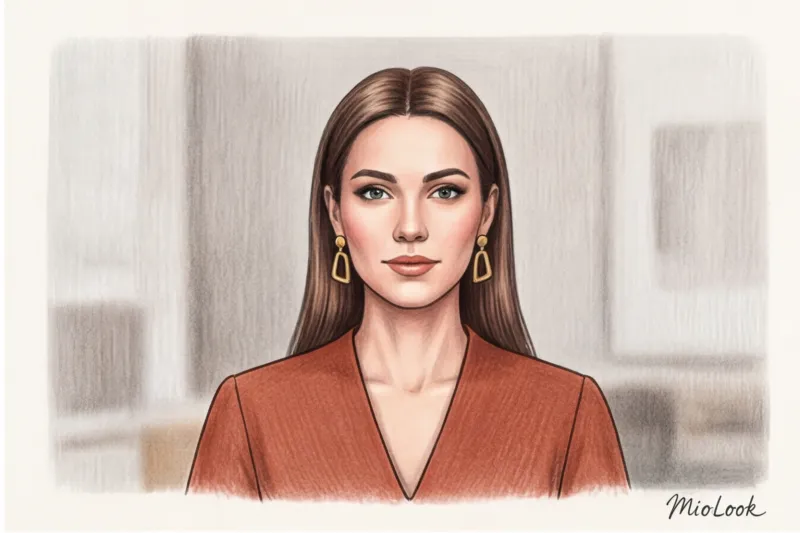
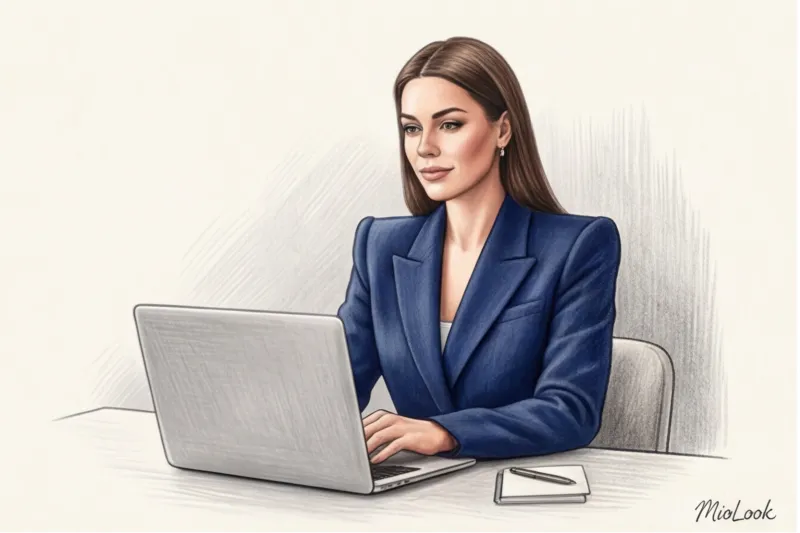
But the most important thing is - architecture of the shoulder girdle I often conduct a visual test with my clients: I ask them to sit in front of the camera wearing a soft, shapeless cardigan from H&M for €25, and then a structured, heavy viscose jumper from Massimo Dutti for €80. The difference is dramatic. Soft knitwear makes you look slouched and tired. Thick cotton, stiff knitwear, or a blazer create a defined shoulder line, which is subconsciously interpreted as put-togetherness and professionalism. If you don't know, How to hide broad shoulders In the frame, use jackets without rigid shoulder pads, but made of dense fabric (for example, jersey).
Jewelry in the frame: size matters
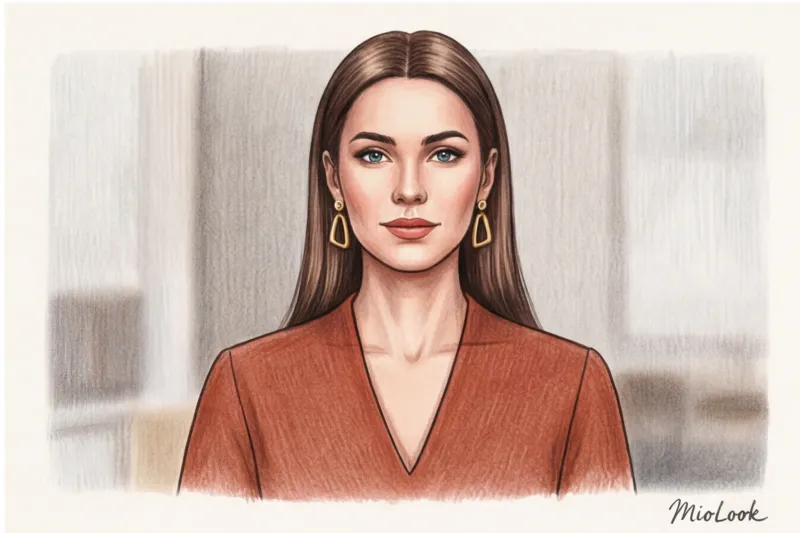
Due to the same video compression, elegant minimalist necklaces simply disappear from the screen, leaving only an incomprehensible shine. If you want to add a touch of status, go for medium and large, sleek shapes: wide hoops, geometric pendants on a thick cord.
What you shouldn't do: Wear jingling bracelets or chunky dangling earrings if you're using a headset. Your microphone will pick up every metallic clang as you turn your head.
Try MioLook
A smart AI stylist will create the perfect look for you. Upload your items and receive ready-made outfits for your daily calls.
Get access — €0.99 onceThe Perfect Video Call Palette: A Stylist's Test Drive
Over 12 years of work, I've spent hundreds of hours tweaking light and color for premium professionals. I tested them with a professional ring light and with dim natural light from a window on an overcast day.
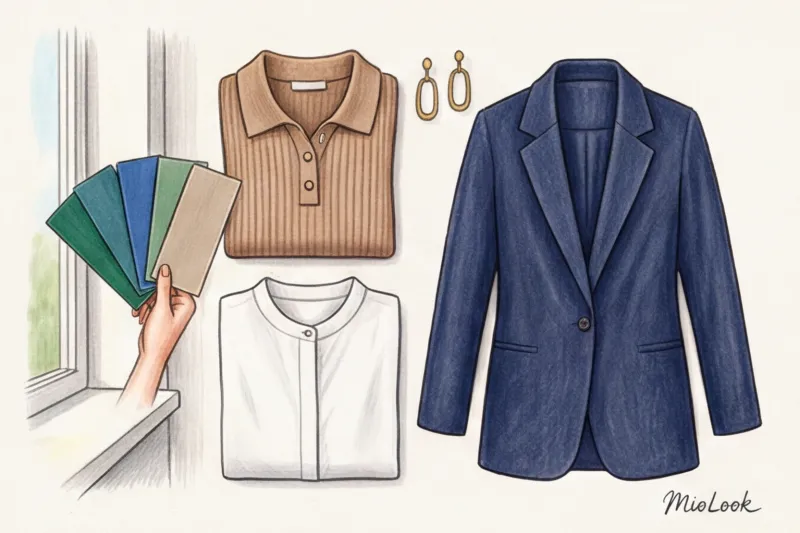
The main conclusion: The camera loves dense, deep colors (jewel tones) Emerald, sapphire, rich wine (burgundy), deep mustard—these shades create the necessary contrast and "lift" the face, even if you haven't had time to apply makeup.
Pastel colors (pale pink, beige, light blue) are tricky. If you have poor lighting in your room (like a plain yellow ceiling chandelier), the camera will blur your pastel blouse with your skin tone, making you look sickly pale.
Of course, there is an exception. These color rules do NOT apply if you're sitting with your back to a bright window (backlit). In that case, the color of your clothes will simply turn into a dark silhouette, and only an external light source in front of your face will save you.
Zoom Clothing Capsule: 5 Items That Will Pay for Themselves Instantly
Your work clothes for home don't have to be expensive, but they do need to be functional. Here's my tried-and-true capsule collection from the mass market, easily digitized. MioLook app , so you don't have to waste time getting ready in the morning:
- Shirt without a collar (Mandarin collar). A dense cotton texture (like the basic COS line, around €69). It looks more formal than a T-shirt, but it's more comfortable to sit in on the couch than a classic shirt with a stiff collar.
- Structured knitted polo shirt. An absolute must-have for smart-casual meetings. Look for heavy viscose styles at Massimo Dutti or Zara (in the €40–€60 range). The collar gives a business-chic touch, while the texture allows for breathability.
- Blazer made of soft fabric (jersey or thick knit). It doesn't restrict movement, yet instantly sculpts your silhouette. It's perfect for throwing on over a simple basic T-shirt just before an important call. A good model will cost around €60–€90.
- Accent silk scarf. The cheapest way (from €30) to add a touch of class and draw attention away from the fact that you're sitting against the backdrop of a kitchen set.
- Smooth top with V-neck. A base layer under a jacket. No lingerie-style lace—it often looks too intimate on camera.
The investment rule is simple: if you work from home 80% of the time, reallocate your budget. Invest in the upper portion (from the waist up). Shoes and pants can be budget-friendly, but the portrait section should be worth every penny.
Ready to get started?
Try the MioLook free plan—no commitments. Create your own virtual video calling capsule.
Get access — €0.99 onceChecklist before clicking "Join Meeting"
Theory is great, but in reality, we have three minutes before the call. To avoid panic, use this short checklist:
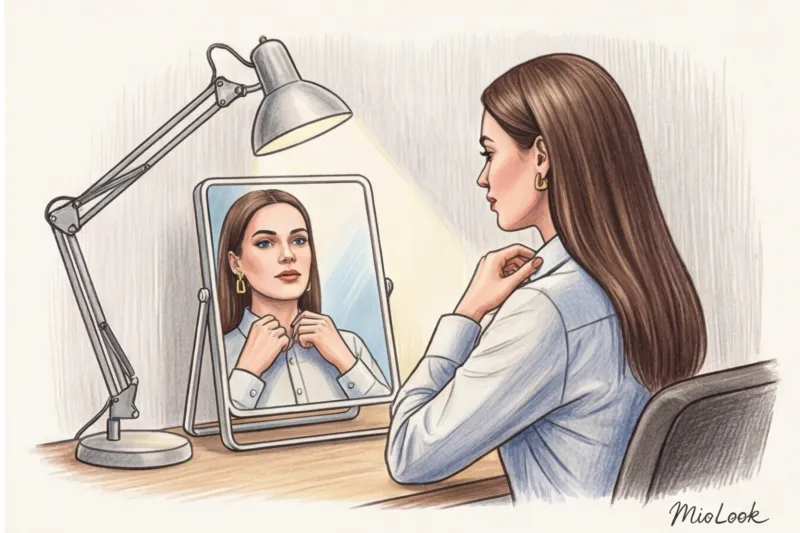
- Pajama test. Ask yourself: would I go to a real coffee shop meeting dressed like this? If the answer is "no," change. Your brain won't lie to you.
- Camera test (Preview). Always turn on your camera in the settings BEFORE entering a room. Check to see if you blend into the wall (no white on white), if your shirt is showing moiré patterns, or if your neckline is casting a strange shadow on your face.
- Life hack with hard shoes. My favorite trick: even if you work from home in shorts, wear sturdy shoes (like leather loafers or clean sneakers). A sturdy sole forces you to position your feet differently, which automatically aligns your pelvis and straightens your back. You'll physically be unable to slump in your chair.
Managing impressions through a screen is a skill that's worth real money these days. Make your personal space a tool of influence: ditch prints for deep colors, replace shapeless knits with chunky textures, and remember that your confidence starts the moment you change out of your sweatpants.