I still remember that moment at the Esxence niche perfumery exhibition in Milan. The perfumer handed me a white cardboard blotter, I closed my eyes, and inhaled. It wasn't roses. Not creamy vanilla. Not noble oud wood. It smelled like a hot tungsten lightbulb, dust settling on hot glass, and the faint ozone of a short circuit. And the most surprising thing? I immediately wanted to wear it, along with a formal black jacket.
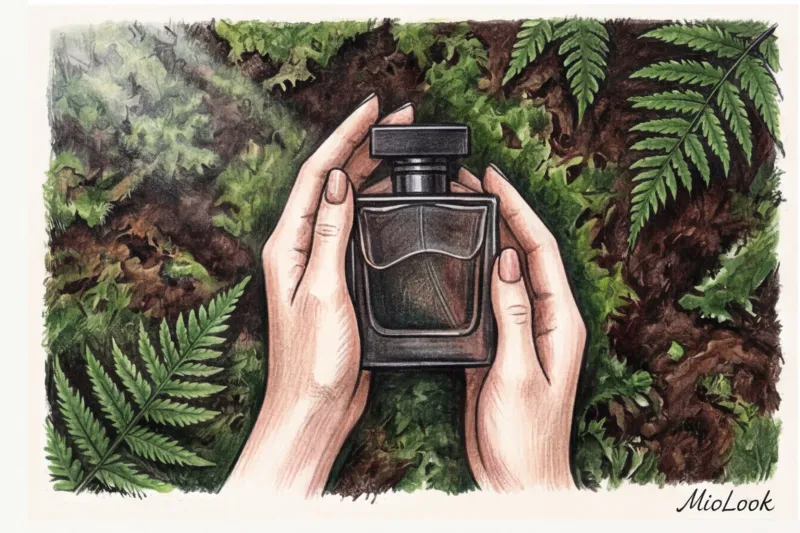
Forget everything luxury brand marketers told you about what a "successful woman" should smell like. Today unusual niche fragrances — this isn't just an attempt to shock the public. It's a complex tool for olfactory positioning and intellectual image, proving that the scent of printing ink or wet concrete can be the perfect complement to a business wardrobe. We've already discussed the basic principles of selection in more detail in our the complete guide to niche perfumery , but today I invite you to the territory of the radical avant-garde.
Why are we attracted to strange smells? The psychology of olfactory shock
The evolution of perfumery has come a long way: from the desire to mask unpleasant body odors with floral oils to the need to smell like "meaning." Olfaction is the only one of our senses that is directly connected, without the filters of the cerebral cortex, to the limbic system. This is the ancient part of our brain responsible for emotions and memory. That's why the smell of a damp basement or sun-baked asphalt can suddenly evoke tears of nostalgia or a feeling of absolute comfort.
But why do we love the scent of an approaching thunderstorm and wet earth so much? Biologists from Lund University (Sweden) have proven that it's not just a poetic attraction, but a rigorous evolutionary mechanism. The human nose can detect geosmin (an organic compound that gives the earth its distinctive aroma) at an incredible concentration—just 5 parts per trillion. By comparison, a shark is much less able to smell blood in the water. Our ancestors survived droughts precisely because they could find water by smelling moist soil over vast distances.
Geosmin and Petrichor: the scent of life in a bottle
In the perfume world, two concepts are often confused: petrichor and geosmin. Petrichor is the scent of oils that plants release during dry periods and are absorbed by clay soils and rocks. When it rains, these oils are released into the air. Geosmin, on the other hand, is the scent of the soil itself, a byproduct of soil bacteria.
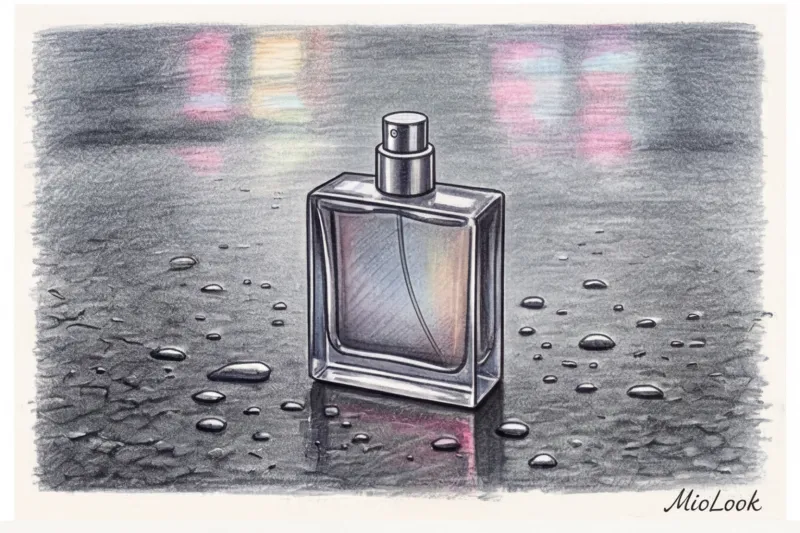
To recreate these notes, modern "noses" use complex synthetic molecules that mimic damp dust, combined with fractionated patchouli (from which the chocolate undertones have been removed, leaving only a damp basement mold). The result? A scent that grounds, soothes the nervous system, and sounds incredibly expensive.
Urban aesthetics: the aroma of asphalt, concrete, and a hot iron
The urban niche is an ode to the modern metropolis. A historic turning point occurred in 1998, when the Japanese brand Comme des Garçons released the revolutionary fragrance Odeur 53. Perfumer Mark Buxton achieved the impossible: he created a composition consisting of 53 inorganic scents. It featured notes of nail polish, burnt rubber, hot metal, sand, and cellulose. It was a shock to an industry accustomed to jasmine and tuberose.
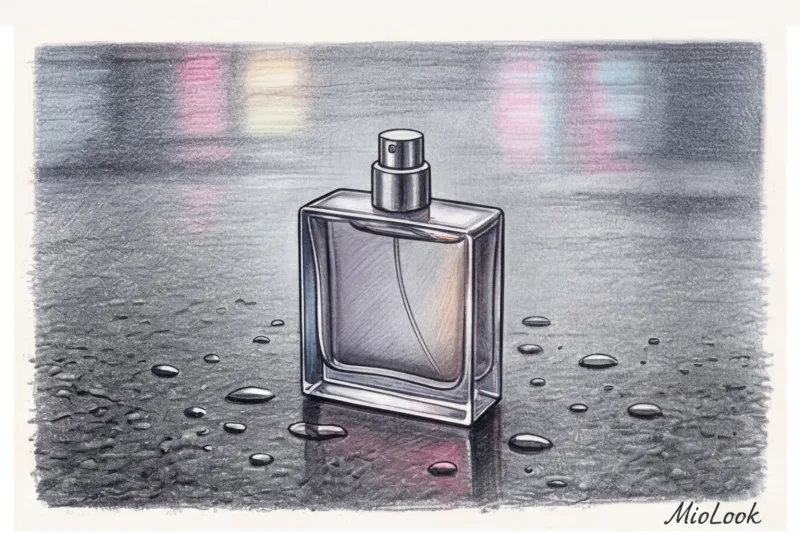
Today, urban fragrances use over 50 different synthetic molecules just to recreate the scent of inanimate nature. When you inhale a scent with a note of a hot iron or hot asphalt, you physically feel a dry throat and warmth—perfumers use aldehydes and oxides to deceive not only the sense of smell but also the sense of touch.
Who are these "industrial" and unusual niche fragrances for? Architects, IT professionals, designers, and anyone living in big cities whose visual style is built on deconstructivism, asymmetry, and monochrome. The scent of wet concrete pairs brilliantly with a voluminous, thick cotton hoodie and chunky sneakers.
Access to MioLook for €0.99 — one-time payment
A smart AI stylist will select the perfect look.
Get access — €0.99 onceAn intellectual perfume wardrobe: notes of ink, old paper and dust
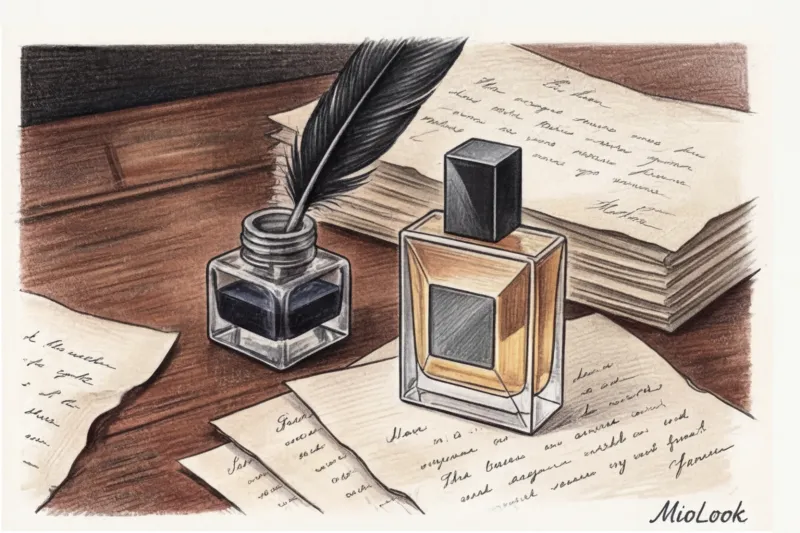
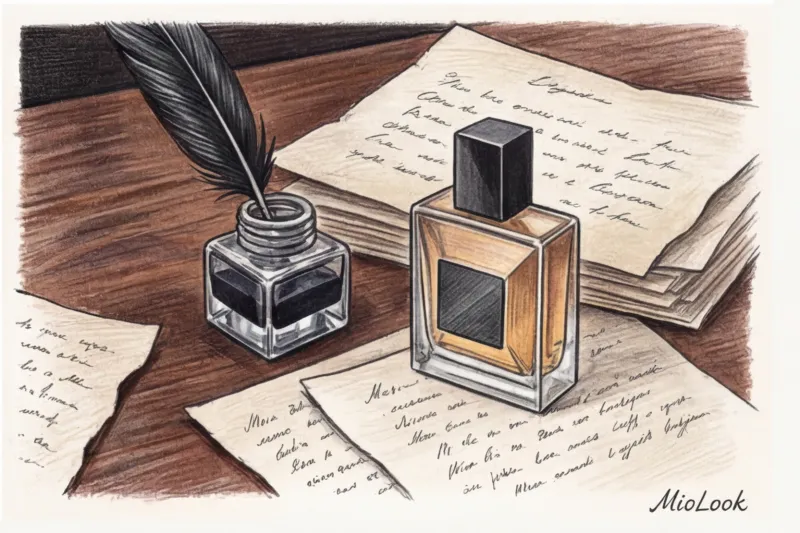
The "dark academia" aesthetic has taken over not only Pinterest but also perfume labs. The scents of libraries, leather tomes, and fresh printing ink create a distinctly intellectual image.
How is the ink note created? It's a masterful illusion. Perfumers blend castoreum (an animalic note with a slight tarry undertone), earthy vetiver, patchouli, and cool synthetic aldehydes. The result is a rich, slightly metallic, bitter scent that evokes centuries of history and absolute tranquility.
"The scent of an old book conveys your authority to others. It's the olfactory equivalent of a pair of glasses with a sharp frame and a perfectly tailored jacket."
I had a revealing case in my styling practice. A client, a partner at a major law firm, approached me. She habitually wore classic Chanel No. 5 to courtroom proceedings. The problem was that this fragrance projected femininity and prestigious luxury, whereas in court she needed distance, cool reason, and unquestionable authority. We replaced the classic floral scent with a fragrance with luminous notes of ink, parchment, and dry wood. The effect was striking: according to her, this dry, "papery" trail subconsciously made her opponents perceive her arguments as more compelling. The scent of ink became her personal armor.
Anti-trends as trends: animalics, blood, and metal in unusual niche fragrances
Radical avant-garde isn't created to please. They're works of contemporary art, bottled up. And like all contemporary art, they're meant to evoke emotions—sometimes uncomfortable ones.
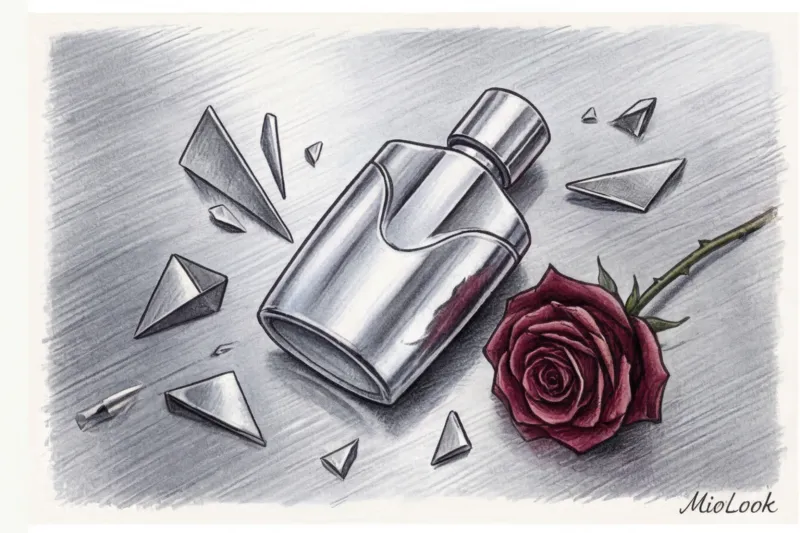
Metallic notes (most often caused by the rose oxide molecule) are cold, piercing, and distant. They can mimic the scent of blood (due to the iron), surgical steel, or old copper coins. Brands like Etat Libre d'Orange broke all taboos back in 2006, releasing compositions with notes of blood, sweat, saliva, and adrenaline. They walk a fine line between brilliant artistry and utter unwearability.
Here, as a stylist, I must offer a fair warning. Yes, conceptual fragrances broaden your horizons. But there are situations when this doesn't work. If you have a public speaking engagement, difficult negotiations, or a first date coming up, save a bottle of blood, raw meat, or vibrant animal scents for your home collection. The other person's olfactory sense may interpret these notes as a signal of danger or illness. Experimentation is best when you have complete control over the context.
Your ideal image
it begins Here
Join thousands of users who look flawless every day with MioLook.
Get access — €0.99 onceThe Myth of Inappropriateness: How to Wear Avant-Garde Selective to the Office
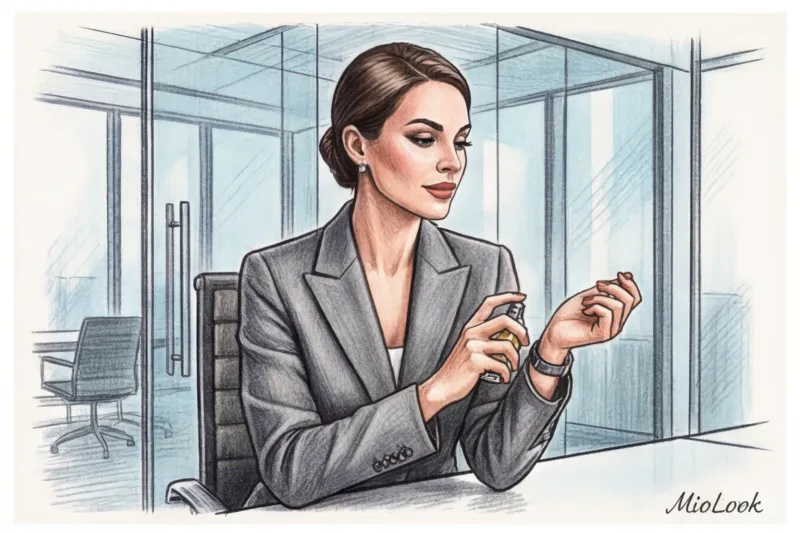
There's a long-standing stereotype: only light, "understandable" citrusy waters or delicate floral arrangements are suitable for the office. I strongly disagree. The counterintuitive truth is that mineral and urban notes (concrete, ink, ozone, chalk) are much more appropriate in a business environment than sugary, commercial luxury.
Why does this happen? Floral, gourmand (sweet), and fruity scents are expansive. They fill the conference room, invade the privacy of colleagues, and often cause headaches. They "shout" about themselves.
Mineral, unusual niche fragrances behave differently. They create a "glass dome" effect around the wearer. They sit close to the skin, smelling of cleanliness, starched shirts, printing ink, or cool stone. These are the scents of introverts.
Imagine a crisp, minimalist fine wool suit from Jil Sander or COS. If you add a hint of cotton candy or tuberose, the look will disintegrate, creating dissonance. But if you add a hint of wet asphalt and white musk, the suit will emerge as a cohesive architectural statement. You're not just dressed; you're stylistically complete.
Checklist: How to Choose and Tame Your First Strange Fragrance
If you've decided to step outside the box of your typical perfume wardrobe, follow a few professional rules. This complex niche doesn't tolerate fuss.
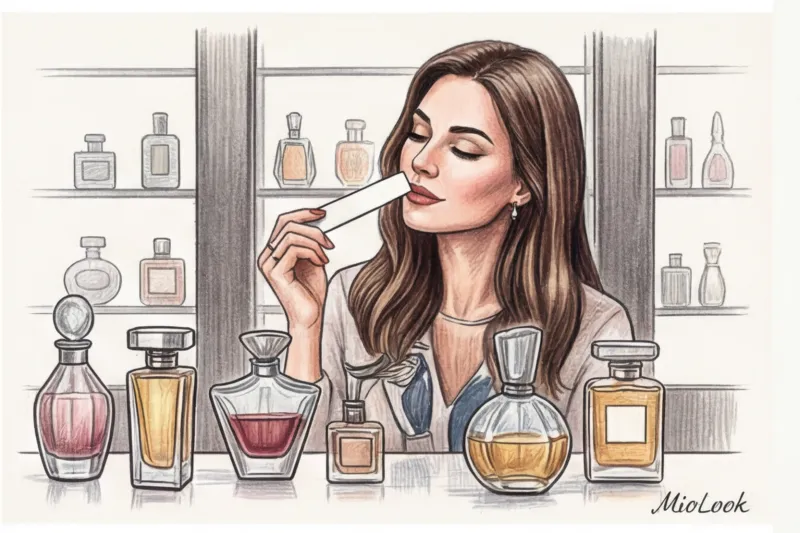
- Never buy blindly. And don't even trust the blotter. Paper distorts synthetic molecules: on cardboard, the scent of concrete might smell like a dusty rag, but on your hot skin, it will reveal a stunning freshness after a rain. Test only on your wrist.
- Give it time to unfold. Avant-garde compositions often have intimidating top notes. For the first 15 minutes, you might be put off by the sharp smell of burnt rubber or iodine (hello, Baccarat-like profiles). But don't rush to wash it off. Wait for the scent to settle into the base—this is what will accompany you all day, and it's often incredibly soft and woody.
- Follow the one spray rule. Selective compositions often have an Extrait de Parfum (perfume) concentration, with fragrances reaching 30-40%. What seems like a light ozone scent to you may sound like a thunderstorm to others. Apply a micro-dose of the fragrance under your hair and to the back of your neck.
- Synchronize the scent with the image. Your scent should match your archetype and visual image. To ensure you're choosing the right proportions and style, you can upload your wardrobe to the "smart wardrobe" feature in MioLook An AI stylist will help you create a look that perfectly matches the mood of your new intelligent perfume.
The world of unusual niche perfumes is a rabbit hole. Once you experience the beauty of the scent of old paper, a hot iron, or wet asphalt, you'll never want to go back to familiar fruit compotes. Your perfume isn't just a pleasant scent. It's an invisible part of your outfit, your intellectual statement, and your personal code, decipherable only by those on the same wavelength.