One of my clients, financial analyst Lena, impulsively cut her hair into a pixie cut after submitting a challenging annual report. "I wanted something lighter," she told me during a consultation a week later, huddled awkwardly in her favorite oversized COS sweater. The problem was that without her usual full head of long hair, the sweater no longer made her look fragile. On the contrary, the exposed neck and lack of volume around her face had thrown off her proportions: she now looked like a teenager wearing her older brother's leftover clothes.
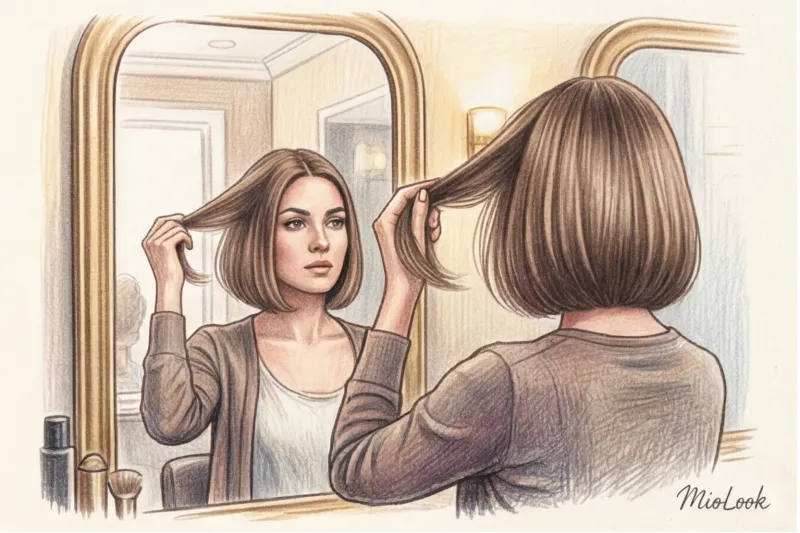
In 14 years of working as a stylist, I've learned one hard and fast rule: a short haircut isn't just a new hairstyle. It's an architectural element that completely changes the geometry of your body and requires a revision of approximately 40% of your shoulder-length clothing (tops, jackets, coats). Therefore, today, the only safe way to avoid such wardrobe shock is to try on a bob online from a photo before you book an appointment. We've written more about how technology saves us from beauty disasters in our a complete guide to virtual hairstyle try-ons In this article, we'll explore how hair shape can disrupt your wardrobe and why AI fitting is your best financial insurance.
Why are spontaneous bobs so expensive? (The math behind beauty mistakes)
There's a dangerous illusion of "cut and forget." Glossy magazines often portray bobs and pixies as symbols of liberation. In reality, short hair is the most demanding investment in your appearance. Long locks can be pulled into a sleek bun in three minutes, but an architectural bob is unforgiving of laziness and lack of styling.
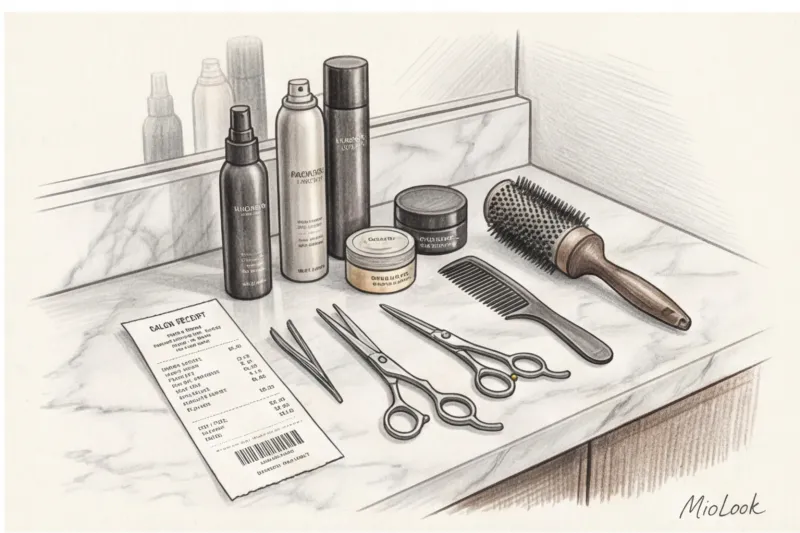
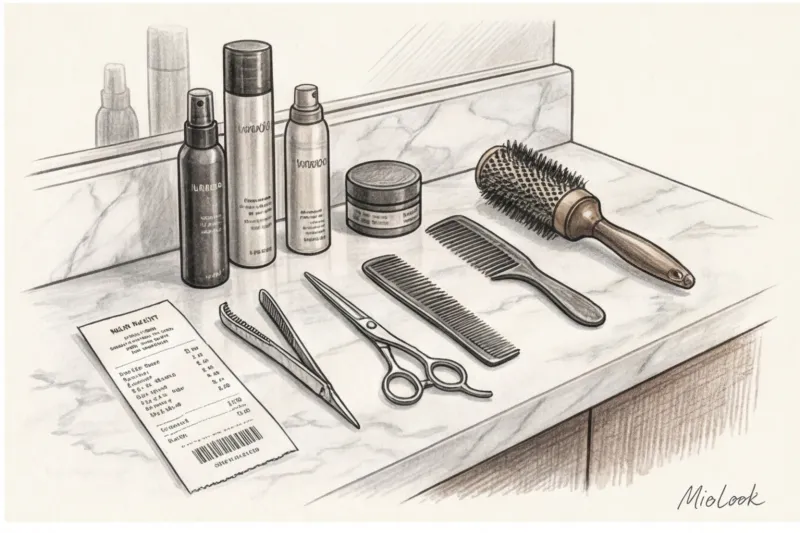
Let's calculate the real cost of such a haircut. Maintaining a pixie cut requires visits to the stylist every 3-4 weeks. Add to that the hidden costs of styling: salt sprays for texture, matte pastes, and powders for root volume. A jar of high-quality texturizing paste (for example, from Kevin Murphy) will cost €30-€40, and it will need to be reapplied regularly. By average European standards, maintenance and correction of a short haircut will cost you an additional €150-€300 per year compared to long hair.
But the biggest cost of a mistake is time. Hair grows at a rate of approximately 1–1.5 cm per month. If the cut is unsuccessful, you'll face a painful period of 8–12 months to grow out a bob at least to the collarbone. That's why trying out a bob online from a photo today isn't just a fun game with filters, but a rational approach to your budget and image.
How to try on a bob online from a photo: biometrics instead of fortune telling
Just five years ago, beauty apps worked like primitive photo editors: they simply superimposed a flat wig-like mask over your selfie. The result always looked artificial, like a pixelated helmet. Today, technology has advanced significantly: neural networks use complex biometrics to ensure the results look as realistic as possible.
Modern algorithms analyze over 150 points on your face. They capture not only the frontal contour but also the depth of your eyes, the microrelief of your cheekbones, the natural tilt of your head, and even your skin tone. The technology understands how your hair will fall on your shoulders in three-dimensional space, taking into account the physics of light and shadow.
This virtual try-on gives you 90% of the desired result. You can see yourself with a bold pixie, a classic French bob with bangs, or an asymmetrical bob in just a couple of minutes. This transforms the conversation with the stylist from "I want that actress's haircut" to a more concrete dialogue: "Look how this length reveals my neck."
Checklist: How to take photos for a virtual fitting
For a neural network to work flawlessly, it needs a clean "canvas." I always ask my clients to follow three strict rules when creating the initial frame:
- Light: Stand facing a window during daylight hours. Side light or a harsh overhead lamp will create harsh shadows that AI may mistake for deep nasolabial folds or sunken cheeks.
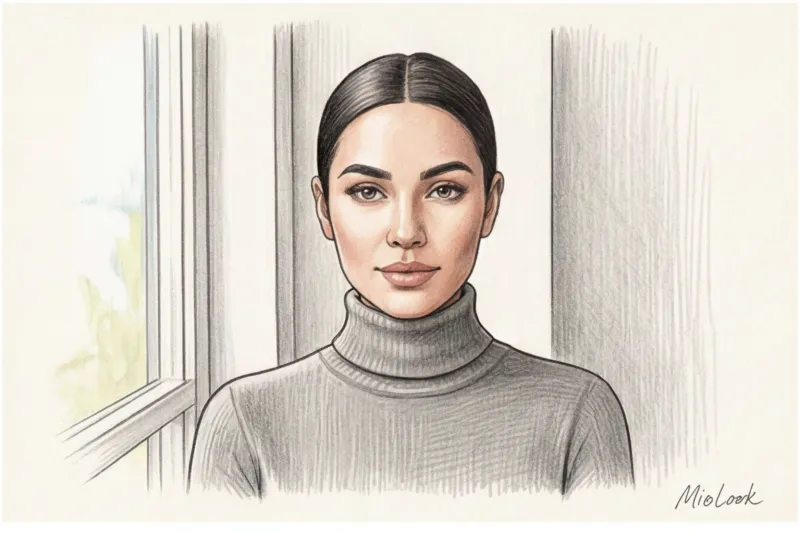
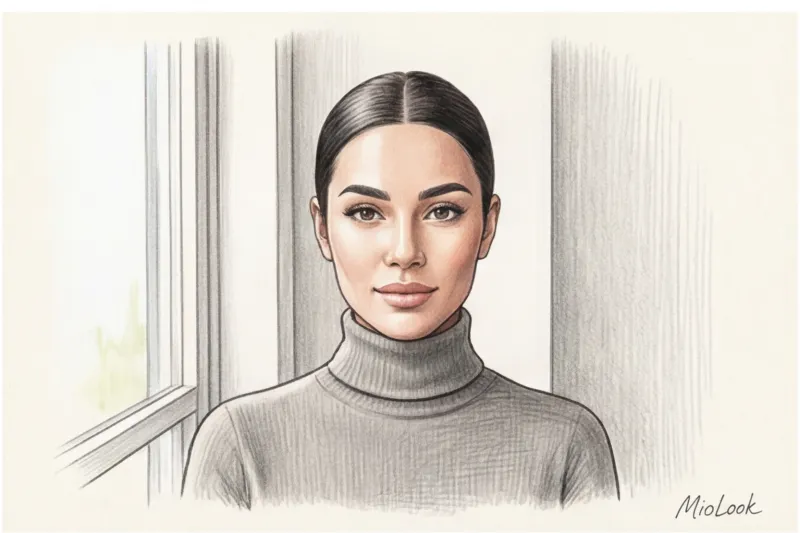
- Posing: Comb your hair into a tight, sleek ponytail. Keep your ears and neckline completely exposed—this is where the line of your future shape lies. Look directly into the camera, keeping your shoulders relaxed.
- Cloth: No photos in pajamas, a robe, or bare shoulders. Wear your basic everyday clothes: a structured jacket, a heavy cotton T-shirt (at least 180 g/m²), or a cashmere turtleneck. You need to see how the new hairstyle works with your actual style.
Access to MioLook for €0.99 — one-time payment
A smart AI stylist will select the perfect look based on your proportions and wardrobe.
Get access — €0.99 onceThe Anatomy of a Pixie and a Bob: What Really Decides Whether a Haircut Suits You?
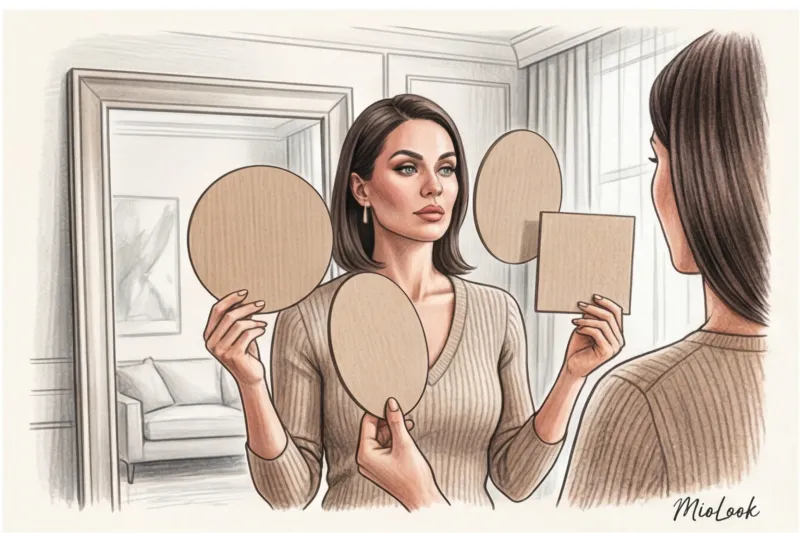
It's time to forget the outdated rule from the glossy magazines of the 2000s: "A round face can't wear a bob, and a square face needs only asymmetry." Over 12 years of practice, I've learned that this is a harmful oversimplification. In fact, the success of a haircut isn't determined by the flatness of your face, but by the architecture of your jawline and the length of your neck.
The key marker of youth and the ideal canvas for a bob is the jawline. If the line from the chin to the earlobe is clearly defined, a short haircut will beautifully highlight this contour. If the line is soft or there's a tendency toward puffiness in the lower third of the face, a straight cut at chin level will visually weigh down the face. In this case, the hairline should be lower (at collarbone level).
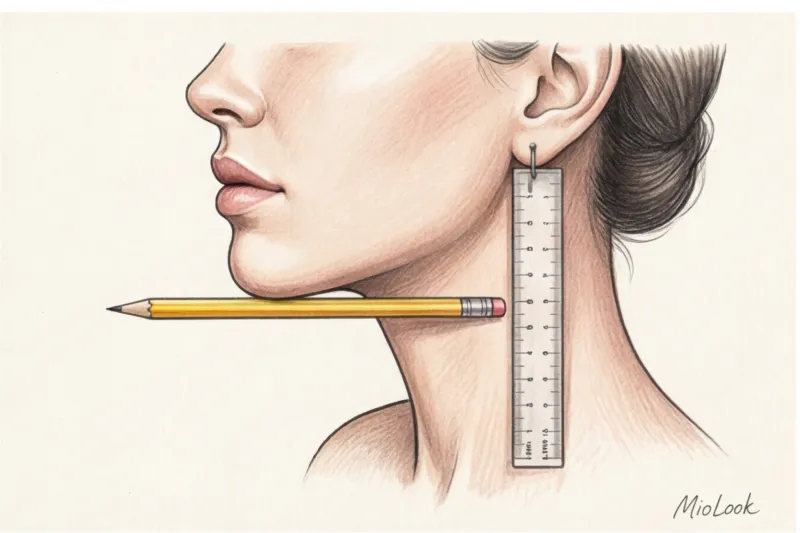
In professional circles, there's a famous rule: the 5.5 cm (or 2.25 inches) rule. It was discovered by legendary stylist John Frieda after studying the proportions of over 1,000 female faces. It proves that bone geometry is more important than facial type.
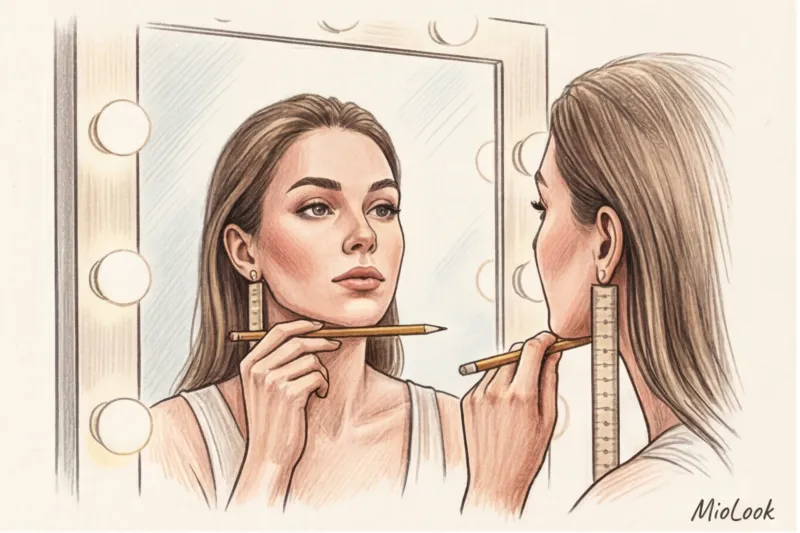
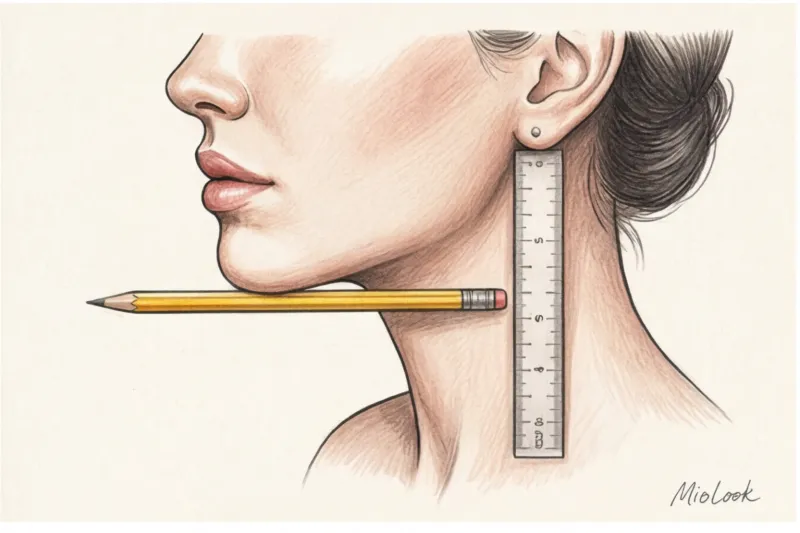
To check this at home, take a regular pencil and a ruler. Place the pencil horizontally under your chin and the ruler vertically down from your earlobe. Look at the mark where they intersect. If the distance is less than 5.5 cm, a short haircut is perfect for you. If it's longer, it's better to go with a longer style.
This simple physical action perfectly complements the AI fitting results, giving you complete confidence in your decision.
Wardrobe Shock: How a Short Haircut Changes Your Look
Let's return to my client Lena's story. Why did her favorite sweater suddenly stop looking flattering? Because hair is mass. Long locks create extra volume around the head and neck, which balances out broad shoulders or baggy clothes.
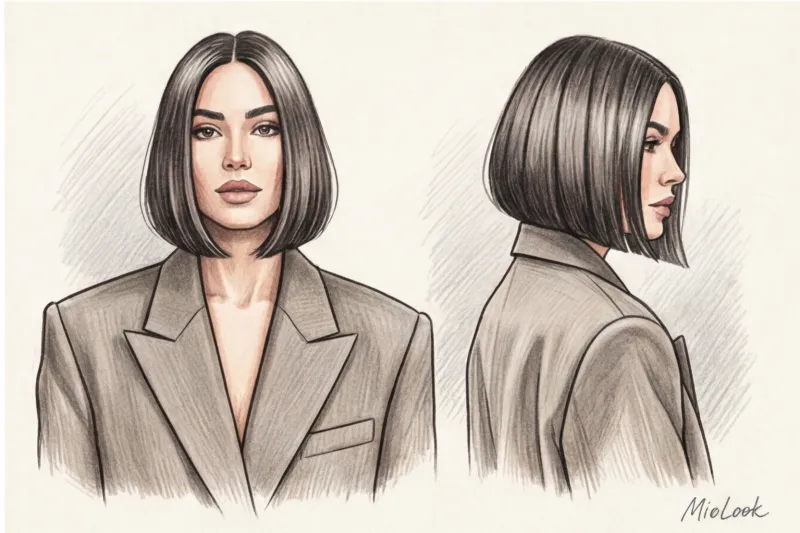
When you cut your hair into a bob, the volume of your head is visually reduced. Consequently, your shoulders instantly appear broader and your neck longer. This completely changes the balance of your figure. I regularly observe this wardrobe shock: the menswear-inspired jackets from Zara or the massive wool-blend coats you wore with your hair down begin to overwhelm your figure. You appear smaller, while your clothes appear larger.
Necklines and Collars: New Rules of the Game for Bobs and Pixies
Changing your hair length inevitably forces you to reconsider your headshot design. Here's what happens to your basics after you've decided on a haircut:
- Collars and necklines: A deep V-neck paired with a short haircut can make the upper body appear too elongated and angular. However, turtlenecks, stand-up collars, polo shirts, and boat necklines begin to look incredibly aristocratic, highlighting the fragility of the exposed neck.
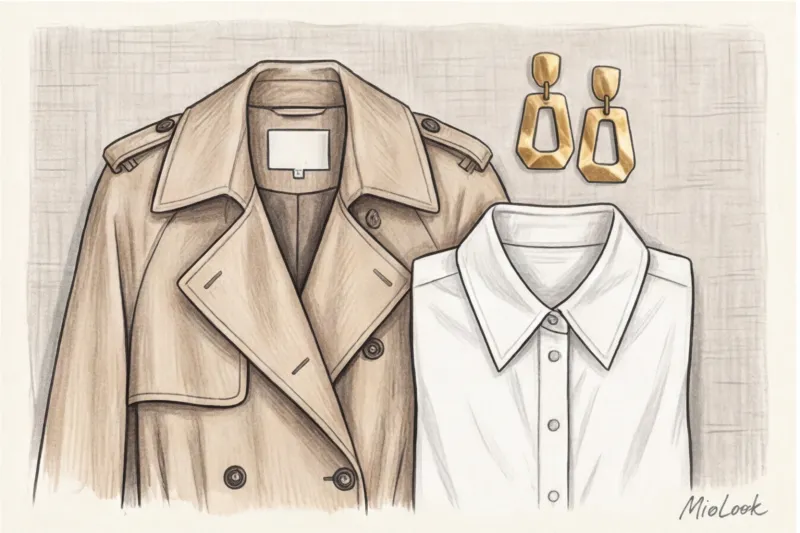
- Oversized rules: To maintain the feminine appeal of voluminous pieces when wearing a pixie cut, choose fabrics that hold their shape. A structured trench coat made of thick cotton will work much better than a loose, chunky knit cardigan, which will make the look look sloppy.
- Accessory group: Exposed ears require accents. If you previously limited yourself to discreet studs, now you'll need large geometric earrings (architectural hoops, teardrops) and statement pendants in the €50–€150 price range to fill the empty space near your face.
Your perfect look starts here
Join thousands of users who look flawless every day with MioLook, choosing hairstyles and clothes in just a few clicks.
Get access — €0.99 onceFrom virtual to real: how to communicate with a specialist after an AI fitting
Let's say you used an app to try on a bob cut online from a photo, fell in love with the result, and are ready to take action. Does that mean the hairdresser will create a cut exactly as pictured? Not necessarily. And herein lies the true limitation of any neural network.
AI always shows you the perfect salon-quality style with smooth, manageable hair. But in reality, you may have porous, glassy, fine, or curly strands with stubborn curls at the nape of your neck.
When showing a generated photo to a hairdresser, don't just ask for a cut like this. Ask the professional a specific question: "Will my hair texture and thickness allow me to wear this style without spending hours straightening it every morning?" A competent hairstylist will analyze the direction of your hair growth and the density of the cut. Often, a long bob (lob) is the best compromise. It's a safe transitional length that allows you to get used to your new wardrobe proportions and, if necessary, tie your hair back into a low ponytail.
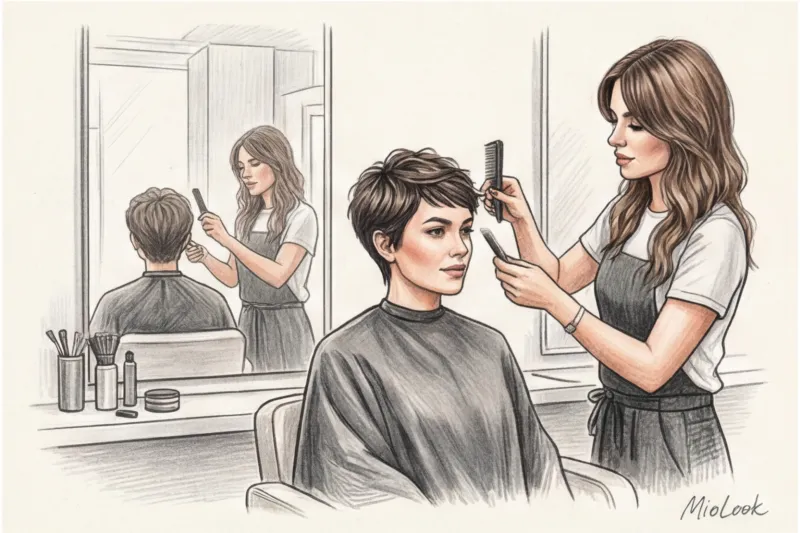
Summary: An action plan before a radical image change
To ensure your style transformation brings you confidence instead of tears in front of the mirror, take a systematic approach. Going shorter is a project that requires technical know-how.
- Take the perfect photo with slicked-back hair in daylight, paired with a basic top or jacket with a statement collar.
- Use MioLook to try on 5-7 bob and pixie cuts with different bangs and partings.
- Conduct a physical test with a pencil and ruler (5.5 cm rule) to confirm the AI's decision.
- Assess your wardrobe: do you have enough structured pieces, turtlenecks, stand-up collar shirts, and large statement earrings?
- Honestly include in your annual budget regular haircuts every six weeks and the purchase of high-quality texturizing styling products.
Remember, your hair is the most noticeable accessory you wear every day. And today, we have all the digital tools to ensure it's flawless long before the first snip of the scissors.