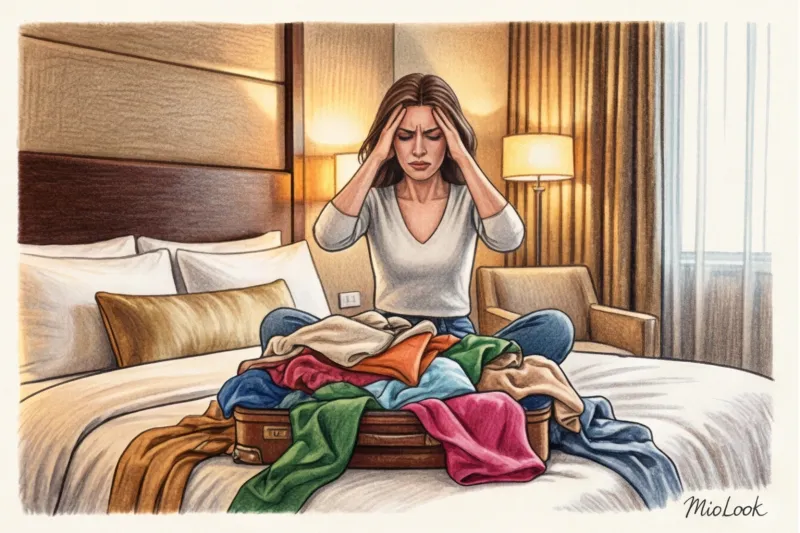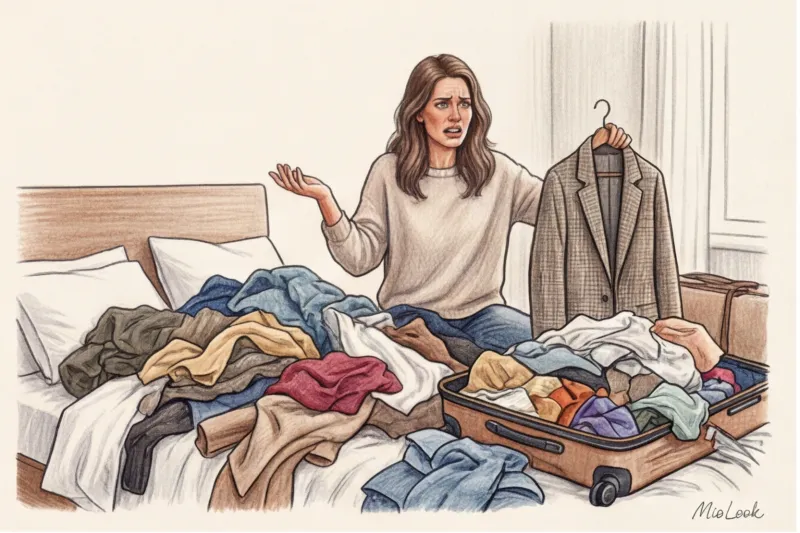
One day, a client of mine, the CEO of an international IT company, called me from downtown Milan in a state of utter despair. The airline had lost her luggage, and she had to present to an investor board in three hours. Instead of calmly sipping an espresso and getting ready for the presentation, she was running around boutiques, buying the first jacket she saw for €450, which was clearly ill-fitting. This incident forever changed her approach to travel.
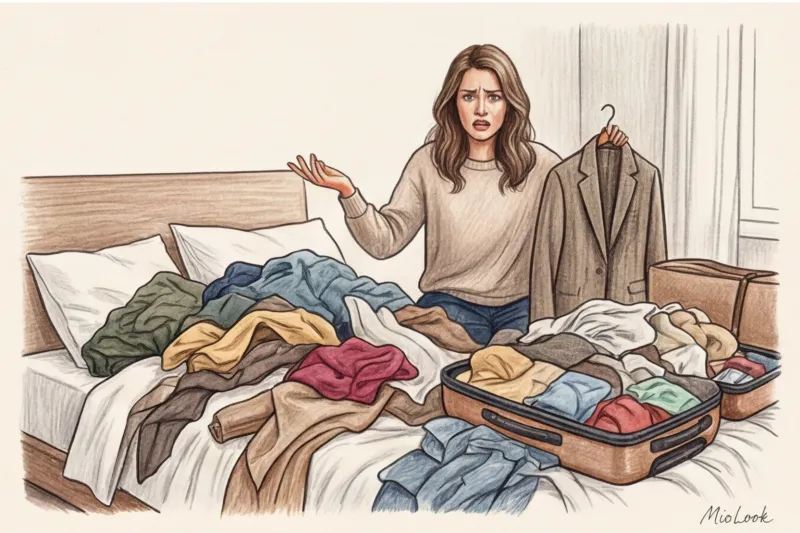
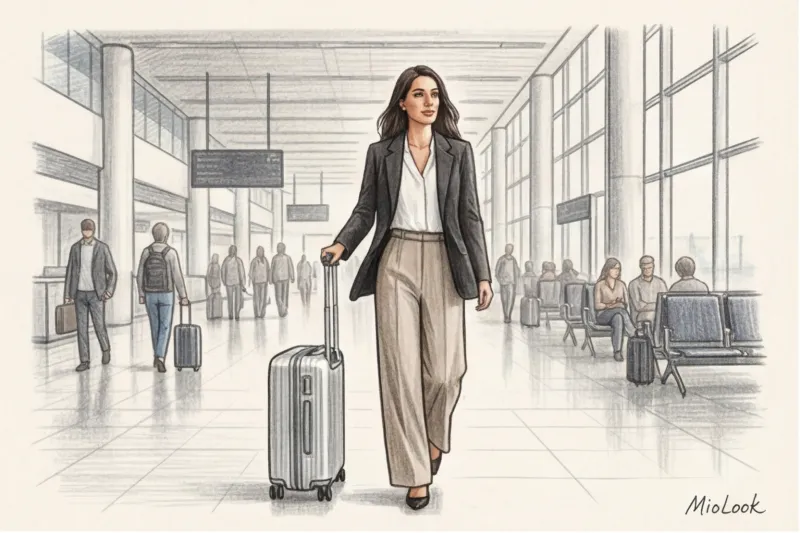
After 12 years of working as a stylist and regularly flying to Fashion Weeks, I've developed a strict rule: fly exclusively with carry-on luggage. The space in a cabin-size suitcase is prime real estate. You wouldn't put a cheap plastic chair in a penthouse with a view of the Seine, would you? So why do we fill up precious space with things we won't wear?
The secret to perfect packing is that you pack your suitcase not on your bed, but in digital space. Today, the perfect Travel wardrobe planning app can save you hours of time and hundreds of euros on impulse purchases. We've already covered the architecture of such images in more detail in our A complete guide to business trip attire for women , and now let's look at the engineering approach to packing luggage.
The "What if" syndrome: why we carry unnecessary things with us
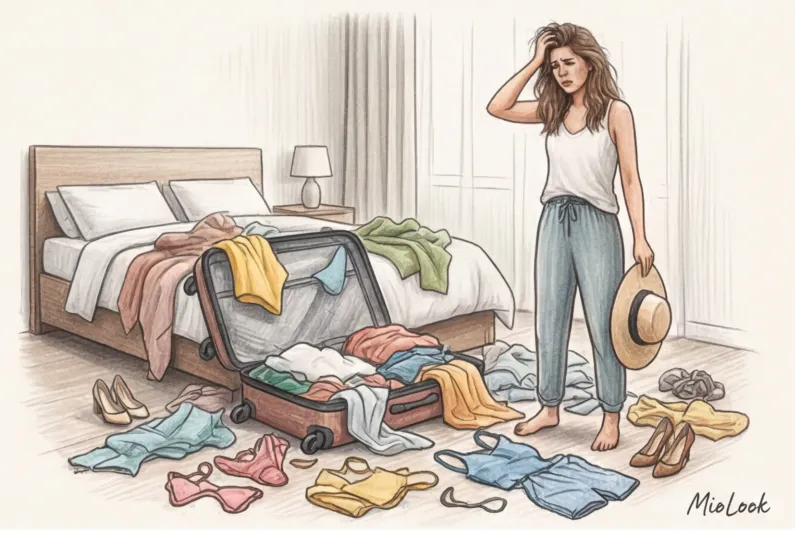
Let's be honest: when we throw a third pair of shoes into our suitcase "just in case," we're not packing shoes. We're packing anxiety. The fear of not being prepared for a sudden invitation to the opera, a sudden cold snap, or spilled coffee on our blouse drives us to act irrationally.
According to the SITA Baggage IT Insights 2023 report, the rate of delayed and lost baggage globally remains critically high—7.6 bags per thousand passengers. By checking your suitcase, you literally hand over control of your image to the baggage claim.
"When analyzing the wardrobes of my wealthy clients after business trips, I regularly see the same thing: 20 to 30% of the items return home without ever leaving the suitcase. Once, we were unpacking luggage after a strictly business forum in Davos, and I found a sequined evening dress. When I asked, 'Why?' the classic answer was, 'What if?'"
The cost of this mistake is high. And it's not just about being overweight. Extra items create visual clutter and complicate morning get-ready at the hotel, when every minute counts. You waste time choosing instead of putting on a pre-planned, flawless outfit.
MioLook as the ultimate travel wardrobe planning app
The biggest mistake 90% of women make is opening an empty suitcase and starting to fill it with things they simply like. This is a dead end. A modern approach requires digitizing the process. That's why I always recommend my clients use MioLook — your personal smart capsule algorithm.
How does it work in practice? You upload your travel itinerary: flight, business lunch, conference, dinner with partners. Artificial intelligence analyzes your digital database and calculates the "cost-per-wear" (Cost-per-Wear) for each item. The app simply won't let you add a soloist—an item that only works in one specific way—to your virtual suitcase.
You get a clear visualization of your looks by day. You know exactly what you'll wear when you step off the plane and what you'll wear to a gala dinner, without overloading your luggage.
Your perfect look starts here
Join thousands of users who look flawless every day with MioLook. Plan your trips stress-free.
Get access — €0.99 onceCarry-on Luggage Math: The 1:3 Rule
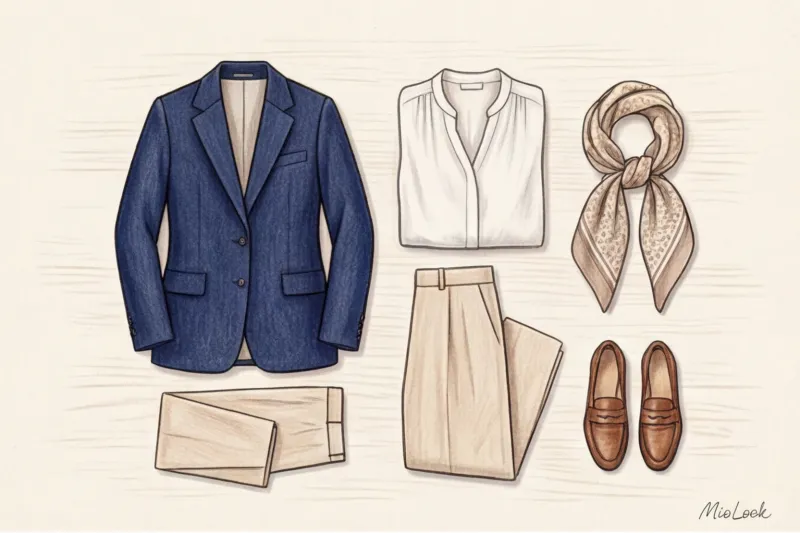
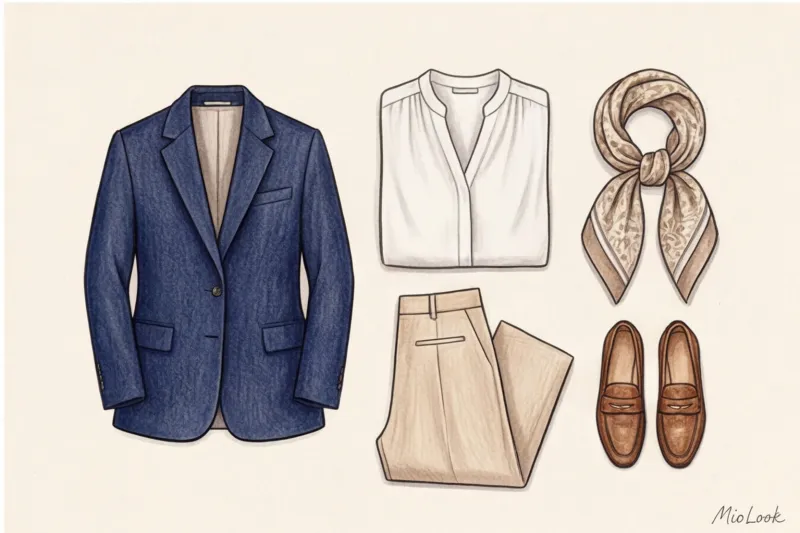
The foundation of any successful travel capsule lies in the ironclad mathematical rule of 1:3. One bottom (well-tailored trousers or a midi skirt) should pair flawlessly with three different tops. If you're packing trousers that only go with one specific blouse, cross it off the list.
But the capsule's true anchor is its footwear. This is where planning in the app begins. For a 3-4-day business trip, you need exactly two pairs: comfortable but classy loafers or brogues (for flying and daytime wear) and elegant pumps for evening events. That's it. Give the rest of the space to accessories and high-quality fabrics.
The Roller Myth: Why Popular Life Hacks Are Ruining Expensive Items
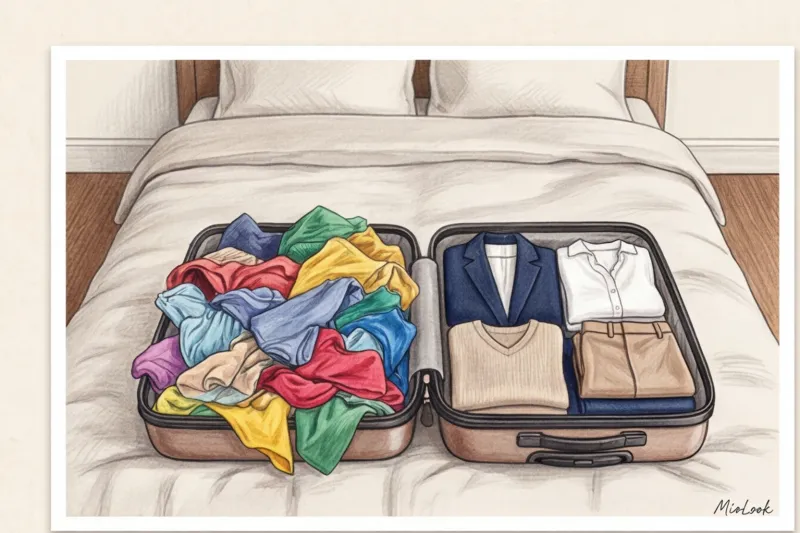
Open any article about packing for travel, and you'll see the same advice: "Roll your clothes tightly to save space." As a luxury wardrobe expert, I can tell you this is the worst thing you can do to your expensive clothes.
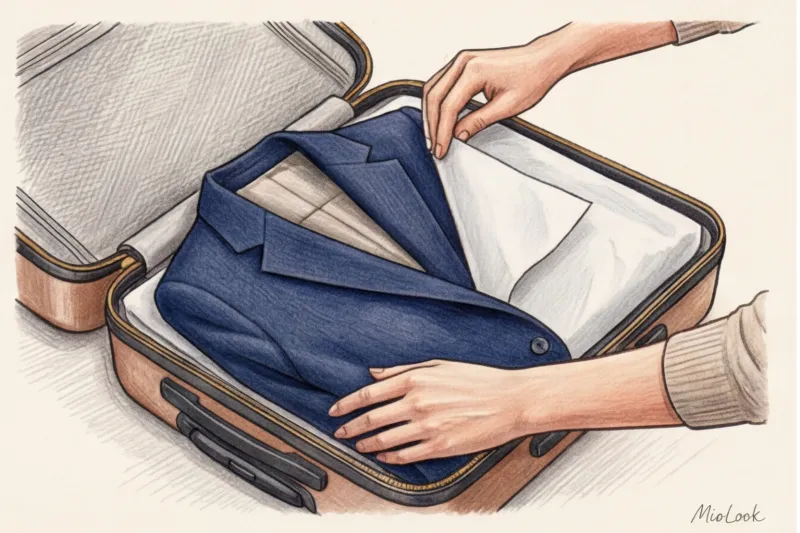
Rolling clothes, and especially using vacuum bags or rigid compression organizers, is the death knell for structured jackets, fine silk, and high-quality wool. This doesn't save space, but rather encourages overuse of space and irreversibly destroys the structure of tailored fabrics. No hotel steamer will save the fibers of a fabric that has been subjected to 10 hours of intense rolling pressure.
What to do instead? Haute Couture boutiques and top-tier brands use the method Dry Cleaner Fold (flat fold packaging).
- Take acid-free tissue paper.
- Line the folds of your jacket (shoulders, elbows) with it.
- Fold the item as flat as possible, preserving its natural architecture.
- The paper takes the friction away, and the item comes out of the suitcase with virtually no creases.
Yes, this method doesn't work for bulky hoodies or stiff, raw denim, but we don't take such items on business trips. For suit wool, folding flat with paper is the only reliable way.
Access to MioLook for €0.99 — one-time payment
A smart AI stylist will select the perfect look and calculate the combination of each item in your suitcase.
Get access — €0.99 onceInvesting in Fabrics: What Works for You in the Air and on the Ground
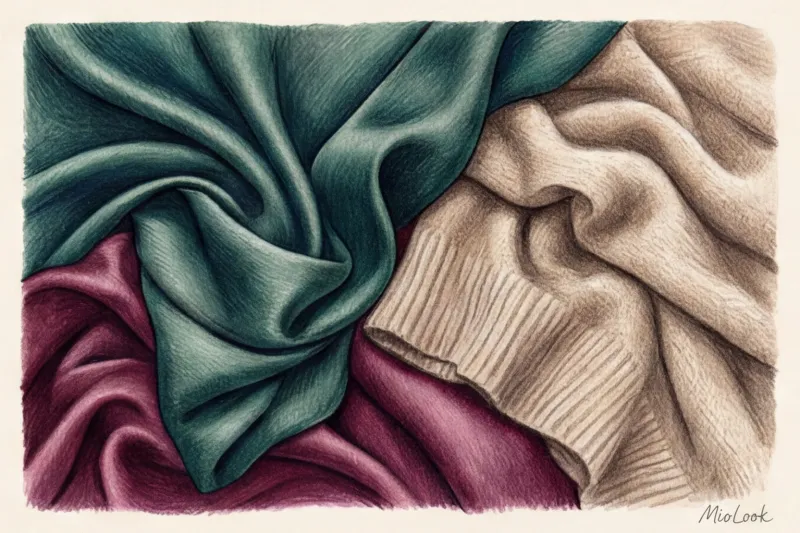
Your comfort and appearance directly depend on the molecular structure of what you're wearing. Leave 100% stiff linen and heavy cotton at home—they'll wrinkle on the way to the airport.
If you want to step off the plane and head straight to the meeting, invest in the right textures. Brands like Loro Piana haven't spent decades developing their concepts for nothing. travel suit Ideal fabrics for flights include silk crepe (crepe de chine), fine merino wool (Super 120s and above), and blended fabrics with 3-5% elastane added for flexibility.
Instead of packing a bulky sweatshirt for air-conditioned airplane cabins, layer smartly. A thin turtleneck made of a silk-cashmere blend keeps you warmer than bulky cotton and takes up no more space in your luggage than a pair of socks.
"Fair warning: cashmere is great for flying, but it's absolutely pointless if you're flying to Singapore or Dubai on business. Always consider your destination—climate matters more than trends."
Accessories as image multipliers
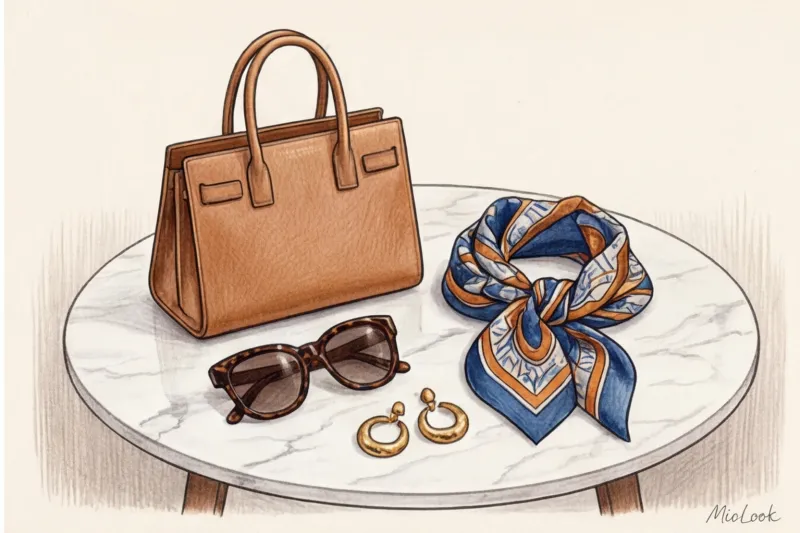
Accessories are the secret weapon of seasoned travelers. They weigh next to nothing in luggage, but pack maximum visual weight into an outfit. It's the details that can dramatically change the level of formality of the same basic outfit.
I had a client attend a morning board meeting, an afternoon exhibition, and an evening cocktail party. We designed the entire look around a single, perfectly tailored navy blue suit. In the morning, with minimalist stud earrings and loafers. During the day, with rolled-up sleeves and a silk Hermès bobble neckpiece. In the evening, with large statement earrings, bright lipstick, and pumps.
When it comes to bags, use the "Russian doll" rule. For a flight, you need a structured leather tote that holds its shape (it's big enough to hold your laptop and documents). Inside that tote, you put a sturdy evening clutch or a small crossbody bag, which already holds your headphones and passport. You're not carrying empty air.
Step-by-step checklist: packing the perfect suitcase in 15 minutes
If you've done everything correctly digitally, physically packing your things will take no more than a quarter of an hour. Forget about spending hours pondering over your unpacked luggage. Here's what the process looks like:
- Step 1: Digital generation. Open MioLook , enter the dates and types of events. The app will generate a ready-made capsule based on your wardrobe.
- Step 2: Filtering. Check your capsule for "soloists." Replace any item that doesn't fit into at least three different sets.
- Step 3: Architectural laying. Place your makeup bag and underwear at the bottom of the suitcase (between the handles) to create a flat base. Then fold your pants so the legs hang over the sides of the suitcase. Layer structured items (jackets with tissue paper), then knitwear. Finally, fold the hanging pant legs over everything to prevent creases at the folds.
- Step 4: Shoe Tetris. Be sure to pack the second pair of shoes in individual dust bags and place them along the edges of the suitcase, filling the inside of the shoes with rolled-up socks (this maintains the shape of the shoe last).
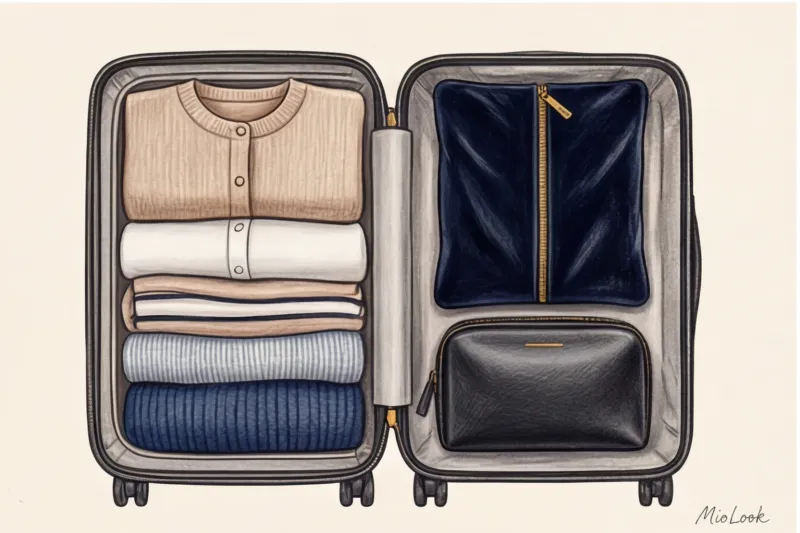
A well-packed suitcase isn't about squeezing in the unsqueezable. It's about respecting your time and belongings. By transferring the pain of choosing to the digital realm, you preserve the most valuable things you'll ever need on any trip: peace of mind, self-confidence, and a flawless appearance under any circumstances.