

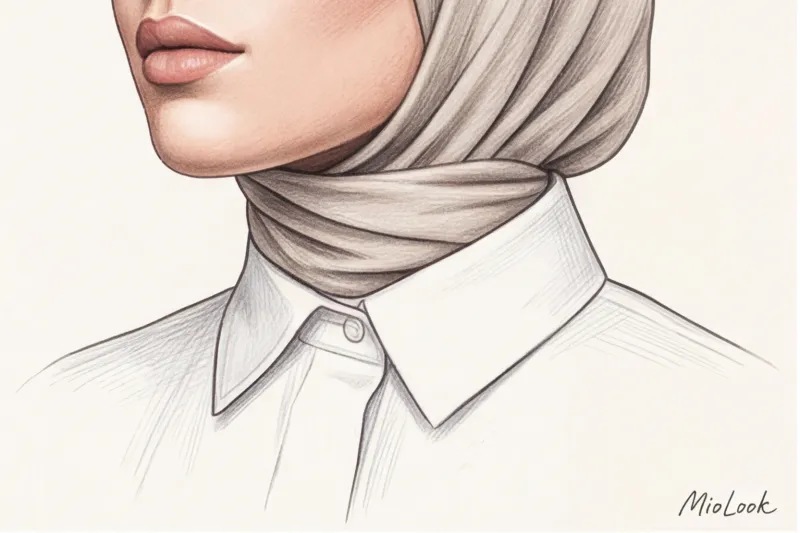
One of my clients once came to me almost in tears. She'd bought a stunning silk Massimo Dutti blouse in a deep emerald shade (around €120), applied the perfect foundation, put it on, and headed off to an important event. An hour later, her perfect look was ruined: a telltale reddish streak had appeared on the high stand-up collar. "But I used a matte foundation; it said oil-free!" she exclaimed, perplexed.
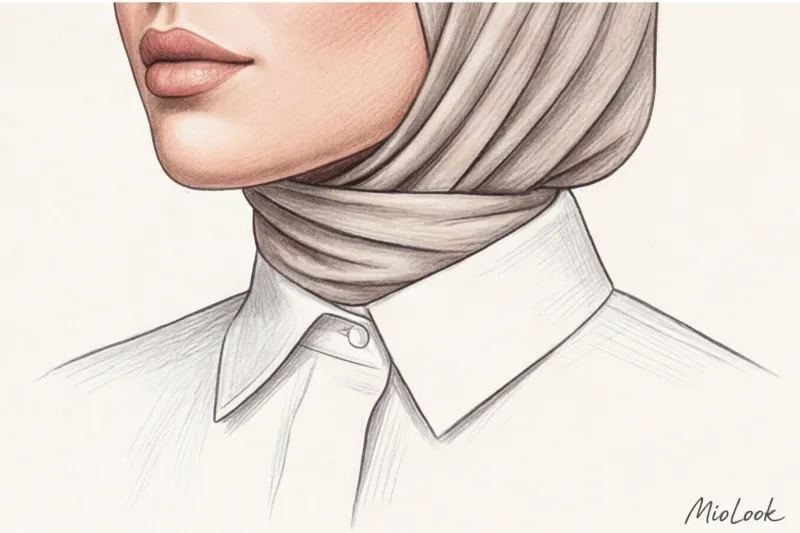
Matte doesn't mean friction-resistant. The label on the bottle doesn't guarantee anything if you don't understand the physics of how cosmetics interact with fabric. When I began studying textile materials science in depth, I realized that to find the perfect foundation that doesn't stain clothes , you need to look at the problem not through the eyes of a makeup artist, but through the eyes of a chemist. This is especially critical for women who prefer modest fashion. I discussed in more detail how to effectively shift the focus in closed looks in our A complete guide to hijab makeup: how to accentuate your face.
The Anatomy of a Spot: Why Does Our Favorite Makeup Betray Us?
When the body is completely covered in beautiful fabric, the face becomes the main focus. And any sloppiness, whether a powder mark on a lapel or a fingerprint on the edge of a stole, instantly ruins the entire look.
Have you ever wondered what happens to the skin under a tight turtleneck or hijab? A unique microclimate is created there. The temperature in the contact area increases by 1–1.5 degrees. Sebum (lipids) begin to melt faster, and the moisture under the fabric prevents moisture from your makeup from evaporating properly.
Add to this mechanical friction. The jawline and chin make hundreds of micro-movements per hour: we speak, turn our heads, nod. According to statistics, about 80% of classic oil-based foundations stain when in direct contact with fabric within the first 30 minutes of wear. In this case, the fabric acts like a powerful sponge, drawing pigment from your skin.
The Chemistry of Longevity: How to Choose a Foundation That Won't Stain
If you want the collar of your white cotton shirt to stay white all day, forget about classic "Oil-in-Water" formulas for the lower third of your face. They're designed to moisturize and brighten, but they're completely defenseless against fabrics.
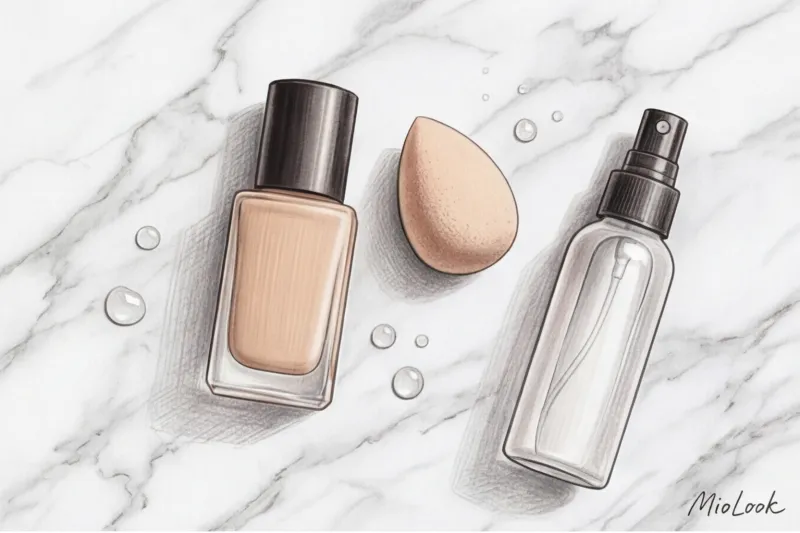
You need so-called self-setting foundations. The secret to their effectiveness lies in volatile silicones and film-forming polymers. How does it work? You apply liquid foundation, a volatile base (for example, Isododecane ) evaporates within a minute, leaving behind an elastic, invisible polymer mesh on the skin that tightly “locks” the pigment.
“According to the International Journal of Cosmetic Science (2023), the use of film-forming polymers reduces pigment transfer to fabric by 78% compared to classic emulsions.”
How can you find this product in the store? Turn the bottle over and look at the ingredients (INCI). Look for the component in the first five ingredients. Trimethylsiloxysilicate or Acrylates Copolymer These are the same "sticky" resins that provide reinforced concrete with strength.
The Hidden Danger: Primers and Treatments That Ruin Your Foundation's Longevity
The most durable foundation in the world will run onto your collar if you disrupt the foundation's structure. Often, women apply a thick, nourishing, oil-based cream and then a long-lasting silicone foundation on top.
What's happening? Silicone physically can't "stick" to the oil film. A sliding effect occurs. Your makeup literally drifts across your face and transfers to the fabric at the slightest touch.
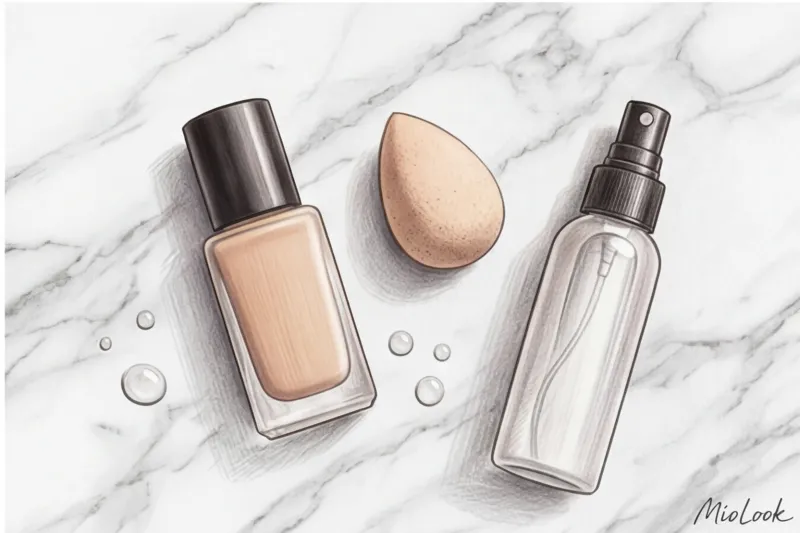
My golden rule: Allow the treatment to fully absorb for exactly 15 minutes. If your skin is shiny after 15 minutes, blot it with a dry tissue before applying makeup.
Organize your smart wardrobe
Tired of choosing clothes in the morning? MioLook's AI stylist will help you create the perfect capsule wardrobe and save your favorite looks in one place.
Get access — €0.99 onceThe Textile Factor: How Hijab and Collar Material Affect Makeup
In my experience, choosing makeup should go hand in hand with understanding what you're wearing today. Different fibers react differently with makeup. This is something they don't teach in makeup courses, but something you encounter every day.
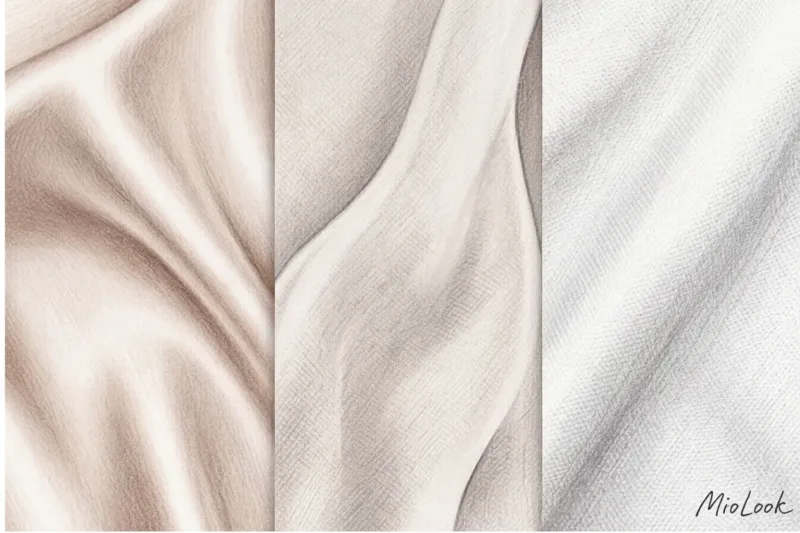
- Silk and satin. They have a minimal coefficient of friction and glide smoothly. However, silk is a protein that thrives on lipids (oils). If your foundation contains oils, silk will instantly draw them out, leaving a greasy, translucent stain that's incredibly difficult to remove. Dry cleaning a good silk hijab can cost up to €30–40—that's the price of two excellent setting sprays.
- Chiffon, crepe and georgette. These fabrics have a distinct, grainy microtexture. They work like delicate sandpaper, mercilessly removing any dry textures from your face: powder, dry foundation, blush.
- Shirt cotton. Cotton is extremely hydrophilic—it loves water. It literally draws the water out of your makeup on your chin, leaving a dry, concentrated pigment on your collar.
By the way, if you often get ready in a hurry and are afraid of getting your clothes dirty, I recommend reading our article Quick Makeup: A Fresh Face in 5 Minutes , where I share techniques for minimizing the use of liquid foundation.
Fixation architecture: the "Sandwich" technique for garment protection
So how do you create an impenetrable barrier? Red carpet makeup artists use a layered setting technique, which I've adapted for everyday modest fashion.
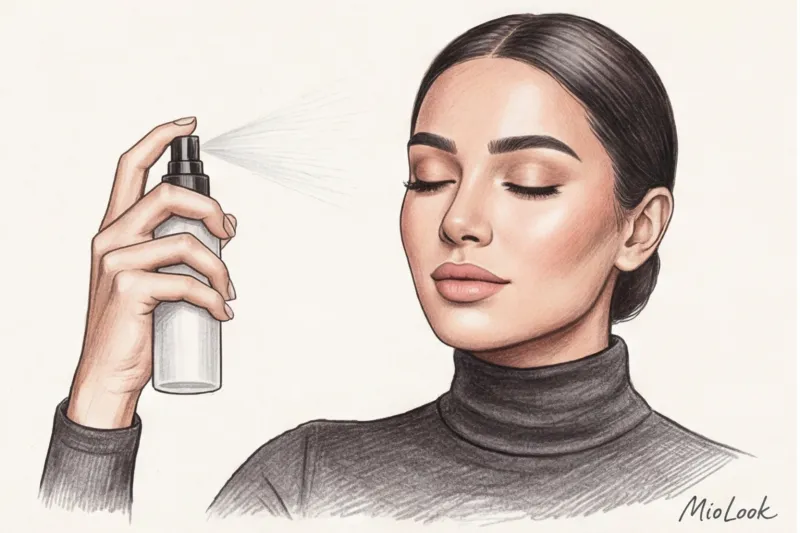
- Step 1: Gel preparation. Instead of oily creams, apply a light moisturizing gel to the lower third of the face and neck.
- Step 2: Wet sponge. Apply foundation that won't stain clothes with a brush, not a damp beauty blender. A brush leaves a layer on top of the skin, while a sponge taps the pigment in, removing any excess. The thinner the layer near the jawline, the less likely it is to smudge.
- Step 3: Liquid fixative BEFORE powder. This is the main secret. Lightly spray the setting spray directly onto the thin base. Let it dry.
- Step 4: Local powdering. Use a translucent HD powder (silica-based, not talc-based) and apply it with a puff only to areas of potential contact.
- Step 5: Sealing. A final, generous veil of setting spray will melt the layers together, eliminating the chalky effect on your face.
The biggest myth of the beauty industry: why powder (baking) often makes things worse
If you watch beauty bloggers, you've probably seen the "baking" technique—applying a thick layer of loose powder with a damp sponge for a few minutes to "bake" the makeup. It looks impressive in videos. But in real life, with high collars, it's a disaster.
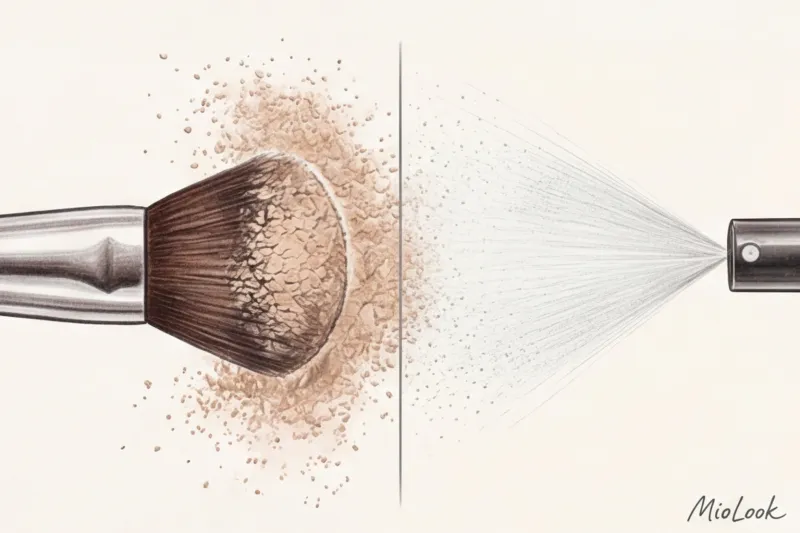
Why is this a bad idea? Dry powder in such quantities doesn't adhere to the skin. It simply sits on top. According to research in the Textile Research Journal (2022), friction between dry microparticles and synthetic fibers (such as polyester, which is often used to make inexpensive dresses or added to mass-market blouses from brands like Zara and H&M) creates powerful static electricity.
Your collar literally attracts dry powder from your face. Instead of setting it, you end up with a cloud of dusty pigment on your clothes. Therefore, a liquid polymer fixative always beats out an abundance of dry powder.
Find your perfect makeup palette
Upload your photo to MioLook, and our algorithms will suggest which makeup and clothing shades will best highlight your natural contrast.
Rescue Operation: How to Remove Foundation After a DisasterBut what if you notice a beige stain on your perfect white collar just before you go out?
Never rub the stain with soap and water! Most long-lasting foundations are waterproof. Water will simply push the pigment deeper into the fibers.
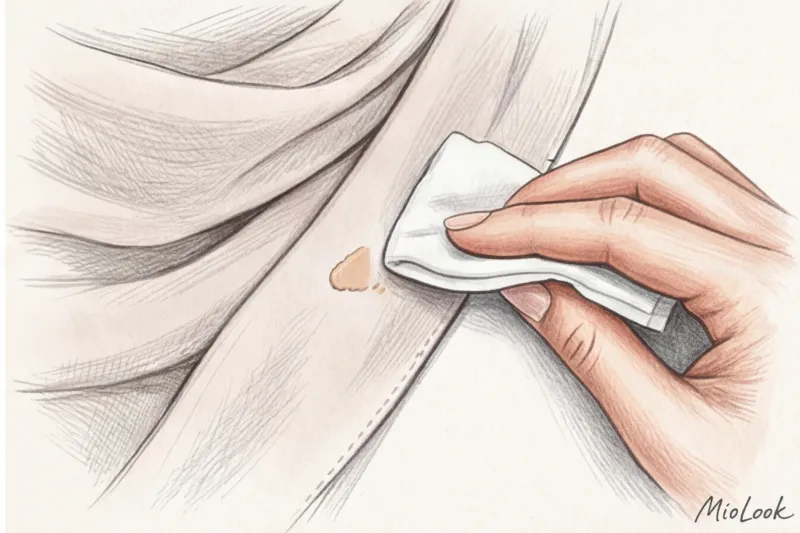
Take micellar water (the same one you have on your shelf) and a cotton pad. Micelles act like magnets for oils and silicones. Wet the pad and gently blot stain without smearing it.
If the stain has set into a cotton shirt, use regular clear dishwashing detergent at home. It breaks down foundation lipids much more effectively than any powder. Apply a drop to the dry stain, let it sit for 15 minutes, and then wash.
Important limitation: This method absolutely DOES NOT work on natural silk! Enzymes and harsh surfactants in dishwashing detergents will destroy the silk thread's protein structure, leaving you with a thinned hole instead of a stain. Only professional dry cleaning can save silk.
Checklist: The Perfect Algorithm for High Collars and Hijabs
Clean lines and a neat appearance are the foundation of a luxurious, confident look. To ensure your makeup stays on your face, not your favorite cashmere turtleneck, remember these five golden rules:

- Choose self-fixing foundations with Trimethylsiloxysilicate in the composition.
- Do not apply foundation to fresh, unabsorbed cream (wait 15 minutes).
- Apply makeup to the lower jaw in a minimal, translucent layer using a damp sponge.
- Avoid baking and using too much dry powder, as it will flake onto your clothes due to static.
- Always seal the result with a quality setting spray.
A smart approach to your wardrobe and makeup not only saves you stress, but also money on dry cleaning. To avoid wasting time mulling over your closet, try the "smart wardrobe" feature in MioLook The service will help you digitize your items, create harmonious outfits, and suggest what to wear tomorrow to look flawless.
Frequently Asked Questions
Your perfect vacation wardrobe
Pack your suitcase correctly – find out which vacation style suits you
About the author
Unlock MioLook
for €0.99
Start creating perfect outfits with artificial intelligence
Get access — €0.99 onceRelated Articles
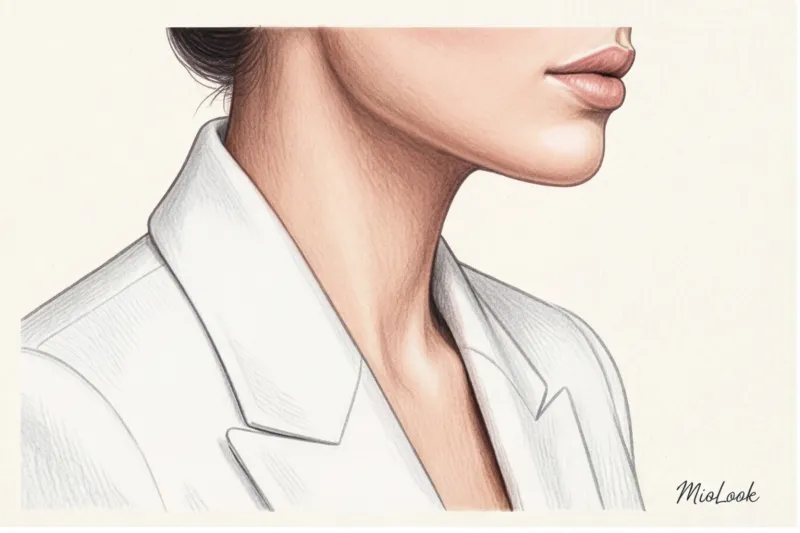
How to set makeup so it doesn't stain your clothes and hijab
Standard glossy tips don't work against friction. Learn the secrets of creating ...
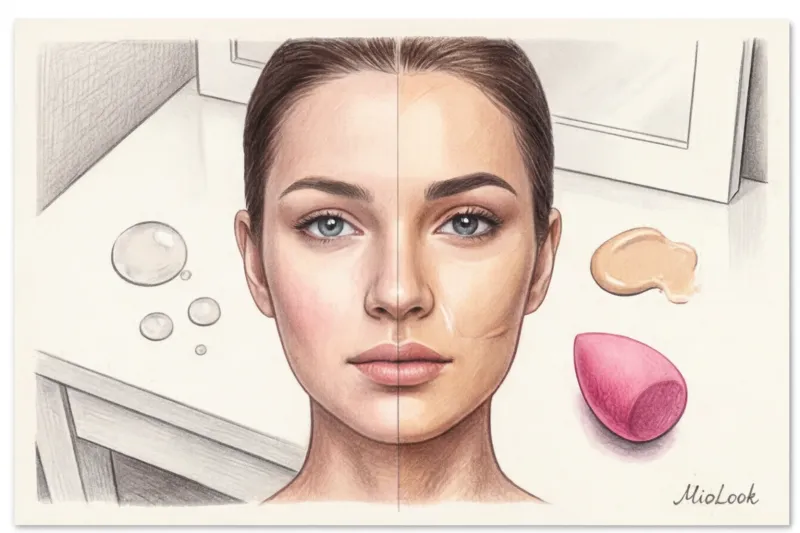
How to Make Your Makeup Last: The Best Bases and Fixatives
A faded foundation not only ruins your look but also risks staining your clothes...
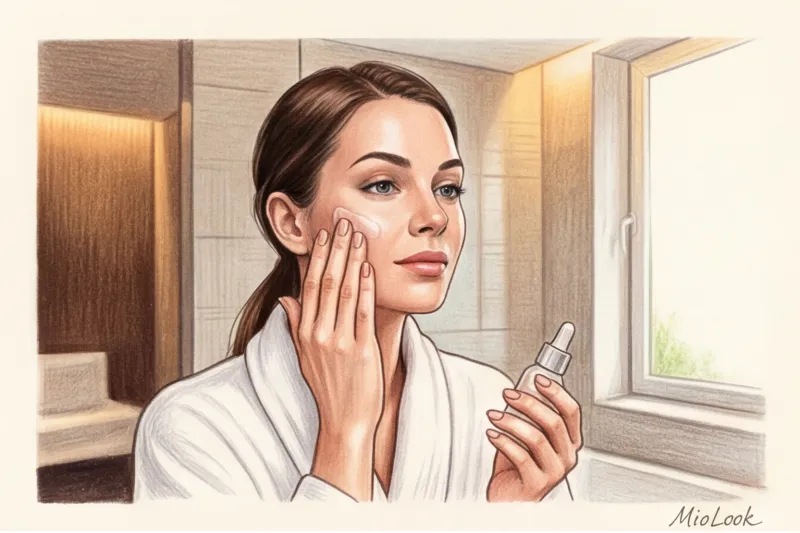
How to Create Long-Lasting Makeup: Secrets for the Evening
Your perfect evening look can be ruined by bleeding foundation. Learn insider ma...

Perfect Wedding Makeup for a Hijab: Secrets to Balance
A covered look places 100% of the attention on the face. We explore the laws of ...