Take a look at your accessory drawer. We bet there are at least three or four pairs of sunglasses you bought on a vacation shopping spree, which you've worn exactly twice? In my 14 years as a personal stylist, I've seen this pattern regularly: dozens of impulse buys and not a single pair you could casually throw on early in the morning and look flawless. That's why basic sunglasses aren't just plastic with dark lenses. They're an architectural element of your wardrobe and, arguably, the most profitable investment in your personal style.
Today we'll move away from outdated glossy advice. We discussed in more detail why strict facial math is no longer relevant in our a complete guide to choosing glasses for your face shape In this article, I'll show you how to perceive optics through the prism of modern stylistics and the psychology of perception.
What makes basic sunglasses truly "basic"?
Basic in optics doesn't mean "boring." Basic is an absolute purity of lines. The main characteristic of a basic model is the absence of overt decoration. No rhinestones, gold monograms on the half-arm, or garish brand logos. Basic frames work through shape, texture, and color, not through hardware.
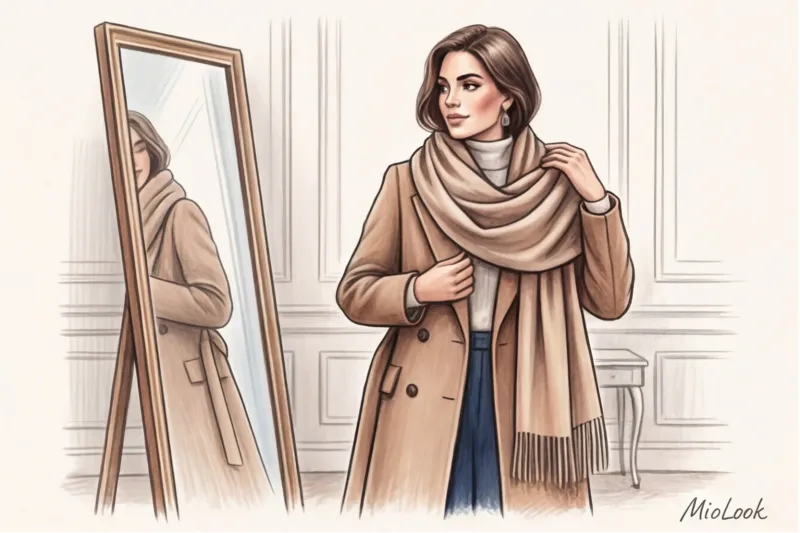
Many people mistakenly consider sunglasses to be a summer accessory only. However, up to 80% of ultraviolet radiation penetrates clouds even in November. Therefore, a truly essential pair should be aesthetically pleasing year-round: they should look equally appropriate with a relaxed linen suit on a terrace or with a heavy cashmere coat in a slushy metropolis.
The foundation of basic eyeglasses is their materials. Mass-market injection-molded plastic loses its appearance, becomes covered in micro-scratches, and becomes cloudy within 1-2 seasons. A high-quality frame made of milled cellulose acetate (reasonably priced at €100-150) lasts on average 5 to 10 years. Acetate has a refined inner luster, a deep color, and adapts to the contours of your face over time, becoming truly yours.
Access to MioLook for €0.99 — one-time payment
A smart AI stylist will select the perfect look based on your individual characteristics and wardrobe.
Get access — €0.99 onceGeometry vs. Architecture: How to Choose Basic Sunglasses Today
Forget the rule "a round face needs square glasses, and a square face needs round glasses." According to a WGSN analytical report (2024), the eyewear and styling industry has finally shifted its focus from correcting so-called "flaws" to emphasizing the individual facial architecture. Attempts to rigidly compensate for facial shape often result in a compromised, boring face, losing its natural character.
Instead of math, use the topline rule. This is a key marker for proper fit: the top edge of your frames should align harmoniously with your brow line. Ideally, it follows the arch of your brow, sitting slightly below or overlapping your brow by no more than a third. If the frame clashes with the arch of your brow (for example, if your brow is arched but your glasses have a perfectly straight topline), it creates a frowning, heavy look.

The most important detail is the fit and balance of the weight on the bridge of the nose. In my practice, I often see this: a client puts on luxurious glasses, but 15 minutes later starts complaining of a headache. This means the frames are unbalanced. A professional stylist's test: in a boutique, place the glasses with the open temples on your index finger near the bridge of your nose. If they immediately tip forward, they will constantly slide down your face, causing you to wince.
Essential basic models that have survived decades of trends
Trends for micro-glasses or oversized face shields come and go every few years. But there are some true classics in eyewear—shapes that have become timeless. Choosing a specific model depends on the message you want to convey.
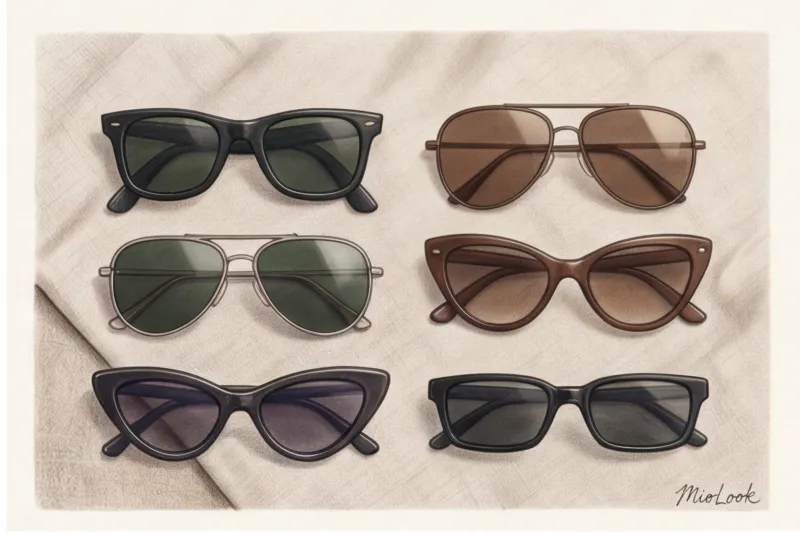
Wayfarers: Structured Classics
If I had to stick to just one eyeglass shape in the world, it would be Wayfarers. Created in 1952, they suit approximately 80% of people thanks to their slightly trapezoid shape. The slight forward tilt of the frame and accentuated upper corners create a visual lift for the cheekbones.

This shape is ideal for those seeking balance. Wayfarers are phenomenal at taking the edge off formal business suits, while still creating a relaxed look with jeans and a white T-shirt.
Aviators: Relaxed Chic and Its Pitfalls
The thin metal frame and teardrop lens convey a spirit of freedom, '70s style, and a touch of casualness. However, I always offer a stylistic caveat. Classic teardrops have sweeping, downward-sloping lines.
When it does NOT work: If you're prone to morning puffiness, have pronounced nasolabial folds, or naturally drooping eyes, classic aviators will visually "pull" your face downward, creating a tired look. In this case, look for modernized versions with a straighter bottom line or a "navigator" shape (with square rather than teardrop-shaped lenses).
Cat-Eye: Refined Elegance
This style places emphasis on the upper third of the face and conveys femininity and status. The modern cat-eye differs from the retro styles of the 1950s: we avoid extremely sharp, upturned angles and rhinestones on the temples.
Opt for softer, more voluminous options. This is the perfect solution for smart-casual looks for the office These glasses instantly make your posture straighter and your look more luxurious.
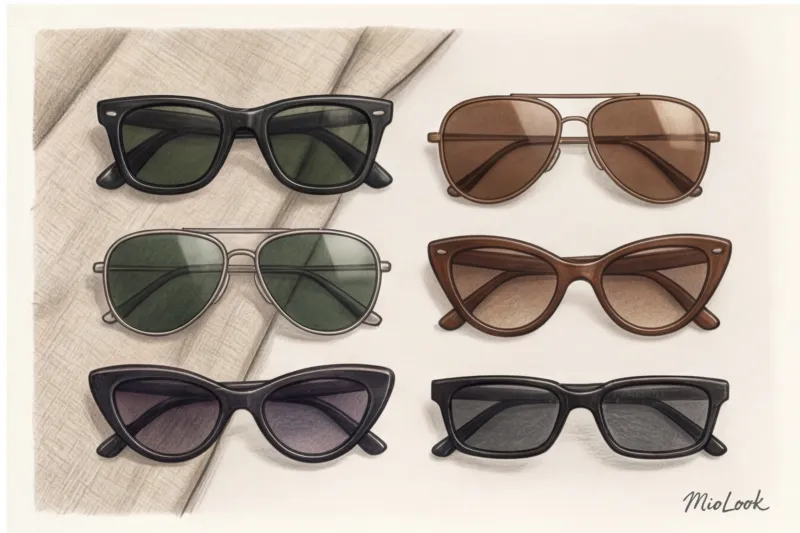
Soft Rectangle (90s Minimalism)
The '90s aesthetic has made a triumphant return and firmly established itself as a modern staple. Slim, but not microscopic, rectangular glasses are the quintessence of intellectual minimalism. Horizontal lines add a sense of collectedness, austerity, and a touch of distance to the face. They look luxurious with sleek hairstyles, voluminous jackets, and minimalist jewelry in smooth metal.
Your perfect look starts here
Join thousands of users who look flawless every day with the MioLook smart wardrobe.
Get access — €0.99 onceFrame and Lens Color: Why Basic Glasses Don't Have to Be Black
It's time to debunk the most common myth: "Black frames are the most universal and basic." In fact, for most Slavic face types, including those with light brown hair and fair skin, solid black near the face is harsh. It creates harsh shadows, highlighting under-eye circles and skin imperfections.
I recall a case from my practice: a client, a marketer, came to me with a request to refresh her wardrobe. She wore thick black glasses, considering them "safe." But against her fair skin, they looked like two black holes, making her face look haggard. We replaced them with warm caramel-colored frames—her face literally glowed, visually taking a couple of years off her tired appearance.
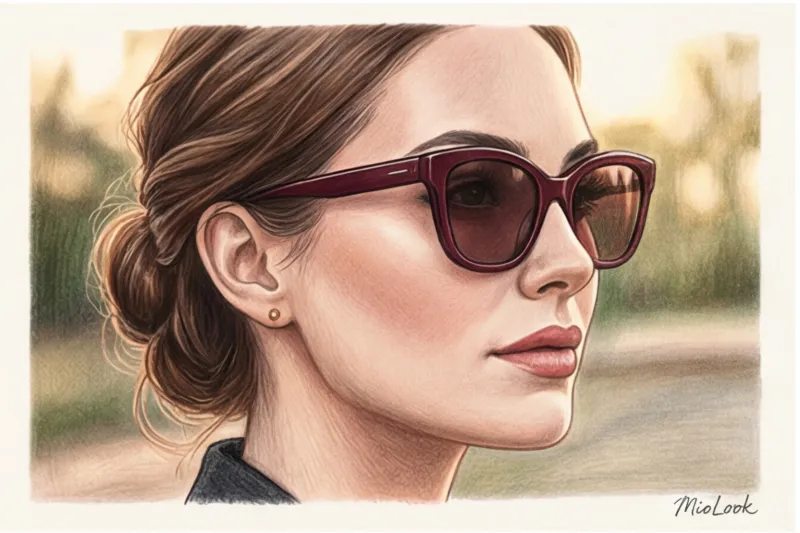
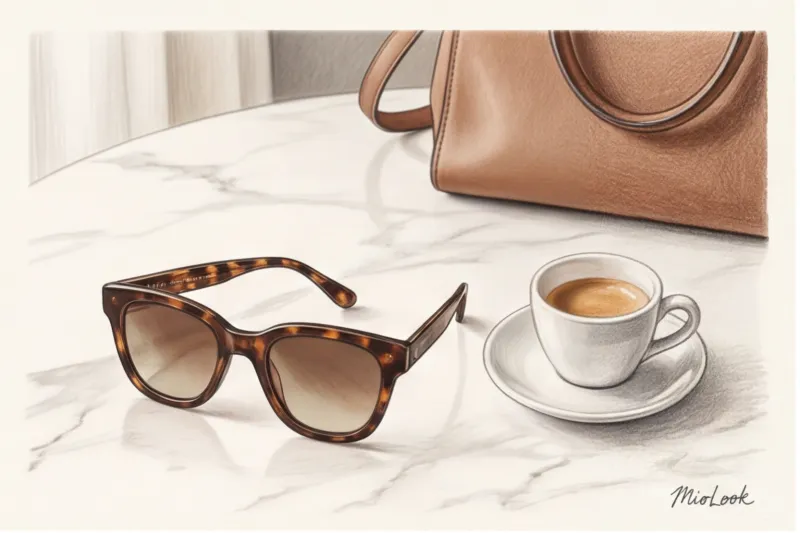
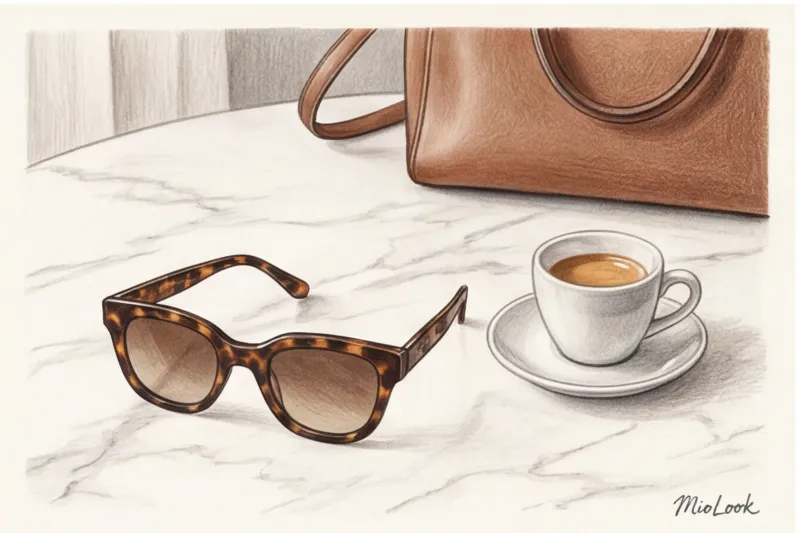
A truly versatile base is a tortoiseshell frame (havana or tortoiseshell). With its mix of brown, amber, and black flecks, these frames are chameleon-like, perfectly matching your skin and hair color. Also consider sophisticated shades: deep olive, burgundy (a hit of recent seasons), or clear champagne acetate. They look unique but work perfectly with any wardrobe.
When it comes to lenses, for city life I always recommend a gradient (a smooth transition from dark on top to light on the bottom) rather than a solid fill. A gradient conceals bags under the eyes without creating a harsh line across your cheekbones, allowing your eyes to be seen in low light.
Investing Wisely: A Quality Checklist for Choosing Frames
Buying basic glasses is an investment. To ensure every euro is worth the investment, pay attention to the technical details that signal quality.
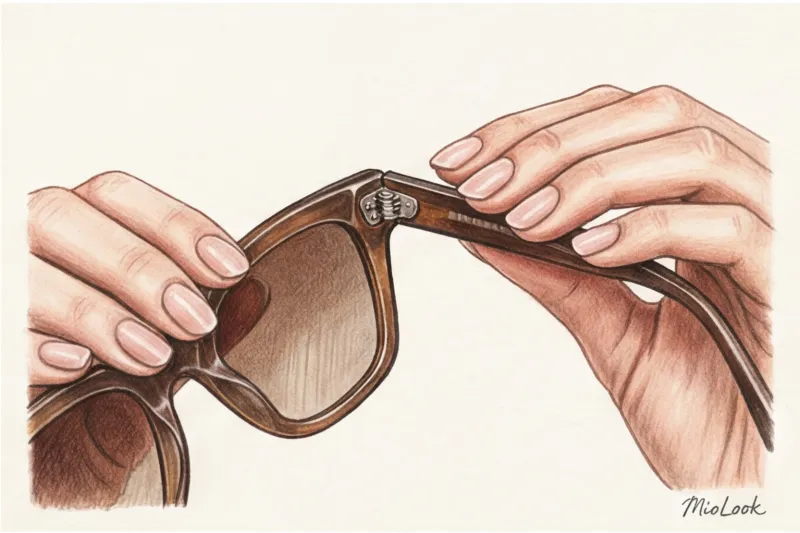
- Hinges (joints): Cheap glasses have a single flimsy screw to secure the temples. Premium optics use a five-step (sometimes seven-step) hinge. This ensures smooth movement and doesn't wobble for years.
- Balance check: Place your glasses open on a flat table. A quality frame will lie flat, with both lenses and both temples touching the surface. If one temple is hanging in the air, the frame geometry is off.
- Lenses: The minimum requirement is a UV400 rating (ultraviolet protection). Polarization (glare protection) is optional. It's essential for driving or at sea, but in the city it can be annoying, as it interferes with reading information on smartphone screens and payment terminals. In terms of optical standards, look for lenses made of CR-39 material—they provide a crystal-clear, distortion-free image, unlike cheap polycarbonate.
- Material: Run your finger along the frame. Real acetate is warm to the touch, its polish is smooth as glass, without the slightest casting seams.
Forming a capsule: how many pairs of glasses do you really need?
My approach to creating a capsule wardrobe Unwavering: 2-3 quality pairs for €120-€200 will always beat a dozen dubious plastic glasses for €20. You don't need a huge collection to cover 100% of your styling needs. If you use the app MioLook By digitizing your wardrobe, you'll quickly notice how three well-chosen pairs can be combined with anything.
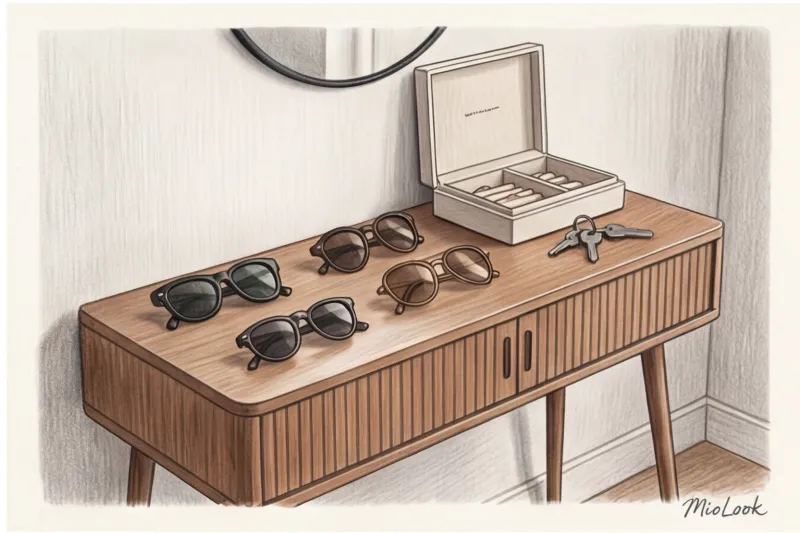
The formula for an ideal optical capsule looks like this:
- A pair of structured glasses made of thick acetate (For example, tortoiseshell Wayfarers or soft rectangles.) They pull together an outfit, add a touch of class, and pair perfectly with coats, trench coats, and jackets.
- A pair of lightweight metal-framed glasses (modernized aviators or round ones). Perfect for relaxed weekends, flowy dresses, and chunky knit sweaters. Make sure the metal color matches your jewelry collection and bag hardware.
- One accent classic (cat-eye or sophisticated wine-colored frames). For those days when you're wearing a very simple monochrome look, and your glasses should be the main style statement.
Basic sunglasses are your personal filter, the way you see the world and the way the world sees you. Don't skimp on lens quality and fit, choose sophisticated, natural shades instead of flat black, and the right frame will be that finishing touch that transforms a simple outfit into a flawless, complete look.