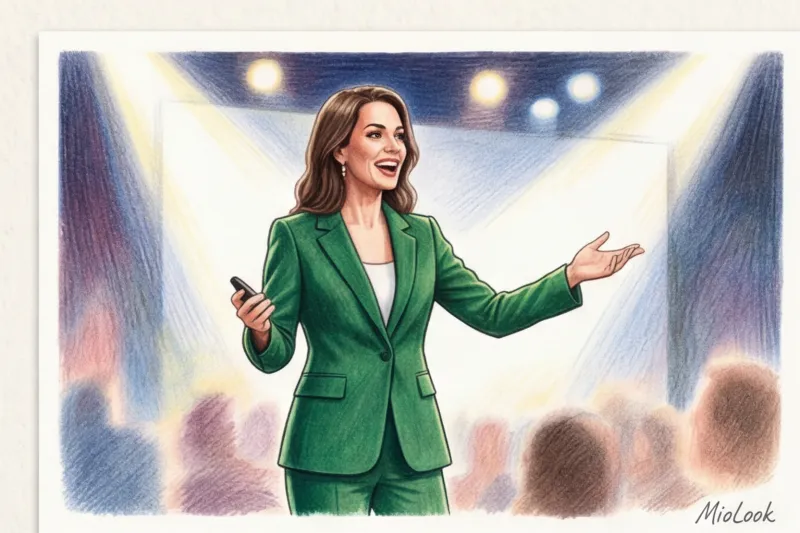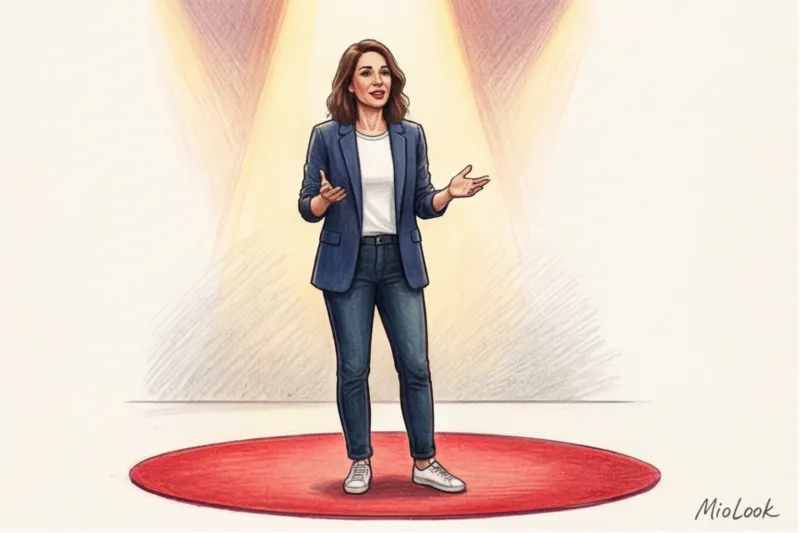
In 2019, I was preparing a senior executive at a major IT company for a TEDx talk. We chose a stunning emerald silk blouse—it looked flawless in the dressing room mirror. But as soon as my client stepped onto the stage, under the direct rays of four powerful spotlights, the temperature around her jumped eight degrees. The tension and heat instantly clung to the thin silk, and on the video feed, the fabric cast such a strong glare that the speaker's face appeared flat. That day was a turning point for me. I realized that a speaker's style isn't just the art of putting together beautiful pieces. It's a true engineering challenge.
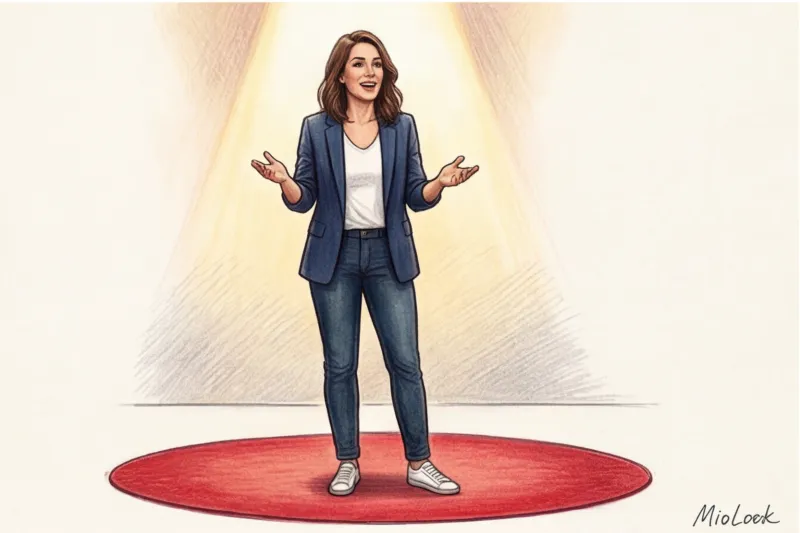
We discussed the basic dress code rules in more detail in our The Complete Guide to Dressing for Public Speaking , but today I want to talk about the highest level of performance. We'll combine the psychology of relaxation with the optics of 4K cameras and textile physics. Forget the old rule of public speaking—it no longer works.
The Anatomy of a TED Talk: Why the Suit No Longer Works
"Dress for the audience in the back" is perhaps the most hopelessly outdated piece of advice still circulating in public speaking courses. According to a McKinsey report (2024) on digital consumption, over 85% of speeches are now watched on smartphones and monitors, not from the audience. We no longer speak to the gallery. We speak to someone watching us close-up.
A perfectly pressed, rigid, "armored" three-piece suit or sheath dress no longer conveys status. On camera, they convey reserve, distance, and, paradoxically, a fear of losing credibility. Armor has been replaced by the concept Sprezzatura — deliberate casualness. The audience wants to see not an unapproachable lecturer on the podium, but an intelligent conversationalist in the living room.
"A rigid, formal dress code physically blocks a speaker's natural gestures and breathing. When the shoulder girdle is pinched by shoulder pads, the voice sounds higher and more tense, which the audience subconsciously perceives as a lack of confidence."
Researchers of cognitive load theory have long proven that the more complex and rigid a speaker's visual image, the less brain power the viewer has to absorb the ideas themselves. True status today is a comfort that allows you to focus on the meaning, not on your hunched stomach.
Access to MioLook for €0.99 — one-time payment
A smart AI stylist will create the perfect stage look from your clothes.
Get access — €0.99 onceTextiles under the spotlight: how fabric controls attention
The stage is an extreme environment. Temperatures under direct lighting often reach 30–32 degrees Celsius, even with a powerful air conditioner. How fabric performs in these conditions determines half your success.
The trap of synthetics and glossy shine
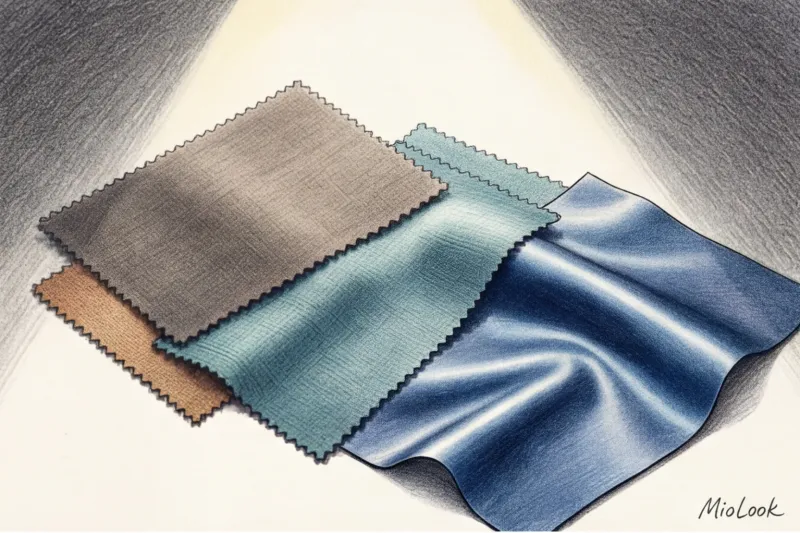
Polyester, acrylic, and shiny satin are a speaker's worst enemies. Under the spotlight, synthetic materials create a greenhouse effect. Just 10 minutes of vigorous gesticulation, and telltale sweat stains will ruin your credibility faster than a forgotten text. Furthermore, glossy textures reflect light directly into the camera lens, creating a cheap sheen and visually adding volume where there isn't any.
Eco-friendly and breathable alternatives
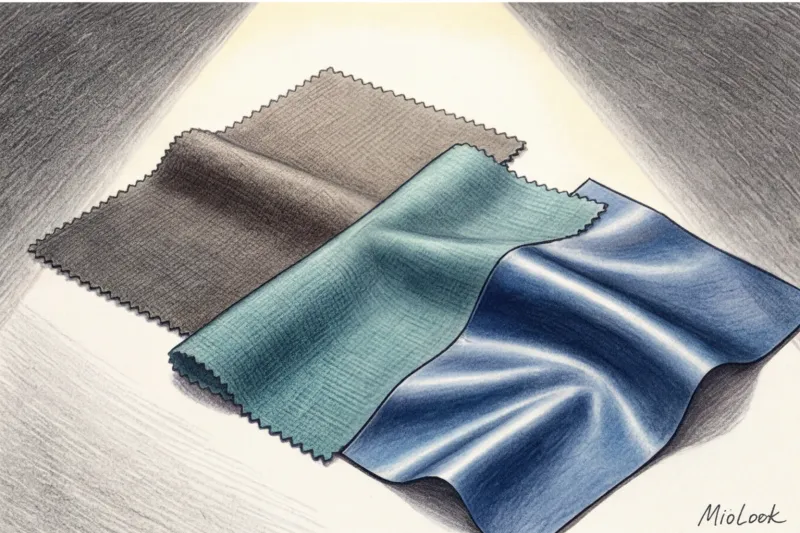
For the stage, I always recommend matte fabrics that absorb rather than reflect light. Ideal options:
- Tencel (lyocell) — eco-friendly eucalyptus fiber. It breathes better than cotton, flows beautifully, and looks incredibly elegant on camera.
- High-twist wool — paradoxically, thin wool cools the body perfectly and practically does not wrinkle.
- Thick matte cotton — from 180 g/m². It holds its shape and is not see-through under flashes.
Important limitation: 100% linen is a wonderful, breathable fabric, but it's NOT suitable for stage wear. You'll get wrinkles on the way to the microphone. If you love the texture of linen, look for blends: linen with 30-40% viscose or tencel. They maintain the aesthetic appeal but prevent creasing.
Your perfect look starts here
Join thousands of users who look flawless every day with MioLook.
Get access — €0.99 onceRelaxed Silhouette Architecture (Smart Casual for the Stage)
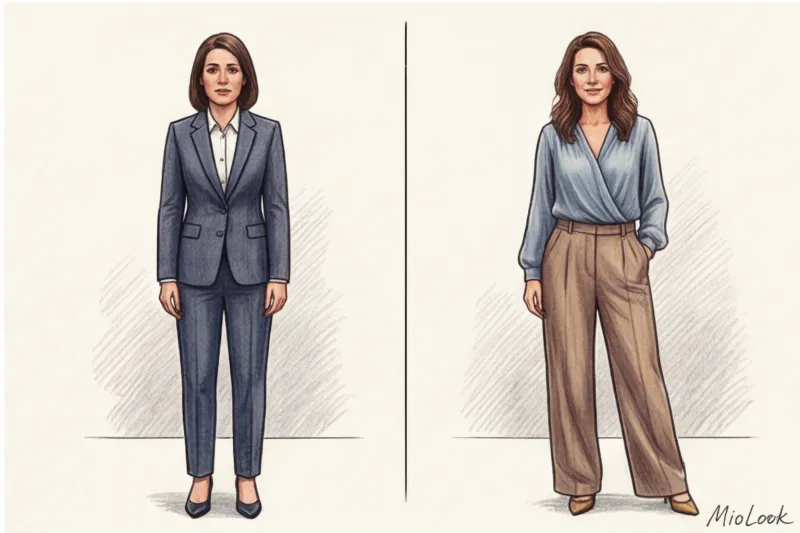
How do you find a balance between comfort and a put-together look without going overboard with a casual look? My favorite trick is "one-structural-element rule".
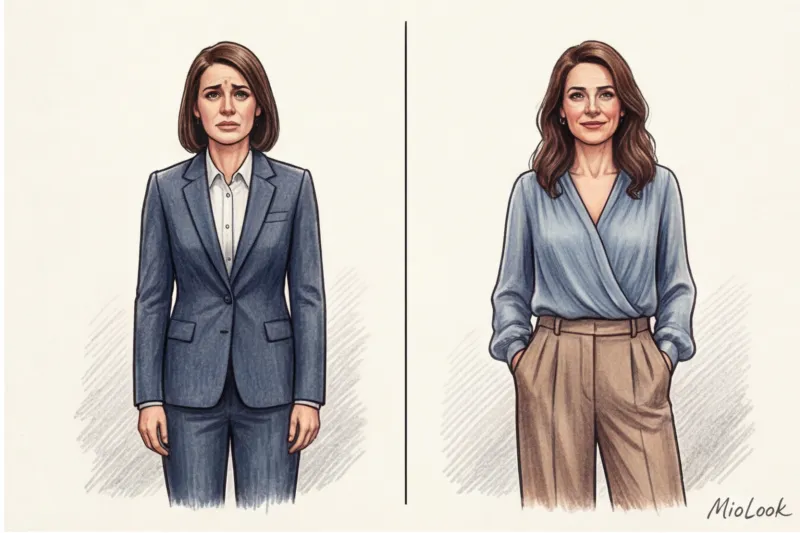
The idea is simple: if the bottom is relaxed (for example, wide, flowing palazzo pants), the top should be structured (like a structured jacket). Conversely, a soft blouse or oversized cashmere sweater pairs perfectly with tailored, straight-leg trousers with a pleated waist.
In practice, this works flawlessly. Last year, an economics professor approached me about a presentation to startups. In her usual tweed suit, she looked like a stern head teacher. We simply swapped the dress shirt for a basic heavyweight cotton T-shirt (220 g/m²) and wore it under a blazer. The pomposity instantly diminished, the image became more dynamic, and the speaker became more relatable to the younger audience.
Shoes are a particular pain. Stages are often hollow. Stiletto heels turn your every step into a roar, which the microphone picks up and broadcasts to the audience. Replace them with stylish loafers, minimalist leather sneakers (no logos), or shoes with a sturdy block heel. By the way, if you're unsure whether your shoes match your outfit, upload a photo of your items to MioLook — the algorithm will help you create harmonious combinations in a couple of seconds.
Color and Pattern in the Age of 4K Broadcasting
Choosing colors for a video presentation is a matter of pure physics. What looks stylish in real life can be a disaster on screen.
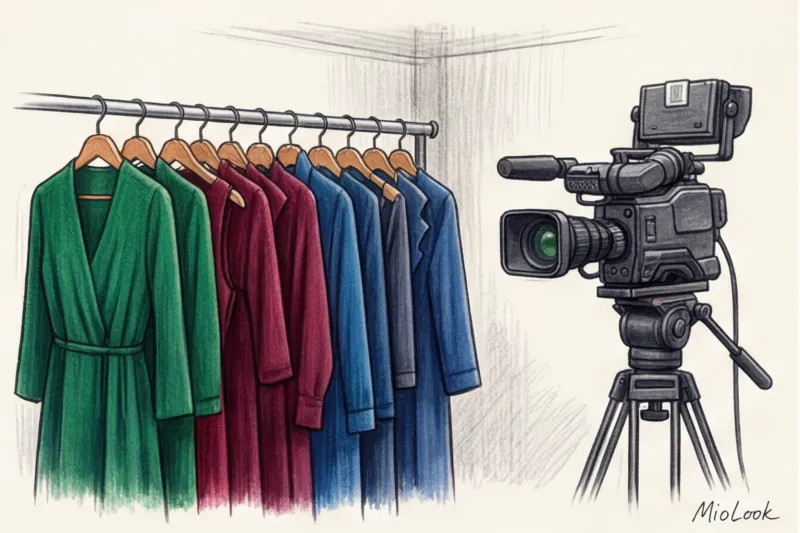
As the Society of Motion Picture and Television Engineers (SMPTE) notes, modern digital camera sensors clash with small, contrasting patterns. Houndstooth, small Vichy checks, and narrow stripes all create what's known as "stripes" in video. moiré effect (Moiré pattern). The fabric begins to ripple, strobe, and shimmer, causing physical headaches in viewers.
There are also some pitfalls with solid colors:
- Absolute black — cameras often fail to capture the texture of black fabric, turning the silhouette into a flat black spot without shadows or volume (especially against a dark curtain).
- Snow-white — acts as a reflector. It creates glare, overexposing the frame, and forces the camera's sensor to darken your face to compensate for the brightness of your shirt.
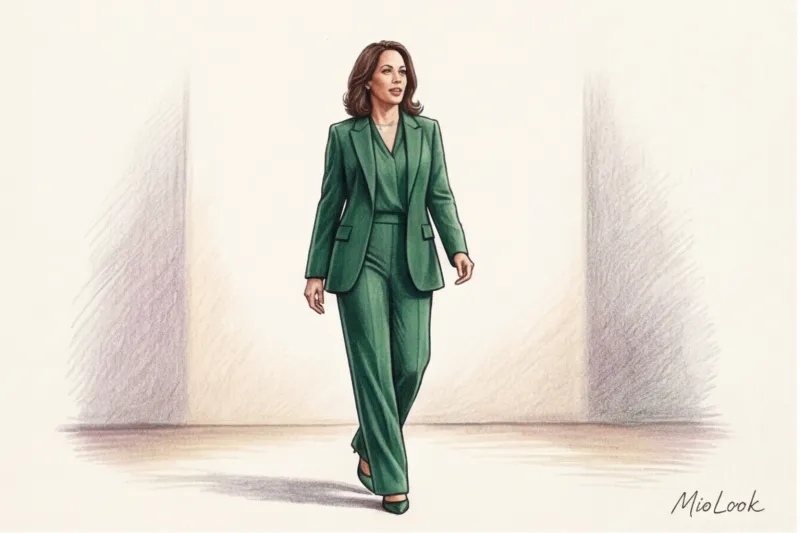
What to wear? Colors of gemstones. Emerald, sapphire, deep burgundy, amethyst. In 2024, the Pantone Color Institute confirmed that these deep, saturated hues are best rendered on digital screens. They are contrasting, authoritative, but not aggressive.
Ready to get started?
Try the MioLook free plan—no commitments. Build your performance capsule.
Get access — €0.99 onceTechnical Wardrobe Rider: What 90% of Experts Forget
This is the most insider part of preparation, the one they don't write about in glossy magazines. Your clothes aren't just fabric; they're a mounting platform for sound equipment.
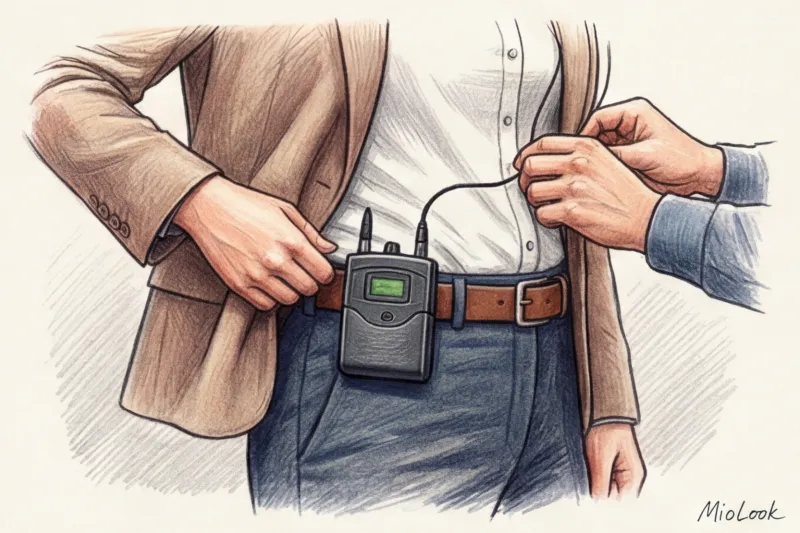
One day, a client of mine arrived for an important interview in a stunning silk slip dress. The look was delicate and elegant until the sound engineer arrived with a "bodypack"—a heavy transmitter the size of a deck of cards. The dress had no belt or hem. As a result, the transmitter had to be attached to her underwear at the back, the wire tucked under the dress, and the silk stretched unattractively, ruining the entire silhouette.
To avoid this situation, check three things:
- Where to mount the transmitter? You need a strong trouser or skirt waistband, belt, or jacket pocket that can support a weight of 150-200 grams without sagging.
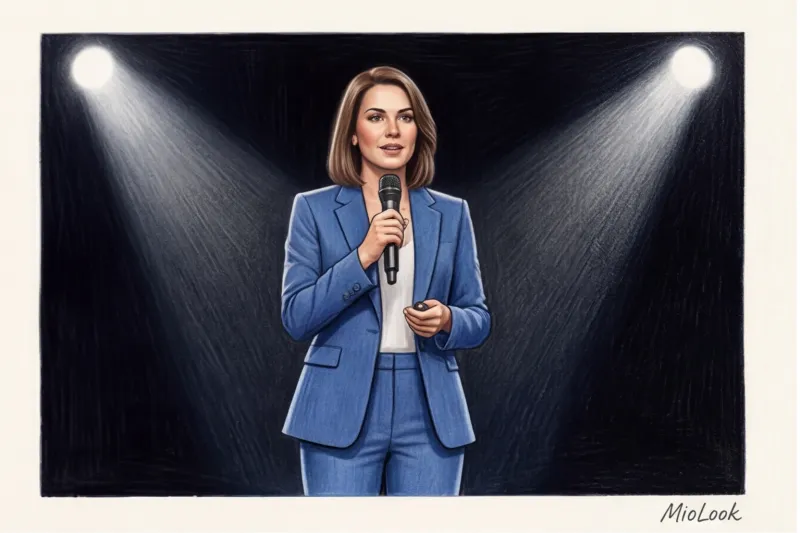
- Where to attach the lapel? The microphone should be positioned at chest level (about a hand's breadth below the chin). A jacket lapel, a stiff shirt collar, or a well-cut top are essential. If the fabric is too thin, the microphone will point toward the floor, resulting in a muffled sound.
- Jingling decorations. Multi-layered metal bracelets, long earrings that hit the headset, and large pendants on long chains are absolutely prohibited. They create micro-shocks that sound like hammer blows in the speakers.
Checklist: Test drive the look 24 hours before release
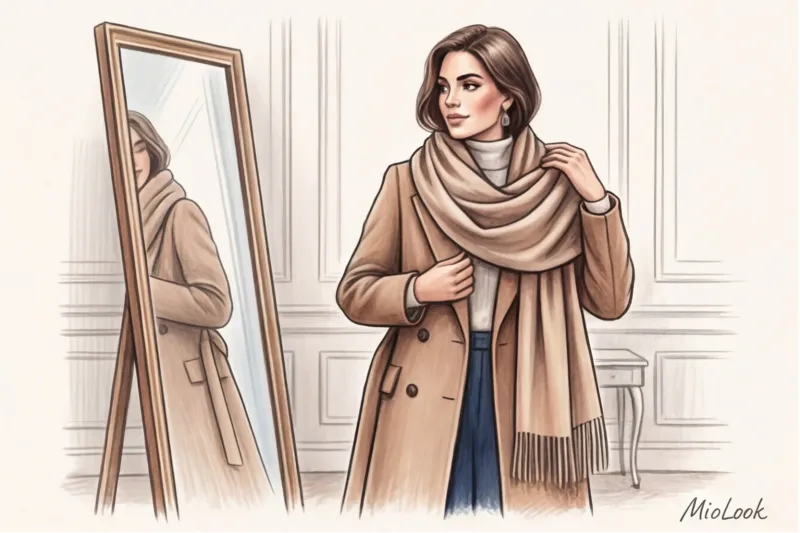
Never wear clothes straight from the store to a performance. Any stage look requires a rigorous test drive. I make all my clients go through this checklist in front of a mirror.
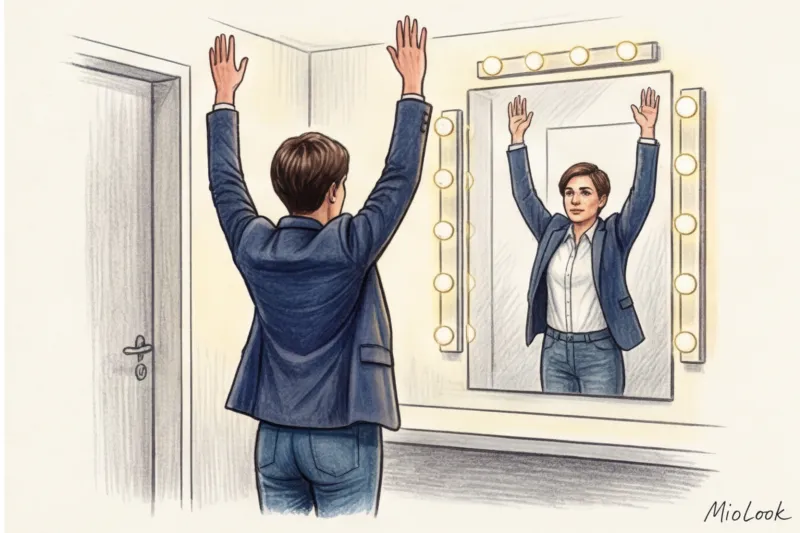
- Raised Hands Test. Make a sweeping gesture with both arms upward. Is your shirt hanging loose from your pants? Is your jacket riding up, exposing your lower back? If so, change the cut or add a bodysuit.
- Squat and wide step test. You should be able to move freely around the stage. If a pencil skirt forces you to take tiny steps, you'll look unsure.
- Flash test. Ask someone to take a photo of you in a dark room with a phone flash. You'll be surprised how many dense fabrics become completely transparent under directed light.
- Video test in motion. Record 30 seconds of your speech on full-length video. Look at yourself through the eyes of the viewer. Is your belt dangling distracting? Does your groin area bunch up strangely when you walk?
I recommend saving successful images that pass this test immediately in a digital capsule. MioLook app This way, you'll build your own arsenal of tried-and-true looks and save yourself a ton of stress before your next conference.
A speaker's attire shouldn't scream status. It should whisper to the audience, "I know who I am, I'm comfortable, and now we can talk about what's truly important." Choose matte textures, deep colors, consider technical details—and let your style complement your ideas, not distract from them.