I remember one of the closed showrooms during Paris Fashion Week a couple of years ago. The PR director of a major Scandinavian brand proudly showed me voluminous trench coats made from 100% recycled ocean plastic. "This is our future," she said, demonstrating the perfect seams. And that evening, over a glass of wine in a brasserie, the commercial director of the same brand wearily let slip that 40% of this grand "eco-collection" hadn't sold even in the final sales and would soon be sent for recycling. They simply hadn't gotten the cut and volume right.
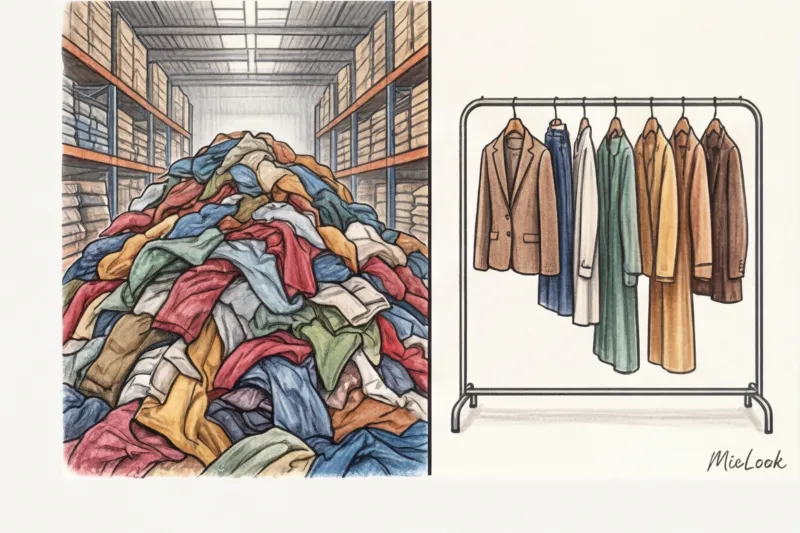
At this point, it becomes clear: producing 100,000 T-shirts from the purest organic cotton that will rot in a landfill is a far greater crime against the planet than producing 5,000 T-shirts from virgin polyester that will sell out to the last one and last for years. The present sustainability in fashion It's not just about choosing the right fabric. It's about solving the problem of overproduction. We've covered how the industry's focus is shifting in more detail in our The complete guide to analytics for the fashion business.
The Greenwashing Trap: Why Organic Cotton Won't Save the Planet Without Analytics
The modern fashion industry has fallen into a self-marketing trap. Brands spend colossal amounts of money on attaching a cardboard tag with a green leaf to a garment, touting recycled fibers and vegan leather (which often turns out to be ordinary polyurethane). This is classic greenwashing—creating the illusion of eco-friendliness.
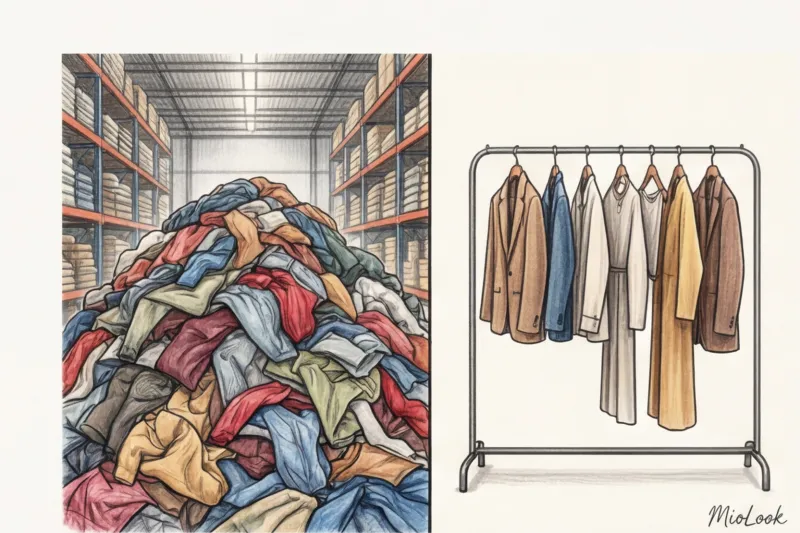
The fundamental difference between marketing sustainability and real sustainable business is how we handle deadstock. Focusing solely on materials distracts us from the main problem: we're making clothes for people who don't exist.
"Producing one kilogram of cotton requires up to 20,000 liters of water. Wasting this precious resource on things no one will ever wear is an environmental and financial disaster."
Over 12 years of analyzing the fashion market, I've seen dozens of brands go bankrupt with warehouses full of "eco-friendly" clothing. They saved the planet at the yarn selection stage, but killed it at the run-rate planning stage. Data is the most powerful "eco-material" of our time.
Manage your wardrobe wisely
Digitize your items and create looks based on what you already own, reducing the need for impulse purchases.
Get access — €0.99 onceThe scale of the disaster: how overproduction became the main threat
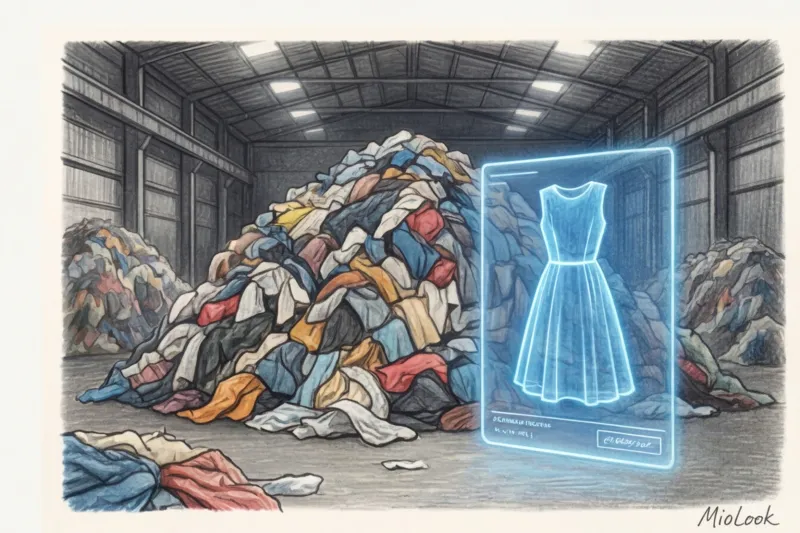
Let's look at the numbers without rose-colored glasses. McKinsey & Company's 2023 "The State of Fashion" report documents a frightening reality: approximately 30% of all clothing produced globally never finds a buyer. A third of the planet's resources spent on the industry go to waste.
According to the Ellen MacArthur Foundation, every second, the world incinerates or landfills the equivalent of one garbage truck's worth of textiles. The carbon footprint of unsold collections (moving them from warehouses to outlets, then to recycling or incineration) negates all efforts to implement solar panels in factories.
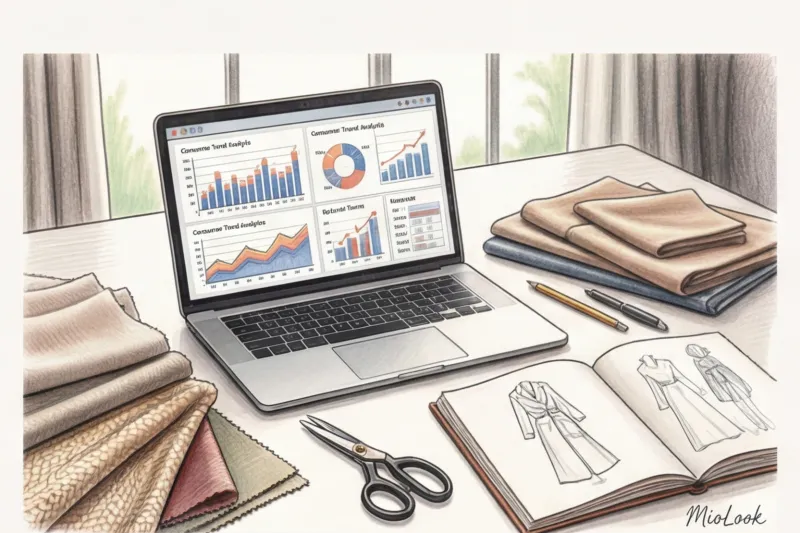
The era when a fashion house could rely solely on the "brilliant intuition of a buyer" is gone forever. In a volatile market where trends are born on TikTok overnight and die within a month, reading tea leaves is a surefire way to ruin a business.
The myth of the "eternal base" that costs brands millions
"Let's make 10,000 basic white shirts and straight blue jeans—basics always sell!" is the most expensive misconception I encounter when consulting with mid-market brands (with pricing policies ranging from €80–€150 per item). We transitioned their strategy from producing 10,000 "safe basics" to 3,000 units, backed by predictive analytics, and the results were astounding.
The problem is that the concept of essentials is mutating. Micro-trends influence proportions. When the global silhouette shifted from skinny to wide-leg, millions of pairs of classic straight-leg jeans in warehouses instantly became deadstock. Essentials cease to be essentials if they have an outdated cut, lapel width, or shoulder line. Producing such items in huge quantities without data-driven demand is suicidal.
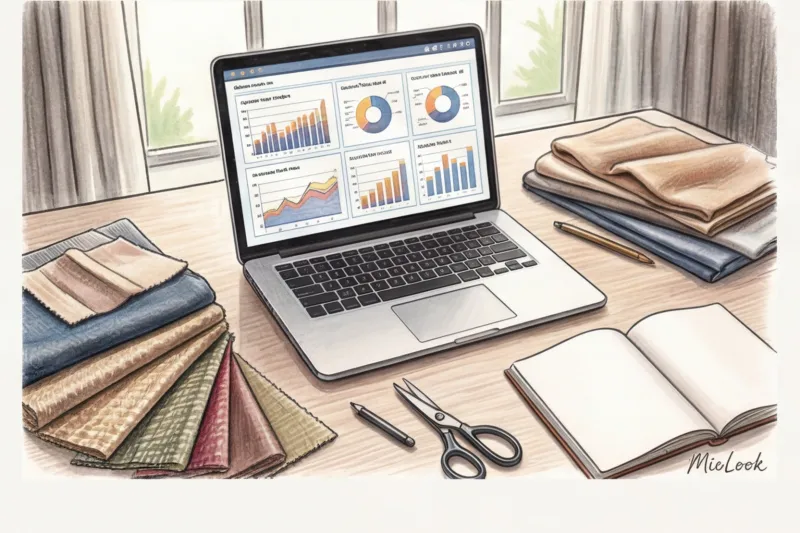
But it is important to make an honest disclaimer here: Predictive analytics does NOT work 100% When it comes to pure avant-garde design, the algorithm simply has no basis. If you create a completely new, deconstructed silhouette, one that has never been seen before, the algorithm simply has nothing to rely on. AI is brilliant at predicting evolution, but has a hard time predicting revolution.
Sustainable Development in Fashion through Big Data: AI as Chief Ecologist
How does an algorithm help save the planet? Predictive AI models continuously analyze millions of data points: from Google search queries and social media hashtags to historical sales and return data.
The algorithm literally "reads" shifts in mood. It notices how search interest in butter yellow increases by 300% among a specific demographic, while the fashion world is still wearing burgundy on the runways. This allows brands to shift from seasonal mega-collections (when winter pieces are released in May) to an agile drops model—flexible, small launches in real time.

This approach is the foundation of modern retail technologies. For example, the platform's algorithms MioLook analyze not only what users buy, but also how they buy it combine things in real life Understanding what a woman will wear with a new €200 jacket gives brands invaluable insight into the viability of a trend and allows them to plan the production of related products.
Virtual fitting rooms as a tool to reduce returns
Up to 40% of online clothing purchases are returned. Each return represents a double carbon footprint from shipping plus the cost of repackaging (or, more often with mass-market clothing, a direct route to landfill, as recycling is cheaper than ironing and repackaging).
The implementation of precise digital size charts and virtual fitting rooms reduces the return rate by half. When customers see exactly how a garment will fit them, the practice of buying "three sizes to choose from and two to return" is eliminated. Fewer returns mean fewer CO2 emissions, and a cleaner planet.
Bring an AI stylist into your business
MioLook's virtual fitting and smart wardrobe analytics tools help reduce return rates and increase customer loyalty.
Explore the possibilitiesFrom Mass Production to On-Demand: A New Supply Chain Architecture
The industry is slowly but surely moving away from 12-month production cycles in Asia in favor of localized micro-factories and an on-demand model.

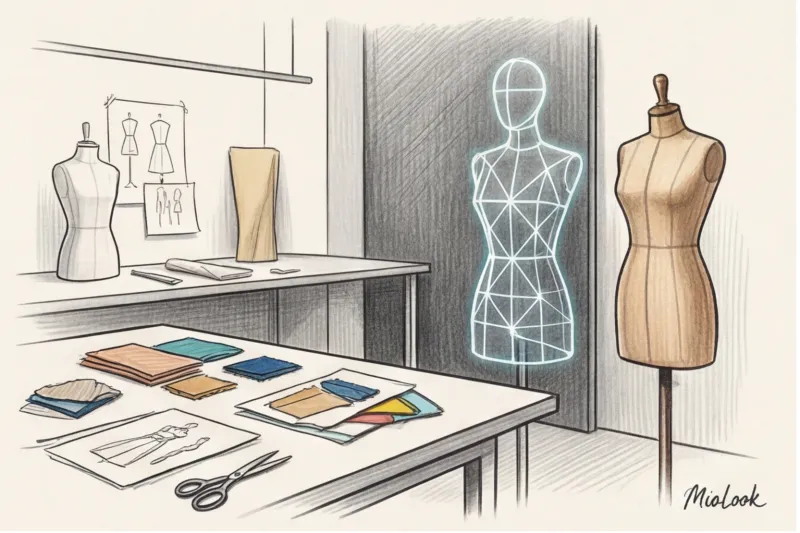
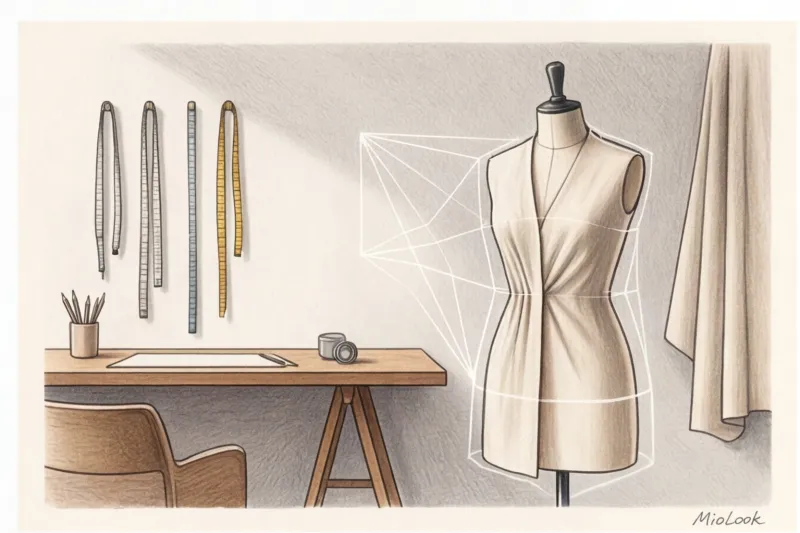
3D modeling programs (such as Clo3D) become a key tool here. Creating a digital twin of a garment allows designers and engineers to test drape, fabric tension, and visual balance. before the scissors touch the actual material In my experience, integrating digital samples into the work of one European mid-market brand reduced textile waste during the development stage by 40%.
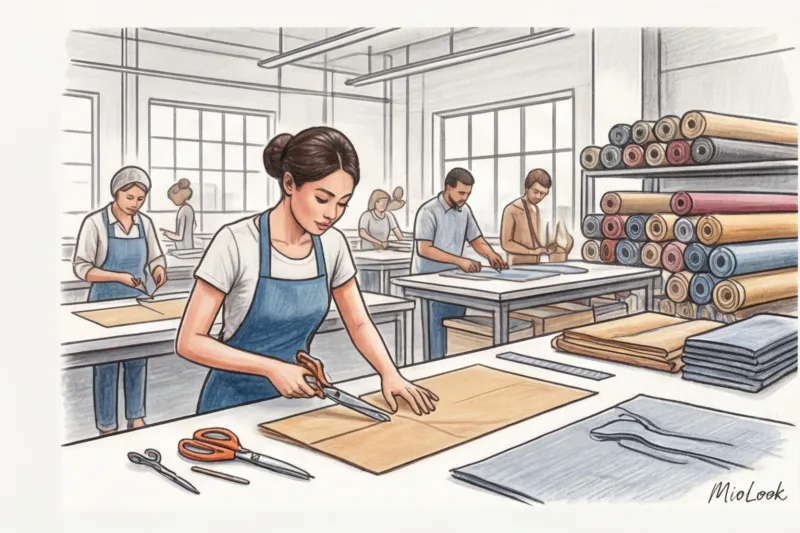
Next comes the pre-order model, reinforced by hyper-targeted marketing. The brand shows a photorealistic 3D render of the dress, collects 500 orders, and produces exactly 500 units plus a 5% defect insurance premium. No leftovers. No 70%-off sales. Maximum margins with zero environmental impact.
Fashion Business Checklist: 5 Steps to Data-Driven Sustainability
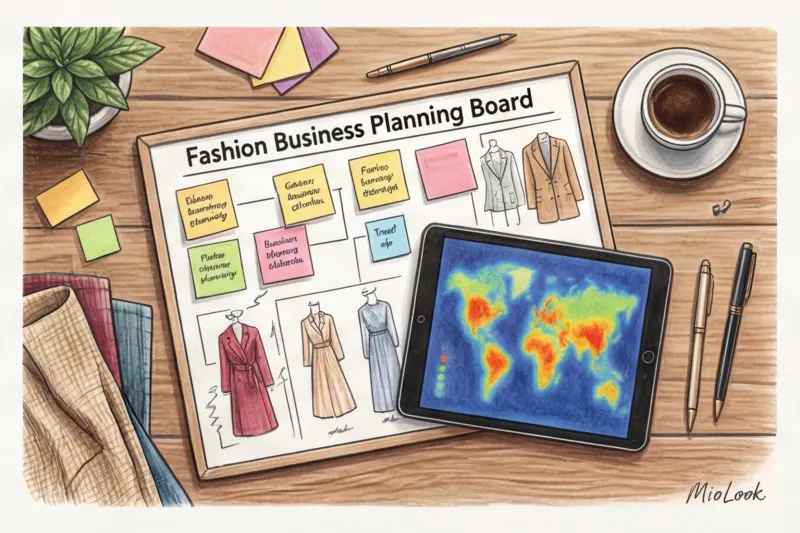
If you run a clothing brand, talking about sustainability shouldn't start with sourcing organic linen, but with optimizing processes. Here are five steps we implement with clients to transition to a data-driven model:
- Conduct a deadstock audit. Your unsold inventory is your best data. Train AI or analyze it manually: what exactly didn't sell? Was it the color? The armhole too narrow? The fabric too thick for this season?
- Incorporate digital samples. Prohibit the production of physical samples in five colors for internal team approval. Approve the design in 3D and only physically produce the final prototype.
- Reduce the lead time for test capsules. Transfer production of 20% of your trendiest items to local factories. Yes, the cost of production in Europe or at your local location will be higher, but the lack of leftovers and discounts will offset this difference.
- Integrate predictive analytics before fabric procurement. Use agency data (WGSN, Lyst) and AI tools to check trends at a macro level.
- Change your key performance metrics (KPIs). Stop rewarding your team based on the number of units produced. The key metrics should be sell-through rate (percentage of goods sold at full price) and a minimum percentage of returns.
A New Metric for Success: Why Cost Per Wear Is the Future
Ultimately, all this complex analytics, algorithms, and local factories boil down to one simple consumer metric: Cost Per Wear.
The ideal, truly sustainable item is one that is worn often and with pleasure. A €300 sweater worn 100 times (CPW = €3) is more sustainable and cost-effective than a €15 recycled T-shirt worn once and forgotten (CPW = €15).
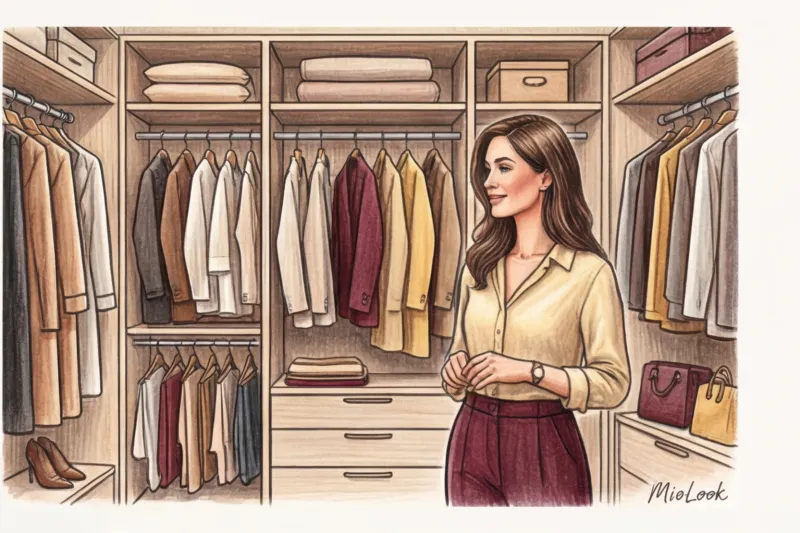
Brands that understand this are using apps like MioLook to stay in touch with the customer's wardrobe even after the purchase, offering them new combinations with items already purchased.
Many people fear that analytics will kill creativity. But over the years in the industry, I've learned the opposite. Hard data doesn't kill creativity—it gives it the very boundaries it needs to prevent our creative ambitions from turning the planet into one big dump of unsold ambitions. Produce less. Calculate more precisely. And let every created thing find its right person.