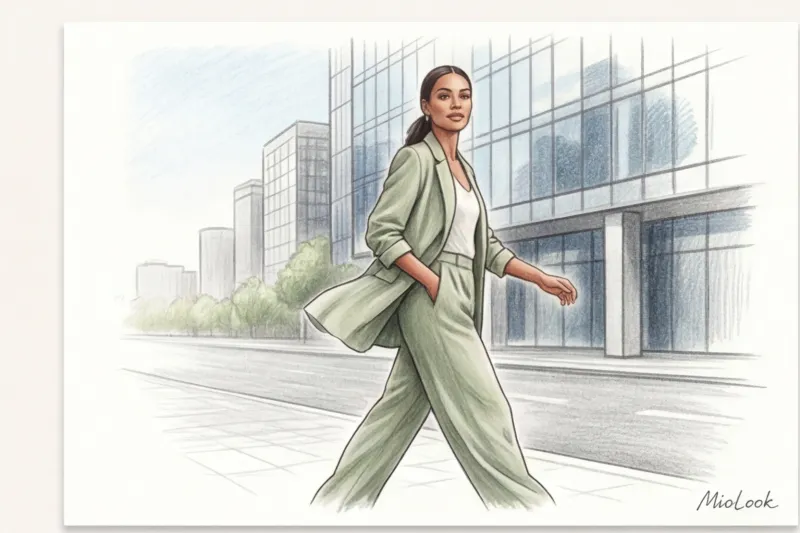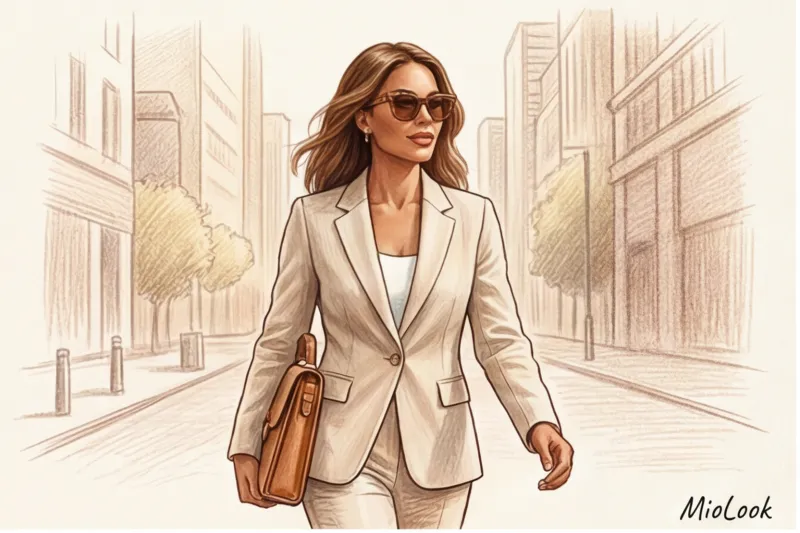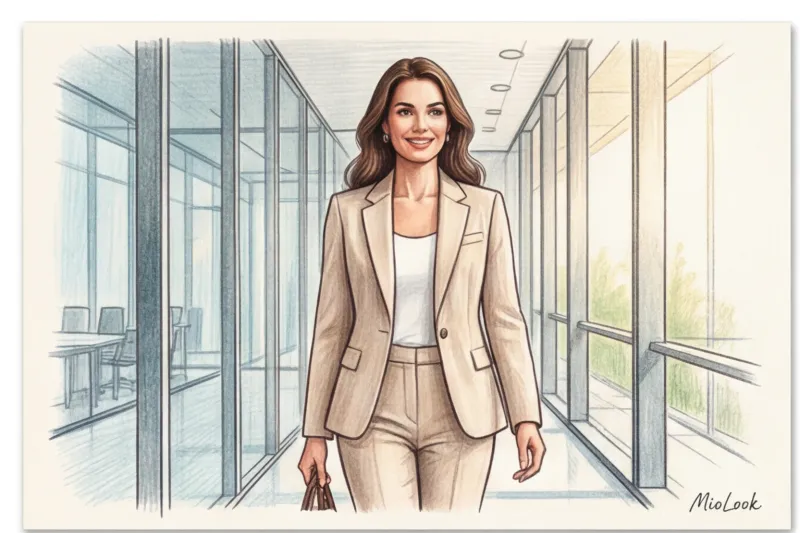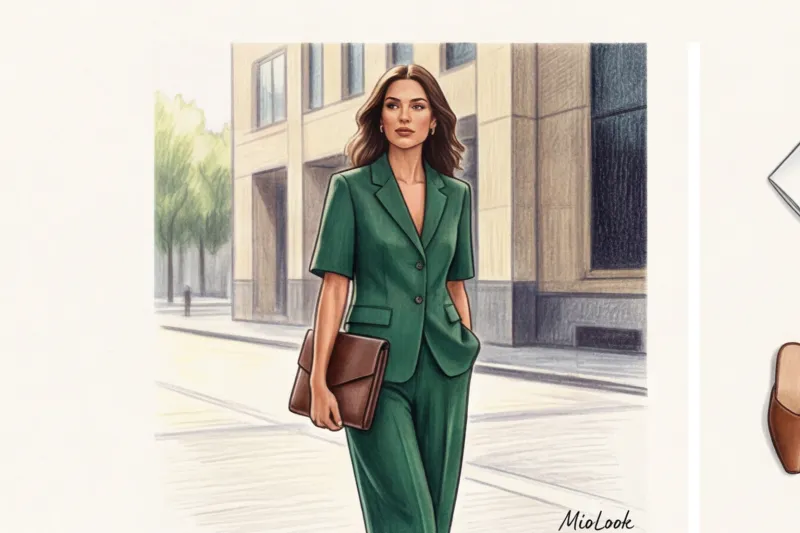
It's July. It's 32°C outside. My client, a brilliant art director with ten years of experience, walks into the meeting room to pitch a five-million-dollar project. She's wearing a trendy silk slip dress with thin straps and elegant sandals. She didn't win the project. The client later gave the agency feedback: "The idea is good, but your designer seemed too... frivolous for our budgets.".
This story from my experience perfectly illustrates the main pitfall of the corporate summer wardrobe. When the temperature rises, we instinctively strip down, switching to "beach chill" mode. But in business, even if you work at the most relaxed creative agency, the rules of perception still apply.
When people ask me, What to wear to the office in summer without a dress code I always start with a mindset shift. We need to create status armor that breathes but holds its shape. By the way, we discussed the fundamental principles of building such a wardrobe in detail in our A guide to creative business style for creative professions.
The Summer Wardrobe Trap: Why the Heat Is Killing Your Expertise
In image consulting, there's a fundamental concept: the "visual weight" of clothing. Dense, structured fabrics are subconsciously perceived by the brain as reliability, authority, and status. Thin, flowing, translucent textures convey lightness, relaxation, and... casualness.
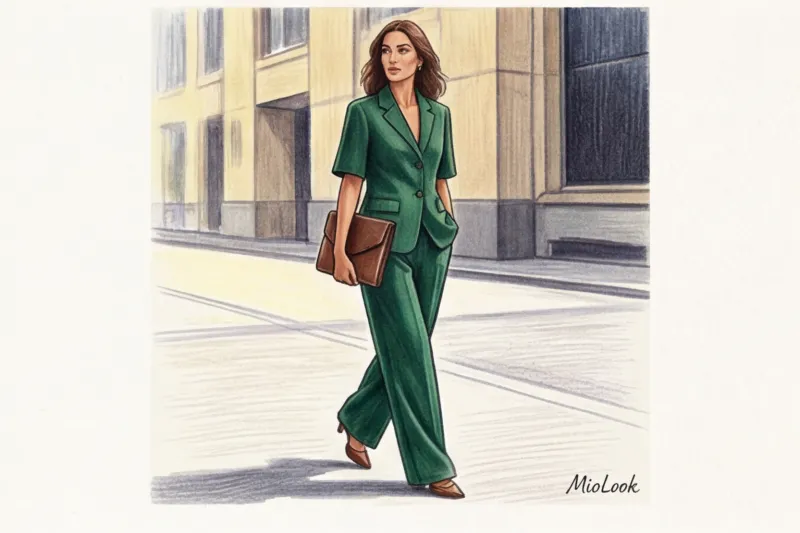
That's why a flowy floral chiffon sundress is a wonderful choice for a veranda brunch, but a disaster for a pitch. You literally lose visual impact in the eyes of your interlocutor. After that failed tender, we replaced the client's slip dress with a structured suit vest worn barefoot and wide-legged trousers. The creativity remained, but an architectural element emerged. The next three presentations were brilliant.
What to Wear to the Office in Summer Without a Dress Code: A Creative Wardrobe Formula
To avoid looking like a bank clerk on vacation, but also to avoid slipping into beachwear, I use the "one-stiff-piece rule" with my clients. If you choose a lightweight fabric, the cut should be architectural. No shapeless, baggy pieces.
Instead of flaunting your creative side with crazy tropical prints (save those for vacation), embrace asymmetry, deconstruction, and complex tailoring. A white shirt? Go for a wrap or an asymmetrical button-down.
Access to MioLook for €0.99 — one-time payment
A smart AI stylist will select the perfect look based on your preferences and temperature.
Get access — €0.99 onceNow, a little science. In 2014, researchers from Harvard Business School (Silvia Bellezza and colleagues) published a groundbreaking paper on the so-called Red Sneakers Effect They proved that in creative and business environments, deliberate, measured violations of dress codes enhance a person's status in the eyes of others. The subconscious interprets this as follows: "She's such a cool pro that she can afford not to play by the general rules.".
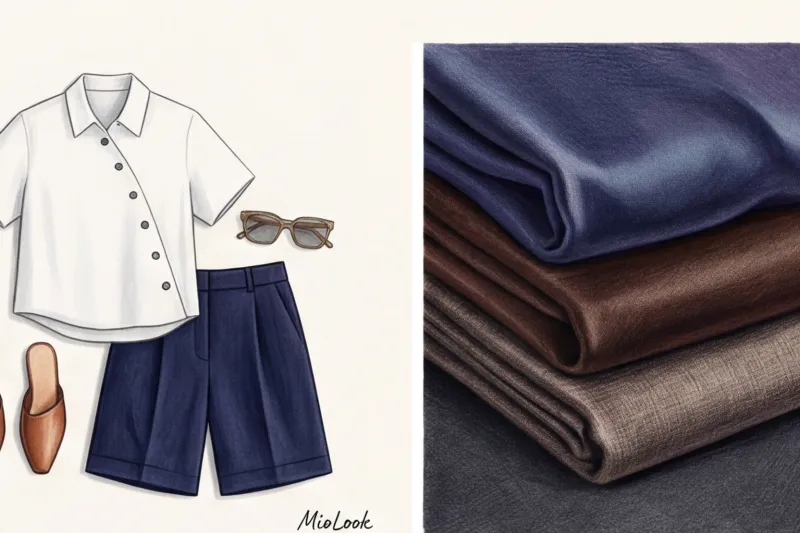
How to style this in summer? Wear a crisp, tailored suit in a lightweight fabric (like COS or Massimo Dutti), but instead of classic pumps, add chunky, slightly chunky sandals. This contrast works flawlessly.
The 100% Linen and Light Colors Myth: Choosing the Right Summer Fabrics
Now I'm going to say something that I'm often criticized for by proponents of eco-minimalism. As a stylist, I categorically forbid clients from wearing 100% linen to important meetings. Yes, linen breathes. But pure linen wrinkles after 15 minutes in a taxi. By the time you enter the meeting room, creases in the groin and elbows will reduce the visual value of your look by 40%. You'll look unkempt.
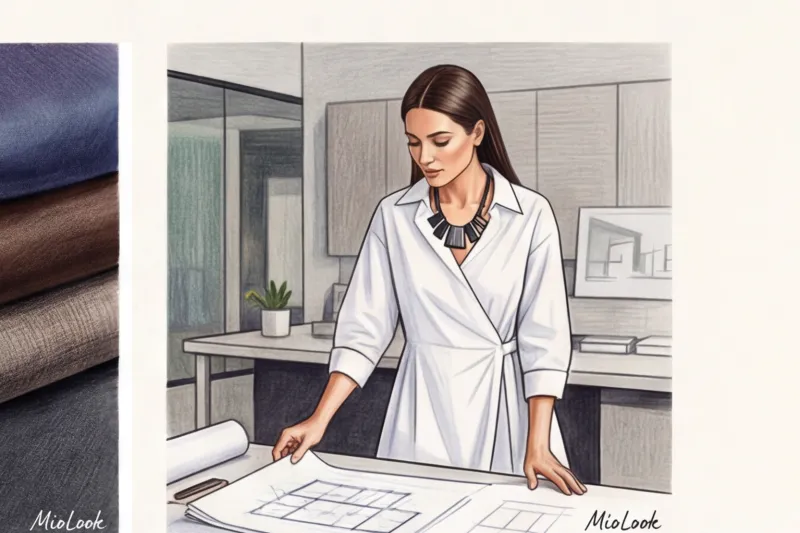
My secret weapon is blended and innovative fabrics:
- Cupro and Tencel (lyocell): cellulose derivatives that breathe better than cotton, cool the skin like silk, and flow beautifully without creating hard creases.
- Linen-silk or linen-viscose blends: silk gives a noble shine and elasticity, preventing linen from turning into a wrinkled rag.
- Cool wool The finest wool thread (rated Super 120s and above) is twisted to wick away body heat. This is the best choice for summer trousers.
"You can't wear black in summer" is the biggest myth I love to bust. According to the laws of physics, smooth dark fabrics (silk, cupro) in shades of dark chocolate, indigo, or graphite reflect heat just as well as thick white cotton. At the same time, dark, deep tones always look more expensive and hide sweat stains much better.
Top 5 Summer Items for Designers, Architects, and Marketers
Let's put together a construction kit. Here are 5 elements that solve the "nothing to wear" problem in the heat for creative professionals:
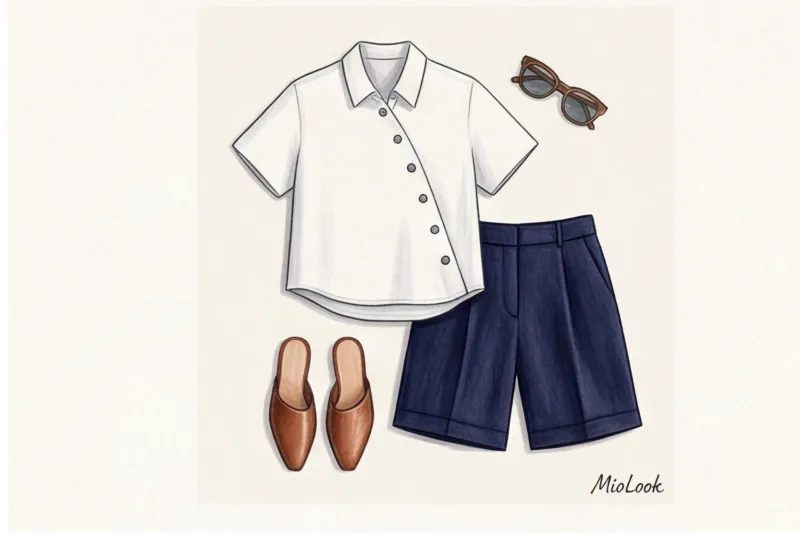
- Structured suit vest. Long or short, worn against the bare skin, it creates the necessary armor and structure while leaving the arms exposed.
- Bermuda shorts with arrows. Forget short shorts. Wide Bermuda shorts made of suiting fabric, two fingers above the knee, are the perfect substitute for trousers.
- Architectural cut shirt dress. Look for styles with a wrap, asymmetrical hem, or accent sleeves.
- Silk bias cut midi skirt. Wear it not with romantic blouses, but with thick, shape-holding T-shirts (weight from 180 g/m²) - this will take away the pathos of silk.
- Wide palazzo trousers. Made from flowing fabric with a high waist, they create a microclimate around the legs and elongate the silhouette.
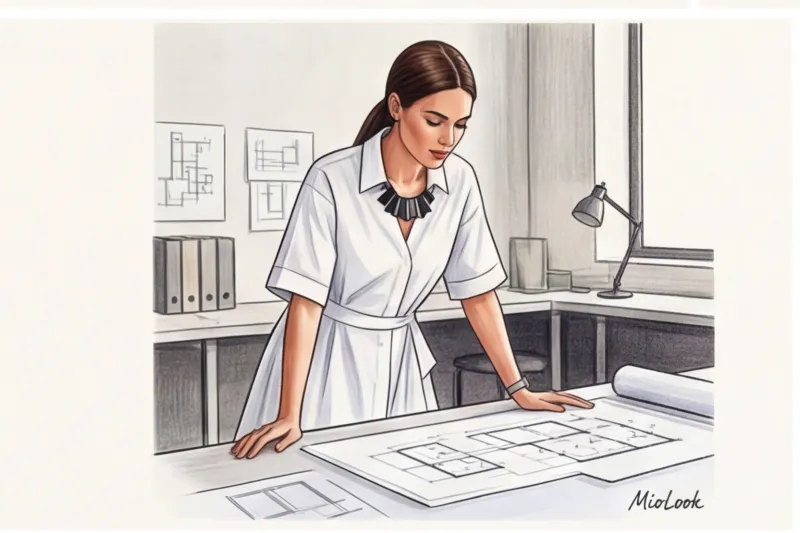
Your perfect look starts here
Join thousands of users who look flawless every day with MioLook.
Get access — €0.99 onceHidden problem: which fabrics don't show sweat stains?
Let's be honest. Speaking in front of an audience or defending a project in the heat is stressful. Over 12 years of work, I've conducted dozens of fabric tests for moisture visibility. Gray melange, light blue, and dusty rose are telltale colors. Even the slightest drop shows through on them.
Your go-to colors: optical white, deep black, navy blue, and items with bold geometric prints (the ripples hide moisture). If you're prone to this, opt for a dolman cut or a dropped shoulder—when the fabric doesn't physically touch the armpit, the problem goes away.
Summer Shoes: The Fine Line Between Relaxed and Unprofessional
Showing off your toes in the office is always a risk. Even if you don't have a strict dress code, bare toes subconsciously dampen the atmosphere in a business setting. The exception is if you work completely remotely and are only seen from the waist up on Zoom.
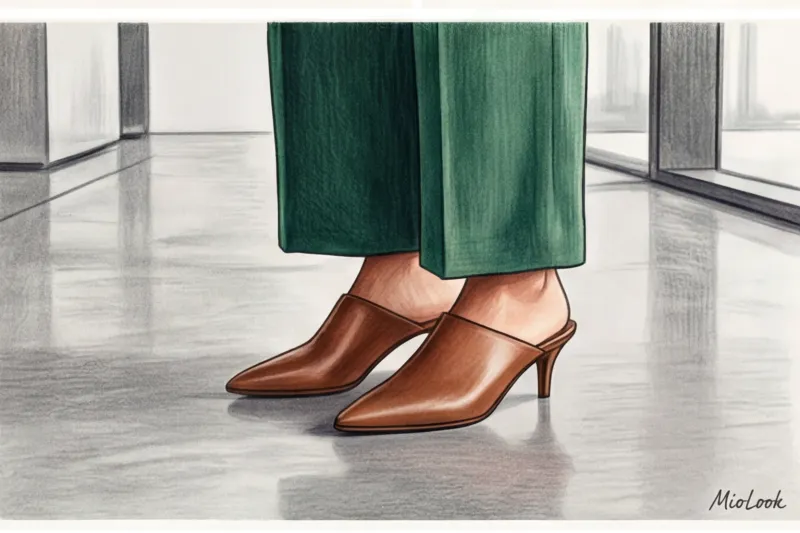
What can replace sandals?
- Closed Toe Mules: The heel breathes, but from the front you look absolutely businesslike.
- Woven leather loafers: They are as breathable as sandals, but retain the shape of a classic shoe.
- Slingbacks: closed-toe shoes with a strap at the heel.
If you do choose open-toe shoes, show off your creativity through the details: consider sandals with an unusual geometric heel or an asymmetrical interlacing of straps.
Air Conditioning vs. Heat: The Art of Summer Layering
A classic office pain point: the asphalt outside is melting (+30°C), but the air conditioning in the conference room is set to +18°C. It's hot to throw on a classic jacket, and it's also uncomfortable to carry it around.
This is where the throw technique comes in handy. A thin 100% cotton or viscose sweater is draped over the shoulders and knotted at the chest over a dress or T-shirt. Firstly, it keeps the air-conditioned back and neck warm. Secondly, the sweater on the shoulders creates additional vertical lines, which visually elongate the height and add complexity and texture to the look.
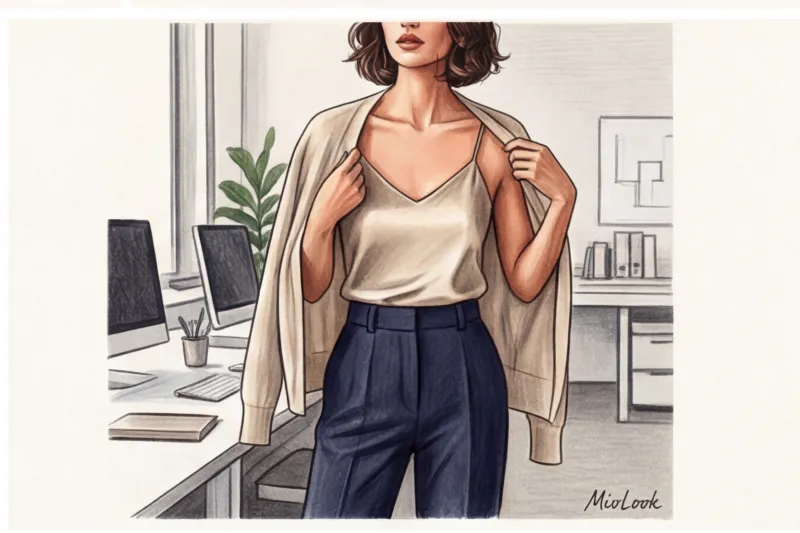
Another great alternative is summer dusters or kimonos made of thick silk. They weigh just a few grams, fit easily into a shopper bag, but instantly transform a simple top and pants combo into a complete, bohemian-business ensemble.
Checklist: Putting together a summer creative capsule at MioLook
The most common mistake my clients make in June is impulsively buying "another cute sundress" that they then have nothing to wear with except a straw hat. A summer business wardrobe requires a mathematical approach because we physically have fewer items, and each of us must work 100% of our time.
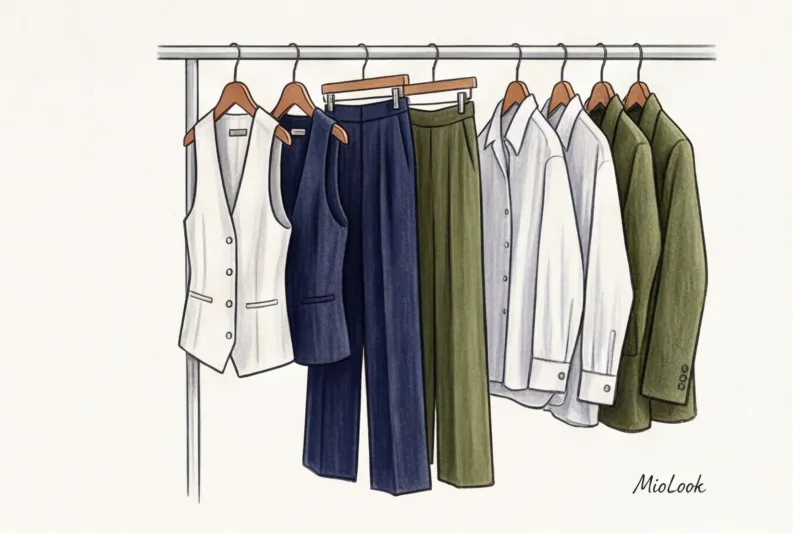
By the way, it is for such cases that I recommend using wardrobe digitization feature in the MioLook app How it works in practice:
- You load up your basic summer pieces (those Bermuda shorts, vests, and palazzos).
- An AI stylist analyzes your capsule wardrobe based on your color type and suggests unconventional combinations of complex architectural shapes that you might not have thought of on your own.
- Before buying a new item, you simply check in the app whether it will work with at least three bottoms you already own.
Summer style for creative professionals isn't about sacrificing comfort for status. It's about smart choices of textures and tailoring. Swap flimsy knits for crisp cotton, wrinkled linen for flowing cupro, and open sandals for closed mules. You'll see a change not only in your reflection in the mirror but also in the attentiveness with which clients listen to your ideas during presentations.