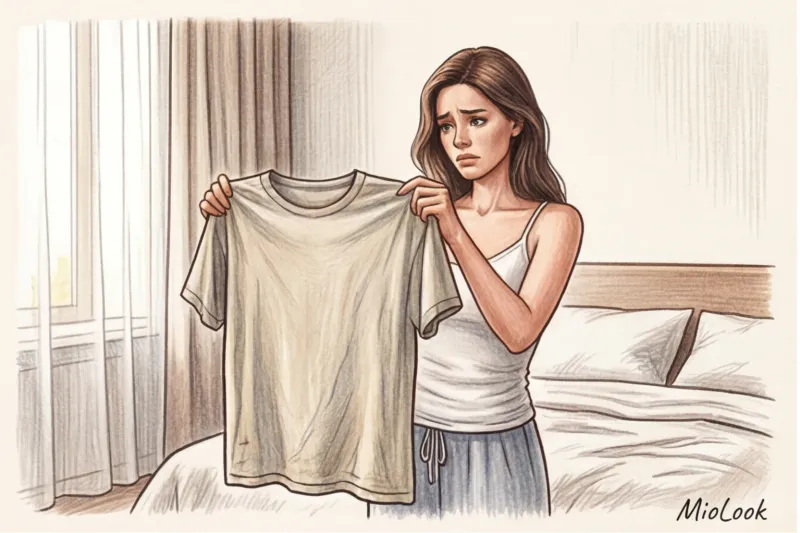
One of my clients, a top manager at a large company, nearly burst into tears when, during a wardrobe review, I suggested she get rid of a faded promotional T-shirt from a 2008 festival. "Sofia, you don't understand, it's soft as a cloud! I change into it after suits, and my stress level drops to zero," she defended the shapeless piece of fabric. And I understand her perfectly. As a textile expert, I know that our attachment to worn-in items isn't just sentimentality, but pure physics and tactile chemistry.
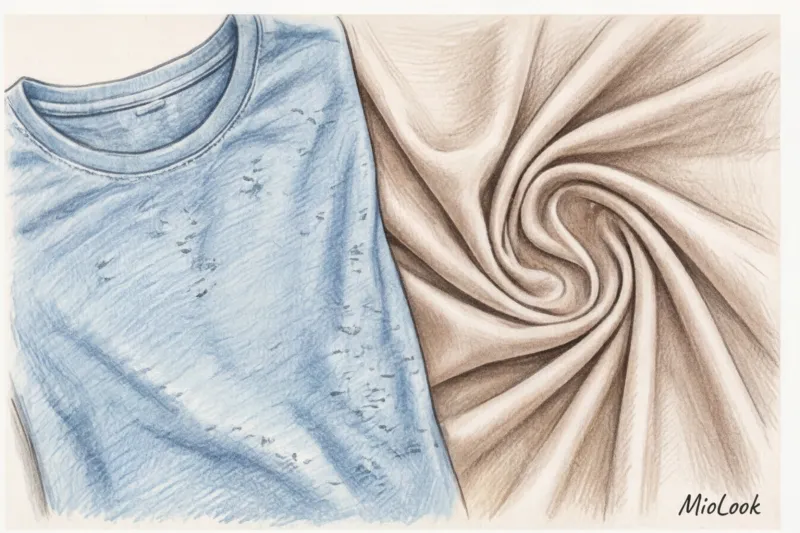
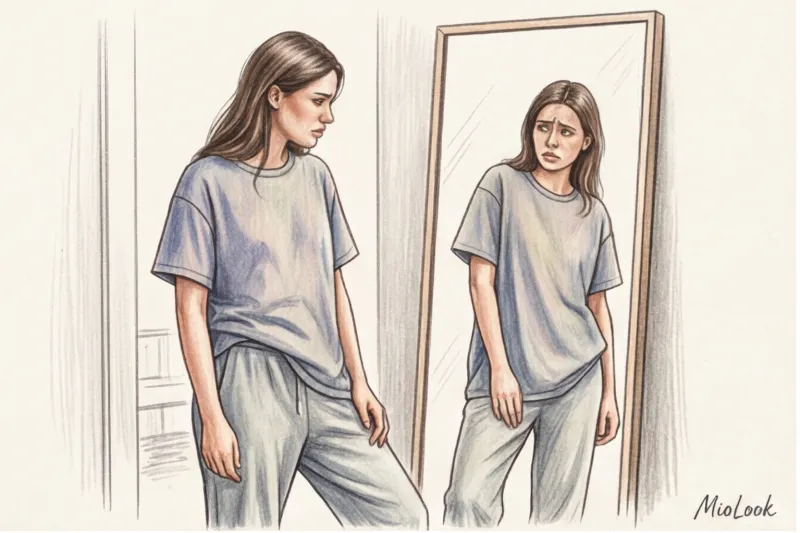
The problem is that old, pilling clothes steal our energy without us even realizing it. When you look in the mirror and see a tired woman in a stretched-out T-shirt, your brain interprets this as a signal for apathy. A paradox arises: we want to relax in style, but we're afraid of losing physical comfort. We've covered more about how home life affects self-esteem in our the complete guide to stylish loungewear.
In this article, I will tell you without glossy cliches, What should a woman wear at home? to maintain that same "cloudy" softness of an old T-shirt, but at the same time look so that a sudden doorbell doesn't cause panic.
The Anatomy of Comfort: Why It's So Hard to Let Go of an Old T-Shirt
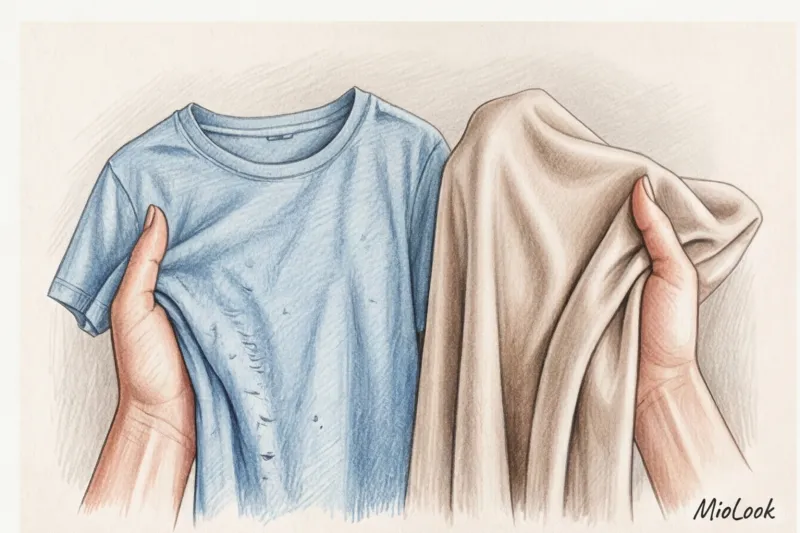
Let's examine the phenomenon of your favorite T-shirt from a scientific perspective. You love it not the T-shirt itself, but its altered structure. According to research by the Sustainable Apparel Coalition, cotton fibers lose up to 40% of their original tensile strength after 50 washing cycles. The cellulose in the fibers breaks down, the fabric loses its original density, becomes loose, and—as a result—is incredibly soft to the touch.
It becomes a "second skin" because it literally loses its shape and conforms to the contours of your body. But we pay for this comfort with aesthetics: a stretched collar, crooked side seams, and faded pigment.
"The secret to a perfect lounge wardrobe isn't forcing yourself to wear stiff but beautiful pieces. The secret is finding technical fabrics that mimic the degradation of old cotton but offer durability and a beautiful look."
As a stylist, I have a fail-safe tool called the "Courier Test." Ask yourself: if a delivery person rang the doorbell right now or a neighbor walked in, would you answer it wearing what you were wearing, or would you frantically search for a robe to cover yourself? If the latter, your home wardrobe needs an upgrade.
Your perfect look starts here
Join thousands of users who look flawless every day with MioLook. Its smart algorithm will help you create your own personalized capsule.
Get access — €0.99 onceWhat to wear at home for a woman: 5 modern and comfortable alternatives
The modern textile industry has made great strides. Today, we don't have to choose between beauty and comfort. Here are five alternatives that will completely satisfy your need for comfort.
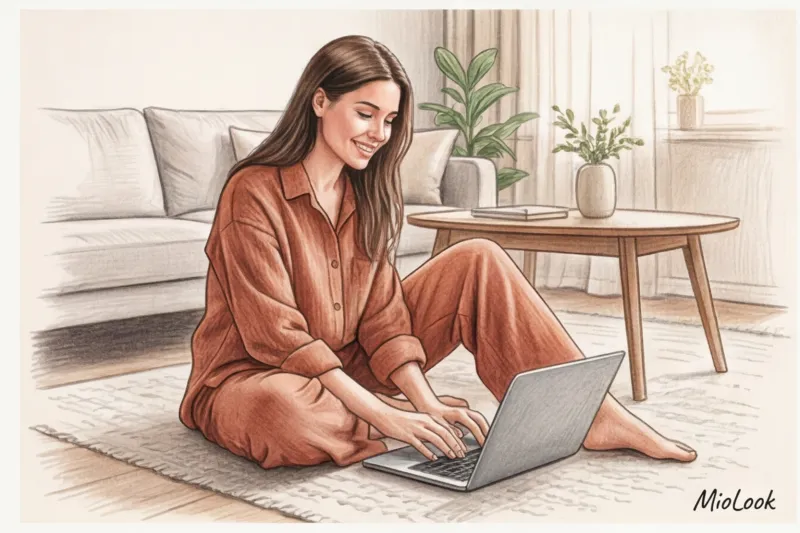
Muslin suits: the aesthetics of relaxation
If you're used to lightweight cotton T-shirts, muslin is your ideal choice. It's a double-layer cotton fabric with a distinctive crinkled texture. Thanks to its special weave, muslin creates air pockets, making it more breathable than any classic T-shirt.
- The main advantage: Muslin is strictly forbidden to iron. Its aesthetic is built on a slight creasing and boho-chic feel.
- Styles: Opt for loose, off-shoulder shirts paired with wide-leg trousers with a soft drawstring.
- Budget: A quality muslin set from a basic brand will cost between €40 and €70.
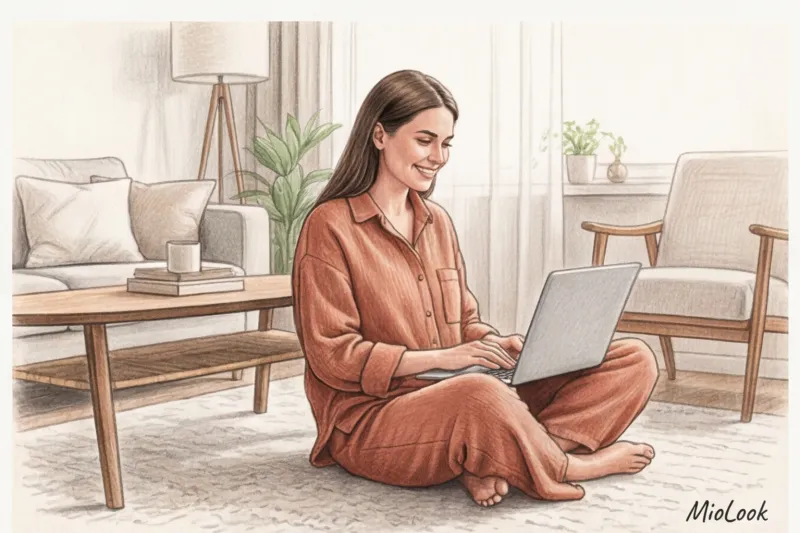
Tencel and Modal: A Technological Replacement for Washed Cotton
If you value a silky, fluid texture, consider fabrics made from wood pulp. Tencel (lyocell made from eucalyptus) and modal (made from beech wood) are next-generation eco-friendly materials.
Ribbed modal feels softer than even the most washed cotton, yet boasts phenomenal bounce back. This means your modal leggings with 5% elastane won't develop "bubble" knees after two hours of sitting on the couch. Upload photos of these sets to wardrobe digitization feature in MioLook so that the program itself suggests you combinations of home tops and bottoms for every day.
Sports chic: joggers made of footer and cashmere
It's time to leave behind washed-out sweatpants and oversized hoodies. If you love a sporty look at home, premium fleece is your choice.

An important rule from a stylist: Never buy fleece-lined terry cloth for your home. It's impossible to live in it in modern heated apartments—it disrupts your body's temperature regulation. Look for a three-thread fleece with a density of 280–320 g/m² and a looped backing. It holds its shape, conceals subtle body features, and looks expensive.
For the winter season, a cashmere-blend lounge suit (from €150) is the best investment. It's a statement piece that provides unparalleled, dry warmth.
Ready to get started?
Try the MioLook plan for free—no commitments required. Create your perfect home capsule right on your smartphone.
Get access — €0.99 onceShirt dresses and house kimonos
For those tired of trousers, there's an elegant alternative to washed-out flannel robes. A shirtdress made of thick, softened linen (from 180 g/m²) or soft flannel looks put-together without restricting movement. If you want to accentuate your waist, read our article on How to choose the right women's belt - textile soft belts work great in home fashion too.
Another micro-trend is the home kimono made of thick viscose. Worn open over a basic knit top and leggings, the kimono instantly brings the look together, creating a stylish layering effect. When choosing a pattern, be sure to consider print scale by body type A small flower may be forgiving, but large geometric or abstract designs will make your home look ultra-modern.
The Silk Pajama Myth: Why Glossy Tips Don't Work
Perhaps the most harmful piece of advice that migrates from one glossy magazine to another: "If you want to look luxurious at home, wear silk pajamas." As a practitioner, I officially declare: for an active home life, this is a failure.
Yes, the Pinterest photos of a woman in a silk set with a coffee cup look stunning. But in reality, natural silk (especially smooth satin) is an extremely sensitive material. It immediately shows stains even from clean water (if you were just washing an apple in the kitchen), it becomes staticky, slips on furniture, and requires delicate washing with special shampoos.

But the main thing is psychology. Pajamas (even if they cost €500) are sleepwear. Wearing them during the day tells your brain to relax and prepare for sleep. This can dramatically reduce productivity if you work remotely. Loungewear should be visually distinct from what you sleep in.
A stylist's checklist: how to choose a long-lasting at-home capsule
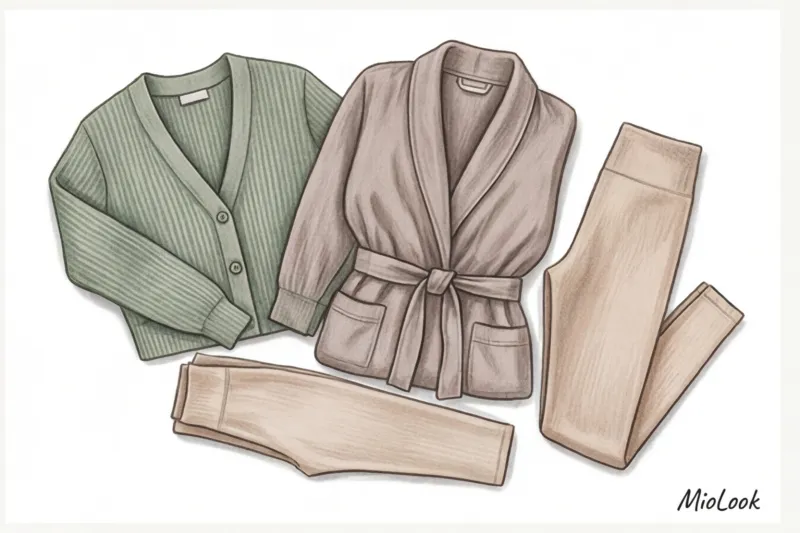
A home wardrobe follows the same capsule wardrobe principles as an outdoor wardrobe. To avoid the hassle of deciding what a woman should wear at home every day, use this formula: 2 bottoms + 3-4 tops + 1 warm layer (for example, an elongated textured cardigan).
What to look for when buying:
- Seam technology: Look for items with flat seams or seamless knits. At home, give your skin a break from the harsh seams.
- Tags: In high-quality loungewear lines, labels with the composition are not sewn into the side seam, but are printed with paint directly onto the fabric of the neckline.
- Elastane content: The ideal composition for knitwear is 90-95% natural or artificial fiber (cotton, viscose) and 5-10% elastane to maintain shape.
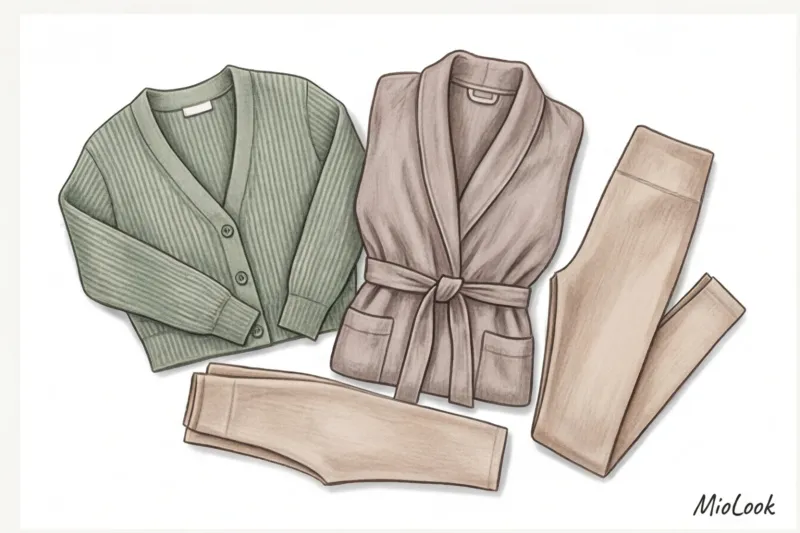
Color palette: Over 12 years of work, I've developed a strict rule: no black for loungewear. Black knitwear attracts dust, pet hair, and small lint. Moreover, at home, without heavy makeup or hair, black near the face often makes the skin look sallow.
According to the Pantone Color Institute, complex, dusty, natural shades are the most conducive to home relaxation. Choose sage green, warm taupe, dusty rose, oatmeal, or terracotta. They look elegant even in simple designs.
Access to MioLook for €0.99 — one-time payment
A smart AI stylist will analyze your appearance and select the perfect color palette for your home wardrobe.
Get access — €0.99 onceAn eco-friendly end: where to put your old T-shirt collection
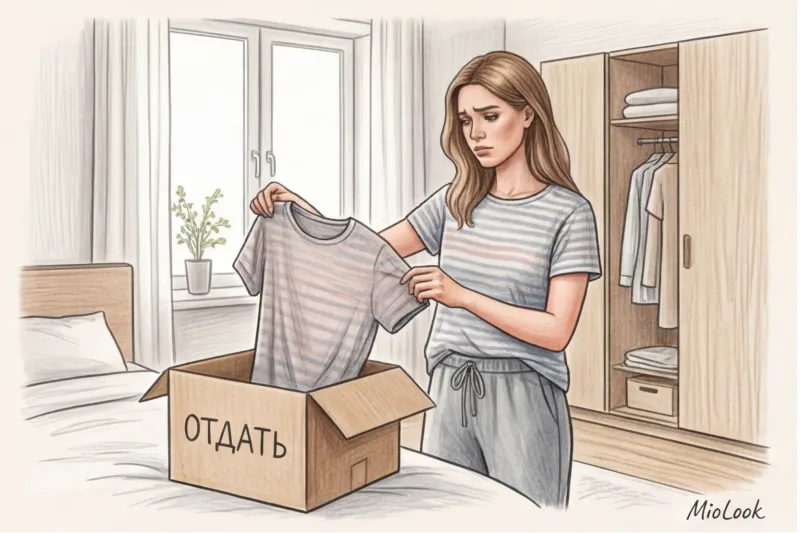
So, you've put together a beautiful capsule wardrobe. The logical question is: what to do with a stack of old, stretched-out T-shirts? Throwing them in the trash is the worst-case scenario.
According to a 2023 report by the Ellen MacArthur Foundation, every second a truckload of textile waste is sent to landfills worldwide. Cotton, when disposed of in landfills, decomposes without oxygen, releasing methane, a greenhouse gas more dangerous than carbon dioxide.
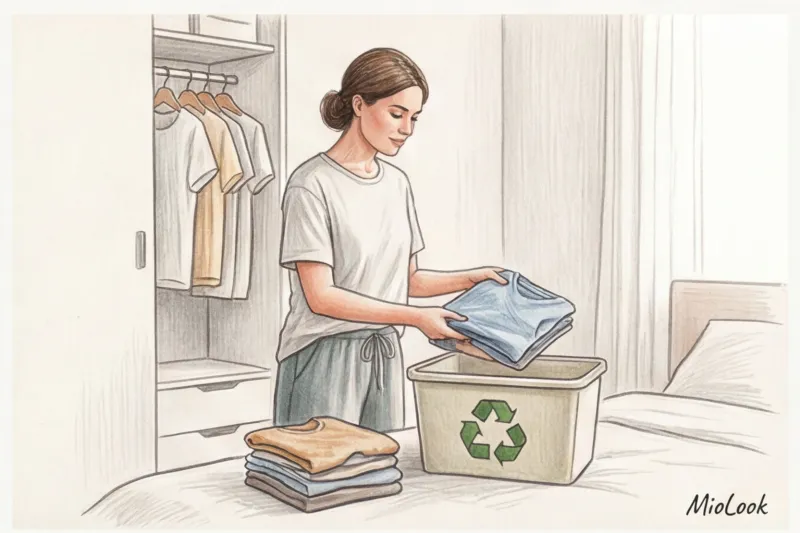
How to part with the past in an environmentally friendly way:
- Recycling boxes (Recycle): Most major retailers (and local eco-funds) accept rags. Your old T-shirt won't go to a second-hand store; it will be shredded into regenerated fiber, which can be used as furniture stuffing or building insulation.
- Conscious upcycling: Saving 2-3 cotton T-shirts for cleaning rags (they're perfect for polishing mirrors) is fine and practical. But don't turn your home into a rag bin.
A woman's self-respect begins not at a social event, but behind the closed doors of her own home, when no one is watching. Allow yourself to wear high-quality, aesthetically pleasing pieces at home that support you rather than drain you. And let that old promotional T-shirt remain just a warm memory.