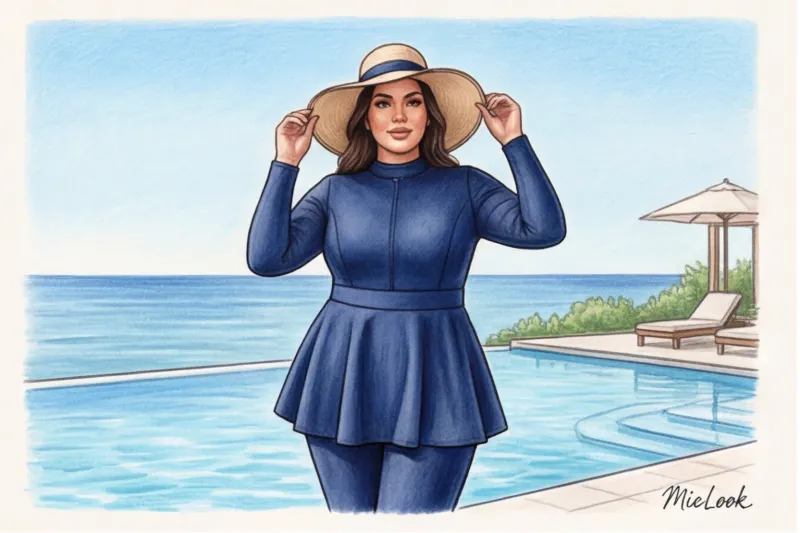
Three years ago, at a resort in Dubai, my VIP client nearly drowned during a harmless aqua aerobics session. The reason wasn't her inability to swim, but her choice of beachwear. Wanting to maintain maximum modesty, she wore a voluminous, oversized tunic over swim leggings. In the water, this fashionable choice instantly turned into a "parachute": meters of excess fabric inflated, restricting movement and pulling her downward, creating colossal hydrodynamic drag.
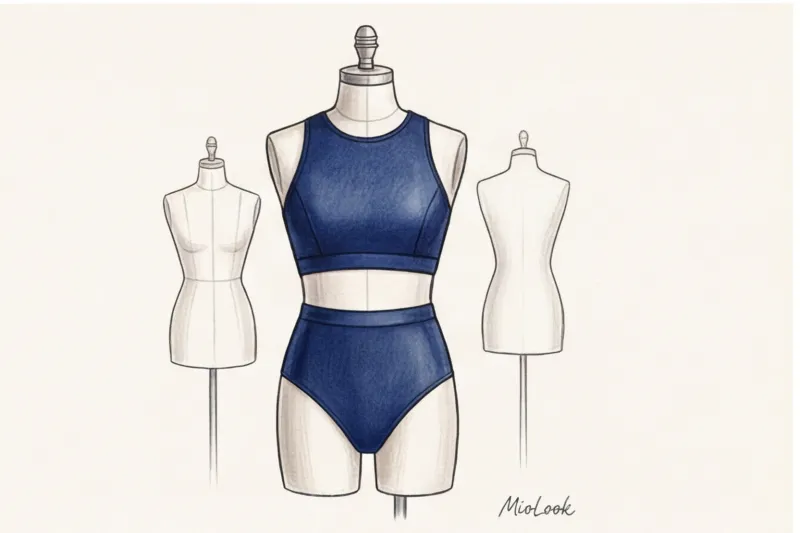
This incident forever changed my approach to styling for the pool and open water. In 12 years of working as a fashion journalist and stylist, I've learned an ironclad rule: you can't ignore the laws of physics. What makes your silhouette modest and closed on land works exactly the opposite in the water. When choosing burkini swimsuit , we must think not only about aesthetics, but also about biomechanics.
We talked about the history of the development of modest sports fashion in more detail in our The complete guide to sportswear for Muslim women Today, I'd like to explore the anatomy of the perfect one-piece swimsuit: why a fitted one is sometimes more modest than an oversized one, which high-tech fabrics will save your health, and how to look classy on a lounge chair, not like you accidentally fell into the water in your everyday clothes.
The Evolution of the Burkini: From Compromise to High-Tech Style
According to a McKinsey report (2024), the "modest fashion" segment is growing three times faster than the rest of the clothing market. And one-piece swimwear is at the forefront of this growth.
It all began as a niche experiment. When Lebanese-Australian Aheda Zanetti created and patented the first burkini in 2004, her goal was to combine Australia's renowned beach culture with Islamic norms. The first designs resembled diving suits with a hastily attached skirt. It was a compromise, devoid of elegance.
What do we see today? The industry has made a quantum leap. Modern one-piece swimsuits are no longer just "Muslim clothing." In my experience over the past couple of years, about 40% of clients requesting a burkini have completely different motives. Some suffer from sun allergies or melasma, others are recovering from cosmetic procedures, and still others simply prefer premium comfort without the need to constantly adjust bikini straps.
Your Perfect Vacation Wardrobe
Try MioLook for free: A smart AI stylist will create the perfect look for the beach and the city, tailored to your body type.
Get access — €0.99 onceThe Biggest Pool Myth: Why Oversized Clothing Violates Modesty
Let's talk about a counterintuitive rule that often shocks my clients. The loose (oversized) cut doesn't hide the figure in the water. It reveals it.
Think back to your high school physics class. Water is 800 times denser than air. When you step into a pool wearing a loose tunic, the air trapped between the fabric and your body forms a huge bubble. The fabric rides up, revealing your lower back and stomach (the very things you were trying to hide). But the most interesting thing happens when you exit the water.
"The baggy, wet fabric, under the weight of the absorbed liquid, instantly clings to the body. And it does so so anatomically, emphasizing every fold and contour, that it looks much more revealing than the originally fitted silhouette of a dense, architectural fabric."
The only truly modest choice for water is a semi-fitted cut made of dense (at least 190 g/m²) fabric that holds its shape and creates a rigid frame around the body without falling into anatomical depressions.
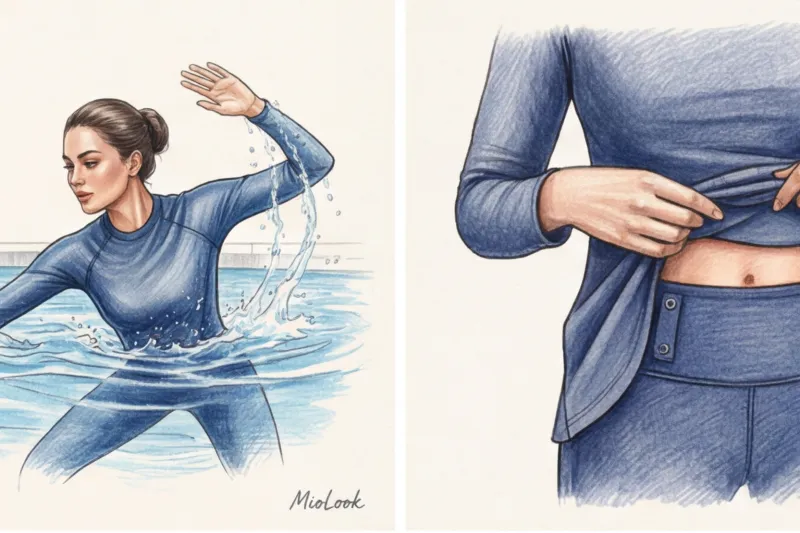
Aqua aerobics: the specifics of intense movements
Returning to my client's story in Dubai: when you jump in the water during aqua aerobics, the loose tunic, without support, rises up to your neck. Aquatic fitness requires compression.
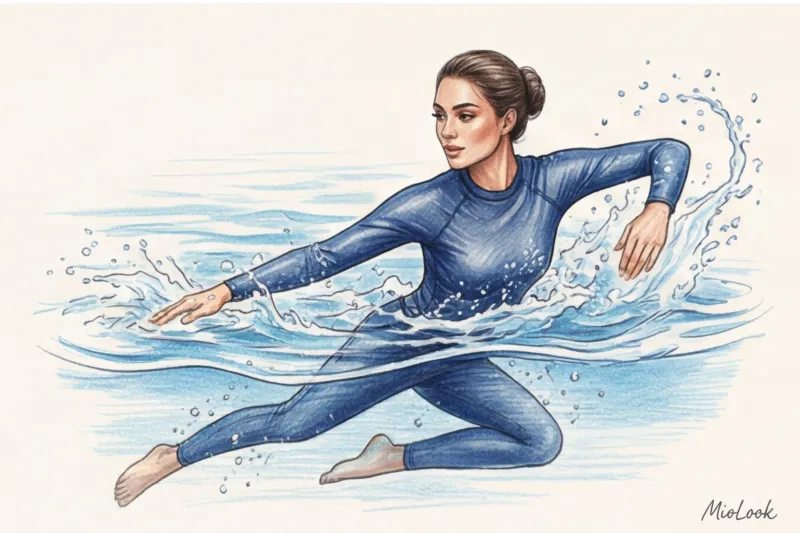
A properly fitted one-piece swimsuit works like good sports equipment: it supports muscles, reduces tissue vibration, and protects the skin from friction. For active activities, I always recommend models with at least 20% elastane density—they provide the right level of pressure and don't bubble during vigorous strokes.
The Architecture of the Perfect Burkini: What a Stylist Should Look for
Buying a burkini isn't about choosing a sundress. It's about choosing technical gear. Here are three design features you shouldn't take to the checkout without:
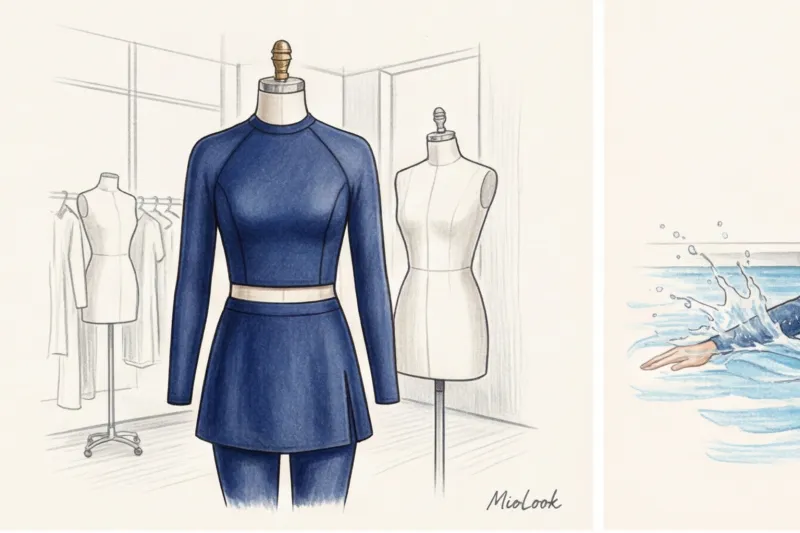
- Tunic length and proportions: The ideal tunic length for an average height is mid-thigh. If it's below the knee, you won't be able to move your legs properly while swimming (the fabric will get tangled).
- Construction of trousers: Forget baggy swim palazzos or joggers. Stick to thick swim leggings. Ideally, they should have a stirrup at the heel (like professional gymnastics tights) to prevent the legs from riding up to your knees when diving.
- A critical element is the internal fastenings: This is the detail that distinguishes a cheap mass-market item from a quality one. The tunic's hem should have loops or snaps sewn into the inside, which attach to the waistband of the leggings.
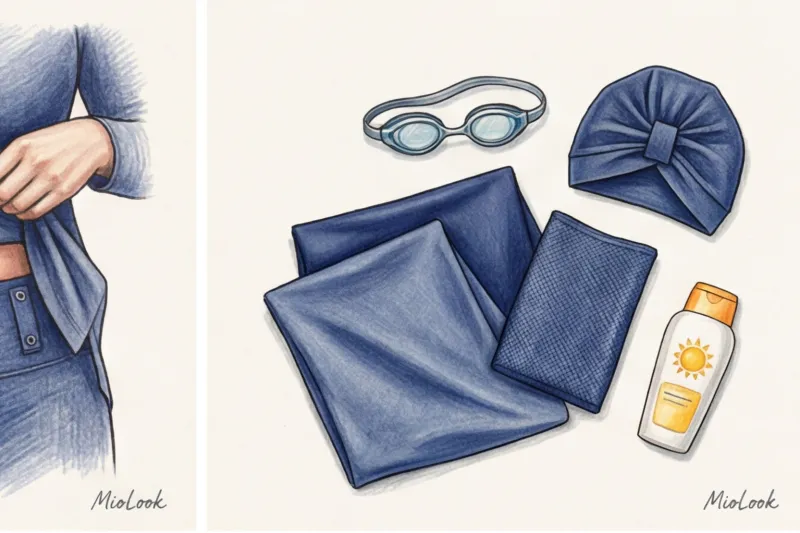
If there are no fastenings, the tunic will float away from you at chest level. This is an absolute no-no.
The Right Headwear: Built-in Hood or Beanie?
Many brands offer tunics with integrated hoods (similar to hoodies). While this sounds convenient, it's a disaster for freestyle swimmers. When turning your head to inhale, the hood fills with water like a bucket, twisting your neck and slowing your movement.
A stylish and safe alternative is a swim turban with a rigid drape or thick, anatomically-fitting Lycra balaclavas, worn separately. They don't flap and look incredibly elegant.
Not sure which accessories to choose?
Upload a photo of your burkini to MioLook, and the algorithm will select the perfect sunglasses and hat for your face shape.
Select accessoriesFabrics and Biomechanics: Material Decides Everything
Fabric quality is something you absolutely cannot skimp on. Budget-friendly one-piece swimsuits made of thin polyester (usually in the €30–€50 range) are not only see-through when wet but also take hours to dry. And spending long periods of time in a wet, cold, and dense synthetic cocoon is a surefire way to lower back hypothermia and women's health problems.
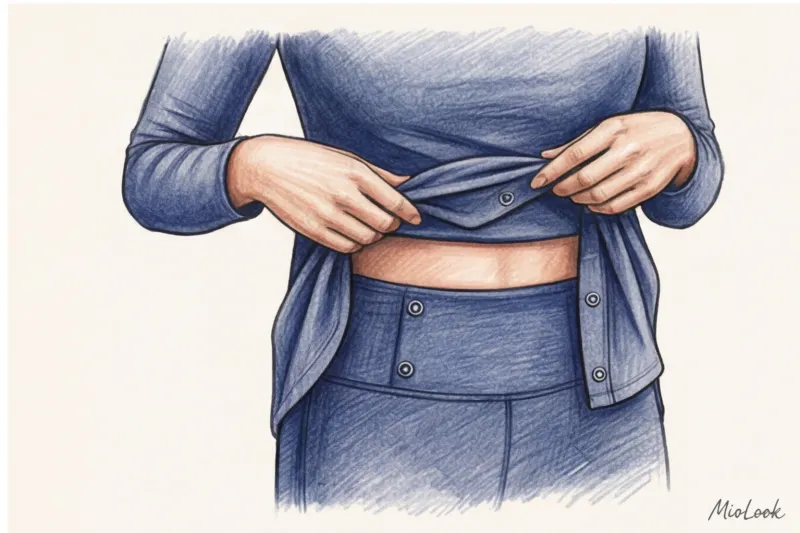
Look for the following quality markers on the labels (these sets usually cost in the range of €120–€250):
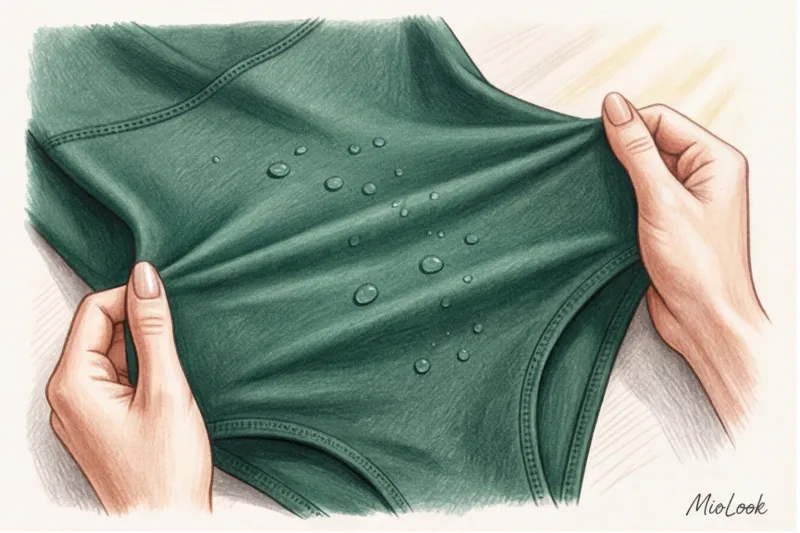
- Xtra Life Lycra® threads or fabrics from the Italian factory Carvico: They have a hydrophobic coating (water literally rolls off them in drops) and are resistant to the destructive effects of chlorine and sunscreens.
- UPF 50+ rating: UV protection is critical. Regular thin cotton or cheap synthetics transmit up to 20% of UV rays. If your body is completely covered and you don't apply SPF cream underneath your clothing, you can get seriously burned right through the fabric.
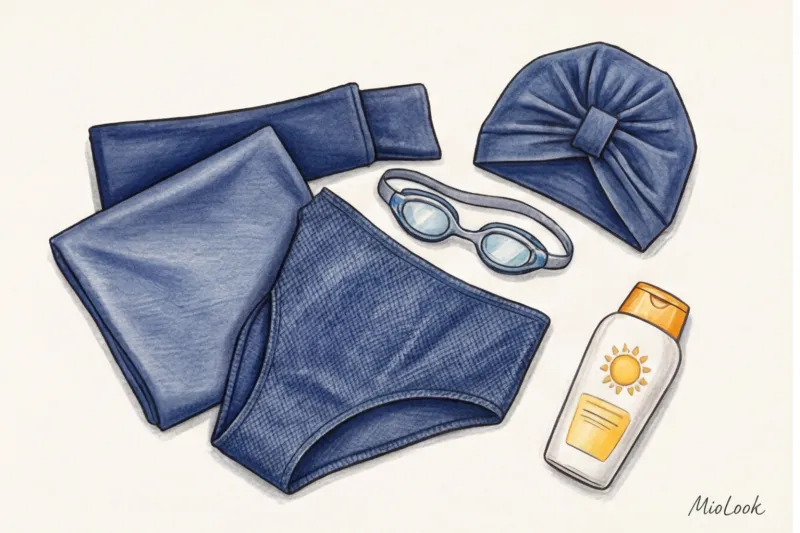
Luxury Vacation Aesthetics: How to Style a One-Piece Swimsuit
Let's move on to my favorite part—the visual impact. Why do some women in burkinis look like they're guests at a luxury resort on the Côte d'Azur, while others look like they're in their pajamas?
It's all about prints and geometry. Forget tiny chintz flowers, psychedelic patterns, or rhinestones—they all visually cheapen the look.
The best trick for a one-piece swimsuit is Color blocking Large, contrasting geometric inserts work wonders for figure-shaping without revealing anything. For example, a dark blue or emerald tunic with wide vertical white stripes on the sides visually "cuts" the waist by 2-3 centimeters and elongates the silhouette. This is a basic rule. status and expensive wardrobe , which works great on the beach too.
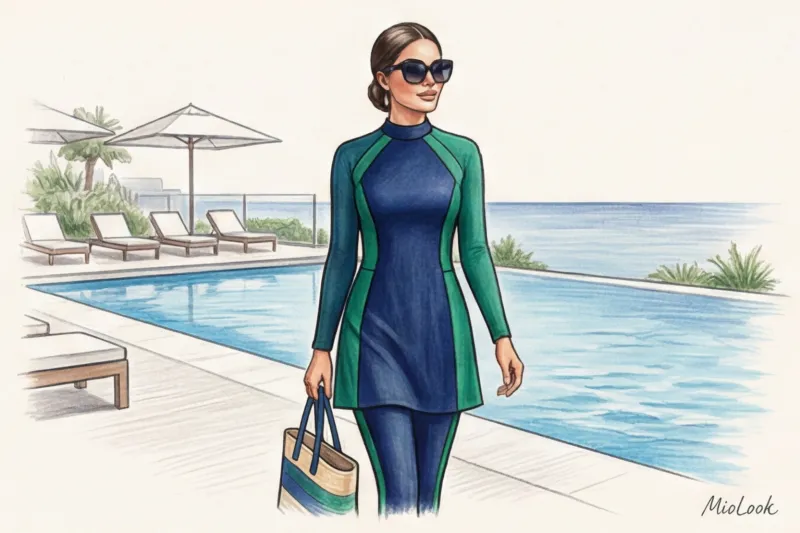
Complete the look with accessories: chunky tortoiseshell sunglasses, oversized straw tote bags from Loewe or Jacquemus (or their quality equivalents), and a wide-brimmed hat that can be worn right over a swimming turban.
Pre-purchase checklist: test drive in the fitting room
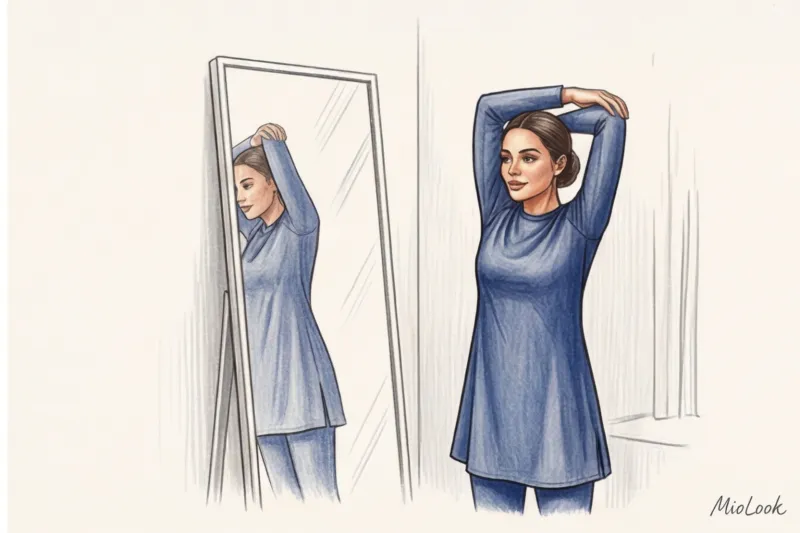
Never buy a one-piece swimsuit based solely on a picture online without trying it on. Once in the fitting room, take this mandatory three-step test drive:
- Mobility test (stroke simulation): Raise both arms sharply upward, as if you were swimming a crawl or reaching for a ball. If the armhole is pulling the entire tunic up and it's riding up above your belly button, take it off. The patterns are incorrect.
- Checking the elasticity of the belt: The waistband of your leggings should be wide (at least 5 cm) and snug. Squat a couple of times. If the waistband bunches up into a thin rope around your waist, it will be unbearably tight in the water.
- Test of fastenings: Fasten the inner snaps between the tunic and trousers and try leaning forward. The snaps shouldn't come undone with a slight tug.
Investing in the right burkini isn't just another beach item. It's an investment in your freedom of movement, safety in the water, and absolute confidence at any resort in the world. Forget the stereotypes of "modest oversized," trust the laws of physics, and choose technologically advanced fabrics that work for you, not against you.