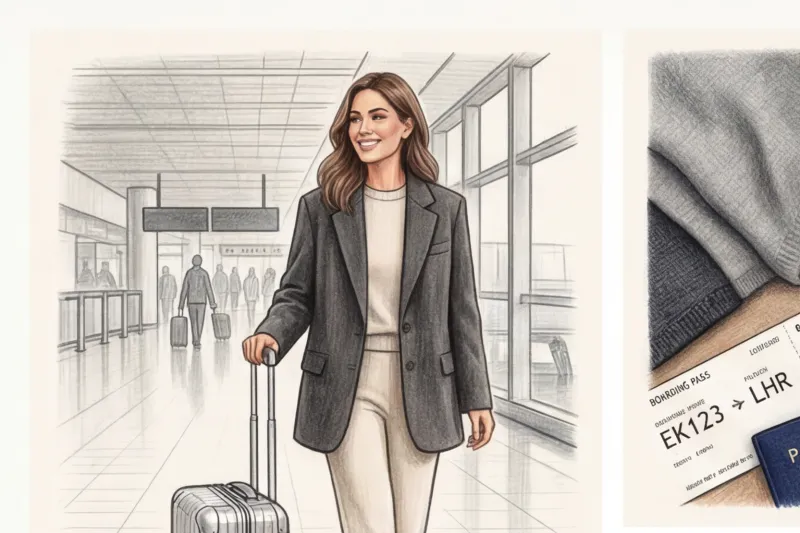
Have you ever wondered why, after a long flight, some people emerge from the terminal looking like they've just left a spa, while others look (and feel) drained? It's not always about the class of service or the price of the ticket.
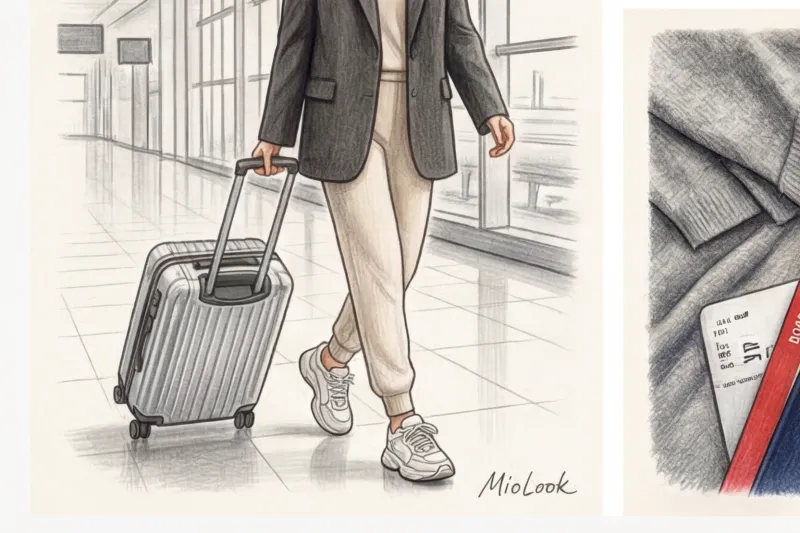
After 12 years of regularly flying between fashion weeks in Paris and New York, I, as a stylist and colorist, learned one hard lesson: the right airport bow It's not just a matter of aesthetics, but also of physiological survival. We're used to thinking that comfort on the road automatically means a shapeless tracksuit. But I offer a scientifically proven approach to the "Jet-Set Chic" style.
Did you know that the humidity in an airliner's cabin drops to 10-20%, making it drier than the Sahara Desert? And does your favorite "practical" black sweater make your face look years older under the airplane lights? We've already covered the anatomy of the perfect flight wardrobe in more detail in our The complete guide: what to wear on a plane , but today I want to analyze the physics of fabrics, the psychology of color, and specific formulas that work at an altitude of 10,000 meters.
Style Evolution: Why Your Airport Look Shouldn't Rely on Sweatpants Anymore
The golden age of aviation, with its tweed two-piece suits, boxy hats, and stiletto heels, is long gone. It's been replaced by the era of athleisure—we've happily donned Ugg boots, stretched-out hoodies, and leggings. But the pendulum of comfort has swung too far toward sloppiness.
In cognitive psychology there is a term enclothed cognition (clothed cognition). A 2012 study from Northwestern University demonstrated that clothing directly influences our psychological processes and sense of self. By wearing revealing loungewear or pajamas in public, we blur personal boundaries. The brain receives the signal "I'm relaxed to the point of apathy," and we feel overwhelmed, disorganized, and vulnerable even before takeoff.
I had a very revealing experience. I love observing passengers at check-in counters and in transit areas. Those who choose Jet-Set Chic—a put-together yet soft silhouette—are treated completely differently by the staff. There's an unspoken airline rule: when overbooked (when more tickets are sold than seats are available), upgrades to business class are offered to passengers who look neat and presentable. In washed-out sweatpants, your chances of getting a free glass of champagne in business class are zero.
The 10,000-Meter Rule: How Extreme Climates on Board Dictate Fabric Choices
Airports and airplanes are zones with a merciless and unstable climate. Temperature fluctuations are colossal: you can board a plane on a scorching ramp at +30°C, and half an hour later find yourself under an icy blast of air conditioning at +18°C.
It's commonly believed that 100% cotton is the best and safest choice. This is a myth that I debunk during the very first consultation when packing. Yes, cotton absorbs moisture well (for example, if you're sweaty after running a kilometer through the terminal to your gate). But it has a critical drawback: it takes a particularly long time to dry. In a cold, air-conditioned cabin, that damp compress on your back is guaranteed to give you hypothermia and a cold.
Access to MioLook for €0.99 — one-time payment
A smart AI stylist will select the perfect flight look based on your preferences.
Get access — €0.99 onceBreathable materials vs. synthetic trap
Dense polyester and acrylic create a greenhouse effect on the ground and provide no warmth in the air. They're a synthetic trap that prevents the skin from breathing.
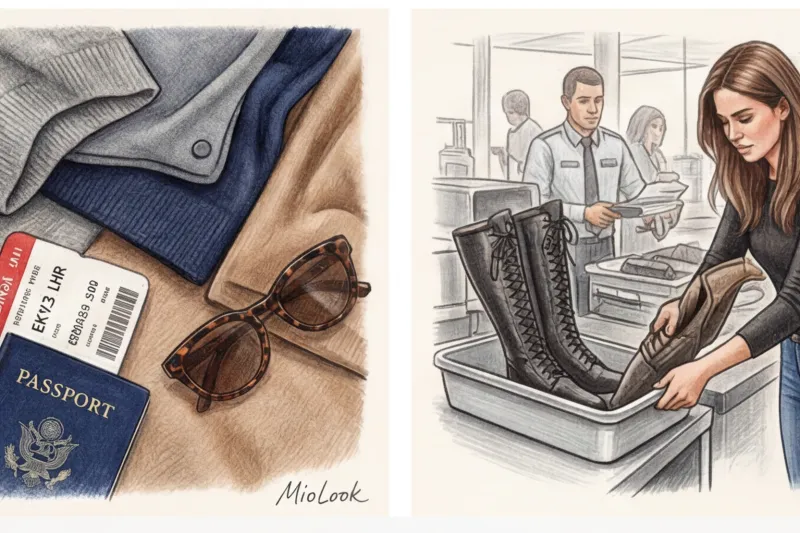
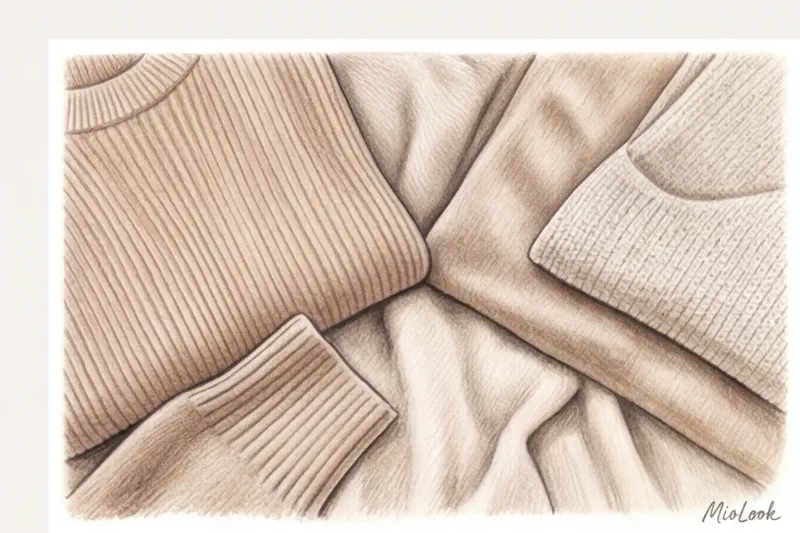
Ideal travel investments include highly absorbent and thermoregulating fabrics. Look for viscose, tencel, cupro, or modal on the tags. But my absolute favorite, which I recommend to all clients, is fine merino wool. Its fibers have unique natural thermoregulation properties: they trap warm air near the body when it's cold in the cabin and wick away excess moisture when it gets hot.
The Secret to Crease-Free Fabrics for Transatlantic Flights
How can you tell if an item will survive 10 hours in an economy class seat without turning into chewed-up paper? Do a simple test right in the fitting room: squeeze the fabric tightly in your fist for 20 seconds, then release. If you notice any hard, deep creases, leave the item on the hanger; it's not suitable for flying.
Instead of the usual thin cotton, choose a dense Milano jersey. Its special weave allows it to hold its shape like a good suiting fabric, yet stretch like athletic gear. It looks expensive and feels like a second skin.
A Traveler's Color Palette: Debunking the Myth of Perfect Black
As a certified colorist, I constantly encounter the same misconception: “I’ll wear total black on the road; it won’t show stains, it’s practical.”
Let's be honest: black is the worst color for flying. Sure, spilled tomato juice doesn't show up as well. But black is a powerful magnet. It collects, highlights, and reveals every speck of dust, the light lint from other people's sweaters, pet hair from the lounge seats, and the slightest dander. By the end of a long flight, a black suit looks sloppy and cheap.
The second problem is lighting. Airplane cabins and terminals use cold fluorescent lighting. When combined with black, it creates harsh shadows near the face, highlighting nasolabial folds and dark circles under the eyes, and making the skin appear sallow, giving it a greenish undertone.
"Black against the face in the artificial light of an airplane acts as a magnifying glass for any signs of fatigue. If you want to look fresh after an overnight flight, choose soft, light-diffusing shades."
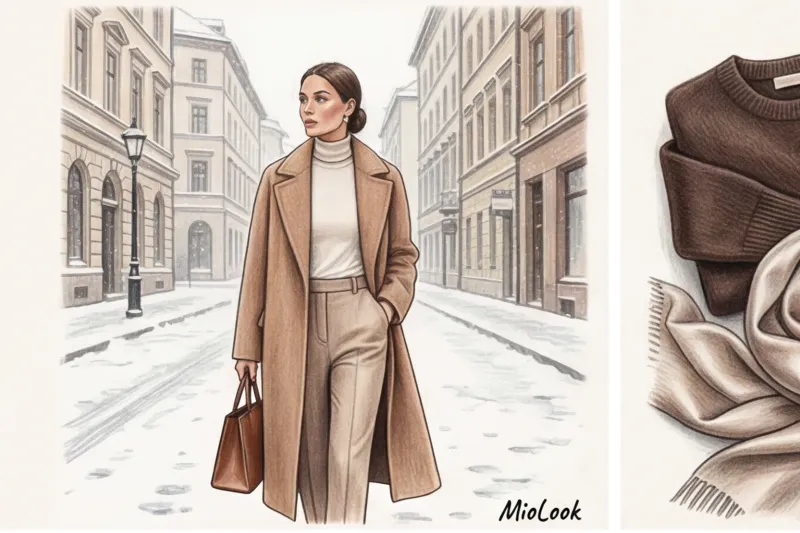
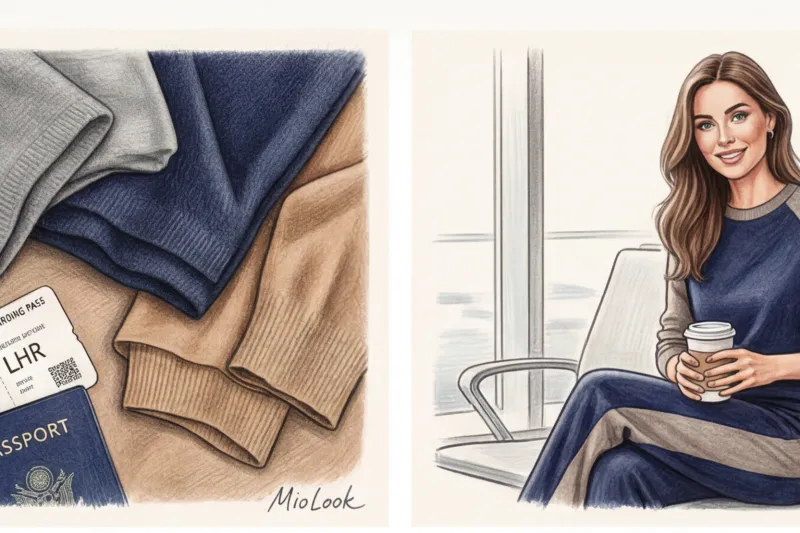
The perfect jetsetter's palette: melange light gray, complex taupe, deep navy, and camel. The melange texture, where threads of different shades are interwoven, creates an optical illusion—small stains, creases, or stuck-on lint are completely invisible.
Jet-Set Chic Formula: How to Create a Stylish and Comfortable Airport Look
Layering is the key to surviving on the road. Don't wear just a thick wool sweater on your bare skin. If the cabin suddenly gets too hot (which often happens while taxiing), you'll either have to endure it and sweat, or wear underwear.
One of my clients, a top manager at an IT company, was forced to go straight from the plane to a meeting with investors without stopping at a hotel due to a serious flight delay. She was saved by the outfit we'd put together the day before: a basic top, a thin cardigan, and a soft jacket. She simply removed the cardigan in the taxi, leaving the silk top and jacket on, and looked perfectly at home in the meeting room.
Your perfect look starts here
Join thousands of users who look flawless every day with MioLook.
Get access — €0.99 onceBase layer: second-skin comfort
Let's start putting together the look with the right lingerie. Avoid hard underwires or push-up bras—at altitude, pressure changes can cause them to dig into your ribs. Seamless microfiber or cotton bra tops are a great choice.
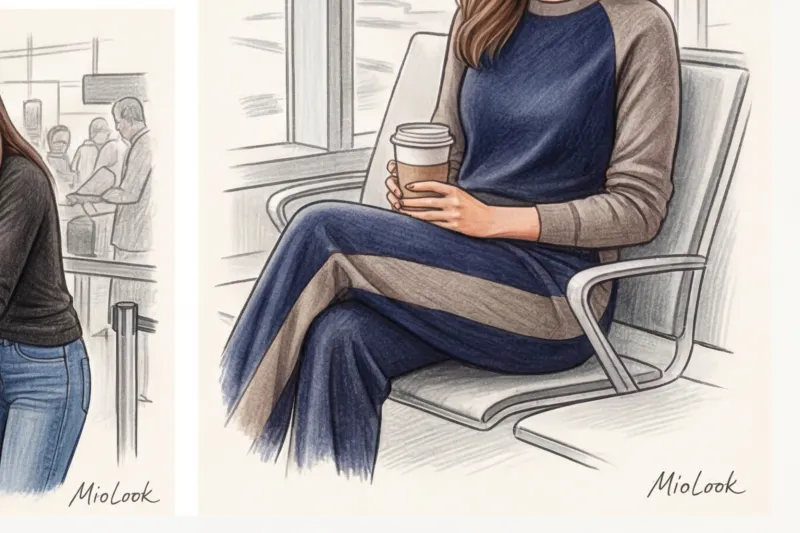
Over this layer, wear a T-shirt made of thick cotton (look for a weight of at least 180 g/m²) with 5-10% elastane to prevent the garment from losing its shape at the elbows, or a basic top made of thick silk. The main rule: the base layer should not be tightly clinging to the body; there should be some air between the fabric and the skin.
Architectural layer: status and warmth
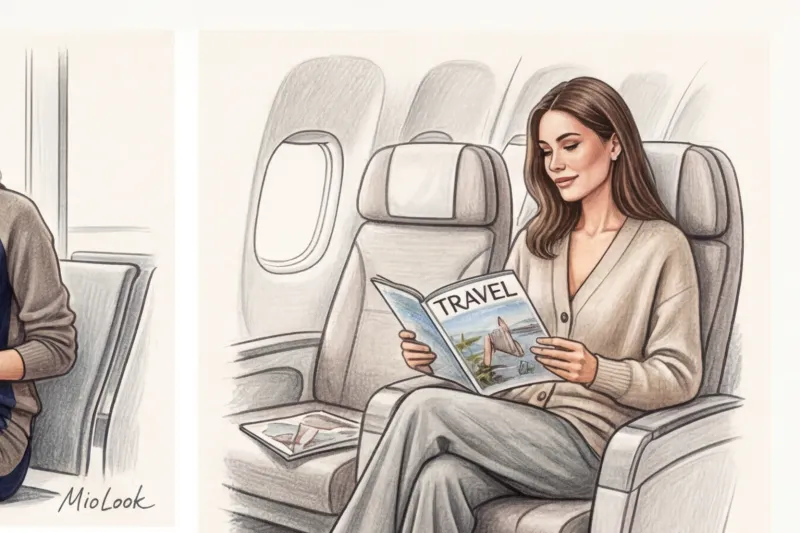
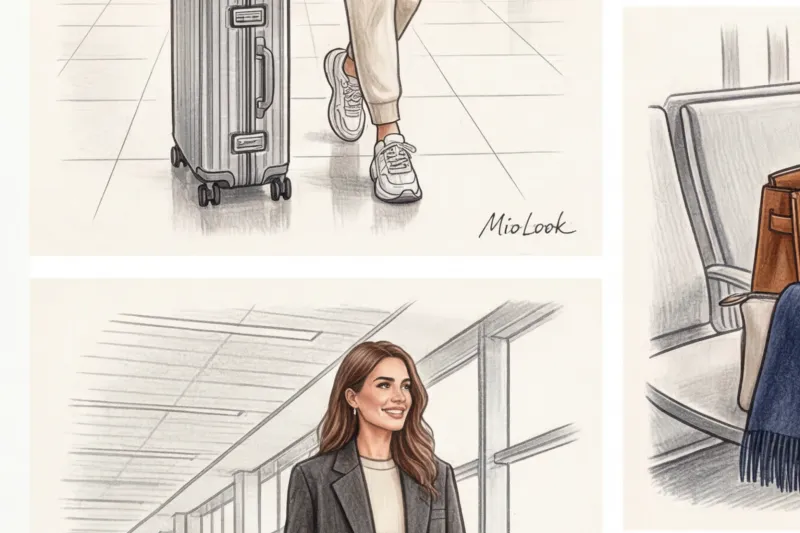
Leave the crisp, sharp-shouldered office blazer in the suitcase. Instead, opt for a chunky knit cardigan or a loose-fitting knit jacket. It adds structure to the look, keeping it put together, but doesn't restrict your movement when you're curled up in a chair trying to fall asleep.
Trousers: Instead of classic jeans, choose wide-leg palazzo pants in a flowing fabric (like modal or thick viscose) with a soft, wide elastic or drawstring waistband. They're a statement piece, but feel like your favorite pajamas.
Shoes and accessories: balancing inspection and swelling
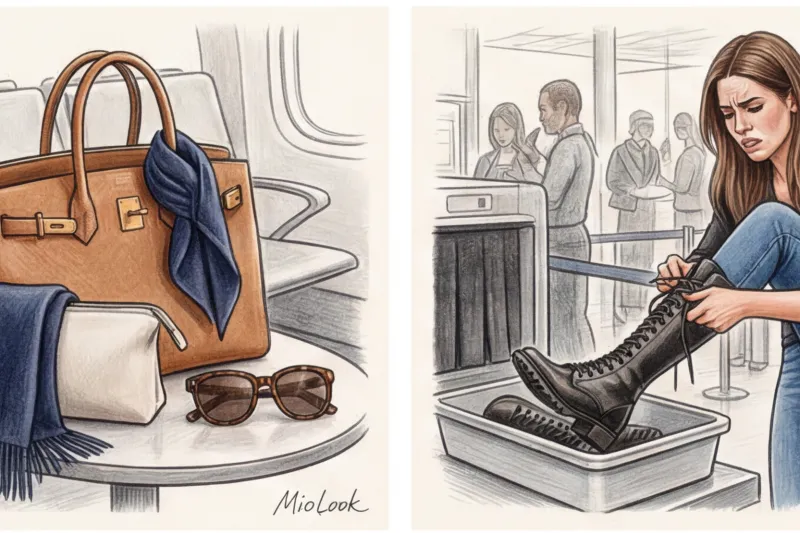
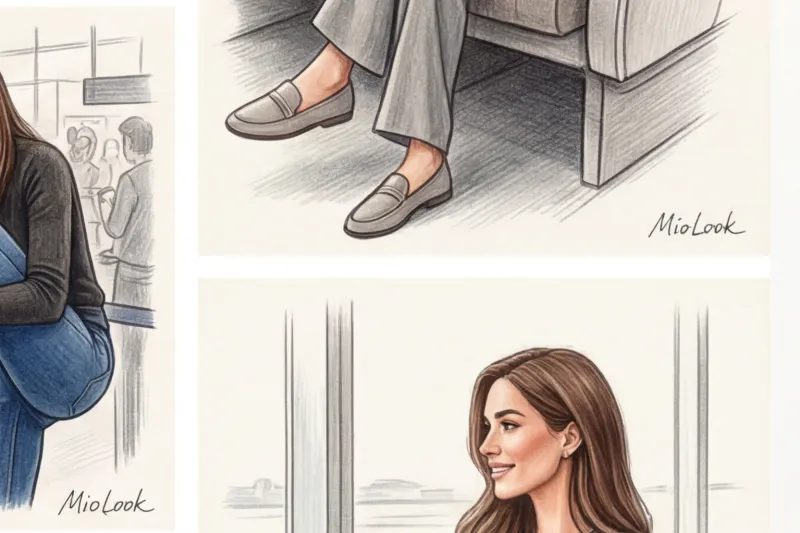
The security checkpoint is the ultimate test for your footwear. Complex laces, high heels, and an abundance of metal straps will make you nervous, sweat, and hold up the line. Ideal choices: leather loafers, slip-ons, or soft urban sneakers that can be slipped on and off with a single flick of the foot.
Now for the medical aspect. According to the World Health Organization (WHO), long flights (more than 4 hours) increase the risk of developing deep vein thrombosis (DVT) by 2-3 times. Due to pressure changes and prolonged sitting, blood pools in the legs. Compression socks are not a luxury for the elderly, but a must-have for any traveler. Choose a compression class (15-20 mmHg). They prevent swelling, and you won't have to tearfully squeeze your feet, which have swollen two sizes, back into your shoes before landing.
You'll only need two accessories. First, a voluminous cashmere stole. It's a multi-functional tool: it works as an elegant scarf in the terminal, a warm blanket on the plane, and even as a folded lumbar pillow. Second, oversized sunglasses. They instantly add Hollywood chic to your look and reliably conceal a lack of makeup and tired eyes after an overnight transatlantic flight.
Checklist: 5 Absolute No-Nos When Choosing Flight Attire
Over the years of working with wardrobes and hundreds of hours in the air, I've compiled a list of items that are absolutely forbidden to wear on a plane. It's not just a matter of taste; it's a matter of your physical comfort and safety.
- Rigid skinny jeans. Tight denim that fits tightly around the calves and waist impairs circulation in the pelvis and legs. At altitude, where the body is already prone to swelling, this is a surefire way to heavy legs and joint pain.
- Overalls. They look stylish in Pinterest photos, but imagine the turbulence and cramped bathroom stall measuring just a meter by a meter. A jumpsuit is a logistical disaster, requiring almost complete undressing.
- Massive metal decorations. Jingling bracelets, large watches, and multi-layered chains will guarantee you an extra 10-15 minutes of manual inspection at the security checkpoint. Leave them in your carry-on baggage.
- Light 100% linen. Linen is perfect for strolls along the coast, but on a plane it wrinkles at the first glance. You'll look like you've been sleeping in it for a week before they even call boarding.
- Open shoes without socks. Flip-flops, mules, or sandals are a bad idea for two reasons. First, you might be asked to take them off at security (walking barefoot on a dirty airport floor is a dubious experience). Second, cold air from the air conditioners in the cabin always wafts across the floor.
Ready to get started?
Try the MioLook free plan—no commitments required. Get your perfect wardrobe right on your smartphone.
Get access — €0.99 onceAssembling the image