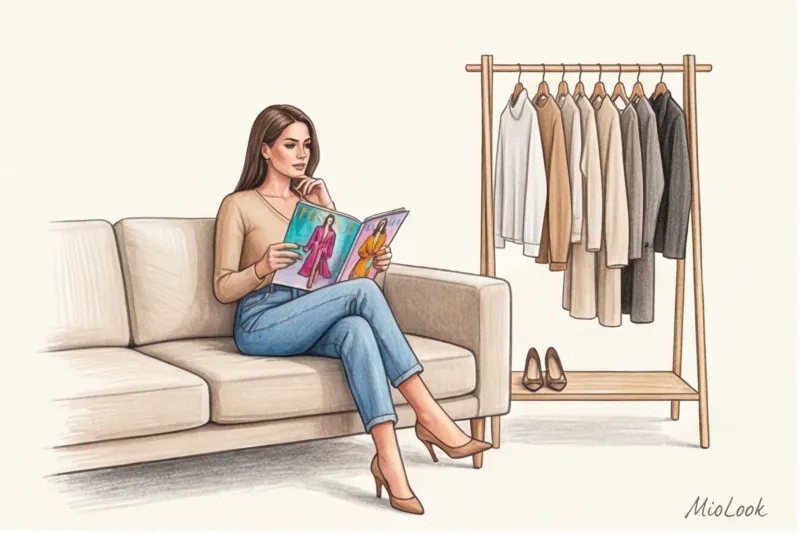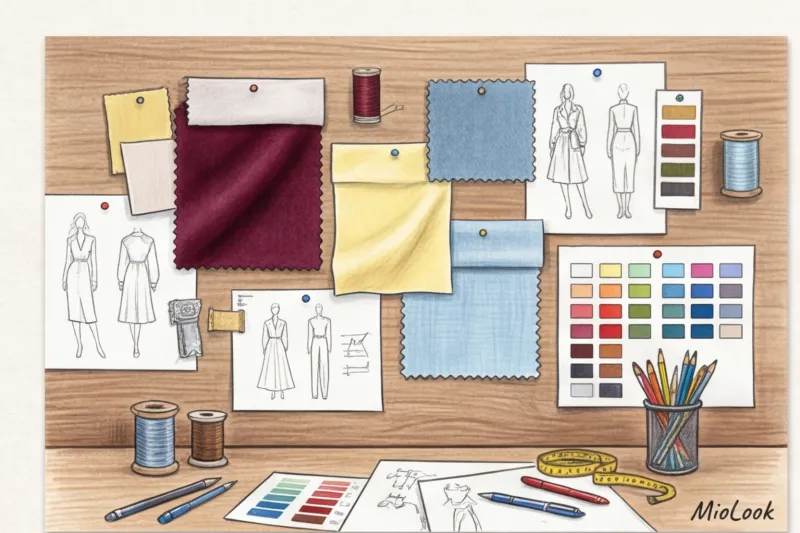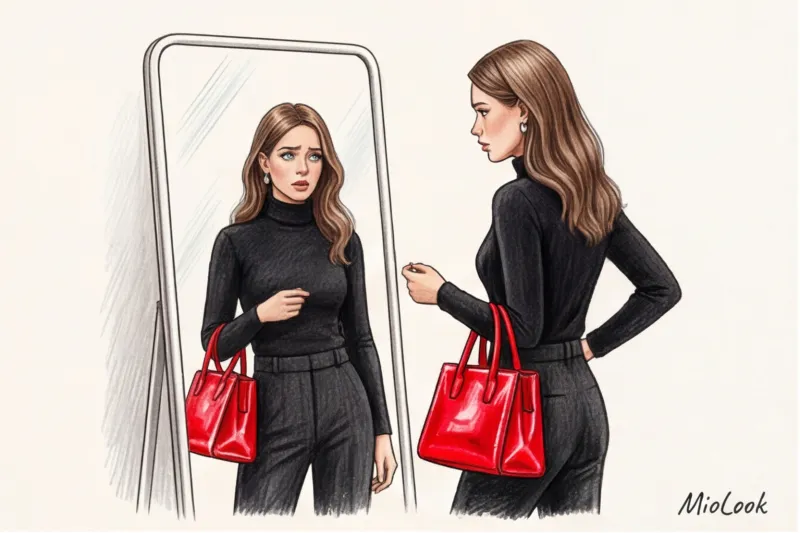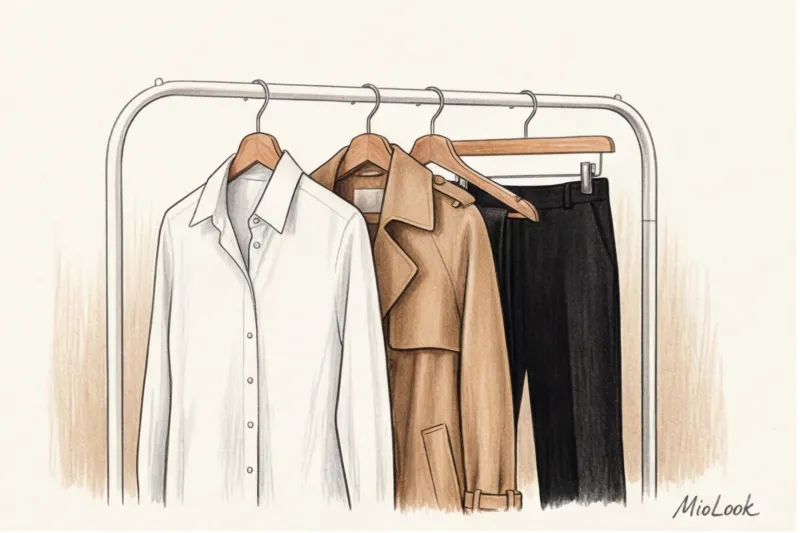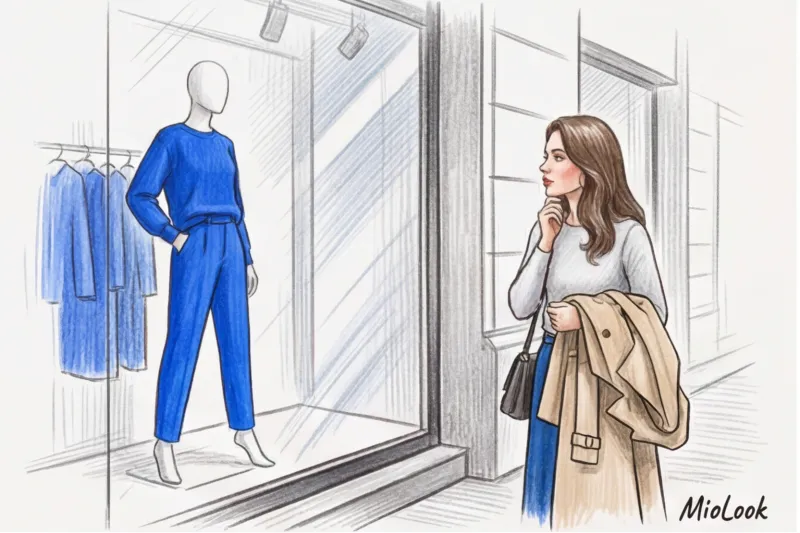
A few years ago, I conducted a brutal but sobering experiment: I digitalized my closet and tracked every item for six months. The data was merciless. Items from my neutral base worked 100% of the time, but clothes in ultra-fashionable shades, bought on the heels of trends, were worn 80% less often. Sound familiar? Every winter, the Pantone Color Institute delivers its verdict, and within a month, mass-market fashion convinces us that our wardrobes are hopelessly outdated.
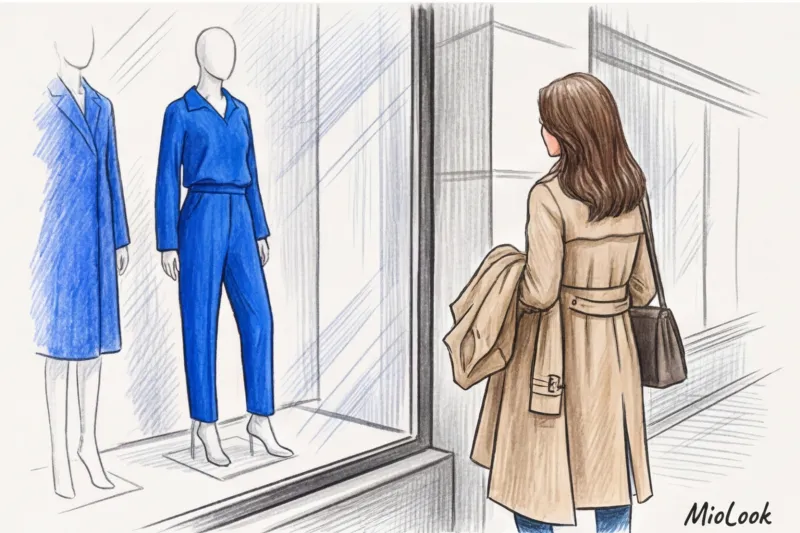
But as someone who works at the intersection of technology and personal style, I'm confident: you don't need to buy total looks in a new shade to look trendy. We've already discussed the mechanics of how a trend bureau works in our a complete guide to fashionable colors in clothing and the rules for combining them In this article I will show you an engineering approach: how to implement Pantone's color of the year in clothing using the microdosing method, preserving your style, budget and nerves.
Why Pantone's 'Color of the Year' in Clothing Is a Trap for Your Basic Wardrobe
Pantone's methodology is based on deep macroeconomic and cultural analysis. Their forecasts reflect the spirit of the times. But as soon as a color is announced, the rigorous marketing of fast fashion kicks in. Brands like Zara, H&M, and Mango flood their store windows with monochrome capsules in the new shade for six weeks. The goal is simple: create a visual buzz that will make your everyday clothes seem dull.
According to McKinsey & Company's "The State of Fashion" report for 2024, the life cycle of microtrends has now shrunk to 3-5 months. When you buy a bright, one-day-use jacket, you fall into the trap of isolated pieces. It looks stunning on the mannequin, but when you get home, you discover there's nothing to wear it with except a white T-shirt and blue jeans.
Let's do some math and calculate Cost Per Wear. Imagine a basic camel-colored trench coat for 15,000 € that you'll wear 100 times over three years. Its CPW is 150 €. Now, take a trendy Viva Magenta suit for the same price, which you'll wear maybe three times before the color goes out of style. The cost per wear is 5,000 €. The difference is colossal.
Ready to get started?
Try a free plan—no commitment—and discover how technology is changing the way you approach style.
Get access — €0.99 onceThe 10% Rule: How to Microdose a Trendy Shade
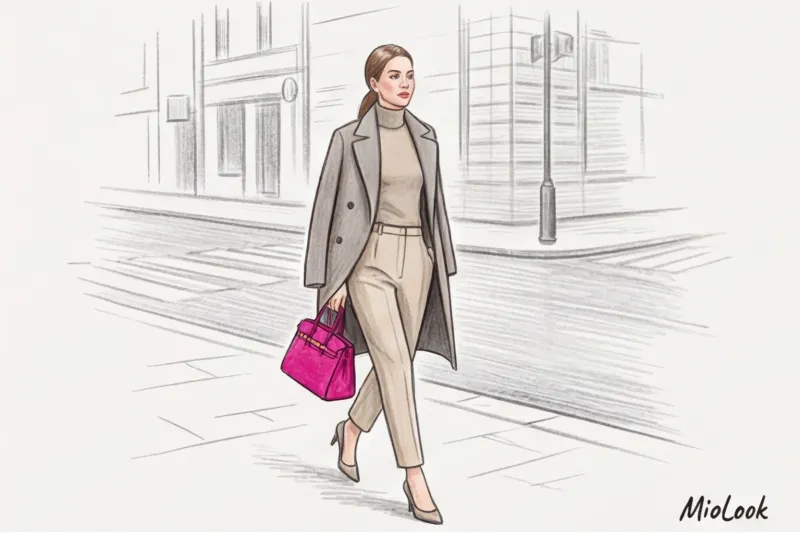
Working with clients who prefer minimalism, I've developed a rule of thumb: any bold trend should take up no more than 10-15% of the overall look. This is called microdosing. When you use a bright shade not as a base but as an accent, the entire outfit instantly looks more expensive and sophisticated.
You don't rework your basics for the new season. You take a canvas (your usual graphite, navy, or beige suit) and add one precise, measured brushstroke. This shows that you're aware of trends, but not held hostage by them.
Accessories as a safe investment
If you want to test a complex color, start with accessories. Glasses frames, thick leather belts, silk scarves or basic bags for summer A belt with a bold accent will last for years in your wardrobe. Unlike mass-market knitwear that loses its shape after three washes, a high-quality leather belt in a trendy shade will remain relevant even if Pantone changes its favorite three more times.
Integration through prints and textures
The same color behaves completely differently depending on the material. A deep shade on 19-millimeter natural silk looks classy, shimmering in the light. The same color on cheap, thin polyester looks flat and garish. If you're afraid of pure color, look for it within prints: for example, in a formal check suit or a geometric pattern, where the trendy hue occupies only a small portion of the design.
What should you do if the main color of the year absolutely doesn’t suit you?
There's a harmful myth propagated by many glossy magazines: "To be on trend, you have to wear a fashionable color close to your face." As a practicing stylist, I categorically disagree.
Last year, a client contacted me about a slouchy sweater in Peach Fuzz (Pantone Color of the Year 2024) that caught the hype. She had a cool olive undertone, and the delicate peach hue made her face look painfully tired, highlighting the slightest under-eye circles. The sweater had been sitting in her closet for a year, still with the tag still on. We solved the problem simply by replacing it with a bag in the same shade, removing the color from the portrait area.
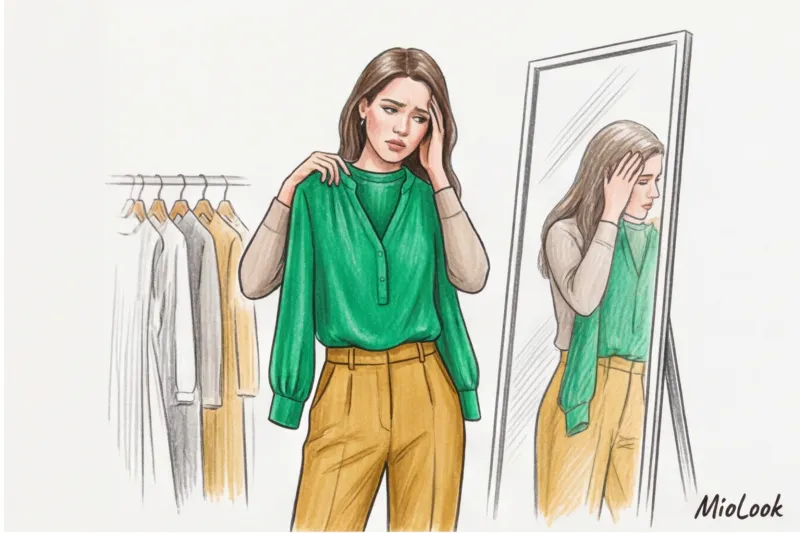
If the shade of the year is objectively not in your palette, don't force it. You can slightly adapt it, shifting it toward a cooler or warmer tone. For example, if a warm coral is announced, you might choose a cooler, raspberry-toned version that will better suit your complexion.
Access to MioLook for €0.99 — one-time payment
A smart AI stylist will select the perfect look based on your appearance and current wardrobe.
Get access — €0.99 onceShifting Focus: Trousers, Skirts, and Shoes
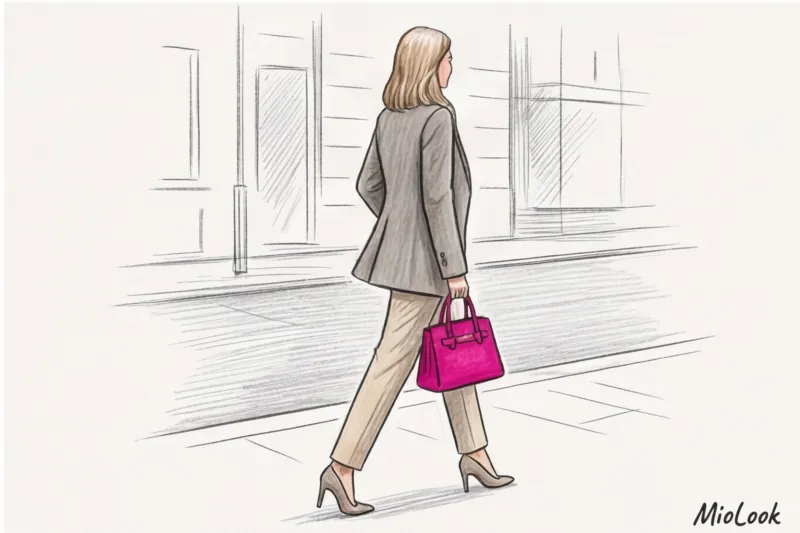
The golden rule of style: we send all experiments with inappropriate colors downstairs. Cargo pants , midi skirts, or statement shoes are a great testing ground for trends. Your face is framed by a neutral, perfectly flattering top (white, gray, or navy). Others will notice the trendy silhouette and color, but your face will remain fresh and rested.
Perfect Pairings: Mixing Pantone with Your Current Capsule
To prevent a new, vibrant piece from becoming a standout, it needs to be carefully integrated into your current wardrobe. This is where color theory and Johannes Itten's color wheel come to our aid. Forget your intuition—use proven patterns.
1. Analogue combination (peace and high cost). Choose colors that are adjacent on the color wheel. If the color of the year is a complex red, pair it with a deep burgundy or terracotta. This technique creates a soft gradient that always looks premium.
2. Complementary combination (boldness and contrast). These are colors located opposite each other. Color blocking in clothing is built on this very principle. For example, classic blue and rich orange. But there's an important limitation here: This method doesn't work at all if your basic wardrobe consists of items with a strong print. Color blocking requires clean, monochromatic surfaces, otherwise the image will degenerate into visual chaos.
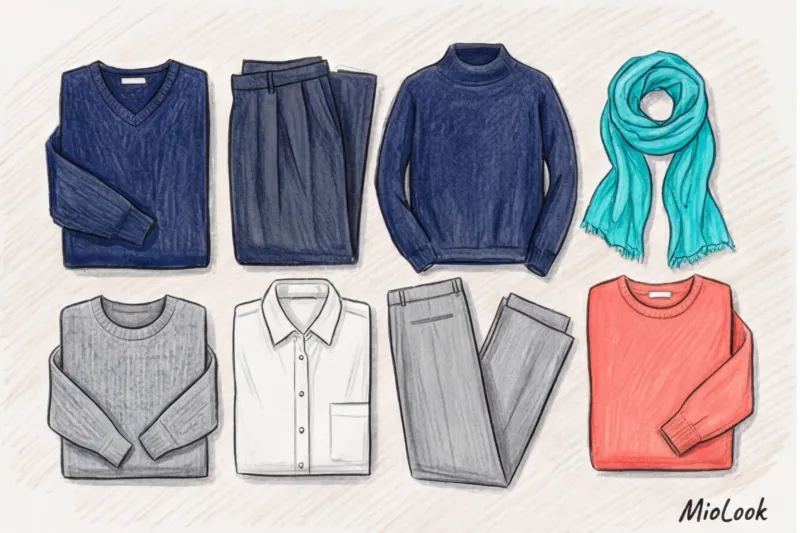
The safest canvas for any Pantone hue are achromats (black, white, gray) and deep neutrals (navy, chocolate, camel). Pairing a trendy, vibrant hue with dark blue will always look more elegant than with black, which often creates an overly harsh, "sporty" contrast.
Smart Shopping Checklist: Should You Buy the Color of the Year?
Before you take a flashy item to the checkout, run it through my mindful purchasing framework. It saves you 90% of impulsive spending.
- The rule of three images. Can you, right now, standing in the store, come up with three different outfits to wear with this item from everything else already hanging in your closet? If you need to buy "those other pants and that other bag" to go with it, return the item to the rack.
- Life cycle analysis. Imagine this item in two years. When the trend for this particular shade fades, will its cut still be relevant? A classic silk top in a trendy color will survive, but an asymmetrical T-shirt with a complex cut will not.
- Real life style. Ask yourself: where exactly will I wear this next week? Not "anywhere," but specifically: to the office with casual Friday, on a walk with the dog, or to an exhibition on the weekend.
How Digitizing Your Wardrobe Saves You From Impulsive "Colorful" Purchases
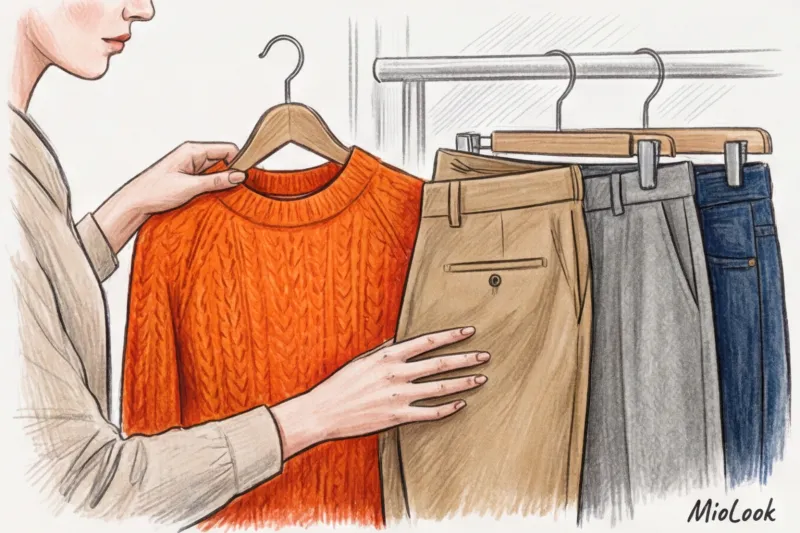
The most common problem my clients encounter in shopping malls is memory distortion. Standing in the fitting room with a bright sweater, you try to remember, "Are my gray pants from home a warm or cool shade? Will they look good here?" Eight times out of 10, memory fails, and we bring home an item whose color temperature clashes with our reference.
That's why I'm a fan of digitalization. Application MioLook It takes the guesswork out of it. I simply open a virtual fitting room on my smartphone and combine a new item with digitally-created items from my real wardrobe. Artificial intelligence suggests how harmoniously the new color will fit into my existing capsule wardrobe.
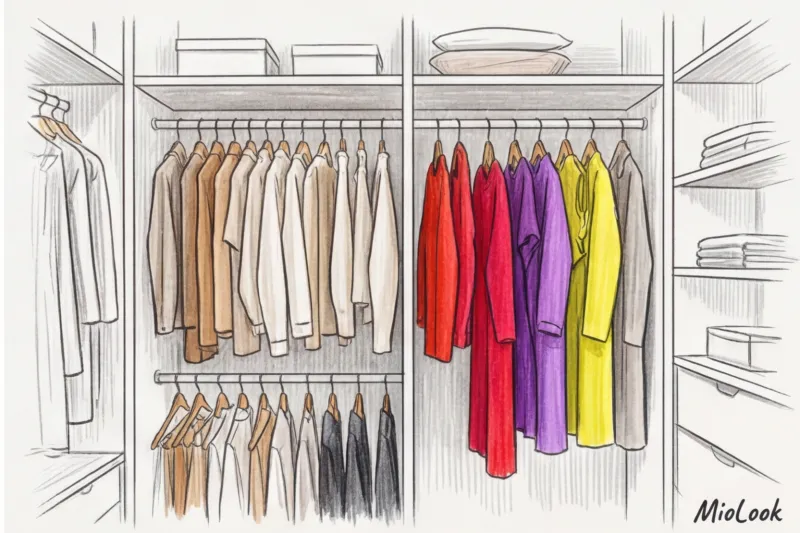
Statistics are relentless: we wear only 20% of the items in our closet 80% of the time. Tracking your looks through an app clearly shows which colors truly work for you and which ones are just sitting there. If the data says you've worn red twice this year, no Pantone should force you to buy a red coat.
Summary: Trends pass, but style remains
The Pantone Color of the Year in clothing isn't a mandatory guide or a uniform for the next 12 months. It's simply a tool, a new color in your palette that you can use or ignore without the slightest damage to your reputation.

Before the seasonal sales start, conduct a closet audit. Digitize your wardrobe, identify missing pieces, and allow yourself to incorporate a trendy color only where it truly enhances your personal style, not overshadows it. Ultimately, the most fashionable color is the one that makes your eyes sparkle, not the one that's destined to be the hottest trend this quarter.