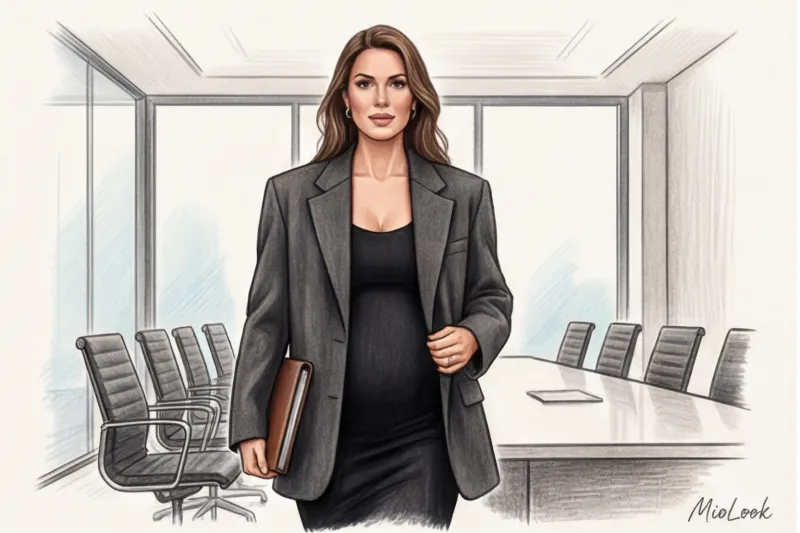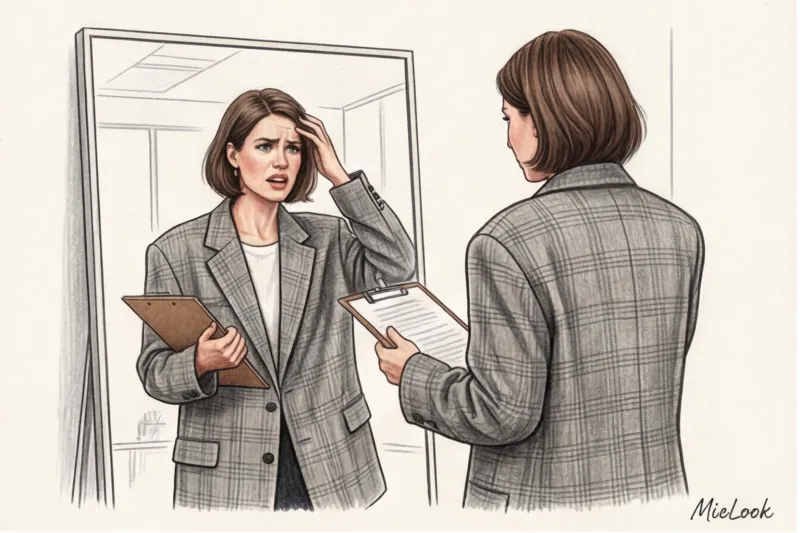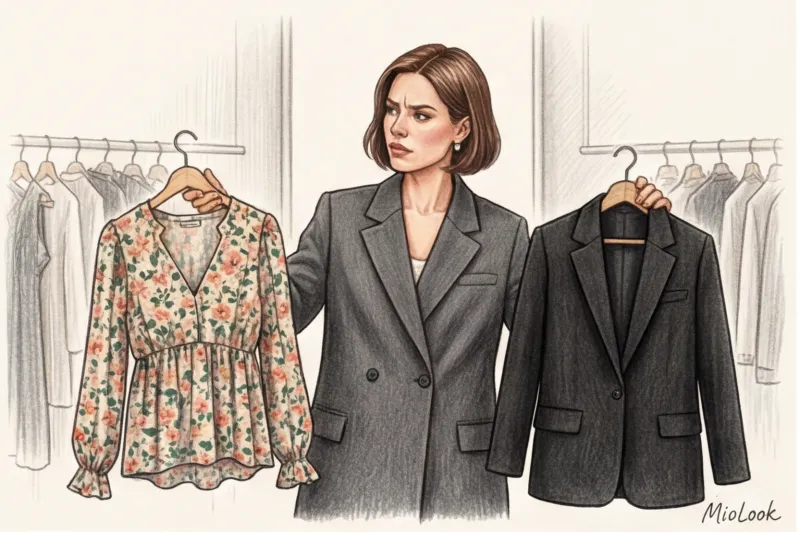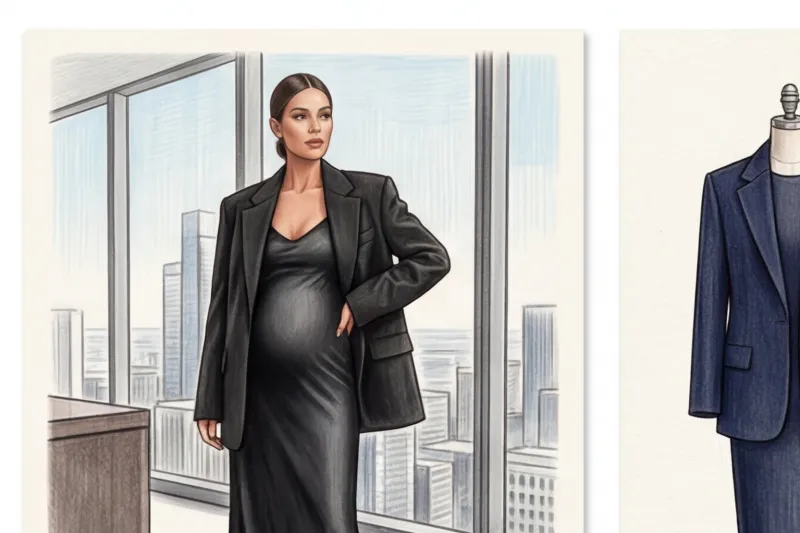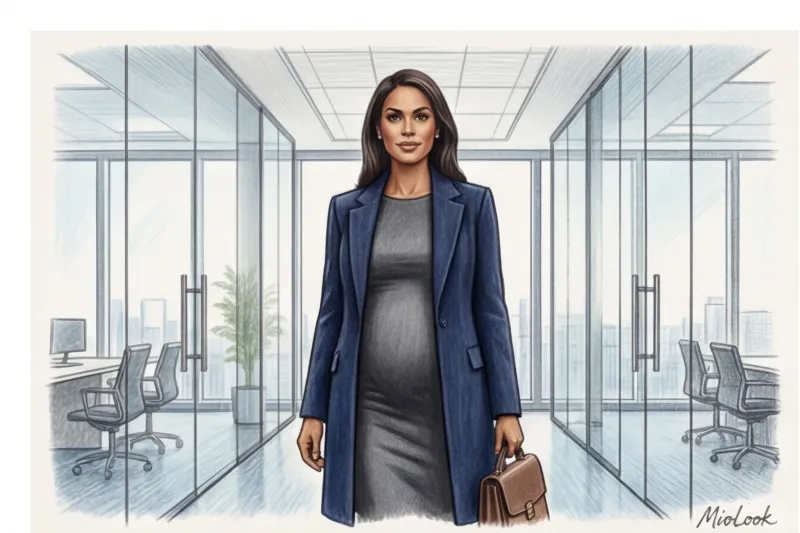
A client once contacted me—a partner at a major international law firm. Seven months pregnant, she was facing a complex corporate dispute in court. She bought a "specialized" business suit for expectant mothers and burst into tears in the fitting room. "I don't look like a lawyer charging €500 an hour, but like a tired schoolgirl," she said. And she was right.
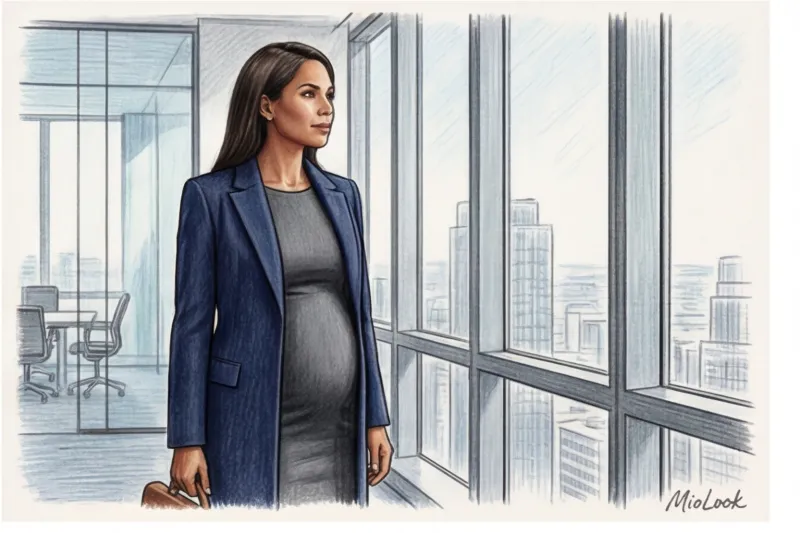
Collect strict dress code for pregnant women — this is perhaps one of the most difficult stylistic challenges. The fashion industry has somehow decided that as body size changes, women lose their professional status, offering us infantile high-waisted tunics, ruffles, and shapeless knitwear. But authority is built on visual rigidity. We discussed this paradox in more detail in our The Complete Guide to Maternity Office Wear: How to Stay Stylish.
As a stylist and fabric expert, I want to share with you a system that will allow you to maintain strict corporate protocol without sacrificing your own comfort.
Corporate Standards vs. Body Changes: Finding the Balance
Bank and corporate dress codes are based on conservatism: rigid lines, closed-toe styles, and heavy textures. The biggest mistake women make is trying to squeeze into their usual size until the last possible size, then abruptly switching to cheap maternity lines from mass-market stores.
I had a client, a top manager at an investment bank, whose unspoken authority at meetings literally began to melt away when she changed into stretchy, floral dresses. The problem wasn't pregnancy; it was the loss of visual status markers.
In my experience, 70% of a pregnant executive's wardrobe can and should be collected from regular premium brands (such as COS, Massimo Dutti, or local brands with price tags in the €150–€300 range), simply by choosing the right architectural cut and size.
Your perfect look starts here
Join thousands of users who look flawless every day with MioLook.
Get access — €0.99 onceImage Architecture: Why the Shoulder Line is More Important than the Waist Line
Herein lies my main contrarian advice: specialized formal wear for pregnant women is an oxymoron A true formal dress code is built on a rigid form, while maternity clothes are built on flexibility and stretch. Trying to find a "two-in-one" option will result in a garment that doesn't do both well.
The solution? Separate these functions. According to the principles of architectural tailoring taught at leading design institutes (FIT, Parsons), in a business dress code, authority is determined by the shoulder girdle, not the waist.
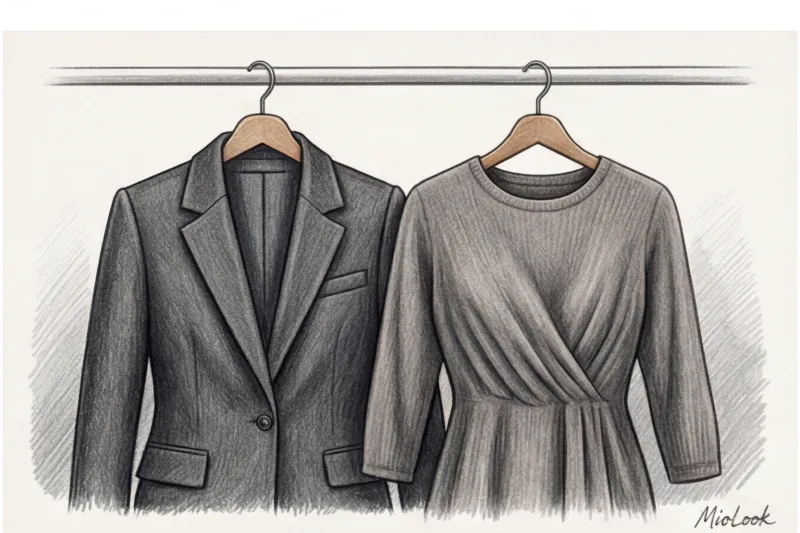
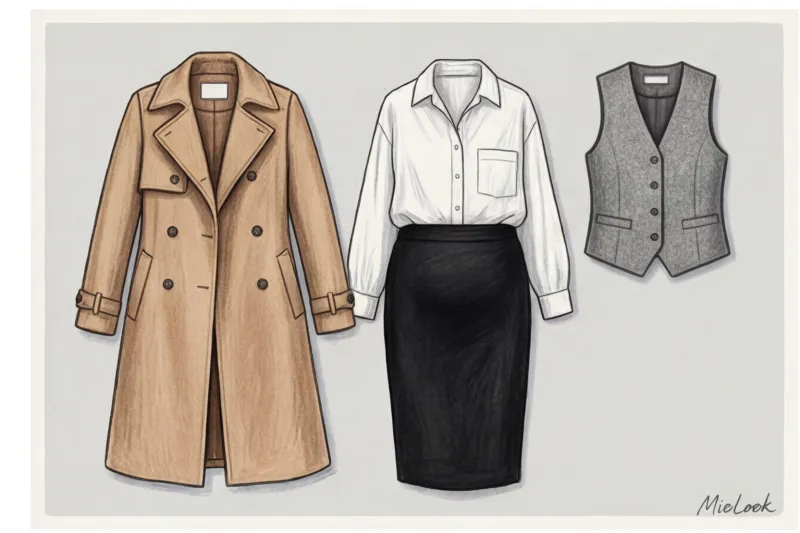
Don't look for the perfect tailored pants for your belly. Look for the perfect structured jacket with stiff shoulder pads that you can wear open over a soft basic dress.
"The crisp lapels of a men's suit jacket or long tuxedo create two distinct vertical lines along the body. These lines act as an optical illusion—they gather the silhouette, disguising changes in the waist area and maintaining your professional armor."
However, there's a fair limitation here: this open-jacket method stops working after 8-9 months if your company's protocol requires a strictly buttoned jacket (for example, some Swiss banks). In this case, your only recourse is a tight sheath dress.
Textile expertise: fabrics that hold their shape and breathe
During pregnancy, basal body temperature increases by an average of 0.5°C. Research into thermoregulation shows that circulating blood volume increases, leading to increased sweating. And here we encounter the main problem with specialized clothing.
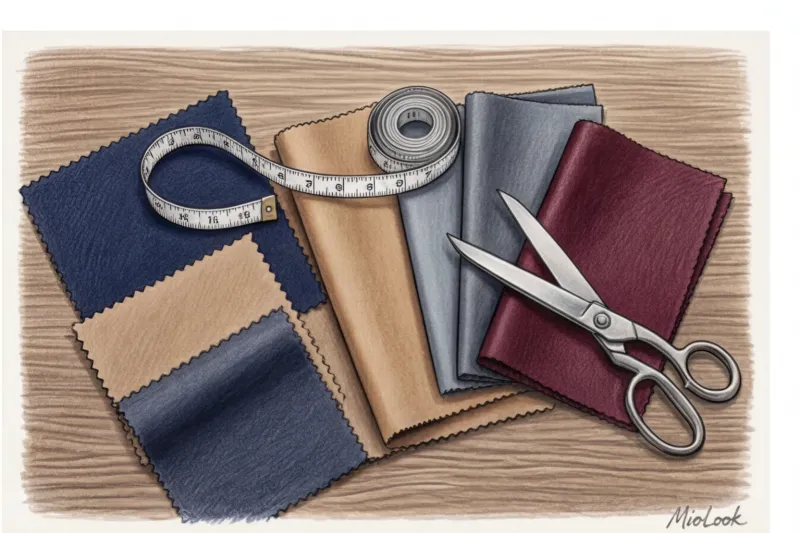
Walk into any maternity section and check the labels. You'll see viscose or polyester with 10-15% elastane. Why is this the enemy of a strict dress code?
- Deformation: 15% elastane makes the fabric look unsightly when stretched across the stomach.
- Greenhouse effect: The high content of synthetic stretchy threads kills hygroscopicity (the ability of the fabric to wick away moisture).
- Peelability: I personally tested these fabrics for friction. With constant contact with the underside of the table (and my belly now protruding), cheap knitwear becomes covered in pills within three weeks.
The optimal composition for high-status office wear is 70–80% natural or high-quality synthetic fibers (wool, tencel, cupro) and no more than 3–5% elastane. Textile engineers call wool crepe (from 200 g/m²) is an ideal investment: its grainy texture conceals small creases, it drapes beautifully, and it looks expensive. Yes, such a dress may cost €200, but it will save you face during those crucial negotiations.
Strict Dress Code for Pregnant Women: Putting Together a Capsule
The foundation of a smart wardrobe during this period is the principle of layering: a soft, breathable inner layer (which grows with you) plus a tough outer layer (which is responsible for status).
Sheath dresses and A-line silhouettes instead of pantsuits
Dresses are the most logical choice for corporate attire. Forget tight, thin ribbed knits in favor of chunky knits. Milano It's heavy enough to not be see-through or highlight the contours of your underwear, but stretchy enough to be comfortable.
The length should be strictly midi (below the knee). As your belly grows, the front hem will ride up a bit, so buy dresses with extra length to begin with. Choose a boat neckline or a shallow V-neck—they draw the attention to your collarbones and face.
Trousers and skirts: compromises with the dress code
If you can't live without pants, avoid styles with a giant knit panel that stretches all the way to your chest. If you accidentally remove your jacket, this bandage will look like a piece of athletic gear. Look for pants with hidden elastic panels on the sides (called an underbelly fit).
A-line midi skirts with hidden elastic work great with classic silk blouses if you use the French tuck trick: you tuck the blouse in slightly at the front or side only, creating a subtle asymmetry that drapes elegantly over the belly.
Shoes and accessories: how to maintain your appearance while suffering from swelling
The bank's dress code is strict: no open toes or heels. But what should you do when, by the third trimester, your foot size can increase by half or even a full size due to swelling?
My experience with formal attire has taught me one rule: ballet flats are a killer for a corporate look. They ruin your posture, make your gait heavy, and visually "dull" your look. Instead, invest in:
- Soft leather loafers (nappa or suede) with a small hidden platform or a rigid sole.
- Mary Jane shoes on a low square heel - the strap allows you to adjust the height throughout the day.
- Kitten-heels — micro-heel (2-3 cm) does not put strain on the back, but maintains a businesslike instep.
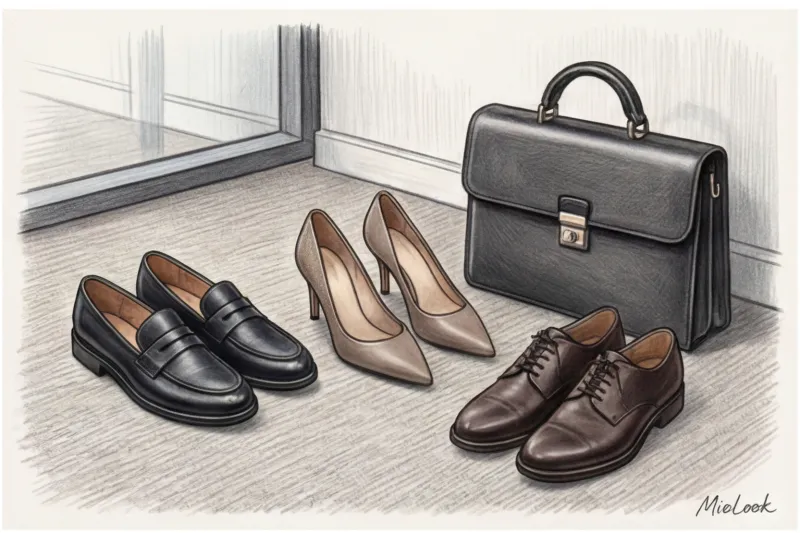
As clothing itself becomes more minimalist, accessories take on the role of status markers. A rigid, geometrically shaped bag (no soft hobos!), a simple watch with a metal bracelet, and a silk bodice (from Hermès to excellent versions from Massimo Dutti for €50)—all these items steal the show.
Infantilism is prohibited: 5 taboos in corporate style
If you want your subordinates and partners to continue to see you as a tough professional, immediately remove the following items from your wardrobe:
- Empire silhouette (cut-off line under the bust). It instantly brings back the image of Natasha Rostova and makes you look overly “homey.”
- Bows, ruffles on the shoulders and a small floral print. It's a matter of perception: these elements are associated with children's clothing.
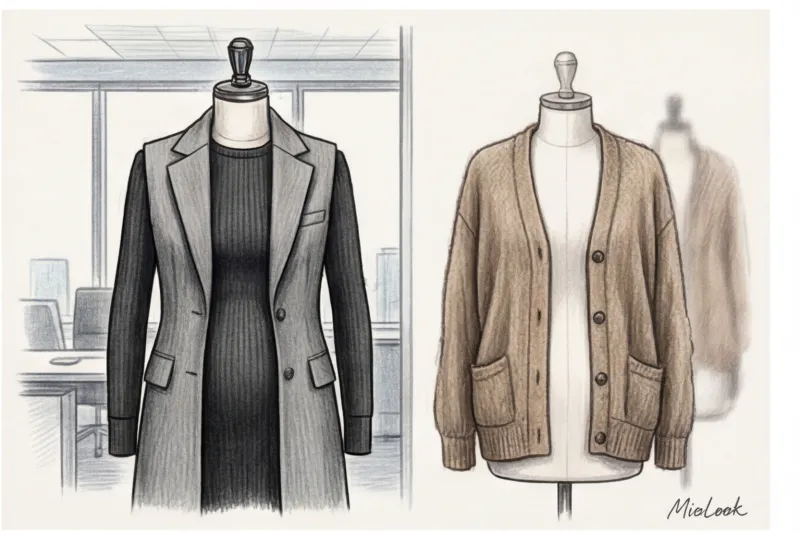
- Waterfall cardigans. Shapeless knitwear with frayed edges makes the figure look bulky and disorganized. Replace them with structured, elongated vests.
- Leggings under a tunic. It's appropriate for a weekend out of town, but not for the boardroom.
- An abundance of melange fabrics. Gray melange looks like a tracksuit. Choose pure, deep colors: navy (deep blue), graphite, camel, emerald.
Smart Wardrobe Review with MioLook
Before you head out to the store and spend hundreds of euros on items you'll only wear for four months, take stock. You'll be surprised how many suitable items you already have hanging in your closet.
In my practice, I always start by digitizing the client's wardrobe. You can do this yourself using MioLook applications Scan your current items.
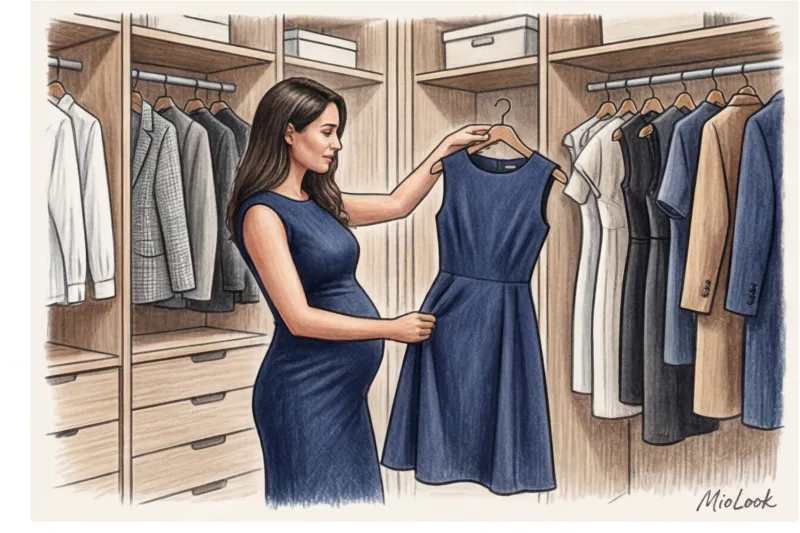
Artificial intelligence will help you create pregnancy capsules from what you already own: for example, your favorite men's shirts that can be worn untucked, oversized jackets that simply don't need to be buttoned, and loose-fitting knit dresses. The app will clearly show you what you're missing and allow you to buy just two or three basic dresses for your growing belly, pairing them with your existing fashionable blazers.
Checklist: Your Plan for Transitioning to Maternity Formal
The transition to new forms doesn't have to be chaotic. Let's conclude our discussion with a practical action plan:
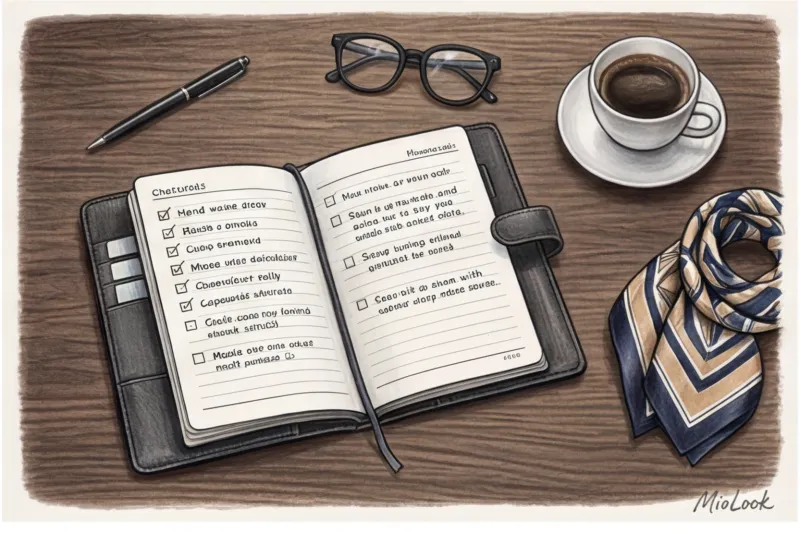
- Step 1: Take inventory of your current jackets and vests. Set aside those with defined shoulders and a length below mid-thigh—these will be your go-to pieces for the coming months.
- Step 2: Buy two basic straight or A-line dresses (dark blue and graphite) made of thick suiting viscose or wool with a minimal elastane content.
- Step 3: Invest in a pair of statement shoes with a wider fit but a closed toe and a rigid shape.
Remember the key: formality in pregnancy clothing isn't achieved by squeezing your belly into a tight frame, but by impeccable fabric quality, architectural shoulders, and statement footwear. Keep your base layer soft, but maintain your shape with outer layers—and your professional authority will remain unshaken.