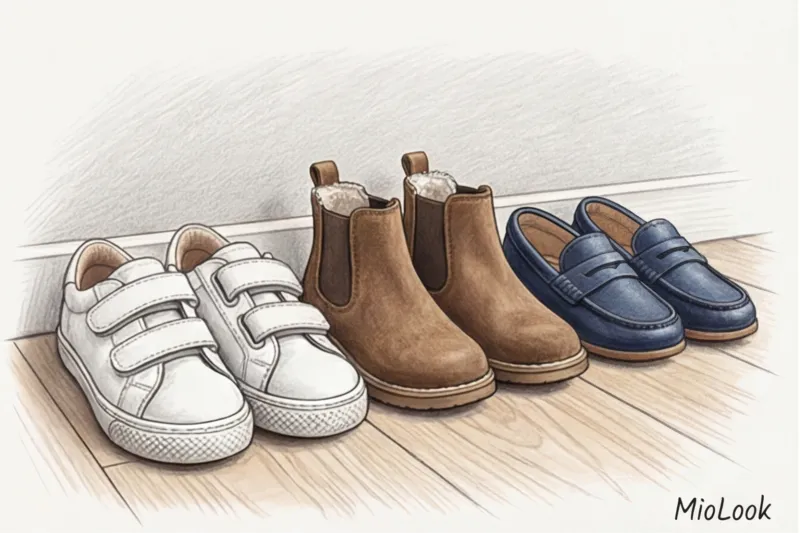
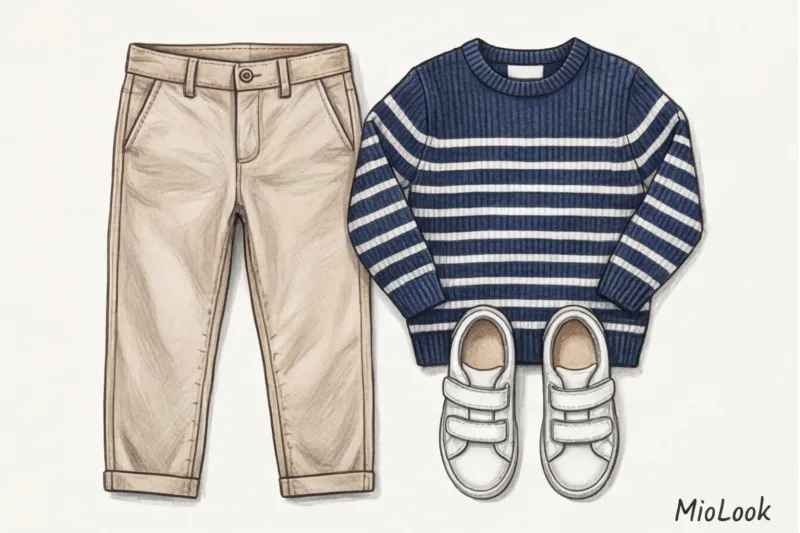
It's Monday morning. You've got the perfect beige jumper and navy chinos for your four-year-old, but your child screams and refuses to leave the house without neon-green sneakers with flashing soles. Sound familiar? A client came to me with exactly this request a month ago. She'd spent over €200 on five pairs of trendy children's shoes, but every morning she'd start with a tantrum because the items clashed with her outfit. My solution was pragmatic: we packed away the acidic "visual noise" into boxes and assembled a functional capsule. We've shared more about how this system saves mornings in our The complete guide to a child's capsule wardrobe.
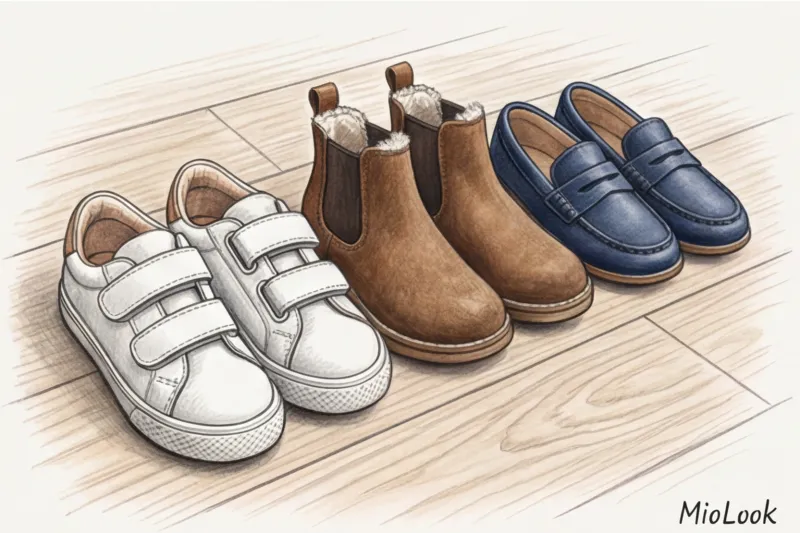
As a stylist with 14 years of experience in Europe, I am convinced: basic children's shoes — it's not boring. It's your morning stress reliever and a smart investment. Let's figure out how to choose the right pairs that your child will enjoy wearing, and you'll avoid overpaying for marketing.
What Are Basic Kids Shoes (And Why They Aren't Light-Up Sneakers)
Basic children's shoes are a wardrobe staple. They feature neutral shades, simple designs, and a complete lack of embellishment like rhinestones, appliqués, or oversized logos. Their main purpose is to blend into the overall look, rather than steal the show.
In children's style, there's a concept called "decision fatigue." When a closet is full of silver shoes, red boots, and dinosaur-print sneakers, putting together a cohesive look becomes impossible. Bright shoes ruin a carefully planned wardrobe, leaving the child looking like they got dressed in the dark.
It is important to remember the formula here Cost-per-wear (cost per wear). Let's say you bought a pair of bright, statement sneakers for €45. Your child wore them five times on special occasions—the cost per wear was €9. Now, let's take a pair of basic white leather sneakers for €65. Your child wore them every day for three months (about 90 times). The cost per wear was €0.72. It's better to invest in one perfect base than to create cheap, but useless, one-off trends.
The Anatomy of a Perfect Pair: Orthopedic Experts' Opinions vs. Marketing Myths
Perhaps the most pernicious myth in the post-Soviet space is the belief in "preventative orthopedics." For decades, mothers have been told that a healthy child needs high, rigid booties and aggressive arch support.
Current data suggests otherwise. According to the APMA (American Podiatric Medical Association, updated 2024), rigid shoes without a medical indication literally act like a cast. They disable the foot muscles, leading to ligament weakness. Of course, if a child has a severe case of hallux valgus, confirmed by a doctor, you should follow the surgeon's instructions. But for healthy children, rigid shoe lasts are detrimental.
"The ideal children's shoe should conform to the shape of the foot, not force it to adapt to the shoe last. Healthy feet are formed through movement."
Today, the concept is considered the gold standard barefoot (barefoot shoes) It has three key characteristics:
- Wide toe box - the fingers are not clenched into a bunch, but can freely fan out when stepping.
- Zero drop - the heel and toe are at the same level, without hidden wedges.
- Total flexibility - You should be able to easily bend the sole with one hand.
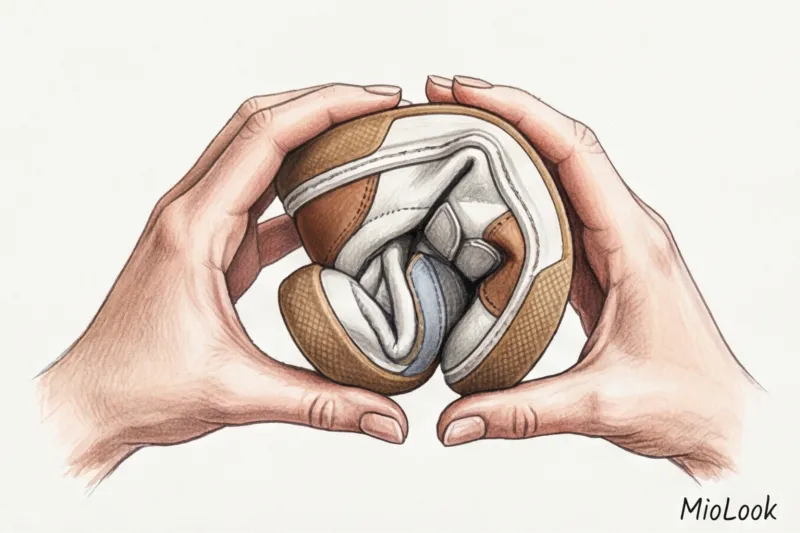
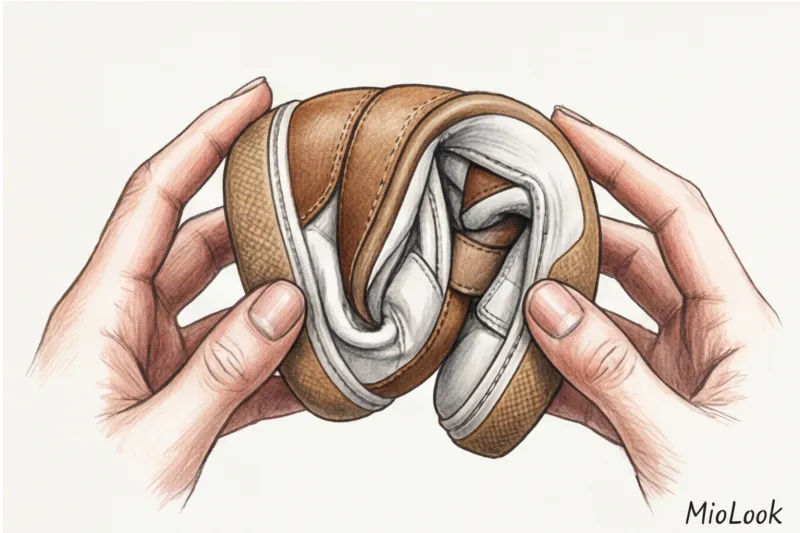
How do you test a base in a store? I teach my clients a simple trick: take a shoe and try to wring it out like a wet towel. If it feels like a rock, return it to the shelf. As for materials, mass-market shoes often use polyurethane (PU), which can make your feet sweat in 20 minutes. Look for genuine leather or modern breathable membranes (like Gore-Tex) for winter.
A smart wardrobe on your smartphone
Tired of trying to remember what to pair your child's new shoes with? Digitize your child's wardrobe and create stylish capsule collections in one click.
Start using MioLookMinimum shoe requirements: how many pairs does a child really need per season?
"Less, but better" is my professional motto. After 12 years of analyzing children's wardrobes, I've come up with a formula: 3-4 pairs of shoes are enough for a child at six months. Everything else is a matter of your emotions, not their needs. To avoid impulse purchases, my clients and I use MioLook — the app allows you to pre-assemble your capsule wardrobe for the season and clearly see exactly which pair (and in what color) you need.
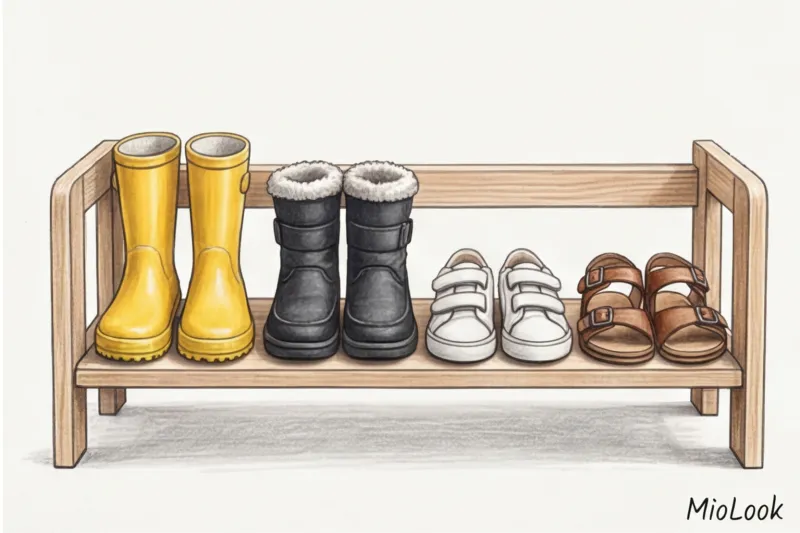
Warm half of the year (spring-summer)
For the warmer months, the basic shoe capsule is built around dynamism and warmth:
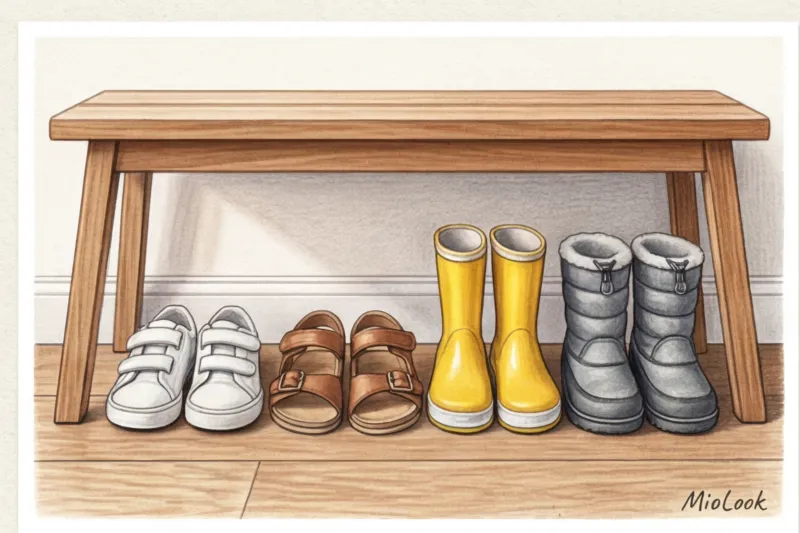
- White or beige leather sneakers with Velcro fastenings. This is an absolute must. Velcro is critical to a child's independence in kindergarten.
- Open sandals with adjustable width. No closed heels for toddlers unless specifically indicated. Two or three Velcro fasteners will allow you to adjust the shoe to any instep.
- Textile slip-ons or ultra-light sneakers (mesh). Indispensable for dry but windy days, scooter rides and active games on the playground.
Cold half of the year (autumn-winter)
Basic winter footwear for kids requires a balance between warmth and style:
- Chelsea boots or lace-up boots (with side zip). Choose smooth leather models on baize. Ideal for the city, going out to visit friends, or going to the theater (smart-casual).
- Membrane boots or snow boots. For sledding, building snowmen, and surviving the cold. Here, aesthetics give way to functionality.
- EVA rubber boots with insulated liner. EVA weighs three times less than regular rubber (PVC). It's a must-have for puddles without weighing down your feet.
The formula for pairing: how to fit shoes into a child's capsule wardrobe
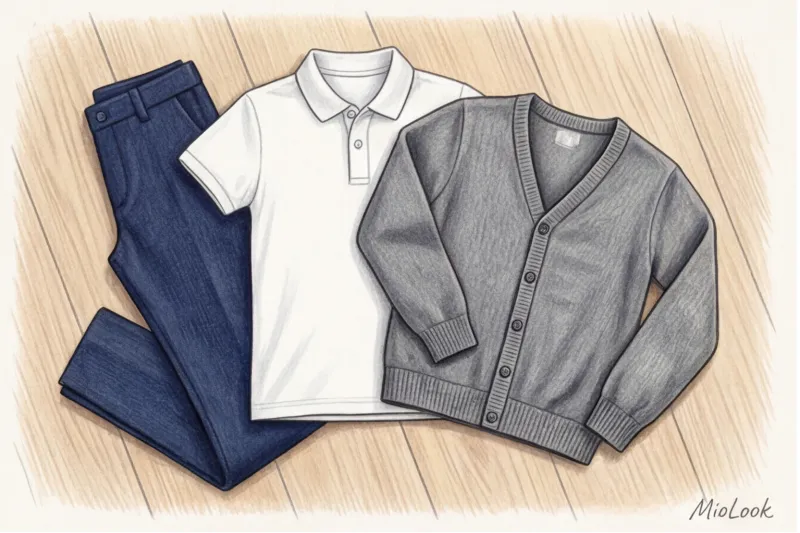
Basic children's shoes follow the three-color rule. To cover 100% of your needs, you need: dark blue, beige/camel, and white (for girls, white can be replaced with a muted metallic).
Have you noticed that black shoes often look harsh on small children? Black boots visually cut off a child's height and create a heavy accent at the bottom, especially if the outerwear is light. Camel or warm chocolate shades are much softer.
A secret trick I often use when shopping: match basic fall shoes to your child's hair color. Sand, mustard, and light gray shades are ideal for blondes. For light brown and brunette hair, burgundy, deep brown, or mocha are ideal. This creates the perfect visual frame for the look. You can read about how color influences perception in our article about 12 Color Types of Appearance: A Guide to Choosing a Palette.
When it comes to texture, many mothers are terrified of suede. It's true, suede isn't ideal if you live in a region with daily acidic slush. But in dry weather, high-quality suede treated with a nano-spray is much more practical than smooth leather: it doesn't show the scratches from asphalt that so quickly accumulate on the toes of ordinary shoes.
Size Matters: Why Buying a Size Larger Costs More
According to statistics, children's feet grow at an alarming rate between the ages of 1 and 3—up to 2-3 sizes per year. Because of this, many parents, with the best of intentions (and a desire to save money), buy shoes with a 2-centimeter allowance. And they're making a fatal financial mistake.
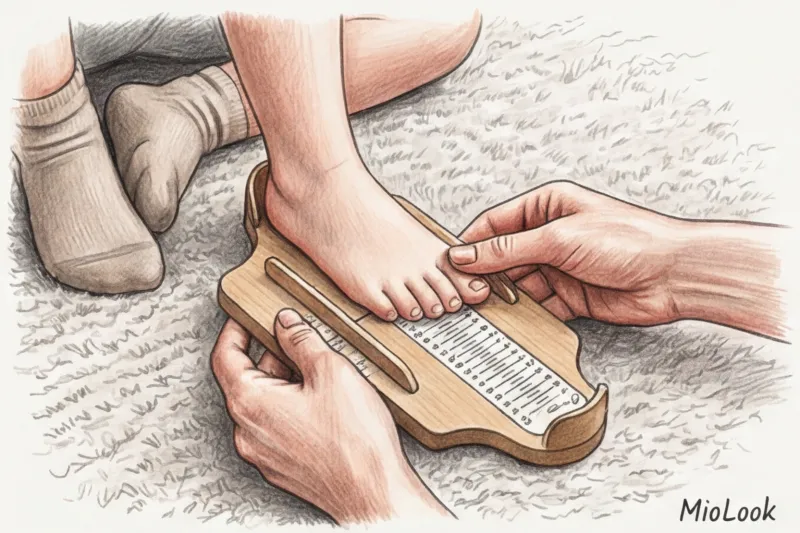
Let's do the math. An extra 1–1.2 cm is physiologically normal. It's needed to allow the foot to shift during a step transition. But if you buy shoes with an extra 2 cm, the biomechanics are disrupted. The child can't lift their toes properly and begins to drag their feet. As a result, they constantly trip over curbs.
One day, a client and I analyzed wear and tear: expensive €80 boots, bought "for two seasons," were completely worn out in exactly three weeks. There was no saving—we had to buy a new pair. Boots that fit would have lasted four months and still looked good enough for resale.
How should I measure my feet? Only in the evening (the foot swells slightly), only while standing (the foot lengthens under my body weight), and only while putting weight on both feet.
You don't have to keep everything in your head anymore
Save your measurements, save your favorite brands, and plan your next season's shopping stress-free with the help of a smart AI stylist.
Get access — €0.99 onceEuropean mass market vs. specialized brands: where to look for a base?
Where to buy good basic shoes? You don't have to overpay hundreds of euros for orthopedic brands if you know where to look. I regularly scan European mass-market stores and can say: Zara Kids and Mango Kids make amazing, very grown-up designs (great Chelsea boots, minimalist loafers). But there's a catch. 70% of their models have soles as hard as wood. You need to choose very carefully, torsion-testing each pair and always checking the label (look for 100% leather, not polyurethane).
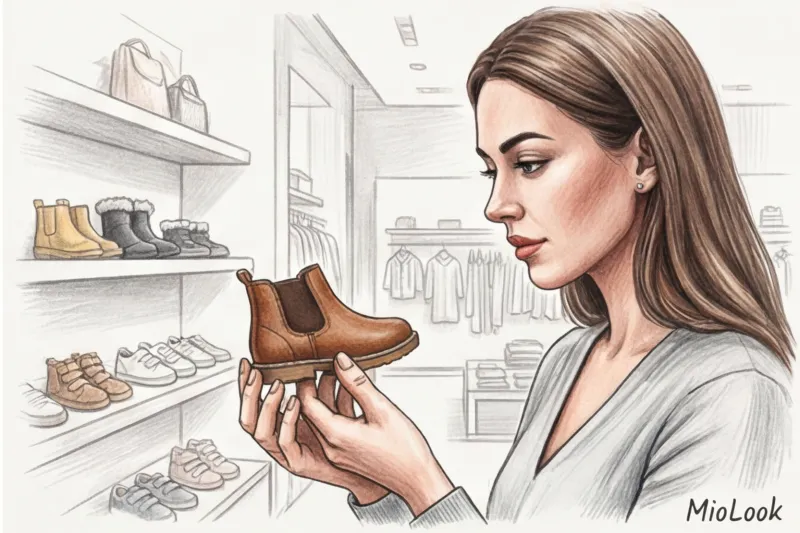
A hidden gem that my European clients adore is the line H&M Premium Quality For €40–€50, you can find excellent soft leather sneakers and sandals there, the build quality of which is comparable to mid-range shoes priced at €100.
When is it really worth going with specialized brands like Geox, Ecco, Bobux, or Camper? Three reasons:
- The first shoe to step into. What's important here is perfect heel support with absolutely soft soles (Bobux has an excellent Step Up series, around €70).
- Winter shoes. For a high-quality Gore-Tex membrane (which won't get wet in a puddle, but will let out steam from a hot foot), it's worth paying €80–120.
- Non-standard foot. A very high instep or an extremely narrow foot requires specialized lasts.
Smart shopping life hack: Basic styles hardly change from season to season. Buy winter basics (snow boots) in February at a 50-70% discount, and summer sandals at the end of August, adding one size up for next year.
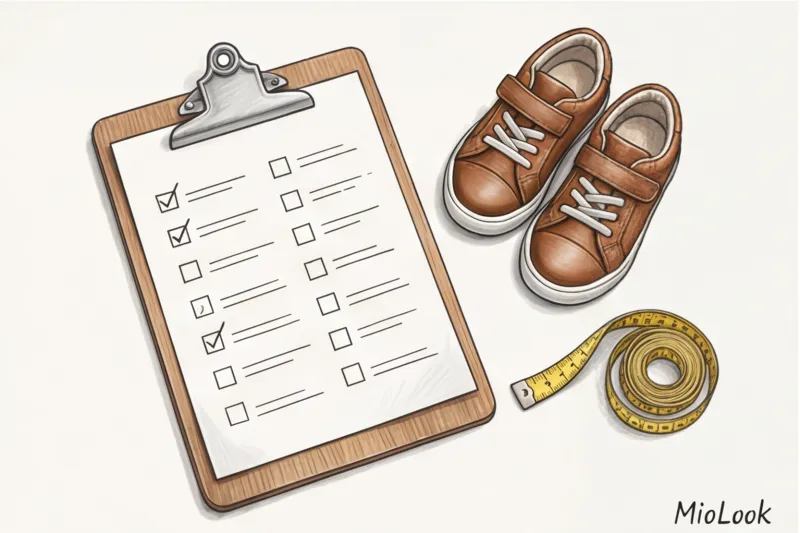
Checklist: Putting together a basic shoe wardrobe for a child (shopping cheat sheet)
To avoid wasting money on uncomfortable shoes, save this step-by-step guide. It's saved the budget for dozens of my clients.
- Audit. Ruthlessly throw away or give away any pairs that have become too small, are worn to one side, or have hard oak soles.
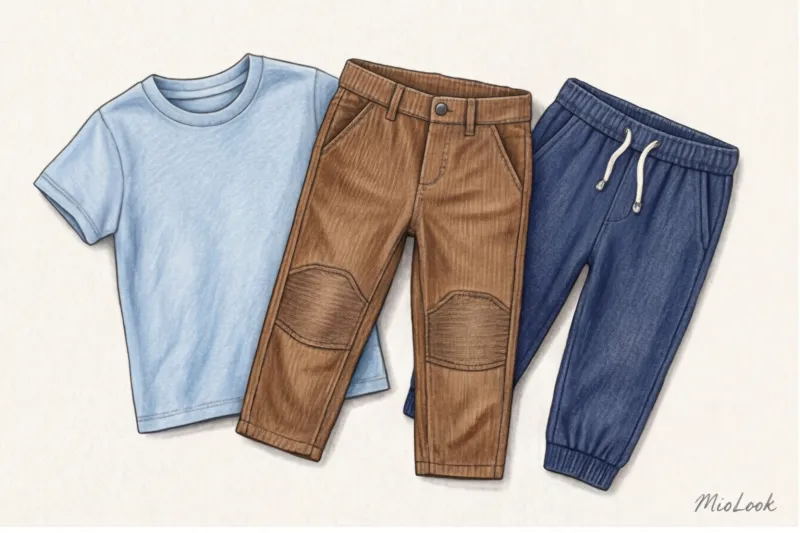
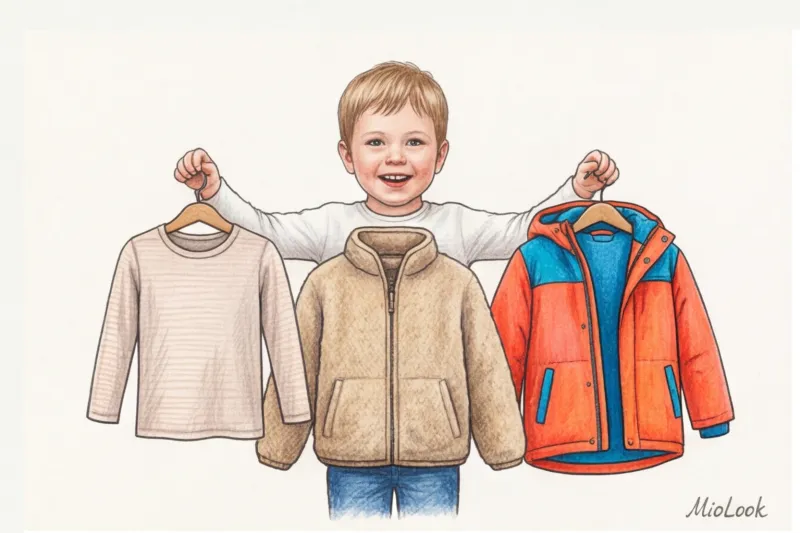
- Color matrix. Look at your child's outerwear and pants/jeans. Choose two basic colors for new shoes (for example, white and camel).
- Shopping list. We go to the store strictly for specific items. If the list says "beige sneakers," we don't look at the neon dinosaurs.
- Test before the checkout. Answer these 4 questions: Does the sole bend with one hand? Is there 1 cm of room above the big toe? Is it a natural material or a membrane? Can a child fasten it themselves?
Remember, children's shoes are a tool for exploring the world, not the star of their look. The perfect pair is one that the child forgets about within a minute of putting them on, and the mother doesn't have to waste time trying to fit them into her wardrobe. Invest in comfort and the basics, and your morning routine will become the most relaxing time of your day.