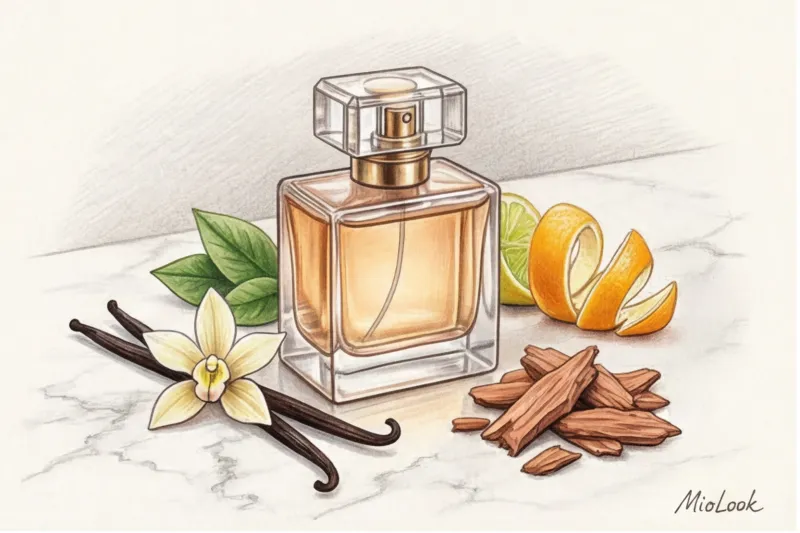
Have you ever noticed how often a budget perfume from Zara, H&M, or another mass-market store makes you fall in love with it at first sniff, only to vanish without a trace by the time you get home from the mall? You buy a bottle for the stunning top notes, only to receive a ghost of a scent. Most women become disillusioned at this point and decide that cheap perfume is a waste of money.
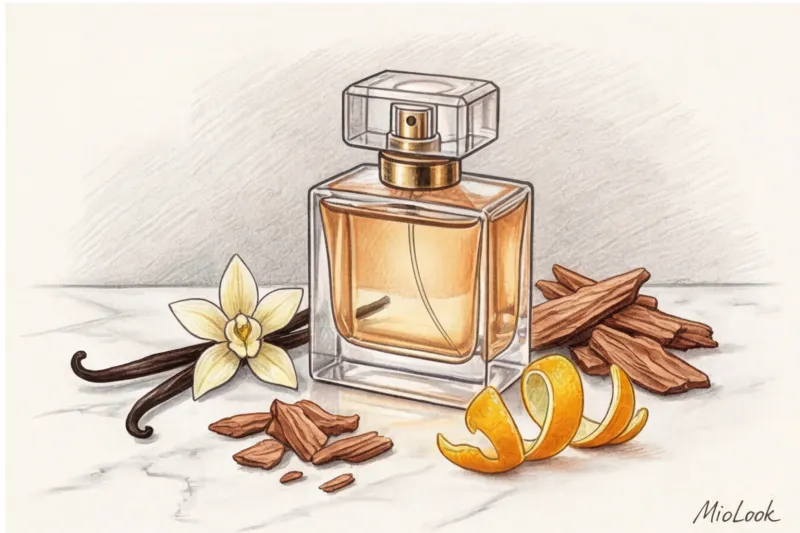
But as a textile expert and stylist, I look at fragrances through the lens of fabric structure. If you have a stunningly tailored but thin jacket, you don't throw it away—you layer it with a thick lining. The same thing works with perfumes. Today, we'll explore the chemistry of fragrances and find out... How to mix cheap and expensive perfumes to create a long-lasting, unique sillage that sounds like a premium niche. We've already discussed the layering architecture in more detail in our The complete guide to blending perfume on skin and the art of layering , and here we will focus specifically on rescuing budget finds.
The Anatomy of a Fragrance: Why Does a Budget Perfume Give Away Its Price?
To understand how to make mass-market products sound expensive, you need to dispel the main myth: cheap perfumes smell bad because they're too chemically strong. This is a misconception. Modern niche perfumes (including Baccarat Rouge and Tom Ford's hits) are 70–90% synthetic. The difference lies not in the naturalness, but in the formula's architecture and the cost of the fixatives.
Legendary perfumer Jean Carles formulated the concept of the olfactory pyramid back in the early 20th century. According to the International Fragrance Association (IFRA), the evaporation rate of molecules varies dramatically:
- Top notes (citrus, light flowers, greenery): have a light molecular weight and evaporate within 15–30 minutes.
- Middle notes (spices, dense flowers): last from 2 to 4 hours.
- Base notes (resins, wood, musk): heavy molecules that live on the skin for up to 24 hours.
Mass-market manufacturers invest 80% of their budget in top notes—the ones that sell a fragrance within seconds of its launch. There's no budget left for expensive base notes (real sandalwood, high-quality ambroxan, resin absolutes). Returning to the stylist's metaphor, a cheap perfume is like a thin, unlined polyester jacket. It may have an ultra-fashionable cut, but it doesn't hold its shape and wrinkles with the slightest movement.
Your perfect look starts here
Join thousands of users who look flawless every day with MioLook.
Get access — €0.99 onceThe main secret of layering: how to mix cheap and expensive perfumes to create a niche
A common fear of my clients is: "If I spray my cheap fruity spray over my expensive perfume, I'll ruin the expensive scent." Chemically, it works just the opposite.
One of my clients, Anna, adored the limited-edition fig fragrance from Zara for 15 euros. The scent was truly beautiful, but it faded within an hour. Instead of reapplying it every 60 minutes (which produces a sharp, alcohol-like kick), we used a perfume "primer" technique. I suggested she apply one drop of the expensive woody extract to her skin and then spray her favorite Zara on top. The result? The fig lingered on her skin until the evening, acquiring a deep, prestigious scent.
A high-quality, expensive base acts as an anchor. Its heavy molecules physically slow the evaporation of the light, volatile notes of a budget perfume, "anchoring" them to the skin. You don't ruin an expensive scent—you use it as an invisible framework.
Molecular Enhancers: Ambroxan and Iso E Super
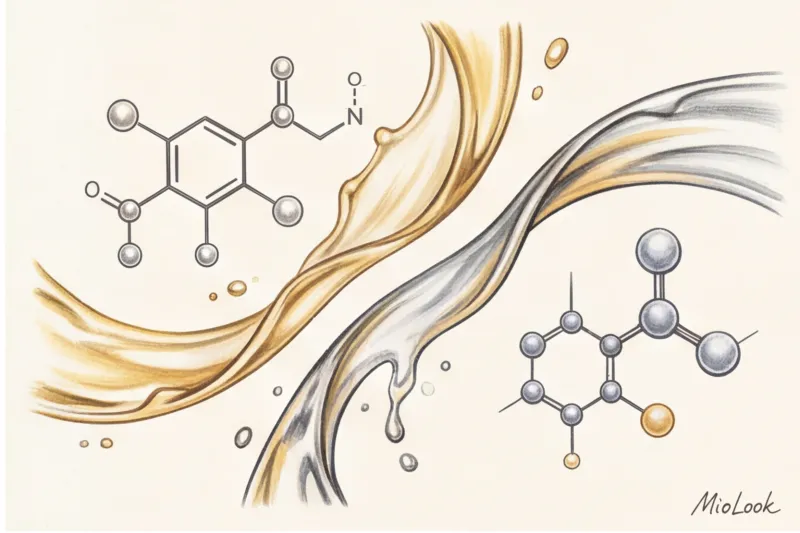
If you want to start experimenting with layering, you don't necessarily need to buy complex, selective perfumes. The ideal "primer" is a mono-fragrance based on molecules like Ambroxan (a synthetic ambergris analogue) or Iso E Super (velvety cedarwood).
These ingredients are unique in that they adapt to your skin's pH. On their own, they can smell subtle—like a clean body after a shower, a freshly ironed cotton shirt, or dry wood. But layer a flat, budget-friendly floral over them, and it instantly gains volume, sillage, and that "luxury" quality we seek in a niche fragrance.
Perfume Wardrobe Rules: How to Layer Fragrances Without Mistakes
Layering isn't about randomly sprinkling everything on your shelf. Over 12 years of working with personal style, I've developed three ironclad rules for a fragrance wardrobe.
- Weight rule: Always apply heavy notes first, lighter ones second. First, oud, leather, resins, or sandalwood. Let them settle. Then, citrus, berries, or aquatic notes. If you do it the other way around, the heavy base will simply crush the lighter notes.
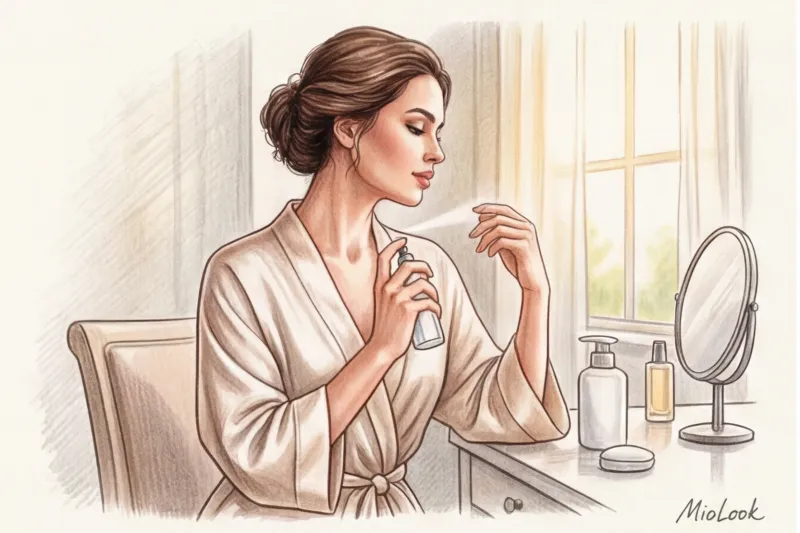
- Texture Rule: Perfume should be applied to damp skin. Dry skin absorbs oils like a sponge, leaving no residue. Use a base, unscented body lotion. This is like preparing fabric before dyeing—the pigment lays down more evenly and lasts longer.
- Spatial layering: You don't have to apply fragrances to just one spot. Apply a thick base to warm pulse points (wrists, elbows), and a lightweight, budget-friendly top coat to the back of your neck or hair. The scent will mingle in the air as you move.
"The fabric of your clothing also plays a role in layering. Wool and cashmere retain the molecules for days, revealing the base, while smooth silk or viscose release the scent much more quickly, highlighting the vibrant top notes."
Access to MioLook for €0.99 — one-time payment
A smart AI stylist will select the perfect look based on your preferences and wardrobe.
Get access — €0.99 once4 Win-Win Layering Schemes for the Office and Evening
So you can apply this knowledge tomorrow, I've put together four ready-made patterns. They work regardless of specific brands—just follow the notes.
Scheme 1: Status purity (for the office)
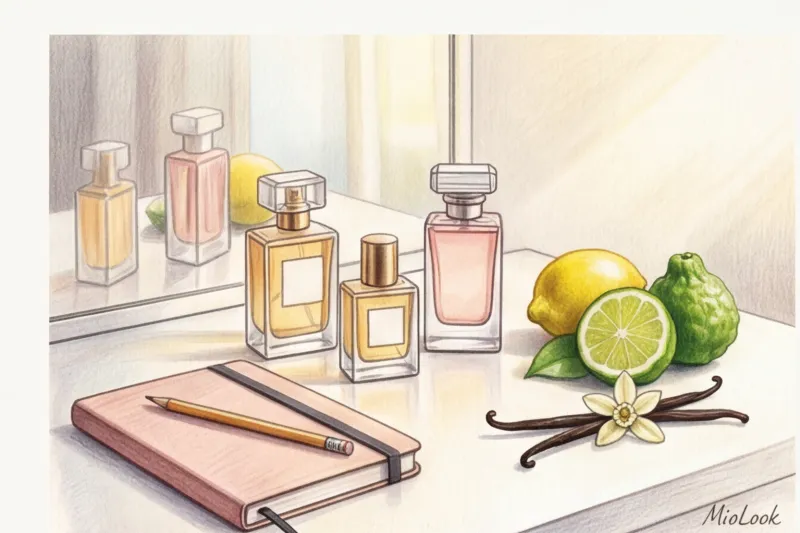
Molecular base (Ambroxan) + Budget citrus (bergamot/lemon)
Perfect for a formal environment. Mass-market citrus usually smells like lemonade and disappears within 20 minutes. The molecule transforms it into the scent of a crisp white shirt. Perfectly complements competent business makeup , creating the image of a collected professional.
Pattern 2: Confidence (for difficult negotiations)
Dry wood (cedar, vetiver) + Budget aquatics (sea water)
Cheap aquatics often suffer from excessive frivolity (remember the shower gels of the 2000s). A woody base removes this "soapy" quality, adding a strong core to the scent. It's as much an invisible status marker as well-chosen fragrances. status accessories.
Pattern 3: Languid Luxury (for the evening)
Expensive patchouli or oud + Budget vanilla/caramel
Cheap gourmands smell like a candy factory—too sweet, too flat. Earthy patchouli or bitter oud "eat up" the excess sugar, leaving only an expensive, lingering, almost mystical note.
Pattern 4: Voluminous Femininity (for a Date)
Pure Musk + Budget Single Rose or Peony
Inexpensive floral waters often smell like air fresheners and lack body. High-quality animalic musk in the base warms the flower, making the rose smell as if it bloomed right on your skin.
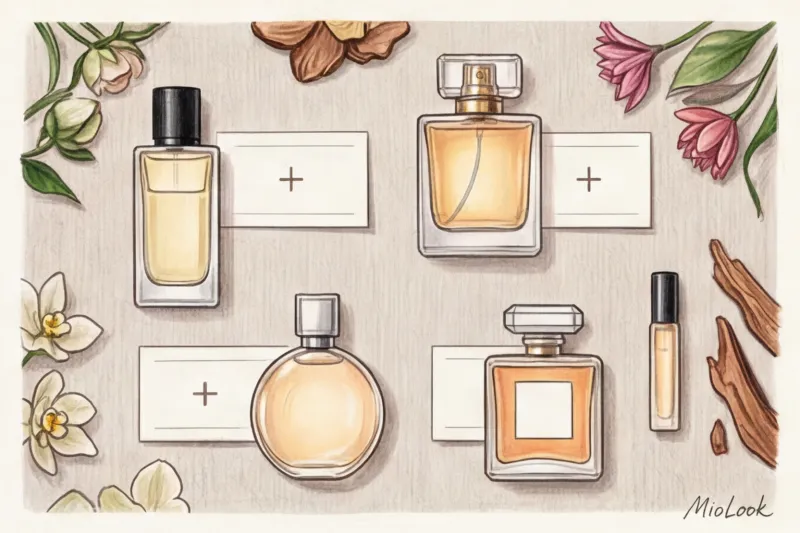
Common mistakes: which notes should never be mixed together
Let's be honest: layering doesn't always work. There are combinations that are guaranteed to lead to olfactory disaster. Remember when to use this method. NOT worth it.
First, avoid mixing two complex, multi-component fragrances. If each bottle contains 15 bold notes, when layered, you'll create an "olfactory mud" effect—an indistinct, suffocating scent. Leering favors minimalism: the base should be sleek.
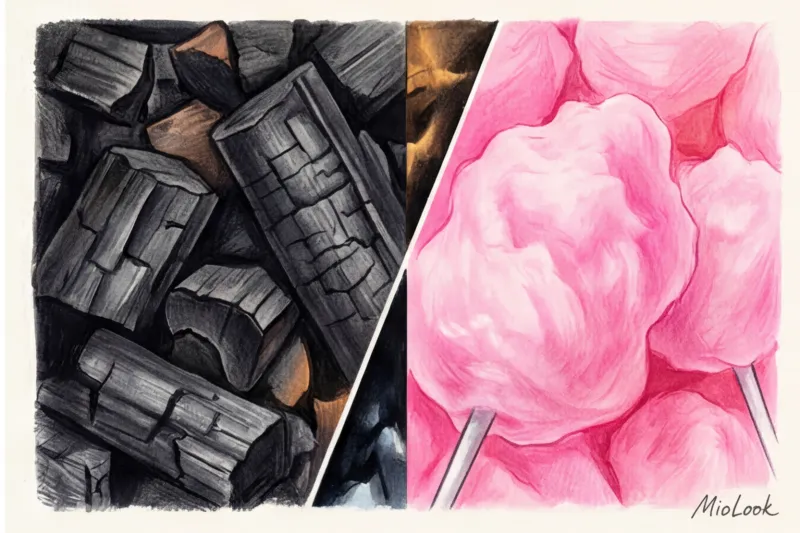
Secondly, be extremely careful with the "calone" note (synthetic melon/sea breeze). Mixing a distinctly aquatic scent with a heavy gourmand (praline, chocolate, rich vanilla) creates a sharp chemical clash. Our brain interprets this combination as the scent of cheap car air freshener.
And the most important technical rule: don't spray a second fragrance immediately. Let the first layer (base) sit on the skin for at least 1-2 minutes to allow the starting alcohol to evaporate. Otherwise, the alcohols will react, distorting both formulas.
Perfume capsule: collecting a base from 4 bottles
According to the McKinsey State of Beauty (2024) report, the industry is moving toward hyper-personalization and mindful consumption. Buying 15 different bottles of mass-market products that don't suit you isn't saving money. It's much smarter to assemble a perfume capsule.
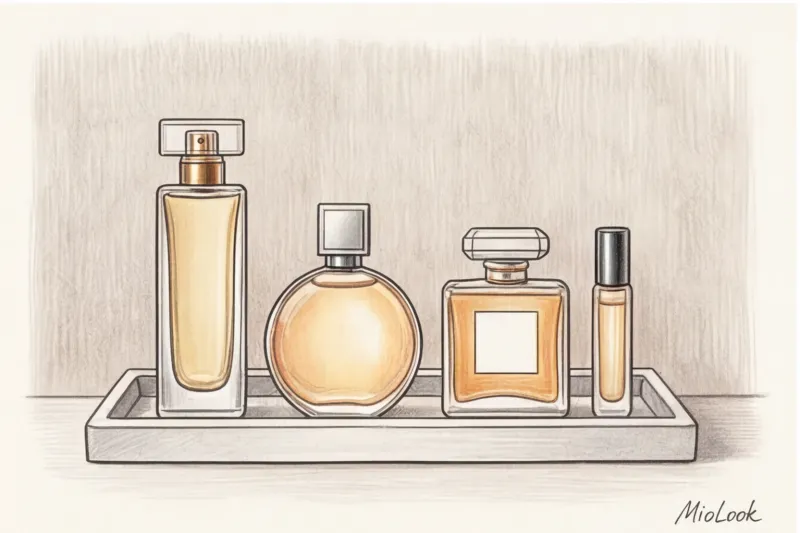
Wardrobe math works flawlessly here. You'll only need four bottles:
- 1 expensive molecular fixative (premium segment).
- 1 high-quality woody or musky base (mid-range).
- 2 budget-friendly mood toppers: for example, mono-citrus and light florals (mass market).
These four bottles give you up to 15 unique combinations. You save about 40% of your budget compared to constantly buying cheap new items, and you'll always smell different and always be expensive. Incidentally, planning these capsules (both perfume and clothing) is incredibly convenient. smart wardrobe MioLook , where you can visualize your combinations.
Checklist: How to Test Your New Mix Before Release
Never test a new combination 5 minutes before leaving the house. Skin chemistry is unpredictable. Here's a professional testing protocol:
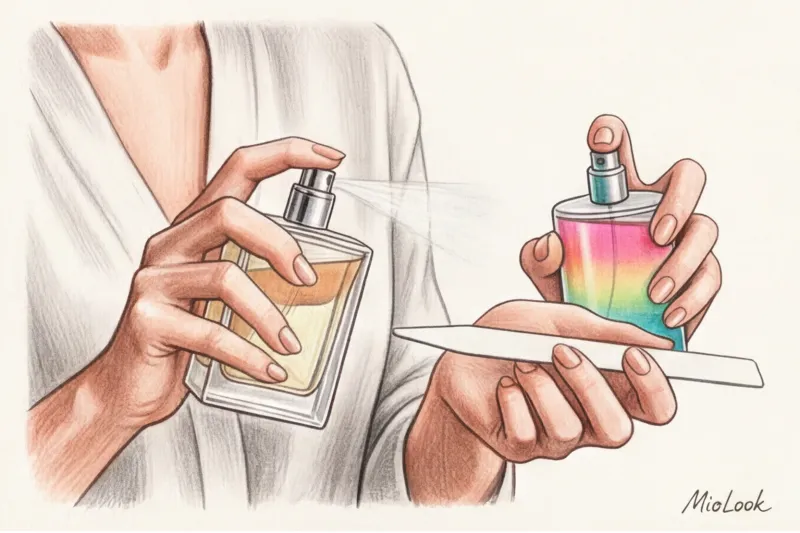
First, do a test on a blotter (paper strip) to see if the notes clash at all. But remember: paper is cold and has no pH. What sounds beautiful on cardboard may sound sour on hot skin.
Then apply the mixture to your wrist and follow the "15-minute rule." Don't inhale the fragrance immediately—you'll only smell the alcohol and top notes. Wait for the heart of the fragrance to unfold.
My personal stylist life hack: If you're worried the mix will be too loud for the office, apply the base directly to your skin and a budget-friendly, lightweight top coat to the inseam of your clothing (for example, the hem of a skirt or the inside of a cuff). The fabric will release the scent in discrete bursts, creating a delicate, pulsating trail without being overpowering.
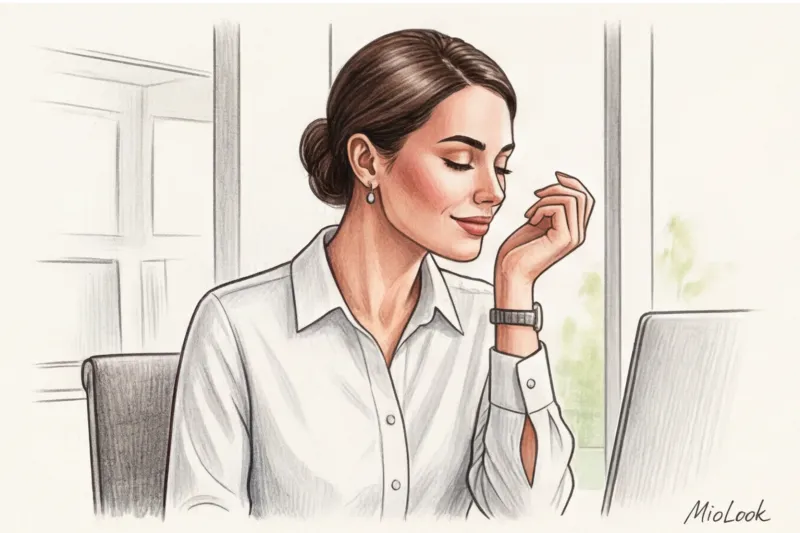
Perfume is your invisible accessory, entering the room before you and remaining long after you leave. Don't be afraid to experiment with budget finds; just give them the right, reliable base. Proper layering transforms mass-market products into your personal olfactory signature, impossible to copy or buy in a store.