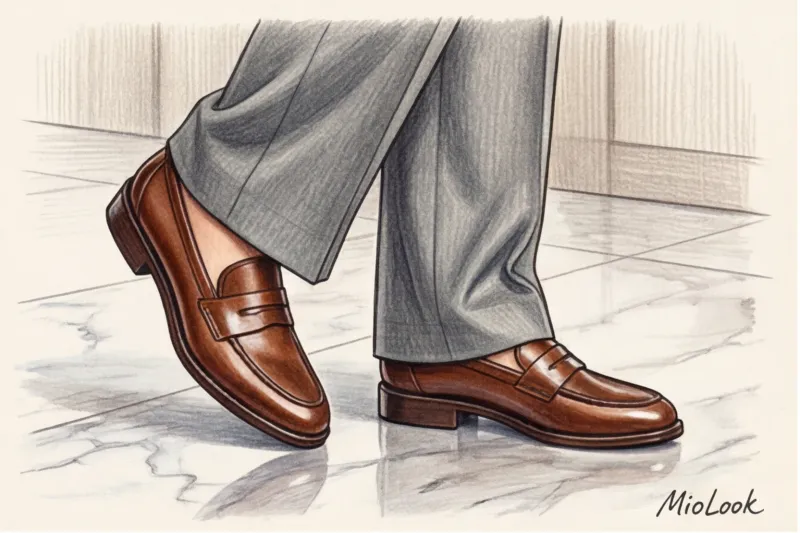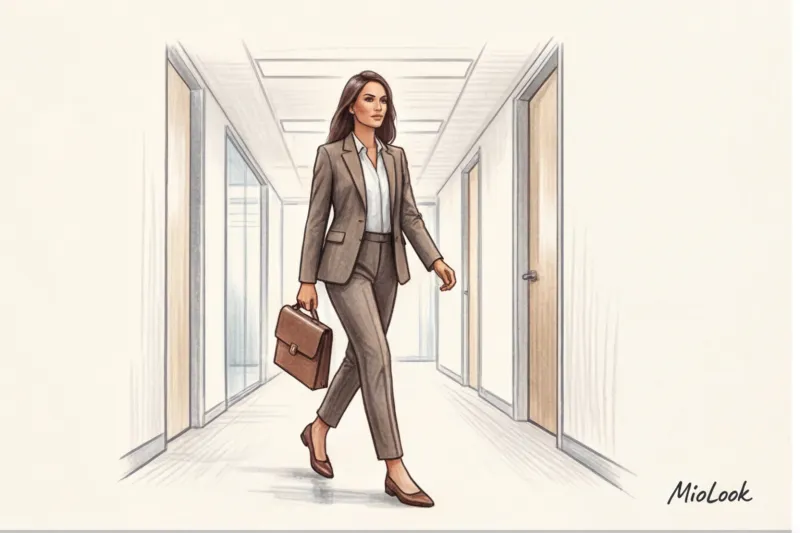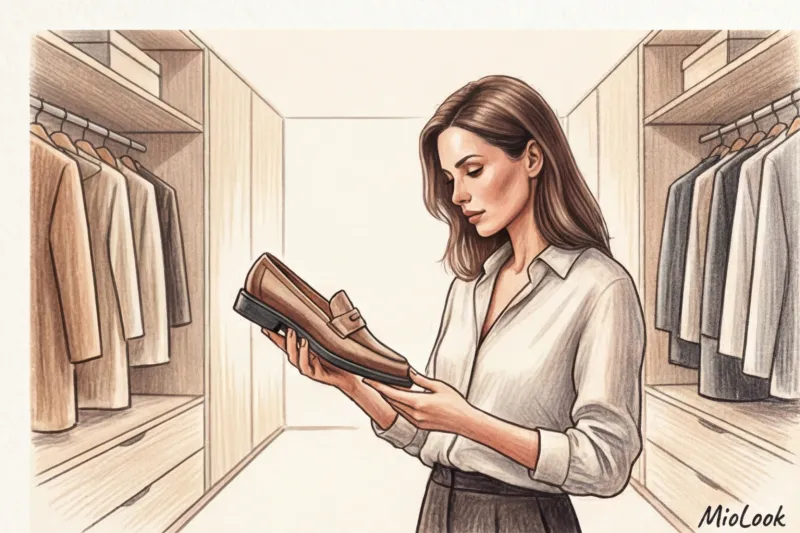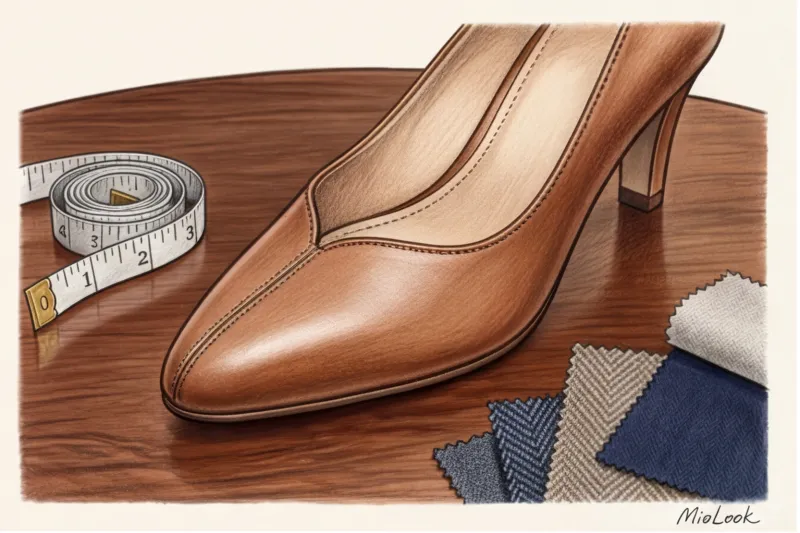
Research from Alexander Todorov's laboratory (Princeton University) has proven that our brain needs exactly 100 milliseconds to form a first impression of a stranger. Now guess where 80% of our visual attention goes when assessing a business partner? To the hands (watches, rings) and shoes. We discussed the mechanics of this unconscious scanning in more detail in our The complete guide to status accessories for women.
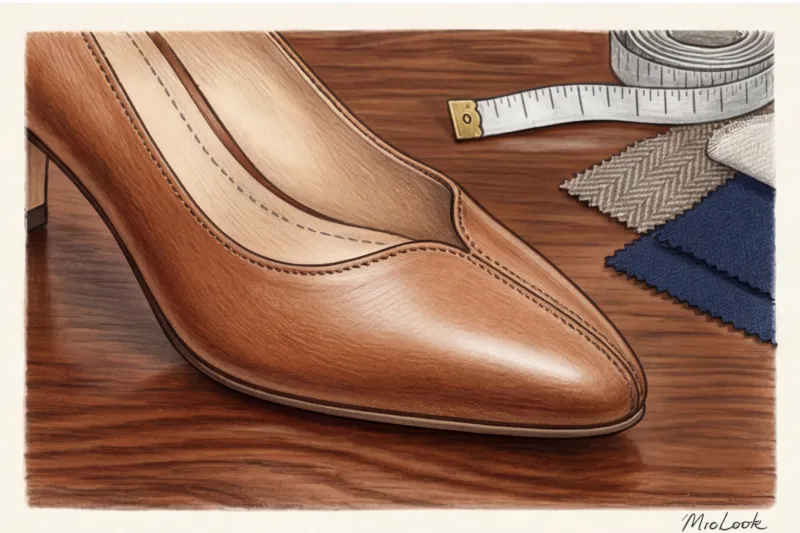
As a practicing stylist and colorist, I often see the same scene: a perfectly tailored Italian wool suit that's literally ruined by the wrong shoes. And it's not just the height of the heel or the gold logo of a famous brand. Statement women's shoes for the office — it’s always about the architecture of the last, the geometry of the cut and the depth of the color.
Let's break down footwear down to its molecules and find out why your next work shoes probably shouldn't be black.
The Anatomy of Expensive Shoes: What Gives Away the Price at First Glance
Our brain calculates the "expensiveness" of an item not by the price tag, but by its proportions. This principle works flawlessly in shoes. A cheap pair always reveals itself by its imbalance.
The first thing you should pay attention to is cape shape A round, shortened toe subconsciously evokes associations with children's shoes (Mary Jane style), which, in the context of tough business negotiations, detracts from the image's authority. Opt for an almond-shaped or soft square toe—they convey composure and dynamism.
The second critical element is vamp cut.
- The deep V-neckline visually elongates the foot and makes the ankle look more graceful.
- An oval cut that reveals the beginning of the toes (toe cleavage) has historically been considered a marker of aristocracy.
- A disclaimer from practice: A deep V-neckline may not provide good support for a narrow foot without an arch. In this case, look for a compromise—an asymmetrical cut.
And finally, a hidden marker that only insiders know about - quality of the edge The edge is the cut of leather along the edge of the shoe. In premium shoes, it's perfectly sanded, dyed to match, or neatly folded inward. In mass-market shoes, the edge is often left exposed, rough, or coated with cheap rubber, which cracks after a month of wear.
Access to MioLook for €0.99 — one-time payment
A smart AI stylist will find the perfect look to match your new pair of shoes.
Get access — €0.99 onceWomen's Office Shoes: Why Black Isn't Always the Best Choice
As a certified color analyst, I love debunking the myth that "black shoes go with everything." It's the biggest misconception about business attire.
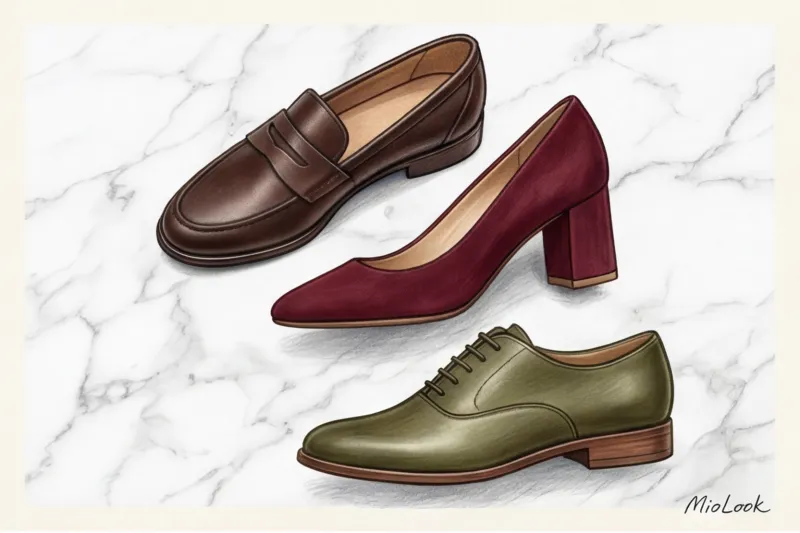
Why is black so beloved by mass-market consumers? According to the principles of color theory developed by Johannes Itten, black absorbs light. In practice, this means that thick black dye perfectly conceals defects in cheap raw materials, leather scars, and poor workmanship. But there's a downside: inexpensive, smooth black leather treacherously reflects in the light, creating a plasticky effect.
"One of my lawyer clients couldn't figure out for a long time why her outfits looked boring, despite her expensive suits. We simply swapped out her basic black pumps for structured dark chocolate loafers. Her perceived status—and her fees—soared because the sophisticated shoe color made the suit fabric pop in a new way."
If you want to look three times more expensive than your shoes actually cost, choose deep shades (jewel tones and earth tones):
- Burgundy (oxblood) — the perfect alternative to black. Pairs well with gray, navy blue, beige, and emerald.
- Espresso or dark chocolate - looks softer than black, looks luxurious in suede.
- Dark olive — an unobvious, but incredibly prestigious choice for an autumn capsule.
Stylist's advice: Texture is key. High-quality taupe suede will always look more refined than smooth black leather in the mid-price range, as the nap creates the illusion of volume and depth through light refraction.
Pumps: How to Choose the Perfect Pair for Important Negotiations
The era of aggressive 12-centimeter stilettos in the office is long gone. Today, intellectual chic rules the business world. A WGSN study (2024) confirms that sales of extremely high heels are declining, giving way to architectural and sustainable designs.
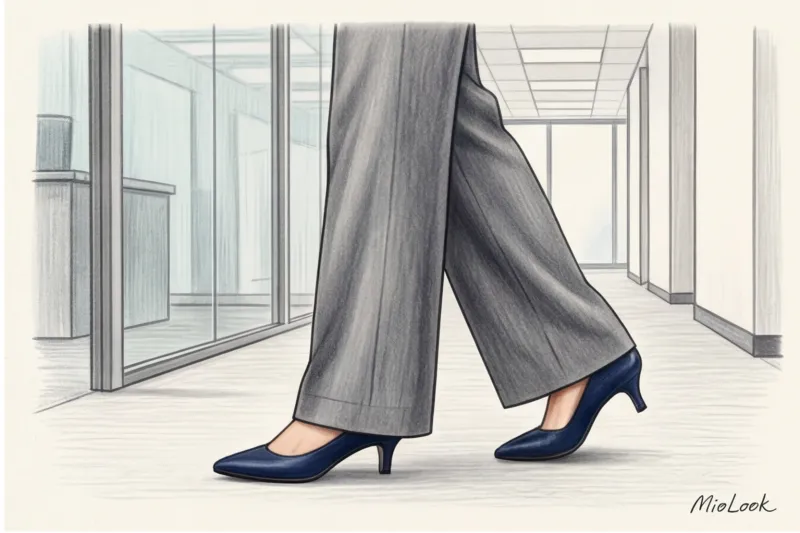
For important meetings I recommend heels. kitten heel (3-5 cm) or a stable post. They provide the necessary formality without making you look like you're trying too hard.
The material is crucial. Patent leather is almost always a faux pas in a formal office setting. Patent leather reflects light, draws unnecessary attention to your legs, and often cheapens the look (unless it's a perfect pair of Christian Louboutin, but even that's best reserved for evening wear). Matte, smooth leather or suede are a safe and classy choice.
How to check a brake pad right in the store:
Put on your shoes and stand up straight. Try to shift your weight onto your heels. If the heel starts to wobble or slide back slightly, the arch support (instep support) is weak. Your calves will start to ache in just two hours in these shoes. Also, pay attention to the fit: there shouldn't be a gap between your heel and the back of the shoe, otherwise you'll instinctively curl your toes as you walk.
Your perfect look starts here
Join thousands of users who look flawless every day with MioLook.
Get access — €0.99 onceLoafers and Oxfords: Flat Status for Today's Experts
Masculine style in a woman's wardrobe is a powerful tool. When a woman wears structured oxfords with a pantsuit, she subconsciously conveys competence, stability, and self-confidence.
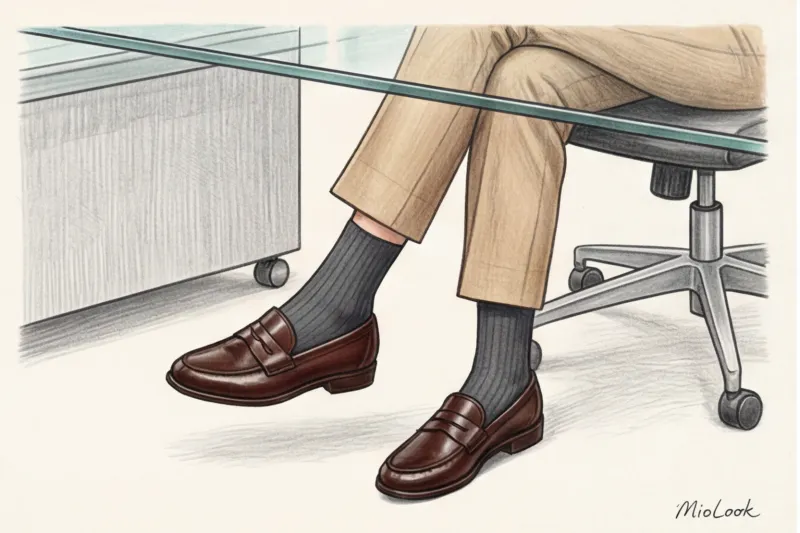
If you're choosing loafers for the office, you'll have a choice between two classic models:
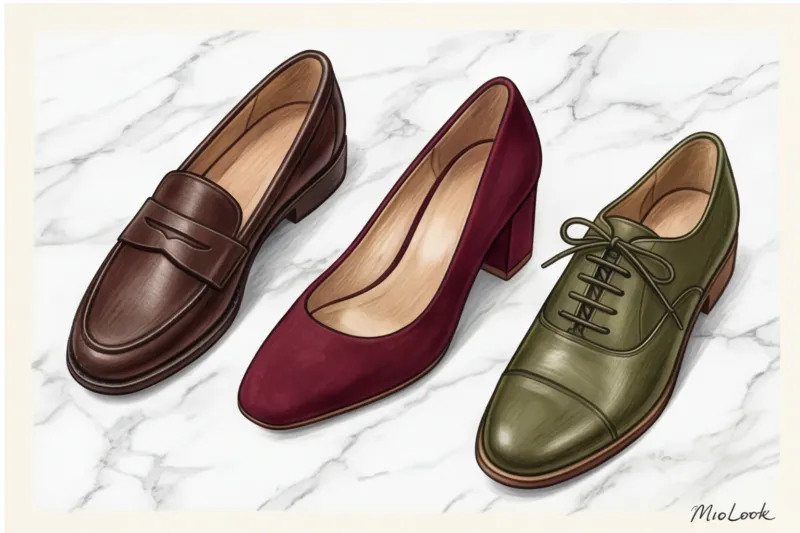
- Penny loafers (with leather bridge) - strict, academic, ideal for a conservative dress code.
- Horsebit loafers (with metal buckle) — more relaxed, referencing the Gucci aesthetic.
This is where the main risk area lies - fittings Nothing betrays budget shoes more than flashy, overly yellow, and shiny "gold." If your budget is limited to the mid-range segment (for example, Massimo Dutti or COS), choose models without any metal at all or with a matte, aged brass finish.
Oxfords and brogues (with perforations) are closed-toe lace-up shoes. They require a perfect fit with the trousers. Ideally, the hem of the pant leg should just barely cover the laces, or, conversely, the trousers should be cropped and reveal the ankle (in this case, don't forget high-quality ribbed socks that match the shoes or trousers).
Key mistakes: what shoes instantly ruin a business image
In psychology, there's a concept called the "framing effect." The way information is presented influences how it's perceived. In your image, your shoes are the frame for a painting. A cheap frame will ruin even a masterpiece.
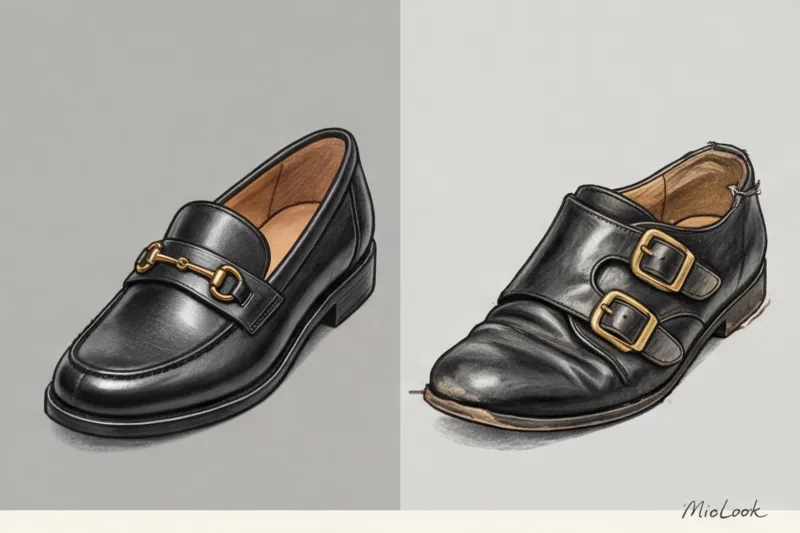
What should absolutely not be in office shoes:
- "Paper" sole. Thin, flat soles (especially on ballet flats) detract from the shoe's visual weight. They make you appear unsteady. High-quality shoes always have a pronounced welt and a slight rise in the heel (even if they're flats).
- Abundance of decor and logos. Rhinestones, contrasting white stitching on black leather, and brand monograms all over the surface—this is visual noise. Status loves silence (hello, quiet luxury trend).
- Mismatch of season. Lightweight textile ballet flats paired with thick tights and a wool suit look ridiculous in November.
And most importantly: wear I always tell my clients: if the Friday dress code allows, it's better to wear perfectly clean, white, basic smooth leather sneakers than worn-out Prada shoes with worn-out toes and worn-out heels. Untidy looks can't be compensated for by brand.
Ready to get started?
Try a free plan - digitize your wardrobe without commitment
Get access — €0.99 onceChecklist: Auditing Your Office Shoe Capsule
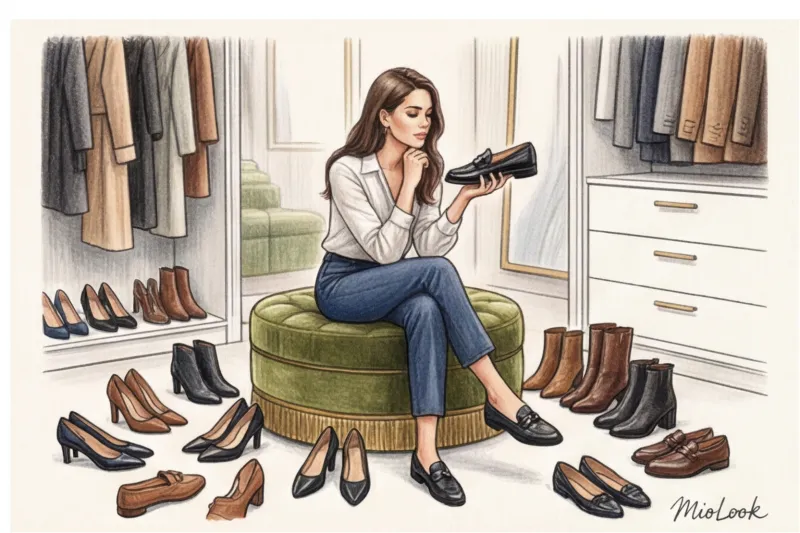
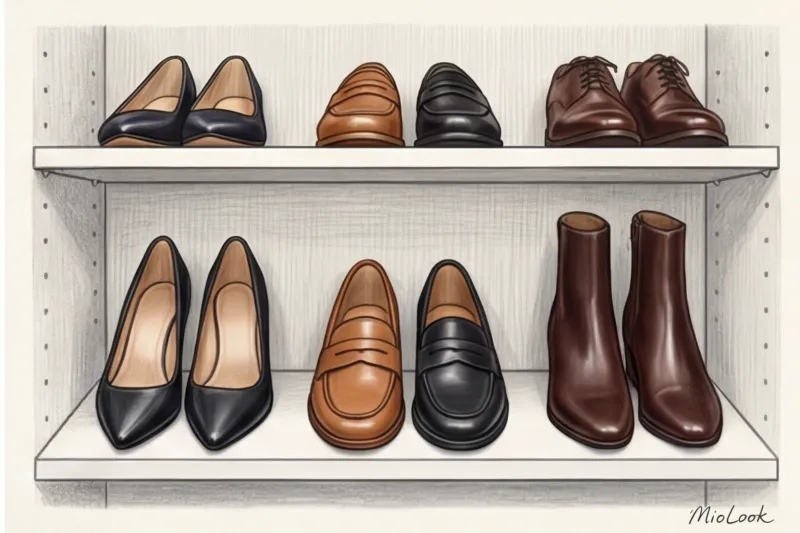
To avoid standing in front of the closet every morning, you need a working system. The basic minimum for an expert working in the office 5 days a week includes just three pairs:
- 1 pair of formal pumps with a comfortable heel (for presentations and meetings).
- 1 pair of status loafers or oxfords (for every day).
- 1 pair of elegant ankle boots with a narrow shaft (for the off-season, to wear with wide trousers or skirts).
How to justify buying expensive shoes? Use the formula Cost Per Wear (CPW).
Let's say you bought a pair of high-quality leather loafers for $300. You wear them three times a week for 10 months (about 120 times). Your CPW = $2.50 per wear.
Now you buy a pair of faux leather shoes for $80. After 20 wears, they've lost their shape, your feet are sweating, and you throw them away. Your CPW = $4 per wear. Cheap shoes cost you more.
To manage your capsule collection wisely and see which shoes are truly worth their price, I recommend using smart wardrobe feature in the MioLook app You simply upload photos of your clothes, and the AI creates dozens of ready-made looks from them, showing you which pair of shoes you really need.
Care as an investment: how to keep your shoes looking their best for years to come
Buying an expensive pair is only 30% of the battle. The other 70% is proper skin care. Over 12 years of experience, I've conducted numerous personal test drives and can confidently say: the harsh off-season can wreak havoc on any skin if you don't follow these basic rules.
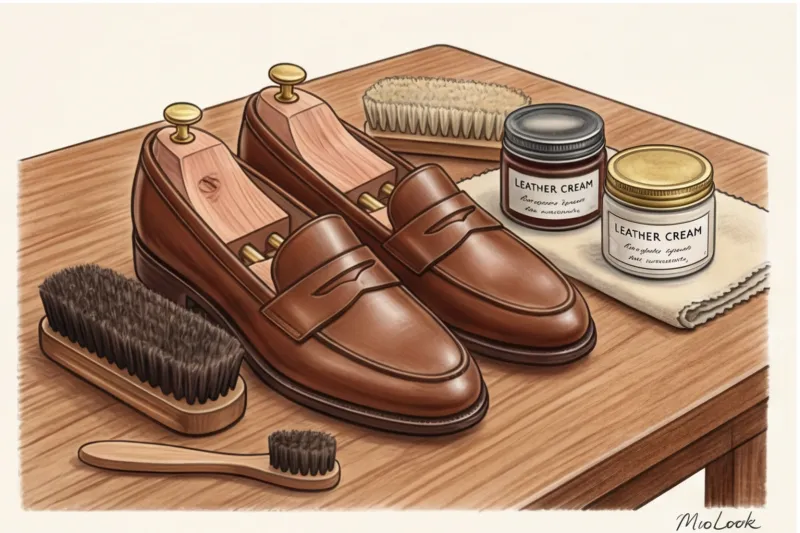
The main secret of shoemakers, which is rarely talked about in fashion magazines - cedar shoe trees (blocks) This is the first thing you should buy with your new shoes. The human foot produces about 20 ml of moisture per day. Moisture damages the leather structure from the inside. Unvarnished cedar works like a sponge: it draws out moisture, deodorizes the shoe, and, most importantly, smooths out creases at the toe.
It follows from this The 24-Hour Rule Genuine leather shoes need to rest for 24 hours after a day of wear. That's why you need at least two pairs of work shoes to alternate between.
You should always have a basic expert kit in the bottom drawer of your desk:
- A natural horsehair brush (to dust off before a meeting).
- A clear cream based on beeswax (not a silicone sponge from the supermarket that dries out the skin, but a cream!).
- Shoehorn (putting on shoes without one will permanently break the hard back of the shoe).
Stately women's office shoes don't require a huge budget or a closet the size of a room. They do require a thoughtful approach to color, attention to the design of the last, and respect for materials. Swap your black pumps for burgundy loafers, insert cedar lasts into them after work—and you'll see how not only your look but also the way your colleagues and partners perceive you changes.