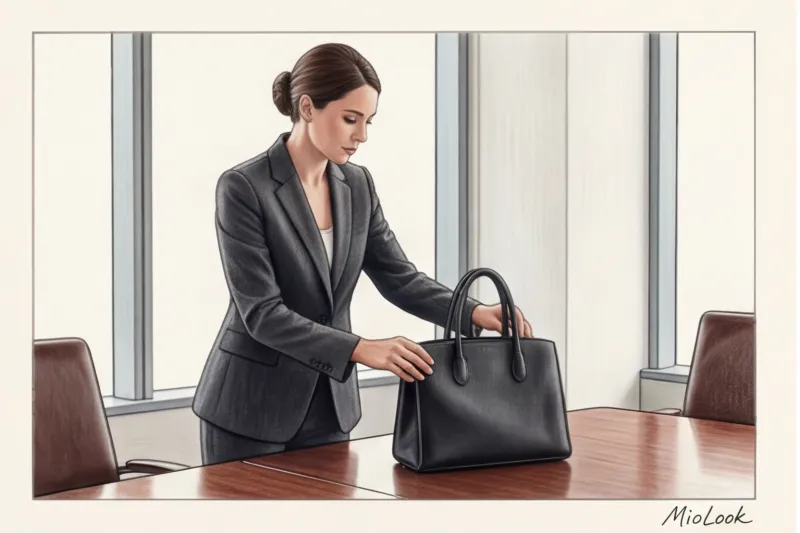
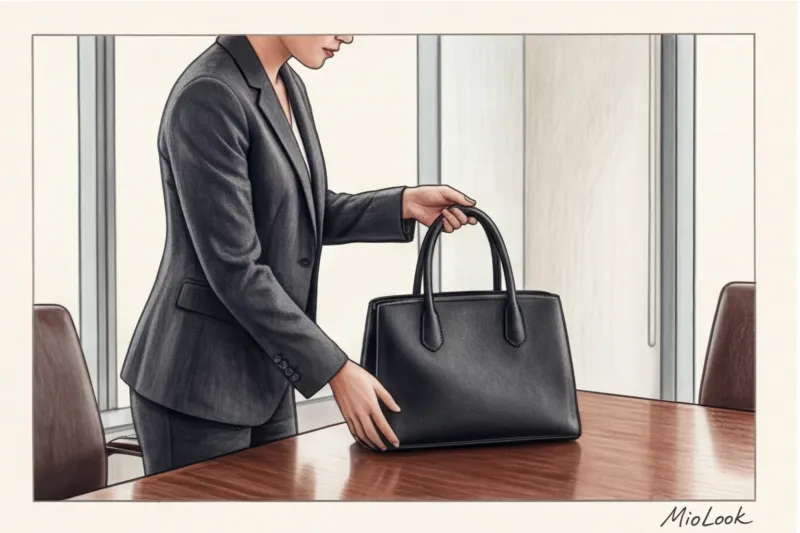
Imagine this: you walk into a conference room. The woman across from you places her bag on the table. It's devoid of any logos, but the dull clank of the heavy brass hardware and the way the thick leather holds its shape instantly command respect. At that moment, you realize: this is a decision-maker.
When choosing status accessories for women, many make the same mistake: they buy recognizable logos, hoping to buy authority along with them. But true power today speaks in a whisper. We covered the basics in more detail in our a complete guide to the ideal image of a female leader Today, I'd like to explore the technical side of luxury. We'll discuss why the "Genuine Leather" label is your biggest enemy, how the weight of the hardware reveals a piece's price, and why a smartwatch can ruin your credibility at an important meeting.
The Psychology of Expensive Details: Why Status Accessories for Women Speak Louder Than Words
Things physically change our behavior. In 2012, researchers Hajo Adam and Adam Galinsky of Northwestern University coined the term Enclothed Cognition (embodied cognition). They proved that clothing and accessories influence the wearer's psychological processes. A heavy mechanical watch on your wrist makes you move a little more deliberately. A rigid frame bag makes you keep your back straighter.

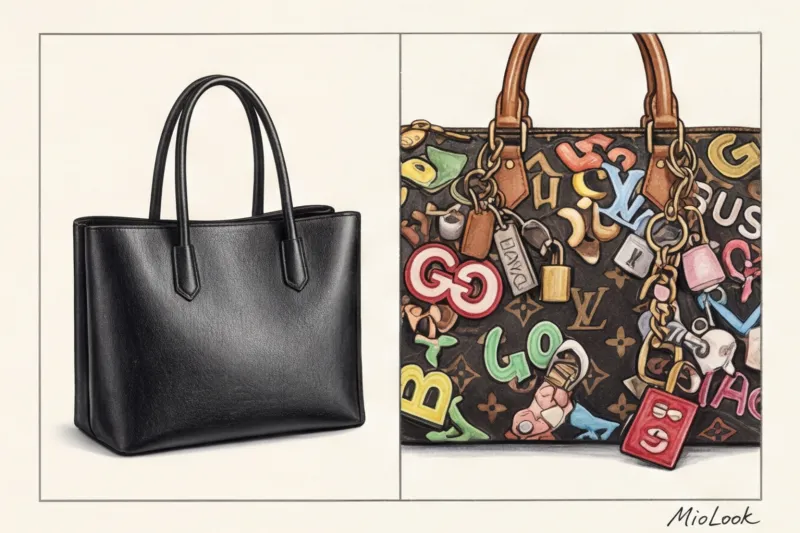
Status has evolved. According to Bain & Company's "Luxury Goods Worldwide Market Study 2024," logomania has finally given way to "quiet luxury." Today, flashy brands convey a desire to appear rather than to be. True status accessories for women are a tool of nonverbal communication. They convey stability, attention to detail, and, most importantly, self-respect.
Investment bag: the anatomy of impeccable quality without flashy logos
Let's be honest: a soft shopper that can fit half your life is convenient. But in a business environment, it conveys fuss. It says, "I'm lugging everything around." A rigid, framed model with clear geometry says the opposite: "I only take the essentials with me because everything else has been delegated."
In my practice, I often conduct a "blind test" with my clients. I ask them to close their eyes and simply hold two bags: one from the mass market, the other from the premium segment. In 100% of cases, they unmistakably identify the expensive item. How? By the balance of the handles and the temperature of the metal. Cheap alloys (like zamak) are light and ring like tin. Cast brass or palladium, used by sustainable luxury brands, have a pleasant heft and produce a dull, refined sound when touched.
How to Read Leather Quality: From Full-Grain to Edge Finish
This is where the biggest consumer misconception lies. Genuine Leather (genuine leather) is perceived as a sign of quality. In fact, in the leather industry, it's the lowest grade. It's split leather—the inner, loose layer of hide that's generously coated with polyurethane and pressed into an artificial texture. A bag like this will crack within a year.
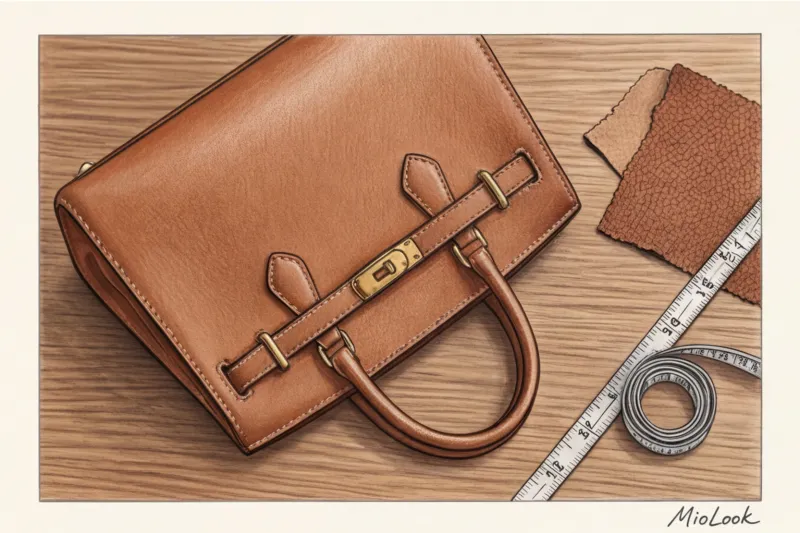
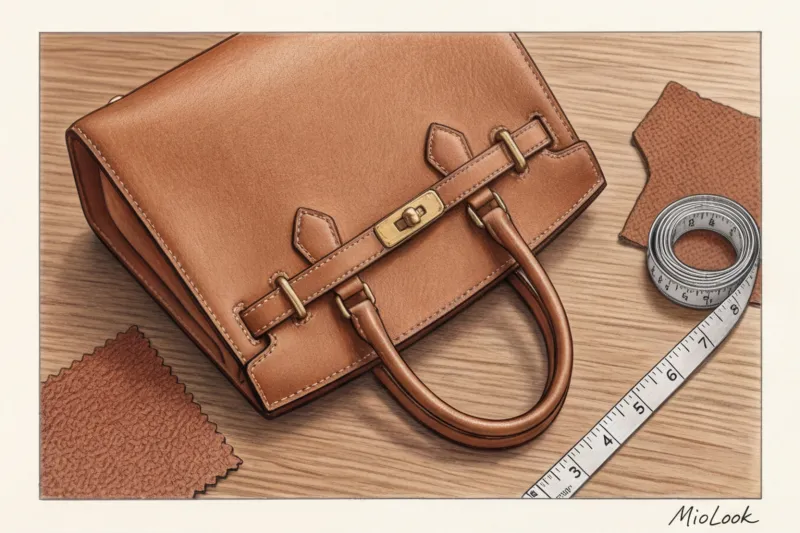
If you're looking for something that will last for decades, look for markings. Full-Grain (facial skin) or Top-Grain Full-Grain is unsanded, retains its natural pore pattern, and develops a beautiful patina over time. It's a living, breathing material that ages gracefully.
The second indicator I always look at is edge painting (edge finishing, or edge trim). Cheap bags have a thick layer of rubber-like paint on the edge, which peels off quickly. In expensive handcrafted bags, the edge is sanded and coated with a thin layer of paint in several stages, blending seamlessly with the leather.
Access to MioLook for €0.99 — one-time payment
A smart AI stylist will select the perfect look.
Get access — €0.99 onceWatches as a Marker of Time and Influence: Mechanical vs. Smart Technologies
I know I'm treading on a sacred topic for many, but I have to say it: Apple Watch and other smartwatches ruin your status image during important meetings. Yes, they count your steps and display messages. But what signal are you sending to your partners when your screen lights up with every notification? You're projecting absolute availability. You're showing that your attention isn't yours.
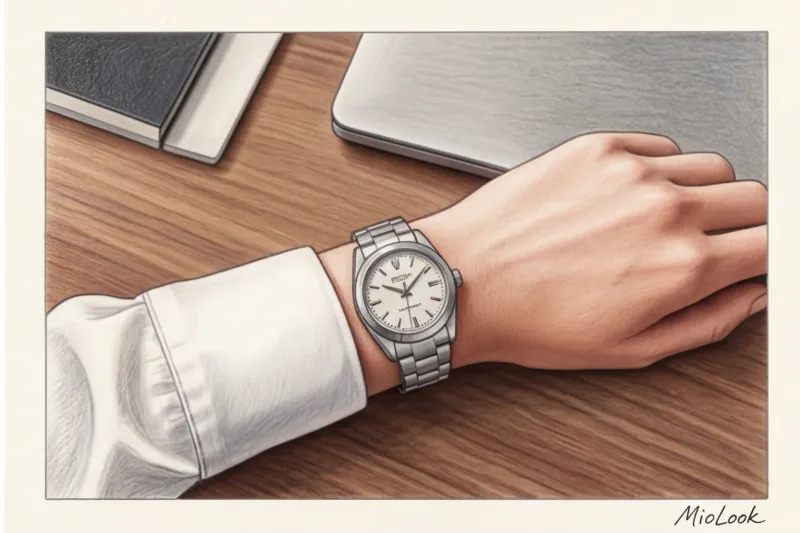
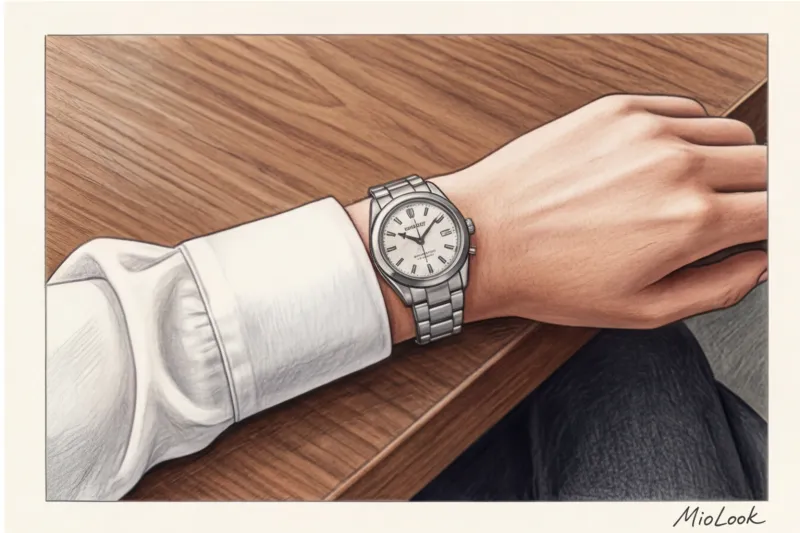
One of my clients, the CEO of a large IT company, complained that at board meetings she was sometimes perceived as an operations manager rather than a strategist. We removed her smartwatch and replaced it with a classic mechanical watch with a steel bracelet. The effect was astounding: no longer twitching from the vibrations on her wrist, she began to speak more slowly, and her focus on her interlocutors became absolute. Of course, this advice doesn't work if you work as a fitness trainer or a gadget tester, but in the corporate world, the rules of the game are different.
From an investment perspective, mathematics is also ruthless. Electronic watches become obsolete within 2-3 years, and their value drops to zero. Classic mechanical watches retain 70% to 120% of their value decades later. Incidentally, don't be afraid of men's watches—today, female executives are increasingly choosing large dials (36-40 mm), rejecting gender stereotypes in favor of simplistic strength.