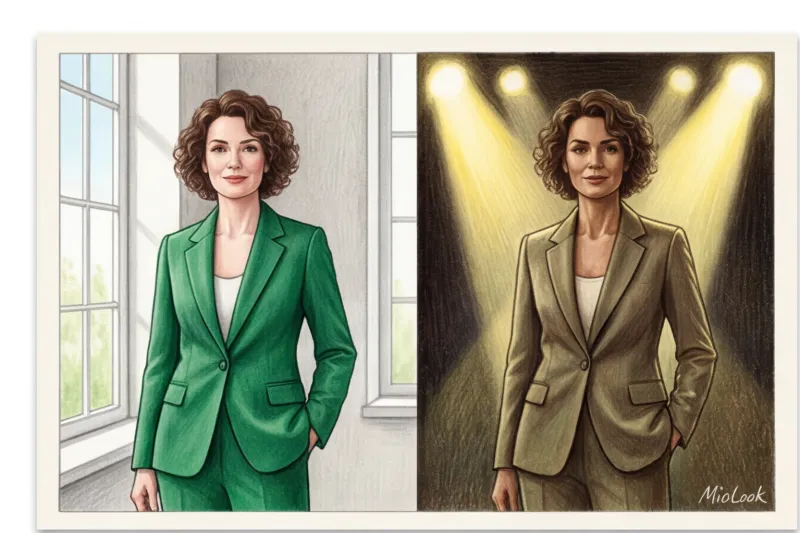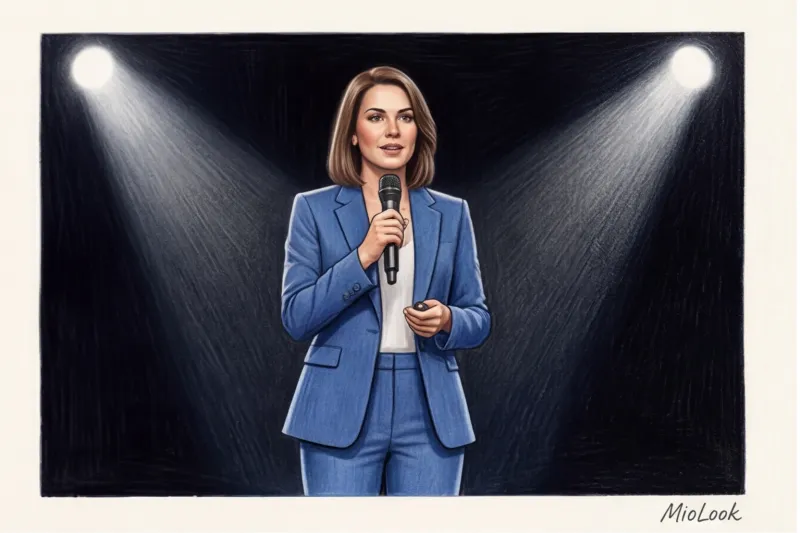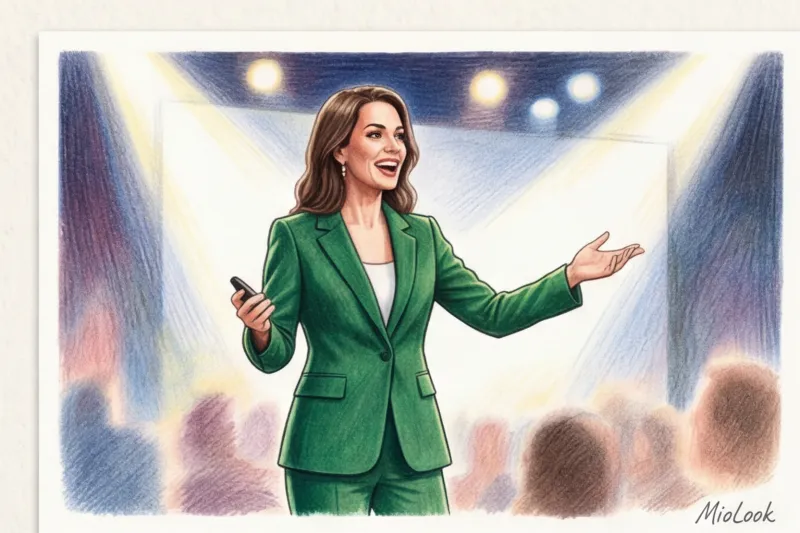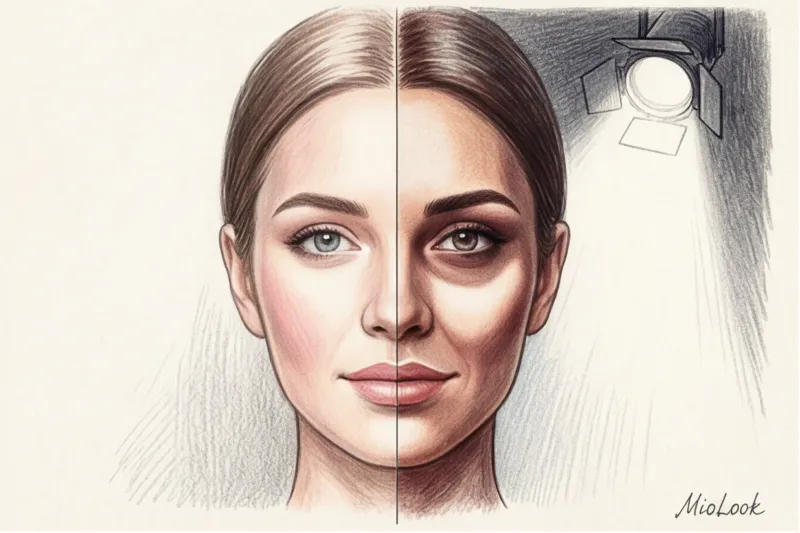
Two years ago, I was preparing the CEO of a major tech company for a major TEDx talk. In the dressing room, under the soft ring lights, her look seemed flawless: delicate skin tone, a hint of blush, and nude lipstick. But when she took to the stage for the dress rehearsal, I gasped. Under the harsh theater lights, her face literally "disappeared." Her eyes looked tired, her cheekbones were flat, and her skin had a sickly, sallow tone. We had to quickly redo her makeup for the onstage presentation fifteen minutes before the broadcast.
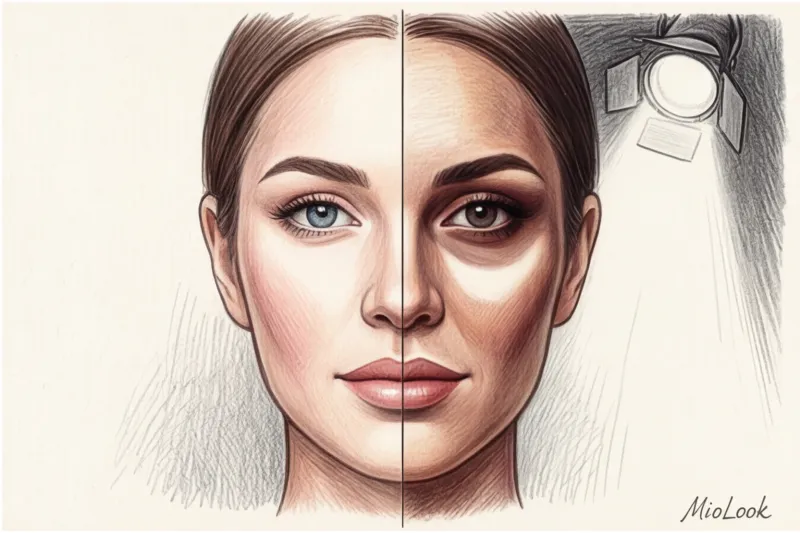
This incident once again confirmed a rule I've learned over the years as a stylist: what looks great in real life or in an elevator mirror falls flat under the gaze of 4K cameras and stage lighting. According to research in the psychology of perception (the so-called "7-second rule"), an audience spends 80% of their time looking at the speaker's face. Your outfit can be impeccable—we covered this in more detail in our The Complete Guide to Dressing for Public Speaking , - but if your face looks sweaty, tired or flat, the credibility of your words falls.
Let's figure out how to create an image that will withstand the test of light, cameras, and excitement, while remaining vibrant and prestigious.
The spotlight is merciless: why ordinary makeup disappears on stage
To understand why your favorite everyday makeup doesn't work in public, you need to remember a little physics. Daylight has a color temperature of about 5500 Kelvin—it softly envelops the face. Stage lighting, on the other hand, uses focused, powerful beams of light that are often either too warm (yellow) or too cool (blue).
In the film and television industry, there's an unspoken "30% rule." That's how much color intensity is "eaten away" by bright frontal light. What looks like overly bright blush to you in the mirror will look like a light, natural flush from the tenth row of the theater.
- The dangers of SPF filters: Never use foundations with a high physical protection factor (such as titanium dioxide or zinc oxide) for performances. These ingredients act like microscopic mirrors. They create a noticeable effect when exposed to camera flashes or direct light. flashback — in videos and photos, your face will appear as a white mask, separate from your neck.
- Flat face effect: Frontal spotlights blur the natural shadows on the face. Without proper correction, the face turns into a white "pancake," devoid of definition and character.
The main myth: stage makeup for a performance should be "plaster"
When we hear the phrase "stage makeup," our brains helpfully conjure up images of the theater: heavy makeup, drawn-on eyebrows, and pounds of powder. This is a fatal mistake for the modern speaker.
Theatrical makeup is designed for the audience sitting twentieth row back. But today, every major performance is broadcast on large screens or recorded in HD. The camera will mercilessly highlight every layer of makeup.
"A popular myth says that a thick matte foundation is essential for stage performance. In reality, a dull matte finish ages your face by 5-10 years under the spotlight. Hard baking is great for Instagram in 2016, but when articulating live, it cracks in the nasolabial folds."
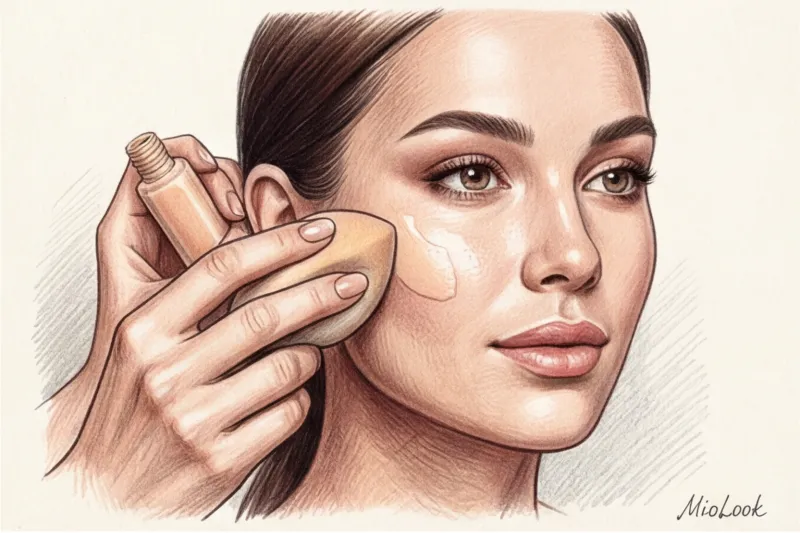
My solution: The "living skin" concept. Use silicone-based High Definition foundations. They create a blurring effect, smoothing skin texture while remaining flexible. The face looks fresh and hydrated, not like a plaster cast. Powder only strategic areas—the center of the forehead, the sides of the nose, and the chin.
Access to MioLook for €0.99 — one-time payment
A smart AI stylist will select the perfect look for your next performance, taking into account your appearance and the format of the event.
Get access — €0.99 onceFacial Architecture: How to Restore Volume with Flat Lighting
Since spotlights steal our cheekbones, they need to be redrawn. But do it in a way that won't make anyone notice the brown streaks on your cheeks up close. The secret lies in layered contouring.
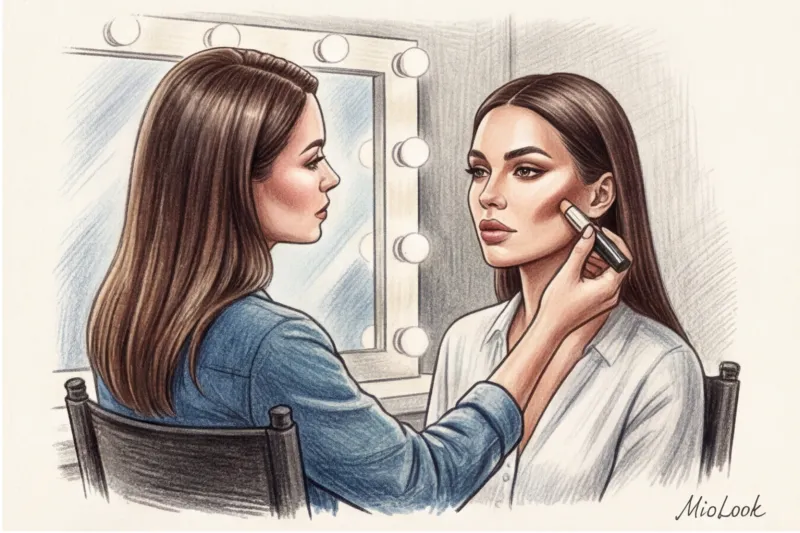
First, we create a shadow with a creamy foundation—it blends into the skin and adds depth. Then, we lightly set it with a powder product. Where to apply? For a speaker, the jawline and cheekbones are critically important. A well-defined facial contour is psychologically perceived by the audience as a sign of willpower, authority, and status.
Important limitation: This cream-based correction method does NOT work if you have very oily skin with active breakouts or severe acne. In this case, creamy textures may "bleed" or accentuate the skin's texture. It's best to stick to delicate powder products.
- Blush: Forget cool pink shades. Under warm light, they often take on a sickly, inflamed appearance. Opt for peach, coral, or warm berry tones. Pro trick: Apply blush just above the apples of your cheeks, bringing the color toward your temples—this gives a stunning lifting effect.
- Highlighter: Glitter is strictly prohibited. Under the spotlights, large, shimmering particles look like beads of sweat. Use only satin textures with a wet-look effect.
Eyes and eyebrows: a focal point to hold the audience's attention
If your eyes aren't highlighted, it's physically difficult for the audience to stay focused on you for more than ten minutes. Eyebrows are the framework of your face. For stage, they should be one shade darker and slightly more defined than in your everyday life.
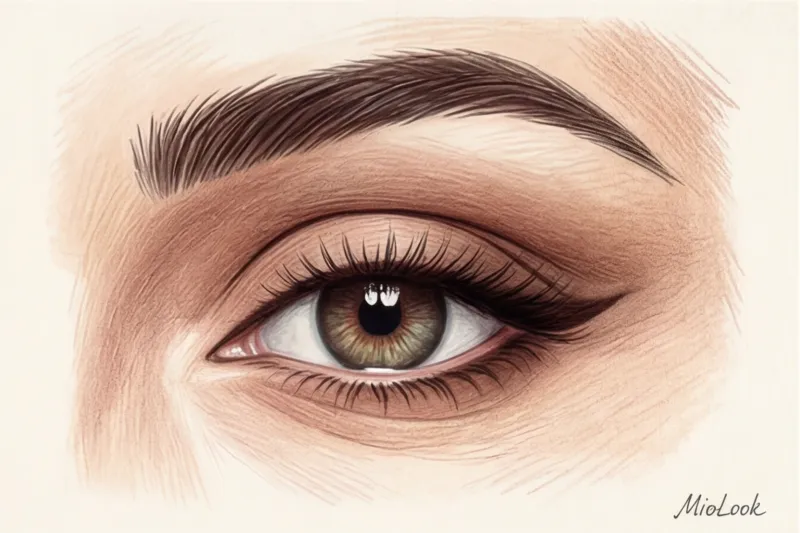
When it comes to eyeshadow, there's a strict rule: matte textures are your best friend. Shimmery eyeshadow, especially on hooded lids, creates the illusion of fullness and makes the eyes look heavy under direct light.
The main secret weapon of any makeup artist is inter-eyelash arrow This isn't a classic winged wing, but a dense fill of the space between the roots of the lashes with a dark brown or black gel pencil. It adds a piercing look while remaining completely invisible. If you're using false lashes, choose only individual clumps in the outer corners of your eyes. Heavy strip lashes cast a shadow on the lower lid, creating a bruised effect under the eyes.
The Speaker's Lips: Status, Articulation, and Stamina
Lip color on stage isn't just a makeup element; it's a tool for impression management. According to the Pantone Color Institute, shades of red instantly attract attention and convey power (perfect for pitching or tough negotiations). Nude shades, on the other hand, are inviting and inspire trust (an excellent choice for HR conferences or storytelling).
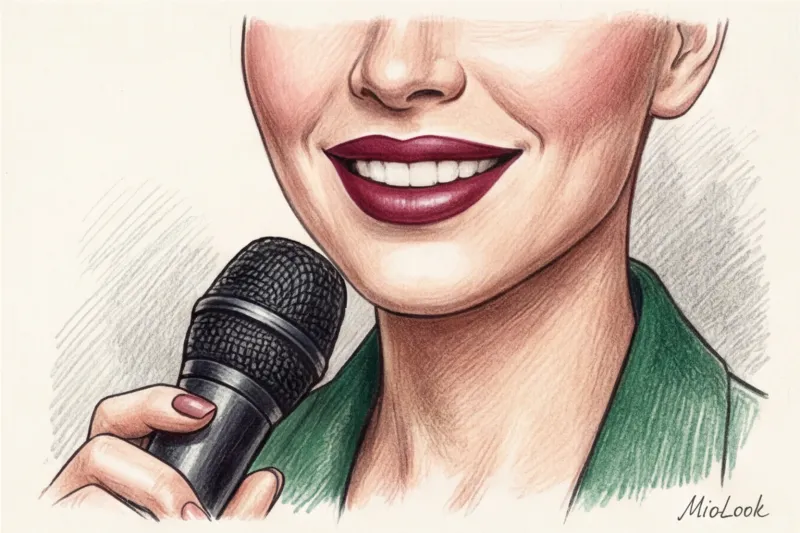
Once, while speaking at a financial forum, a client of mine chose a nude color that was too pale and blended with her skin. On video, it looked like she literally had no lips. This visually distorted her articulation and diminished the persuasiveness of her speech. A speaker's lips should be clearly visible.
- Enemy #1: Glossy glosses. They attract hair (if the air conditioning is on or you're performing outdoors), they pull unattractively during vigorous articulation, and they create strange glare on camera.
- Durability formula: Fill in your entire lip with a matching lip liner. Apply a long-lasting satin lipstick on top. Place a thin tissue paper over your lips and lightly powder them directly through it. Apply a second coat of lipstick. This makeup look will pass the water test—you can drink it during your performance without leaving any marks.
Your ideal image begins Here
Join thousands of users who look flawless every day with MioLook. Digitize your wardrobe and get ready-made looks.
Get access — €0.99 onceMakeup + Clothing for Public Speaking Bundle
Makeup doesn't exist in a vacuum—it's part of your personal brand and an extension of your outfit. If you've chosen a bold outfit (for example, a fuchsia or electric blue jacket), your makeup should be structured but neutral in color. Conversely, a formal black or gray suit will perfectly complement a bold red lipstick.

Be especially careful with crisp white shirts. White against the face acts as a reflector, drawing out any grayish and olive undertones. If you're wearing a white blouse, your foundation should be a half-tone warmer than usual, and your blush should be a little more vibrant.
To avoid mistakes with the balance, I recommend my clients to use the "smart wardrobe" feature in MioLook By uploading photos of your stage costumes, you can plan ahead for the color temperature of your look and determine whether it calls for cool makeup (berry lips, taupe eyeshadow) or warm makeup (peach blush, bronzer).
Checklist: SOS Cosmetic Bag for Backstage
Even the most durable makeup requires control. Over 12 years of work, I've developed the perfect makeup kit that I put together for my speaker clients before they go on stage. This makeup bag contains nothing superfluous, just the essentials.
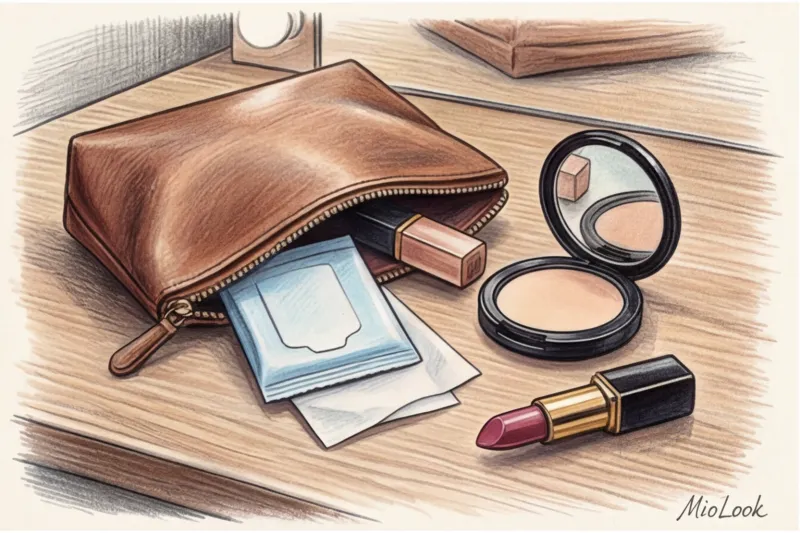
- Blotting papers: Use them 5 minutes before going out. They absorb sebum (oil) without ruining your foundation. This is much better than layering on powder, which will turn into mush over time.
- Transparent powder: Apply with a powder puff exclusively to the T-zone (forehead, nose, chin). Keep cheekbones vibrant.
- Lipstick and pencil: For a quick contour refresh after a coffee break.
- Cotton swabs: Indispensable for removing crumbling mascara in one movement or correcting the corner of the lips if the lipstick has wavered.
- Thermal water or fixative spray: A light mist of spray over your finished makeup will remove the powdery effect and restore your skin's natural glow.
Summary: A face you want to believe
Stage makeup isn't about embellishment. It's a practical tool for managing attention and compensating for the distortions created by the merciless spotlights and camera lenses. You're not trying to create a new face; you're simply helping the audience see the real you.
Remember the three pillars of a stage look: a perfect yet vibrant tone (no harsh matte or SPF filters), structured cheekbones to project confidence, and expressive matte eyes that will maintain eye contact with the audience.
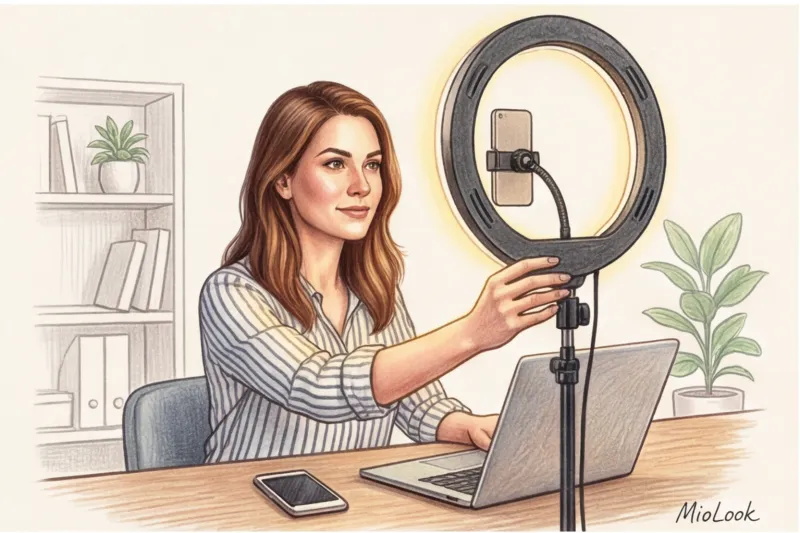
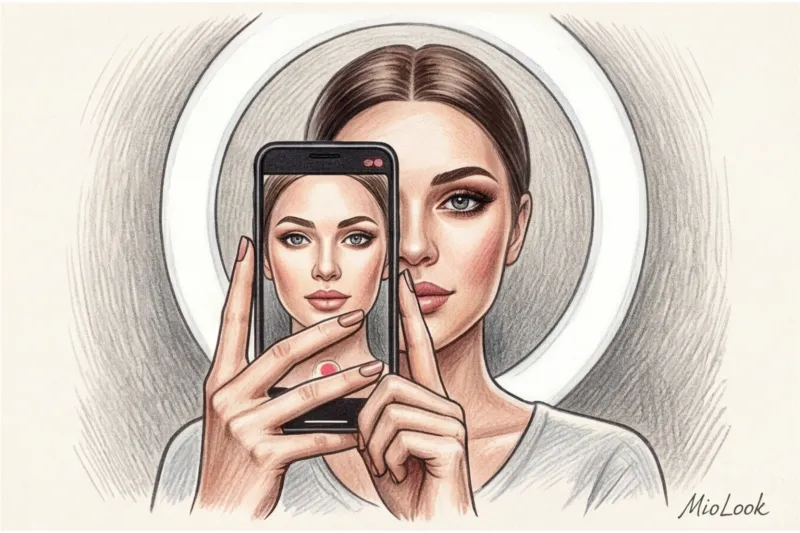
And my most important practical advice: never go on stage with makeup you haven't tested. Put on your makeup, put on your costume, set a ring light to maximum power (or turn on the flash on your phone), and record a minute-long video of yourself actively speaking. What you see on the screen is exactly what your audience will see. Confidence in your flawlessness releases tremendous energy, which you can channel into what matters most—your brilliant performance.