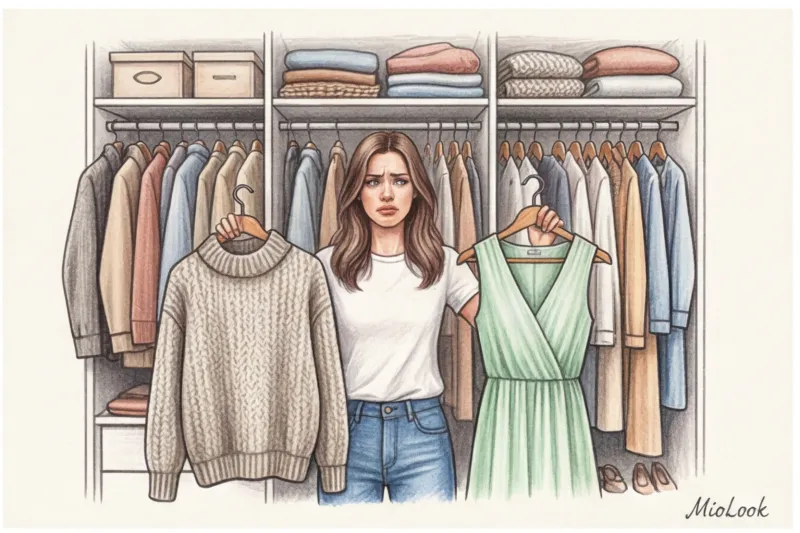
I remember vividly that March day when a client called me in a slight panic. We were going through her closet, and in the farthest corner, crushed under heavy wool sweaters, we discovered three absolutely identical beige Zara trench coats. One was bought in 2021, the second in 2022, and the third a week before our call. Over the winter, she simply forgot about their existence. This cognitive trap is exactly how a typical relationship begins. spring clothing capsule For most women, we don't analyze our assets; we run to the mall for the illusion of renewal.
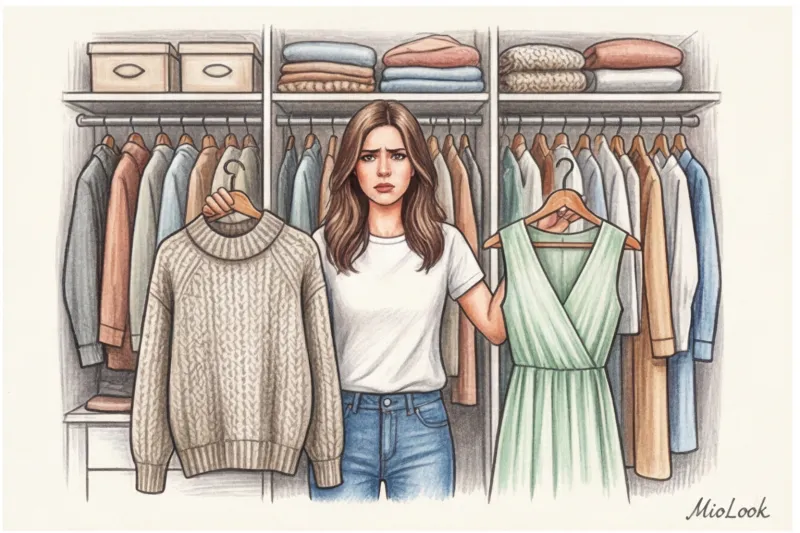
Instead of buying another chiffon blouse in March, while there's still dirty snow outside, I suggest a completely different approach. We've already covered this smart approach in more detail in our A complete guide to the MioLook app Today, we'll explore a step-by-step algorithm: how to survive the off-season without cognitive overload, why you need a "transitional" wardrobe, and why a physical closet always loses to a digital one.
Spring Capsule: Why We Make the Same Mistakes Every Year
With the first rays of spring sunshine, a keen thirst for a "new life" awakens within us. We think that buying a light floral dress will magically bring the May holidays closer. But the harsh reality is this: you'll hang this dress in the closet, where it will get lost among winter down jackets, creating a monstrous visual clutter.
According to a large-scale 2023 study by WRAP (Waste and Resources Action Programme), as the seasons change, about 80% of our wardrobe enters a "blind spot." This means you only wear a fifth of your clothes because you can't see the rest. The neuroscience of the closet is merciless: the brain only scans the first row of hangers. What's hidden beneath a thick winter cardigan is invisible to it.
"We freeze hundreds, sometimes thousands, of euros in unorganized closets. You wouldn't believe how often I find clients with two-year-old tags, bought in a fit of spring euphoria."
A physical closet can't adapt to your morning routine when you only have 15 minutes. That's why switching to digital cataloging isn't a passing fad, but the only way to ensure every item earns its keep.
Access to MioLook for €0.99 — one-time payment
A smart AI stylist will select the perfect look.
Get access — €0.99 onceStep 1: Spring Cleaning and Digitization (Goodbye Winter Chaos)
The first and most important rule of my styling practice is the "blank slate" rule. It's impossible to build a functional spring capsule on top of a winter one. You have to physically separate the seasons.
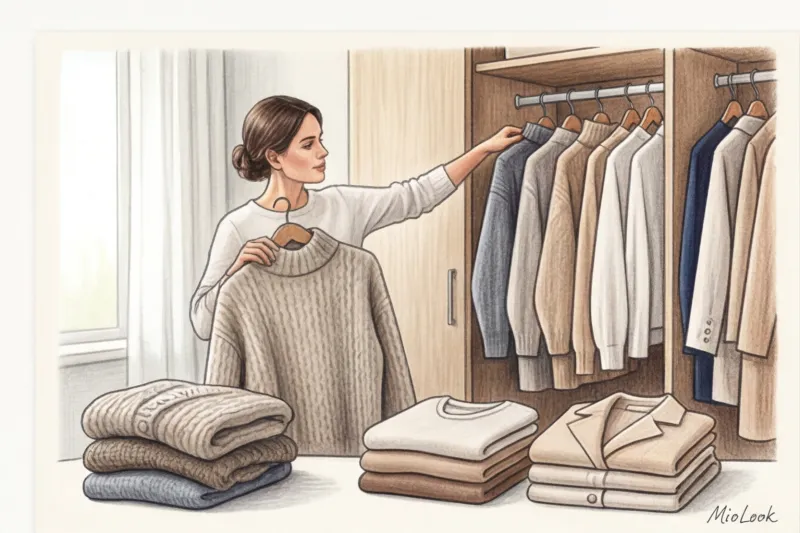
Start by properly packing your winter essentials. I forbid my clients from hanging cashmere sweaters on hangers—they'll stretch under their own weight within six months, and they'll have to be thrown out. Store knitwear only folded. Another tip: never layer thick, coarse denim over thin viscose or silk; the stiff seams will leave creases that no steamer will remove.
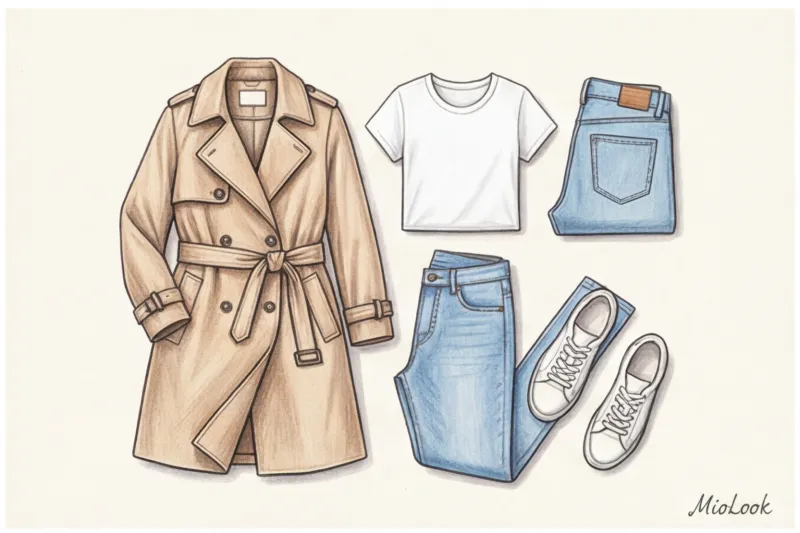
Once you remove the overtly wintery pieces (down jackets, ski sweaters, thermal underwear), you're left with a demi-season essential. And that's where the magic begins. Take 15 minutes on a weekend to photograph this essential and upload it to MioLook app When your clothes are digitized, you no longer rely on clutter on your shelves.
Conduct an audit of that "blind spot." Pull out everything you bought last spring and haven't had time to wear. Often, after such an audit, the need to go to the store disappears.
The formula for the perfect spring base: what to leave and what to remove
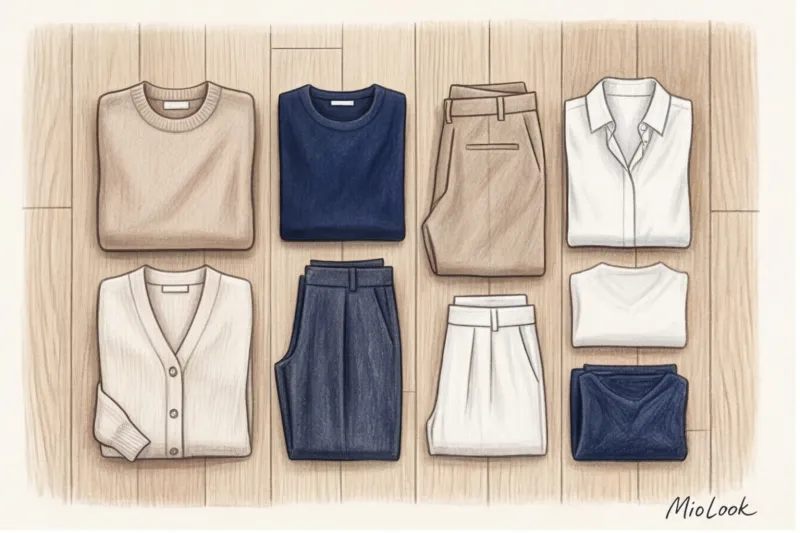
A basic wardrobe isn't boring—it's your foundation. Straight-leg jeans without much embellishment, classic menswear jackets, and crisp white T-shirts work year-round. But how do you differentiate a spring essential from a winter one?
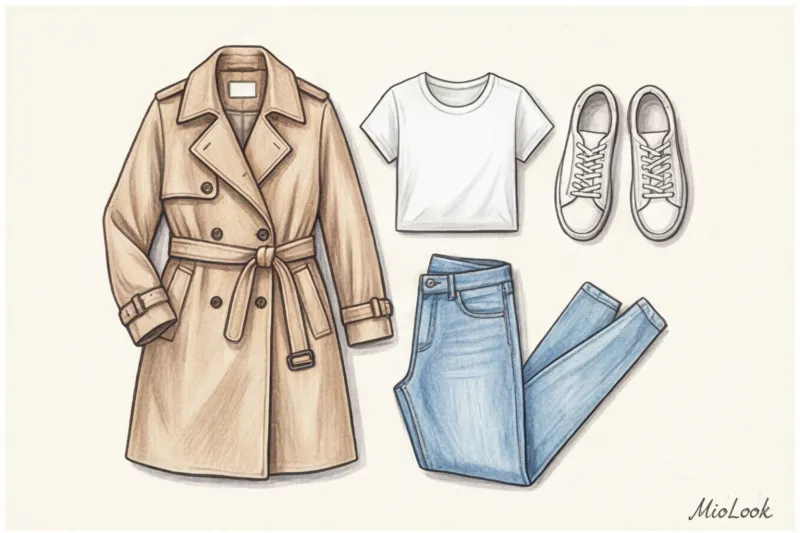
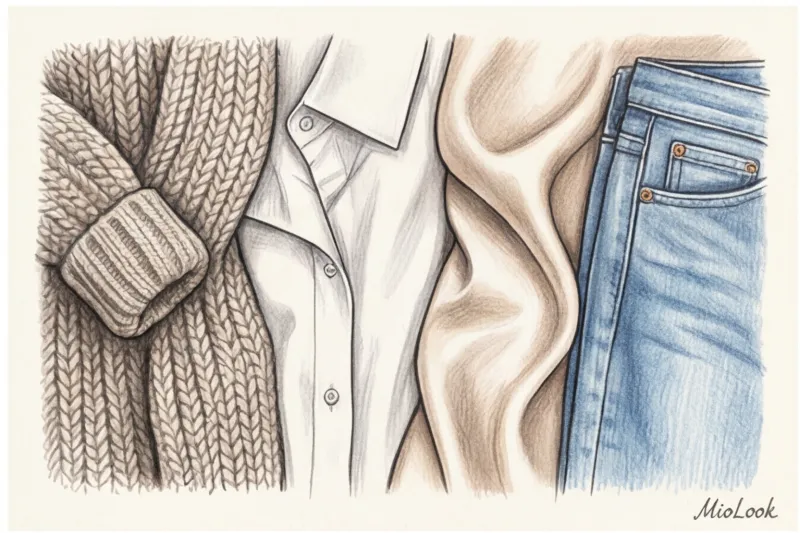
The secret lies in texture. Spring calls for a shift from heavy 100% wool to blended fabrics, dense cotton, and silk. Visually and tactilely, "winter" knitwear always has a nap and a loose texture. Spring cotton (look for a weight of 180 g/m² or higher) is smooth, holds its shape, and feels slightly cool on the skin.
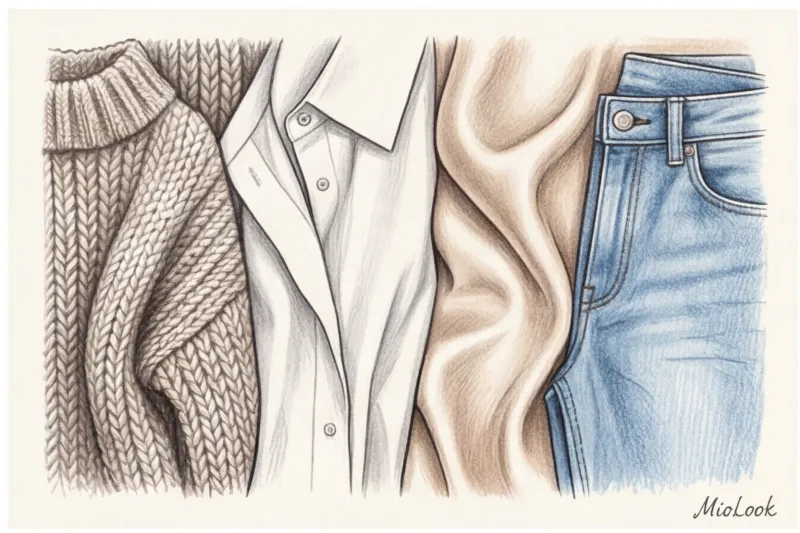
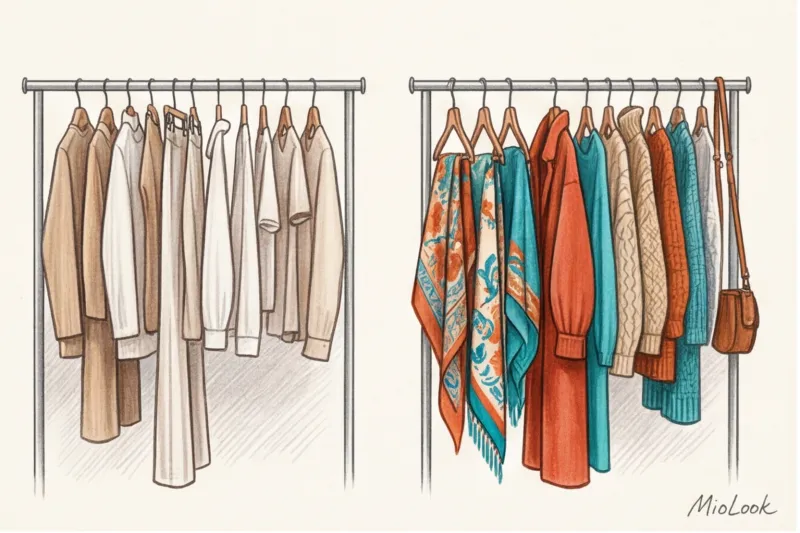
Apply the 70/30 rule: 70% of your wardrobe should be simple pieces in neutral shades, and 30% should be accent colors and trends. If you're unsure which shades to include in that 30%, consider fashionable colors for spring and summer — This season, soft pastel tones and rich creamy colors prevail.
Transitional Pieces: Your Bridge Between Seasons
Here I want to pause and dispel the main stereotype. The biggest mistake of March is buying summer clothes. The real, smart investment is transit items.
These are wardrobe elements that act as a bridge between cool and warm. The Pantone Color Institute (2024) specifically notes in its seasonal guides that abrupt wardrobe changes are a thing of the past—layering is king. What does this mean in practice?
- Leather shirt: worn as a jacket over a T-shirt at +15°C or as a middle layer under a coat at +5°C.
- Thin down vest (Uniqlo style): A brilliant invention that allows you to wear your favorite thin trench coat as early as the end of March.
- Thick, chunky knit cotton cardigan: replaces a light jacket.
What about summer dresses? If you really want to wear chiffon in March, layer warmly: layer a chunky sweater over the dress, and layer with thick tights and chunky boots.
Trends vs. Basics: What to Invest in This Spring?
Let's talk about money. As a personal stylist, I often see extremes: either a wardrobe is entirely comprised of fleeting trends, or it's a never-ending cycle of "grey mouse." The truth, as always, lies in balance and proper budgeting.
If you want to try out this season's microtrends—like a balloon skirt or leopard print—go to Zara or H&M. Spend €30–€40 on something that will last you a season, and then let it go without regret. But if you're looking for basics (trench coats, leather loafers, perfect trousers), head to COS, Massimo Dutti, or & Other Stories. Prices here range from €100–€200, but these pieces will pay for themselves many times over.
I always teach my clients to count. Cost-Per-Wear (price per outing). Let's take a typical example. You buy a cheap trench coat at a fast fashion store for €40. The fabric is thin, wrinkles easily, and the lapels are stiff. You wear it five times and then throw it in the closet. The price per outing is €8.
Now let's take a high-quality, flowing lyocell trench coat for €150. It fits perfectly, doesn't collect lint, and you'll wear it 60 times a season. The price per outing is only €2.50! A quality item is always cheaper in the long run.
Reservation: This formula doesn't work for evening wear or one-off occasions. But for spring outerwear, it's an absolute must.
Before making any purchase, ask yourself, "What will I wear this with?" If in doubt, upload a photo of the item you want to wear to a look generator. MioLook and see how the AI combines it with your existing collection. If it creates fewer than three looks, discard the item.
Your perfect look starts here
Join thousands of users who look flawless every day with MioLook.
Get access — €0.99 onceWe collect images: from +5°C to +15°C without hypothermia
Spring weather can be treacherous. You're out in the morning with a chilly 5°C (41°F) and a piercing wind, but by midday the sun has warmed the air to 15°C (59°F). How can you avoid freezing in the morning and sweating during the day?
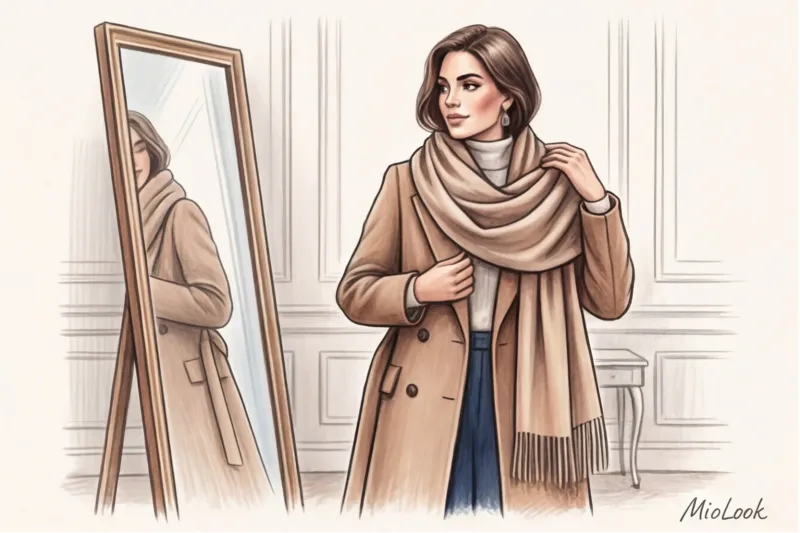
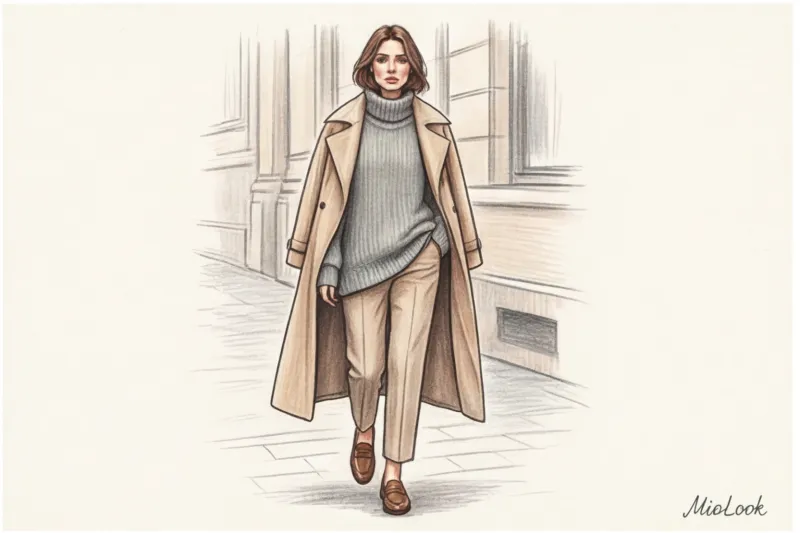
Scenario 1: The Cabbage Principle. A stylist's true mastery comes from layering. My favorite early spring look: a thin cotton turtleneck + a heavy men's shirt + a loose trench coat (or robe coat). At the office, remove the outerwear; if it gets hot, unbutton or remove the shirt, leaving the turtleneck on. No thick sweaters with only underwear underneath.
Scenario 2: Rainy spring. Forget rubber boots unless you're going for a walk in the woods. For the city, leather loafers or Chelsea boots with a chunky (3-4 cm) lug sole are a great alternative—they're puddle-resistant and easily fit into a smart-casual look.
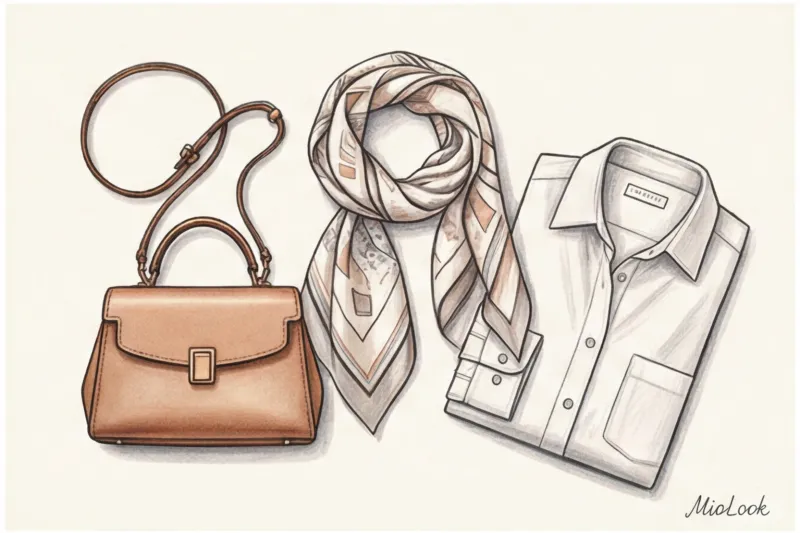
Never underestimate the power of accessories. Even if your entire look consists of a basic black coat and blue jeans, a silk scarf with a geometric print (costing around €30-€50 at Massimo Dutti) or a structured bag in a rich wine shade will instantly make your look spring-like.
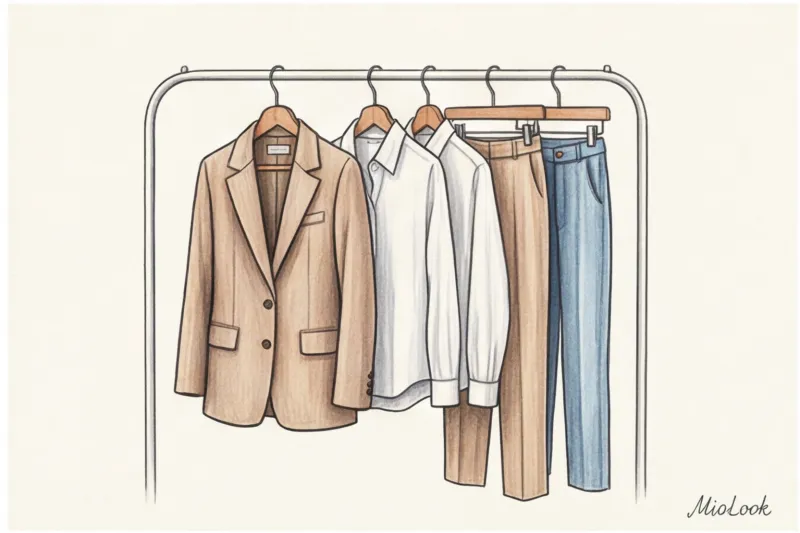
Checklist: 5 Steps to a Smart Spring Wardrobe
To avoid getting lost in the theory, let's move on to concrete actions. Take these five steps this weekend:
- Take away winter. Wash your sweaters, clean your coats, put everything in their bags, and put it away out of sight. Save only the mid-season items.
- Digitize the database. Take pictures of the remaining jeans, t-shirts, jackets and light outerwear.
- Make a wish list of transit items. Consider what you need for layering: perhaps you need a thin vest under a trench coat or a leather shirt.
- Check your purchases with the "3 looks" rule. No spontaneous purchases. Each new item should go with at least three existing tops and bottoms.
- Calculate your budget. Spend 60-70% of your budget on quality shoes and outerwear (from €100), and only the rest on trendy tops and accessories.
A spring capsule collection shouldn't consist of thirty new items. Its strength lies in mathematical precision and the right textures. Every item in your closet should earn its place and earn its keep. Stop collecting identical trench coats and start collecting functional looks!