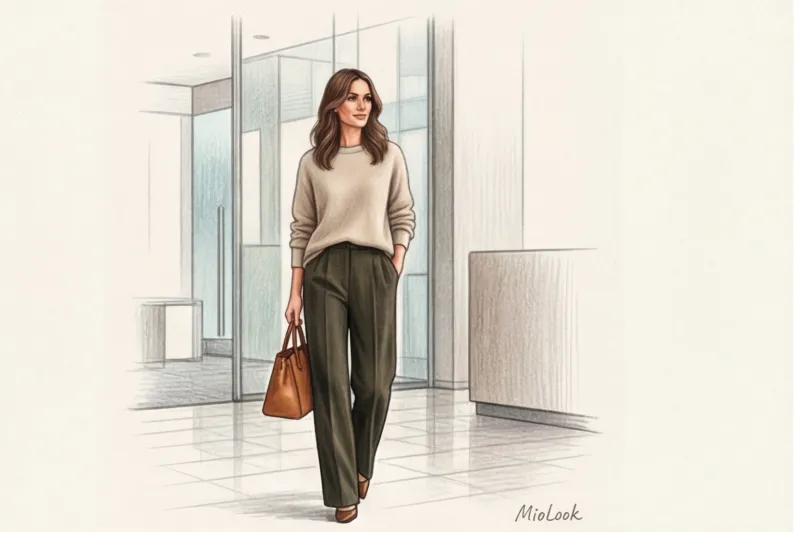
What is a smart casual capsule wardrobe, really?
Last September, during Milan Fashion Week, my schedule looked daunting: a closed-door presentation of new collections in the morning, a series of meetings with buyers in the afternoon, and a networking cocktail in the evening. There was absolutely no time to stop at the hotel to change. At times like these, the only thing that saves you is a well-packed outfit. smart casual capsule wardrobe This is the only dress code that has chameleon properties.
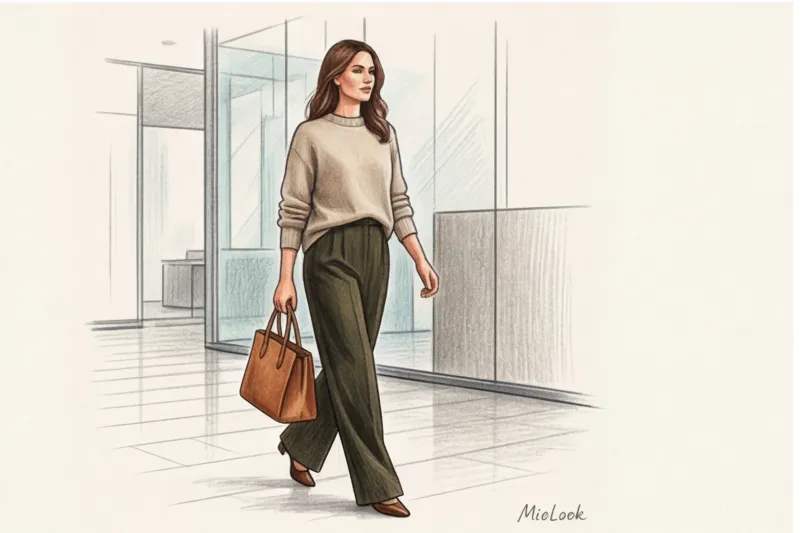
However, most people misinterpret it. Some slip into outright sloppiness, wearing stretched-out hoodies with jackets, while others get stuck in boring banker style. In fact, this approach is radically different from other style formulas (I discussed them in more detail in our The Complete Guide to Capsule Wardrobe Styles: From Old Money to Casual ).
Historically, we owe this style to Giorgio Armani. In the 1980s, he revolutionized the classic men's jacket by removing the stiff shoulder pads and thick lining. The result was a deconstructed jacket—a garment that retained the status quo of a suit but acquired the fluidity and comfort of a cardigan. It was this concept of "elegant relaxation" that formed the basis of modern smart casual.
Today, this style has become the norm. McKinsey research (2024) and WGSN reports reveal a staggering figure: 73% of corporations have permanently abandoned strict business formality after the pandemic. But how exactly does one assemble such a capsule?
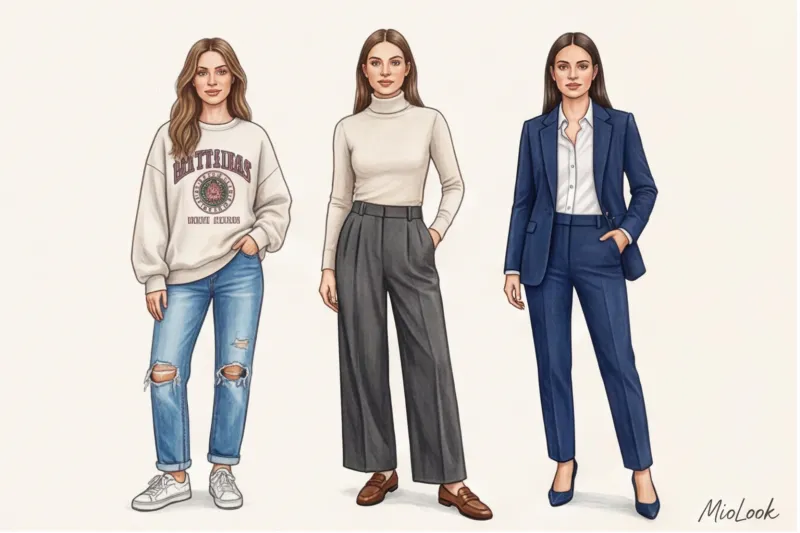
I suggest my clients to forget about fixed lists of things and use Slider Theory (equalizer theory) Imagine a DJ booth: at one end of the slider, you have absolute formality (Smart), at the other, complete comfort (Casual). The smart-casual capsule is the ability to customize this slider for the specific task of the day, mixing textures and cuts.
Your perfect look starts here
Join thousands of users who look flawless every day with MioLook. Digitize your wardrobe and find new combinations in seconds.
Get access — €0.99 onceThe Biggest Myth: Why a Classic White Shirt Doesn't Always Work
If you open any basic article online, you'll be told, "Just wear jeans with a white cotton shirt and a blazer." As a practicing stylist, I can tell you that 80% of the time, this is poor advice and betrays a lack of insight.
One of my clients, a marketing director at an IT company, bought this "classic set." At the very first consultation, she admitted, "I feel like a bank teller or a waitress at an upscale restaurant in this, not like a creative executive." The problem? The thick cotton poplin.
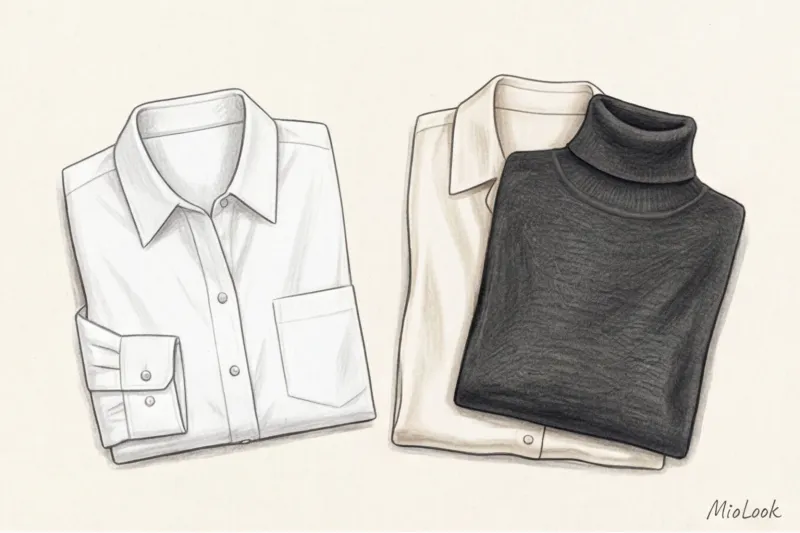
A crisp, crisp shirt is a 100% formal wardrobe staple. When you try to pair it with relaxed jeans, a visual clash arises. The two pieces seem out of place. To create that "expensive relaxed" look, we need to tone down the formality of the top without losing its status.
What can I replace poplin with?
- Loose-fitting silk blouses (natural silk gives a delicate sheen).
- Shirts made of cupro or thick viscose (they flow over the body, rather than standing out stiffly).
- The finest turtlenecks made of merino or cashmere.
Once we replaced the client's crisp cotton wardrobe with heavy ivory silk, the look instantly became more cohesive and modern.
The 60/40 Balance Formula: How to Combine Strictness and Relaxation
The main secret I've learned over the years is that the ideal smart casual style is built on a 60/40 ratio. A single look should have 60% formal elements and 40% relaxed ones (or vice versa, depending on your office dress code).
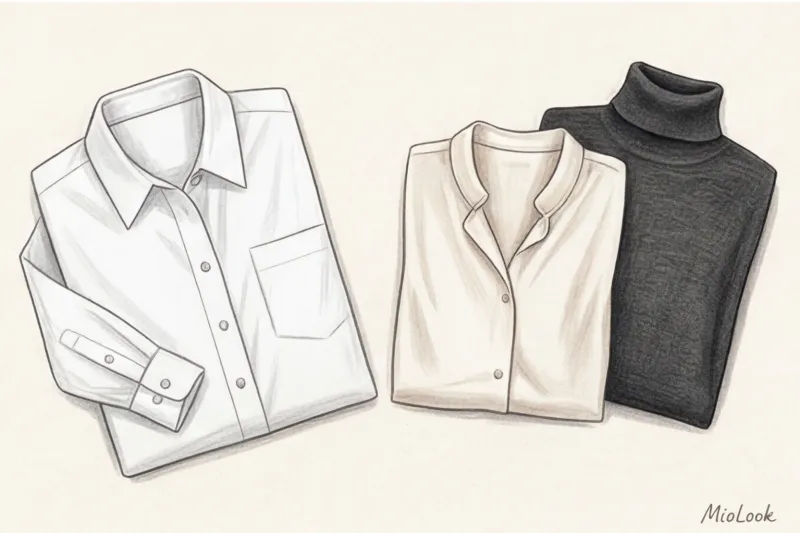
But this formula has a strict limitation: It doesn't work if you're trying to combine two things from the extremes of the spectrum. You can't wear tailored tuxedo pants with a stretched-out gym t-shirt. You need "bridges"—neutral-toned pieces that tie the look together.
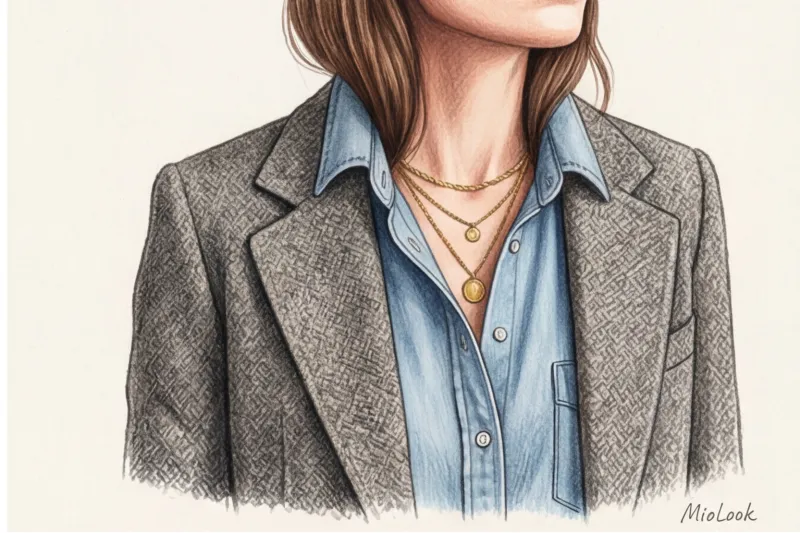
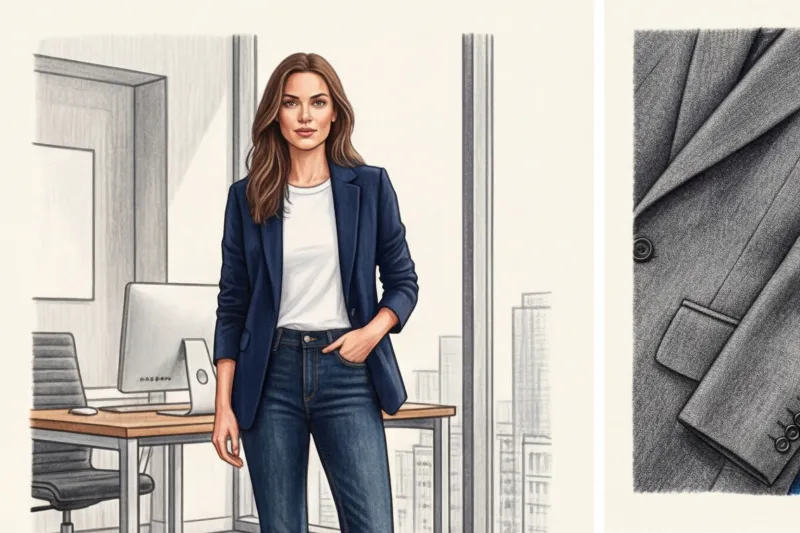
Let's look at an example business capsule wardrobe If the bottom is stiff and structured (thick wool pleated trousers, 100% Smart), the top should be soft, such as a cashmere jumper (Casual). If you're wearing dark jeans (Casual), layer them with a structured jacket (Smart).
Color deserves special attention. A black and white palette immediately enhances formality. If you want a more flexible capsule look, go for sophisticated shades: burgundy, dark chocolate, taupe, or deep olive. A chocolate-colored suit will always look more casual and "expensive" than a similar black one.
Structure vs. Drapery: Secrets to the Perfect Silhouette
Our eyes perceive the geometry of clothing before recognizing color or brand. Hard lines (peak lapels, pressed creases, defined shoulders) convey composure and authority. Drapery (soft folds, loose fit) conveys dynamism and openness.
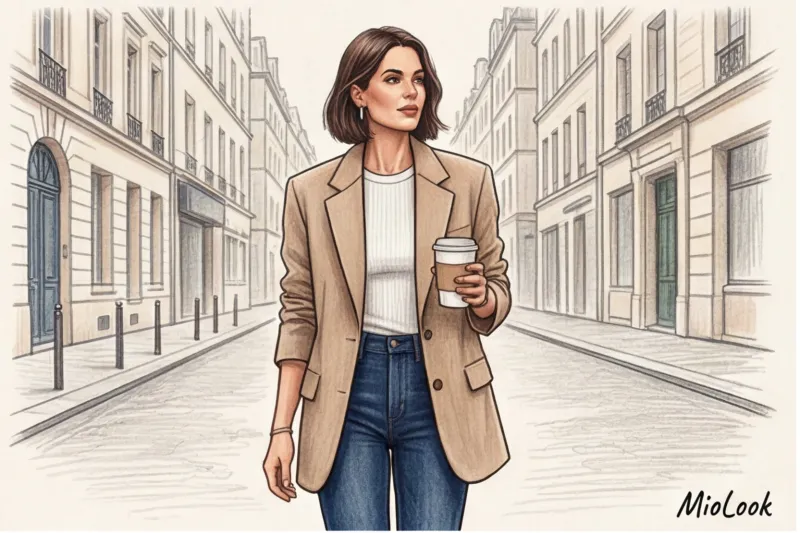
That's why hybrid pieces work brilliantly in the smart-casual capsule collection. For example, a knit jacket: it has lapels (structure), but no rigid frame (drape). Or cargo pants, but made not from cotton, but from fine suiting wool.
Access to MioLook for €0.99 — one-time payment
A smart AI stylist will create the perfect look based on your measurements and the clothes you already own. Eliminate the "nothing to wear" problem once and for all.
Get access — €0.99 onceBuilding a Smart Casual Capsule Wardrobe: 12 Key Elements
I'm against blindly copying lists, but over 12 years of practice, I've developed an optimal design that covers 90% of the needs of a city woman with a hybrid work schedule. With a mid-range budget (one item in the range of €80–250), you can assemble a flawless basic set.
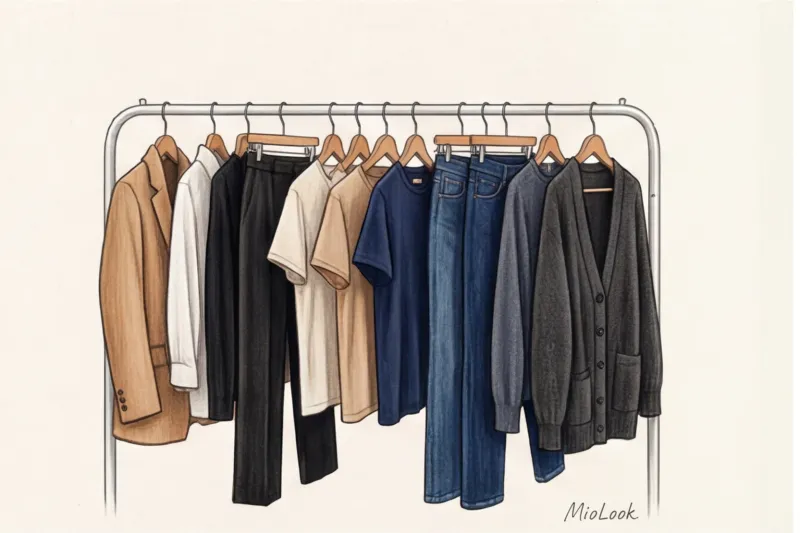
Smart-base (set the structure):
- Deconstructed jacket. Relaxed fit, slightly dropped shoulders, matte wool-silk fabric. Aim for a budget of €150 or more for a quality blend.
- Straight trousers with arrows. Full length, high rise. Creates the perfect vertical line.
- A-line midi skirt or slip skirt. The below-the-knee length conceals just enough skin for business etiquette.
Casual base (sets a relaxed tone):
- The right jeans. Straight jeans Dark blue or graphite, without any fraying, rips, or contrast stitching. High-quality, heavyweight denim will cost €70–€120.
- Basic T-shirts. Forget thin, see-through cotton. Choose heavyweight cotton (180 g/m² and above)—it holds its shape like a blouse.
- A voluminous cardigan or jumper with a textured knit. Works great as a second layer instead of a jacket on "relaxed Fridays."
Connecting links (balancers):
- Merino turtleneck. Smooth texture that looks more expensive than its price.
- Silk or cupro blouse of complex cut. With an ascot collar or delicate draping.
- Knitted midi dress. It is preferable to have a tight knit (ribbed) so that it does not emphasize the underwear, but creates a well-defined silhouette.
- A top made of thick silk with wide straps. To be worn exclusively under a jacket or cardigan.
- High quality leather belt.
- Structured vest from a three-piece suit. Can be worn on bare skin in summer or over T-shirts in autumn.
These 12 elements, when combined with a common color palette, easily generate over 30 different looks for the office, client meetings, and evening outings.
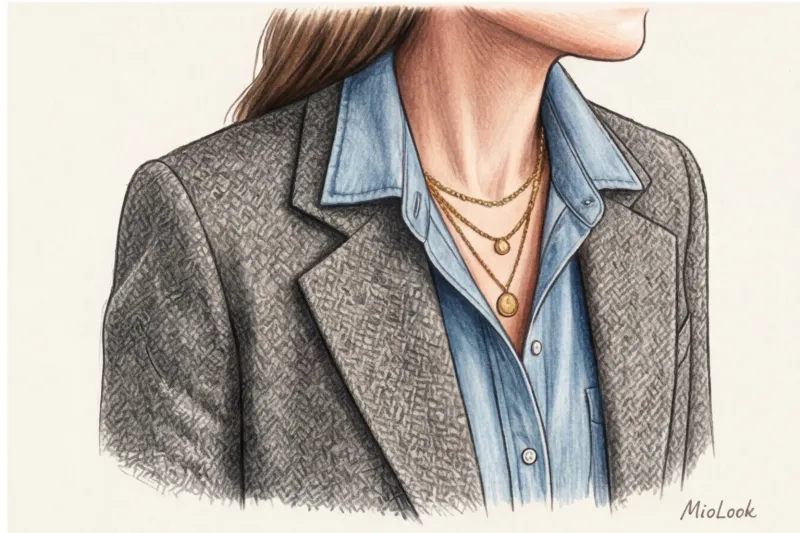
Shoes and Accessories: Regulators of the Degree of Formality
If clothes are a canvas, then shoes and accessories are the filters through which we filter our looks. Fashion week editors know this trick: you can spend all day in pleated trousers and a silk blouse, but by swapping your white minimalist sneakers for leather slingbacks, you transform your workday look into a dinnertime outfit in 10 seconds.
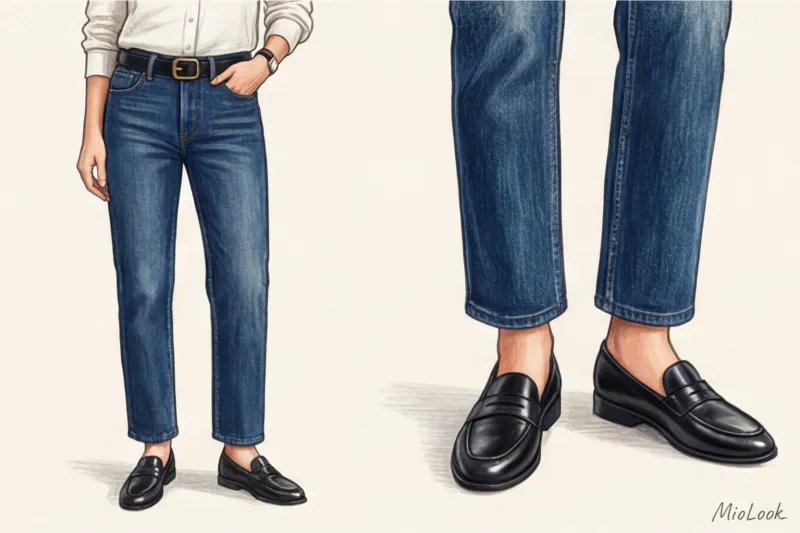
Smart casual footwear should be impeccable. Smooth leather loafers with a midsole are an absolute must-have (invest at least €120 for a pair that will last for years). If you choose sneakers, choose simple styles without unnecessary logos or colorful accents, in the style of Common Projects.
When it comes to bags, there's another common mistake. Many people wear soft fabric shoppers or shapeless bucket bags with jackets. This immediately kills the elegance. Smart casual demands structure: choose totes with a rigid bottom or hobo bags made of thick leather, which hold their shape even when empty.
Decorations also act as a balancer. Discussing basic jewelry wardrobe I always recommend avoiding excessive sparkle from rhinestones and thin, intricate chains in favor of minimalist geometric pieces. A masculine watch with a steel bracelet or a large, smooth ring will add a touch of class without being overtly flashy.
Checklist: How to Digitize Your Capsule with MioLook
After reading this article, you might be tempted to go shopping immediately. Don't rush. The main rule of a stylist is to take stock of what's already in your closet before making any purchase.
More often than not, you find yourself with an overabundance of casual items (jeans, T-shirts, sweaters), but a severe lack of complementing pieces (silk tops, the right jackets). Or, conversely, a closet full of formal suits lacking a relaxed base.
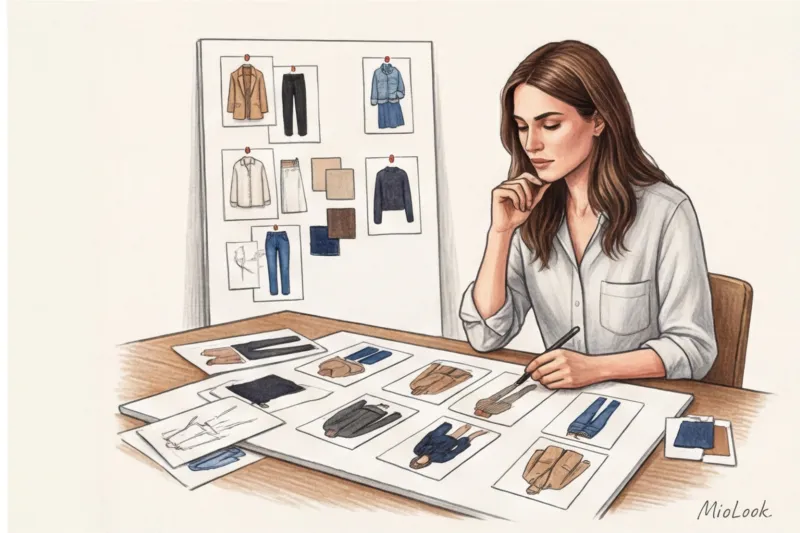
To see the real picture, I recommend using the functionality smart wardrobe in the MioLook app The process takes a little time, but saves hundreds of euros on impulse purchases:
- Take photos of your essential items and upload them to the app.
- Organize them by tags: mark formal pieces as “Smart,” relaxed ones as “Casual,” and neutral ones as “Basic.”
- Use the app's AI module to generate looks from uploaded items.
MioLook's algorithms will immediately reveal your blind spots. You'll clearly see that your perfect straight-leg jeans are missing that deconstructed jacket, and your tailored trousers are missing that soft turtleneck.
Ultimately, smart casual is a style about respecting the situation and being comfortable with yourself. By mastering the equalizer theory and the 60/40 formula, you'll stop being bound by rigid dress codes and begin to manage the impression you make.