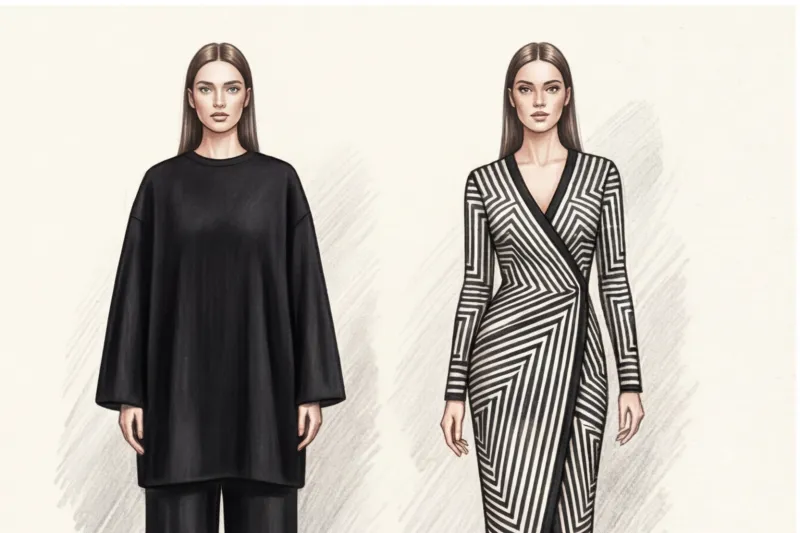

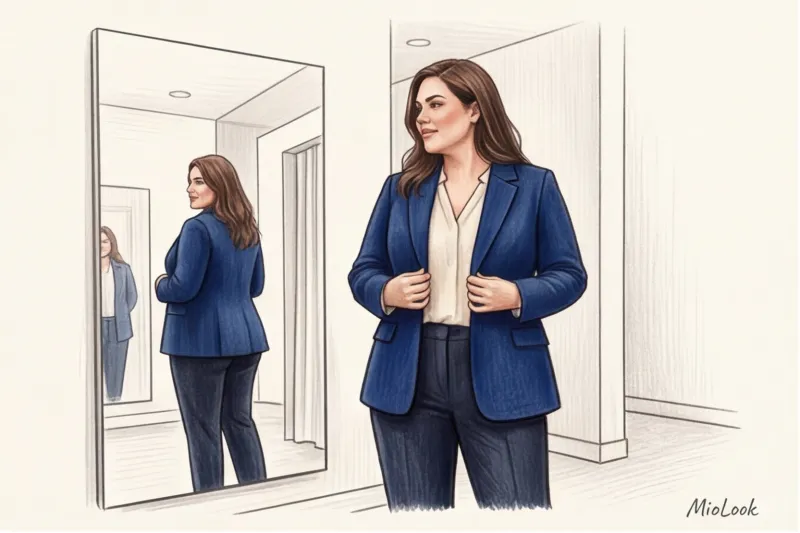
Over 12 years as a stylist, I've sorted through hundreds of closets. And do you know what 90% of plus-size women's wardrobes have in common? They're a hopeless, impenetrable black hole. When I ask a client to show me the clothes she feels comfortable in, a mountain of black tunics, black cardigans, and dark slouchy dresses ends up on the bed. Women sincerely believe this color is their main defense against extra inches.
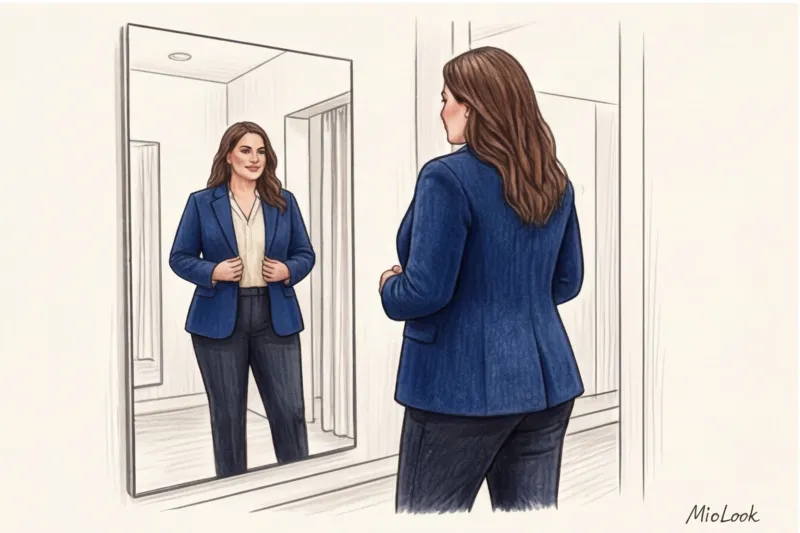
But here's the harsh truth: I analyzed the wardrobes of over 50 clients, size 50 and up, and 8 times out of 10, it was these "safe" items that visually made their figures look larger. We've become accustomed to relying on the outdated dogmas of the glossy magazines of the early 2000s, forgetting the laws of optical physics and the architecture of cuts. If you're still Googling, What colors make you look slimmer? , get ready to break the mold.
In this article, we won't discuss shapewear or advise you to "just love yourself" (although that's certainly important). We'll explore how contrast, fabric density, and optical illusions work. We've already covered the basic rules of silhouette in more detail in our The complete plus-size style guide , and today we will focus exclusively on the magic of color and prints.
The main myth of coloristics: is it true that black makes you look slimmer?
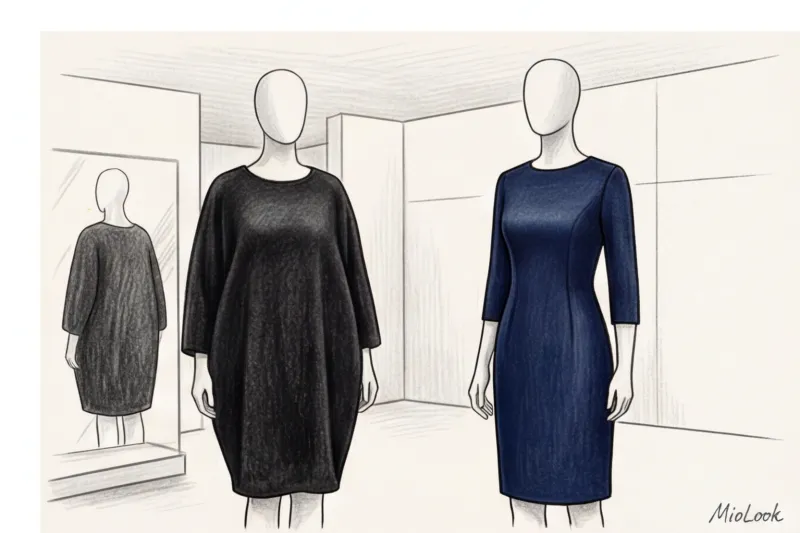
The "hide in black" paradigm is perhaps the most damaging wardrobe mistake for a curvy woman. To understand why, let's look at the physics of light. Black actually absorbs light without creating shadows on the fabric itself. Because of this, in dim light or against a dark background, it reduces volume.
But how often do you stand in a dark room against a black wall? In real life—on a bright street during the day, in a white-walled office, in a café—the effect of silhouette contrast, or backlighting, is at work. A black spot against a light background acts like a bold marker, mercilessly outlining every line of your body. In my experience, this effect can visually add up to 15% volume, emphasizing a slouched posture, a belly, or heavy hips if the cut is improper.
Texture plays a huge role. Thin black knits (especially viscose with elastane) are your worst enemy. They don't hold their shape, glare at the edges, and bunch up. Black heavy crepe (at least 250 g/m²) or structured wool perform quite differently, but even in these cases, color alone won't save you without a rigid, architectural cut.
An alternative to black: which colors actually make you look slimmer
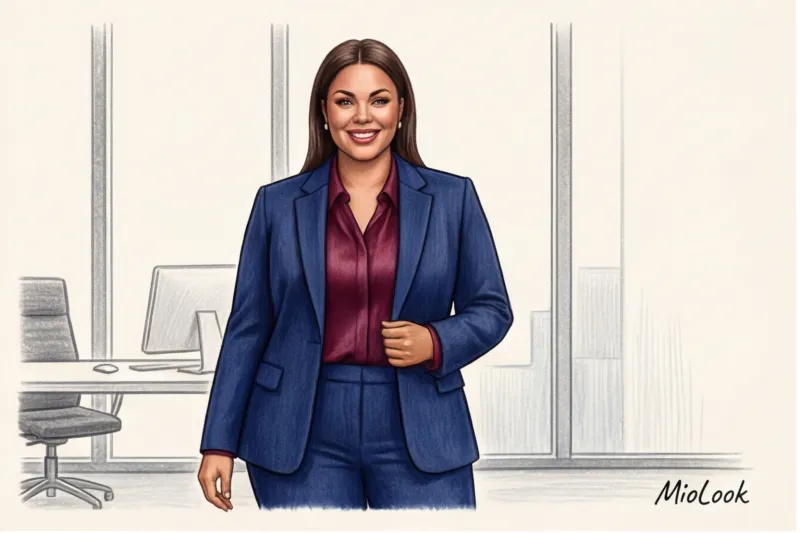
If black is out, what should you wear? The answer lies in deep, rich, cool shades. Navy, emerald, deep burgundy (Marsala), eggplant, and dark chocolate—these are your new best friends.
Why do they work better? Firstly, they offer excellent light absorption, especially in matte finishes, but they don't create that harsh contrast with bright surroundings. Secondly, they look significantly more expensive and prestigious, drawing attention away from the volume and toward the noble shade.
"When we digitized the wardrobe of one of my executive clients and replaced 70% of her black pieces with navy blue and pine shades, her colleagues started asking her what diet she was on. She simply changed the palette and removed the backlighting," – from personal experience.
By the way, to get a true picture of the color imbalance in your closet, I always recommend that clients take photos of their clothes first. When you load clothes into MioLook The app clearly displays color statistics. Seeing a chart where 85% of the color is black will tell you it's time to make a change.
Your perfect look starts here
Join thousands of users who look flawless every day with MioLook. A smart AI stylist will analyze your body shape and select the perfect color palette.
Get access — €0.99 onceAnatomy of a Stripe: Horizontal vs. Vertical
And now we're going to dispel the stereotype that's been hammered into women's heads for decades: "Plus-size women shouldn't wear striped shirts; horizontal stripes make you look fat, so wear only vertical ones." It's complete nonsense, and I have scientific evidence to prove it.
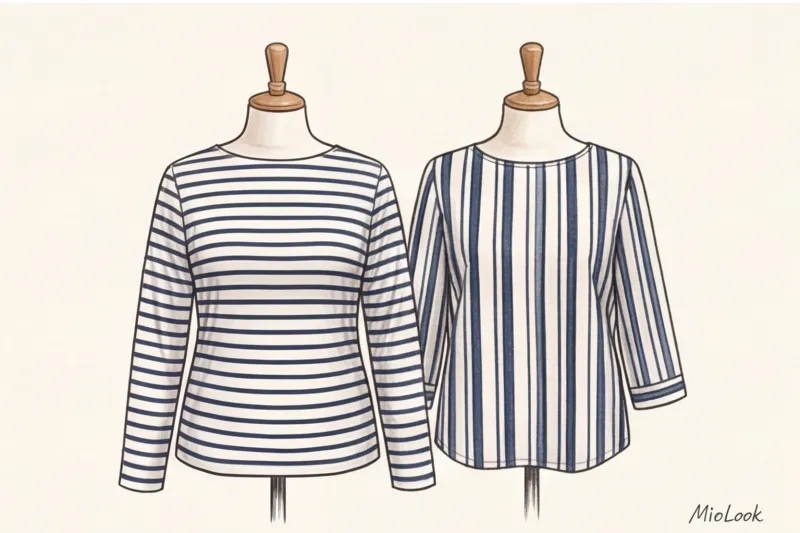
In 2008, researcher Peter Thompson of the University of York conducted a brilliant experiment. He demonstrated the existence of the Helmholtz illusion as it applies to clothing. He found that a square filled with dense horizontal lines appears narrower and taller to the human eye than an identical square with vertical lines.
How does this work on the body? Wide vertical stripes on a full figure play a nasty trick. As they curve around the chest, stomach, or hips, the straight lines inevitably curve, creating a 3D globe effect. This instantly highlights all the curves. Meanwhile, dense horizontal stripes force the viewer's eye to quickly slide up and down the "ladder" of rhythm, visually elongating the silhouette.
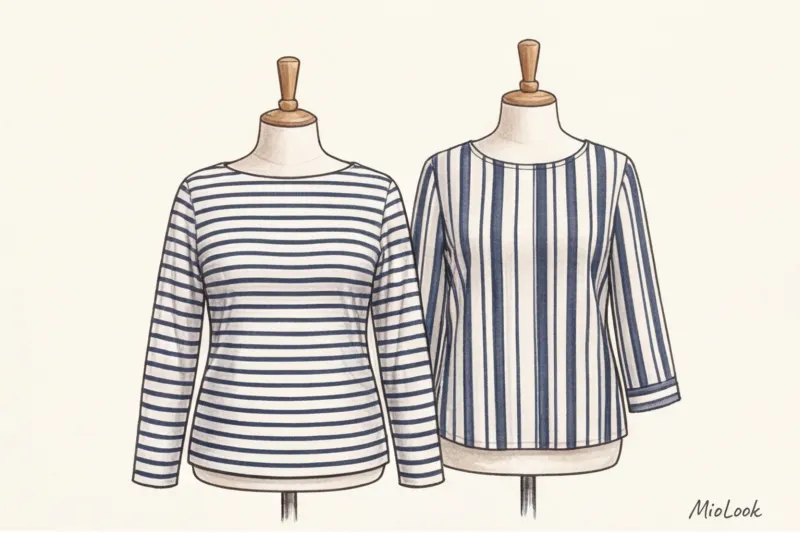
The Perfect Plus-Size Strip: Selection Options
Important point: This rule has strict limitations It doesn't work with every striped shirt. For horizontal stripes to be slimming, they must meet three criteria:
- Thickness and rhythm: Lines should be narrow (no wider than 1-1.5 cm) and spaced closely together. Wide blocks (5-10 cm) will truly expand your space to the size of a billboard.
- Contrast level: Avoid stark combinations of crisp white and jet black. Opt for low-contrast options: navy blue with muted light blue, burgundy with dusty pink, or off-white with beige.
- Preserving Geometry (Limitation!): This rule does NOT work on flimsy fabrics. If you wear a thin viscose long sleeve, the stripes will deform and the effect will disappear. The fabric should hold its shape: heavyweight cotton (at least 180 g/m²), denim, or structured jersey.
Ready to get started?
Try MioLook's free plan—no commitments required. Upload your clothes and watch how AI combines them into slimming looks.
Get access — €0.99 onceGeometry and Floristry: How to Choose Prints for Plus-Size
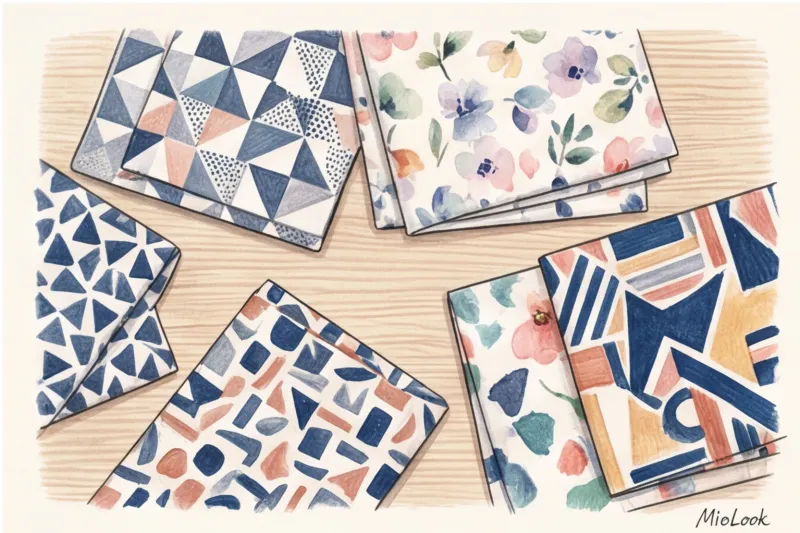
Prints are a source of dread for curvy women. They often fall into two extremes: either avoiding patterns entirely or embracing gigantic, garish flowers that resemble sofa upholstery. The secret to the perfect print lies in the rule of proportion.
The scale of the design should match the scale of your figure. The danger of a small floral (millefleur print) on a large figure is the visual dissonance it creates. Tiny elements over a large area create a "rippled" effect; the eye can't grasp them, and the garment ultimately begins to resemble a "granny robe."
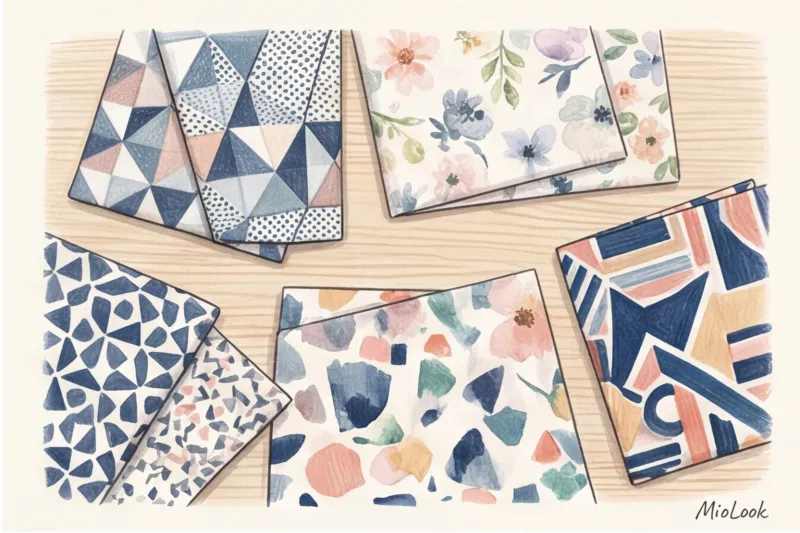
In my consultations, I teach my clients a simple rule: The Clenched Fist Rule Place your fist against the print on your dress. The ideal size of one repeating element for a woman size 50-54 should be about the size of your fist or slightly smaller. If the print is the size of a fingernail, it will make you look wider. If it's the size of a dress pant, it will make you look monumental.
Which prints are your best friends? Abstraction, watercolor washes with soft color transitions, and diagonal geometric patterns (slanted checks, also known as argyle). Diagonals work like a sculptor, drawing the eye away from problem areas and creating dynamism in the look.
Smart color blocking: sculpting a silhouette with color
If you want to know, What colors make you look slimmer? For the most radical take, consider the color blocking technique. It's not just a trend, it's pure architectural magic that replaces diets.
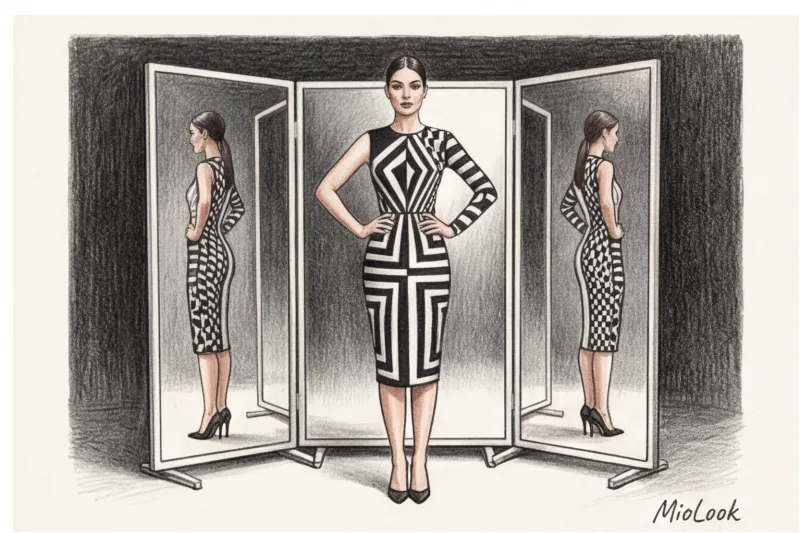
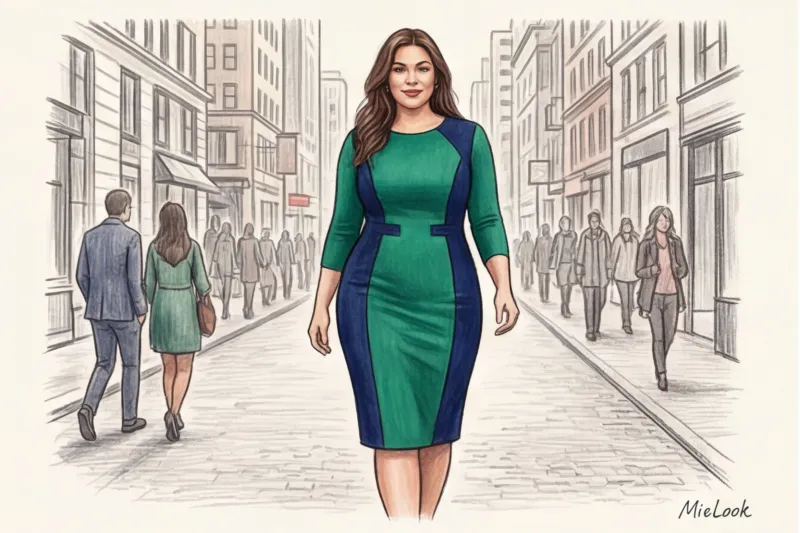
Remember the famous illusion dresses that Stella McCartney released in her 2011 collection? They're still being copied by brands from Zara to high-end retailers. What's the key? The dress features a light or brightly colored front panel, with wide panels of dark blue or black sewn into the sides.
The human brain is lazy. When we look at such a dress from the front, our eyes only notice the light central part of the silhouette, while the dark sides blend into the background. You're visually "cutting off" 5-7 centimeters on each side from the waist and hips.
Another powerful color blocking technique is creating a continuous vertical color line. How to put this into practice? Wear a monochrome inner layer (for example, full-length graphite trousers and a graphite top), then layer a contrasting jacket (for example, a rich burgundy) over it, leaving it unbuttoned.
The two flaps of an unbuttoned jacket form a narrow column of color down the center of your body. You appear exactly as wide as this visible column. This works flawlessly at any size.
Access to MioLook for €0.99 — one-time payment
Not sure how to combine colors to create a vertical look? Our smart AI stylist will find the perfect look from your items in seconds.
Get access — €0.99 onceChecklist: How to Integrate Color and Print into Your Wardrobe (Without Mistakes)
Theory is great, but let's move on to practice. How can you incorporate all this knowledge into your wardrobe tomorrow without wasting money?
- Burn those shapeless printed tunics. Replace them with structured, colorful jackets made of thick cotton or wool. Shape and color work 100 times better than a shapeless, patterned piece.
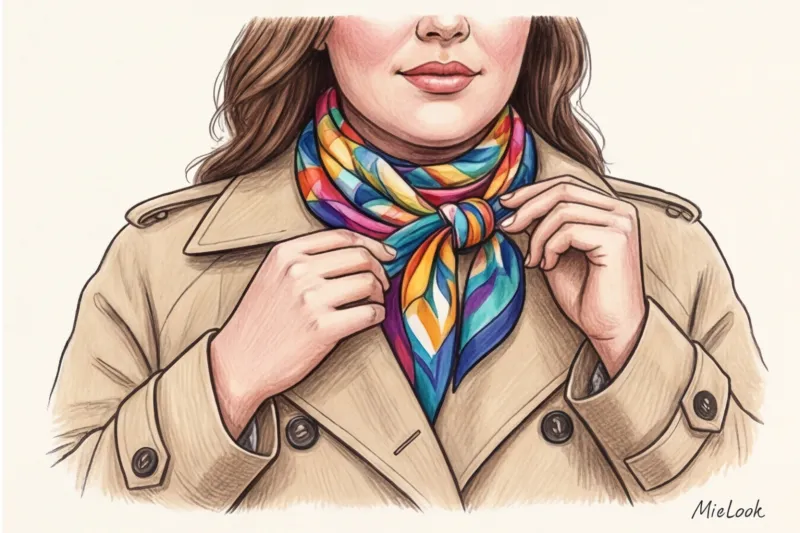
- Control the viewer's attention. Place a statement print or your brightest color in an area you're most proud of. Do you have a beautiful bust and face? Wear dark bottoms, a basic top, and a bright silk scarf over your bust. Your conversation partner's gaze will never wander to your hips.
- Start small. If you've only worn gray and black for 10 years, don't buy a scarlet coat tomorrow—it'll just hang in your closet. Incorporate color through accessories: an emerald hard bag, burgundy loafers, or a blue belt.
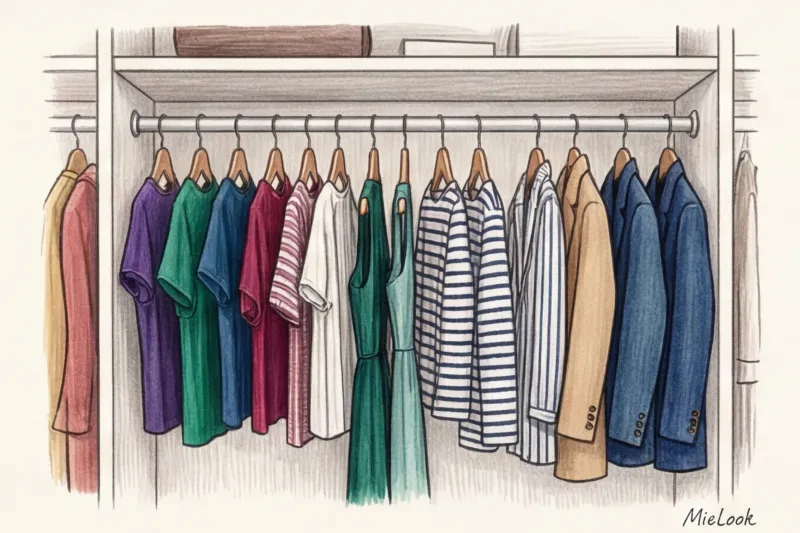
To avoid confusion when shopping, always create capsule wardrobes. A pre-planned wardrobe, where tops and bottoms match in shades and print scales, will save you from stress in the mornings.
Conclusion: from "hide" to "emphasize"
Finding an answer to the question of What colors make you look slimmer? , often leads us to false conclusions. We've discovered that black can be a traitor in the wrong lighting and texture, while horizontal stripes (if they're close and narrow) elongate the silhouette better than any diet. The secret to a luxurious plus-size look isn't in avoiding color, but in choosing deep matte shades, dense fabrics that hold their shape, and prints that are proportionate.
Your size is a given that can and should be treated like a beautiful architectural design. Stop trying to hide your body in dark bags. Use color blocking to sculpt new proportions and vertical color lines to add height.
Take stock tonight. Pull out everything, take photos, and look at your wardrobe like an analyst. And if you need help digitizing and creating slimming outfits, entrust this task to MioLook algorithms Your style should serve you, not the complexes imposed by outdated stereotypes.