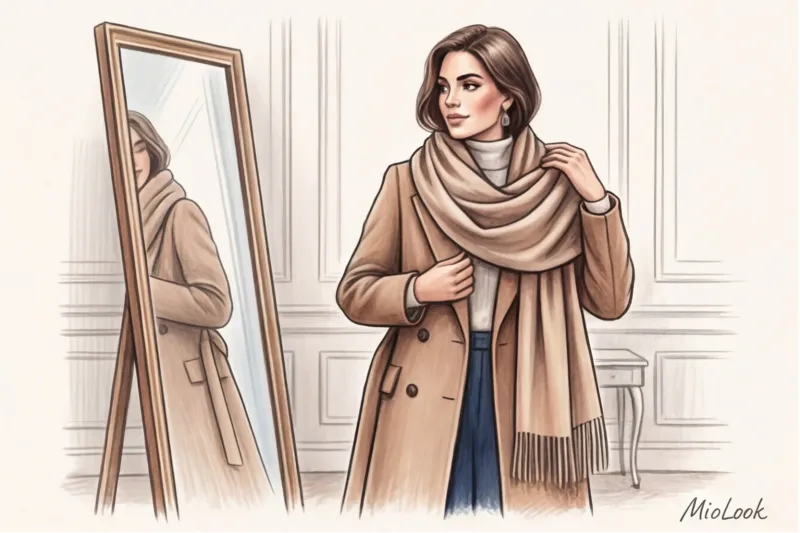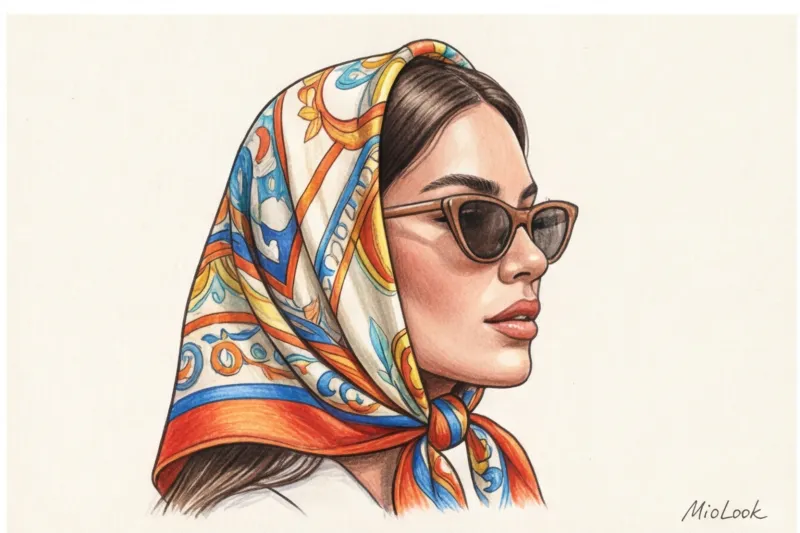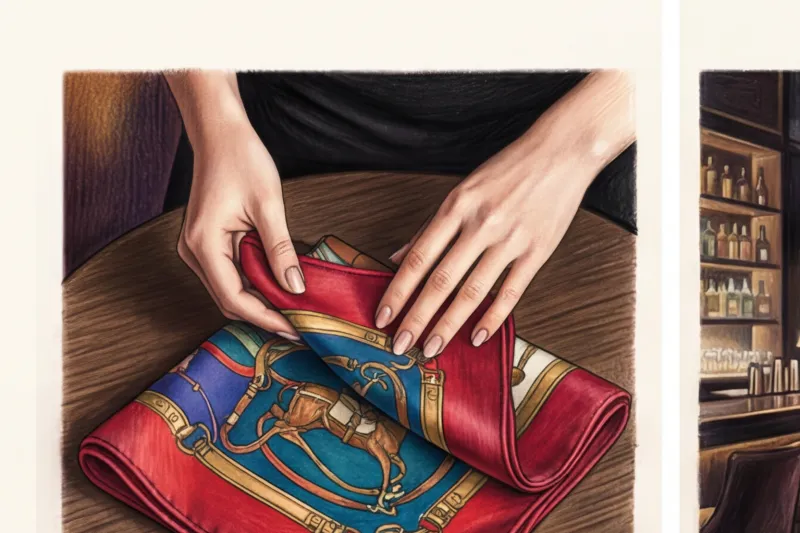
A few years ago, while preparing a client for a private gala dinner in Monaco, we tried a little stylistic sabotage. Instead of the expected couture blouse, we paired a vintage silk 90x90 bob with a formal tuxedo. The effect was astounding: photographers paid more attention to her than to guests in dresses costing tens of thousands of euros. That evening, I was asked again, How to tie a scarf beautifully for an evening look , expecting to hear about complex schemes and secret nodes.
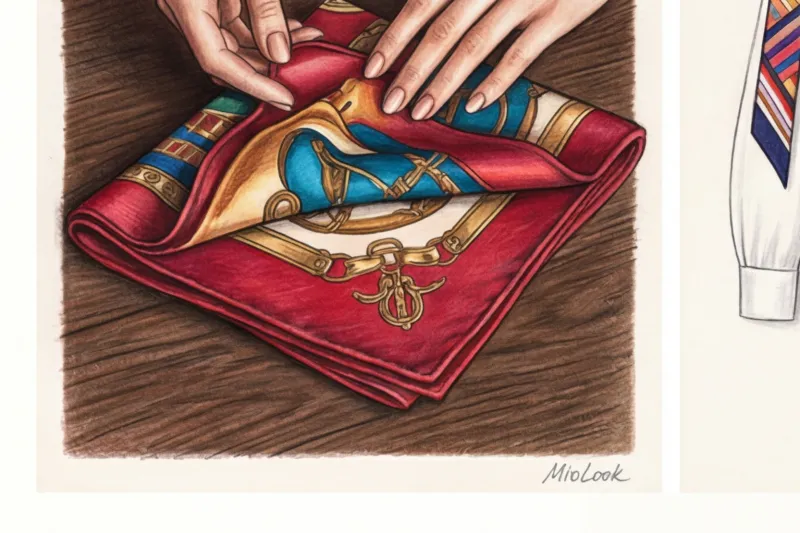
The truth is, there are no secret knots. True luxury tolerates no fuss. Instead of banal instructions like "10 ways to fold a rose," I want to talk about the architecture of silk. How weight, density, and edge finish determine whether your accessory will look like a status investment or a flight attendant's uniform. We discussed the art of such transitions in more detail in our the complete guide to transforming your daytime wardrobe into an evening one , and today we will focus exclusively on silk.
The Anatomy of Luxury: Why Not Every Silk Is Suitable for Evening Wear
When I was interning with a Hermès master in Lyon, the first thing they taught me was to close my eyes. “First you have to hear "You can feel the weight of silk," Monsieur Laurent said. And this isn't French poetry, but the harsh physics of fabric.
The difference between an investment scarf (whether it's Hermès, Dior, or Cartier) and a mass-market one lies in three basic characteristics:
- Silk weight (momme): A high-quality scarf has a density of 14 to 22 momme. This type of silk holds the knot on its own, doesn't slip along the collarbone, and doesn't require dozens of bobby pins to secure it.
- Fabric texture: For evening light, choose silk twill, not shiny satin. Satin reflects light from camera flashes and electric lights, visually cheapening the look. Twill, with its diagonal ribbing, gracefully refracts light, giving the print a play of depth.
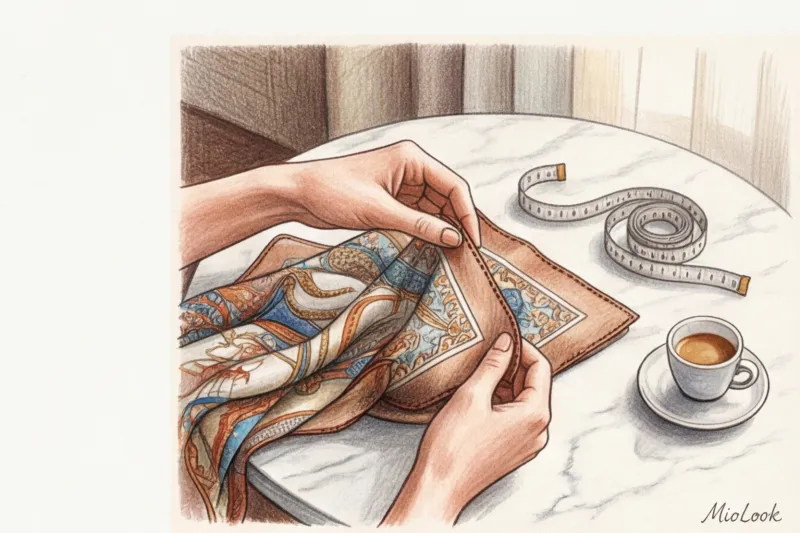
- Hand edge (roulotté à la main): The edges of a true, stately bob are always folded to the right side and hand-stitched with silk thread. This fold creates a micro-frame that provides the correct geometry for any drape.
If you're planning a purchase, aim for a budget of €350 to €500 for a new bobblehead, or look for vintage examples at reputable auctions—there, prices typically range from €150 to €250 for excellent condition.
Access to MioLook for €0.99 — one-time payment
A smart AI stylist will create the perfect look and help you integrate silk accessories into your wardrobe.
Get access — €0.99 onceHow to tie a scarf beautifully for an evening look: the Sprezzatura principle
Italians call it Sprezzatura — the art of looking like you spent exactly one and a half seconds getting ready. The knot should be slightly asymmetrical, living and breathing.
The foundation of any expensive unit is Pli de base (Basic bias fold). You lay the square scarf inside out, fold the two opposite corners toward the center, and then fold the resulting strip in half two or three more times. Only when folding silk obliquely , you get that very fluid, plastic form that lies in perfect folds.
On the neck: an alternative to necklaces and chokers
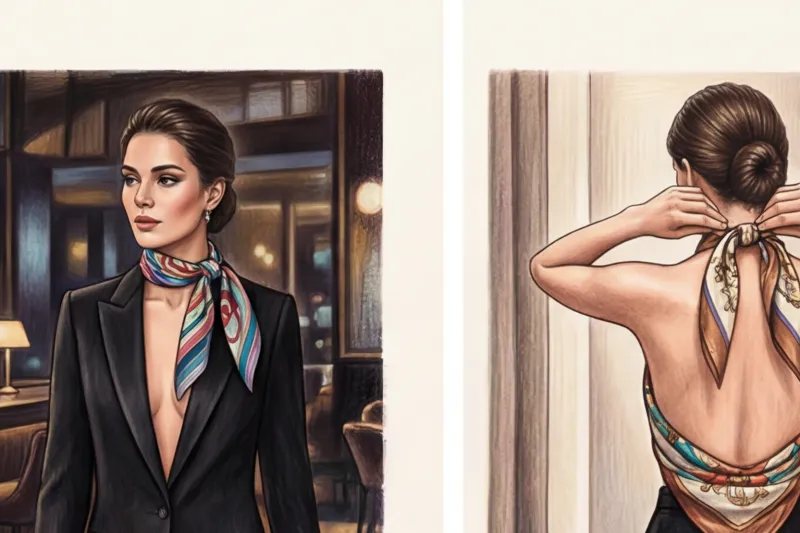
An evening silk neckpiece always reveals a playful touch of skin. According to the WGSN global report (2024), interest in textile jewelry has grown by 40%, driven by a general decline in the popularity of heavy metal necklaces.
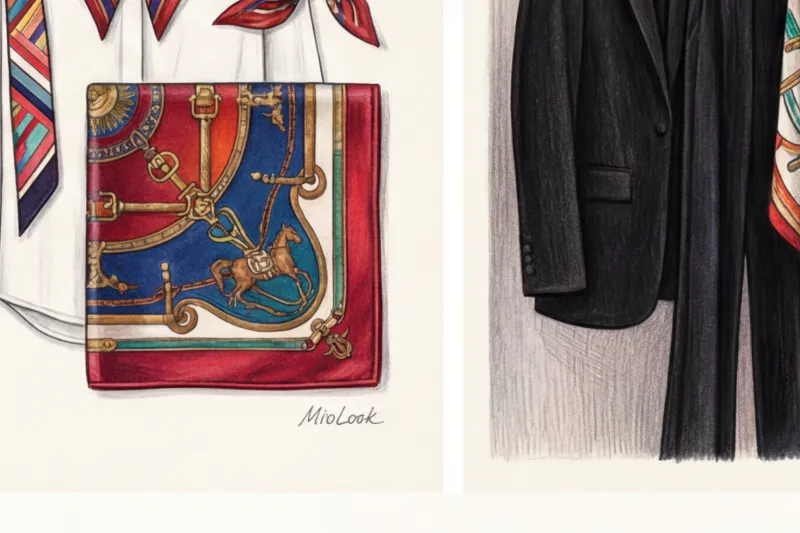
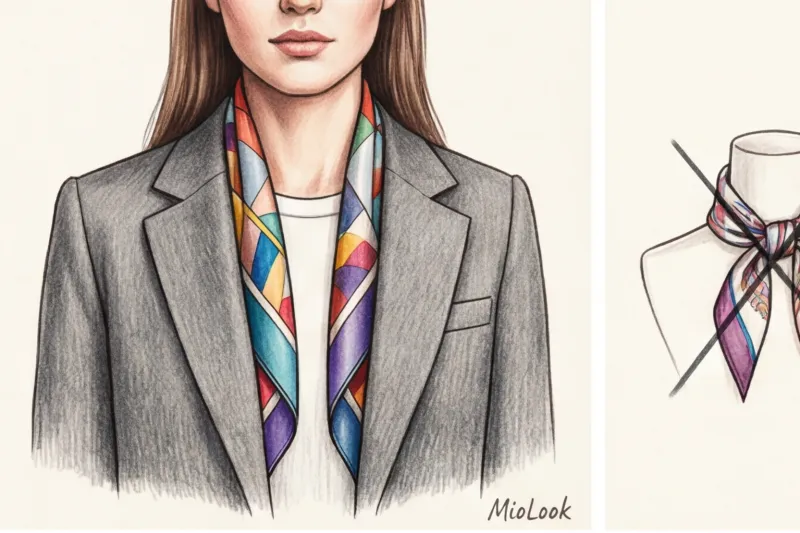
- Tuxedo style: Fold a Pli de base scarf and simply drape it over your neck, over an unbuttoned jacket worn barefoot. Let the ends hang loosely down, creating a vertical line that visually elongates your silhouette.
- French choker: Wrap a narrow silk ribbon around your neck, knotting it at the nape of your neck and letting the ends hang down your open back. A brilliant trick for dresses with a low back.
"The main rule: there should be some air between your neck and the fabric. A tightly cinched silk scarf will instantly transform you from a gala guest to a senior flight attendant on a Milan-Paris flight."
Limitation: If you have a naturally short neck, avoid horizontal wraps. A deep V-shaped drape across the chest is your choice.
Instead of a top: sensuality and architecture of form
The classic 90x90 cm bob is a full-fledged piece of clothing. During Milan Fashion Week, I often use this trick to transition from shows to evening cocktails.
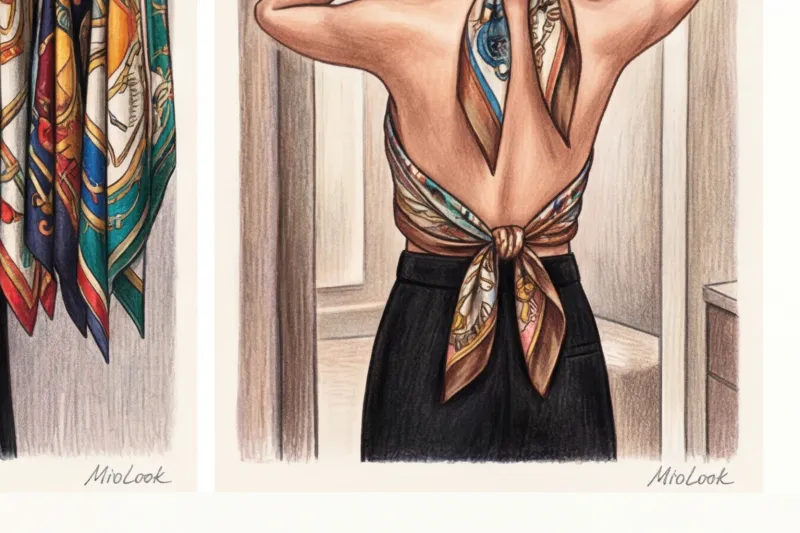
Transformation into halter-top (a top with a loop around the neck) takes exactly one minute. Tie two adjacent corners of the scarf into a tiny knot at the nape of your neck, and the other two at the back of your waist. Paired with a tailored oversized blazer and high-waisted palazzo pants, it looks phenomenally expensive. Vogue France recently called this technique "the ultimate solution for evening minimalism."
On the bag: how to give new life to a daytime tote
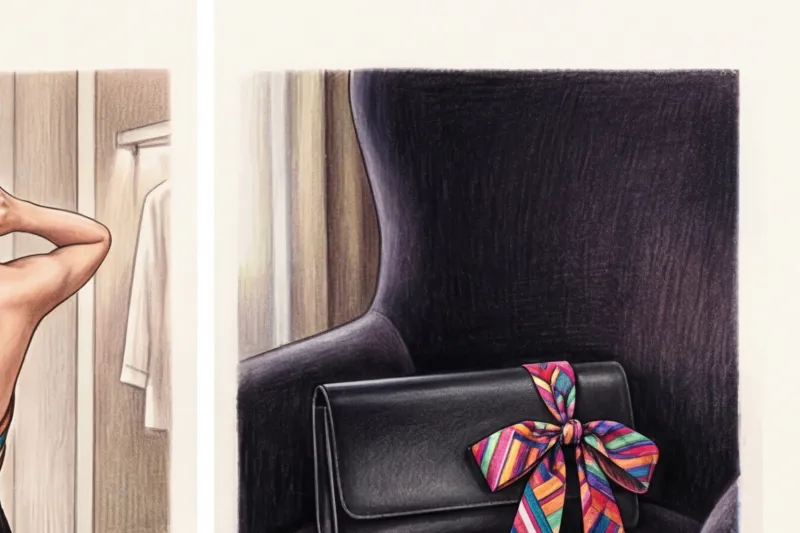
Wrapping your bag handle with twilly ribbon is a great practical trick for protecting the light leather of your Birkin or Kelly bag during the day. But at night, this trick looks too utilitarian.
For evening wear, use a scarf as an accent. Tie a ribbon into a fluffy, asymmetrical bow on one side of the handle of a small clutch. Let the ends hang loose. In an all-black look, a single silky pop of color works better than any piece of jewelry.
Your perfect look starts here
Join thousands of users who look flawless every day with MioLook's intelligent tips.
Get access — €0.99 onceGeometry of Style: Choosing the Right Accessory Format
According to statistics from the consulting firm McKinsey (2024), which analyzes wardrobe cost-per-wear, luxury accessories are the most profitable investment. If you wear a €300 evening top twice a year (costing €150 per outing), then a €450 scarf, worn both day and night 30 times a year, costs only €15 per outing.
- Format 45x45 (Gavroche): Perfect for micro-knots. Wear it on your wrist as a bracelet or create a rosette on your jacket lapel.
- Format 90x90 (Classic bob): An absolute must-have. It's your top, your necklace, your evening belt for silk trousers.
- Ribbons (Twilly/Mitzah): Designed for bags and hair, they often get lost on the neck in larger evening looks, so they're best reserved for accent accessories.
Bad manners: 4 main mistakes when styling silk
Working with private clients, I regularly see the same attempts to "improve" their image, which lead to disaster. Here's what you should stop doing forever:
- Ironing the hand wheel. This is a crime against fashion. By flattening the voluminous hemmed edge with an iron, you instantly transform a €500 garment into a cheap €10 piece of fabric.
- Competition of accents. A silk scarf with a bold print shouldn't be paired with massive chandelier earrings or complex necklaces. The strict rule of one accent is to stick to one piece.
- Cheap scarf rings. Forget plastic or cheap metal clasps with rhinestones. Either use signature, simple rings (like the Chaîne d'Ancre by Hermès) or make do with a clever knot.
- Complexity mania. A counterintuitive fact that's so hard for many women to accept: the more intricate, layered, and tight your knot (all those "roses" and "butterfly bows"), the more provincial your look. True luxury is a touch of casualness and a revealing print.
Checklist: Preparing an Evening Capsule with MioLook
The problem most women face isn't that they have nothing to wear for the evening, but that they forget about the potential of their accessories while getting ready. This is where technology comes to the rescue.
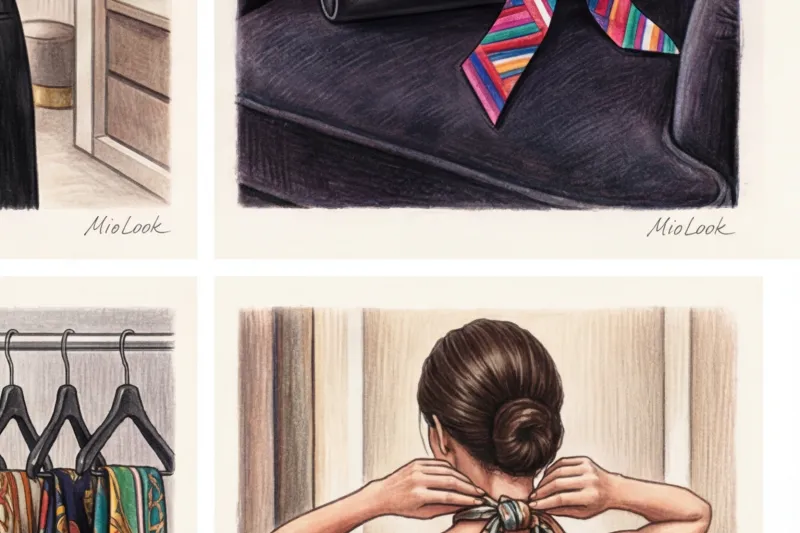
I always recommend my clients to digitize their entire silk collection in an app. MioLook Here's how it works in practice:
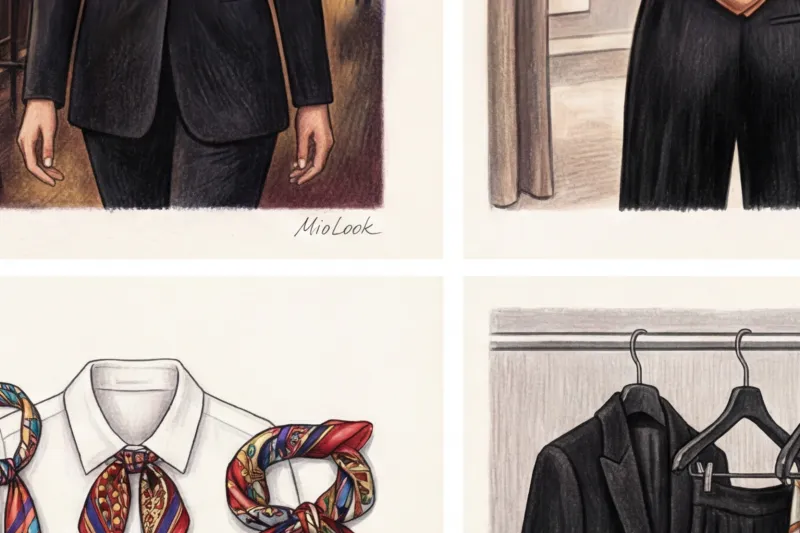
You're getting ready for the office in the morning. You put on basic black pants and a white shirt. After adding this look to the app, you can tap the "evening transformation" feature, and the AI stylist will suggest: swap the shirt for a black silk top, and throw on your burgundy 90x90 bob, tied in a loose knot.
Two swipes, three minutes in the office restroom—and your look for dinner at a premium restaurant is ready. Remember: by investing in one truly high-quality silk accessory, you're buying more than just a piece of beautiful fabric; you're purchasing the key to dozens of new evening looks.