In 14 years of working as a personal stylist, I've learned one ironclad rule: any look, even the most expensive one, begins long before choosing a dress. One day, a client named Irina came to me almost in tears: she was about to throw out half her luxury wardrobe, convinced she'd gained a significant amount of weight. Her luxurious silk blouses were awkward, and her tight knitwear was highlighting some strange bulges on her back. You know what the real problem was? We didn't change our clothes. We simply went to a nice lingerie store.
According to industry statistics, about 80% of women wear the wrong bra size. And most often, it's a devastating combination: too much underbust and too small a cup. Many women spend years googling... How to tell if a bra is too small , but they're looking for the problem in completely the wrong place, complaining about their "wrong" figure. We've covered more about how to build the right wardrobe foundation in our The complete guide to a basic lingerie wardrobe Today, I want to explore 7 subtle signs that your underwear is sabotaging your style, ruining your clothes' cuts, and harming your health.
Sign 1: The belt creeps up, forming an arch on the back
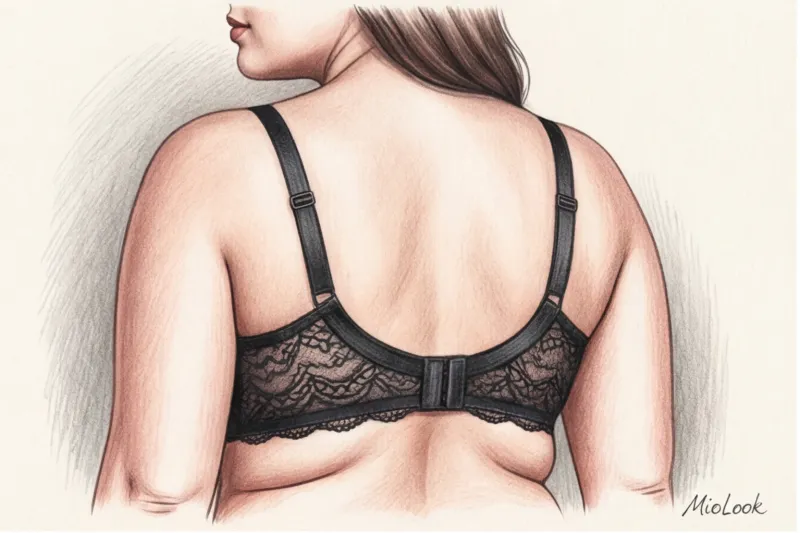
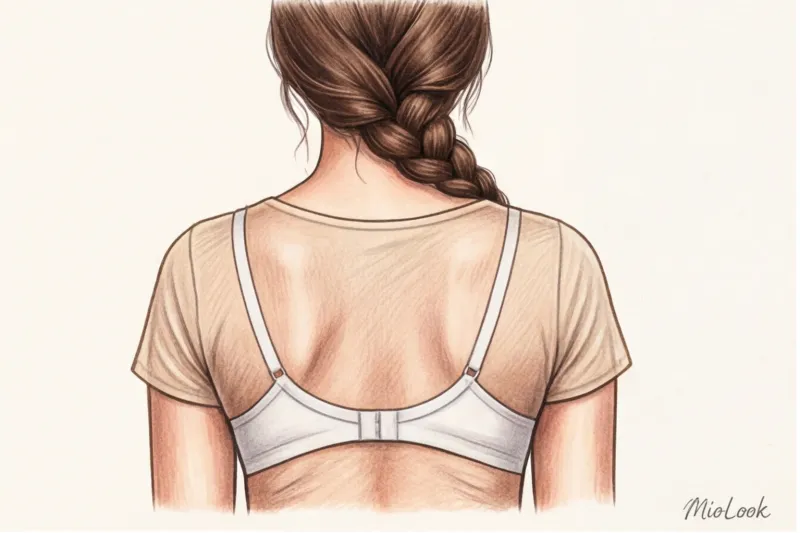
Stand sideways to the mirror. Is your bra's bandline strictly parallel to the floor? If the clasp is sagging toward your shoulder blades, creating a sad arch in your back, I have bad news for you—your silhouette is already broken.
According to professional bra fitting standards, there's an unwavering "80/20 rule": the band should support 80% of the breast weight, with the straps providing only 20%. When a band is too big (which happens 9 times out of 10), it doesn't settle under the weight of the breasts, but instead slides up the wider part of the back.
A common mistake my clients make in the fitting room: when the waistband rides up, they try to tighten the straps even more. This doesn't help lower the waistband; it only guarantees a migraine by the end of the workday.
From a style perspective, the consequences are disastrous. The waistband slips upward, pulling down the back of the garment. That same €200 straight-cut jacket, which should create a flawless vertical line, begins to bunch up at the back and gather in unsightly folds near the shoulder blades.
Sign 2: The "four breasts" effect (how to tell if your bra is too small)
This is probably the most frequent and most insidious request in my practice. Girls ask, How to tell if a bra is too small , and the main visual indicator here is the "four-boob" effect (or double-boob effect). This occurs when the breast literally spills over the top edge of the cup, being separated in two by the dense edge of the fabric.
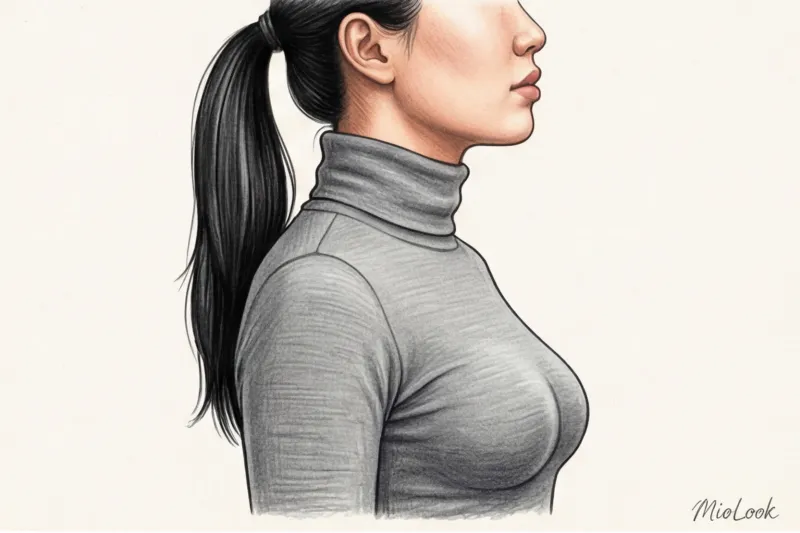
Why is this critical for a stylish wardrobe? This flaw can instantly cheapen a look, especially when it comes to fine knitwear. Last season, we rescued a client's perfect look with a thin cashmere turtleneck from Massimo Dutti. The garment looked sloppy due to the unevenness of the neckline. The solution took 10 minutes: we simply changed her usual C cup to a D cup, keeping the waistband size the same. The sleek, luxurious silhouette was instantly restored.
It is important to distinguish between quality push-up (which lifts the breasts from below, leaving a smooth transition to the collarbone) and a critically small cup (which cuts into the fabric at the top, cutting it). If the edge of the cup is visible under a tight-fitting T-shirt, the size is incorrect.
Sign 3: The bones are digging into the ribs or armpit
The anatomy of a proper underwire is very simple: it should rest directly on the ribs, curve around the root of the breast, and never rest on the breast itself. If you feel a strong urge to adjust your bra mid-day because the metal is pricking your armpit, that's a warning sign.
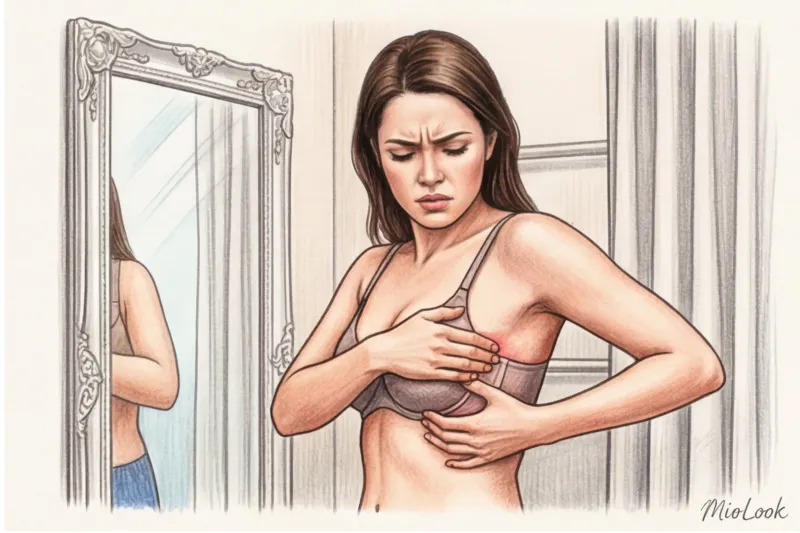
It's important to note here: this rule doesn't work for everyone. For women with a wide ribcage and shallow bust, the underwire of a standard bra may dig in simply because the fit isn't right. In such cases, I recommend looking for brands that specialize in a "shallow" shape (wide underwire, shallow cups).
But more often than not, an underwire in the armpit means the cup isn't deep enough. The breasts simply push the underwire to the side. Medical research shows that the constant pressure of a hard underwire on the tissue in this area disrupts lymph flow and blood circulation, not to mention causing painful microtrauma to the skin.
Your perfect look starts here
Join thousands of users who look flawless every day and organize their wardrobe with MioLook.
Get access — €0.99 onceSign 4: Straps constantly fall off or leave deep grooves
Sagging straps are a brilliant excuse women make up for themselves. "I just have sloping shoulders," I hear at every other consultation. No, my dears, your waistband is simply too big.
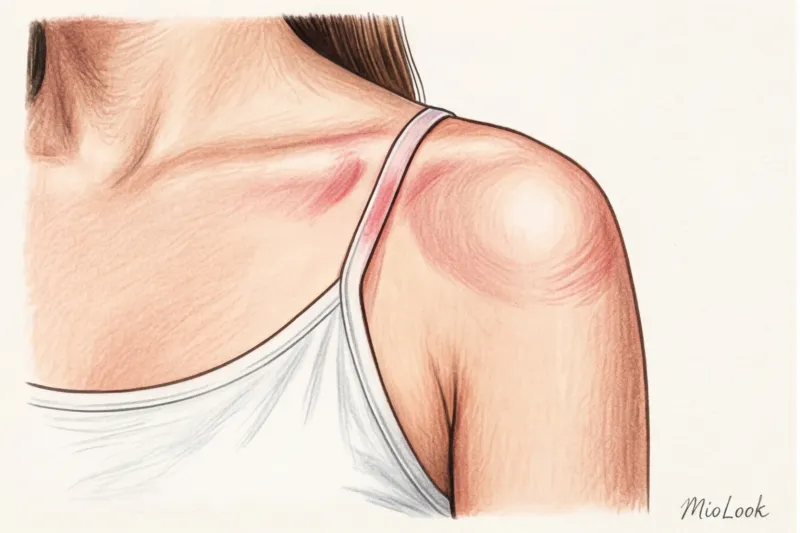
If the band is loose, the cups will slide down, pulling the straps down with them. No matter how tight you tie them, they'll slip off with any movement. The downside is deep, red grooves on your shoulders. This means the band isn't working at all, and the straps have heroically borne 100% of your breast weight. According to physical therapists, constant pressure on the trapezius muscle is one of the main causes of chronic tension-type headaches in office workers.
In a style context, falling straps put an end to off-the-shoulder, boat-neck, or asymmetrical tops. A faded strap peeking out from under an elegant jumper instantly deflates the status quo of your look.
Sign 5: The bridge (stan) does not fit snugly against the sternum
The center part of a bra (the bridge or stanchion) is your main anchor. When it fits correctly, it should lie flat and snug against the bone between your breasts (the sternum). Do a quick practice test right now: press your finger into this center part. If it springs back, sags, or leaves a gap between it and your skin, you're wearing the wrong size.
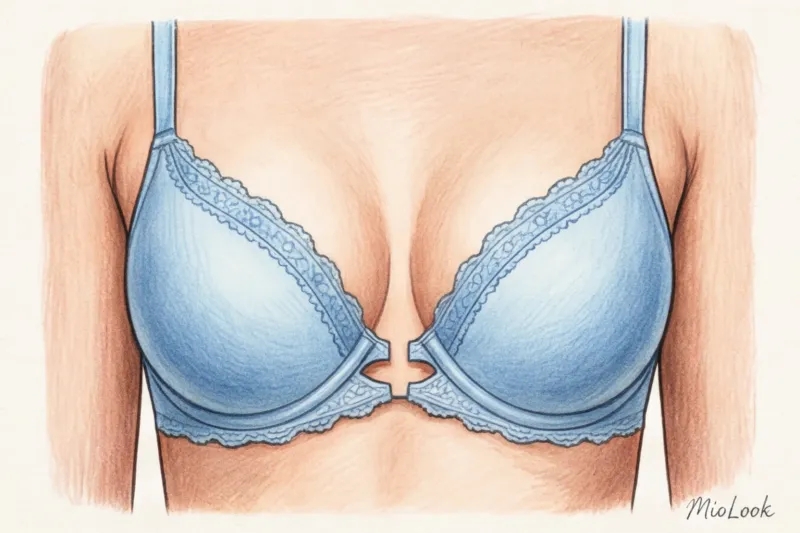
If the bridge is "floating," it means your bust is significantly larger than the cup size. Your breasts don't fit inside and are simply pushing the entire bra away from your body.
Fair limitation: This rule only applies to classic underwired bralettes. If you wear soft, non-wired bralettes, a tight fit is technically impossible due to the lack of a rigid structure.
Sign 6: The texture of the underwear is showing through your clothes.
My lingerie wardrobe philosophy is very simple: base layers are like a high-quality foundation for your face. They should even out the surface and remain completely invisible. Only after creating this base can you layer the rest of your makeup (or clothes).
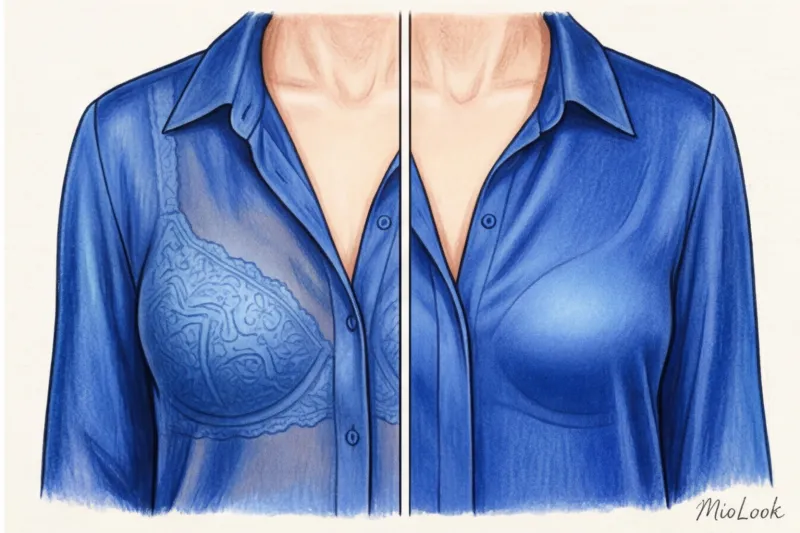
It's surprising how often women try to wear accent lace with everyday wear. A luxurious €150 silk blouse will look sloppy and cheap if the lace seam is bulging underneath. A horizontal or diagonal seam down the center of the cup is especially tricky—it creates unsightly creases under thin, basic viscose or cotton T-shirts (weight less than 180 g/m²).
Your capsule wardrobe should definitely include at least two absolutely smooth basic bras (one beige to match your skin tone, and one black) that create perfect geometry without unnecessary details.
Access to MioLook for €0.99 — one-time payment
A smart AI stylist will select the perfect look based on your body type and wardrobe. Plan your everyday looks stress-free.
Get access — €0.99 onceSign 7: Evening "liberation" as the main ritual
Let's be honest: if taking off your bra is the best part of your day, and you do it right in the hallway without even taking off your coat, you're wearing an instrument of torture, not a wardrobe staple. The right basic underwear should feel like a second skin, allowing you to comfortably spend 12 hours of your active day in it.
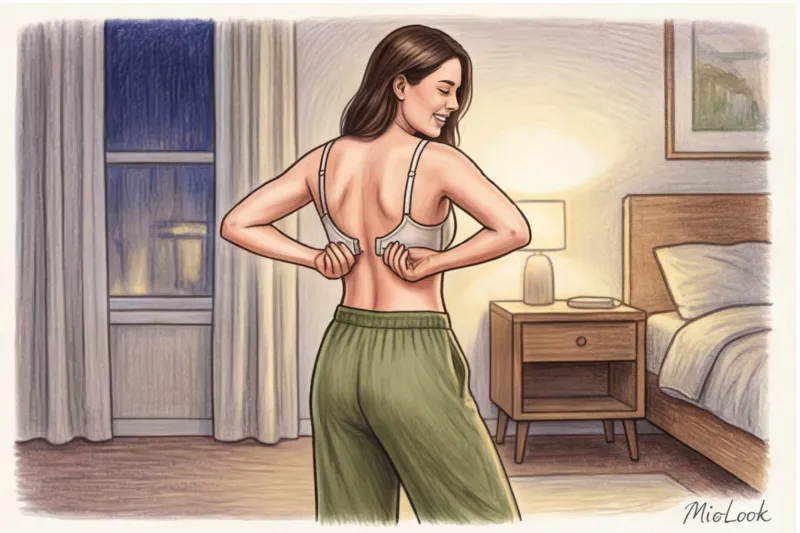
Pay attention to the marks on your skin. Light marks from tight elastane are acceptable—like the marks left by the elastic of your socks. But if deep red marks persist for more than 15 minutes after removing your underwear, it's a sign of poor circulation. As a stylist, I often see women willing to tolerate pain for decades simply out of habit. Please stop doing this.
Myth: If your bra is too tight, you need to buy a size larger.
This is the most harmful counterintuitive stereotype. If a belt or underwire digs in, 90% of women think, "I need a wider belt. I wear an 80C, so I'll buy an 85C." And they make a fatal mistake.
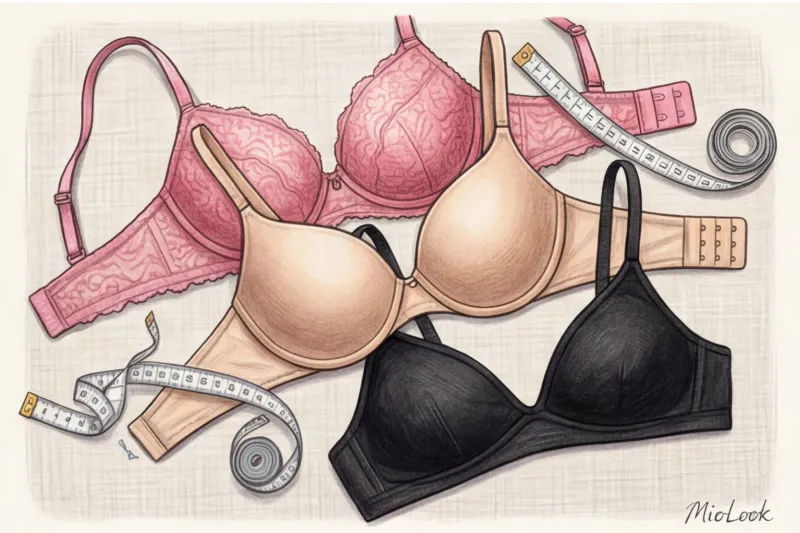
The cup size isn't an absolute measurement. It's simply an indication of the difference between the bust and underbust measurements. A "C" cup on an 85 band is significantly larger than a "C" cup on an 80 band. By purchasing an 85C, you're increasing not only the band size but also the cup size.
Brafitters' insider knowledge is the mechanics of interchangeable (sister) sizing. If an 80C cup size is too small for you, the correct transition usually looks like this: decrease the band size to your actual anatomical size (for example, 75) and proportionally increase the cup size to a D or E. Sound scary? Yes, many are afraid of the letter E. But in reality, a 75E looks more aesthetically pleasing and fits a thousand times more comfortably than a stretched-out 85B.
Also, consider the lifespan. According to research from the Textile Industry Council (WGSN), the elastane in base layers, when worn regularly, loses its properties after 100-150 washes. This means your everyday bra has a lifespan of only 6-9 months. After that, it stretches and loses its shape.
Stylist Checklist: How to Test Bras in the Fitting Room
To avoid making mistakes when shopping, I've developed a 4-step verification method for my shopping-guided clients that takes exactly two minutes:
- The weakest hook rule. Fasten your new bra only on the outermost (loose) row of hooks. Elastane will inevitably stretch after a couple of months, and then you'll need to move on to tighter rows. If you fasten your new bra on the tightest hook, it's too big.
- The two-finger rule. Slide two fingers under the waistband at your back. They should slide in with noticeable resistance. If you can pull the waistband away from your back by 5-7 centimeters, immediately ask for a smaller size.
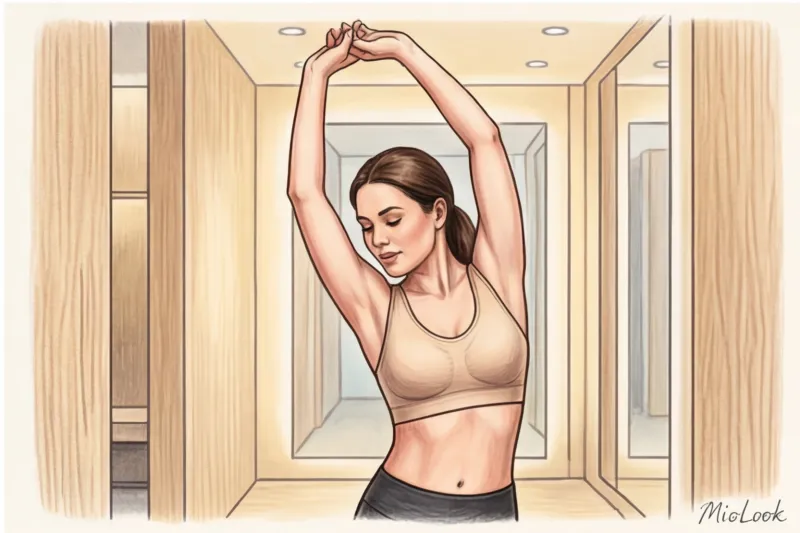
- Hand raising test. Raise both arms sharply upward and stretch. The belt should remain exactly in place. If the lower part of your breasts is visible from under the underwire, the belt is too big.
- Thin T-shirt test. Always take your thinnest, most form-fitting T-shirt (preferably white or gray) to the fitting room. Putting it on over a new bra will instantly reveal all the flaws: protruding seams, pinched areas, and the "four breasts" effect.
Choosing the right bra size isn't just about physical comfort. In a personal experiment with dozens of clients, I measured the lift of their breasts while wearing the right bra. It turned out that the right fit visually elongates the waist by 3-5 centimeters and creates a slimmer silhouette, without any dieting. Treat choosing your bra not as a chore, but as an investment in your style architecture—and your looks will always look luxurious.