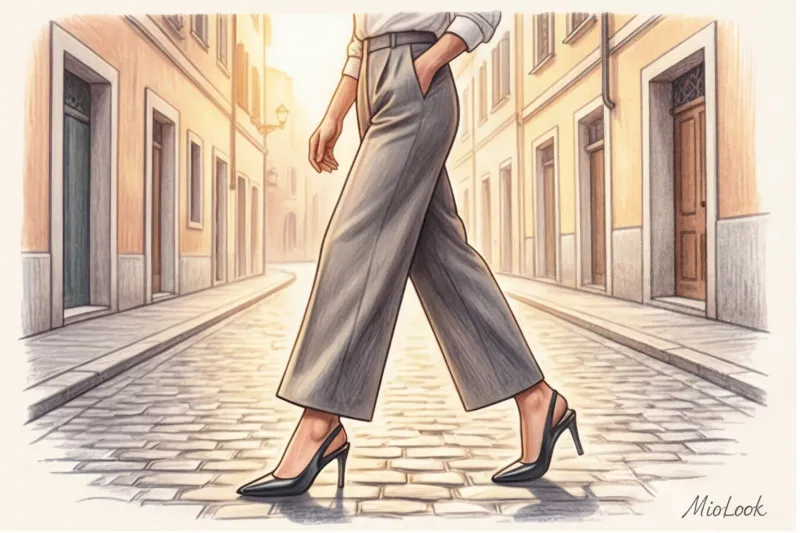
When I first interned with shoemakers in Florence, an elderly tailor told me something that forever changed my perception of style: "A woman's face can be brightened with blush, but her walk will always tell the truth." We spend hours choosing the perfect shade of lipstick or anti-wrinkle serum, completely forgetting that our biological and stylistic age is discernible to others in a split second—by our silhouette and the dynamism of our stride.
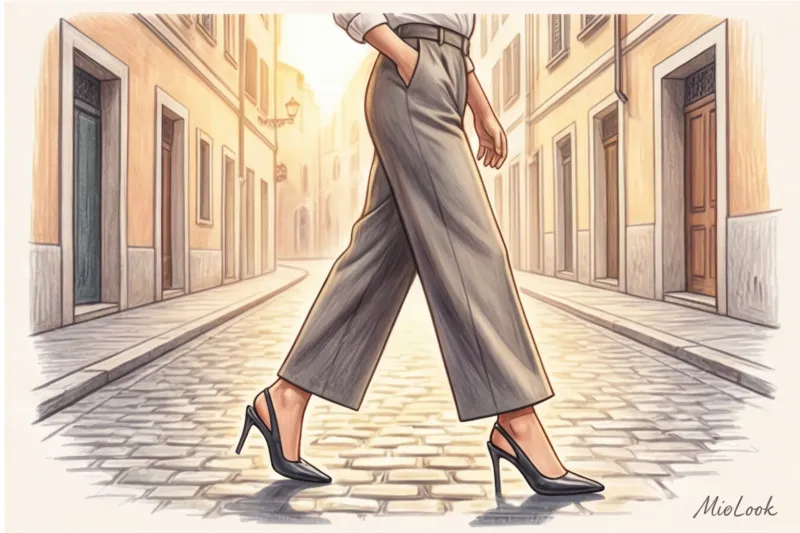
We often look for the cause of dissatisfaction in our reflection in the mirror, whether it's a poorly cut jacket or a dull dress. We discussed the architecture of age-appropriate wardrobes and the influence of the portrait zone in more detail in our A complete guide to style mistakes that make women look older But today I want to shift your focus to the foundation. We'll look at what shoes make you look older , why comfort has long ceased to be associated with shapelessness, and how just one pair of shoes can visually take off a decade.
The Foundation of Your Look: Why Shoes Reveal Age More Than Wrinkles
Shoes are responsible for your macro silhouette and body language. Over 12 years of working as a personal stylist, I've discovered a pattern: an outdated shoe last automatically equals a tired gait.
A striking example from my practice is 45-year-old top manager Anna. She had invested thousands of euros in gorgeous structured suits from COS and Massimo Dutti, but the overall look invariably projected a certain heaviness and retrogradeness. The problem lay in her beloved, time-tested round-toe pumps with a hidden platform. As soon as we replaced them with modern, structured loafers and pointed-toe slingbacks, her wardrobe took off. Her center of gravity shifted, her shoulders straightened, and she acquired that all-important, fluid dynamism.
From a gait biomechanics perspective (as detailed by podiatrist Emily Splichal, PhD), heel height and shape, as well as sole stiffness, directly impact pelvic tilt. Shapeless, worn-out, or poorly balanced shoes cause us to instinctively guard our feet, shuffle, or dawdle. This creates a "heavy foot" effect—the visual weight in the lower half of the silhouette pulls the entire figure toward the ground, making the figure appear squat.
What Shoes Make You Look Older: 5 Traitorous Styles to Get Rid of
If these styles are so bad, why are they still sitting on mass-market shelves? As a practicing stylist, I can answer: brands continue to produce these styles solely because there's a lingering, habitual demand for them. Women buy them out of fear of experimentation, mistaking outdated designs for "basic" or "classic."
Your perfect look starts here
Join thousands of users who look flawless every day by choosing shoes and clothes using AI.
Get access — €0.99 once1. Round-toe pumps with a hidden platform
A style that harks back to the early glamour era of the 2010s. A hidden platform at the toe, combined with a round, blunt toe, creates a "hoof" effect. This geometry visually shortens the foot, making the ankle appear larger and the calves appear bulkier.
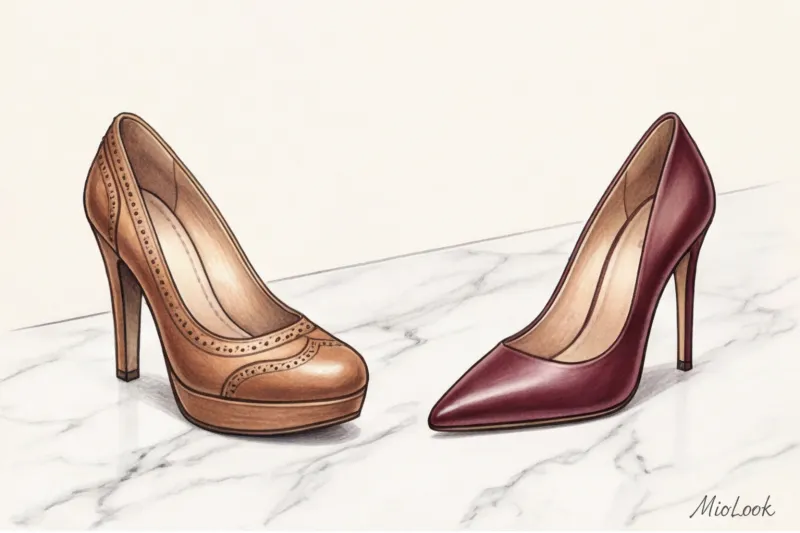
- A stylish alternative: Classic pumps with an elongated (pointed or almond-shaped) toe without a toe platform, or elegant slingbacks with a kitten heel.
- Isabella's formula: Palazzo pants with pleats at the waist + slingbacks with a pointed toe peeking out from under the leg = endlessly long legs and classy Mediterranean casualness.
2. Shapeless moccasins with perforations and an abundance of decor
Soft moccasin-style slippers with eyelets, bows, contrast stitching, and a complete lack of a rigid frame. Because they don't support the foot, they sag under the weight of the body. It's precisely these shoes that trigger that shuffling gait associated with aging.
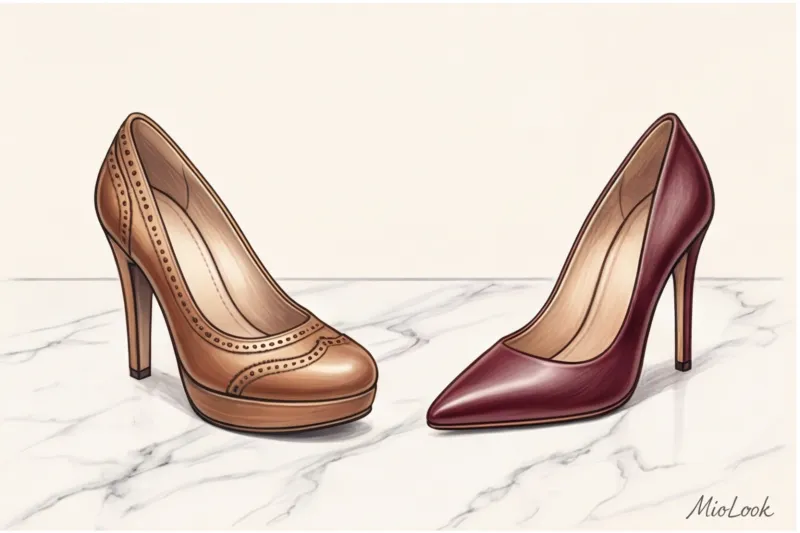
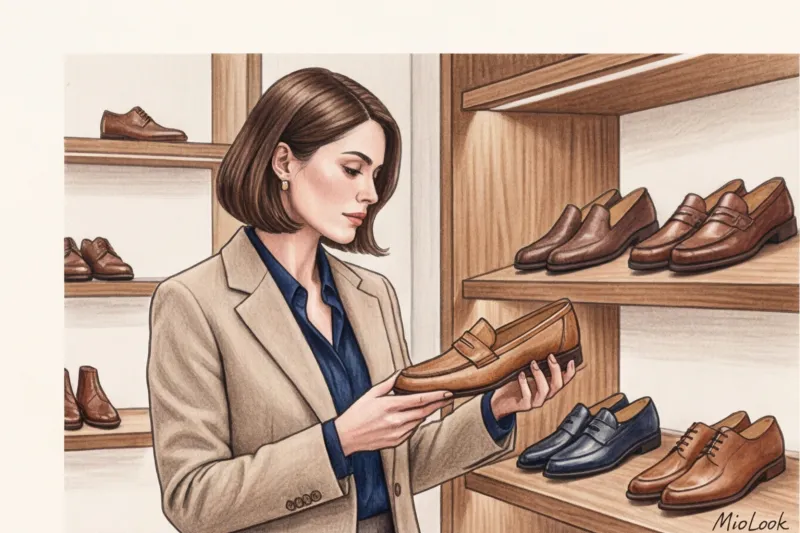
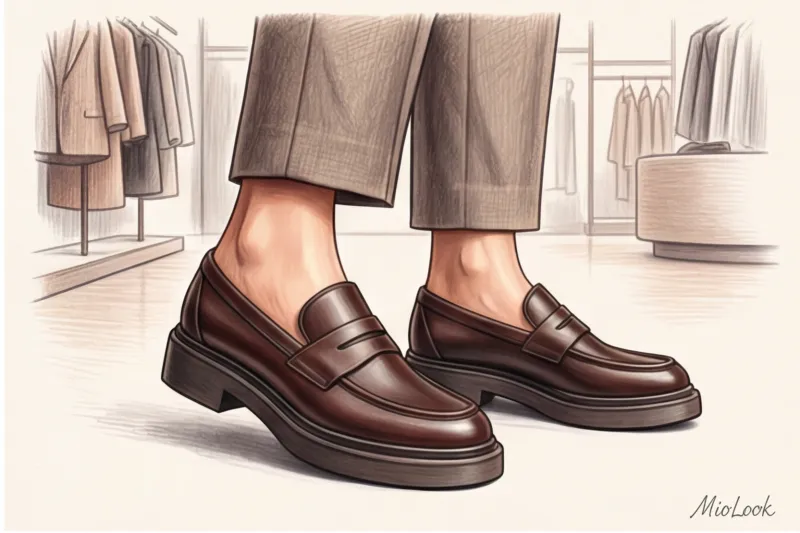
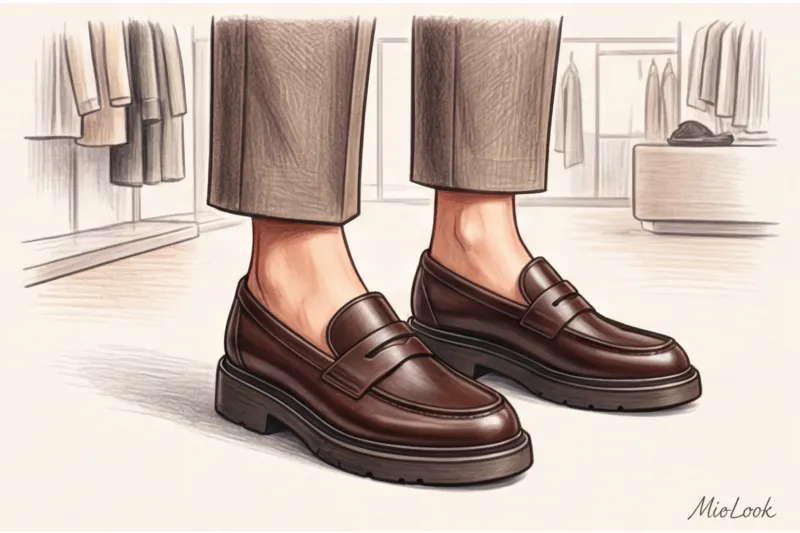
A stylish alternative: Structured loafers made of thick calfskin or modern driving shoes with a simple design and rubber studs. The rigid frame keeps the foot in place, creating a neat silhouette.
3. Mid-calf boots with an accordion-like fit
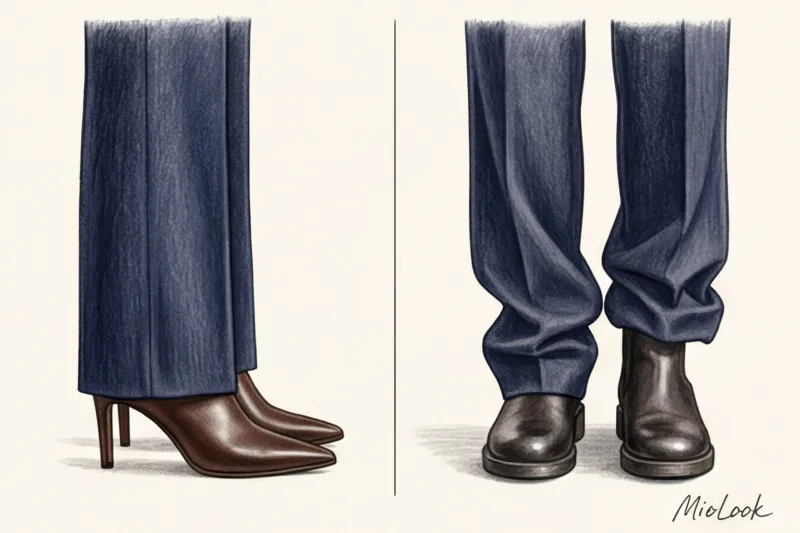
The main rule of proportion is that the hem of the shoe should never end at the widest part of your foot. The thin leather of these boots gathers into untidy horizontal folds mid-calf. These horizontal lines literally cut the leg in half, shortening the height by a good 5-7 centimeters and adding bulk where it's completely unnecessary.
A stylish alternative: Knee-high tube boots, classic jockey boots with a straight shaft, or, conversely, tight-fitting ankle boots that reach under the hem of a skirt.
4. Wedge sneakers (sneakers from the last decade)
Trying to combine sports and high heels today looks like a desperate refusal to accept modern fashion rules. This model loudly declares, "I want to look taller, but I'm embarrassed to wear normal heels." Such hybrids have long since lost their relevance.
A stylish alternative: Chunky urban sneakers with a retro 90s aesthetic or simple leather sneakers with a flat platform 3-4 cm high. They offer the same height boost, but look completely modern and casual.
5. "Deaf" black ankle boots on a vague glass with decor
We're talking about models where the manufacturer decided to add "the best of everything" at once: a side zipper, a decorative strap, a couple of rivets, and an oddly shaped assembly. Combined with an irregularly shaped kitten heel (where the heel is offset at an unnatural angle), this creates visual noise and makes the gait unsteady.
A stylish alternative: Minimalist Chelsea boots with chunky soles or smooth square-toe ankle boots with an architectural, stable heel.
The Comfort Myth: Why Comfortable Shoes Don't Have to Be Age-Friendly
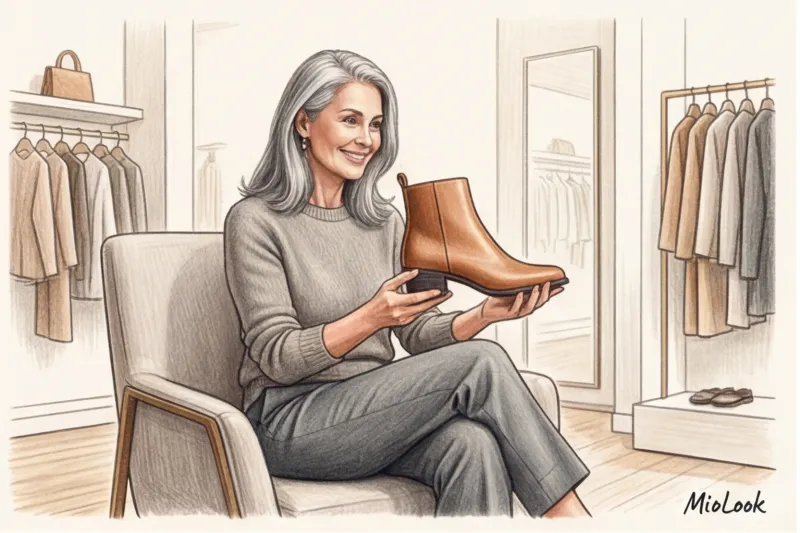
The most common objection I hear is: "Isabella, after 40 years I have a bunion (hallux valgus) and flat feet, I am forced to wear my grandmother's comfort shoes!" This is a deeply rooted and very harmful myth.
A common misconception is that soft, sock-like, shapeless shoes are good for problem feet. In fact, the opposite is true. When shoes lack a rigid, form-supporting heel counter and arch support, your muscles and ligaments have to work double time to stabilize your foot with every step. This leads to evening fatigue and swelling.
Modern technology has radically transformed the market. According to a 2024 report by research company WGSN, the line between orthopedic and fashion footwear has completely blurred. Today, you can buy trendy Prada loafers or their high-quality mid-range equivalents (€100 to €150) that already have integrated anatomical insoles.
Consider the weight: modern foam sole materials (such as EVA) weigh 40% less than older vulcanized rubber counterparts. You get a chunky, modern look that absorbs shock, but the shoes themselves feel feather-light on your feet.
The Italian Formula of Youth: 3 Rules for Choosing the Right Partner
To never hesitate at the window again, use these three style triggers that instantly add polish to your look.
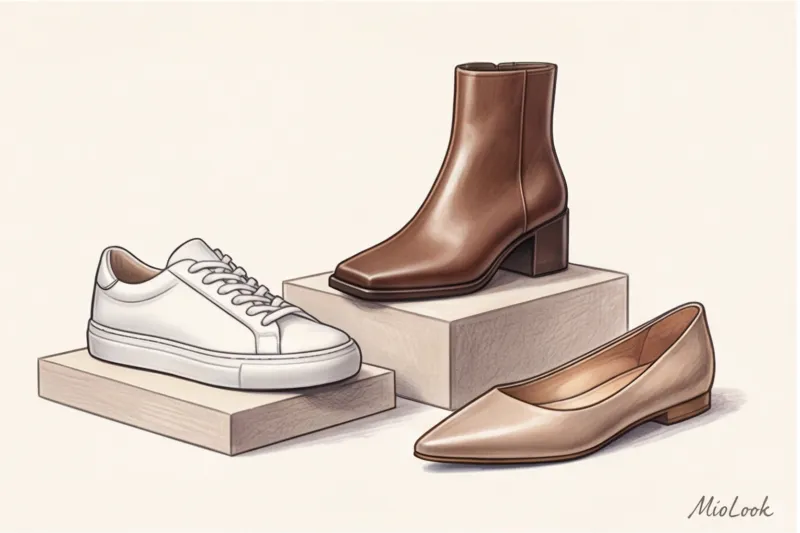
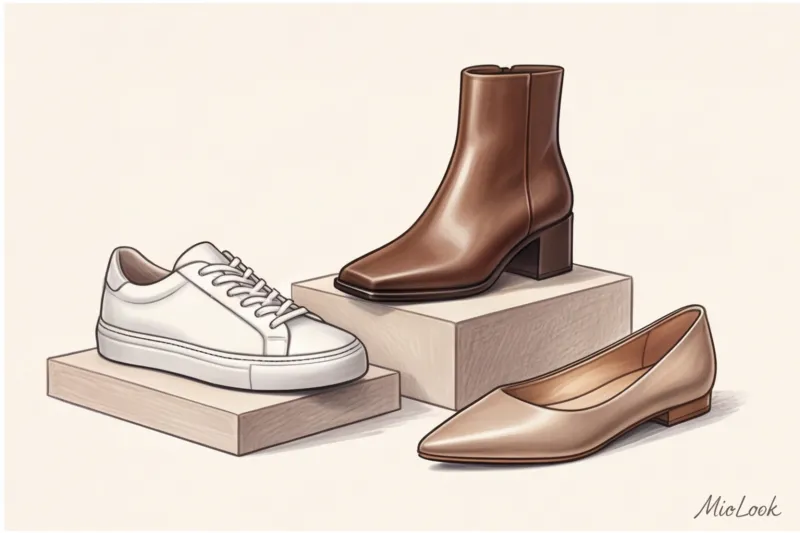
- Geometry is everything. Shoes should have character. A distinct toe—an elongated, pointed, strict square, or "soft square"—always looks more expensive and elegant than a simply round one. Geometry adds structure to the entire silhouette.
- Contrast of volumes. This is my favorite secret. Chunky shoes (brogues or thick-soled loafers) make a woman's ankle appear more delicate and graceful precisely because of the contrast. Imagine heavy loafers paired with a flowing silk midi skirt—it looks incredibly feminine.
But here I must make a fair digression: This advice doesn't work for everyone. If you're petite (up to 155 cm) and have very thin legs (size XS), exaggerated "tractors" without support from wide-leg pants will create a "Mickey Mouse" effect. In this case, choose a mid-height sole. - Rejection of deaf black. Smooth black matte leather often looks flat and boring. Try swapping out your usual black for deep burgundy, dark chocolate, olive, or textured suede. These shades are just as versatile, but visually cost three times as much.
A stylist's checklist: reviewing your shoe wardrobe
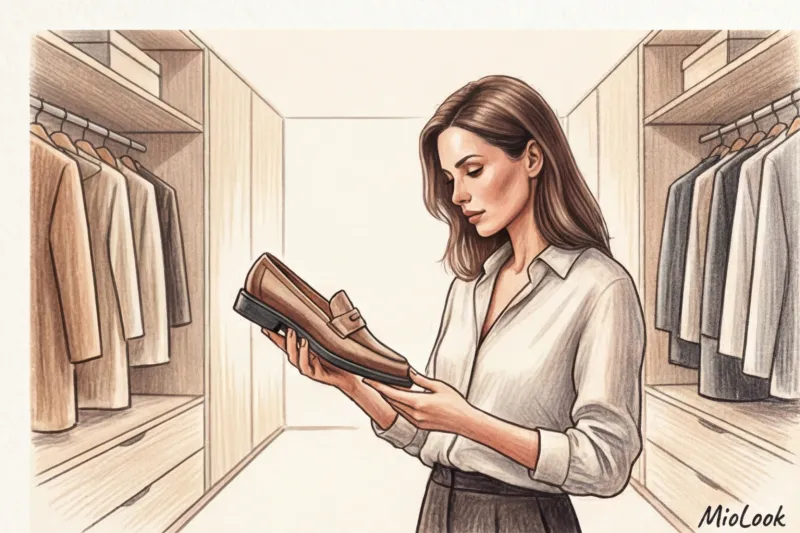
Theory is dead without practice. Set aside 30 minutes tonight and take out all your spring and summer shoes.
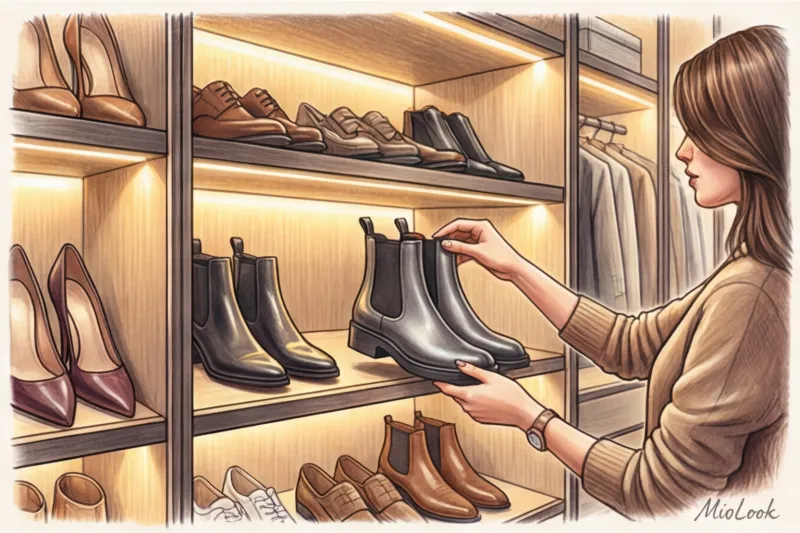
We evaluate each pair based on three criteria: the toe shape, the condition of the heel/sole, and the presence of unnecessary hardware. When in doubt, ask yourself one tough but honest question: "Would I wear these shoes with a modern, loose pantsuit?" If the answer is “no, it will look funny” – it’s time for the couple to rework.
To simplify the process, I recommend using the virtual closet feature in MioLook Take photos of your successful pairs, and AI will help you analyze which basic elements are missing to create harmonious combinations.
Keep in mind the Cost-Per-Wear statistic. One pair of trendy, simple ankle boots made of high-quality leather for €200, which you'll wear 100 times per season (costing €2 per wear), is much more cost-effective and beneficial for your image than five pairs of outdated, compromised, discounted €40 options that will ruin any look.
Ready to get started?
Try the MioLook free plan and organize your wardrobe without any commitments.
Get access — €0.99 onceA Step in a New Direction: Taking Stock
Your shoes are an anchor that either firmly anchors your entire look in the modern era or inexorably pulls it back into the past. By ditching outdated styles, you're not sacrificing comfort. On the contrary, you're discovering a new level of comfort, where orthopedic foot support is packaged within impeccable Italian design.
Don't try to change your entire wardrobe in one day. The main takeaway I want you to take from this article is this: start by replacing just one, your most frequently worn everyday pair of shoes with a modern, structured version. You'll instantly feel a change not only in your reflection in the mirror but also in the confidence with which you take every step.