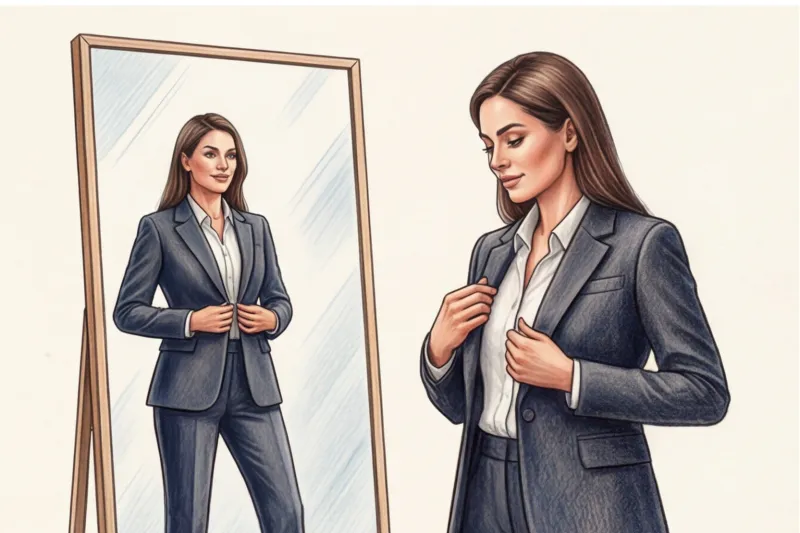

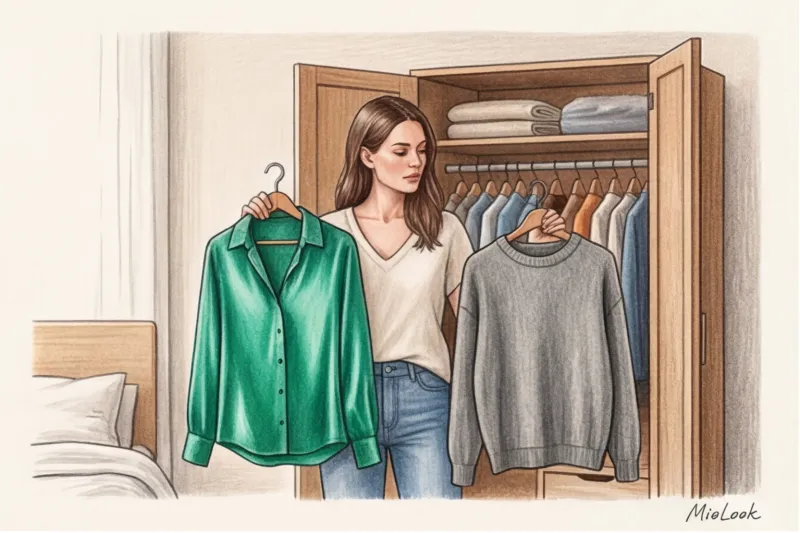
Did you know that it takes exactly 7 seconds for the other person's brain to evaluate your social status, confidence level, and even professional competence? This isn't magic or esotericism, but rather the hard data of Princeton University research. Add to this Albert Mehrabian's famous rule (93% of communication is nonverbal), and it becomes crystal clear: we speak loudest when we're silent.
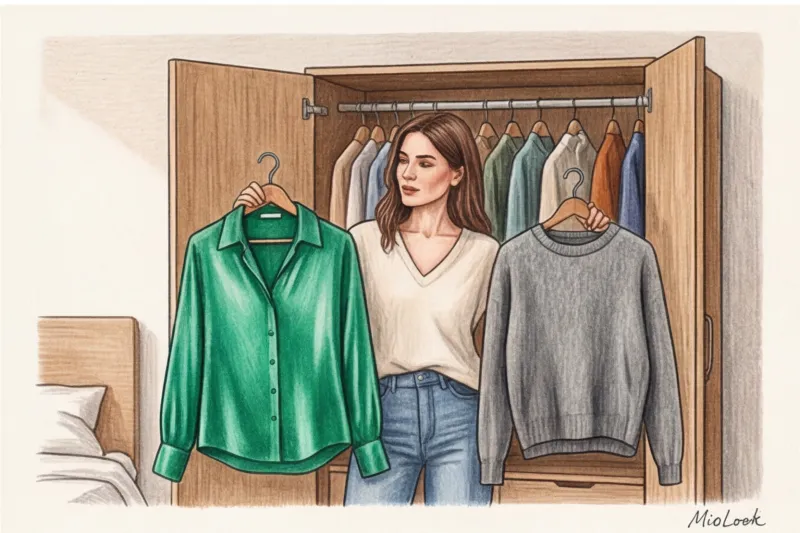
I often tell my clients: self-expression through clothing isn't about wearing "all your best at once." It's a precise system of visual semiotics. We discussed this phenomenon in more detail in our complete guide— The Psychology of Style: How Clothing Changes Mood and Brain Today, we'll explore the practical side: how to transform your wardrobe from a chaotic collection of items into a conscious tool for managing your impressions and, more importantly, your own inner state.
What does self-expression through clothing really mean?
Let's get this straight: self-expression isn't about being outrageous. You don't need to buy neon hoodies, marabou feathers, or asymmetrical cuts unless that's your true essence. True self-expression is visual honesty. It's the moment when your "second skin" tells the world exactly what you feel inside.
But there's also a feedback loop here, one rarely covered in the glossy press. In 2012, researchers Hajo Adam and Adam Galinsky published a seminal paper on the Enclothed Cognition effect. They demonstrated that clothing physiologically rewires our thinking. Subjects wearing a white lab coat showed dramatically different results in attention tests depending on what they were told. If they were told it was a doctor's coat, their concentration soared. If they were told it was an artist's coat, they became more creative but lost focus.
What we wear not only communicates our values to others, but also dictates how our bodies feel.
This is why the clichéd advice "dress for the job you want" really works. Your brain reads the texture and cut of your clothes and adapts your cognitive functions accordingly.
Access to MioLook for €0.99 — one-time payment
A smart AI stylist will select the perfect look that will highlight your individuality.
Get access — €0.99 onceThe Anatomy of a Visual Message: How Color, Texture, and Cut Work
As a colorist with a background in art history, I never view clothing simply as a "pretty blouse." Every look is an equation with three variables: color, texture, and cut. Just as an artist breaks down a painting into brushstrokes, so we'll now break down a wardrobe into micro-signals.
Color as a major trigger of emotions
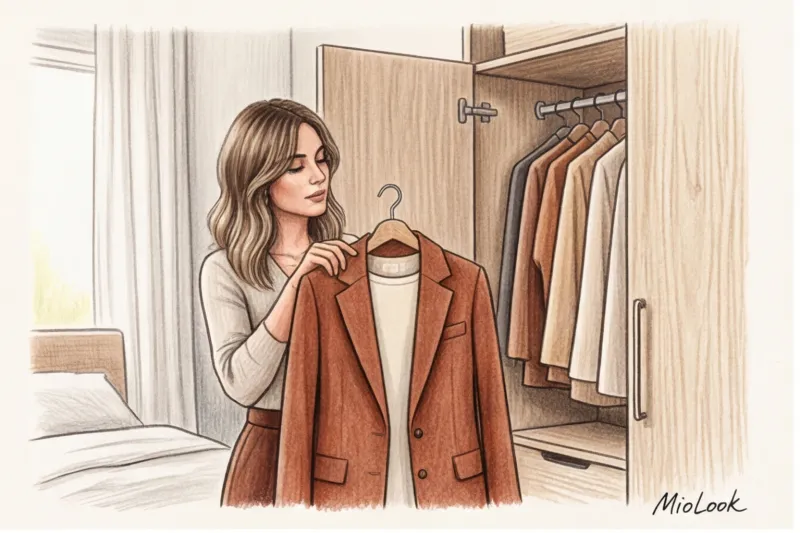
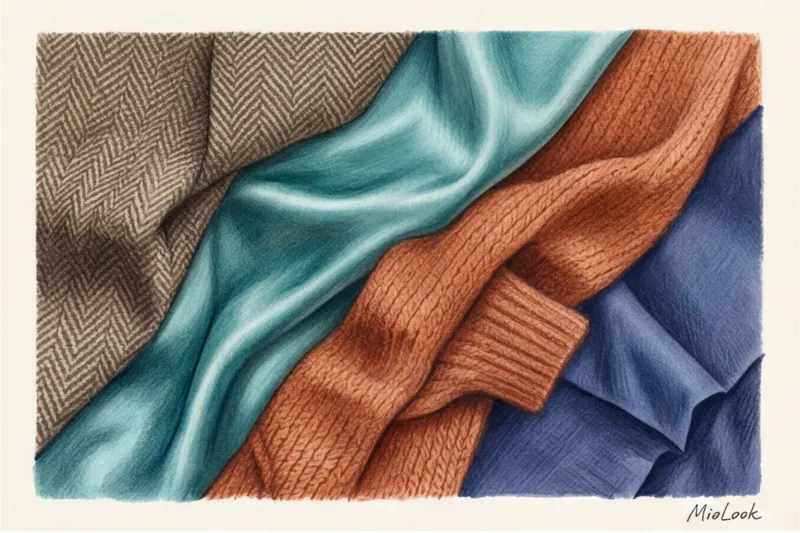
Johannes Itten and Faber Birren, the fathers of visual color psychology, demonstrated that our response to color is evolutionarily hardwired. Warm shades (terracotta, mustard, peach) subconsciously reduce distance. They say, "I'm open, I'm safe." Cool shades (ice, steel, cobalt) increase distance. This is the signal: "I maintain boundaries, I'm an expert."
The contrast in your look directly reflects your personality. If you're naturally calm and laid-back, a contrasting color block (like fuchsia and emerald) will simply outshine you. People will remember your dress, but they won't remember your face. Conversely, a pastel palette will make a dynamic personality appear dull and tired.
Texture and cut: body language and distances
Fabrics speak as much as colors. Have you ever noticed how different you feel in a silk blouse and a thick cotton hoodie?
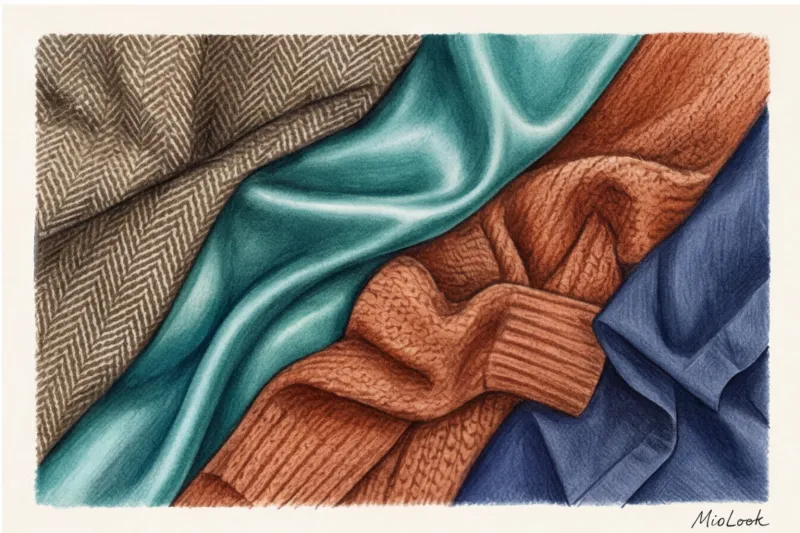
- Smooth, shiny fabrics (silk, satin, smooth suiting wool Super 120s) convey dynamism, status, and inaccessibility. Light glides over them, creating a barrier.
- Loose, matte fabrics (Tweed, chunky knit, suede, corduroy) absorb light. They convey warmth, approachability, and relaxation.
Cut works similarly. A rigid, architectural cut (like a jacket with a sharp shoulder line made of thick gabardine) organizes not only your silhouette but also your thoughts. Soft drapes (like viscose dresses) convey flexibility, adaptability, and creativity.
The main myth: "Black is my self-expression."
This is probably the most common myth I have to debunk during consultations. "Daria, I'm a creative person, so I wear total black, like the New York gallery owners." Let's be honest. 80% of the time, for people who aren't conceptual designers, total black isn't a statement. It's an invisibility cloak.
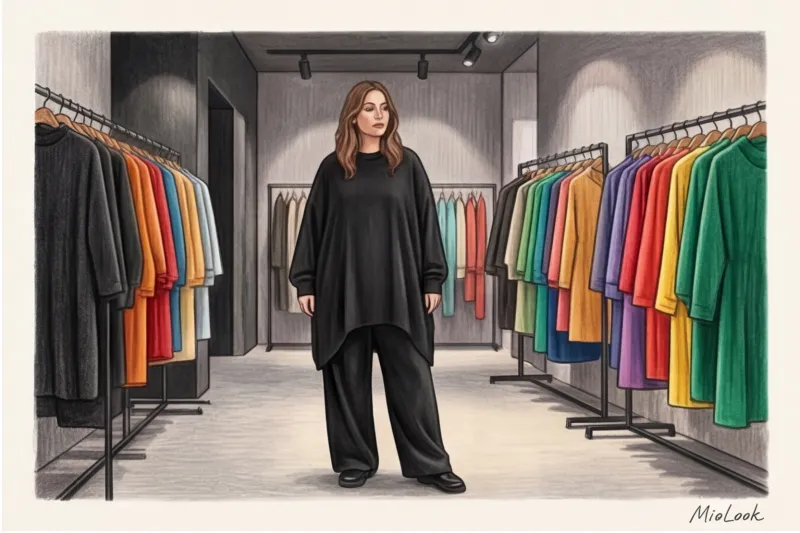
Black has become a universal solution for those in doubt. It relieves us of the cognitive burden: we don't have to think about whether this shade matches that. But the difference between a deliberately avant-garde black (as in Yohji Yamamoto's collections, where color is replaced by intricate tailoring) and a mass-market black sweatshirt is colossal.
One day, a client named Anna came to see me. A financial analyst, a brilliant woman whose wardrobe consisted of 50 shades of black and gray. At our first meeting, she confessed to suffering from impostor syndrome during meetings—her ideas were often stolen by colleagues. She literally melted into her chair. We didn't try to make her look like a Brazilian carnival. We simply replaced the black with deep, prestigious shades of her autumn palette: dark sapphire, rich emerald, dark chocolate. A month later, she told me that people were listening to her before she finished her sentence. Visual weight had been established.
But there is an important limitation here: This advice doesn't always work. If you're experiencing acute stress or trauma, black can truly serve as a therapeutic cocoon. In such moments, taking it away and forcing someone to wear bright colors is a crime against the psyche.
How to Find Your True Self in Your Wardrobe: A Step-by-Step System
Randomly shopping at Zara or H&M sales will never lead you to style. Creating a wardrobe that speaks for you requires a systematic approach. This is the methodology we use when working with our clients.
Step 1: Emotional Closet Audit
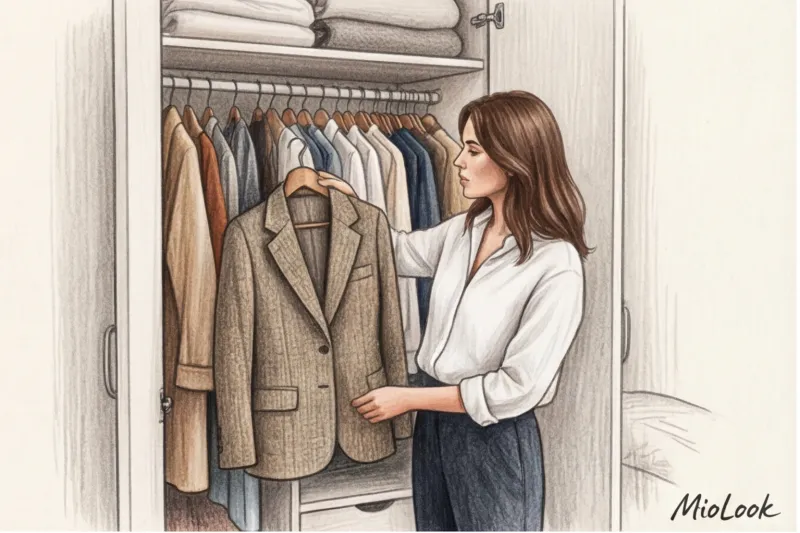
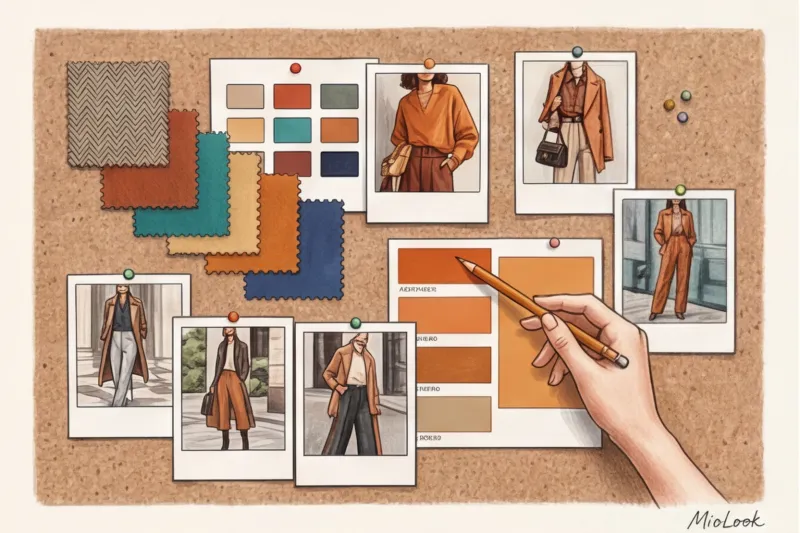
Take out all your clothes. Your goal is to separate them not into "fashionable/unfashionable," but into two emotional piles. The first: things that give you energy (you put them on and feel like a million bucks). The second: things that drain your energy (you constantly tug at them, adjust them, and feel "out of place" in them). Carefully examine the first pile. What patterns are there? Certain textures? Muted colors? Loose fits?
Step 2. Identifying the style archetype
Self-expression through clothing is closely tied to archetypes. Who are you at your core? A rebel who embraces leather and asymmetry? An aesthete who craves silk and flowing lines? Or a sage who embraces minimalism, clean cuts, and premium fabrics like cashmere? Your wardrobe should support your leading roles in life, not contradict them.
Step 3: Create a personal color palette
Knowing your complexion (color type) isn't a prison, as many people think, but a tool for absolute freedom. Knowing your best undertones allows you to create a capsule where everything goes with everything else.
Use the classic interior design rule 60/30/10 in their images:
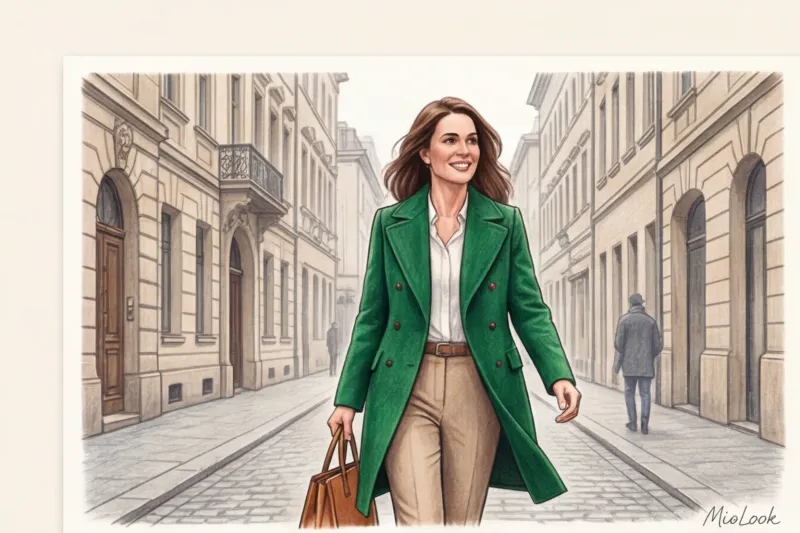
60% - base color (for example, a beige trench coat or trousers).
30% - additional color (blue shirt).
10% - accent color (burgundy bag or scarf).
Your perfect look starts here
Join thousands of users who look flawless every day with MioLook. Digitize your wardrobe and find your style.
Get access — €0.99 onceOvercoming the fear of being noticed
The most common psychological barrier to self-expression is the "what will people say" syndrome. We're afraid to stand out for fear of being criticized. But the paradox is that expressing ourselves through clothing often becomes a catalyst for career and personal growth. People are drawn to those who aren't afraid to be themselves.
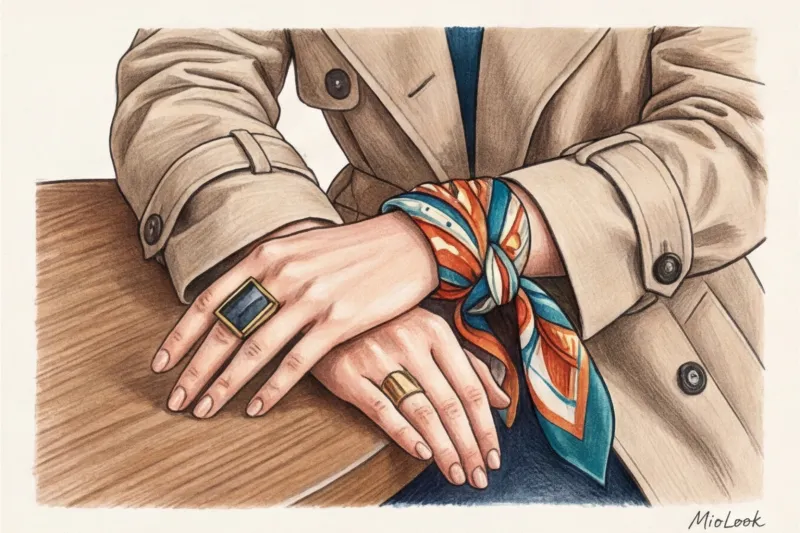
If you are afraid to change everything at once, use microdosing style method Don't buy a red coat right away. Start small:
- Bright socks with an interesting print to pair with formal trousers.
- Unusual glasses frame.
- The jacket is a conservative color, but with a contrasting, bold lining (no one can see it, but you know it!).
- An accent ring or a watch with a non-standard dial.
Your nervous system must gradually get used to the new level of attention.
Self-expression within a dress code: mission possible
But what if you work in a law firm, bank, or government agency with a strict dress code (right down to the height of your heels and the color of your tights)? Many people give up on self-expression.
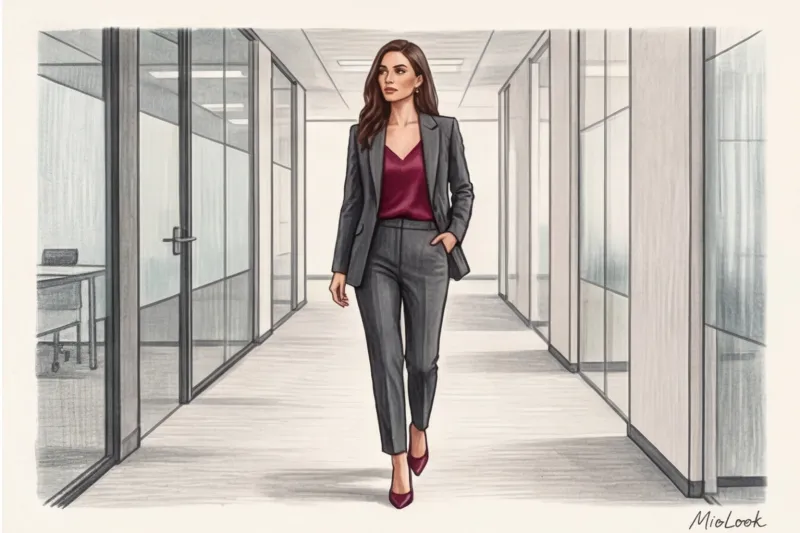
This is where nuance comes into play. If we can't play with color and cut, we play with texture and detail. Swap a plain cotton shirt for a thick silk blouse in the same white. The depth of texture will immediately elevate the look. Choose suits made from blended fabrics (wool with 10% silk or cashmere)—they lay completely differently than regular polyviscose.
Individuality is conveyed through status-defying details: the shape of a shoe's toe, the texture of a watch strap, the quality of the hardware on a bag. Your navy blue suit may be formal, but if underneath it lies a perfectly fitted, deep wine-colored top, you're no longer just "employee number 8"—you're a character with character.
Checklist: Does your current image convey your true self?
To test how well you're expressing yourself through your clothing, ask yourself three questions before leaving the house:
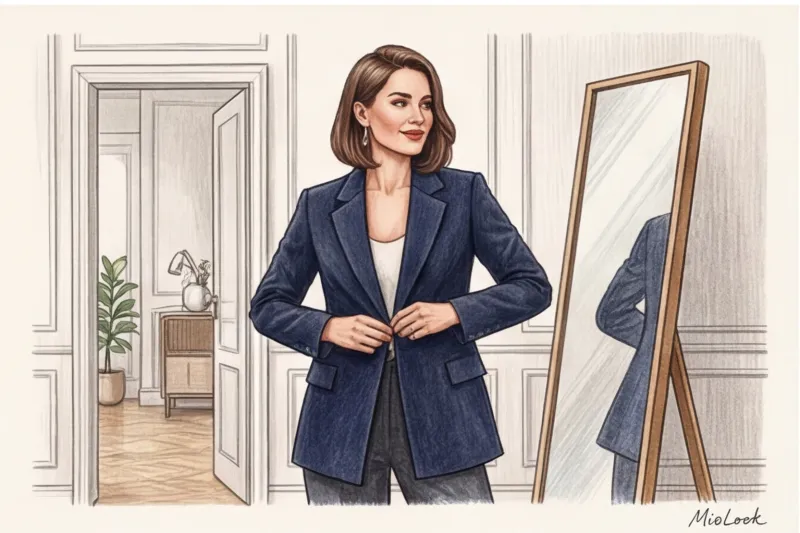
- Does my external comfort match my internal comfort? (If you constantly feel like tugging at your skirt or slouching to hide a bright print, the item doesn't belong to you emotionally.)
- If I asked a stranger to describe me with three adjectives based on this image, would they match who I think I am?
- Is there at least one detail on me today that tells my personal story? (Grandma's vintage brooch, perfume you brought back from a memorable trip, a handmade ring).
If you answered "yes" to all three questions, congratulations, you've mastered the art of impression management. If you're having trouble, don't try to hold all the successful images in your head. I recommend my clients use MioLook capabilities — Simply digitize the combinations in which you felt most like yourself. Artificial intelligence will analyze them and suggest which patterns (colors, shapes) work best for you.
Your wardrobe is your personal media. And only you can decide what you're broadcasting to the world today: a desire to hide or a willingness to make a statement.