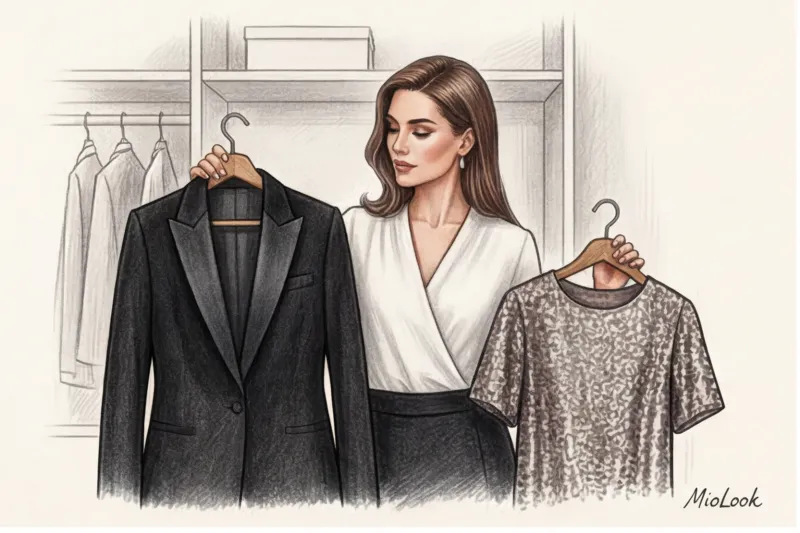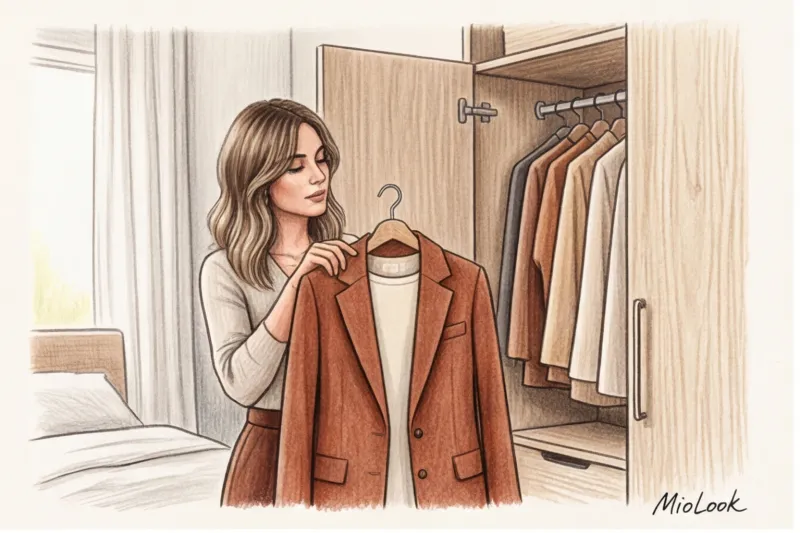
Three years ago in Milan, my client—a brilliant IT startup founder—blamed a pitch to investors. Her presentation was flawless, the numbers added up, but the panel subconsciously distanced themselves and asked aggressive questions. Why? She was wearing a stiff, buttoned-up black suit with massive shoulder pads, reminiscent of 1980s Wall Street. The look screamed, "I'm defending myself," not "I'm inviting you to partner." By the second round, we softened the silhouette: swapped the black for a deep blue, and layered it with a flowing caramel silk blouse. The result? The round was over. It was then that I finally realized: a wardrobe isn't a collection of pretty clothes; it's your personal experience dashboard. And today, when it comes to choosing the perfect outfit for the occasion, a neural network can handle this task faster and more accurately than any intuitive guess.
According to a seminal study by Alexander Todorov of Princeton University (2006), it takes our brain only 100 milliseconds to read visual cues and make a judgment about a stranger. We discussed this mechanism in more detail in our complete guide to the psychology of first impressions. We cannot turn off this biological reaction in our interlocutors, but we can program it.
From intuition to algorithms: how a neural network helps select an image based on the occasion
Have you ever noticed how asking yourself the question "What should I wear?" in the morning instantly spikes your cortisol levels? We stand in front of a full closet, rummaging through hangers, but we're actually asking ourselves the wrong question. The right question is: "What emotion do I want to evoke today?".
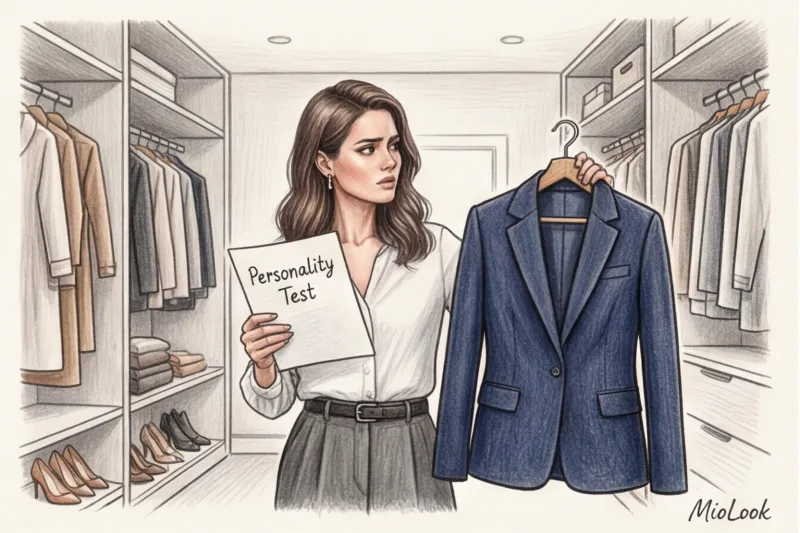
Style isn't magic reserved for a select few. It's applied neuroscience translated into the language of cut, color, and texture. And that's where artificial intelligence comes into play. Algorithms MioLook They don't just mix colors according to Itten's color wheel. They analyze the communication task.
How does this work in practice? AI integrates three basic elements:
- Coloristics: Blue reduces anxiety and inspires trust, red provokes and dominates, beige blurs boundaries.
- Silhouette geometry: Sharp angles (lapels, creases on trousers) convey authority, while smooth lines (drapery, soft knitwear) convey empathy.
- Fabric texture: Dense, shape-holding materials indicate stability, while loose and soft ones indicate accessibility for dialogue.
By setting the purpose of the meeting to the algorithm, you receive a mathematically verified combination from your own closet.
Access to MioLook for €0.99 — one-time payment
A smart AI stylist will select the perfect look for your social purpose and relieve morning stress.
Get access — €0.99 onceGoal: "Convince and inspire trust" (Negotiations, project protection, investments)
When the stakes are high, our instinct tells us to "put on armor." But the psychology of persuasion operates more subtly. For someone to agree to give you their money (or entrust you with a project), they must see you not only as an expert but also as a competent, flexible partner.
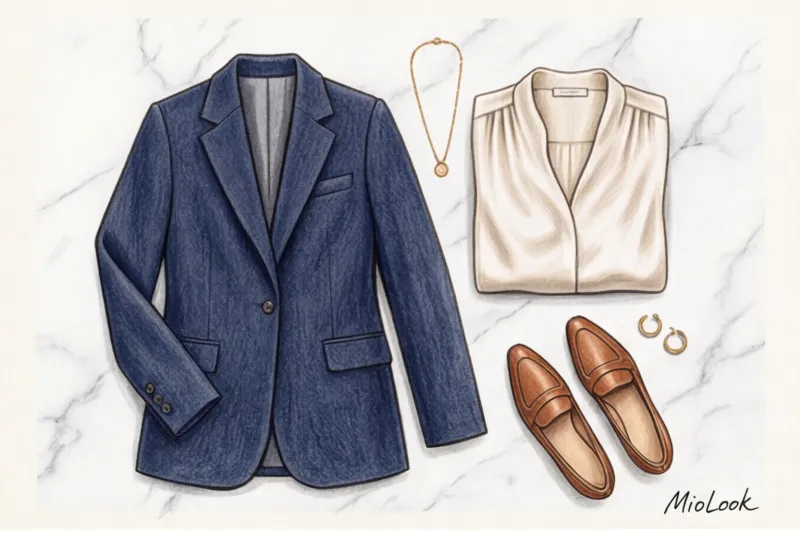
My favorite formula that works like a Swiss watch:
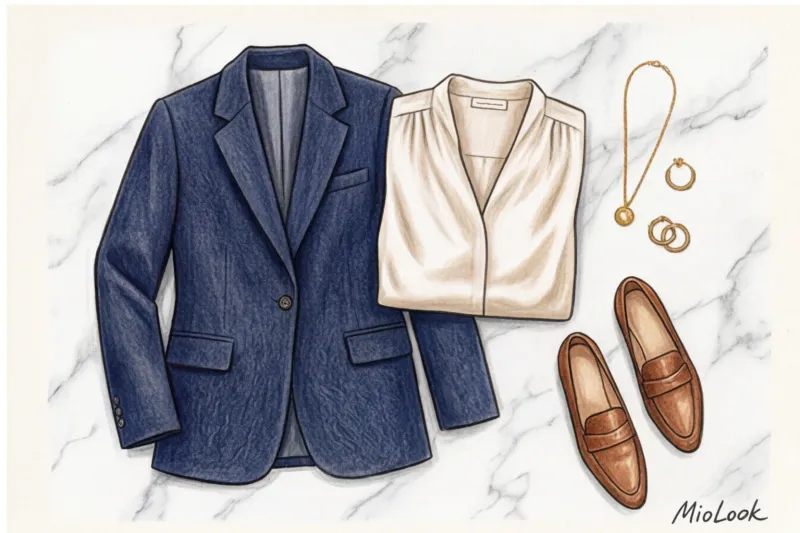
Structured jacket (authority) + flowing silk or viscose blouse (flexibility of mind and empathy).
It doesn't have to cost a fortune. A classic wool-blend jacket from Massimo Dutti or COS (in the €130–€180 range) paired with a quality viscose blouse creates just the right balance. The jacket's firm shoulders define your boundaries, while the soft sheen of the fabric against your face softens your features and shows your willingness to engage.
In the app, simply select the "Business Meeting" tag and use the slider to adjust the level of sobriety. The AI will filter out overly aggressive prints and suggest combinations in deep, calm shades: navy blue, emerald, and dark chocolate.
Rookie Mistake: "Iron Lady Syndrome"
The most common mistake I see among corporate lawyers and top managers is trying to hide behind all-black colors and a solid collar. In style psychology, this is called the "visual blank wall effect."
Black absorbs light. It creates maximum distance between you and your opponent. If your goal is to forcefully fire an employee or defend your boundaries in court, this will work. But if you're seeking a compromise and want your opponent to accommodate you, avoid black monochrome near your face. Replace it with anthracite or deep blue, and you'll physically feel the change in the tone of the conversation.
Goal: “Create an emotional connection” (Networking, informal meetings, acquaintances)
Imagine you're attending an industry conference or an informal brunch. Your goal is to make people want to approach you with a glass of prosecco and start a conversation.
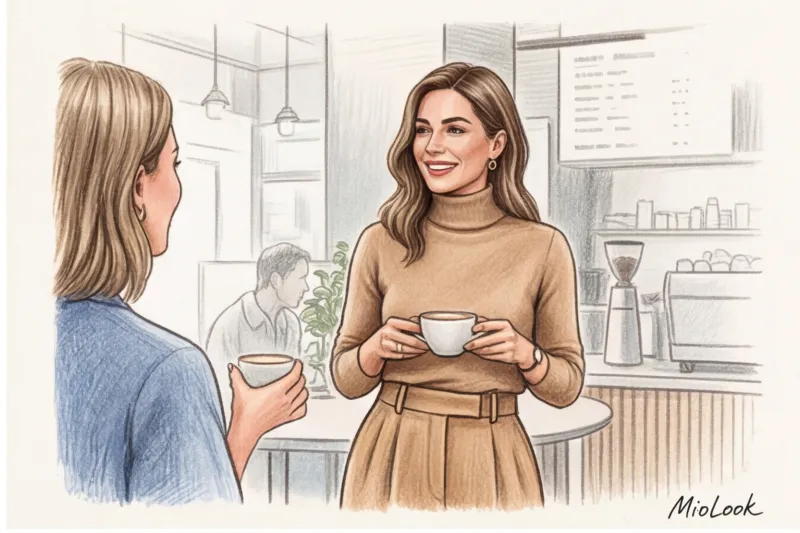
This is where the concept comes into play Embodied Cognition (Embodied cognition). Research by H. Adam and A. Galinsky (Northwestern University, 2012) demonstrated that clothing influences not only those who look at us but also our own cognitive processes. Wearing soft, comfortable clothes makes us more open, smile more often, and approach people more easily.
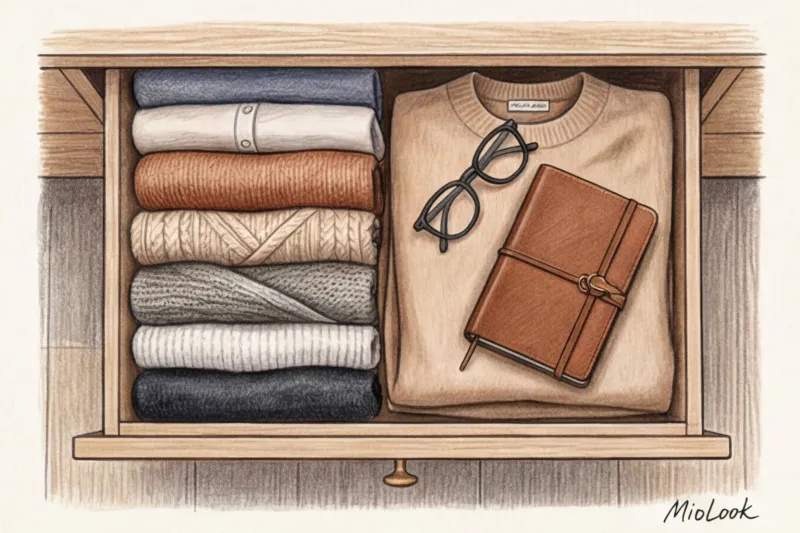
Your main tool here is tactility Matte cashmere, soft merino wool, heavy cotton (from 180 g/m²), suede. The shades should be warm and "delicious": cappuccino, baked milk, terracotta, caramel. They are subconsciously associated with comfort and safety.
If you've uploaded your wardrobe to MioLook, simply use the soft texture filter. The neural network will create a layered, relaxed look. For example, a cashmere sweater over a thin viscose turtleneck (5% elastane for shape retention) paired with wide-leg trousers. It looks expensive, but not at all pretentious.
Your perfect look starts here
Join thousands of users who look flawless every day with MioLook.
Get access — €0.99 onceGoal: “To be remembered and to declare creativity” (Public speaking, creative meetings)
How can you avoid becoming a "grey spot" on stage or among dozens of other candidates for a creative position? Two years ago, I was putting together a speaker for a TEDx talk. She insisted on a fuchsia pantsuit to "make sure she's memorable." I was adamantly against it.
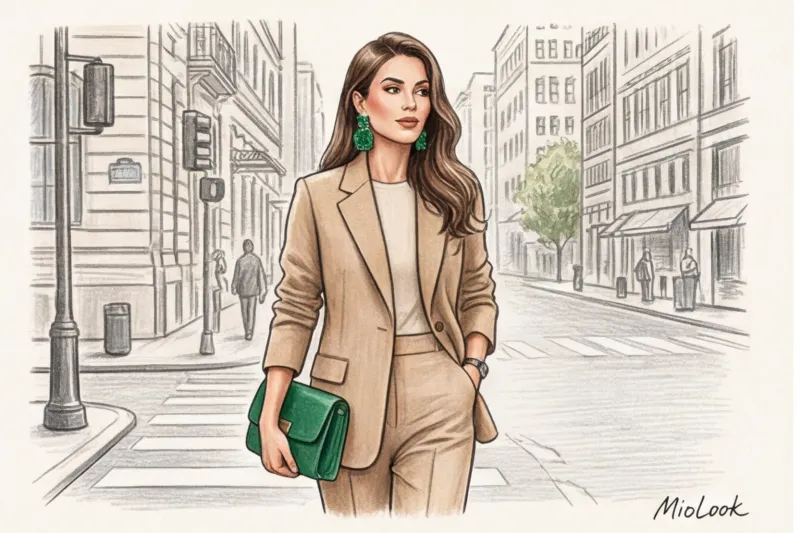
A flashy, all-out look will steal the audience's attention, and within 5 minutes they'll be ignoring your speech and staring at the buttons on your jacket. For situations like these, I use my branded "Anchor" equipment.
The technique is simple: you create a flawless, calm base that doesn't distract from your face, and add exactly one accent, unpredictable element.
Examples from practice:
- A monochrome ecru pantsuit + bright emerald pumps (you're standing on stage, and the shoes become the anchor).
- Classic sand trench coat + massive asymmetrical single earring.
- A laconic black midi dress + a vintage belt with a large gold buckle.
The neural network handles this task brilliantly. When selecting the "Creative Event" scenario, the algorithm analyzes your accessory database and suggests unexpected combinations that your routine-driven brain would simply miss.
Smart Capsule: How to Digitize Your Goals with MioLook
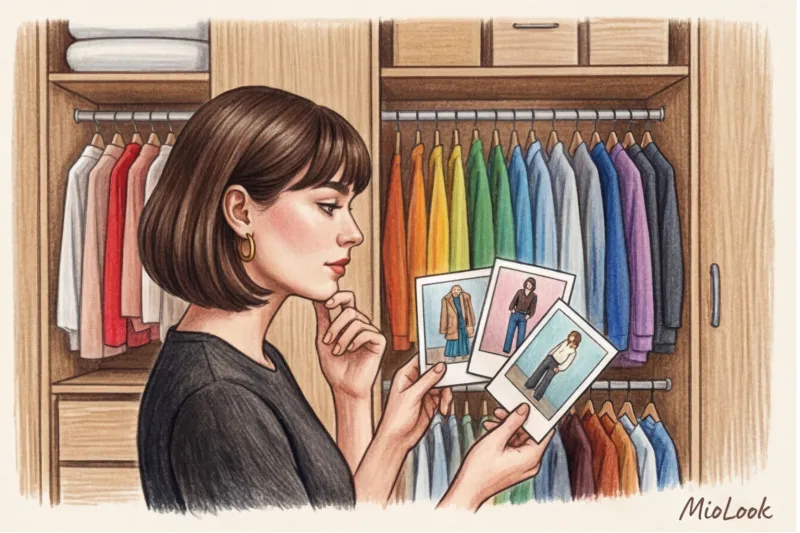
As a practicing stylist, I manage the digital wardrobes of my VIP clients through apps. It changes everything. It's one thing to read style advice, but quite another to have a business capsule wardrobe , which is fully digitized and ready to work.
Here's the step-by-step process I recommend to all new users:
- Download the database: Start with 15-20 of your favorite items. Don't photograph everything—choose what looks perfect on you.
- Add texture tags: The algorithm needs to know not only the color but also the material. Label items: "silk," "thick cotton," "leather." This is critical for matching an outfit to an emotion.
- Separate the scripts: Create templates. Smart Casual for office Fridays, Business Formal for the board of directors, Creative for presentations.
When you suddenly have an important Zoom call in 20 minutes, you don't rush to your closet in a panic. You open the app, click on the desired scenario, and get three or four ready-made options from whatever's currently clean and hanging on the hangers.
The myth that AI takes away style's individuality
I often hear this fear from new clients: "Isabella, what if the neural network makes a clone of me? After all, the algorithm thinks in patterns.".
Let's debunk this myth. Artificial intelligence gives you the "grammar" of style—it ensures proper proportions (the rule of thirds), color temperatures don't clash, and textures complement each other. But the "vocabulary" remains entirely yours!
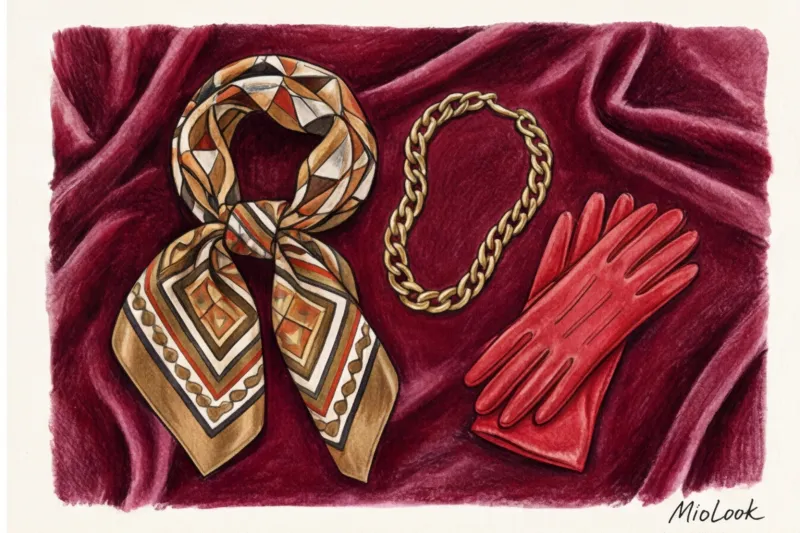
The algorithm works only with your unique wardrobe. If you bought a vintage silk scarf at a flea market in Paris or are wearing your grandmother's brooch, the AI will fit them into a modern context.
But there is a fair limitation here (when it DOESN'T work): If your closet consists entirely of random, bland items bought at a mass-market store simply because there was a sale (like rhinestone T-shirts for €5), AI won't work miracles. A neural network doesn't replace your taste; it replaces the routine of choosing your outfit in the morning. True individuality emerges when you don't waste your energy on basic color combinations, but enjoy adding the finishing touch: your favorite perfume or scarlet lipstick.
Ready to get started?
Try a free plan—no commitment—and build your first smart capsule today.
Get access — €0.99 onceChecklist: How to set up a virtual stylist before an important event
To Choose clothes based on your type using a neural network and to avoid making mistakes with the context, go through this checklist in the evening:
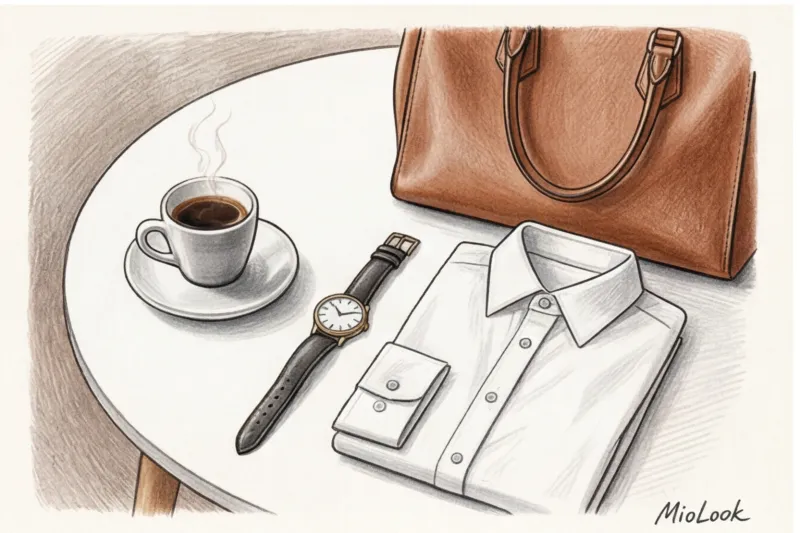
- Step 1: Identify the main emotion. Are you going to persuade, listen, or inspire? Set this parameter in your mind.
- Step 2: Specify the level of formality. In MioLook, adjust the dress code slider. For startups, choose relaxed casual; for the banking sector, choose business traditional.
- Step 3: Choose a "hero item". We all have a "lucky" shirt or skirt that makes us feel like a million bucks. Specify it as a base in the app, and the AI will build the look around it.
- Step 4: Comfort test. Once you've approved the look, ask yourself, "Will I be able to gesticulate freely and breathe in this?" If the skirt is too tight, your body language will betray your tension, and no amount of coloring will save you.
Clothes are your silent avatar in the real world. They speak for you even before you say "Hello." And by entrusting the mathematics of proportions to a neural network, you free your mind for what truly matters—communication itself, your ideas, and your charisma.