
Did you know that the average woman spends 15 minutes each morning choosing clothes? It seems like a small amount, but the math is ruthless: over the course of a year, you waste 3.5 days of your life standing in front of an unoptimized closet. The problem of "I have nothing to wear" often stems not from a lack of clothes, but from an outdated approach to organizing them.

As a stylist and smart wardrobe enthusiast, I tracked my looks using an app for six months. The results stunned even me: 80% of the time, I was wearing just 15 basic items. The rest was wasting space, energy, and time. A seasonal wardrobe review is the only way to break this cycle. We've shared more about how a smart wardrobe audit can save your budget in our article. The complete guide to creating a smart shopping list.
Why a seasonal wardrobe review isn't just about swapping sweaters for T-shirts
Wearing a winter wool down jacket next to a lightweight silk dress isn't just an aesthetic flaw. It's a factor that physically blocks your creativity. In psychology, there's a concept called "decision fatigue," described in detail by researcher Roy Baumeister. When your brain is forced to filter through 50 sweaters that aren't suitable for the weather in the morning to find one spring shirt, by the time you have to choose shoes, your resources are exhausted. You give up and slip back into your usual jeans.
Data from a global study by the environmental organization WRAP (Waste and Resources Action Programme) confirms that most people wear only 20% of their clothes regularly. The remaining 80% is "dead weight." One of my clients obsessively bought a new white T-shirt and blue jeans every spring, even though she owned five pairs. Why? Because the old ones were literally "lost" in the depths of her bulky winter knitwear.
"A properly conducted spring inventory audit can save up to 30% of your seasonal shopping budget. You simply stop buying duplicates of items you forgot you had over the winter."
The Digital Quarantine Method: Breaking the Outdated Three-Pile Rule
The popular advice "if you haven't worn something in a year, throw it away" is fundamentally wrong for a seasonal wardrobe, especially now. The climate is changing, trends are cyclical, and radical "cleansing" a la Marie Kondo ("keep, donate, throw away") often leaves my clients with decision paralysis. Getting rid of things under stress leads to them heading to Zara a month later and impulsively buying replacements.
I propose a different, data-driven approach: Quarantine box method and Cost Per Wear analysis.

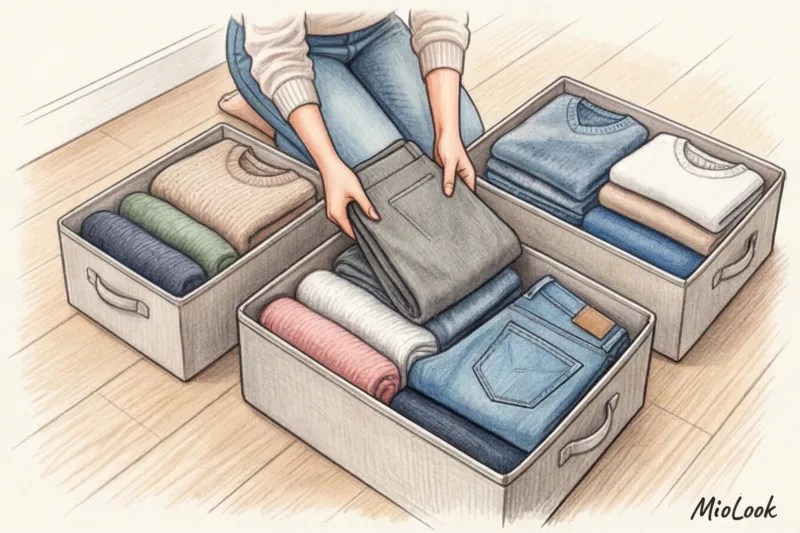
Instead of a trash bag, we use a physical container for items that raise doubts. You put them away for exactly six months. If you haven't thought about that weird crop top or uncomfortable skirt all spring and summer, you'll recycle them in the fall without the slightest regret.
To evaluate your winter assets, use the Cost Per Wear formula. Bought a thick wool sweater from COS for €150 and wore it 50 times this winter? That's a great figure – €3 per occasion. Bought an acrylic cardigan with rhinestones for €60 and wore it once to a New Year's party? Record your financial error and avoid repeating this pattern in the fall.
Digitize your wardrobe in 15 minutes
The MioLook app will help you calculate the Cost Per Wear for each item and show you what you wear most often.
Get access — €0.99 onceStep-by-step guide: get your closet ready for spring and summer without the stress
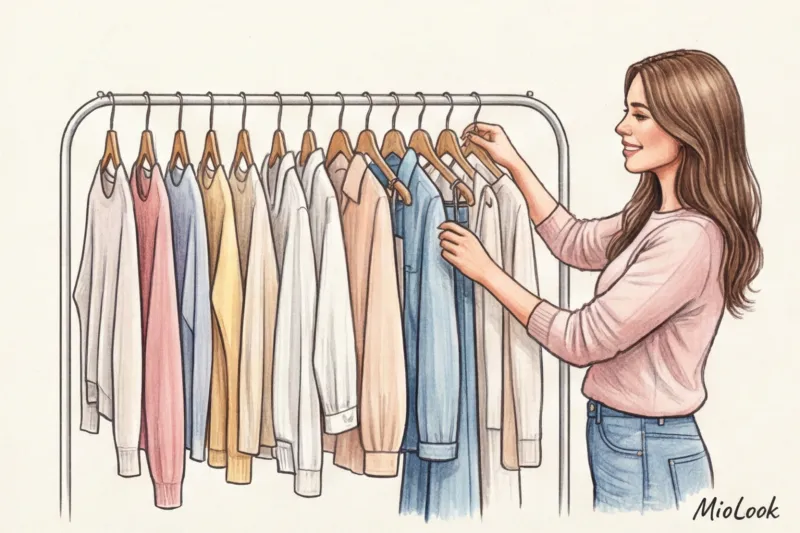
Before sorting your clothes, prepare your infrastructure. Over 12 years of practice, I've developed a rule of thumb: mismatched plastic and wooden hangers steal air from your closet. Replacing all your hangers with uniform, thin ones (40-42 cm wide with a velvet covering to prevent items from sliding) instantly frees up to 25% of your rail space. This is an investment of around €30-€40 that will transform the look of your closet.
Step 1: Audit of the outgoing season (closing out winter)
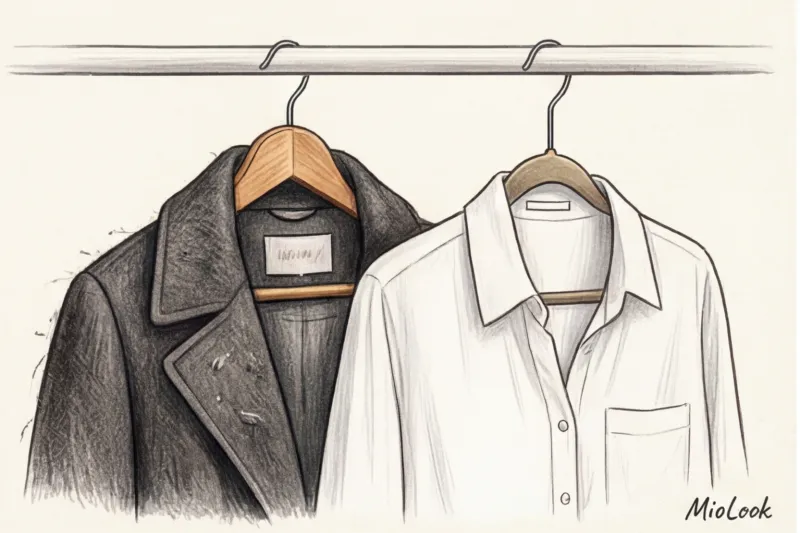
The biggest mistake is putting a winter coat or cashmere sweater away in a far corner, thinking, "I'll wash it in the fall." Over six months, microscopic particles of sebum and perfume oxidize, permanently embedding themselves in the fabric fibers. Moths also prefer dirty wool.
Before packing your winter clothes, separate them into three categories: dry cleaning, hand washing (cashmere and merino), and repair (replacing boot heels, machine-washing pilling). Take an honest look at your closets: which warm items are still hanging with the tags? Make a note in your phone so you don't buy another "pretty but itchy" sweater in November.
Step 2: Warm Season Unpacking and Trying On
You can't just take out your summer dresses and hang them on hangers. Your figure may change (and that's perfectly normal!), the elastane in the fabric may have dried out, and the hardware may have darkened. Be sure to try on your spring/summer essentials. What fit perfectly last summer may require a visit to the tailor.

At this stage, create a "transition capsule" for March and April. The weather is treacherous, so you'll need layers: a classic beige trench coat, lightweight viscose or cotton knitwear, loafers, and straight-leg jeans. Keep these items hanging in an accessible place.

3 Fatal Mistakes When Switching to a Summer Wardrobe
Even seasoned users often make annoying mistakes as the seasons change. Here are three key patterns I regularly correct during wardrobe reviews:
- Leave demi-season items packed. Spring doesn't arrive overnight, where you can suddenly jump from a down jacket to a silk dress. Lightweight scarves, thin jumpers, and cardigans should gradually migrate to the active section of your closet by the end of February.
- Storing delicate items in plastic dry cleaner bags. This is a professional pain point for all technologists. Plastic contains BHT (butylated hydroxytoluene), which, when exposed to air and light, causes irreversible yellow stains on light-colored fabrics. Garments wrapped in plastic "suffocate." Use only breathable bags made of spunbond or cotton.
- Buying hot trends before revising the database. Brand marketing is aggressive, and in the spring, you're tempted to buy a neon top or a micro skirt from Miu Miu for €800. But this purchase is pointless unless you have a crisp white T-shirt with a minimum weight of 180 g/m², perfect white sneakers, and classic blue denim without any fraying.
To be fair, the advice about essential basics doesn't work for those with a distinctly avant-garde or purely romantic style, who generally avoid jeans and T-shirts. But for 90% of city dwellers, this is a wardrobe foundation.
Smart Wardrobe: How Digitalization Addresses Seasonal Changes
Human memory is unreliable. Within six months, we forget exactly which linen shorts we already own. This is where technology comes in. As an active user, I spend exactly 10 minutes visually changing the seasons simply by changing filters in the app. MioLook.
By creating "spring-summer 2025" tags, you gain access to your virtual fitting room 24/7. Visualizing all your summer essentials on a single smartphone screen instantly reveals the gaps in your wardrobe. You can clearly see, "I have three great summer skirts, but only one top goes with them. I don't need a new dress, I just need two basic tops in the 20-40€ range."
Your perfect look starts here
Join thousands of users who look flawless every day with the smart AI stylist MioLook.
Get access — €0.99 once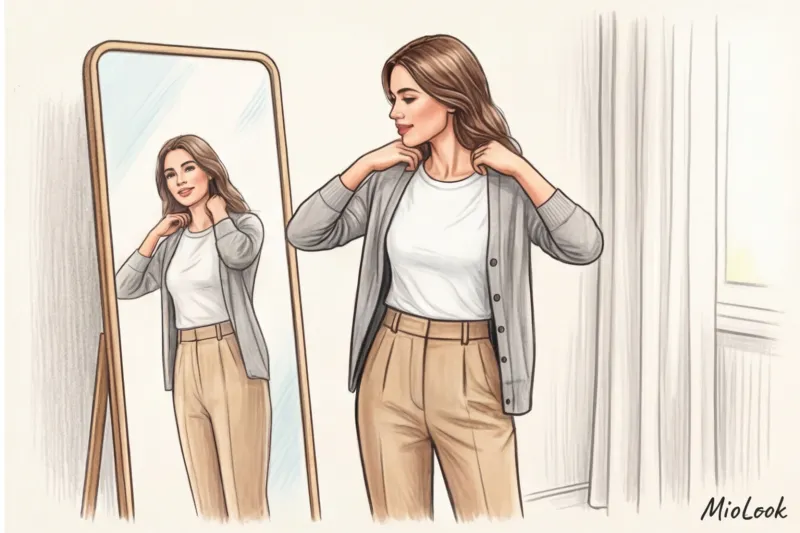
Checklist: Your Action Plan for the Next Weekend
Don't try to sort through your wardrobe half an hour before bed—you'll only create a mess and go to bed in a bad mood. A seasonal audit requires consistency.
- Set aside 2-3 hours, make some coffee, and turn on your favorite podcast (silence is conducive to extra sentimental reflection on old T-shirts).
- Gather all your dirty or repair-intensive winter clothes into a bag right at your front door so you can easily take them to the repair shop.
- Pack the rest of your winter (clean) gear into breathable cases, and any questionable items into that same “quarantine box.”
- Take out your spring/summer base coat, iron it and do an honest try-on in front of a large mirror.
- Digitize the "surviving" items in the app and write down the missing links for your future shopping list.
Your main goal this weekend is to transform your closet from a warehouse of forgotten items into a functional tool. When your wardrobe contains only what suits your season, size, and style right now, getting ready in the morning takes three minutes of pure pleasure, not 15 grueling minutes.