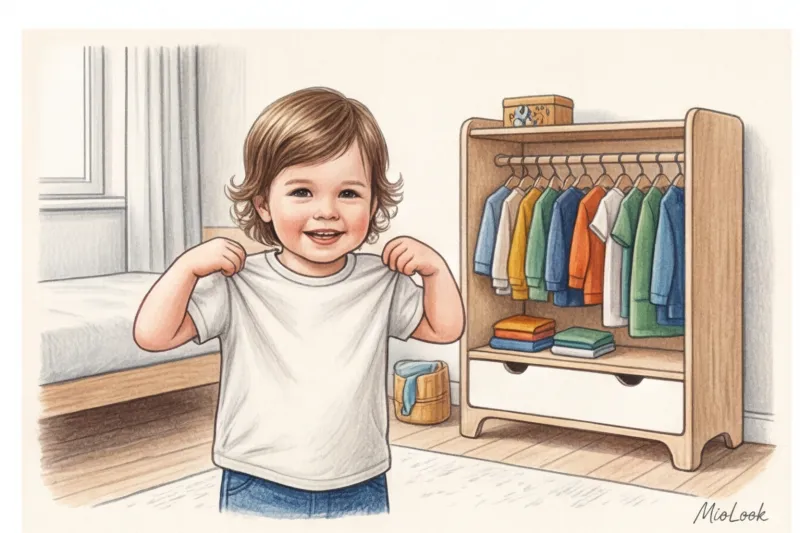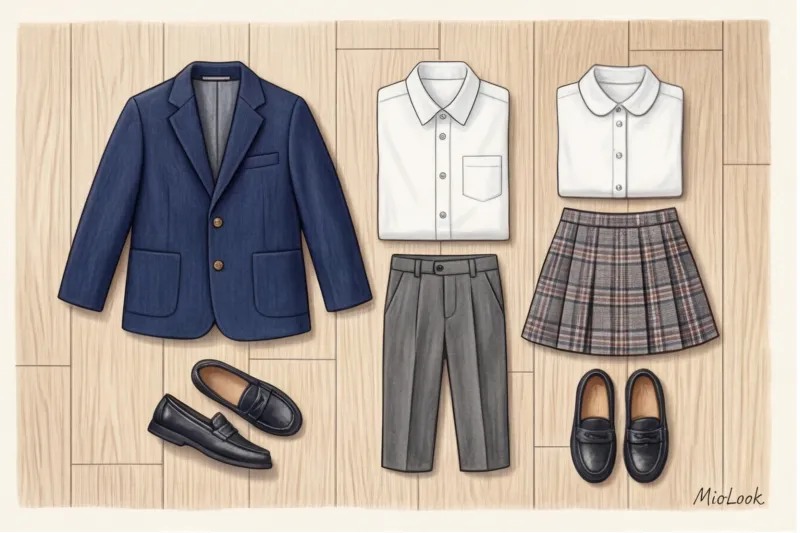
It's 7:15 AM. Your child sleepily looks into a closet overflowing with clothes and utters the classic: "I have nothing to wear. This shirt is itchy, and I hate those pants." You end up frantically ironing the only "normal" turtleneck, while simultaneously promising yourself to tidy up the kids' clothes over the weekend. Sound familiar? As a stylist and textile researcher, I see it all the time: closets overflowing, but nothing to wear. That's why a well-organized wardrobe capsule wardrobe for a schoolchild — this is not just a tribute to minimalism, but a tool for saving nerves, time and the family budget.
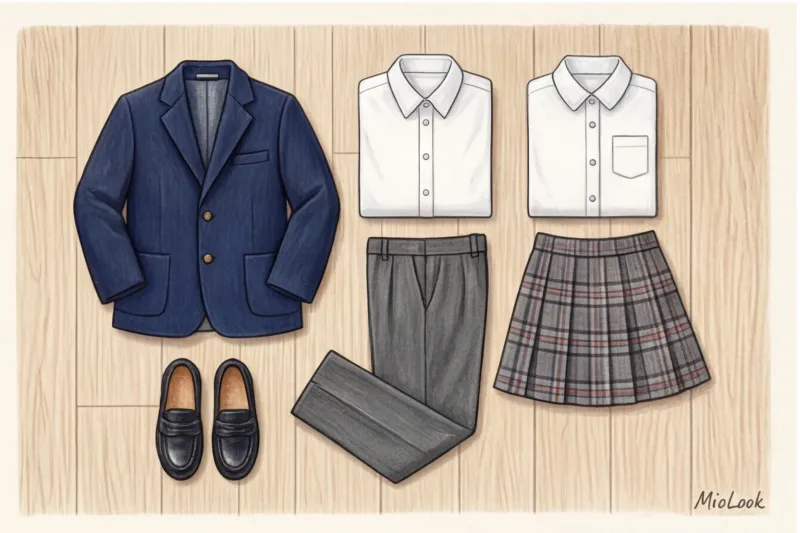
We discussed in more detail the architecture of family cabinets and how technology helps us see the real picture of consumption in our complete guide to virtual wardrobe (app) for the whole family Today, we'll focus exclusively on children's ergonomics, fabric quality, and debunking harmful myths that cause us to waste money.
Capsule wardrobe for a schoolchild: why is closet chaos so costly?
According to a 2023 report by the international organization WRAP (Waste and Resources Action Programme), the average family actively uses only 20-30% of purchased children's clothing. The remaining 70% consists of impulse buys, poorly designed clothes, itchy sweaters, and simply unmatched items. This "dead" stock is a direct drain on your money.
When I suggest implementing a capsule wardrobe for my clients' school-age children, many mothers are apprehensive: "Will my child wear the same thing every day?" Nope. A capsule isn't a restriction, but a mathematically precise system of interchangeable elements. The key is that every top pairs perfectly with every bottom. You don't have to worry about whether that plaid shirt will go with those gray trousers—in a capsule, they'll all match. already are suitable.
Let's calculate the CPW (Cost Per Wear) index. A high-quality blended cardigan for €45, which a child wears for 100 school days, costs €0.45 per wear. A cheap acrylic jumper for €15, which after three washes is covered in pills and has settled at the bottom of the closet, costs €5 per wear. Paradoxically, cheap clothes cost a family significantly more.
Ready to get started?
Try a free plan—no commitments required. Digitize your wardrobe and create stylish looks in one click.
Get access — €0.99 onceTextile Expertise: Which Fabrics Can Really Survive in School Environments?
Last September, the mother of a second-grader contacted me. She had bought five crisp, inexpensive shirts at a school fair. Two weeks later, the boy developed severe contact dermatitis, and teachers began complaining about his restlessness. It turned out the shirts were 80% cheap polyester. The fabric was impermeable, creating a greenhouse effect, and the stiff seams were chafing his neck. The boy was physically unable to concentrate on math because his body was struggling with the discomfort.
Sensory comfort is the foundation of a child's wardrobe. But here we run into another extreme: the myth that clothes must be 100% natural. I often hear: "I only buy pure cotton and wool!" It's a noble aspiration, but in practice, 100% cotton wrinkles on the way to school. By midday, a hyperactive child looks like he slept in his uniform. And pure wool on the elbows stretches into blisters by November.
The Gold Standard of Compositions: The 80/20 Rule
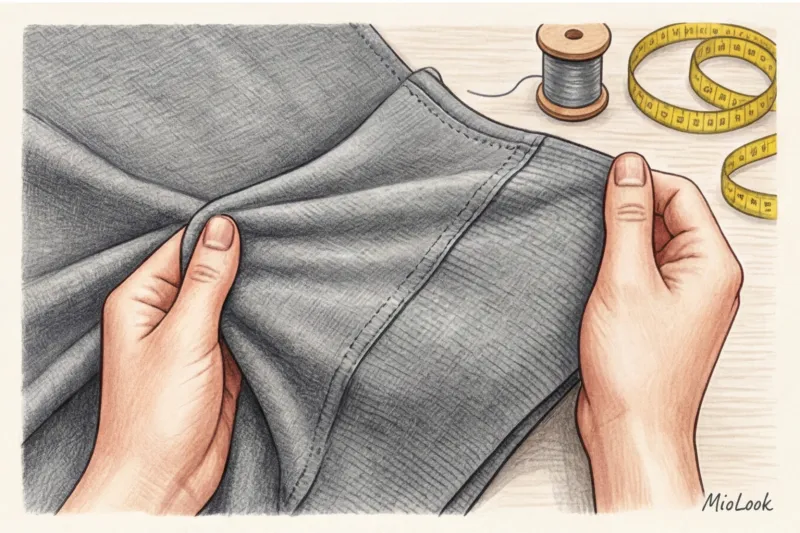
The ideal formula for school clothing, which I've developed over years of studying textile wear, is an 80/20 or 70/30 ratio. Where 70–80% is natural fibers (long-staple cotton, breathable viscose, or fine merino), and 20–30% is high-quality synthetics (polyester, polyamide, or elastane).
- For shirts and blouses: 80% cotton + 20% polyester or 3–5% elastane. Synthetics prevent the fabric from wrinkling quickly and make ironing easier.
- For trousers and skirts: A blend of viscose (40%+), polyester, and elastane. This fabric won't leave your buttocks shiny from sitting at a desk for long periods of time.
- For knitwear: Cotton with added nylon or cashmere. Avoid acrylic (if it's more than 15%)—it squeaks, generates static, and doesn't provide warmth.
The Myth of Buying for Growth: Ergonomics vs. False Economy
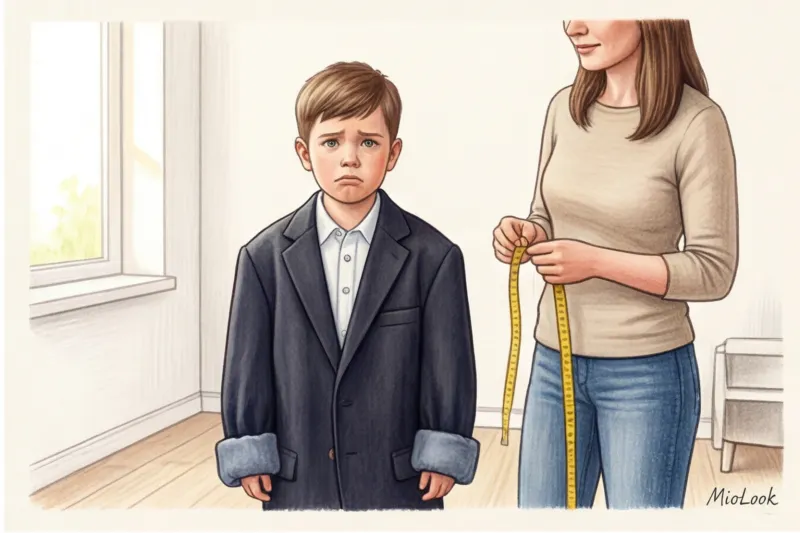
This is perhaps the most persistent and harmful piece of advice, passed down from generation to generation: "Buy a jacket two sizes bigger, it'll last you until 11th grade!" As a professional, I am categorically against this practice.
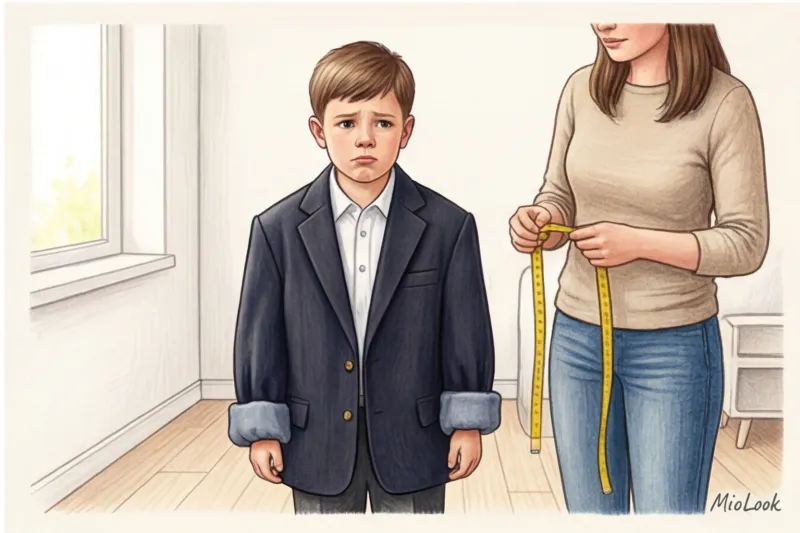
Buying a school uniform "too big" is a grave mistake. Firstly, it directly affects a child's posture. When the shoulder line of a jacket hangs below the anatomical joint, the child instinctively slouches, trying to "support" the heavy garment. Long sleeves and baggy pants alter the biomechanics of gait.
"Clothes that don't fit wear out twice as fast. Due to the misalignment of anatomical zones, elbows and knees are forced into the wrong areas of the fabric. As a result, forearms become chafed, and the bottoms of pant legs wear out against shoes even before the garment fits properly."—This is a law of textile physics that I often explain to clients.
Don't forget about psychology. Children (especially teenagers) are extremely harsh when it comes to judging their peers' appearance. A baggy, sagging jacket can lower a child's self-confidence. It's better to buy budget trousers (€25-€35) that fit perfectly than premium trousers (€90) that are too big for three years.
Your ideal image begins Here
Join thousands of users who look flawless every day and save time with the smart AI wardrobe MioLook.
Get access — €0.99 onceThe Mathematics of Style: What Makes a Schoolchild's Capsule Wardrobe
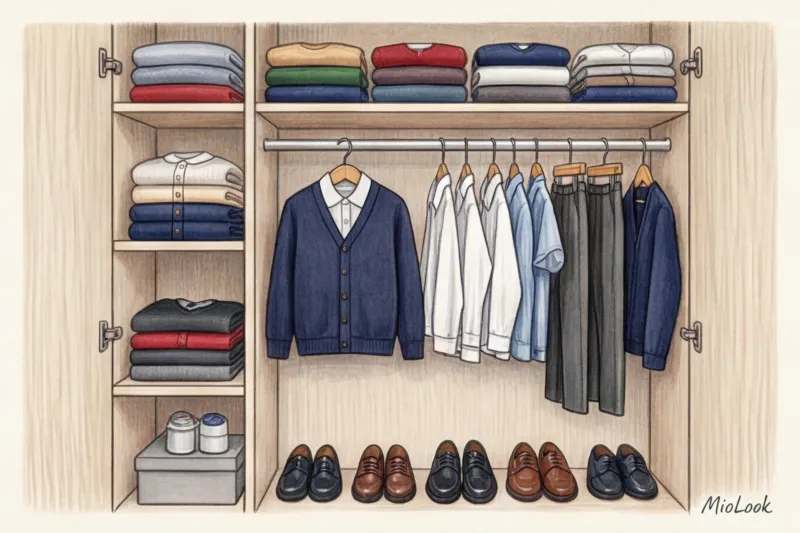
So, we've covered fabrics and sizes. Let's move on to the numbers. An optimal capsule wardrobe for a standard five-day break doesn't require a huge budget. Just 12 well-chosen pieces will give you over 30 different combinations.
Smart capsule formula:
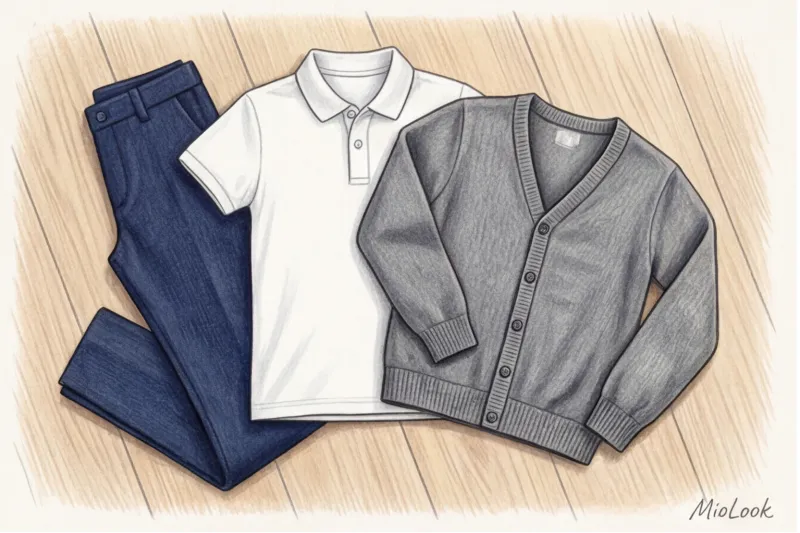
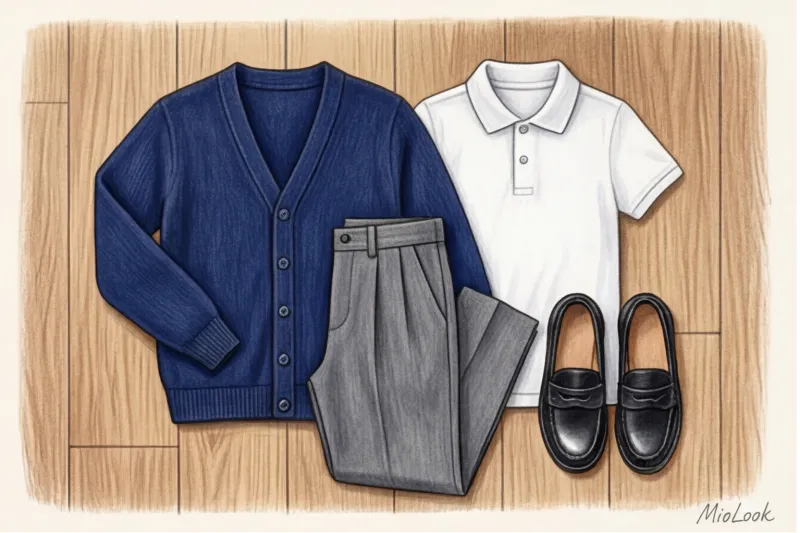
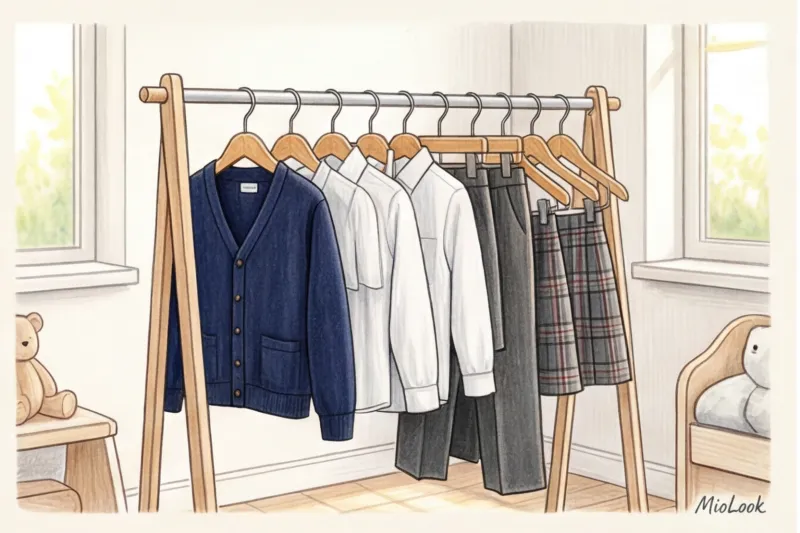
- 3 bottoms: For example, formal trousers for special occasions, comfortable chinos (or skorts for girls) for every day, and thick dark jeans if the school allows casual Fridays.
- 5 tops: 2 basic shirts (white and blue/light gray), 2 high-quality polos made of thick pique (they are a great substitute for shirts and don’t require complicated ironing), 1 turtleneck or long sleeve.
- 2 second layers: Insulation and status.
- 2 pairs of shoes: Breathable change shoes/loafers and minimalist sneakers for gym or relaxed days.
To be fair, I should point out: This capsule program does NOT work if your school imposes strict rules down to the last detail (for example, a mandatory burgundy jacket with the school crest and a checkered tie every day). Given such strict guidelines, we focus on the quality of basic shirts worn underneath the jacket.
Base and Second Layer: Layering Rules
The first layer is always responsible for moisture absorption (wicking away moisture). The second layer, however, is all about the geometry of the look. Forget about thin, flimsy cardigans that sag by lunchtime.
In my experience, a thick knit vest is a real lifesaver. It holds its shape, allows for free movement in the shoulders when the child is writing at the board or acting out during recess, and instantly adds a put-together look. A vest in a deep emerald or graphite shade visually elongates the silhouette and hides minor creases in the shirt.
Virtual Wardrobe: How to Manage Children's Clothes with AI
You know what the biggest problem with kids' closets is? We forget what's in there. Half the clothes end up hidden behind bulky sweaters, and we go buy new black pants, forgetting that two almost-new ones are hanging in the far corner. That's wasted money.
One of my clients, Anna, complained that every morning turned into a battlefield: her fifth-grader refused to wear what her mother had prepared, and she couldn't choose anything herself. We solved the problem completely. We photographed all 12 items from the capsule and uploaded them to MioLook — an application for managing a smart wardrobe.
The effect was astounding. Now, Anna's daughter opens the app on her tablet every night and, like a stylist, "puts together" her own outfit from digitally scanned items. The neural network suggests successful combinations (for example, how loafers pair with a pleated skirt and a heavy vest). Her morning routine has been reduced from 40 minutes to 10. Moreover, the app shows her mom statistics: Anna sees that the blue polo has been worn 15 times, while the white turtleneck is lying around. This allows her to plan targeted purchases rather than buying everything on impulse.
Pre-purchase checklist: quality and durability testing
Before you take an item to the checkout (or click "pay" in an online store), do a quick check. As an expert, I always use these four techniques right on the sales floor:
- Scrunch Test: Squeeze the edge of the fabric in your fist, hold it for 5-10 seconds, and then release. If the fabric has straightened out and the creases are barely visible, go ahead. If it looks like it's been chewed, it'll become your worst nightmare at the ironing board.
- Recovery Test (Snap Test): Gently tug on the collar or cuff of the sweater and release. The fabric should instantly (with a distinctive click) return to its original shape. If the edge remains wavy, the garment will stretch out after the first wash.
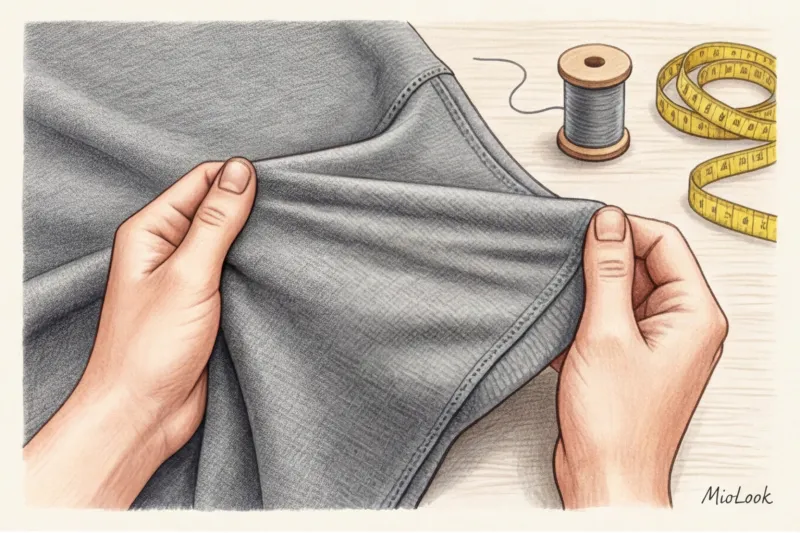
- Checking the seams: Turn the trousers inside out. High-quality children's clothing has a high stitch density (at least 3-4 stitches per centimeter). The edges should be finished with an overlocker, with no loose threads.
- Hidden growth systems: Since we've agreed not to buy clothes three sizes too big for growth, look for clever design solutions. The waistband of trousers and skirts should always have elastic with buttons on the inside for adjusting the waist. And the hems of high-quality trousers are often hemmed with an extra 3-4 centimeters, which can be released as your child grows a bit taller in the spring.
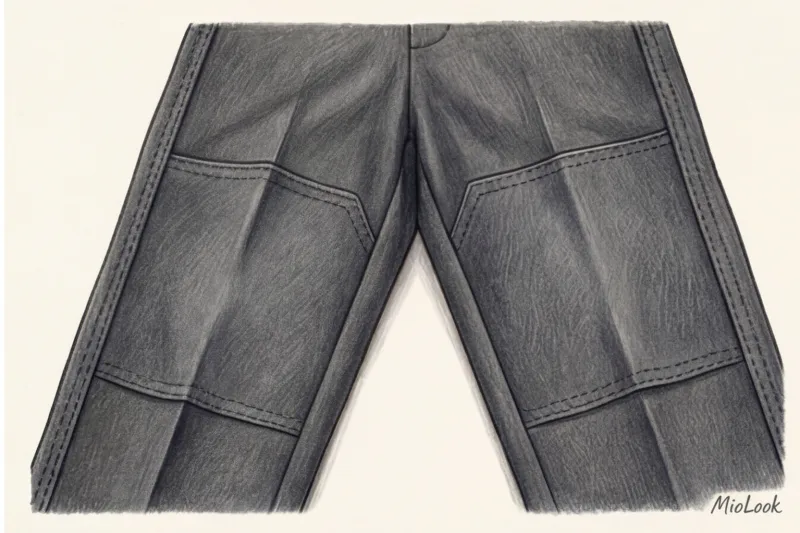
By creating a smart wardrobe for your child, you solve several problems at once: you save money, save stress in the mornings, and, just as importantly, you instill a healthy attitude toward clothes from an early age. A capsule wardrobe isn't boring; it's about respecting your time and comfort. Invest in quality fabrics, use digital closet management tools, and you'll forget about the phrase "nothing to wear" forever.