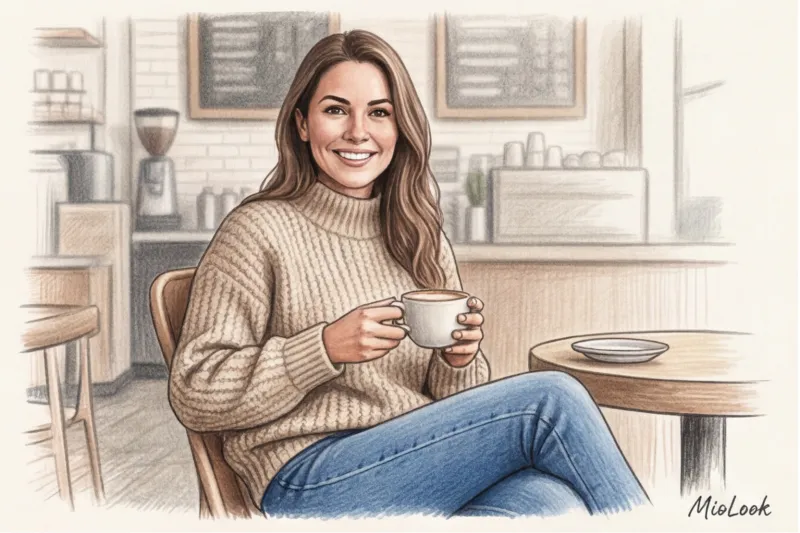
Have you ever wondered why tech giants' leaders wear the same basic T-shirts for years, and it's interpreted as a manifesto of freedom rather than a sign of frugality? A common myth holds that casual is the cheapest, easiest, and most undemanding way to dress. Throw on some jeans, throw on a hoodie, and you're done. As a textile expert and stylist, I'm sorry to disappoint you: this is a colossal misconception.
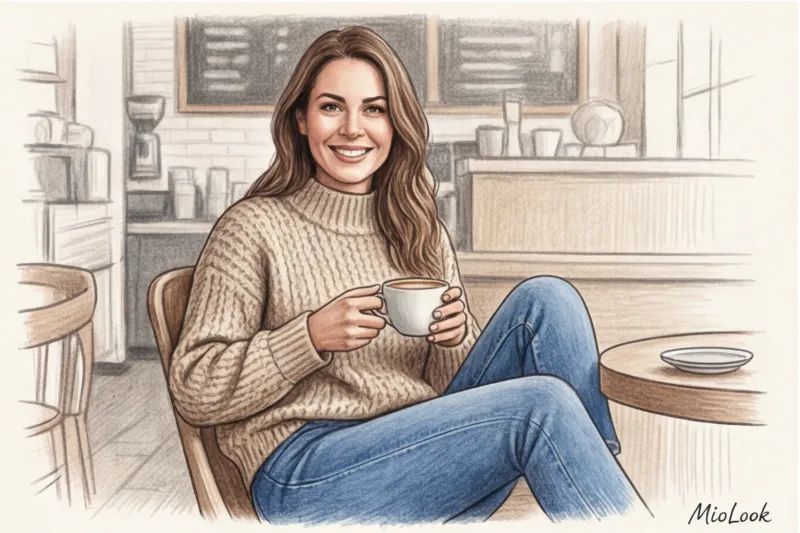
When we disassemble archetype of the nice guy, style of clothing Often confused with plain sloppiness, it's actually one of the most demanding archetypes when it comes to texture quality. A cheap suit may hold its shape thanks to its rigid cut and shoulder pads. But cheap knitwear and thin denim immediately betray their low quality, pilling and stretching at the knees, transforming the look from "relaxed" to "sloppy."
I wrote in more detail about how clothes influence impressions and why we subconsciously trust some people more than others in our the complete guide to style archetypes Today, we'll explore the anatomy of the ideal everyday wardrobe from the perspective of fabric quality and sustainable fashion.
What the Nice Guy Archetype Conveys: Clothing Style as a Tool of Trust
Clothing is more than just fabric covering the body. It's a powerful nonverbal signal. In 2012, researchers from Northwestern University (USA) coined the term enclothed cognition (clothing and cognitive processes), proving that what we wear directly influences our psychological attitudes and how others perceive us.
The Nice Guy (or "One of the Guys") archetype is built on conveying friendliness, equality, and safety. Soft, tactile textures literally trigger the release of oxytocin in the interlocutor—at a subconscious level, the brain perceives a person in a cozy cardigan as someone trustworthy. This is why this style is vital for community managers, HR specialists, psychologists, and IT executives, where a horizontal management structure is essential.
Our Own: Why People Trust Us in Denim and Knitwear
Historically, denim was workwear. By choosing jeans today, we visually reject dominance. Unlike the Ruler archetype with its sharp shoulders and starched collars, the Nice Guy says, "I'm just like you. I'm not going to push you."
Access to MioLook for €0.99 — one-time payment
A smart AI stylist will select the perfect look for your archetype.
Get access — €0.99 onceAnatomy of Style: Basic Elements and Textile Expertise
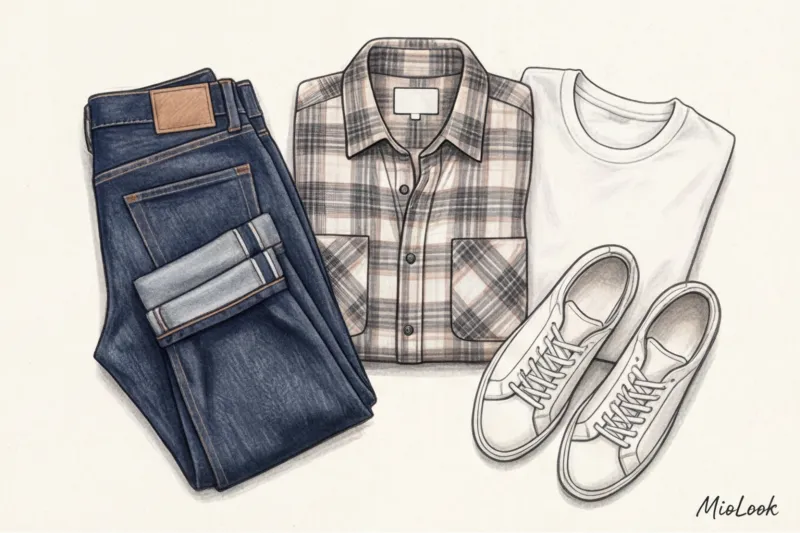
Over 12 years of working with wardrobes, I've discovered a golden rule: the simpler the cut of a garment, the more impeccable the fabric should be. The foundation of a Nice Guy's wardrobe is a conscious foundation. You don't need fifty items, fifteen is enough, but they must be of the highest quality.
The color palette here relies on natural, muted hues: indigo, terracotta, olive, warm beige, and melange gray. No flashy neon colors or complex geometric prints. Footwear is always designed for anatomical comfort: high-quality white sneakers, suede loafers, and Chelsea boots.
The Right Denim: How to Read Fabric Composition and Density
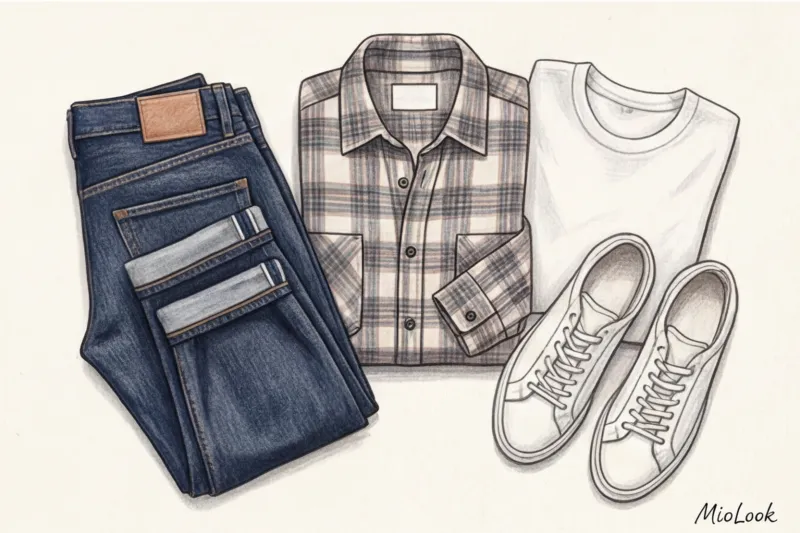
If you want your jeans to look expensive, learn to read the labels. The main indicator of denim quality is its weight, measured in ounces (oz). For a good base, look for a weight of 12 to 14 oz. This type of cotton holds its shape well and ages beautifully, acquiring distinctive fades.
"Avoid jeans labeled as super stretch. According to textile labs, denim with more than 2-3% elastane loses its original shape twice as fast as 100% cotton. Furthermore, blended fabrics are virtually impossible to recycle, making them the main enemy of sustainable fashion."
Knitwear: An Investment in Long-Lasting Comfort
Choosing the perfect white T-shirt is a science. Pay attention to the fabric's density (GSM—grams per square meter). The optimal value for a basic T-shirt that won't be see-through or sag is between 160 and 200 GSM.
In the store, always do a tactile test: run your palm over the fabric. If it feels slightly fuzzy or rough, it's carded cotton; it will quickly become pilled. Look for items made from combed cotton (combed cotton) - its fibers are combed, they are longer, stronger and have a light, noble shine.
The Biggest Trap: Why the Nice Guy Is the Hardest Archetype to Manage
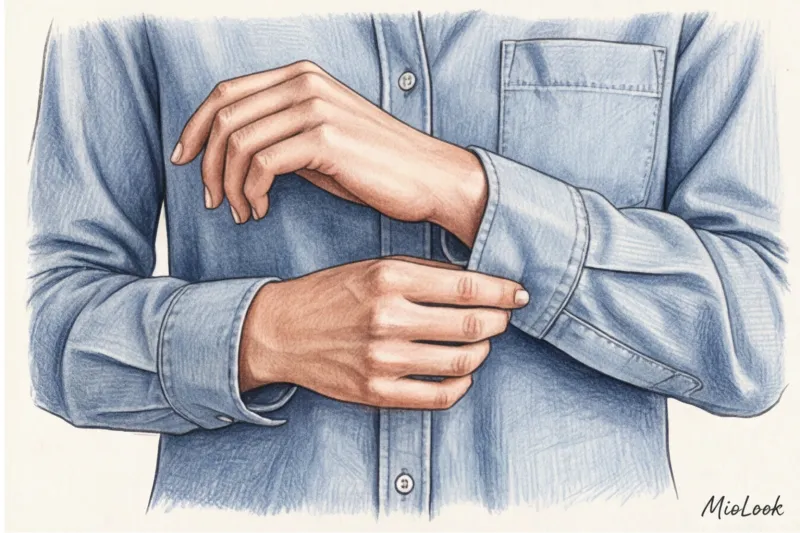
One of my clients, the head of development at a large IT company, came to me with a problem: the team no longer took her seriously. Trying to be "one of the guys" with the programmers, she switched to wearing baggy, mass-market hoodies and shapeless sweatpants. She gained trust, but her authority crumbled.
We swapped thin hoodies for structured sweatshirts made of thick organic cotton (350 GSM), and sweatpants for straight-leg selvedge denim jeans. The relaxed feel remained the same, but the premium textures brought a touch of class back into the look. After a month, she noted that holding meetings had become significantly easier.
The fine line between "relaxed" and "sloppy" lies in care. Basic items require careful handling:
- Wash denim inside out at a temperature not exceeding 30°C.
- Never dry knitwear and jeans in a tumble dryer - high temperatures destroy cotton fibers.
- Buy a good anti-pilling machine and use it after every third sweater wash.
Your perfect look starts here
Join thousands of users who look flawless every day with MioLook.
Get access — €0.99 onceThe Office Nice Guy Archetype: Balancing Casual and Business Etiquette
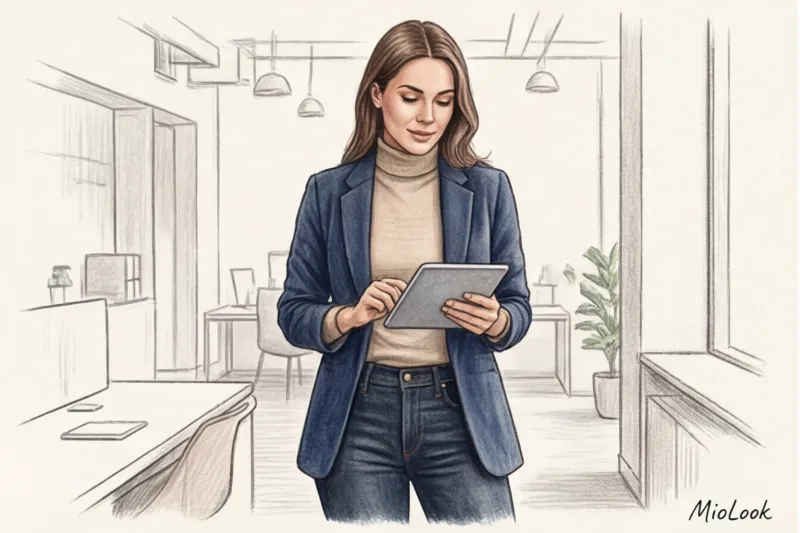
Here I must make an important digression: This style doesn't work everywhere. If you work in conservative banking, appear in court, or represent a company at the government level, a pure Nice Guy will work against you, depriving your image of the necessary distance and expert weight.
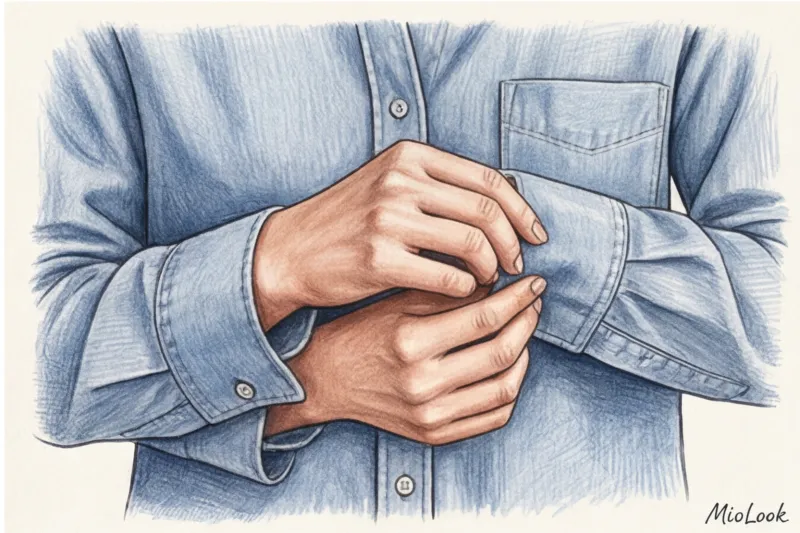
But for modern corporations with a smart casual dress code, this archetype is a real find. The key rule of integration is replacing rigid elements with softer alternatives. Instead of a formal suit jacket with shoulder pads, opt for a deconstructed blazer made of heavy jersey or wool. Instead of pleated trousers, opt for dark, solid-color denim with no fraying.
Image formula: "One of our own, but a professional"
To avoid looking like you just popped into the office for a quick lunch, follow the one-piece rule. If you're wearing relaxed jeans and sneakers, layer a structured shirt over the top. If you're wearing a cozy, oversized sweater, pair it with classic trousers or tailored loafers.
Sustainable Fashion: How to Choose Long-Lasting Essentials
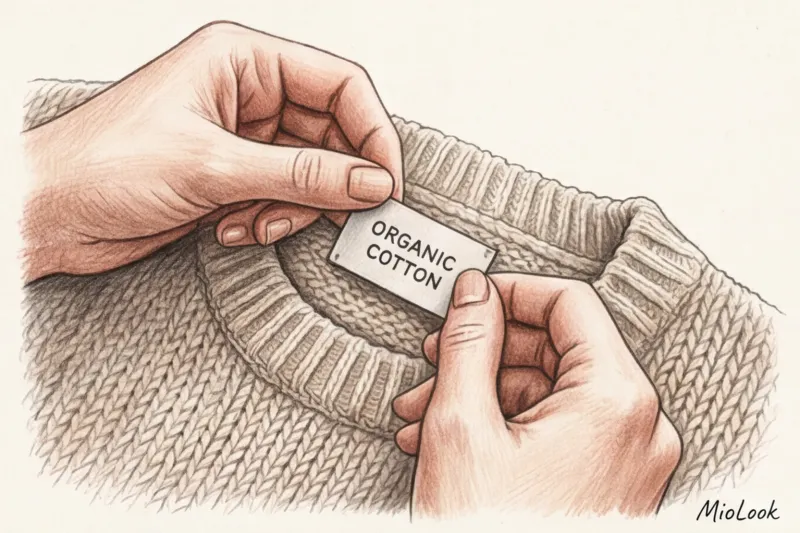
The Nice Guy archetype resonates perfectly with philosophy slow fashion (slow fashion). According to the McKinsey Circular Economy Report (2024), the lifespan of clothing has been halved over the past 15 years. By buying cheap basics, we not only harm the planet but also overpay.
Mathematically, buying one $40 T-shirt made of heavy-duty, long-staple cotton that will last 50 washes without losing its shape is much cheaper than buying five $10 T-shirts that will turn into a rag after the third wash.
When choosing basic items, pay attention to eco-certificates:
- GOTS (Global Organic Textile Standard) — guarantees that the cotton is grown without toxic pesticides.
- Oeko-Tex Standard 100 — confirms the absence of harmful chemicals at all stages of fabric production.
Checklist: Assembling a functional capsule for the season
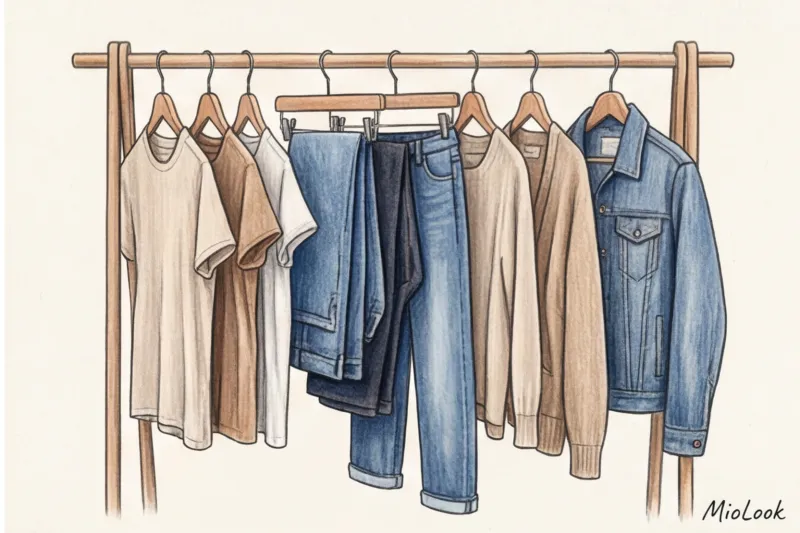
To build a functional wardrobe that will last for years, you don't need endless trips to the mall. Here's a universal capsule wardrobe formula (from mid- to premium-segment stores, such as COS, Massimo Dutti, or local sustainable brands):
- Straight-leg jeans made of heavy cotton (12-14 oz) classic blue color.
- Dark blue or black jeans no fraying for office looks.
- Two thick T-shirts (from 180 GSM) - white and graphite.
- Merino wool or cashmere sweater (avoid acrylic, it doesn't warm and quickly loses its appearance).
- Flannel shirt in a muted cage.
- Structured chambray shirt or thick oxford cotton.
- Deconstructed Blazer neutral shade.
- Organic cotton sweatshirt with looped backing (French terry).
- White leather sneakers minimalist design.
- Suede loafers or Chelsea boots.
By the way, to avoid confusion in combinations, I always recommend my clients to use the "smart wardrobe" feature in the MioLook app You simply upload photos of your basic items, and artificial intelligence helps you create dozens of innovative combinations for work, weekends, or meeting up with friends.
Remember the most important thing: the Nice Guy style isn't about abandoning fashion. It's about deep respect for yourself and others, expressed through uncompromising comfort and the highest quality of simple items.