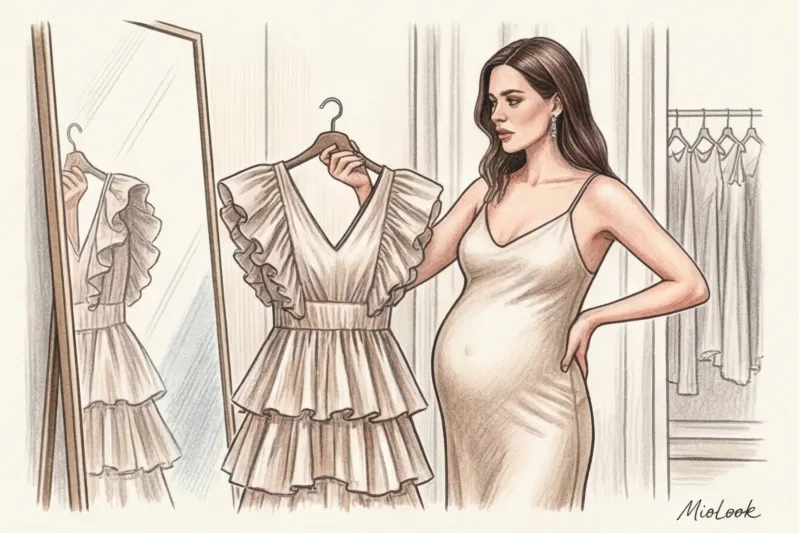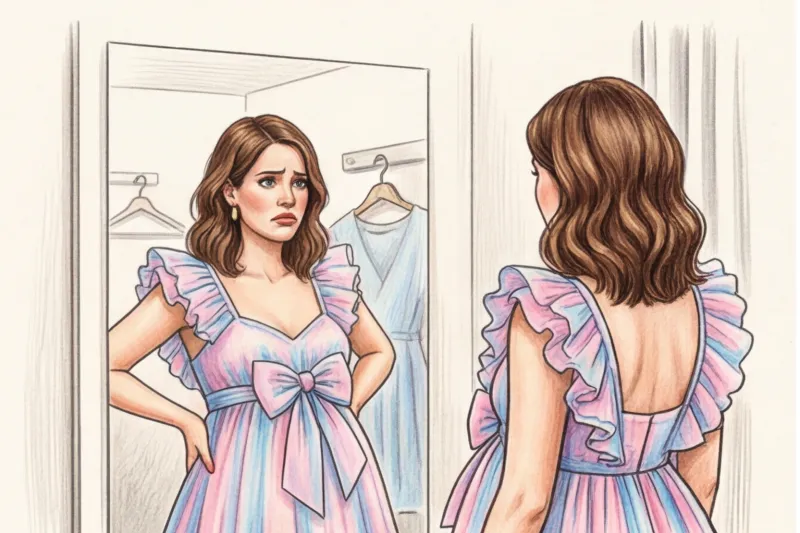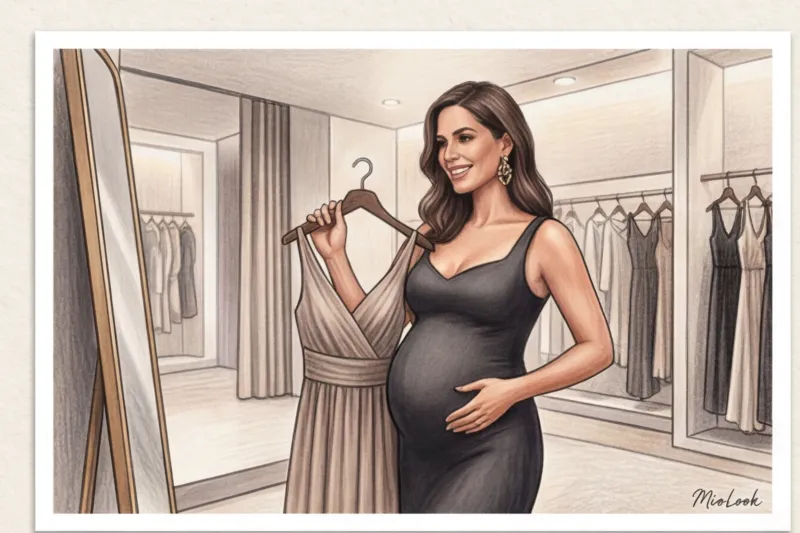
When my client Sofia, eight months pregnant, burst into tears in the fitting room of a specialty maternity store, I realized: the eveningwear industry is screwing us. She needed clothes for a friend's black-tie wedding, but the hangers were filled with shapeless polyester slips with bows under the bust, turning a gorgeous woman into gift wrap. It was then that I became convinced of one rule: to look stunning, you need to choose regular maternity dresses exits, completely ignoring the maternity departments.
We have covered the basic principles in more detail in our The complete guide to elegant maternity clothes , and today I'll share some insider design techniques. As a stylist who adores the Mediterranean aesthetic—with its cult of femininity, architectural cuts, and bold accents—I'll prove to you: a changing body deserves an intelligent wardrobe. And you can find it at your nearest Massimo Dutti, COS, or 12Storeez store.
Why Regular Maternity Dresses Outperform Specialty Lines
Buying a specialized evening gown for a couple of months isn't just an aesthetic compromise but also a financial mistake. Let's calculate the cost per wear. The average maternity dress costs around €150-€250. You'll wear it once, maybe twice. Total: €125 per outing. After giving birth, the dress will be permanently stored in the closet because its specific cut (with the belly bump) is impossible to adapt to a regular figure.
Now, take a bias-cut silk slip dress from a regular premium line for the same €150. You wear it to a party with a jacket, six months after giving birth, on a date with your husband, and next summer, on vacation with sandals. The price per occasion drops to a paltry €5–7. Moreover, according to the McKinsey report "Fashion on Climate" (2024), eliminating disposable event wear is the most effective step toward a sustainable wardrobe.
Architecture instead of robes
Why do most maternity dresses look so bulky? Manufacturers take the path of least resistance: they simply mechanically add meters of fabric to the waist. The law of visual correction states that all-over volume without any points of contact transforms the figure into a monolith. You lose not only your waist (which is natural), but also your collarbones, shoulder line, and the grace of your arms. The architectural approach of traditional brands works differently: the fabric flows, emphasizing natural curves rather than hiding them.
Access to MioLook for €0.99 — one-time payment
A smart AI stylist will select the perfect look from your items.
Get access — €0.99 onceThe biggest styling mistake: why you shouldn't buy clothes three sizes too big
"Just buy a dress three sizes bigger" is the most harmful myth I hear from salespeople in mass-market stores. This is absolutely not an option. Here's why.
When you go up to an XL when you're naturally a Medium, it's not just the waist that gets bigger. The armhole, neckline, and, worst of all, the shoulder seam also get bigger. A collapsed shoulder girdle instantly adds visual weight to the entire silhouette. Shoulders that have slipped 5 centimeters make your figure look hunched and untidy. This is a disaster for a formal event.
My rule of thumb: buy your actual shoulder size, but look for a smart cut below the bust. The shoulder seam should sit exactly at the anatomical point.
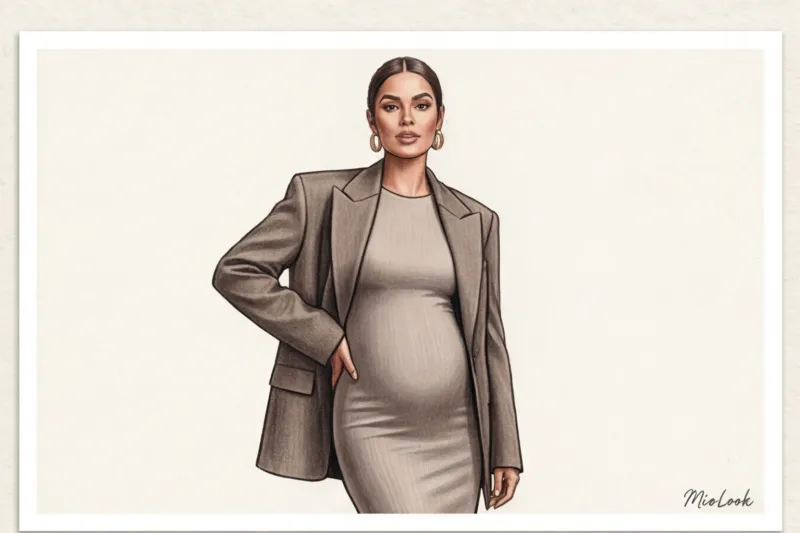
According to analytics platform Lyst (2024), about 40% of current runway trends (fluidity, oversized jackets, architectural pleats) inherently have some room around the midsection. You don't need to buy someone else's size—just choose the right style for your size.
Top 4 styles from regular collections that fit your tummy perfectly
You don't need maternity stores if you know how sartorial principles work. Here are four silhouettes you'll find at any reputable brand.
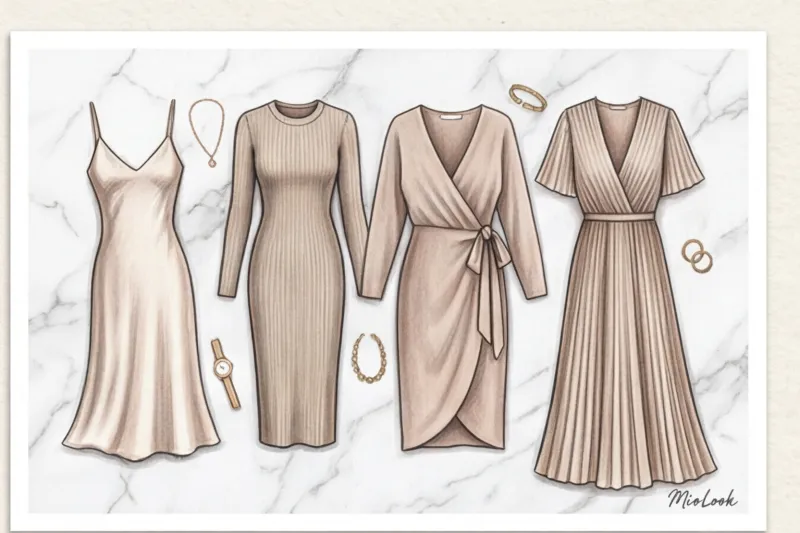
Bias-cut slip dress
In 1922, the great Madeleine Vionnet revolutionized fashion by cutting fabrics at a 45-degree angle to the grain. This secret—cutting on the bias—allows the fabric to stretch exactly where it's needed, without a single gram of elastane. Natural silk or thick, flowing viscose will gently hug your stomach without constricting it, and will return to its original shape when you take off the dress.
Architectural ribbed knitwear
This is the quintessence of Mediterranean chic. The dense ribbed knit works like a soft sculptor, sculpting the figure rather than clinging. Look for dresses with viscose or tencel blends. Important: the knit density should be high so that when stretched across the stomach, the fabric doesn't become treacherously see-through, revealing underwear.
High-waisted wrap dress
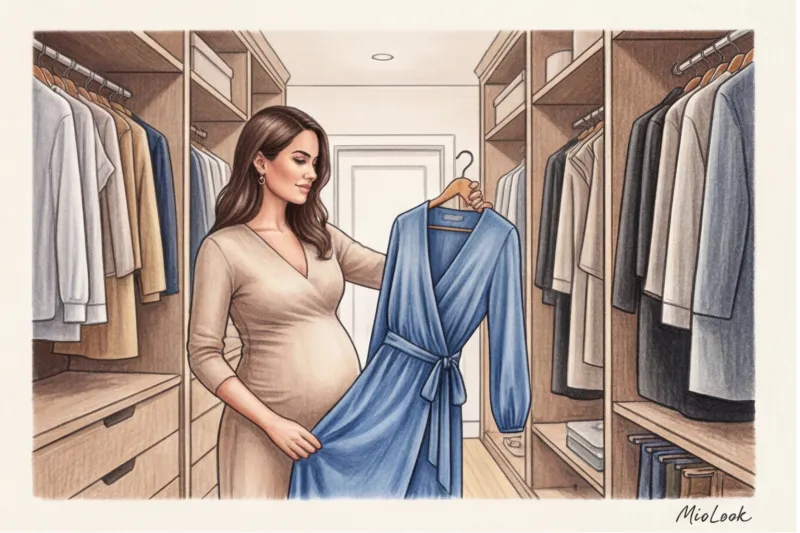
The classic, invented by Diane von Furstenberg in the '70s, adapts flawlessly to new shapes. The wrap allows you to adjust the size yourself during an event. If you already have a fuller belly, move the wrap line slightly higher, under the bust, creating an empire line.
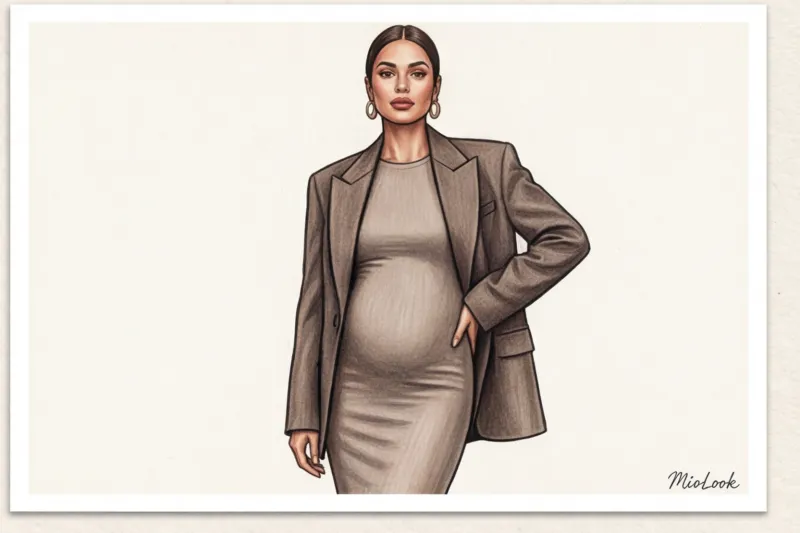
Pleated dresses
Vertical pleats visually elongate the silhouette, adding height and grace. The accordion effect provides virtually infinite width without sacrificing elegance. This dress has a luxurious, dynamic appearance and completely unrestricts movement.
Your perfect look starts here
Join thousands of users who look flawless every day with the MioLook AI stylist.
Get access — €0.99 onceFail-Safe Formulas for Elegant Looks: From Corporate Events to Weddings
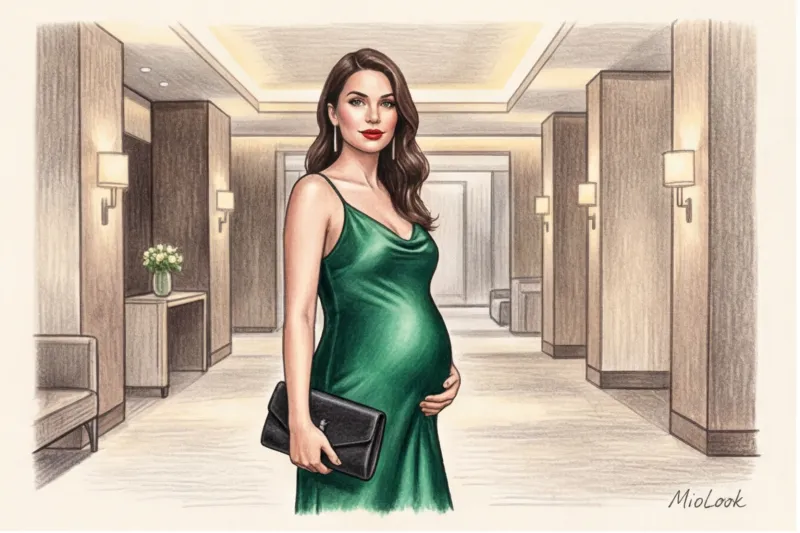
Let's return to my client Sofia. For a black-tie wedding, we took an emerald silk slip dress in her usual size M (it fit perfectly thanks to the bias cut) and draped it over her husband's structured tuxedo. This contrast—the flowing femininity of the fabric and the strict, rigid shoulders of the man's jacket—made her the most stylish guest of the evening. A sleek low bun and large vintage clips completed the look.
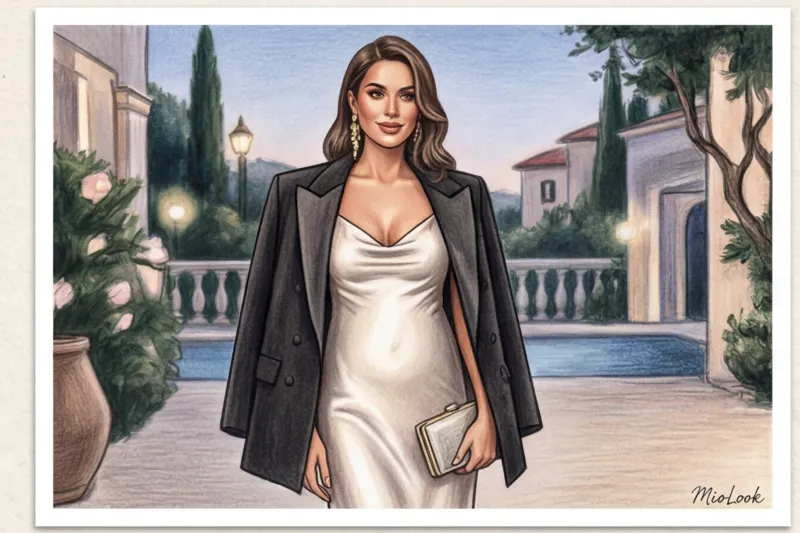
Here are three of my favorite formulas that work without fail:
- Formula 1 (Elegant): A silk slip dress + a structured men's jacket + kitten heel pumps (heel 3-4 cm). The jacket creates those vertical lines that gather the figure at the sides.
- Formula 2 (Bohemian): A knit maxi dress + statement earrings + a crisp evening clutch. The softness of the knitwear is offset by the geometric shapes of the accessories. If you're unsure about your jewelry choice, upload your photo to MioLook — the app will suggest the ideal proportions of accessories.
- Formula 3 (Relaxed Chic): Pleated midi skirt with soft elastic (worn above the belly) + loose silk blouse tucked in at the front + bright red lipstick.
Fabrics That Work for You (and Those to Avoid)
In my experience, 80% of unsuccessful evening looks during pregnancy are not related to the style, but to the incorrectly chosen texture of the fabric.
Your friends: Heavyweight viscose, Tencel, high-quality blended knitwear (with 5-10% elastane), and natural silk. These fabrics have a fluidity—they fall under their own weight, creating beautiful drapes.
Your enemies: Stiff taffeta, non-stretchy cotton poplin, organza. They're stiff and create bulk where there isn't any. I'd also like to warn you about thin, "snotty" knits (usually cheap polyester with a density below 180 g/m²). This is my honest limitation: a tight-fitting knit dress. there won't be work if the fabric is thin - it will highlight every fold of the underwear and deprive the image of status.
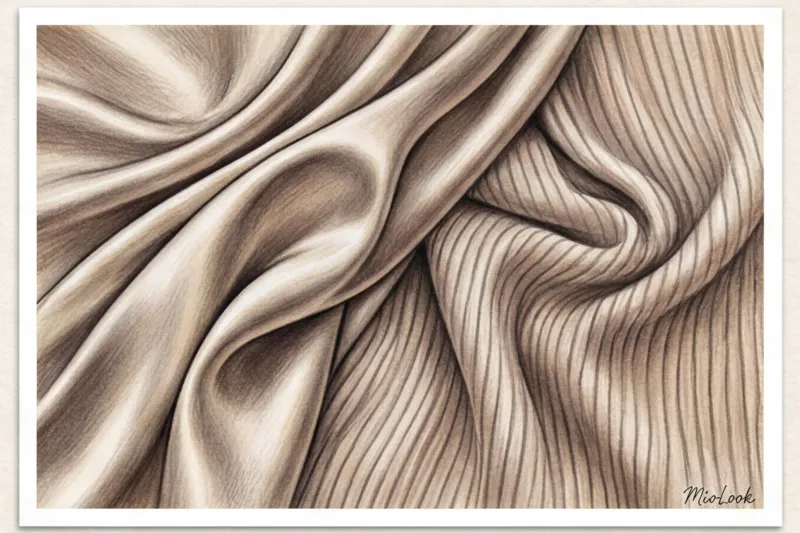
Regarding shiny fabrics (sequins, heavy satin), reflective textures visually add volume. If you're wearing a sequin dress, be sure to tone it down with a matte jacket. The jacket will block out the sides, leaving only a vertical shiny stripe down the center, which creates a stunningly slimming effect.
Checklist: How to Try on Regular Dresses When You're Pregnant
In the fitting room, we often stand straight in front of the mirror, sucking in our stomachs. At a party, you'll be moving, laughing, and sitting at the table. To avoid embarrassment, use this style checklist:
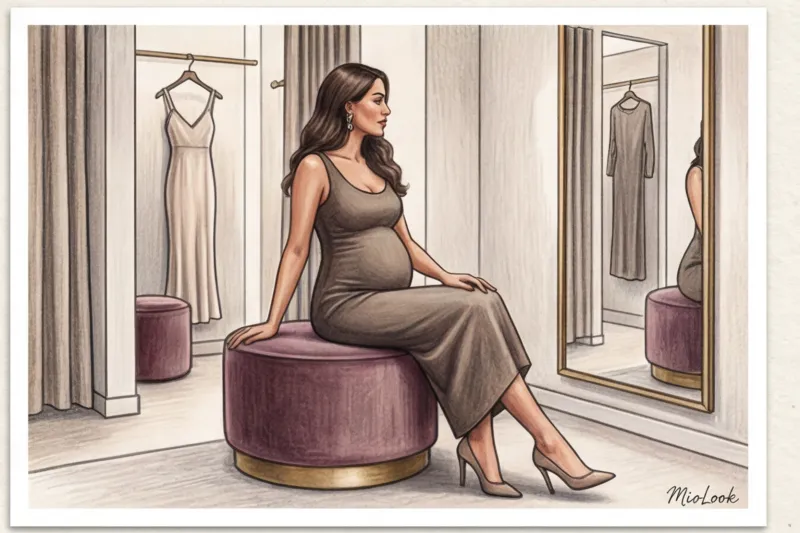
- Sit test: Be sure to sit on the pouf in the fitting room. The fabric will stretch. Is it comfortable to breathe? Does the seam under the bust dig in? If you feel the slightest pressure, leave the item in the store.
- Checking the hem length: A prominent belly can eat up the length of a dress at the front. This can make the hem appear hiked up. My personal styling trick: look for dresses with an asymmetrical hem (slightly longer in the front or with a beveled edge). This completely eliminates this problem.
- Compatibility with underwear: Keep in mind that your chest is expanding, so you'll need a comfortable bra with wide straps. Dresses with open backs or thin spaghetti straps will require special supportive bras, which aren't always comfortable to wear for more than a couple of hours.
Ready to get started?
Try the MioLook plan for free—no commitments required. Create your perfect capsule today.
Get access — €0.99 onceAccessories: The Mediterranean Secret to Distraction
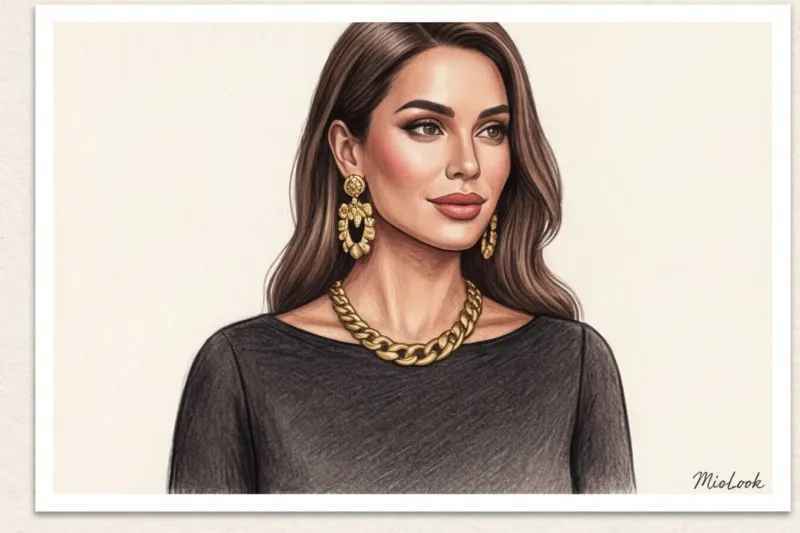
Italian and Spanish women are masters of the art of accentuation. When a figure changes, we use the portrait zone rule. Massive gold earrings, layered necklaces, a silk scarf in your hair—all this draws attention to your face, sparkling eyes, and a beautiful décolleté.
Forget classic stilettos—they're unsafe and uncomfortable. Stylish alternatives are trending now: open-toe slingbacks (they prevent swelling), micro-heeled mules, or elegant Mary Jane ballet flats in velvet or metallic leather, priced between €60 and €120.
And finally, a sleek evening clutch. Against the soft, flowing lines of the maternity dress, the bag's strict geometry ties the entire look together, adding a touch of polish and polish.
Your pregnancy isn't a reason to abandon your style DNA and hide in bland clothes. By choosing smart cuts from everyday brands, you're investing in a wardrobe that will last. Remember: you're still you—a gorgeous, stylish woman, just temporarily with a new, incredibly beautiful silhouette.