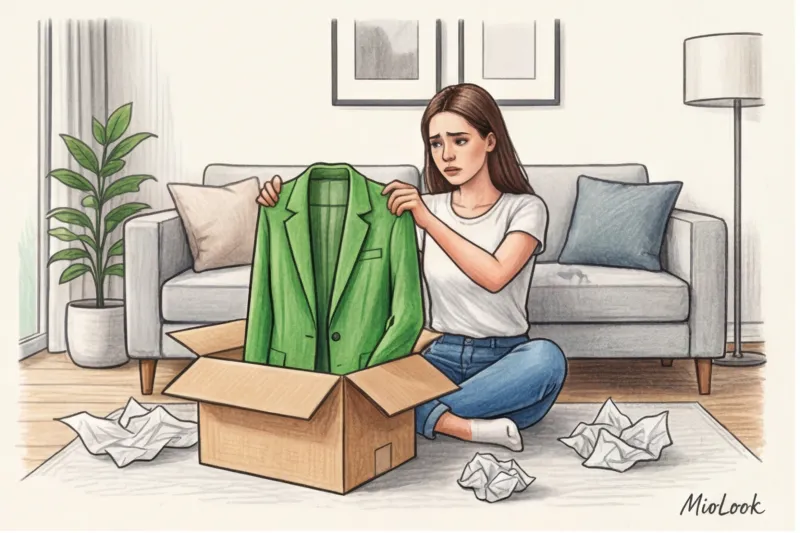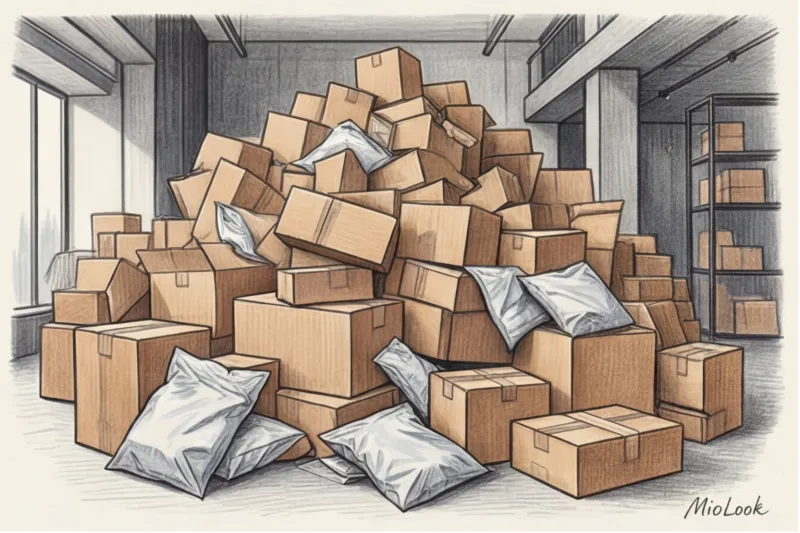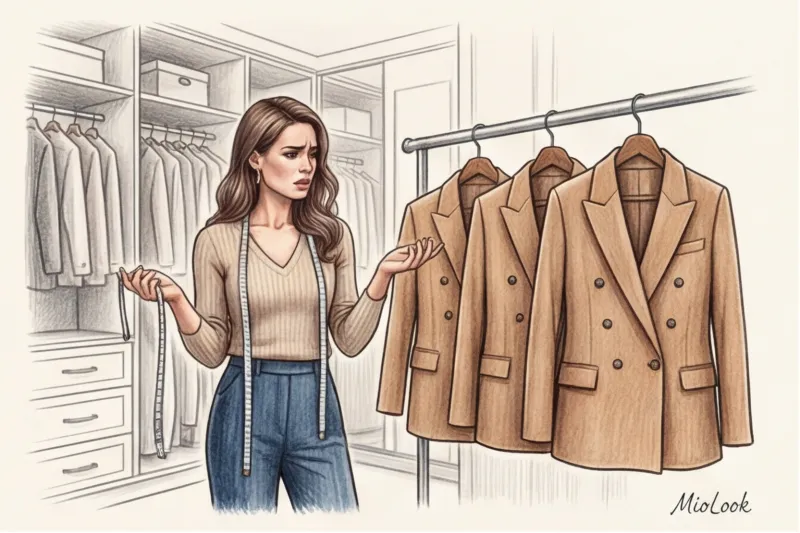
Every morning, hundreds of thousands of perfectly packaged boxes are sent to their customers. And every evening, exactly half of them begin their return journey to the warehouse—crumpled, with foundation stains on the collars and hastily torn tags. If you ask any brand owner, How to reduce the return rate in an online store , he will most likely sigh heavily and start talking about unscrupulous couriers or capricious clients.
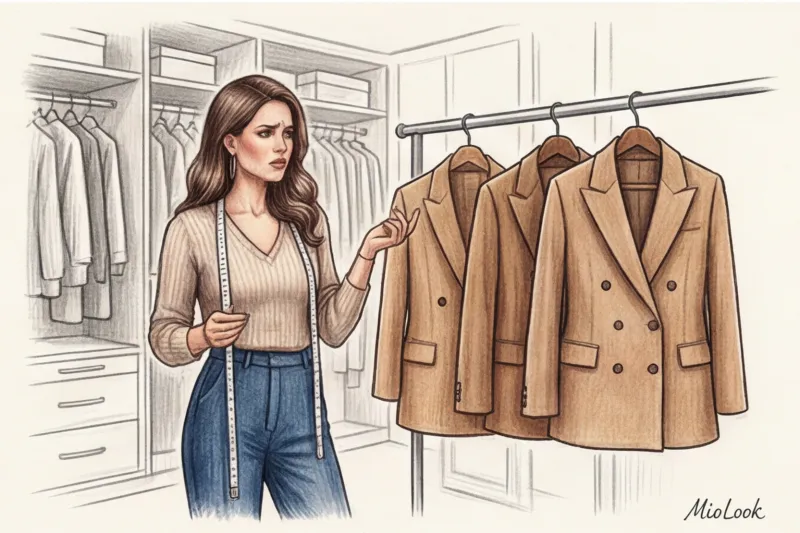
I'm Julia Rossi, a fashion consultant and stylist. Over 12 years of working with premium brands and private wardrobes, I've realized one important thing: the problem with returns isn't about logistics. It's about women's psychology and the physics of fabrics. And this problem needs to be solved not by fines for buyers, but by technology. We've already covered the technical side of this process in more detail in our a complete guide to integrating a virtual fitting room into your website , and today I want to examine this issue from the perspective of fashion, patterns, and consumer fear.
The Return Economy: Why the Classic Size Chart Has Become the Enemy of Business
Let's face it. According to a McKinsey & Company report (The State of Fashion, 2024), returns in fashion e-commerce remain stable at 30-50%. Research by the National Retail Federation (NRF) shows that processing one such return (reverse logistics) costs a business between $10 and $20. This includes courier delivery, defect inspection, dry cleaning (as items are often stained with makeup during try-ons), and repackaging.
When brands see these losses, the first thing they do is add a highly detailed size chart in centimeters to their website. Spoiler alert: this is a fatal mistake.
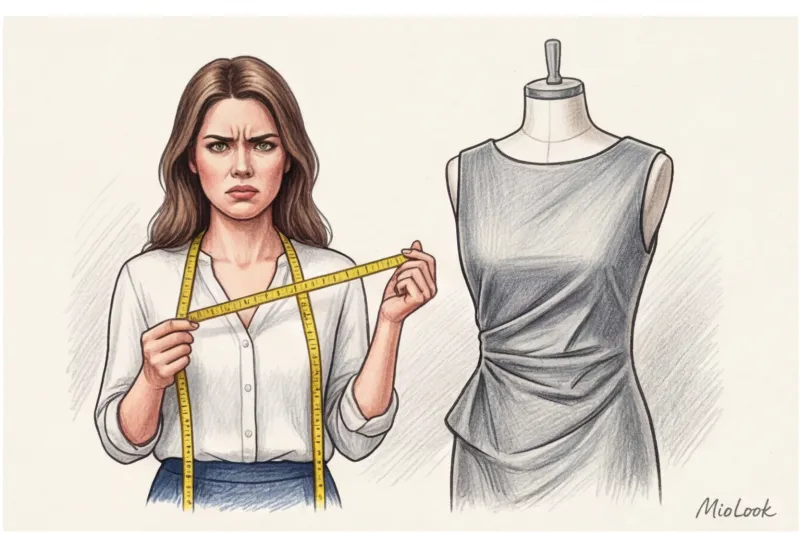
Detailed size charts don't reduce returns, they actually increase them. In my experience, 80% of clients measure themselves incorrectly—they suck in their stomachs, pull the measuring tape too tight, or measure their hips at the widest point.
But even if a woman measures herself perfectly, dry numbers do not take into account a key concept in clothing design - ease of fit A size M in a flowing silk blouse and a size M in a thick knit top are completely different physical measurements. A customer sees a 92 cm chest measurement, buys the item, and it either hangs loose or is bursting at the seams. The result is the same: a return.
The Psychology of Bracketing: Why Your Clients Buy Up the Entire Size Range
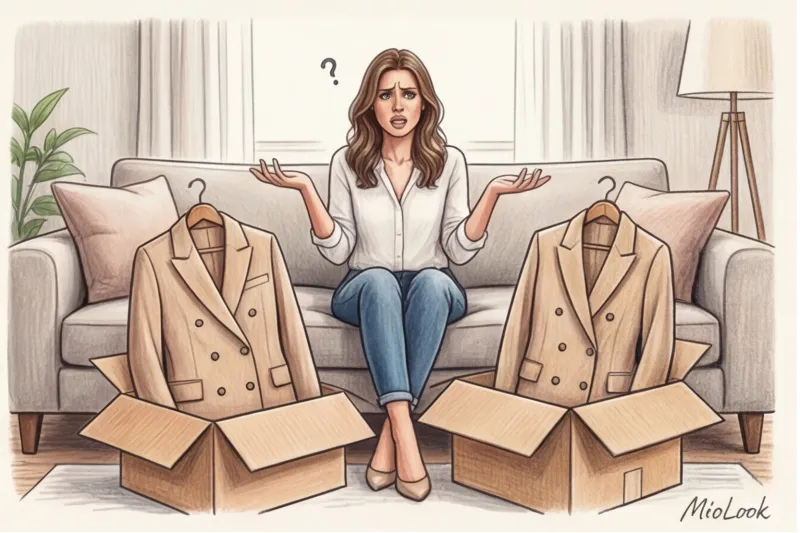
Besides the banal error with the centimeter, there is a phenomenon bracketing (from the English word "bracket" — to put in parentheses). This is when a customer deliberately orders the same item in sizes 36, 38, and 40, knowing in advance that she will definitely return two of them. This behavior pattern accounts for up to 60% of all returns in online clothing retail.
A striking example from my practice. One of my clients, Anna, a financial director, was looking for the perfect sand-colored double-breasted jacket to present at a professional conference. Her status and image were at stake. Anna found a luxurious Italian wool option online, but the brand's patterns were unfamiliar to her. The fear of looking ridiculous in a jacket that was too tight or, conversely, hyper-oversized paralyzed her. What did she do? She ordered three sizes at once.
For Anna, it was an emotional safety net. For the store, it meant freezing inventory, paying for three deliveries, and guaranteeing the return of two expensive items.

There is another unpleasant trend - wardrobing This is the purchase of a striking item (often an evening dress or a trendy accessory) for the sake of a single photo shoot or social media video, after which the item is returned with the explanation "the style didn't fit."
How to Reduce Return Rates in Online Clothing Stores: A Paradigm Shift
To understand, How to reduce the return rate in an online store , we need to stop selling "items on a model" and start selling "items on the customer." Classic e-commerce relies on flawless photography.
But here's the rub: a 178 cm tall model with measurements of 82-60-88 always looks perfect. High-quality lookbooks create the illusion, but they don't answer the main question of a size 46 shopper with a pear-shaped figure: "How will this fit on my hips?".
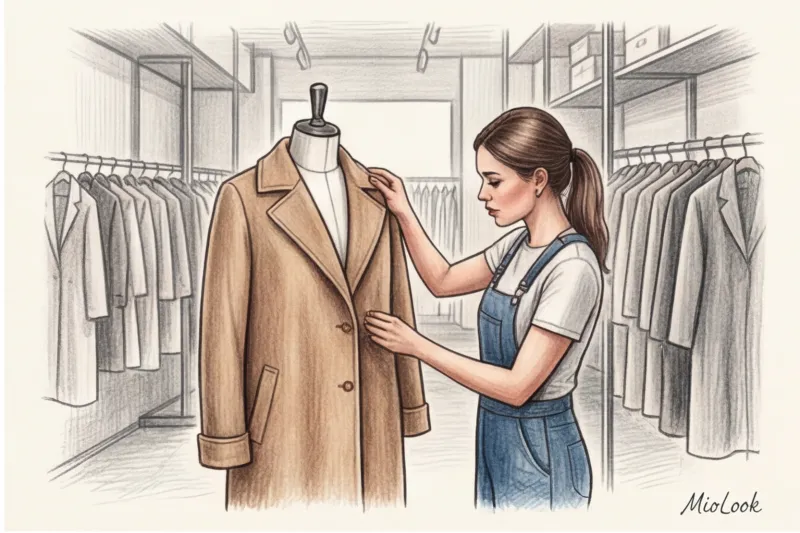
The paradigm shift lies in the introduction of visualization technologies. When a woman sees how a specific cut interacts with her individual proportions, the level of uncertainty decreases. It is this gap between expectation and reality that eats away at the fashion business's profitability.
Virtual fitting as a digital replacement for boutique VIP service
When you walk into a luxury boutique somewhere on Via Montenapoleone in Milan, the consultant doesn't ask you to measure yourself with a tape measure. An experienced stylist takes a quick look at you and brings you the right size pants, simply because they know: "This model from the new collection runs small in the waist. You need an Italian size 40, not a size 38.".
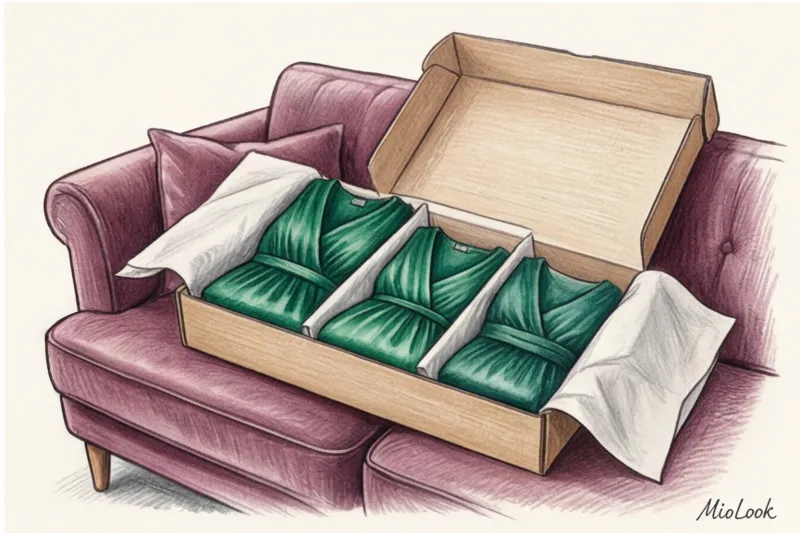
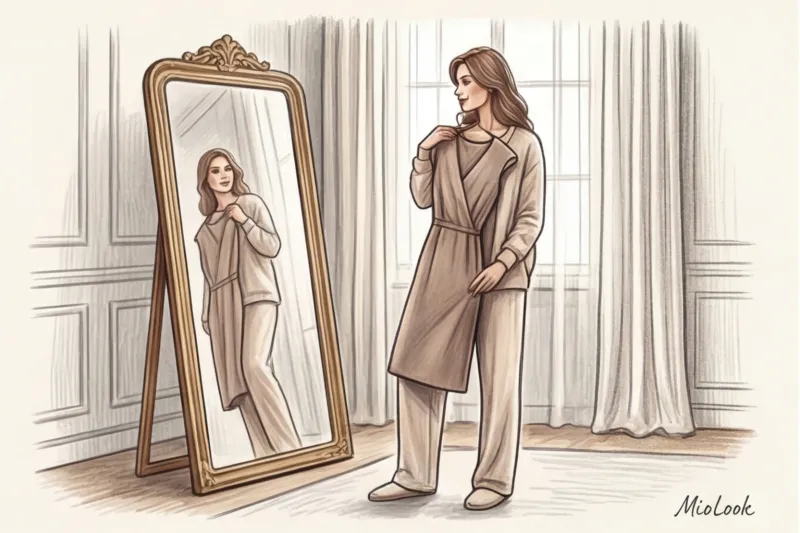
Modern AI algorithms do exactly the same thing, but in the digital space. The algorithm compares the user's 3D avatar (created based on their real-life measurements and a photo) with digital templates of the product itself.
Digitizing Patterns: Why Cutting Matters
It's obvious to a stylist: a straight jacket and a fitted blazer behave differently on the body. If a woman has broad shoulders (an inverted triangle body type), a fitted silhouette can bunch unflatteringly at the armhole, even if the bust size is perfect.
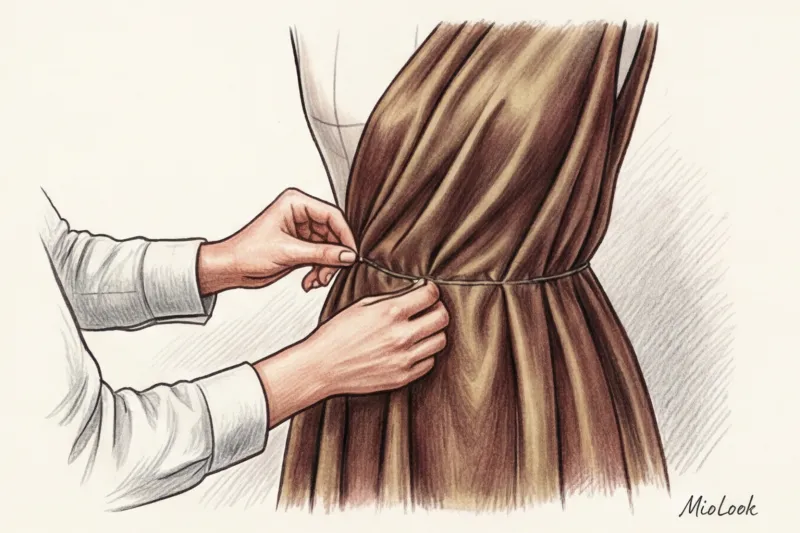
When patterns are digitized, the system "sees" these control points. It understands where the garment should fit and where it should drape. This is no longer just sizing; it's full-fledged fitting.
Integrating an AI stylist into your sales funnel
Imagine that in the product card the customer presses the virtual try-on button MioLook and sees the message: "Your ideal size is a 38. The fit will be precise in the shoulders and slightly loose in the waist, as the designer intended.".
This wording eliminates the urge to add a size 40 to the cart. You give the customer confidence. Conversion to purchase increases, and the average number of items in the cart (due to the elimination of duplicate sizes) decreases to a healthy level.
Fabrics and textures: what can't be conveyed through a screen, but can be calculated
As a materials scientist and stylist, I constantly encounter the main pitfall of online shopping: the unpredictability of fabric. Thick suit wool (for example, 120s) holds its shape like an architectural frame. It fits stiffly. If the suit is even a centimeter too small, you simply won't be able to lift your arms in it.
On the other hand, cotton with 5% elastane or high-quality viscose will forgive you a half-size error. Online store photos don't show the density and stretch factor. The style can curve beautifully, creating the illusion of the softness of a stiff tweed.
The smart virtual fitting room takes into account fabric composition. If the algorithm knows the fabric has no stretch (0% elastane), it will recommend a size with some room for movement. This dramatically reduces returns with comments. "the fabric didn't fit right" or "It felt too tight in the chest".
Your perfect look starts here
Join thousands of users who look flawless every day with MioLook.
Get access — €0.99 onceFashion Brand Checklist: How to Prepare a Catalog for Smart Try-Ons
Of course, technology isn't a magic wand. And I have to be honest here: This does NOT work if your patterns "float" from batch to batch. No AI can save a store if the factory mixed up the tags or skimped on allowances. If production is well-established, here's a step-by-step implementation plan:
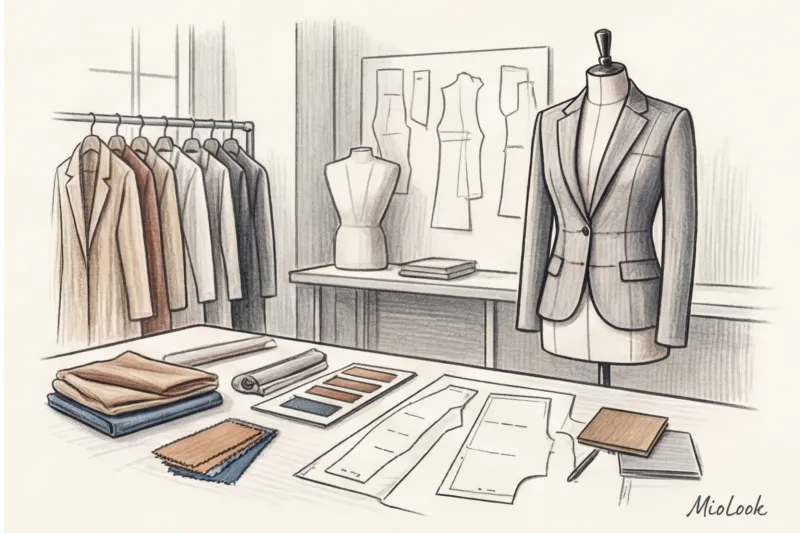
- Standardization of own patterns. Make sure the size 44 in your summer and winter collection is built for the same basic figure.
- Indication of the exact composition of the fabrics. Don't just write "cotton." Specify the density and percentage of elastane/spandex. The algorithms need this information to calculate tension.
- Detailed description of the style. Clearly tag your database: slim fit, regular, oversized, A-line.
- Widget integration. Install the virtual try-on module for the most expensive and difficult-to-fit categories (jackets, trousers, evening dresses). Save T-shirts and sweatshirts for later—they statistically have fewer size-related returns.
Summary: From Unprofitable Logistics to Customer Loyalty
Combating returns isn't just about saving on couriers and dry cleaning. In the long run, it's about maintaining your customer's LTV (Lifetime Value).
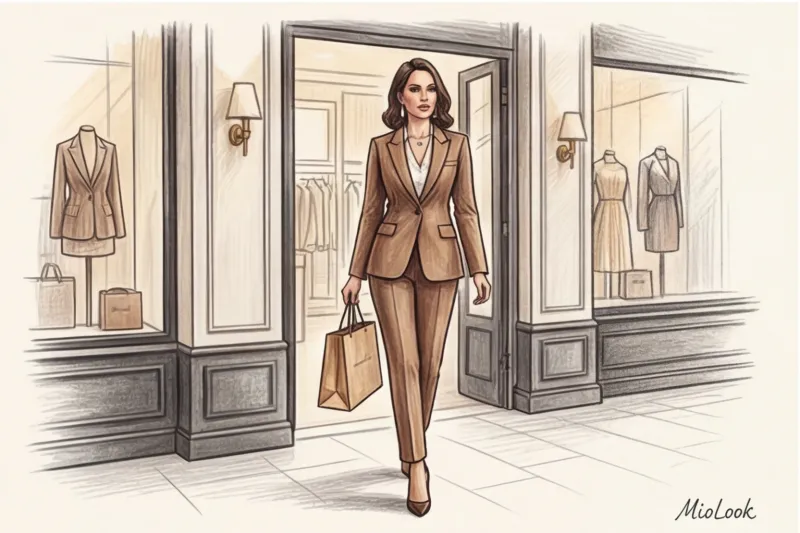
A woman who once ordered a complex business suit from your store, used the virtual fitting room, received the package, and realized the item fits her perfectly will stick with your brand for years to come. She'll no longer go to competitors and experience the stress of fitting rooms.
Replace flat size charts with smart technology. Give your customers confidence before they check out, and you'll see how your reverse logistics costs turn into an investment in loyalty.