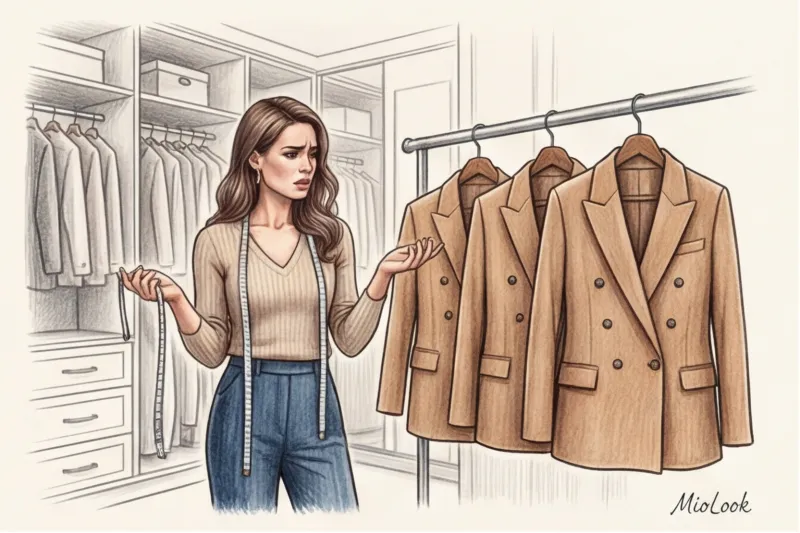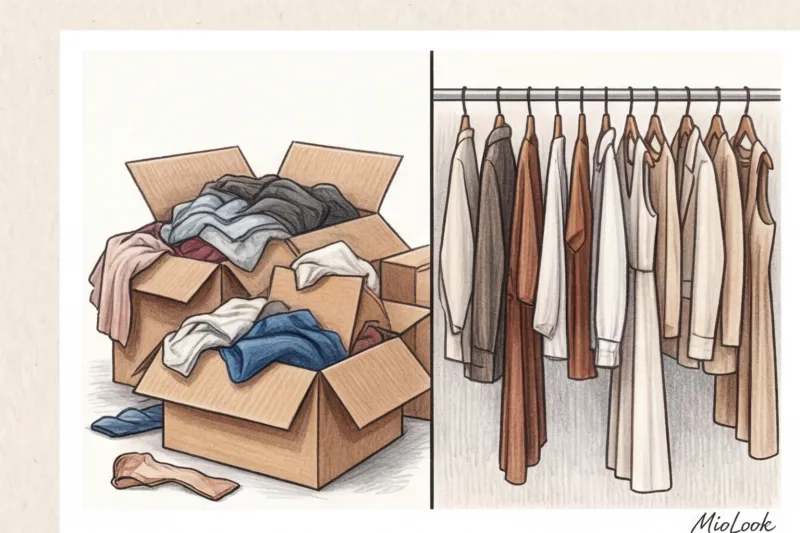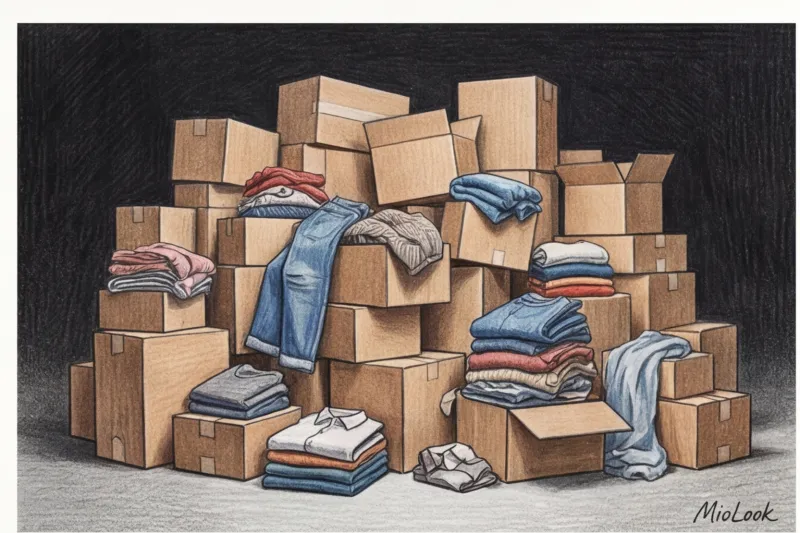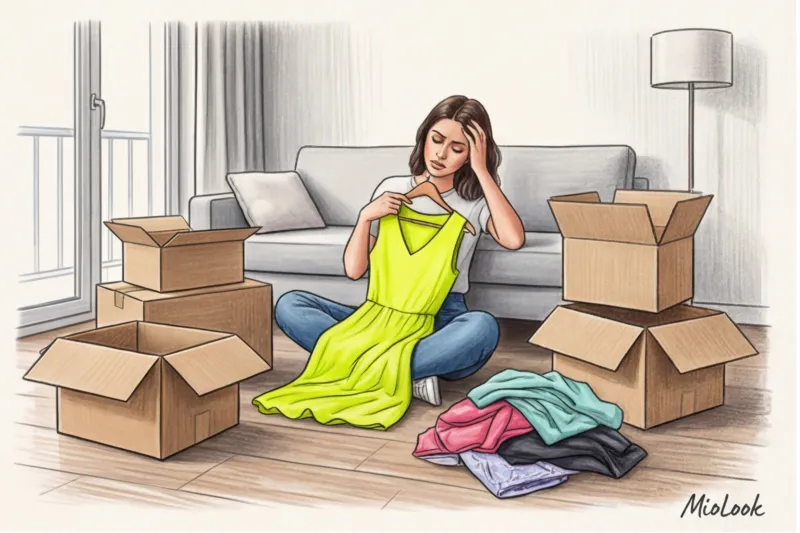

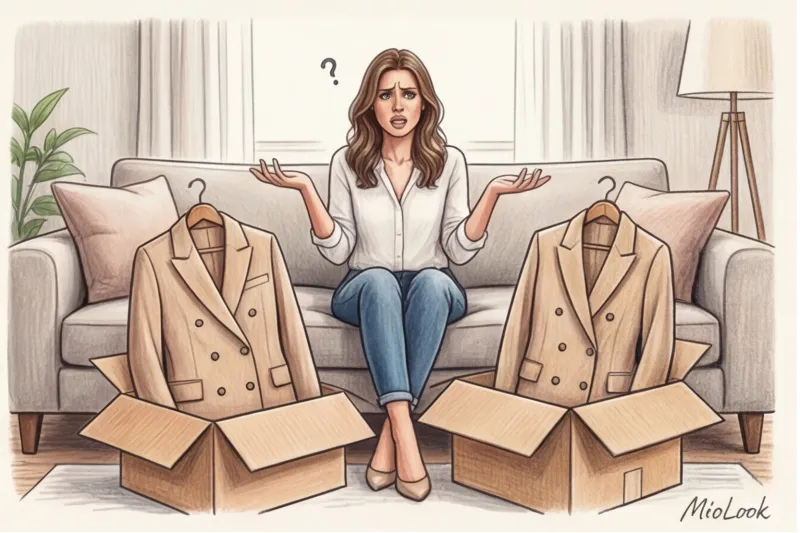
Yesterday, I arrived at the home of one of my long-time clients to sort through her wardrobe. A pile of half-unpacked cardboard boxes towered in the middle of her luxurious bedroom. Inside were three identical, sand-colored double-breasted jackets from a popular European brand. Sizes: 38, 40, and 42. "Isabella, I just couldn't imagine how this oversized fit would look on my height, so I ordered all three. I'll return the other two to the courier later," she sighed guiltily.
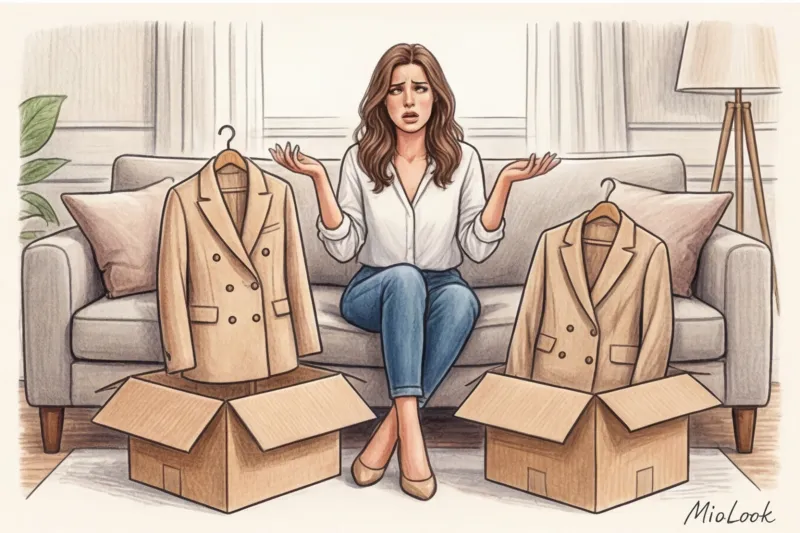
For a woman, this is a convenient safety net. But for you, if you are a fashion business owner and are racking your brains over... How to increase conversion rates for an online clothing store , it's a silent operational disaster. The main reason for empty checkouts in the fashion industry isn't slow website loading times or a complicated payment form. It's the client's paralyzing fear of unknown patterns. We've already discussed the technical basis of this issue in more detail in our A complete guide to integrating virtual fitting rooms into your website , and today I will show you this problem from the other side - from the fitting room.
Discounts no longer save: how to increase conversion rates for your online clothing store in the era of "conscious consumption"
Let's be honest: classic B2B checkout optimization tips have reached their glass ceiling. You can implement one-click payment, enable Apple Pay, and make the delivery form as transparent as possible. But if a woman isn't sure that this slip dress won't highlight her belly, she'll simply close the tab.
There's a dangerous myth among marketers: to get a customer to buy, you just need to offer a 15% discount on their first order. As a practicing stylist, I see the opposite. Aggressive promo codes attract a low-LTV (Lifetime Value) audience—bargain hunters who will never become advocates for your brand. Your best customers, willing to buy items at full price, aren't leaving for competitors because of price. They're going where they can find value. It's clear , how the item will fit.
"In fashion e-commerce, discounts devalue design. The true driver of conversion is a woman's confidence that the new item will make her look more beautiful, not add the headache of returning it."
The industry has coined the term "Fit Anxiety"—anxiety caused by fit. When a brand only offers photos of a model with measurements of 90-60-90 and a height of 180 cm, the average woman who is 165 cm tall feels excluded from this celebration of life. Virtual fitting addresses this deeply psychological issue.
Your perfect look starts here
Join thousands of users who look flawless every day with MioLook. Its smart AI algorithm will select clothes based on your measurements.
Get access — €0.99 onceThe Psychology of Checkout: What's Really Going on in Your Customer's Head
After 12 years of working with women's wardrobes, I've learned one ironclad rule: standard letter sizes (S, M, L) are obsolete. Take a bust measurement of 90 cm. For an hourglass figure with a narrow ribcage and full cups, this measurement requires deep darts. For an inverted triangle figure with a wide back and small bust, the same 90 cm requires a completely different armhole. One size, but the fit is radically different. I discussed this in detail in an article about How archetypes and body types influence silhouette selection.
What does a customer do when she sees a beautiful viscose blouse on your website but can't figure out the pattern? She adds it to her cart. And then another one. And some pants. The cart becomes a free wish list—a graveyard of deferred decisions. She thinks, "I'll buy this when I lose weight" or "I'll have to go to their brick-and-mortar store and try it on" (spoiler: she won't).
Integrating a virtual fitting room breaks this pattern. The customer experience is instantly transformed. When a woman sees a digital avatar with her measurements, on whom the dress fits perfectly, the hesitation ("What if I look stupid?") is replaced by a powerful emotion: "I want to look like that right now!"
The Mechanics of Growth: How Exactly a Virtual Fitting Room Changes the Numbers
The magic of emotions is wonderful, but business speaks the language of numbers. Let's look at some hard statistics. According to a large-scale study by Shopify (2023), the implementation of 3D visualization and AR try-on increases conversion in the fashion segment by an impressive 40%.
What accounts for this leap? First, gamification. Trying on ten different dresses on your digital double is fun. Time on Site increases two- to threefold. Search engine algorithms recognize engagement and boost your site's rankings.
Secondly, it overcomes the highest barrier—the first purchase for new customers. If a woman already knows her size at Zara or COS, she'll shop there blindfolded. Your job, using AI, is to give her the same degree of predictability when discovering your brand.
Increasing Average Order Value (AOV) through Digital Cross-Selling
My favorite stylistic trick: no one wears clothes in a vacuum. We wear images. A client comes to your website for basic black trousers for work. In a regular store, she'll buy the trousers and leave.
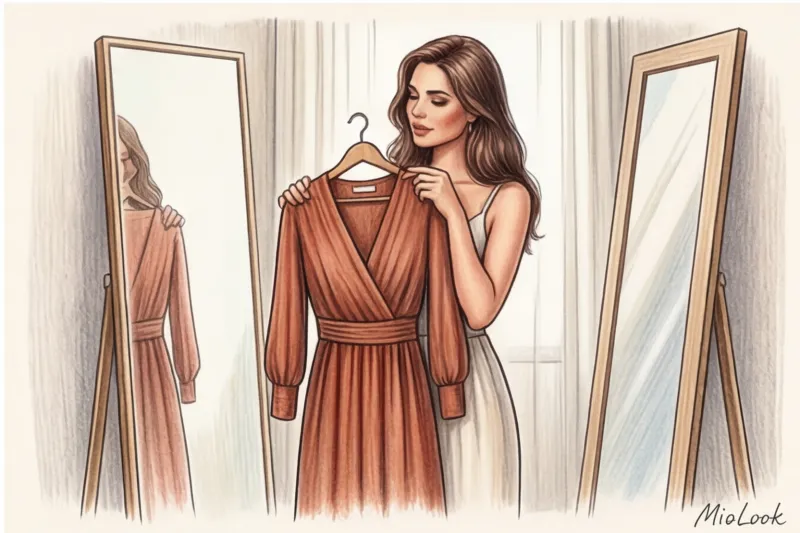
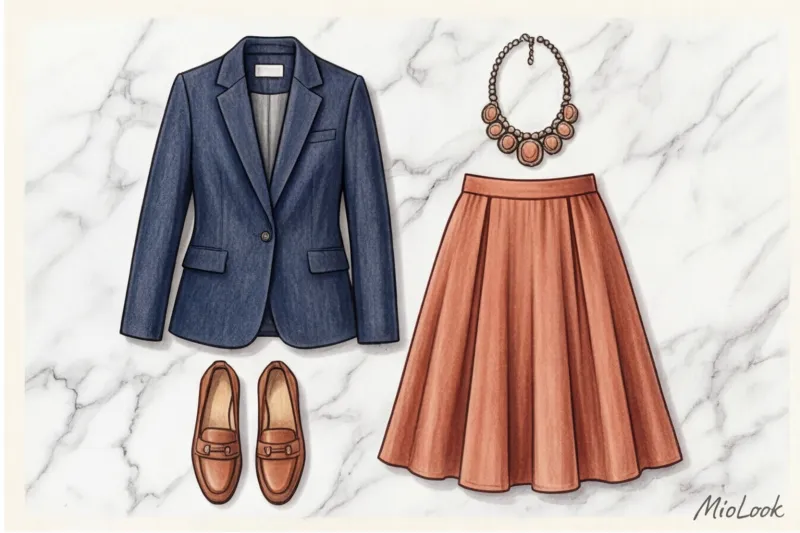
In a store with a smart virtual fitting room, stylistic magic happens. The system suggests a formula: A structured blazer + your new trousers + a basic tee = instant status The woman sees a finished, put-together look that looks expensive. And instead of just one item, the receipt includes a complete capsule collection. It's a classic upsell, but crafted with the client's style in mind.
Ready to start digitalizing your catalog?
Try the free MioLook plan to create smart virtual capsules. No card required and no hidden commitments.
Get access — €0.99 onceThe Ruthless Return Economy: The Scourge of Modern E-Commerce
Let's get back to my client Anna and her three jackets. Do you know how much it costs a business to process these returns? According to the National Retail Federation (NRF, 2023), the operating costs for each returned item in e-commerce range from $10 to $20.
This includes reverse logistics, courier work, unpacking in the warehouse, checking for foundation stains (oh, how often I see that!), steaming, and repackaging. And if it's a seasonal item—say, a linen suit in August—by the time it's returned to the shelf, it may already be out of date and go on sale with zero margins.
The phenomena of "bracketing" (ordering a range of sizes to try on) and "wardrobing" (buying an item for a single photo shoot and then returning it) are killing the economy of small and medium-sized brands. Accurate virtual selection, which takes into account fabric tension and cut characteristics, can reduce returns due to "wrong size" by 30-50%. You don't just increase conversion; you protect your profits from logistics costs.
AI Stylist Integration: MioLook Ecosystem Opportunities for Business
It's important to understand the difference between outdated technologies and modern AI. Superimposing a flat photo of a dress onto a photo of a person is so 2015 that it only elicits a condescending smile from customers. A modern virtual fitting room is a smart wardrobe manager.
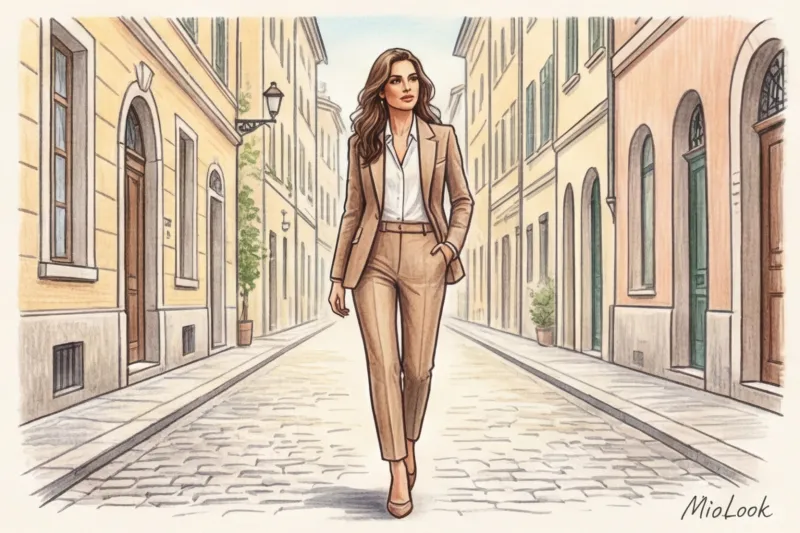
As an expert involved in styling logic development, I see how widget integration works. MioLook On websites. This isn't just a 3D model. It's an algorithm that understands the properties of fabric: how thick silk drapes, and how jacquard holds its shape.
When you transform your catalog into a personalized capsule for each user, you build incredibly strong loyalty. A customer returns to you because your website "knows" that cropped jackets look better on her body type than longer ones. You stop being just a storefront and become her personal digital stylist.
A step-by-step plan for getting started with technology implementation in your online store
I have to be completely honest with you here. This technology has its limitations. AI fitting room It won't work. If your visual content is lacking. If things are photographed on a phone under yellow studio lighting, are wrinkled, or have distorted perspective, no algorithm will work miracles. Garbage in means garbage out.
Here's a step-by-step plan for e-commerce executives who want to get it right:
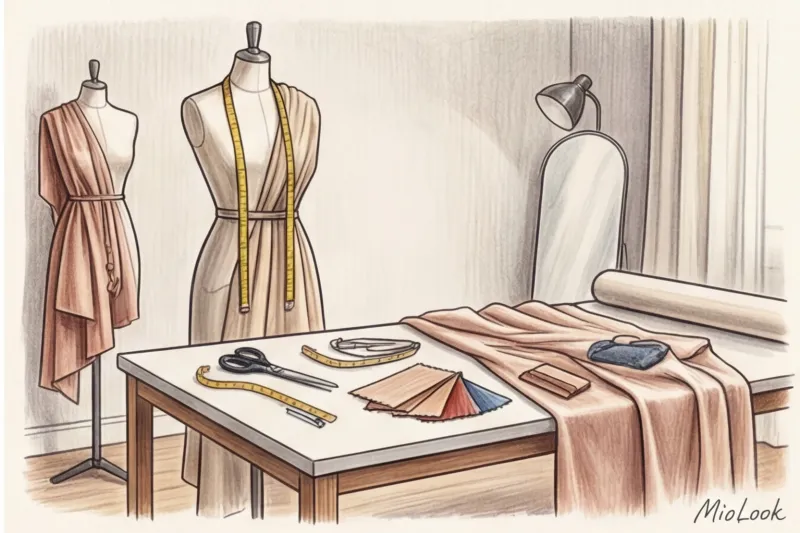
- Audit and digitalization. Start with high-quality source materials (flat lays on a transparent background, precise pattern measurements, fabric composition). The algorithm needs to know whether your cotton has 2% or 5% stretch.
- Launch of a pilot category. Don't try to digitize thousands of SKUs at once. Choose a category where fit is most critical. Ideally, suits or fitted dresses. You can check out our analysis of the manager's dress code to understand how important millimeters are in the fit of a jacket.
- Audience training (Onboarding). Don't just tack on a "Try on Online" button. Show the process on your social media. Film a short Reels where a real client puts together an outfit in the app and receives a flawless fit.
Summary: Investing in Confidence
Increasing conversion rates in the modern fashion business is no longer about playing with fonts or manipulating triggers like "Only 2 items left in stock!" Today, the winner is the one who empathizes with their customers' fears.
Implementing virtual try-ons elevates your brand from "just another online store with confusing sizing" to the elite status of "my personal boutique where everything is tailored just for me." Calculate your losses from returns last quarter. Calculate the advertising budget wasted on abandoned shopping carts. Then invest that money in technologies that give women confidence in their own beauty. Trust me: a confident woman always comes back for more.
Try MioLook
A smart AI stylist will create the perfect look for you. Reduce returns and build customer loyalty with cutting-edge technology.
Get access — €0.99 once