Physics vs. Aesthetics: Why We Freeze in Expensive Jackets
Have you ever noticed the paradox: why do you start shivering in a fitted Italian down jacket costing hundreds of dollars at the first frost, while in a bulky jacket from a mass-market store you stay warm even in a piercing snowstorm? Most articles on winter fashion focus exclusively on the visual aspect. But as a textile expert, I maintain: the materials we study anti-trends of down jackets These aren't just the whims of glossy magazines. They're indicators of technological defects and violations of the basic laws of heat conservation physics.
An outdated winter jacket not only ruins your figure's proportions, but also simply fails to fulfill its primary function—to keep you warm. We've already covered the mechanics of wardrobe obsolescence in our a complete guide to anti-trends in clothing Today, we'll examine your winter wardrobe through the lens of textile engineering, ecology, and common sense. You'll learn to evaluate outerwear like professional buyers and technologists.
The Anatomy of an Outdated Silhouette: How Down Jacket Anti-Trends Are Ruining Proportions
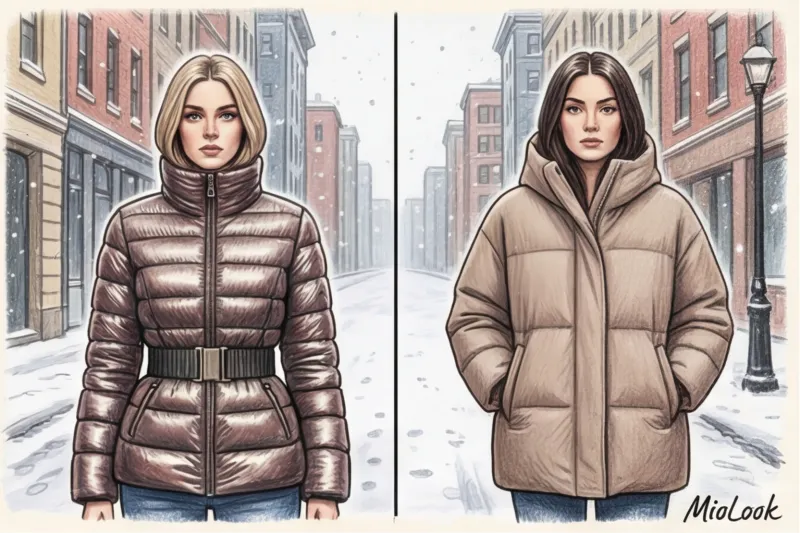
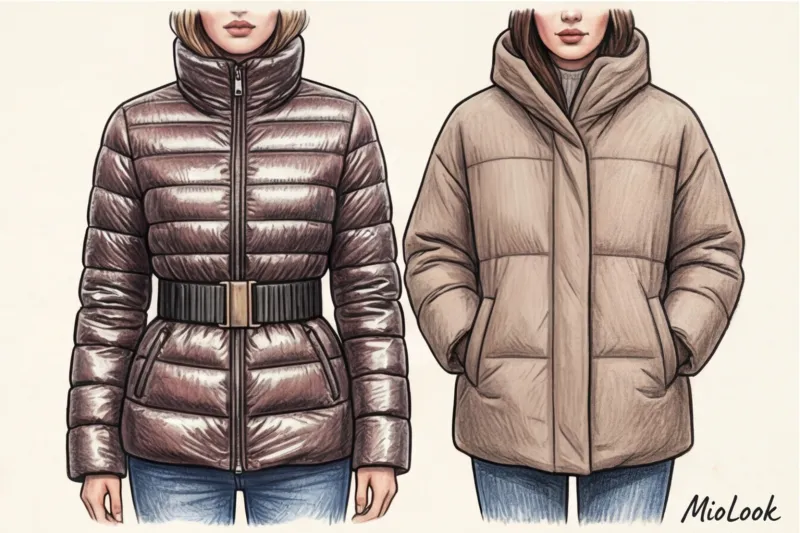
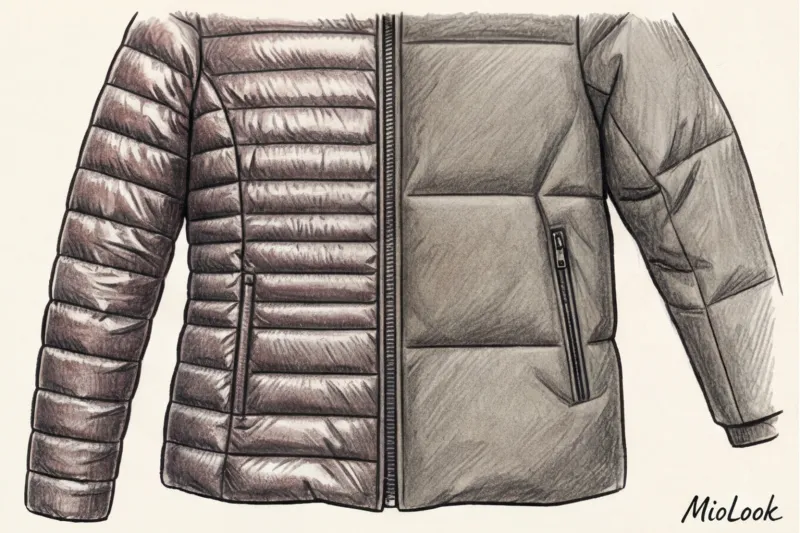
The main enemy of modern style architecture is the "caterpillar" silhouette. This refers to jackets with dense horizontal stitching (the distance between seams is less than 5-7 cm). In terms of visual illusions, multiple horizontal lines mercilessly widen the figure, creating excess volume where none was ever there.
I had a telling case in my practice. A client, a size 44, was convinced she absolutely couldn't wear down jackets because they "made her look like a ball." A wardrobe review revealed that her winter jacket had a quilting width of just 3 centimeters, complemented by a tight elastic waistband with a chunky metal buckle reminiscent of the 2000s. This technique instantly cheapens the look and visually cuts the torso in half, disrupting the integrity of the silhouette.
What to replace: Look for a straight fit, an architectural "cocoon" silhouette, or styles with a hidden internal drawstring. If you want to emphasize your waist, opt for a built-in drawstring inside a sleek jacket, rather than an external cinching belt that creates folds in the fabric.
The Illusion of "Eternal Classics": Why Fitted Winter Clothes Are Hopelessly Outdated
There's a persistent myth that a slim, figure-hugging down jacket is a timeless, feminine classic. It's time to dispel this illusion: a tight fit in outerwear is now considered a complete faux pas. And the reason lies in thermodynamics.
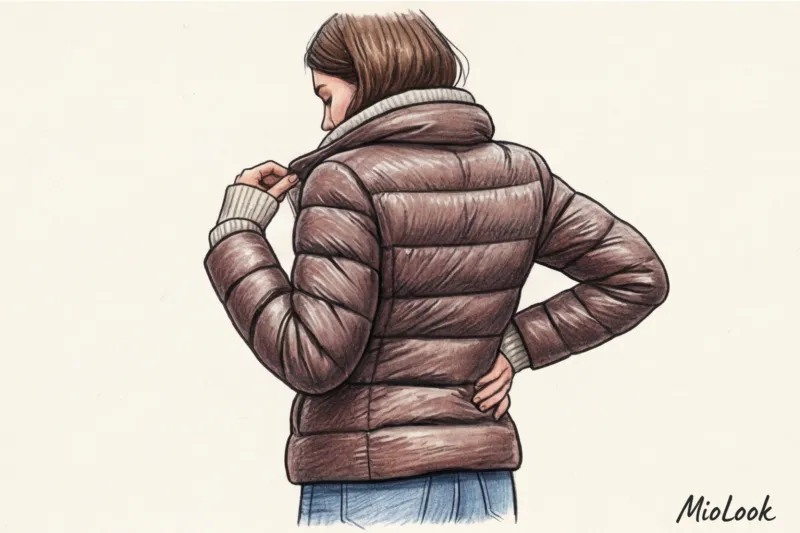
It's not the down filling itself that keeps you warm. It's the air gap between your body (or base layer) and the jacket. When a down jacket fits snugly, there's no room for air to accumulate. You're literally squeezing your only insulating material out from under the jacket.
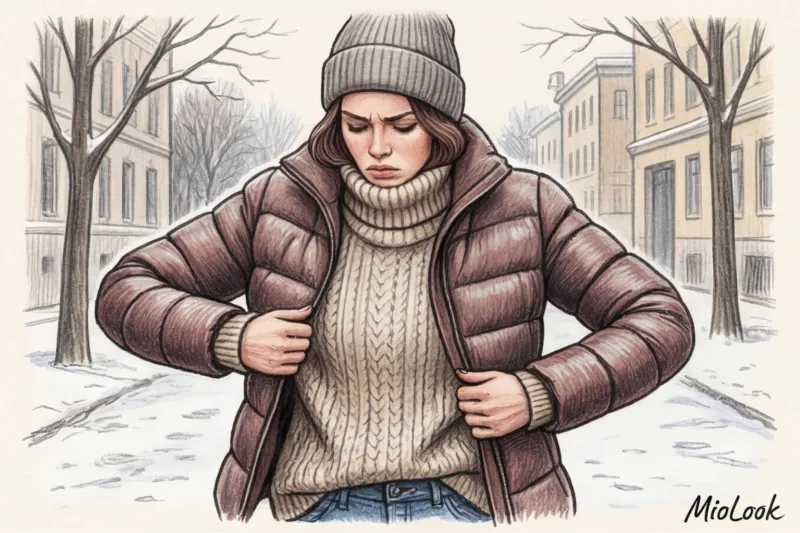
Moreover, an irresolvable layering conflict arises. A woman once came to me with a stunning, expensive suit with a trendy oversized jacket. But she couldn't wear it in winter because the jacket's sleeves simply wouldn't fit through the narrow armholes of her fitted down jacket. Outerwear should serve as a container for your inner image, not dictate how thin a jumper you'll have to wear today.
To avoid such mistakes when putting together a winter capsule, I recommend using the virtual wardrobe feature in the MioLook app You'll be able to see how your new oversized jacket will pair with chunky knit sweaters and business suits without having to buy anything blind.
Sneaky Length: Jackets That Cut Off Legs
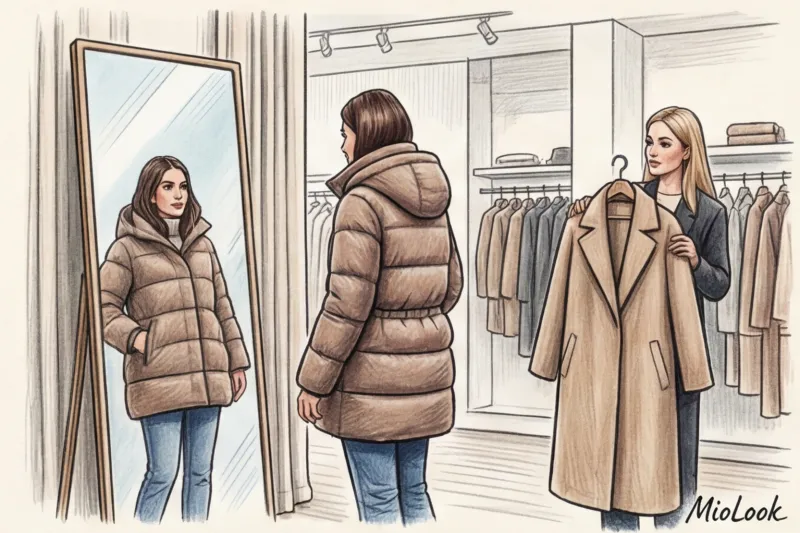
The most dangerous length for outerwear is exactly to the mid-thigh. Physiologically, this is the widest part of a woman's figure. By ending at this point, the horizontal hem of a down jacket draws maximum attention to the hips and visually "eats" the length of the legs, violating the golden ratio.
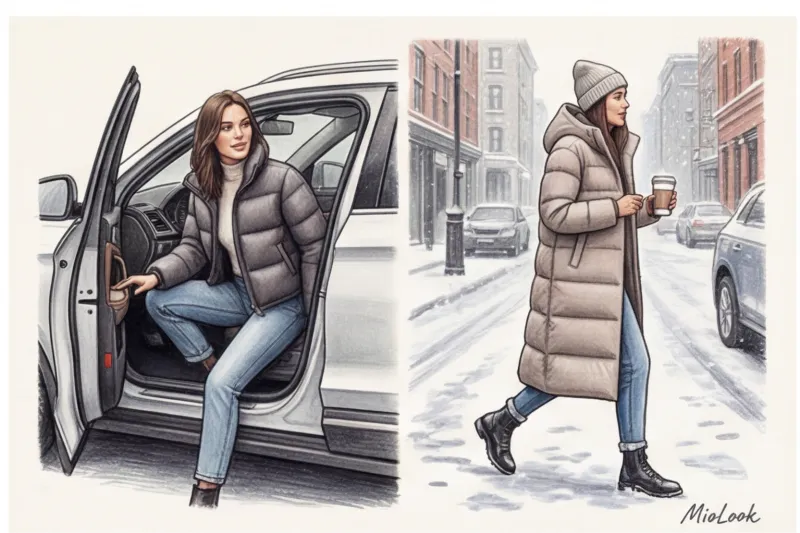
Current alternatives: If you frequently drive, choose cropped styles that hit just below the hipbone or just below the thigh bone. For hiking and cold weather, a midi (mid-calf) or full maxi length is ideal. They create an elongated, continuous vertical line that creates a slimming effect.
Your perfect look starts here
Join thousands of users who look flawless every day with MioLook, the smart AI stylist. Upload your items and get ready-made look formulas.
Get access — €0.99 onceFur trims and cheap decor: an environmental and visual failure
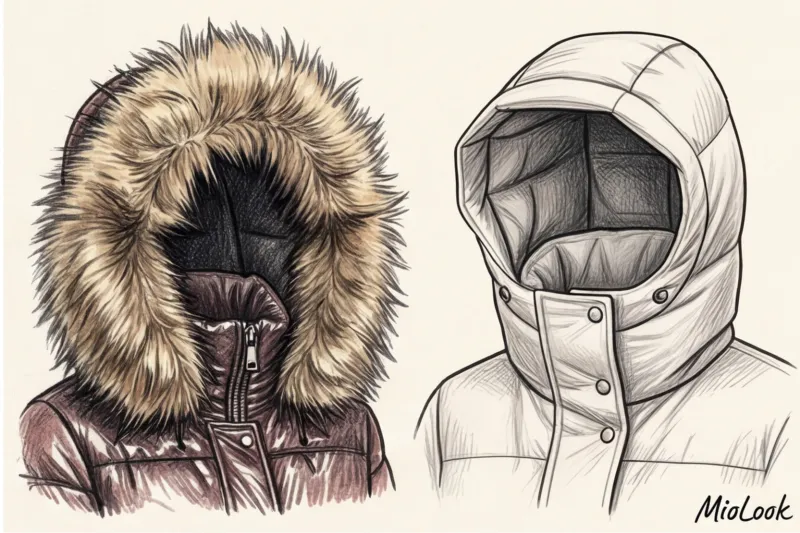
Fifteen years ago, a rich fur hood was considered a status symbol. Today, according to WGSN's 2024 global macrotrend reports, fashion has shifted decisively toward utilitarian minimalism (the Gorpcore aesthetic) and conscious consumption. Natural fur on jackets looks archaic, while faux fur poses serious environmental concerns.
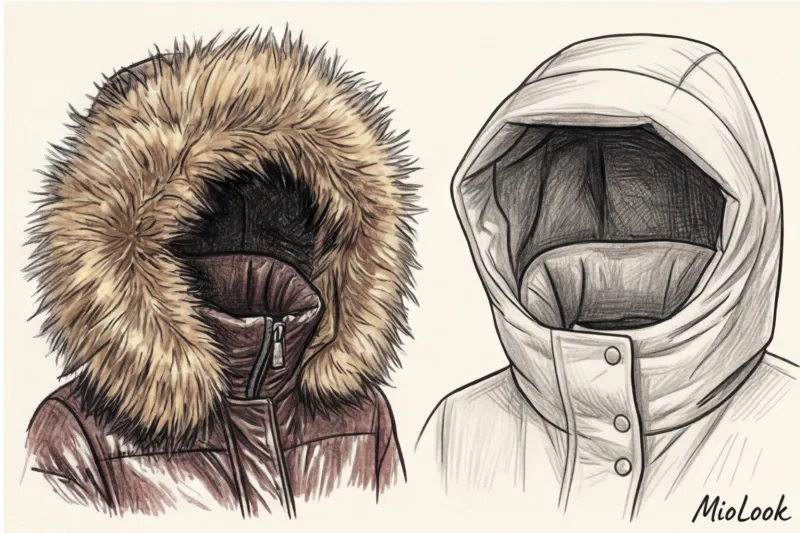
Cheap faux fur not only forms unsightly tangles after the first wet snow, but also actively releases microplastics when washed. Furthermore, an abundance of rhinestones, contrasting gold zippers, large logos on the sleeves, and a profusion of decorative hardware are sure signs that the manufacturer was trying to disguise poor quality.
"Expensive minimalism is always evident in clean lines. The true status of a winter garment is revealed by hidden matte hardware, magnetic fastenings instead of Velcro, and a high, architectural stand-up collar that doesn't need fur trim."
Textile Expertise: When Fabric and Filling Scream of Irrelevance
Wear your down jacket to a mirror. If the fabric has a strong, uneven, glossy sheen and resembles a thin trash bag, it's a no-no. Thin raincoat fabric doesn't hold its shape, and every clump of lumpy filling shows through.
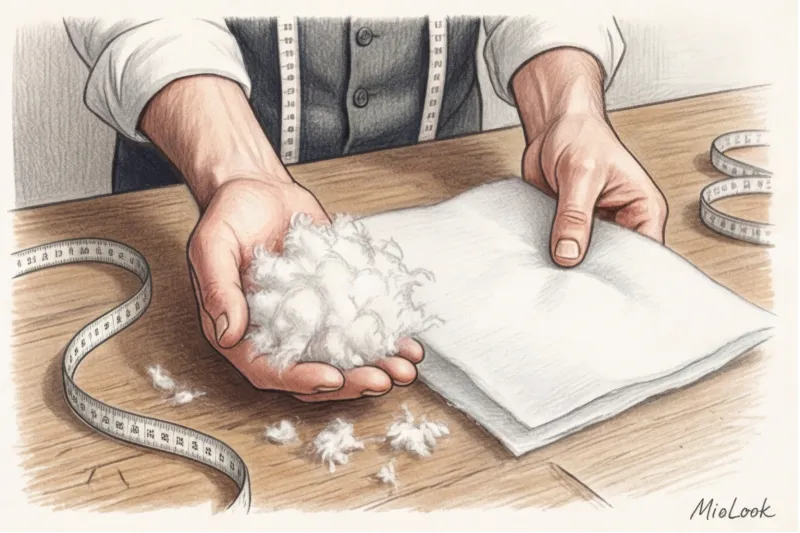
Let's look at the numbers. The quality of a down filling is measured by the index Fill Power (FP) — the ability of down to regain its volume after compression. A rating below 500 means the jacket will lose its shape and warmth after 1-2 washing seasons. Invest in products with an FP between 600 and 800.
Another critical problem with cheap, outdated models is through-seams. This occurs when the needle pierces the outer fabric, filling, and lining. There's no down at all in these punctures. Thermal imaging studies show that up to 40% of your body heat is lost through cold, through-seams. High-quality modern jackets have "warm seams" with special internal baffles that prevent cold from penetrating.
Hooded Collars and Giant Snoods: What's Wrong with the Neckline?
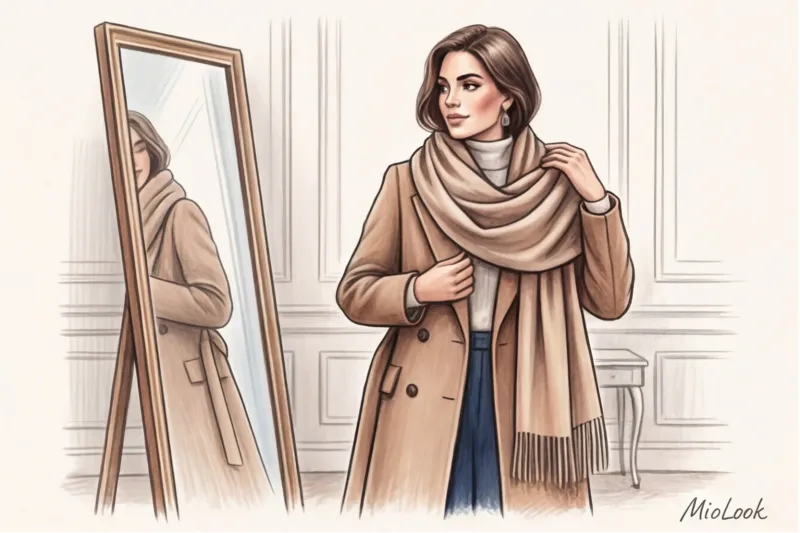
Remember the 2010s fad for huge knitted snood scarves that were wrapped around the neck in three layers? This trend was born out of a design flaw in the jackets themselves. They had thin, flat, collarless hoods that lay pitifully on the shoulders like a flimsy rag, leaving the neck completely exposed to the wind.
Modern collar design solves this problem on its own. A modern down jacket features a high, tight funnel collar that covers the neck all the way to the chin, and a deep hood with a stiff peak. You no longer need to compensate for the lack of a collar with a giant scarf that ruins the silhouette.
Organize your warm wardrobe wisely
Tired of choosing a hat and scarf to match your jacket every morning? Create ready-made capsules in MioLook and save up to 20 minutes every day.
Get access — €0.99 onceChecklist: How to choose trendy winter clothes for the next 5 years
To avoid guessing in front of the window, use these objective criteria when buying:
- Freedom of fit: Wear your thickest hoodie for the fitting. Leave at least 5-7 cm of space between it and the zipped jacket.
- Stitch geometry: Choose wide stitching (10-15 cm), diagonal geometric patterns or the completely smooth cut of a cocoon coat.
- Material: Only matte, dense to the touch fabrics with a water-repellent coating (look for the DWR marking - Durable Water Repellent).
- Fittings: Strictly matching the fabric, matte, no rhinestones. Magnets are preferable to buttons.
Fair disclaimer: Totally oversized, exaggerated fits don't work for all body types. If you're petite (under 160 cm) and plus-size, a thoughtlessly oversized "duvet-like" coat can make you look squat. In this case, choose a semi-fitted cut (not tight, but airy!) and a midi length that will elongate your silhouette.
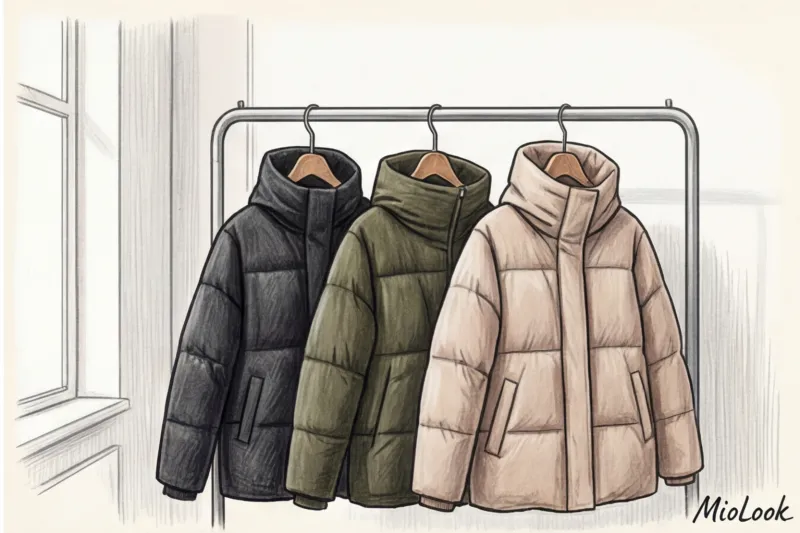
Rejecting anti-trends isn't a blind pursuit of fashion. It's a choice in favor of comfort, warmth, and technology. Choose winter clothing based on the laws of physics and the quality of materials, and your style will remain impeccable for years to come.