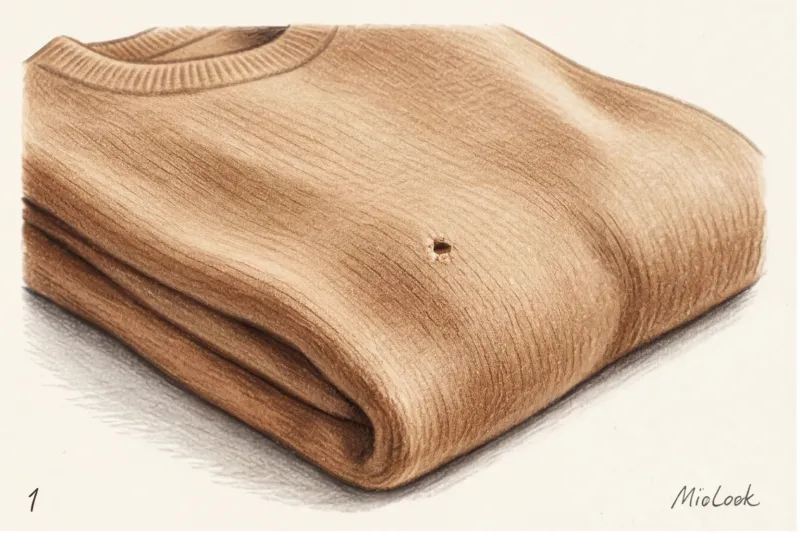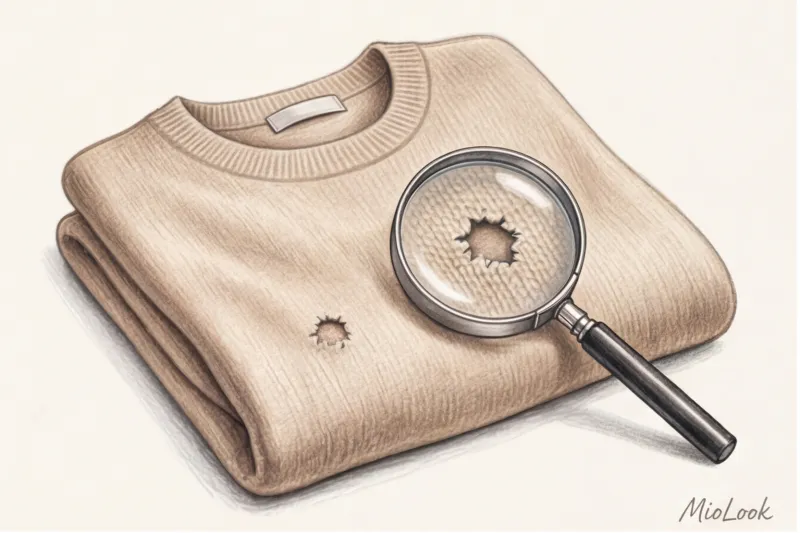
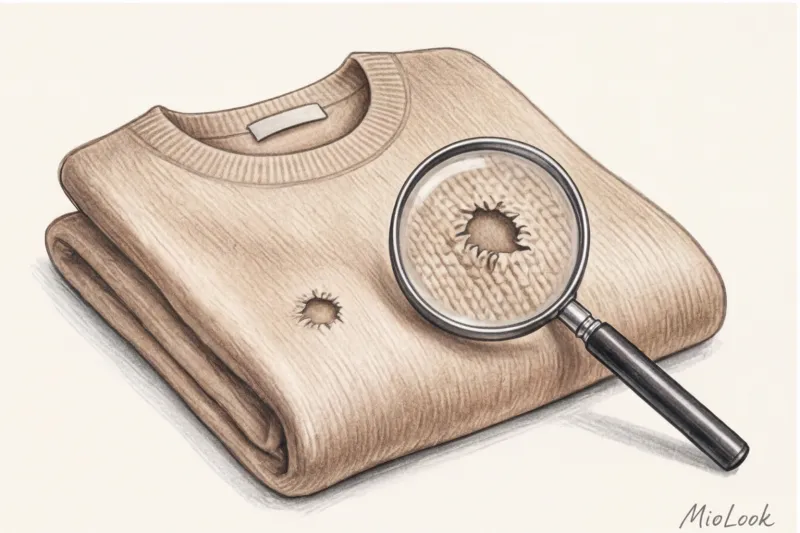
One of my clients, a top manager at an IT company, called me in a complete panic. Her immaculate €400 Max Mara cashmere sweater, purchased just a month earlier, had become a sieve. She'd worn it exactly once, for a two-hour presentation, and then carefully folded it on a back shelf. The sweater lay next to bags of dried lavender, but it didn't save it. This story is a classic illustration of how we lose our most valuable style investments due to a simple misunderstanding of pest biology and outdated storage habits.
We've covered the basic principles of sorting and storing things in more detail in our a complete guide to proper clothing care In this article, I want to address the issue in more detail. Over 12 years of working as a stylist, I've learned the most important thing: a reliable moth repellent isn't a magic pine-scented pill, but a smart wardrobe management system. Let's figure out how to protect your clothes based on modern knowledge, not advice from the last century.
The Enemy of Expensive Wardrobes: Why Moths Ignore Mass-Market Clothing and Eat Your Best Cashmere
Have you noticed that cheap acrylic jumpers from H&M can last for years in perfect condition, while thin Italian silk or merino wool gets holes in a couple of months? The fact is that clothes moths ( Tineola bisselliella ) is a true gourmet in the insect world. Or rather, its larvae are gourmets.
According to entomological studies, a female moth lays up to 50 microscopic eggs at a time, hiding them in the folds of fabric. When the larvae hatch, they require keratin, a protein found in abundance in natural wool, cashmere, silk, feathers, and fur. Synthetics like polyester are completely indigestible.
But there's one thing 90% of people forget. If your favorite sweatshirt is 70% cotton and 30% polyester, but you accidentally spill coffee on it, spray perfume on it, or sweat a little, it's at risk. Larvae are attracted not only to the fabric itself, but also to microscopic particles of skin, sweat, and food. A dirty stain on the fabric is a smorgasbord for the pest, doubling its development.
The main myth: will lavender or a folk remedy save you from moths in your closet?
The most dangerous myth I have to fight every time I go through my wardrobe is the belief that herbal sachets and cedar cubes will save clothes from destruction.

Let's get this straight. Any herbal or folk remedy for moths in the closet works exclusively as repellent This means the pungent odor can only confuse an adult butterfly looking for a place to lay its eggs. The problem is that adults don't eat fabric at all—they don't even have mouthparts! Fabric is eaten by the larvae. And if eggs have already been laid in your cardigan, the larvae won't care a bit about the scent of Provence. They'll simply continue munching on the cashmere, smelling of lavender.

The smell of mothballs that permeated our grandmothers' closets is a toxic insecticide. The World Health Organization has long classified it as a potential carcinogen. Using mothballs today, when safer alternatives exist, is a crime against one's own health.
A smart wardrobe on your smartphone
Stop losing things in the depths of your closet. Digitize your wardrobe with MioLook and always know what to wear.
Get access — €0.99 onceSeasonal Storage Guide: 4 Steps to Protect Your Investment
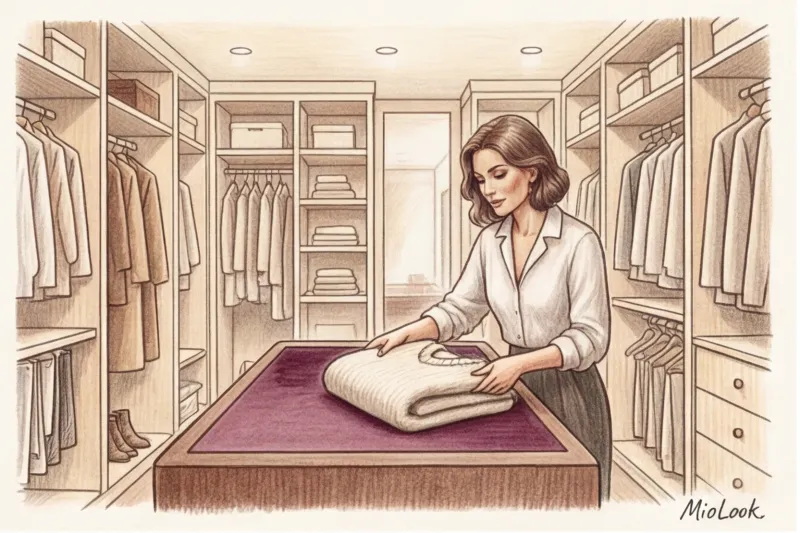
Professional stylists don't use the term "storage." We call it "preservation." Before putting things away for six months, they need to be properly prepared. I recommend always dividing your seasonal wardrobe into two piles: a basic capsule that stays on hangers year-round (like white shirts and silk tops), and strictly seasonal pieces that go into hibernation.
Proper washing and dry cleaning before packing
There's a strict "one-wear" rule. If you've worn a wool item even once—even for an hour—it shouldn't be stored for long periods without cleaning. What appears clean to you visually is covered in sebum particles under a microscope.
Blended sweaters can be washed on a delicate cycle, but expensive coats, suits, and 100% cashmere require professional dry cleaning. Modern dry cleaning standards include treatment with perchloroethylene or hydrocarbon solvents, which are guaranteed to kill the eggs of any insects. A €30–€50 dry cleaning bill for a coat is insurance for an item worth €500.
Choosing Cases: Vacuum Bags vs. Breathable Cases
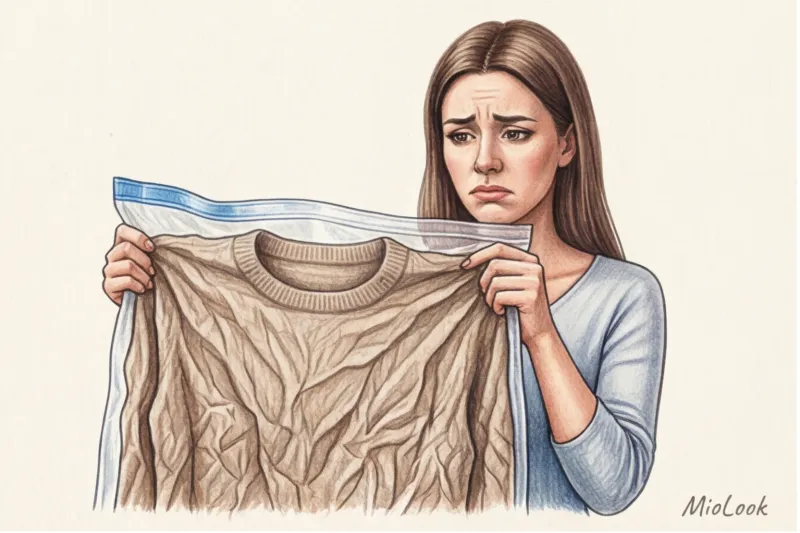
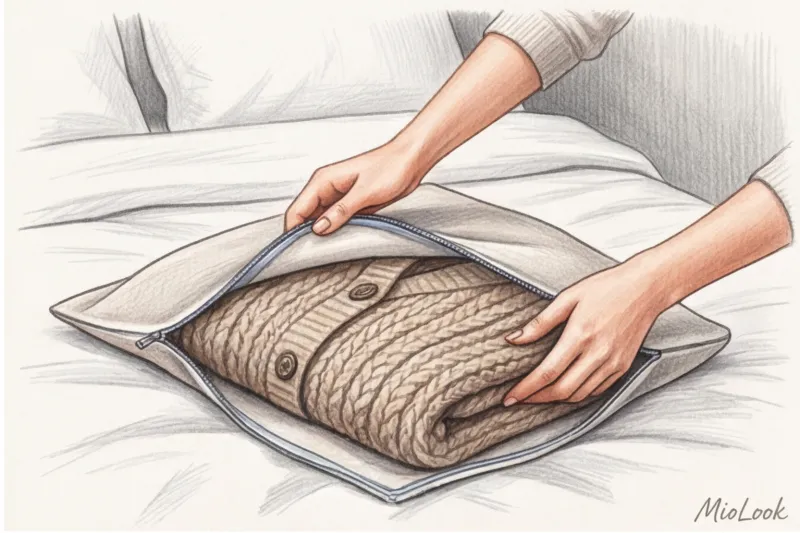
I often see customers, in an effort to save space, compressing winter sweaters into vacuum-sealed plastic bags. This is a huge mistake. I'll add an important caveat here: vacuum bags work great for down jackets with synthetic filling (holofiber) or bedding. But they are absolutely contraindicated for natural fibers.
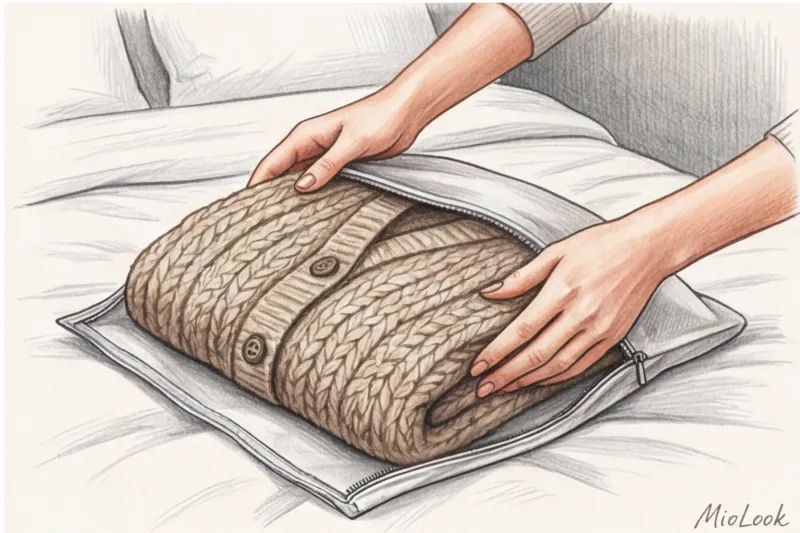
Wool and silk need to breathe. In plastic, without access to air, condensation forms at the slightest temperature change, and the fibers permanently lose their elasticity, causing creases. The ideal physical barrier against moths is a dense cover made of spunbond or cotton (at least 80 g/m²) with a secure, gap-free zipper. The insects will be physically unable to chew through such a barrier.
Modern Moth Repellent for Closets: Chemical and Eco-Friendly Solutions
If folk remedies don't work, what should you turn to? The modern market offers solutions based on pyrethroids (synthetic analogues of chamomile extract) that are safe for humans but deadly to insects.
They come in gel sections or impregnated sheets. They must be placed correctly: do not place the section directly on the fabric, as the chemical components can leave yellow stains on light-colored silk or cashmere. Hang them on a rod or attach them to the inside of a closet, changing them every 3-6 months according to the instructions.
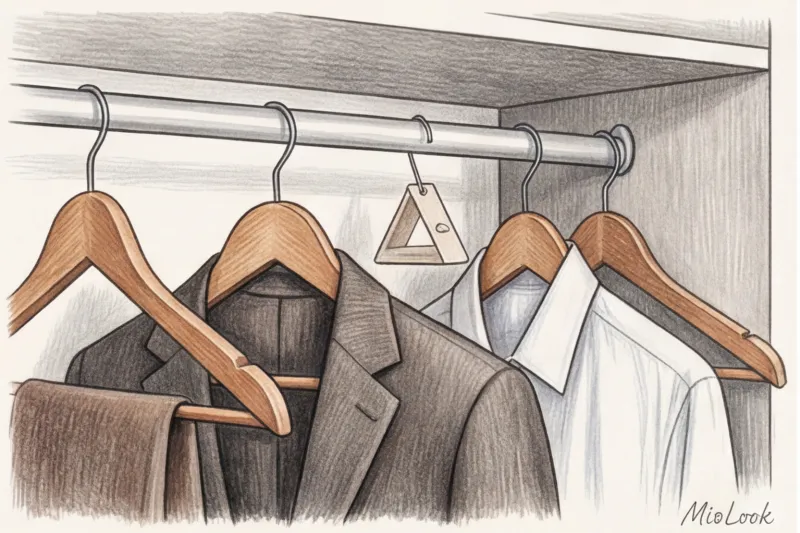
A separate, professional-grade tool is pheromone traps. They look like small cardboard houses with a sticky coating. It's important to understand their purpose: the trap doesn't kill moths en masse; it only attracts males with synthesized female pheromones. If you stick one of these traps in your closet and find two or three moths stuck there a week later, that's a red flag. The trap acts as an audit: it signals that it's time to sound the alarm and do a thorough cleaning before the larvae consume your wardrobe.
Smart Wardrobe Care: How Tracking Your Clothes Prevents Infections
According to a large-scale McKinsey study (2024), the average consumer actively wears only 20% of their wardrobe. The remaining 80% of items hang motionless for months. These static, dark corners of the closet are ideal breeding grounds for pests. Moths hate light, movement, and drafts.
Therefore, the best preventative measure against moths in your closet is to regularly rotate your items. In my practice, I use the app MioLook for digitizing and tracking your wardrobe. The app's analytics clearly show your "blind spots"—those items you haven't worn in more than 90 days.

Whenever I see a forgotten wool cardigan in my MioLook stats, I have two options: either integrate it into my outfit this week, giving it a chance to breathe and move around, or send it to the dry cleaner and put it away in a cover until next season. No in-between. Also, make it a rule to open all closet doors for two to three hours once a month, allowing for cross-ventilation. Light and airflow critically reduce pests' chances of survival.
Ready to get started?
Try the free plan—no commitments. Upload your items and create capsules in just a few clicks.
Get access — €0.99 onceEmergency Checklist: What to Do If You Notice Holes in Your Sweater
Let's say the worst has happened. You take the item out and see a characteristic scattering of small holes. It's too late to panic; you need to follow strict pest control protocol.
- Step 1: Total isolation. Immediately remove the damaged item and any clothing hanging or lying near it. Place them in heavy-duty trash bags and tie them tightly.
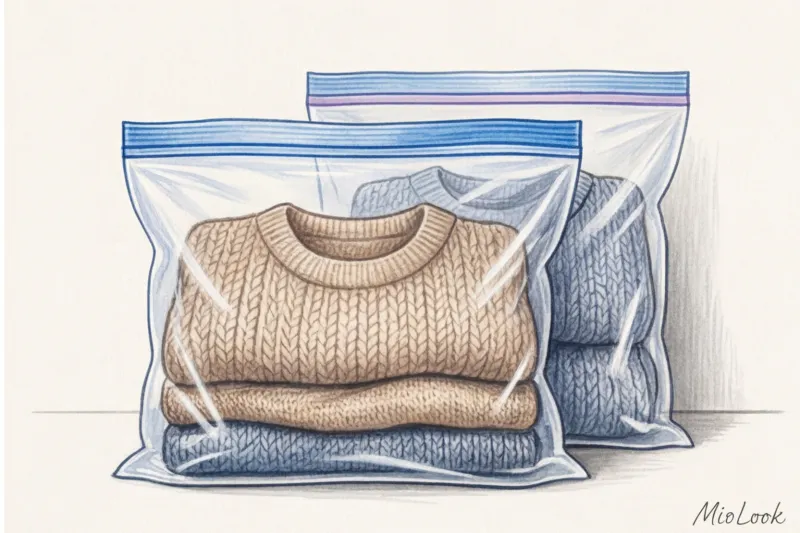
- Step 2: Heat treatment. Larvae die at extreme temperatures. If the fabric allows (for example, heavy cotton), wash the item at 50°C or above. For delicate wool and cashmere, freeze it: place the item in a sealed ziplock bag in a freezer at -20°C for at least 72 hours. Afterward, gently launder the item to remove any dead larvae.
- Step 3: General cleaning of the closet. Remove absolutely everything from the shelf. Use a vacuum cleaner with a crevice tool and go into all the joints, corners, and shelf openings (this is where insects hide their eggs). After cleaning, throw the vacuum bag outside immediately. Then, treat the empty cabinet with a pyrethroid-based insecticide spray, leave it closed for a couple of hours, and then thoroughly ventilate.
A beautiful and functional wardrobe requires not only a financial investment at the time of purchase but also a systematic approach to maintenance. Use scented sachets to create a pleasant atmosphere, and trust the protection of fabrics to proper hygiene, airtight covers, and digital monitoring of how often your items are exposed to daylight. An item that actively lives in your wardrobe will never become a moth's meal.