Open any article about a basic wardrobe, and you'll likely be advised to buy a classic black and white polka-dot dress. It's supposedly a "safe investment" that flatters everyone and never goes out of style. As a practicing stylist and textile researcher, I'm sorry to disappoint you: this is one of the most insidious fashion myths. Polka dots in clothing are a complex optical correction tool that, in 90% of cases, irreversibly ages and adds a comical look if you miscalculate the scale of the pattern or the texture of the fabric.
Instead of offering you yet another retro 1950s-inspired reimagining, we'll look at this pattern through the lens of textile engineering and visual illusions. We've covered the optical intricacies of basic patterns in more detail in our complete guide. Fashionable Prints in Clothing: How to Wear Leopard and Plaid Today, we'll explore how to choose the right fabric weave and polka dot size so that the garment becomes your intellectual foundation, not a one-time, emotional purchase.
Geometry and scale: how polka dot prints work with proportions
Any repeating pattern obeys the laws of visual perception. In the context of polka dots, the famous Ebbinghaus optical illusion plays a key role: a circle appears larger or smaller depending on the size of the objects surrounding it and the empty space between them. Translating this into fashion language, the distance between polka dots can visually expand your silhouette by a couple of sizes or, conversely, make it appear slimmer.
This is where the strict rule of proportionality comes into play. Over 12 years of working with different figure types, I've discovered a clear pattern: polka dots larger than 3 cm in diameter are downright dangerous for petite women (under 160 cm). A large pattern clashes with a delicate bone structure, causing the clothes to "wear" you, rather than the other way around. On the other hand, on tall, curvy women, polka dots that are too small and sparse can create a "rippled" effect, visually blurring the silhouette's lines.
Micro vs. Macro Polka Dots: What to Choose for a Basic Wardrobe
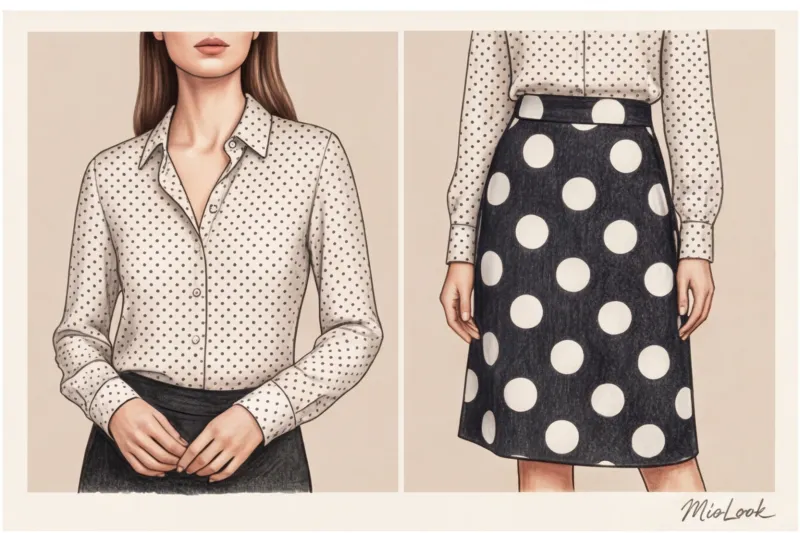
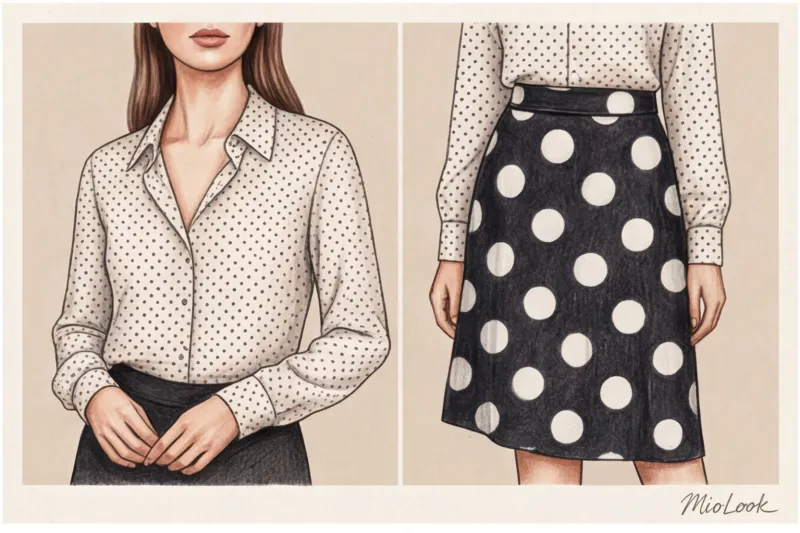
If you're putting together a functional capsule collection, go for micro polka dots. From a distance, they blend together, creating the illusion of a textured, solid-color fabric, while up close they add complexity. They're the perfect substitute for basics.
Macro polka dots (coin spots) are always a statement piece. They steal the show, so they require total minimalism in cut. No pleats, ruffles, or asymmetry: the larger the circle, the more architectural and laconic the cut should be.
The Biggest Mistake of Beginners, or How to Avoid Becoming a Retro Theater Actress
During a recent wardrobe audit of my client Katarzyna, we discovered a classic "wardrobe ghost." It was a fitted dress made of stiff polyester with large white polka dots, generously embellished with ruffles at the hem. It had been hanging with the tags for two years. Katarzyna admitted, "Every time I wear it, I feel like a child's entertainer." And she was absolutely right.
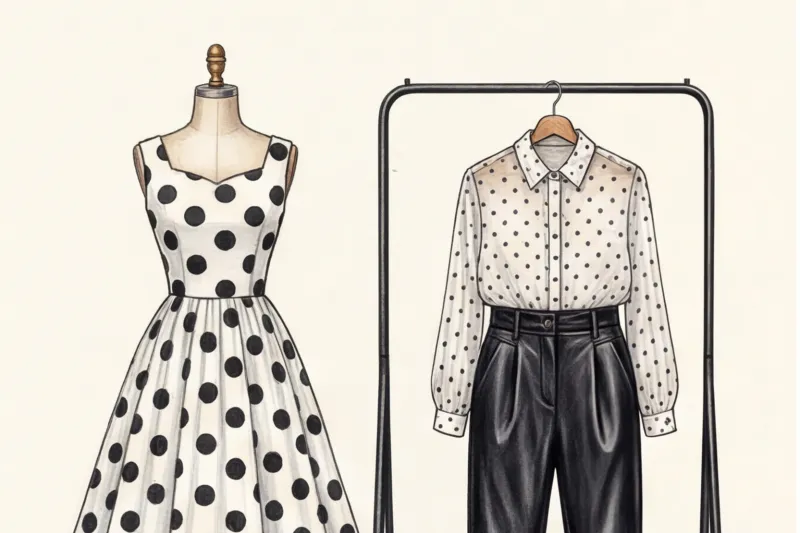
Infantilism is the main side effect of this pattern. A classic polka-dot A-line dress is incredibly difficult to style modernly precisely because it screams retro. To tame this excessive theatricality, professionals use the principle of "contrast of meanings."
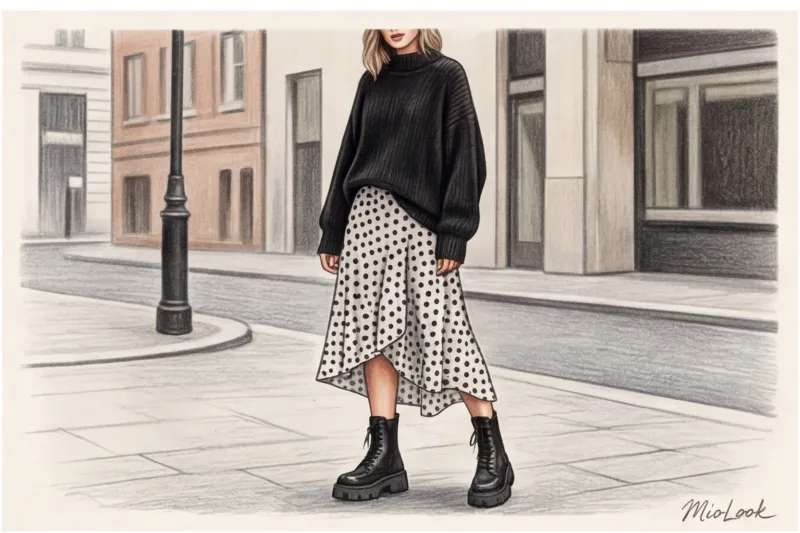
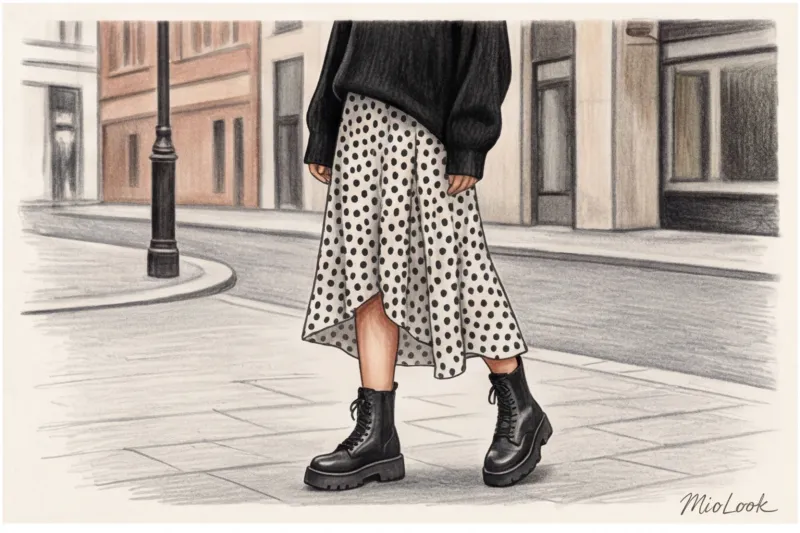
The idea is simple: we juxtapose feminine patterns with rugged, rough textures. A delicate, flowing polka-dot skirt? Add a chunky, chunky knit sweater and heavy combat boots. A silk polka-dot blouse? Wear it with heavy, raw denim or leather pants. By the way, if you're unsure whether this technique will work with your items, upload them to MioLook — a smart AI stylist will help analyze your textures and create subtle yet stylish combinations.
Texture Matters: Why Polka Dot Prints on Silk and Cotton Are Two Different Patterns
Few people think about the physics of fabric, but it determines how a pattern will behave dynamically. The fluidity (drapeability) of the material can alter the very geometry of the circles.
Dense cotton or linen hold their shape. On them, polka dots remain static, creating a clean, graphic silhouette. This works well on menswear shirts. However, flowing viscose, cupro, or natural silk break up the geometric lines. In the folds, the circles distort, stretching into ovals, making the pattern abstract and looking much more expensive.
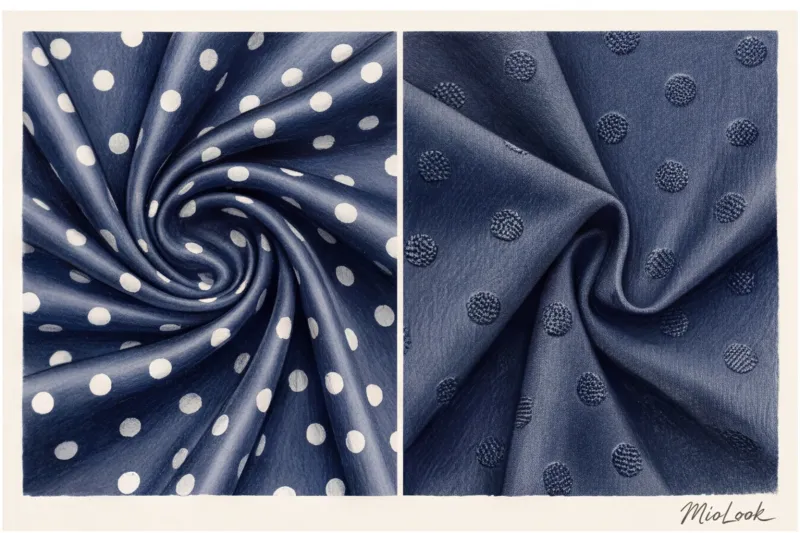
But the most important thing is the application technology. According to a 2024 study of textile patterns published by WGSN experts, contrasting heat-transfer printing on twill fabric retains sharp edges 40% longer than surface printing on plain single-knit fabric. Cheap surface printing cracks. If you want a garment that won't fade, look for woven patterns: jacquard, dobby, or the luxurious fil coupé technique (where the pattern threads are woven into the base and then cut, creating a textured pattern).
Your perfect look starts here
Join thousands of users who look flawless every day with MioLook. The smart algorithm will take your body shape into account and suggest the best print combinations.
Get access — €0.99 oncePolka Dot Print in a Business Wardrobe: From Smart Casual to Business Formal
Integrating vibrant patterns into a strict dress code is a challenge. According to a 2022 Harvard Business Review report on the psychology of office dress code perception, small geometric patterns are perceived as 15% more "authoritative" and composed than floral or abstract motifs.
For the office, I recommend swapping out the classic white shirt for a silk blouse with micro polka dots. But there's a caveat: avoid aggressive black-and-white contrast. It's too harsh on the eyes in the artificial light of an open space. Opt for deep navy blue, emerald green, or chocolate brown with cream flecks.

If your dress code (for example, in the banking sector) prohibits any prints on shoulder garments, use polka dots as a discreet accent. A silk handkerchief on a bag handle or a jacket with a polka dot lining conveys refined taste without violating corporate protocol.
Sustainable Fashion: How to Choose Polka Dot Pieces That Will Last for Years
Buying printed items often conflicts with sustainable wardrobe principles due to their rapid change in trends. Therefore, it's especially important to consider the cost per wear. A basic silk blouse from COS or Massimo Dutti will cost you around €120-€150. Wear it 50 times over a couple of years, and you'll get a cost per wear of €3. For comparison, an impulse buy of a €40 polyester dress worn to a single party costs you €40 per wear.
Fashion Revolution regularly highlights the harm of cheap dyes used for high-contrast prints in its reports. Cheap polyester with white polka dots on a black background is an environmental disaster and a guarantee that the white will turn a dirty gray after the first wash. Color migration occurs.
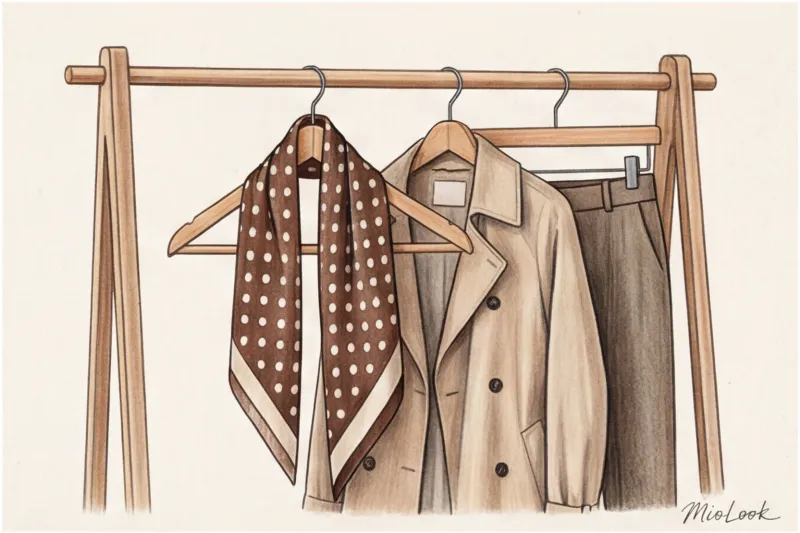
To prevent this process on high-quality items, wash contrasting fabrics only in cold water (no higher than 30°C) using eco-friendly liquid detergents for delicate fabrics, avoiding harsh powders. A great sustainability hack is to look for vintage polka dots. Items made of heavy crepe or silk from the 80s and 90s have survived dozens of washes, and if their pattern is still clear, the item will last for another decade.
Fresh look formulas: how to wear polka dot print this season
Let's move from theory to practice and collect several stylistic formulas that are relevant right now.
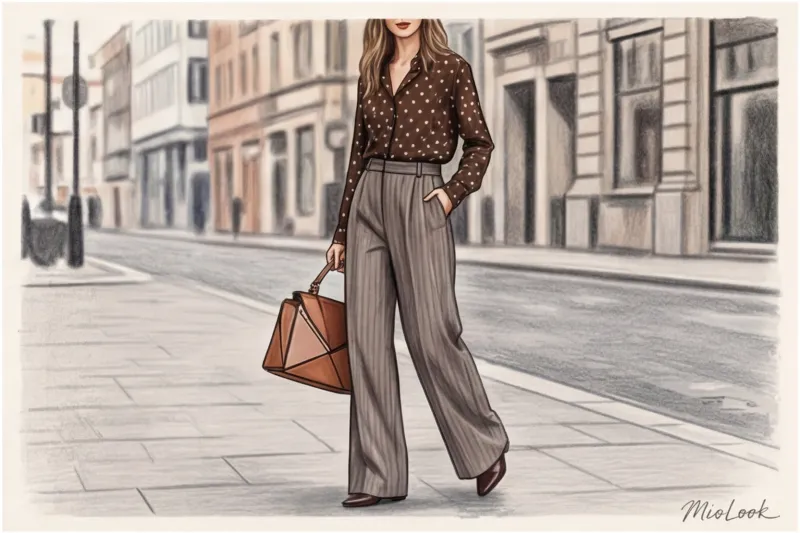
- Peas + Stripes: A geometric combination always looks intelligent. The main rule of mixing is to match one characteristic. This could be a similar scale (small polka dots and a thin pinstripe) or a shared color (for example, a dark blue background for both elements).
- Monochrome layering: Try wearing a sheer mesh turtleneck with small velvet polka dots under a crisp, structured slip dress or a tailored jacket. It creates depth without being overwhelming.
- Colored peas: Forget the classic black and white. The most expensive combinations of the season are caramel backgrounds with sky-blue dots or olive and cream.
Ready to get started?
Try the free plan—no commitments required. Build your smart digital wardrobe and plan your print looks for the week ahead.
Get access — €0.99 onceChecklist: Check the quality of the fabric and print before purchasing
When I'm shopping with clients, I always teach them a simple quick test. These three steps will save you from buying a low-quality item that will lose its appearance within a month.
First, do a stretch test. Gently (but not excessively) tug the fabric between the polka dots with two fingers. If white spots or cracks in the paint appear on the colored background, you're looking at a cheap, shallow print. This item will quickly turn white when worn on the elbows, chest, and hips.
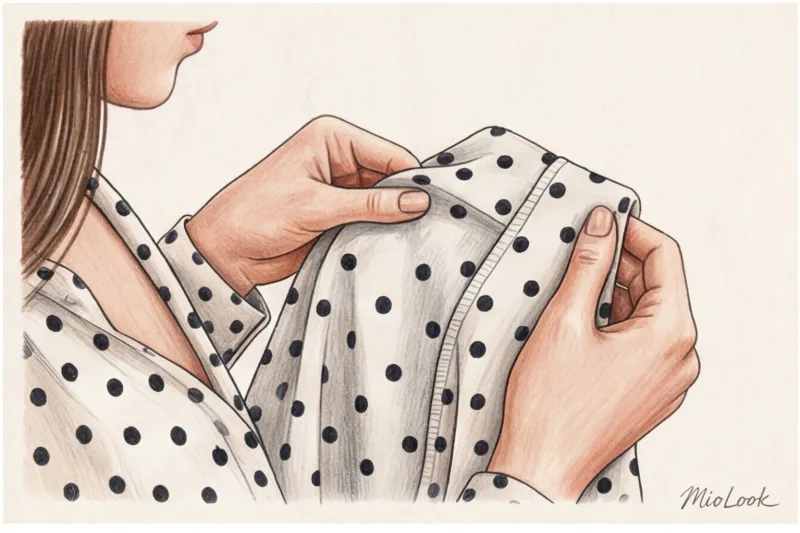
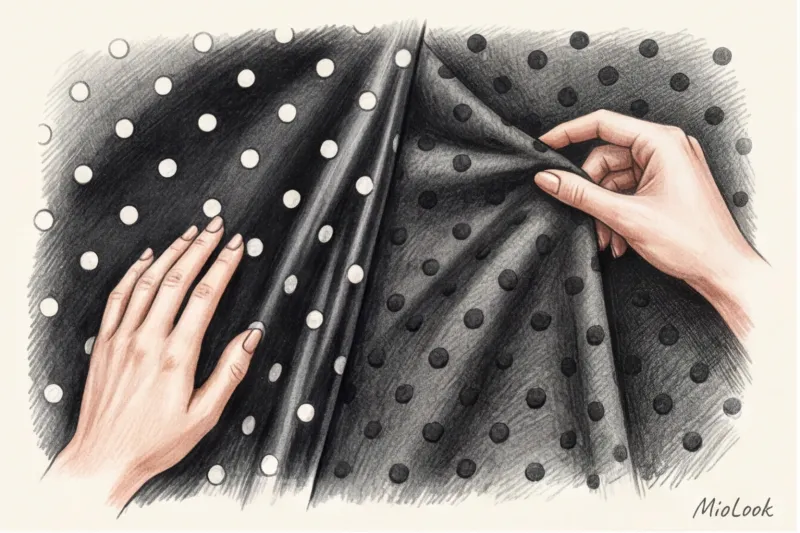
Second, turn the garment inside out. The backing reveals everything about the dye's penetration depth. High-quality textiles should have at least 60-70% of the pattern visible on the reverse side. If the backing is completely white with a contrasting black face, the dye will wash out very quickly.
Third, pay attention to the pattern alignment at the seams, especially at the center back seam or side seams. High-end and premium brands use circles at the seams to create a seamless pattern. Mass-market brands under €80 usually don't waste fabric or the tailor's time on this, but if you find a budget item with perfect alignment, buy it without hesitation—it's made using luxury patterns.
"Polka dots don't forgive sloppiness in details. When choosing between a perfectly tailored solid color and a mediocre polka dot dress, always choose the former. The pattern should enhance quality, not disguise its absence."
There are no prints that suit everyone. There's just a lack of understanding of how a particular pattern works with your proportions, appearance, and contrast. Think of polka dots not as a fun retro element, but as a mathematical grid: by manipulating its scale, density, and background, you can create looks that don't look childish, but truly classy and modern.