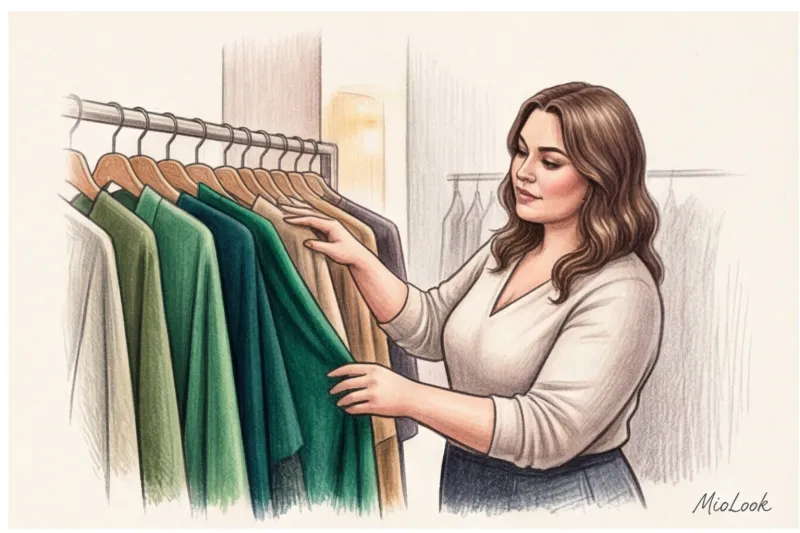
Let's be honest: if you've ever taken off your shapewear in a cramped restaurant bathroom stall in the middle of a wedding reception simply because you couldn't breathe, you're not alone. In my 12 years as a personal stylist, I've heard this story from every other plus-size client. For some reason, we're so used to thinking that a formal look requires physical suffering. And that's a fundamental mistake.
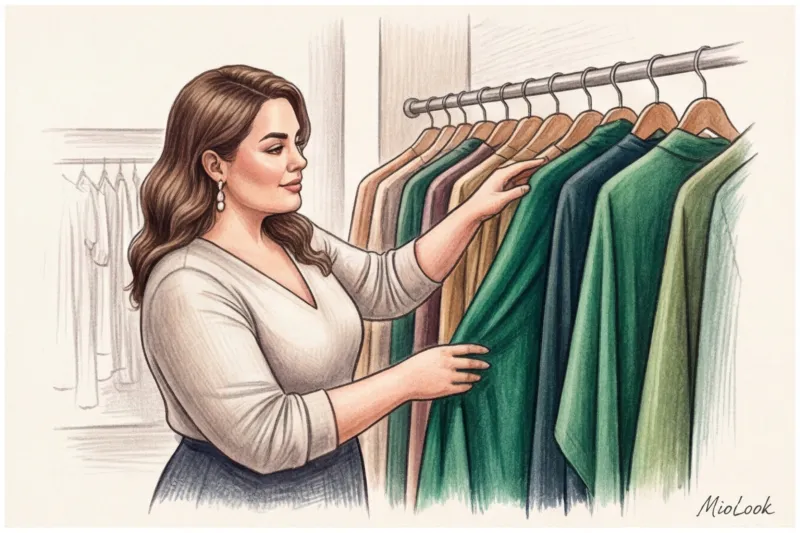
Ideal wedding dress for plus size women It shouldn't turn you into a hostage to your own outfit, afraid to eat an extra canapé or go out on the dance floor. We've already discussed the basics of a wedding dress code in more detail in our A complete guide on what a guest should wear to a wedding , but today we'll be talking about the specifics of Size+. We'll leave behind stereotypical advice like "wear black to hide your curves" and instead explore the real magic—the architecture of cuts, the properties of modern eco-fabrics, and static confidence.
Architecture, not camouflage: how to choose a wedding dress for plus-size women
For a long time, the fashion industry sold curvy women the idea of "camouflage." We were offered shapeless robes or, conversely, rigid, body-constricting sheaths. Today, I challenge you to shift the paradigm: we no longer hide. We create a sculpted silhouette.
A quality dress functions like a fine architectural design. It has an internal structure: proper bust and waist darts, a well-balanced shoulder girdle, and, crucially, precise armhole geometry. If the dress is cut on the bias, it will gently hug the body, following its movements, rather than standing upright or bunching up at the waist.
Fabric is everything: density and drape
I have a golden rule for my clients: if you want to avoid shapewear, the fabric weight should start at 220 g/m². Why is this so important?
Thin chiffon, cheap flowing knits, or shiny satin are all traitorous materials. They'll highlight even those uneven areas of your skin you didn't even realize you had. Instead, look for heavy crepe, dense silk, or matte eco-viscose on tags and price tags. These fabrics have enough heft to fall in beautiful, heavy folds, elongating your silhouette.
Sustainable Fashion: Cupro and Tencel vs. Polyester
A wedding is a marathon. The registration in the blazing sun, the photo shoot, the stuffy hall, the dancing. Wearing 100% polyester to a 12-hour event is like voluntarily placing yourself in a greenhouse.
According to a comprehensive study of the properties of cellulose fibers conducted by the Lenzing Group (2023), lyocell (Tencel)-based fabrics absorb moisture 50% more effectively than cotton and are excellent heat regulators. If your budget allows, choose dresses made of cupro (an eco-friendly silk substitute) or Tencel. They have a luxurious matte sheen that looks expensive while still allowing your skin to breathe.
Access to MioLook for €0.99 — one-time payment
A smart AI stylist will select the perfect look based on your proportions and preferences.
Get access — €0.99 onceThe Shapewear Myth: Why It's Worse at Your Wedding
It's time to debunk the biggest myth of evening fashion. Shapewear is your enemy during long events. The statistics are brutal: approximately 78% of women complain of hyperhidrosis (overheating and excessive sweating), stomach cramps, and circulatory problems after wearing synthetic corsetry for four hours.
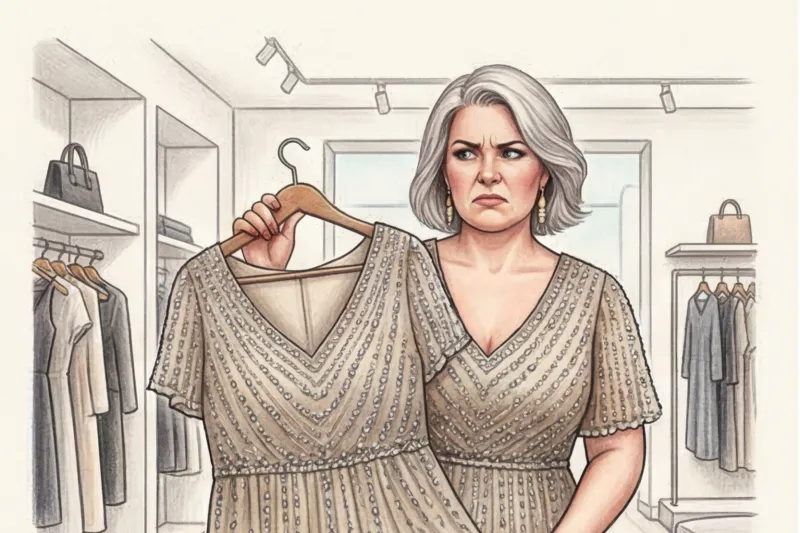
I've seen dozens of girls buy a gorgeous dress a size too small, planning to "slim down." Their photos ended up looking tense, and by the evening, they were dreaming of only one thing: going home.
"It's better to buy a dress half a size larger, made of a dense, shape-resistant fabric that naturally supports the body's architecture, than to squeeze into spandex under thin silk."
What to do instead? Invest in smooth, seamless underwear (laser-cut) that fits perfectly. It won't create tightness on your sides. And to avoid chafing on your inner thighs in the summer, use lace braces or anti-chafe balms. Comfort is the foundation of a strong posture.
Top 5 Stylish Size+ Styles for Special Occasions
When you come to me MioLook When people come to me for an evening capsule collection, I always start with these five fail-safe options, avoiding overtly "girly" styles.
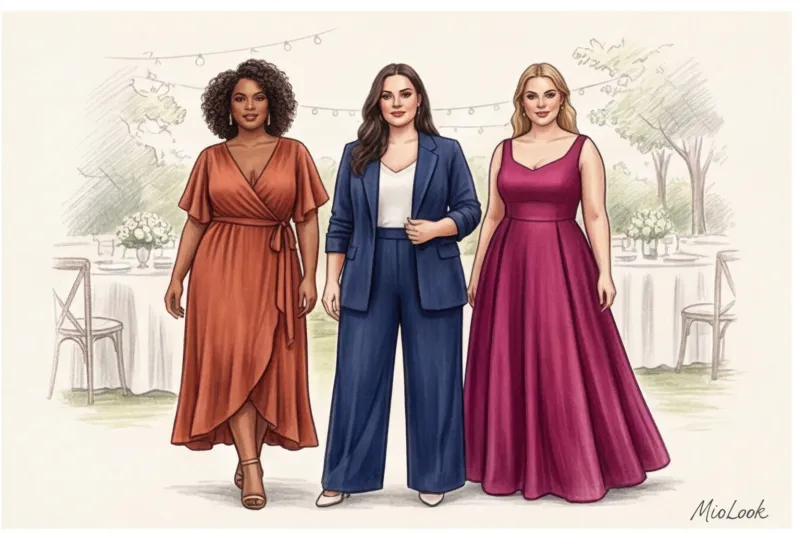
- Wrap dress of the new generation. Forget the flimsy knits of the 2010s. This modern wrap is cut from thick crepe. It creates a perfect V-neckline and delicately accentuates the waist.
- Suits with palazzo trousers and a long jacket. A luxurious alternative to a dress. Wide, flowing trousers visually lengthen the legs (especially if they cover the heel), and the unbuttoned jacket creates two vertical lines that dramatically elongate the silhouette.
- Bias cut lingerie style dress with cape. Yes, you can wear a slip dress in a size plus! The secret is the thick matte silk, bias cut (the fabric doesn't stretch, but slides), and an asymmetrical chiffon cape on top. But there's a limitation: This advice doesn't work for an apple-shaped figure with a prominent tummy—in that case, it's best to choose the next point.
- A-line silhouette with a deep neckline and accent cuffs. A classic that won't let you down. Accentuating the wrists (feathers, embroidery, wide cuffs) draws attention away from the stomach and onto the most graceful parts of the arms.
- Evening jumpsuit. This heavy viscose design with a draped waist looks incredibly classy. Just make sure it's easy to take off.
Color and Print: Breaking Outdated Rules for Curvy Figures
"Black is slimming" is perhaps the most damaging fashion dogma. Yes, in everyday life, black can conceal shadows. But in evening wear, especially under the artificial lighting of a banquet hall, black absorbs light, turning your figure into a single, monolithic block. You don't look slimmer; you look like a dark blob.
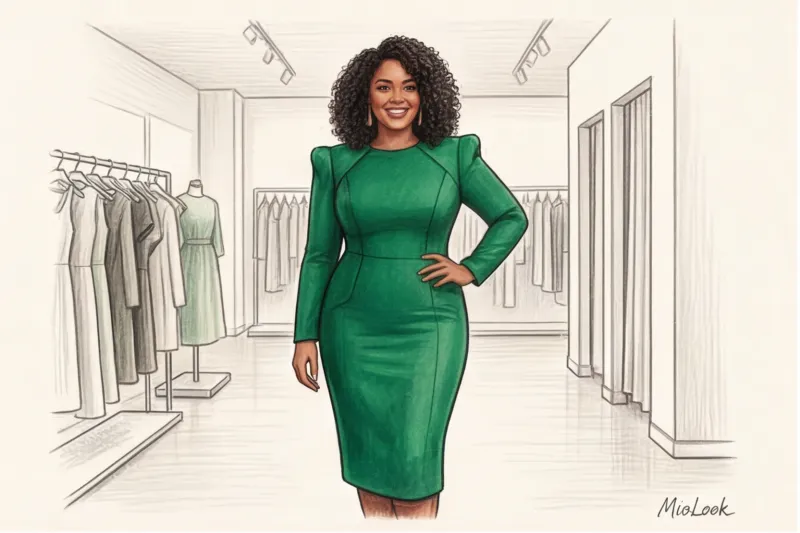
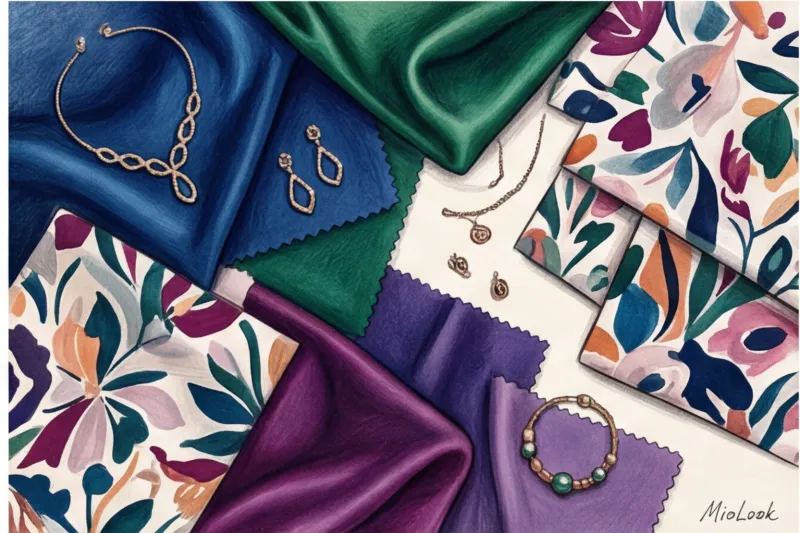
In its modern wedding dress code recommendations, the British guide to good taste, Debrett's, also advises guests to avoid all-black (as well as white, of course). Your best bet is jewel tones: deep emerald, rich sapphire, elegant amethyst, or ruby. They reflect light, making fabric appear more voluminous and expensive, drawing attention away from the contours of the body.
As for prints, save the small "granny" flower for the garden. If you want a pattern, choose a large abstract or watercolor splashes. The scale of the print should be proportionate to your figure. And don't forget to check with the bride about her wedding mood board in advance so that your emerald dress doesn't clash with the soft peach theme of the celebration.
Your perfect look starts here
Join thousands of users who look flawless every day with MioLook.
Get access — €0.99 onceDetails that define a plus-size wedding dress
Take it from a textile expert: a garment's status is determined not by the label on the back, but by its inside. In the fitting room, pay attention to the technical details that can save your look (or ruin it forever).
- Armhole width: The fabric under the armpits shouldn't cut into the skin. If the armholes are too narrow, they will create unsightly folds even where there aren't any naturally occurring folds. Two fingers should fit between the armpit and the seam.
- Lining quality: You can buy a luxurious silk dress, but if the lining is cheap polyester, you'll still sweat. A 100% viscose or cupro lining is more important than the main fabric.
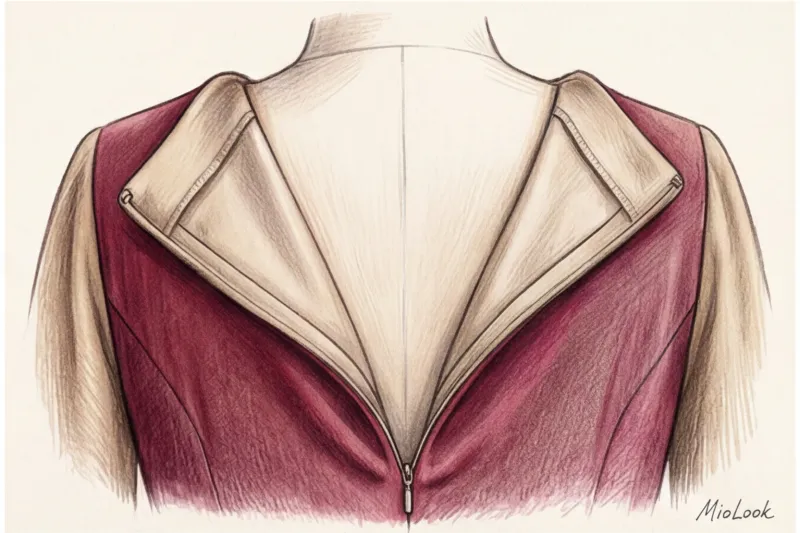
- French seams and hidden zippers: Turn the dress inside out. If the seams are simply finished with a cheap serger, they may come apart when stretched (like when you sit down). A French (closed) seam is a sign that the manufacturer didn't skimp on quality or patterns. The zipper should be concealed and sewn in perfectly straight to avoid a "wave" down the back.
Stylist Checklist: Final Fitting Before the Wedding
Never buy an outfit just by twirling in front of a mirror. You'll spend the whole day on the move in that dress. Perform these three simple tests right in the fitting room:
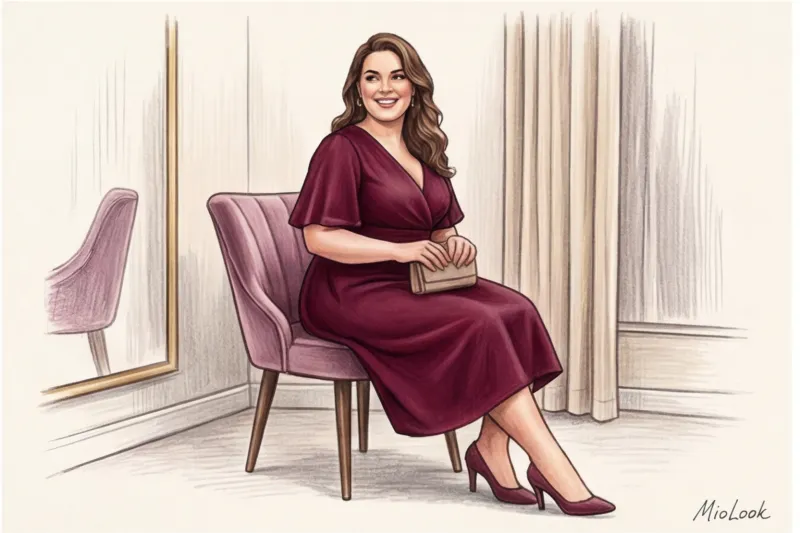
- Sitting test: Sit on a ottoman or chair. The fabric across your stomach shouldn't feel taut and stretchy. Can you breathe comfortably and deeply? Can you eat a hot meal without having to unzip your pants?
- Hug Test: Raise your arms up and slightly forward, as if you were embracing a newlywed couple. Is your armhole tight? Is your dress riding up extremely high?
- Light test: Ask a friend to take a photo of you with a flash. Delicate fabrics have a tricky tendency to become transparent when exposed to flash. You don't want the outline of your underwear to be the talk of the family in the final photos, do you?
Wardrobe Investment: How to Wear Your Wedding Attire After the Celebration
Buying a dress for just one evening in 2024 is bad taste and an eco-crime. The sustainability approach (conscious consumption) requires calculating cost per wear—the cost per outing.
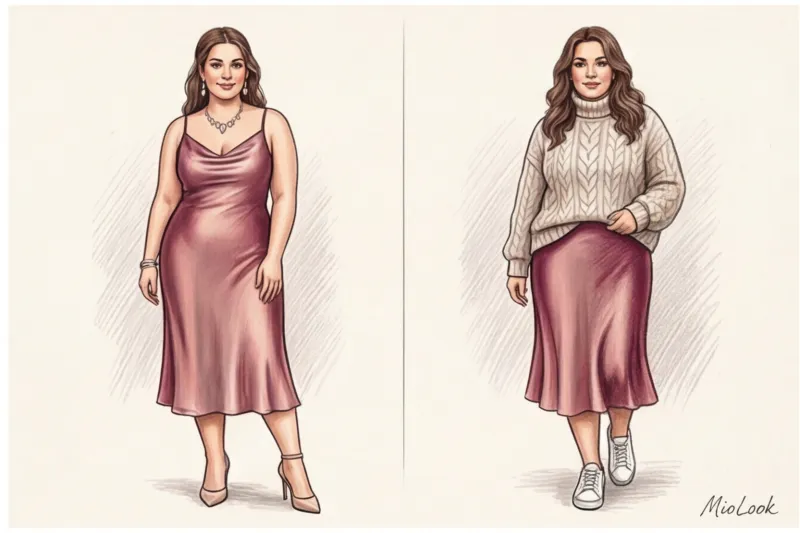
You'll wear a gorgeous, flowing emerald midi dress with pumps and statement earrings at your wedding. A week later, throw a chunky knit sweater over it (so it doubles as a skirt), slip on white leather sneakers, and head to Sunday brunch. A palazzo pantsuit is a brilliant investment: the jacket pairs perfectly with jeans and a white T-shirt for the office, and the trousers pair perfectly with tailored shirts.
Ready to get started?
Try a free plan—no commitments. Build a smart wardrobe now.
Get access — €0.99 onceChoosing a formal dress isn't about compromising between beauty and your size. It's about finding something that respects your body, its structure, and your comfort. Avoid stifling lingerie, opt for dense eco-friendly materials and deep shades. Remember: the most stylish woman at any event is the one who feels relaxed.