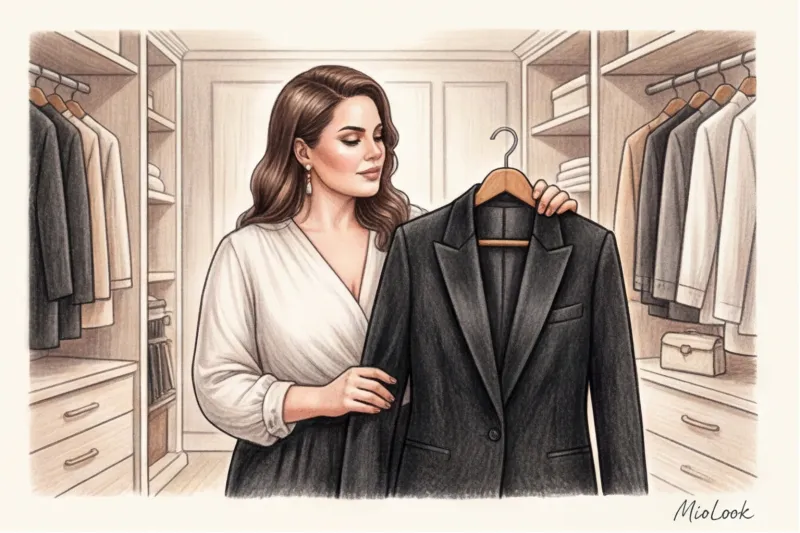
Yesterday I was sorting through my new client Anna's wardrobe. We pulled eight dresses out onto the bed: one sequined, two delicate lace, and a couple of chiffon shift dresses. You know what they had in common? Each one had been worn exactly once. For a corporate New Year's party, for her sister's wedding, for an anniversary. Eight emotional purchases that are now simply taking up space while Anna panics before every new event: "Camilla, I have nothing to wear again!" Sound familiar?
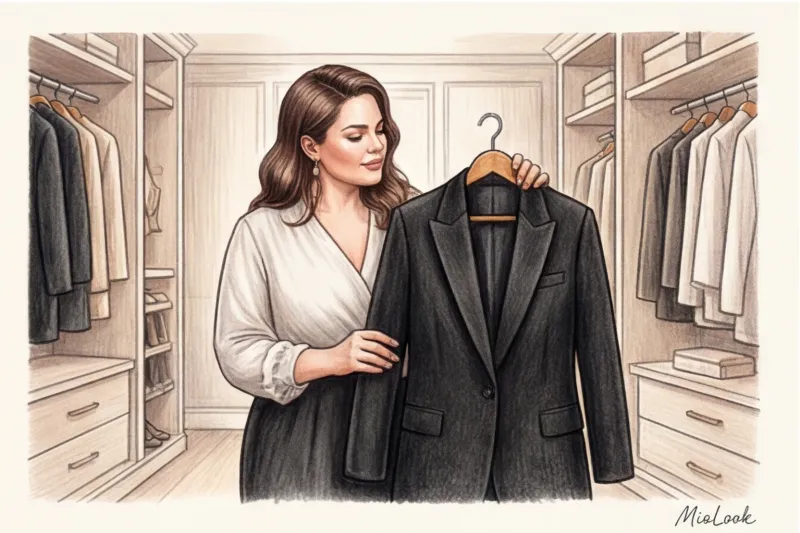
For curvy girls, finding the perfect evening look often turns into a quest where stylistic stereotypes work against us. For years, fashion magazines have been telling us to "hide our flaws behind a black robe." But after 12 years of working as a stylist, I've realized one thing: elegant capsule collection for plus-size women It's not based on attempts to hide anything, but on a mathematically precise cutting architecture. We discussed this systematic approach in more detail in our complete guide. How to Build a Basic Evening Wardrobe: A Dressy Capsule And today I want to show how this principle works for plus-size.
The "One-Stop Shop" Trap: Why Plus-Size Women Need a Dressy Capsule
Let's be honest and do some math. Let's get back to Anna. Eight mass-market dresses cost her an average of €70 each. That's a total of €560 spent on one-time wear. In professional styling, there's an objective measure of wardrobe profitability: Cost-Per-Wear (Cost per Outing).
Anna's sequin dress cost €70. Now imagine she'd invested €400 instead in a flawless, premium-quality three-piece suit made of heavy crepe. The pants, top, and jacket can be worn together or separately. By wearing this suit (as a whole or in separates) at least 20 times a year for various events, Anna's cost-per-wear is only €20. The savings are obvious.
Shifting from the "I need a new dress" paradigm to the "evening essentials" concept is liberating. The separates system works more effectively because you only change one element or accessory, achieving a completely new look without breaking the bank.
Your perfect look starts here
Join thousands of users who look flawless every day with MioLook. A smart AI stylist will help you create a capsule wardrobe of your items.
Get access — €0.99 onceThe Biggest Plus-Size Styling Myth: Why We're Ditching Black Cases
And now for the biggest misconception. "Black is slimming" is a mantra we've been told for decades. But it's a half-truth that often works against you.
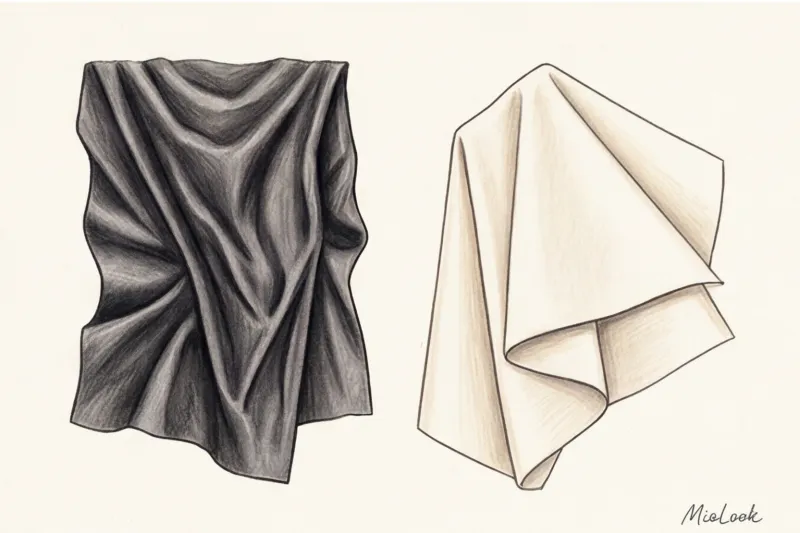
Black does absorb light, but it unable to change poor tissue architecture A cheap black dress made of thin polyester, viscose, or flimsy knit will act like a second skin: it will treacherously highlight every fold, the texture of your underwear, and even those nuances of your figure that aren't really there. Meanwhile, a crisp white or emerald jacket made of thick fabric will create a perfect, toned silhouette.
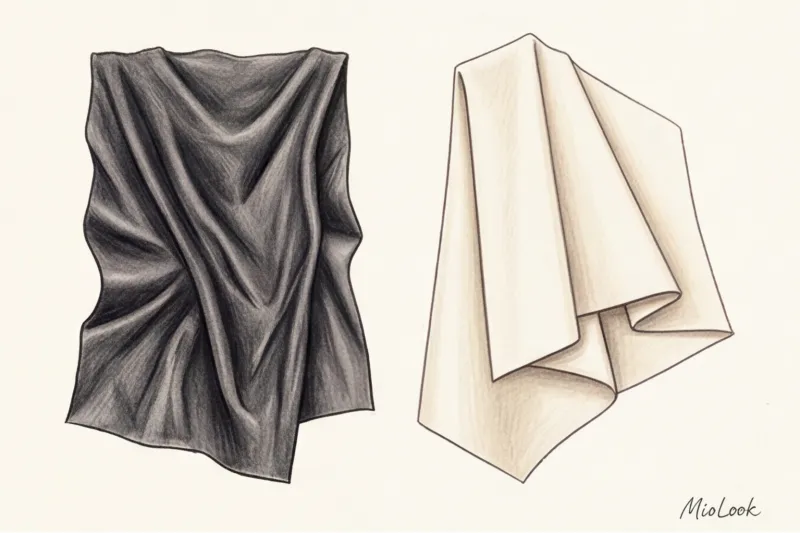
"We're seeing a global shift in inclusive design. WGSN's 2024 analysis confirms: the focus has shifted from color blocking to structural tailoring. Material density has become more important than hue."
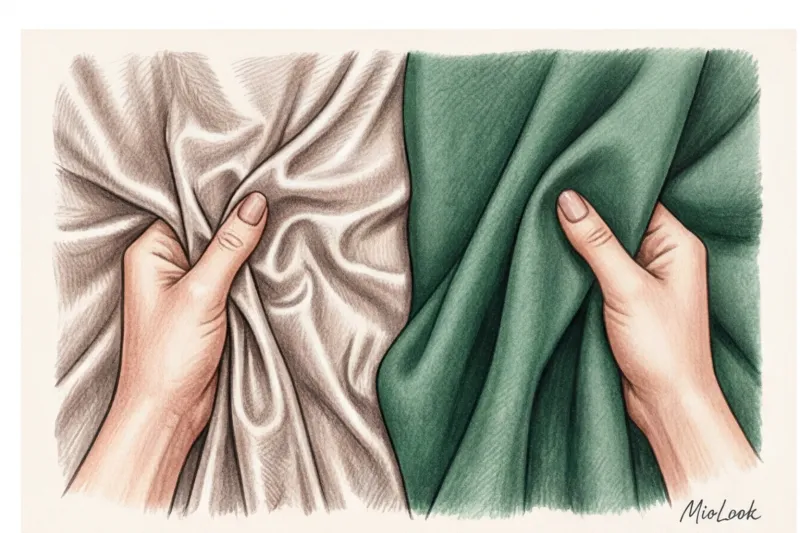
The law of architectural tailoring dictates that fabric should hold its shape on its own. For a plus-size evening capsule, I recommend choosing fabrics with a minimum weight of 250 g/m². They create that essential "framework" (air) between your body and the garment. Don't be afraid of light and bright shades—white, deep wine, fuchsia, or cobalt. If the fabric is thick, you'll look luxurious and classy in any color.
Evening Wardrobe Math: 5 Pieces for 15 Flawless Looks
The essence of the capsule approach is simple: each item should pair with at least three others. To make it work for an evening outfit, avoid complex, garish prints. Opt for deep monochrome shades and sophisticated cuts. Here's a 5-piece formula that will cover all your needs.
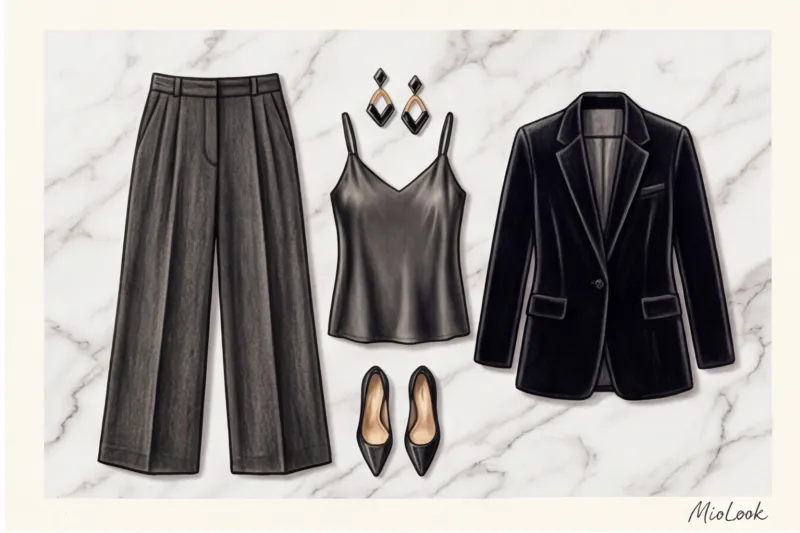
Foundation: palazzo pants and an architectural jacket
The ideal pants for plus-size women are palazzo pants made of heavy, flowing fabric with a high waist. An important detail: look for styles with pleats that point downwards. to the center (and not outward), they visually gather the stomach.
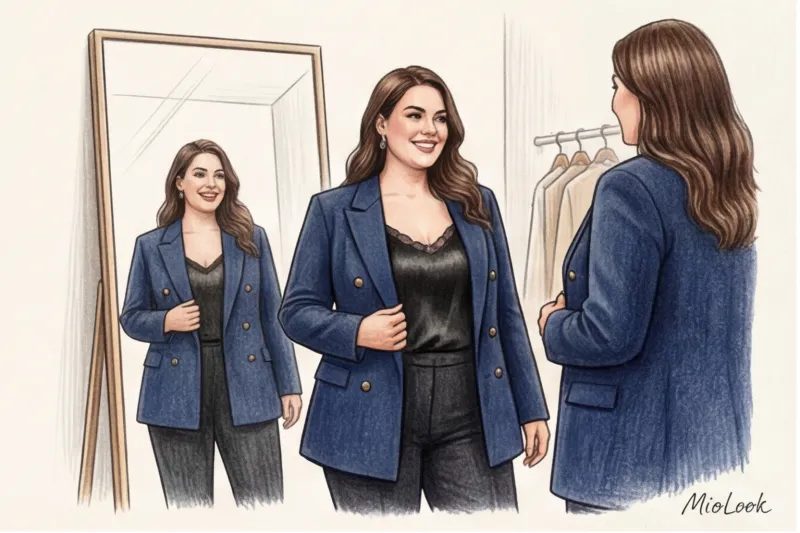
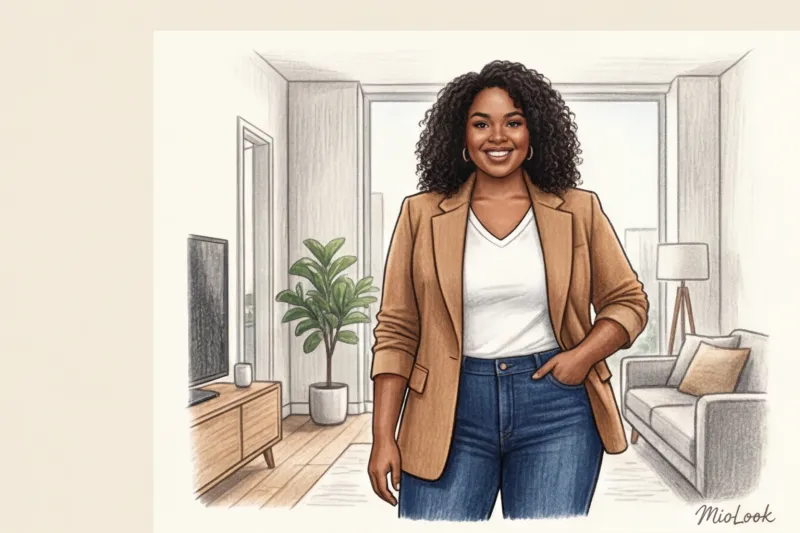
The jacket should be straight-cut or tuxedo-style. Its ideal length is one that covers the groin and ends at the narrowest part of the hip or, conversely, just below the widest part of the thigh. A strong shoulder line is essential—it balances the hips.
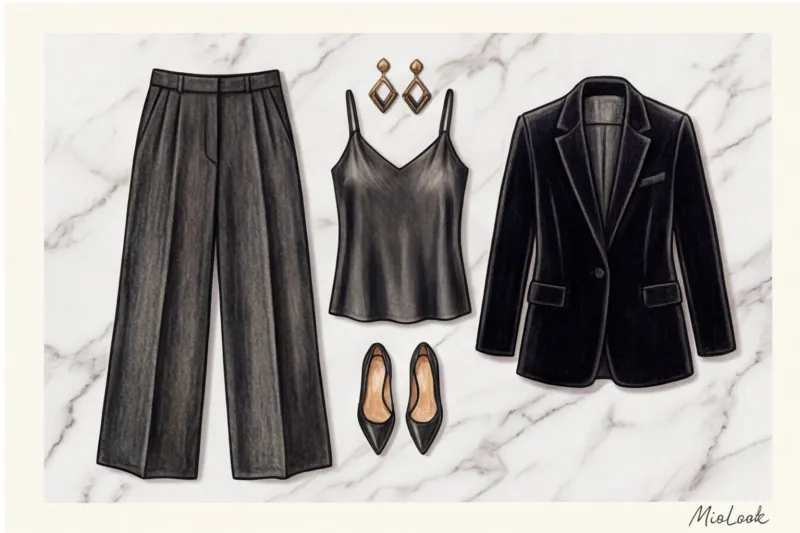
Filling: an accent top and a dress of the right cut
Add a lingerie top made of thick matte silk (not satin!) with a perfect V-neckline that will elongate the portrait area.
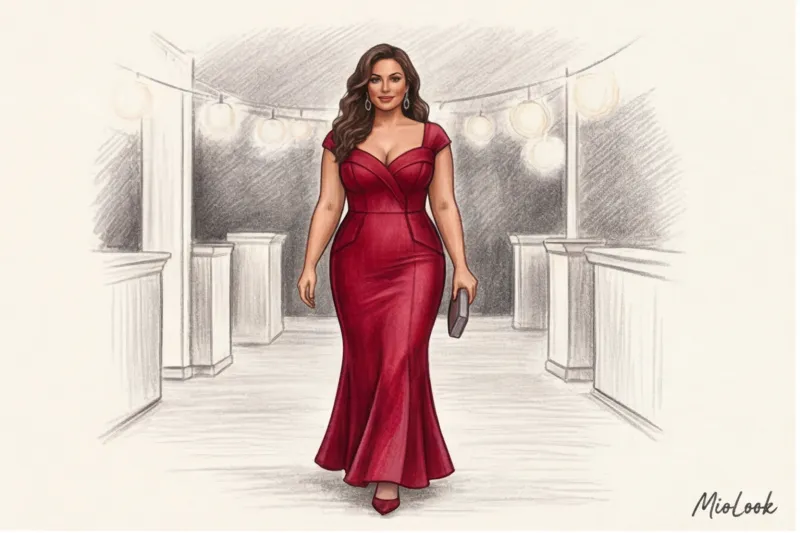
And, of course, a dress. My favorite is a bias-cut slip dress. The physics of this cut are unique: the fabric gently hugs your curves without creating horizontal tension on your hips. But there's a fair limitation: This cut doesn't work at all. If you choose cheap static cling or thin rayon, the fabric should be heavy (19-22 momme for silk), otherwise it will simply stick to your legs.
Access to MioLook for €0.99 — one-time payment
Upload your items into the app, and an AI stylist will show you how to put them together into an evening capsule.
Get access — €0.99 onceTexture Play: A Stylist's Secret Weapon
If color isn't so important, then what is? Texture! At the shows of brands that work with plus-size models at a high level (for example, 11 Honoré or Marina Rinaldi), stylists masterfully play with the laws of optics.
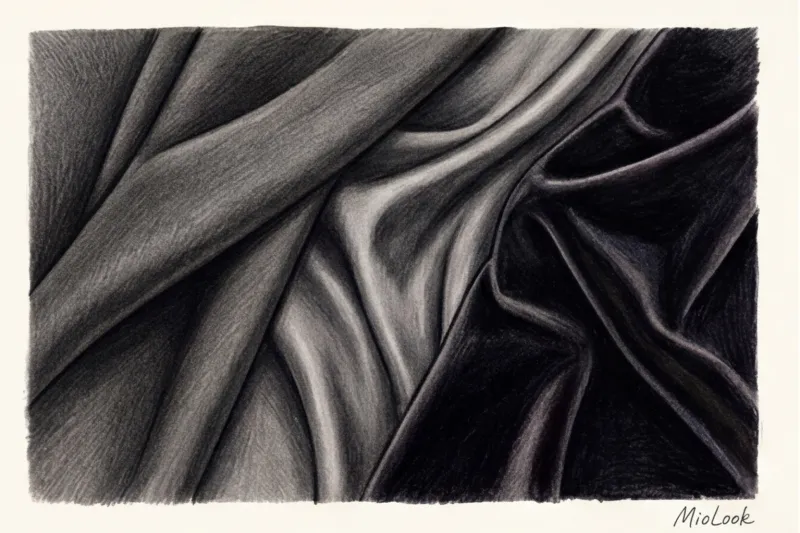
Glossy textures (sequins, satin, lurex) reflect light and act as a highlighter, visually adding volume. Matte textures (velvet, crepe, heavy suiting cotton) absorb light, creating a defined outline and slimming the silhouette.
The golden rule of distribution: wear matte colors on areas you want to conceal. Use shimmery colors on areas you want to draw attention to. For example, if you have a voluptuous bust but want to tone down your stomach, wear a matte pantsuit and a top embroidered with delicate sequins at the neckline. And please avoid cheap stretch lace and guipure—they instantly cheapen the look and throw off the proportions.
Scale Matters: Accessories for Plus Size Women
One of the most common mistakes I see in my fittings is when a statuesque woman picks up a micro-clutch the size of a phone. By the law of contrast and proportion, a large figure appears even larger against a tiny detail.
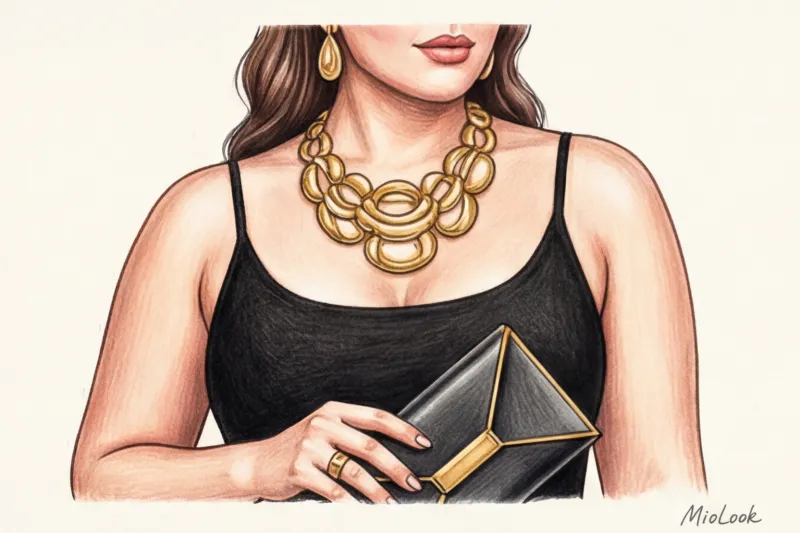
- Bags: Choose a medium size and a crisp, geometric shape. Envelopes and structured minaudières add a put-together feel.
- Decorations: Leave the delicate chains in the jewelry box. Opt for large, architectural earrings or chunky cuff bracelets. They're great for drawing attention away from problem areas and focusing your conversation partner's attention on your most prominent features.
- Shoes: A pointed toe visually lengthens the legs. The heel should be proportionate—stable, possibly with a complex architectural shape. A thin stiletto heel often looks unstable under the weight of the body and makes the calves appear wider.
Checklist: Assembling a Smart Capsule Without Mistakes
So, where to start right now? Not with shopping. Start with an honest conversation with your closet.
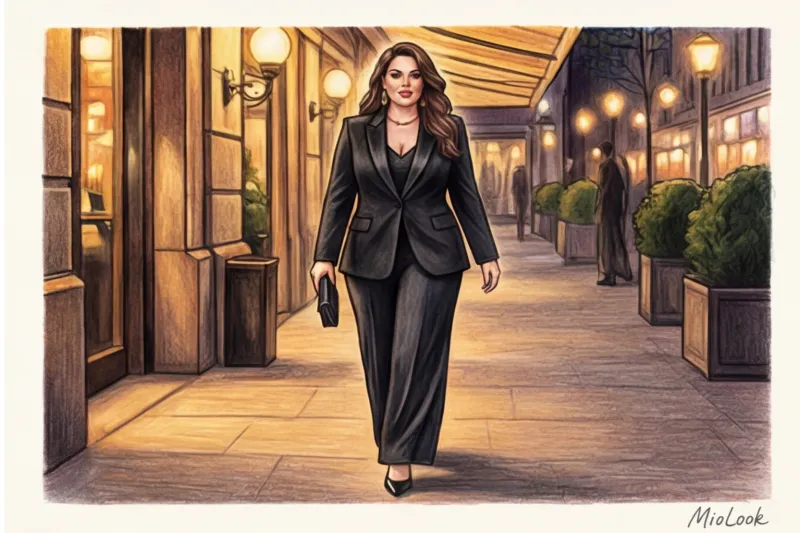
- Conduct an audit: Get rid of those "one-size-fits-all" dresses that are too small, uncomfortable, or that evoke negative associations. If a piece makes you constantly tug at the hem, it has no place in your life. You can digitize your remaining favorite pieces. MioLook , to clearly see the base.
- Make your main investment: Find the perfect tuxedo suit. For €150–€300, you can find excellent options from brands specializing in high-quality tailoring.
- Select a base for the base: The right shapewear. It should be smooth, seamless, and provide moderate The degree of compression. If the underwear is too tight, creating new folds where there weren't any, it's not a good correction.
- Don't forget about styling: A well-groomed hairstyle, fresh evening makeup, and well-groomed hands often do more for your look than the most expensive dress.
Building a dressy capsule wardrobe isn't about limitations. It's about creating your own personal holiday uniform that makes you feel like you're in charge. Your style isn't the size on the tag, but the shape you create and the confidence with which you wear it.