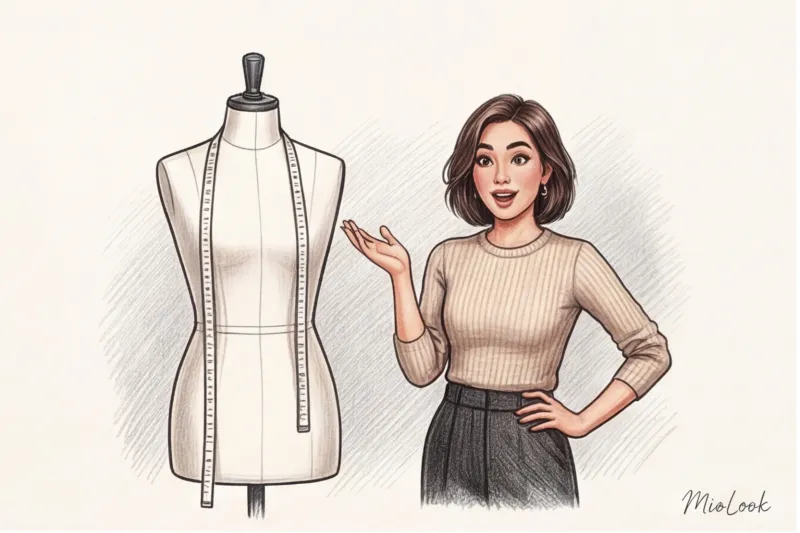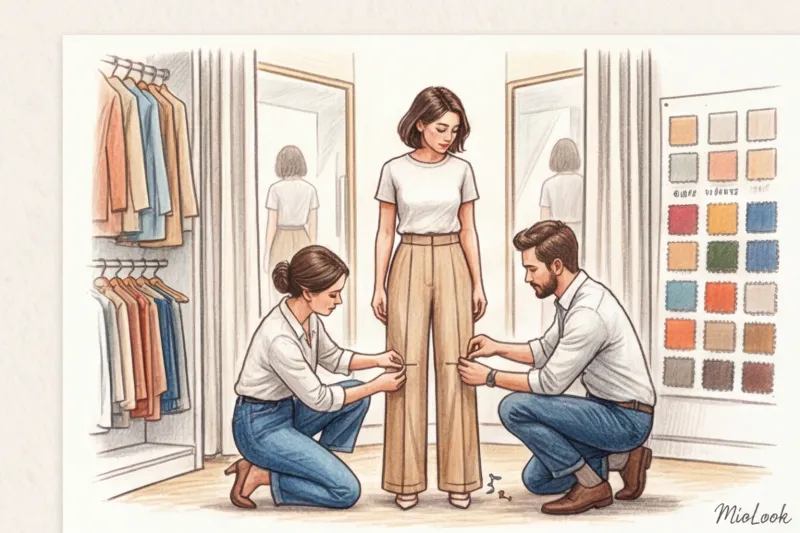
I still remember a client who brought me a stunning pair of wide-leg jeans from a limited edition collection, bought for €150. She decided to save time and simply cut the hem off with scissors at home. As a result, the luxurious flare turned into a shapeless, straight tube, and the knee ended up somewhere around mid-calf. The garment was irreparably ruined.
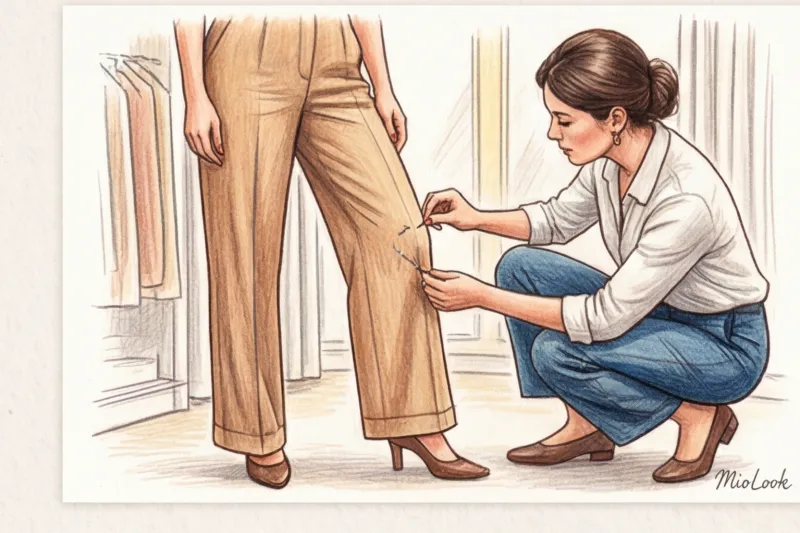
For petite women (up to 160 cm tall), shopping often feels like an obstacle course. When standard mass-market clothes feel baggy, it's tempting to look exclusively for specialized lines or resort to home-made alterations. But a smart approach clothes for short stature and their alterations — it's not just a matter of scissors and thread. It's real architecture. We discussed the anatomy of cutting in more detail in our the complete guide to fitting clothes to your body.
Today, I'm offering an engineer's perspective on shopping: how to buy quality items in standard sizes and transform them into something truly unique with the help of a professional tailor.
The "Just Cut It Off" Myth: Why Short-Size Clothing and Alterations Require an Architectural Approach
Standard sizes for most global brands (Zara, H&M, Uniqlo) are calculated for an average height of 165–170 cm. If you're 156 cm tall, it's not just the leg length that's at issue. The entire geometry of the garment shifts.
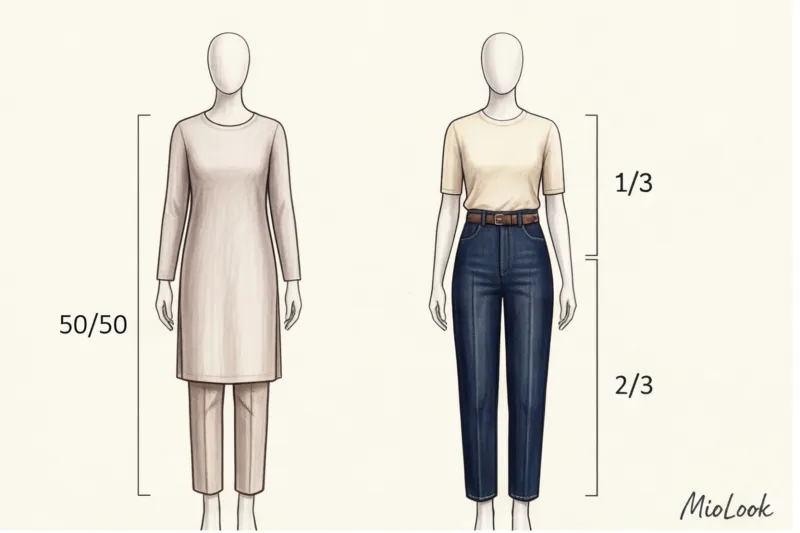
The waistline drops 3-5 centimeters below your natural waist. The bust darts point into empty space. The armholes sag, pulling the entire silhouette down with every arm movement. The classic M. Müller & Sohn garment construction system strictly regulates: the position of the knee line in trousers must be calculated mathematically from the inseam length. If you shorten flared or tapered trousers by more than 5 cm at the hem alone, you violate the designer's original proportions.
That's why a simple hemming can often cheapen a look. The garment feels like it was plucked from someone else's shoulder, even if the hem is perfectly finished.
Your perfect look starts here
Join thousands of users who look flawless every day with MioLook.
Get access — €0.99 onceChoosing a base for alteration: fabrics and seams that are easy to adapt
Not every item is worth taking to a tailor. After 12 years of working with tailors, I've discovered a golden rule: investing in alterations only makes sense when the fabric is capable of holding its new shape.
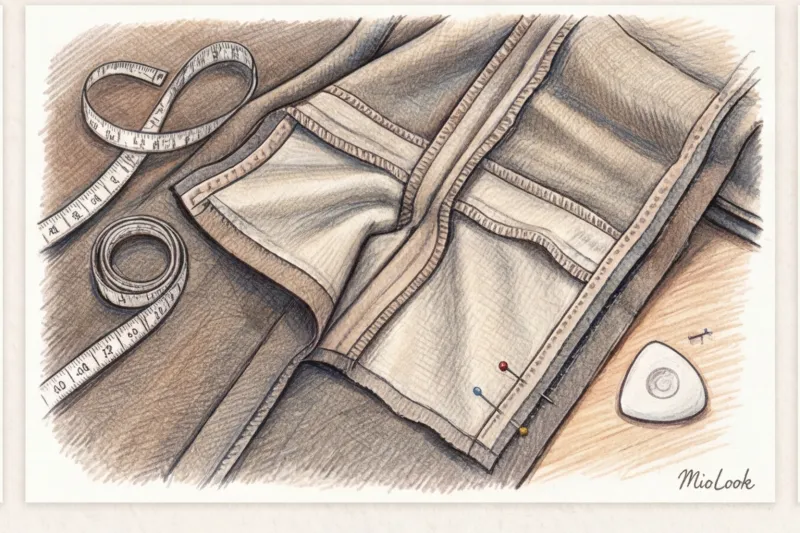
Heavy cotton (180 g/m² and above), suiting wool blends, linen, and high-quality denim lend themselves well to tailoring. They're stable. However, thin silk, bias-cut viscose, or complex, loose knits are always a gamble. Trying to transfer a dart to thin silk often leaves irreparable holes from old seams.
"The quality of the future fit is determined at the factory. Look for items with extra fabric in the inseams."
Turn your jacket or trousers inside out before purchasing. Premium brands (such as COS or Massimo Dutti) often leave a 1.5–2 cm seam allowance. This gives the tailor leeway: they can not only take the garment in, but also slightly widen the hips if you've chosen a smaller size to accommodate narrow shoulders.
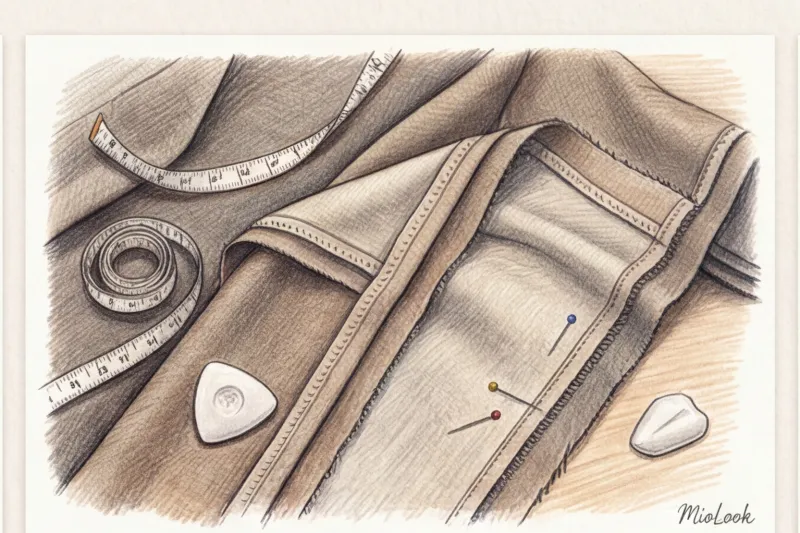
Red flags: what's impossible or too expensive to customize
My honest advice: there are times when it's best to pass on a purchase, even if the color looks amazing on you. Matching doesn't work (or is unreasonably expensive) in the following cases:
- Shoulder girdle in structured jackets. Reducing shoulder width by shifting the sleeve cap and shoulder pad is a delicate job. In Europe, such a service can easily cost €60–€90, which often exceeds the cost of the garment.
- Complex geometric print. The checkered pattern or stripe will inevitably shift when the side seams are sewn up.
- Pockets and rivets. Metal rivets on jeans or patch pockets on a jacket can't simply be moved higher without leaving marks on the fabric.
Investing in Fit: The Math and Sustainability of a Smart Wardrobe
Here we come to a counterintuitive fact. Buying clothes from the "Petite" capsule collection at a cheap mass market is often a bad idea. Have you noticed that the fabrics in these lines are often thinner and the hardware simpler? Brands are optimizing costs.
It's much more environmentally friendly and, in the long run, cheaper to buy a standard-size item from a premium line (in the €100-€200 range) and spend an additional €20-€40 on the services of a trusted tailor. The secret to Italian *sprezzatura* style lies in the millimeter-by-millimeter fit of the fabric to the body, not in the logo on the lining.
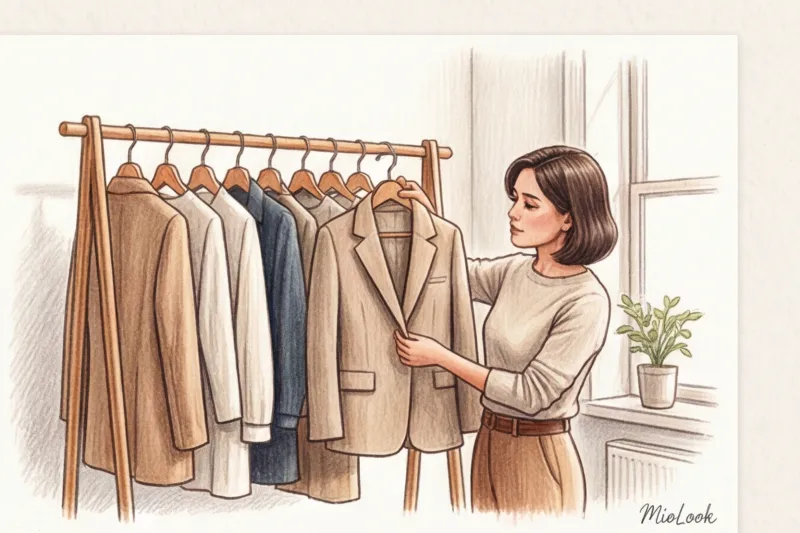
According to McKinsey's 2024 Sustainable Fashion Report, a high-quality fit increases the lifespan of a garment by 70%. You simply stop buying the latest trends because your closet is stocked with pieces that make you look stunning. By the way, digitizing your ideal finds and compiling them into capsule collections is very convenient—try it. MioLook to create a digital smart wardrobe.
Top 5 Most Effective Alterations for Petite Girls
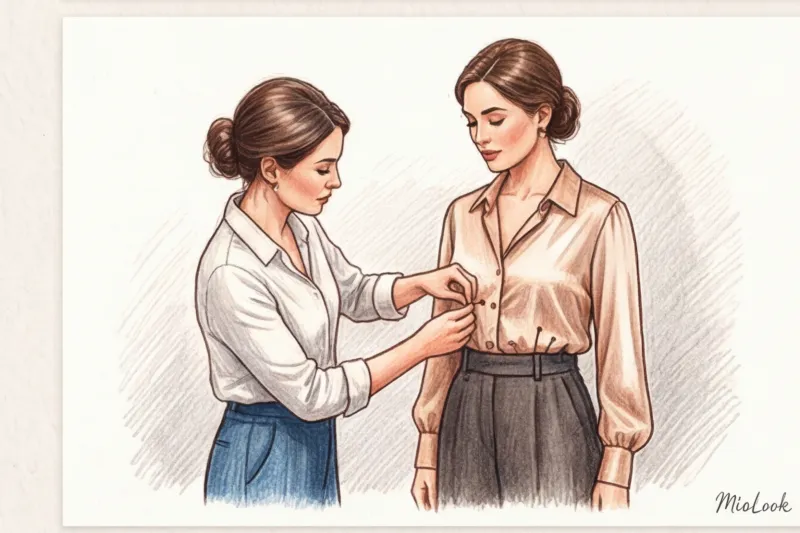
If you've found a quality base, here's a checklist of adjustments you can literally read out to the stylist at the studio:
- Raising the waist line. This is especially important for dresses and blouses. It eliminates that telltale "bubble" at the waist that visually adds a couple of pounds.
- Transfer of bust darts. The dart should point exactly to the highest point of the chest, and not to the ribs.
- Shortening the sleeve from the cap (from the shoulder). Yes, it's more expensive than trimming the bottom. But if the sleeve has a buttoned vent or a complex cuff, trimming the bottom isn't an option—it will disrupt the proportions of the piece.
- Adjusting the armhole line. Deepening or raising the armholes eliminates underarm folds and allows you to comfortably raise your arms in the jacket.
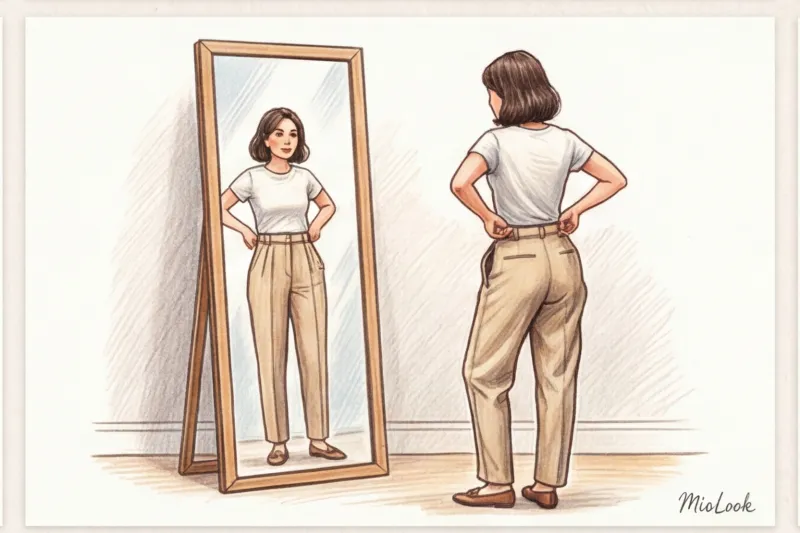
- Reduction of volume in the groin area. Regular-fit trousers have a seat (inseam) that's too deep for a petite fit. A tailor can trim this excess fabric to prevent the trousers from hanging down in the front.
A guide to communicating with a tailor: how to get a predictable result
One of my clients constantly complained that her skirts would "slide" up when she walked after she left the atelier. The problem turned out to be trivial: during the fitting, she simply stood there in front of the mirror.
Remember the "test drive" rule. While the technician is pinning the needles, you should sit on a chair, cross your legs, raise your arms, and mimic a step. Fabric behaves differently when it's moving.
Come to your fitting only with the shoes you plan to wear with the trousers, and the same underwear. A push-up bra or a soft, seamless top can make a difference of up to 3 centimeters in bust height—a significant difference for a tailor. And when you give away jeans, always ask the tailor to keep the "original edge" (the so-called Euro hemming)—that way, no one will guess you shortened them.
Access to MioLook for €0.99 — one-time payment
A smart AI stylist will choose the perfect look for you.
Get access — €0.99 onceOuterwear and business wear: focus on the right proportions
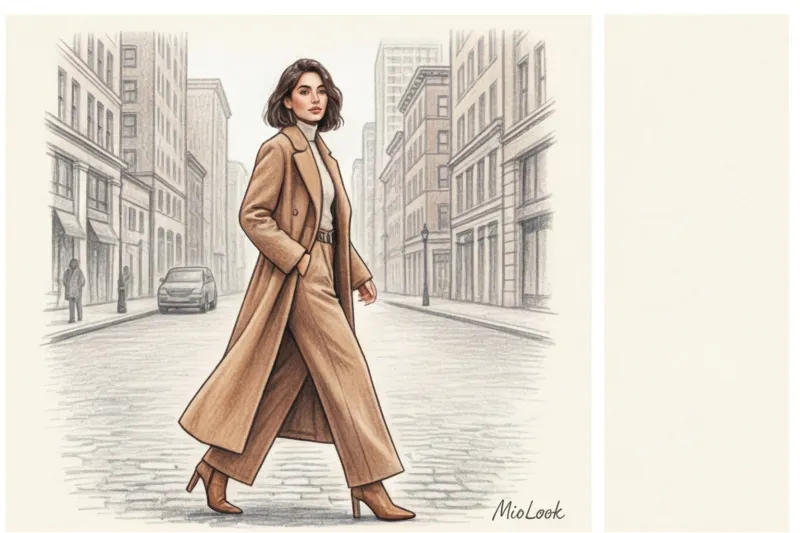
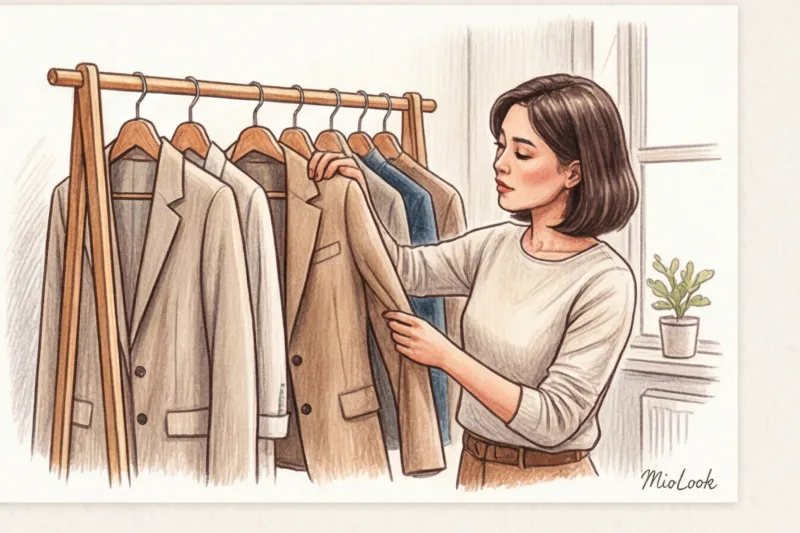
Coats and trench coats are the trickiest items in your wardrobe. If you shorten a long coat by 15 centimeters, the pockets will visually move toward the knees, and the back vent will become comically short. The ideal solution is to look for midi-length styles in standard sizes that will fit like an elegant maxi.
In business suits, button stance is critical. If the bottom button of a jacket falls below the hip bone, the legs appear shorter. Planning the proportions of your business looks before shopping will help. MioLook smart visualization.
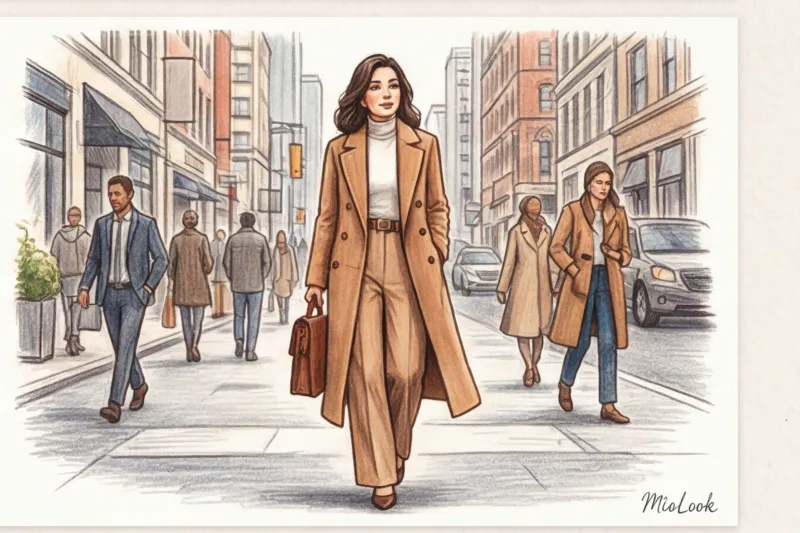
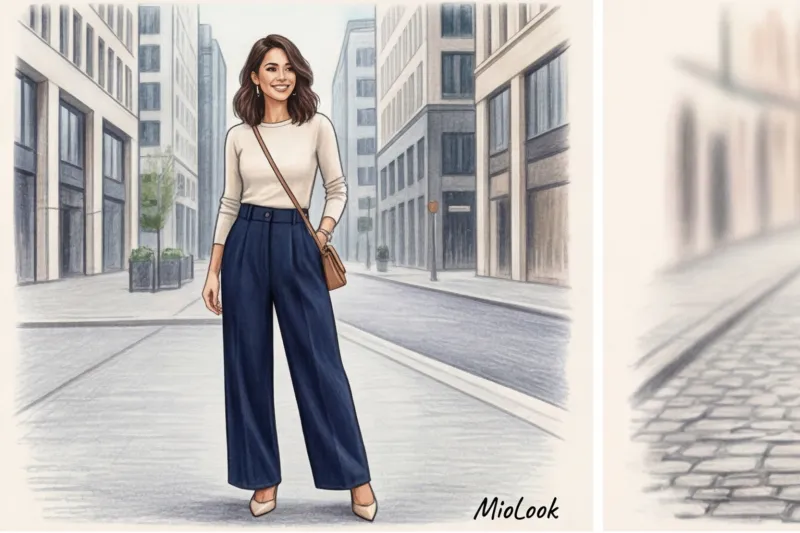
And my favorite secret trick with belts: if you buy high-waisted trousers, ask your tailor to move the belt loops 1–1.5 cm higher than their original position. This microscopic upward movement of the belt creates the fantastic illusion of infinitely longer legs.
Next time you're in the store, don't be discouraged by pants that are too long or a slightly dropped waist. View quality fabrics not as finished products, but as exquisite semi-finished products from which your tailor will create a masterpiece just for you. A perfect fit isn't luck; it's a conscious choice and a little math.